Feeding schedule basics for dogs and cats
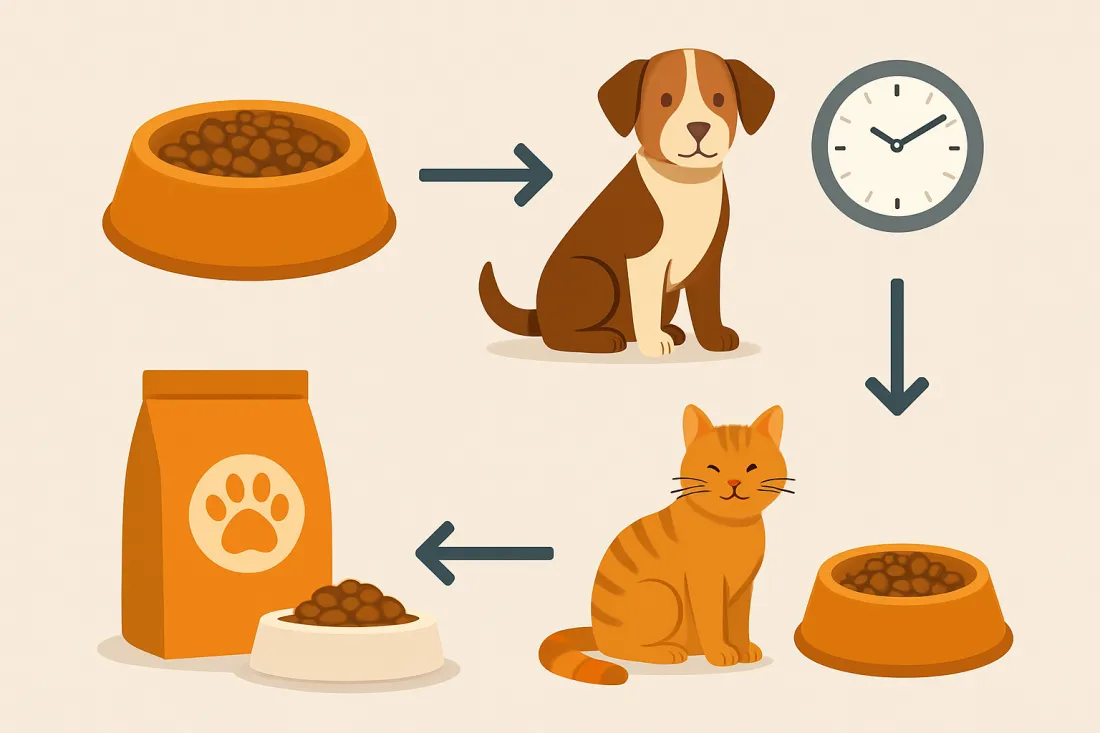
For most healthy pets in the United States, a simple starting point is:
- Adult dogs: usually 2 meals per day (morning and evening).
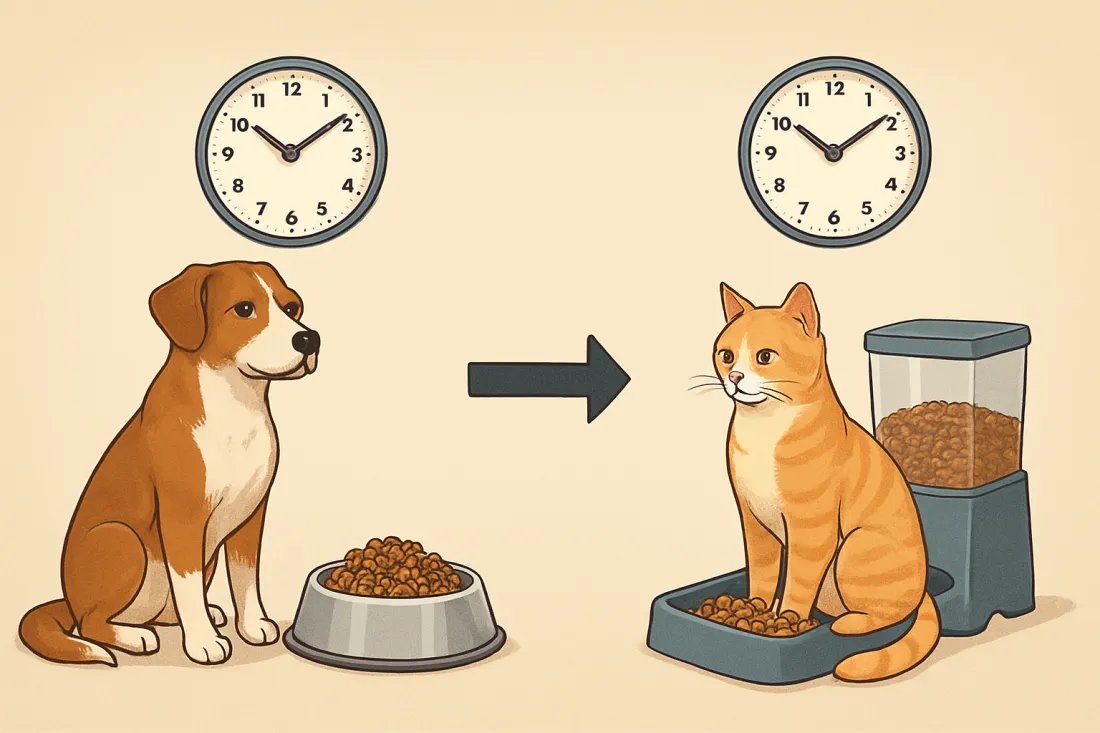
- Adult cats: usually 2–3 small meals per day or measured portions via a timed feeder.
- Puppies and kittens: 3–4 meals per day, spread evenly while they are growing.
Then you adjust that schedule based on your pet’s age, size, body condition, activity level, and health. A practical way to manage feeding as part of responsible pet ownership is to:
- Use the feeding guide on your pet food bag or can as a starting point only, not a fixed rule.
- Split the daily amount into the right number of meals for your pet’s age and lifestyle.
- Watch body shape, weight, and energy over several weeks, and adjust portions by small amounts (for example, about 5–10%) as needed.
- Keep mealtimes consistent so feeding and mealtime management becomes a predictable routine for both you and your pet.
The rest of the guide explains how to choose food, set portions, decide how often to feed at each life stage, store food safely, change diets and schedules without stomach upsets, and spot warning signs that your plan is not working.
Nutrition basics before you set a feeding schedule
Before deciding when to feed, you need to be confident about what you are feeding. A good schedule cannot fix a poor-quality or unbalanced diet.
1. Choose a complete and balanced diet
Look for:
- A commercial dog or cat food labeled as complete and balanced for your pet’s life stage (puppy/kitten, adult, or senior).
- A formula appropriate for species (dog food for dogs, cat food for cats – cat food typically has higher protein and specific nutrients cats need).
- A recipe that matches your pet’s size and lifestyle (for example, large-breed puppy, indoor cat, active dog, or weight-management formula).
If you are considering home‑prepared, raw, or very unusual diets, work with a veterinarian to avoid nutrient gaps and food safety problems.
2. Understand the 80–10–10 rule for dog food
Pet owners sometimes mention an “80–10–10 rule” when talking about raw or homemade dog diets. In that context it often means something like:
- 80% muscle meat
- 10% bone
- 10% organ meat
This is not a complete nutrition standard and does not guarantee a balanced diet. It does not address vitamins, minerals, or the different needs of puppies versus adults. If you are interested in raw or homemade feeding, treat 80–10–10 as a rough description some people use, not as a safety guarantee. Always:
- Discuss the plan with your veterinarian.
- Use a recipe formulated by a qualified veterinary nutrition professional.
- Review safe food handling and storage because raw ingredients can carry bacteria.
For most owners, a reputable commercial diet is the simplest way to support balanced nutrition as part of responsible pet ownership.
3. Decide on treats and extras
To keep your feeding schedule meaningful:
- Limit treats to a small fraction of daily calories (many veterinarians suggest that treats should only be a modest part of the overall diet).
- Count edible chews, table scraps, and training treats as part of the total daily intake.
- Use low‑calorie treats (like part of their regular kibble) for frequent training.
- Avoid giving high‑fat leftovers or heavily seasoned foods that can upset the stomach.
Portion guidelines: how much to feed dogs and cats
Exact calorie needs vary widely, so think in terms of ranges and adjustments, not fixed numbers. Your goal is to use portions to keep your pet at a healthy body condition over time.
1. Start with the package guide
Most commercial foods give a chart based on body weight. Use it as a starting point:
- Find your pet’s current or ideal weight on the chart.
- Note the recommended total daily amount.
- Divide that amount by the number of meals per day for your pet’s age.
Example:
- If your adult 40‑lb dog’s food suggests 2 ½ cups per day, and you feed 2 meals, start with about 1 ¼ cups per meal.
- If your 10‑lb adult cat’s food suggests ¾ cup per day, and you feed 3 meals, start with about ¼ cup per meal.
These are starting estimates only. The real test is how your pet’s body responds over time.
2. Use body condition, not just weight, to fine‑tune
Check your pet’s body every 2–4 weeks:
- Ribs: You should be able to feel ribs easily under a thin layer of fat, not see them sharply and not have to dig for them.
- Waist: Viewed from above, there should be a visible waist behind the ribs.
- Side view: The belly should tuck up slightly behind the rib cage, not hang heavily.
If your pet is:
- Gaining weight or looking rounder: Decrease daily food by a small amount (for example, about 5–10%) and re‑check in a few weeks.
- Losing weight or looking bony: Increase daily food slightly and re‑check.
- Staying stable with good energy: You are close to the right amount.
This kind of regular check is a core part of feeding and mealtime management and helps you catch problems early.
3. Adjust for lifestyle and special factors
Consider increasing or decreasing portions modestly when:
- Very active dogs (hiking, running, dog sports) may need more than the package starting point.
- Indoor, low‑activity cats often need less than the chart suggests.
- Neutered/spayed pets may have lower energy needs than intact animals.
- Senior pets can have changing needs; some slow down and need fewer calories, others lose weight and need more.
- Medical conditions (for example, diabetes, kidney disease, digestive issues) often require specific diets and feeding plans from your vet.
When in doubt, ask your veterinarian to help you set a target body weight and portion range.
Feeding frequency by age and type of pet
A consistent schedule supports digestion, behavior, and training. The table below compares typical feeding patterns for dogs and cats at different life stages.
| Pet & life stage | Typical meals per day | Timing examples | Why this pattern helps |
|---|---|---|---|
| Puppy (under ~6 months) | 3–4 meals | 7 am, 12 pm, 5 pm (and sometimes 9 pm for very young pups) | Small, frequent meals support growth and help prevent blood sugar dips; easier on small stomachs. |
| Adolescent dog (~6–12 months) | 2–3 meals | 7 am, 5 pm (and optional mid‑day meal) | Transition toward adult schedule while still supporting growth and training routines. |
| Adult dog | 2 meals | 7–8 am, 5–7 pm | Two meals per day are widely recommended; supports steady energy and can reduce begging and scavenging. |
| Senior dog | 2 meals (sometimes 3 smaller) | 7–8 am, 5–7 pm (or add a light mid‑day meal) | Regular meals help with medication timing and digestion; smaller, more frequent meals can help some seniors. |
| Kitten (under ~6 months) | 3–4 meals | 7 am, 12 pm, 5 pm (and possibly a late snack) | Frequent meals support rapid growth and high energy needs. |
| Adolescent cat (~6–12 months) | 3 meals or measured free‑feeding | 7 am, 3 pm, 9 pm (or timed feeder portions) | Helps avoid overeating while still matching their active metabolism. |
| Adult cat | 2–3 meals or timed portions | 7 am, 6 pm (and optional late‑evening snack) | Multiple small meals fit natural cat behavior and can help prevent gorging and vomiting. |
| Senior cat | 2–4 smaller meals | 7 am, 12 pm, 6 pm (and optional bedtime snack) | Smaller, more frequent meals can help with appetite changes and medical needs. |
How many times a day should I feed dogs and cats?
Putting it simply:
- Dogs: At least 2 meals per day is widely recommended for adults; more frequent meals for puppies.
- Cats: 2–3 measured meals per day, or a timed feeder that dispenses small portions several times daily, works well for most healthy adults.
These patterns support responsible pet ownership by making feeding predictable and easier to monitor.
Is feeding my cat every 6 hours okay?
Feeding a healthy adult cat roughly every 6 hours (for example, morning, afternoon, and late evening) can be reasonable if:
- Total daily food is measured and does not exceed what your cat needs.
- Your cat maintains a healthy body condition and weight.
- The schedule is consistent enough that your cat knows when to expect meals.
If your cat has a medical condition or is on a special diet, confirm the timing with your veterinarian.
How long does it take a cat to adjust to a new feeding schedule?
Many healthy cats begin to adapt to a new schedule within about one to two weeks. Some adjust faster, others take longer. To make the change smoother:
- Shift meal times gradually over several days instead of all at once.
- Keep the total daily amount of food the same while you change timing.
- Use calm, predictable routines (same location, same bowl, similar times).
If your cat stops eating, hides, or shows signs of stress, slow down the transition and contact your vet if you are concerned.
Safe food storage and handling for dogs and cats
Good storage keeps food fresher and reduces the risk of stomach upset or contamination.
Dry food (kibble)
- Keep in the original bag (it is designed to protect nutrients) and place that bag inside an airtight container.
- Store in a cool, dry place, away from direct sunlight and moisture.
- Close the bag tightly after each use to reduce exposure to air.
- Use a clean scoop; avoid using the pet’s food bowl as a scoop.
- Check the best‑by date and avoid using food that smells rancid, moldy, or “off.”
Canned and wet food
- Refrigerate unused portions promptly in a covered container.
- Serve refrigerated food slightly warmed to room temperature rather than ice‑cold.
- Discard uneaten wet food that has been at room temperature for several hours; do not leave it out all day.
Fresh, raw, or homemade food
If you use fresh or raw ingredients:
- Handle them like you would raw meat for your family: wash hands, surfaces, and utensils thoroughly.
- Keep raw food refrigerated or frozen according to the product’s instructions.
- Thaw in the refrigerator, not on the counter.
- Discard leftovers that have been at room temperature for too long.
When in doubt about storage times, follow the manufacturer’s guidance or ask your veterinarian.
Transitioning food and changing schedules safely
Two big changes can upset a pet’s stomach: switching foods and changing feeding times. Handle both gradually to keep feeding and mealtime management on track.
1. How to switch your pet to a new food
A common approach is to transition over about 7–10 days:
- Days 1–2: 75% old food, 25% new food.
- Days 3–4: 50% old food, 50% new food.
- Days 5–6: 25% old food, 75% new food.
- Day 7 and beyond: 100% new food.
If your pet has a sensitive stomach or shows mild loose stool, slow the transition and stay at each step longer.
2. How to change feeding times
To move from free‑feeding or irregular meals to a schedule:
- Pick the new meal times that fit your routine (for example, 7 am and 6 pm for dogs; 7 am, 3 pm, 9 pm for cats).
- Over several days, shift the old times toward the new ones by 30–60 minutes at a time.
- Keep the total daily amount the same while you change timing.
- Ignore begging between meals as long as your pet is otherwise healthy and acting normal.
If your pet is on medication that must be given with food, coordinate any schedule change with your vet.
Structured checklist to set up a healthy feeding schedule
Use this step‑by‑step checklist to build or adjust your dog or cat’s feeding plan.
- Confirm your pet’s basics
- Species (dog or cat).
- Age (puppy/kitten, adult, senior).
- Current weight and approximate ideal weight (ask your vet if unsure).
- Activity level (low, moderate, high).
- Any medical conditions or special diet needs.
- Choose an appropriate food
- Pick a complete and balanced diet for the correct species and life stage.
- Decide whether you will feed dry, wet, or a combination.
- If considering raw or homemade, plan a vet consultation first.
- Set the number of meals per day
- Puppies and kittens: aim for 3–4 meals.
- Healthy adult dogs: plan for 2 meals.
- Healthy adult cats: plan for 2–3 meals or timed portions.
- Adjust for seniors or medical needs based on vet advice.
- Calculate starting portions
- Use the feeding guide on the package to find a daily amount.
- Divide that daily amount by the number of meals.
- Measure with a consistent cup or scale, not by eye.
- Pick realistic meal times
- Align meals with your daily routine (before work, after work, bedtime).
- Keep the gap between meals reasonably even.
- For dogs, avoid heavy exercise right before or after large meals.
- Plan treats and extras
- Decide what treats you will use and how often.
- Keep treats to a modest portion of daily intake.
- Use part of the regular food as training treats when possible.
- Set up storage and feeding area
- Store food in a cool, dry place, in its original bag inside a sealed container.
- Wash bowls regularly with hot, soapy water.
- Choose a quiet, low‑stress feeding spot away from high traffic.
- Monitor and adjust over 2–4 weeks
- Check body condition and weight regularly.
- Watch stool quality, energy level, and appetite.
- Adjust daily portions slightly if your pet is gaining or losing too quickly.
- Review with your veterinarian
- Bring your feeding plan and questions to your next checkup.
- Ask about ideal weight, portion ranges, and any special needs.
- Use an pet preventive care schedule USA as a reminder to revisit feeding as your pet ages.
Common mistakes in dog and cat feeding schedules
Avoid these frequent pitfalls that can undermine even a good schedule.
1. Free‑feeding without measuring
Leaving a full bowl out all day, especially for indoor cats and some dogs, can easily lead to overeating and weight gain. If you use a gravity feeder or automatic feeder, still:
- Measure the total daily amount that goes into the feeder.
- Track how quickly it disappears and adjust if your pet is gaining weight.
2. Ignoring treats and table scraps
Treats, chews, and “just a bite” of human food can add up quickly. A pet that is already at a healthy weight may gain if treats are not counted as part of the daily intake.
3. Changing food or schedule too quickly
Abrupt changes can cause vomiting, diarrhea, or refusal to eat. Transition foods over several days and shift meal times gradually.
4. Using the wrong food for life stage or species
Feeding puppy or kitten food to an adult, or dog food to a cat, can create nutrient imbalances over time. Always match food to species and life stage unless your vet directs otherwise.
5. Overreacting to normal appetite changes
A single skipped meal in an otherwise bright, healthy dog or cat may not be an emergency. However, repeated refusal to eat, especially in cats, needs prompt attention. When in doubt, call your vet for guidance.
6. Inconsistent mealtimes
Feeding at very different times each day can make some pets anxious or pushy around food. Try to keep meals within a similar time window, even on weekends.
Warning signs that your feeding schedule or diet is not working
Contact your veterinarian promptly if you notice:
- Rapid weight gain or loss over a short period.
- Persistent vomiting or diarrhea, or very hard, dry stool.
- Refusal to eat for more than a short time, especially in cats.
- Excessive thirst or urination.
- Lethargy, weakness, or collapse.
- Bloated or painful abdomen, restlessness, or attempts to vomit without bringing anything up (in dogs, this can be an emergency; seek immediate care).
- Skin or coat changes such as hair loss, dull coat, or itching that might relate to food.
If you are unsure whether a symptom is urgent, call your veterinary clinic or an emergency service and describe what you are seeing.
Frequently asked questions about dog and cat feeding schedules
How many times a day should I feed my dog?
Most healthy adult dogs do well on two meals per day, spaced roughly 8–12 hours apart. Puppies usually need three to four meals per day until their digestive system and blood sugar control are more mature. Very small breeds and dogs with certain medical conditions may need more frequent, smaller meals, so check with your veterinarian. If you are bringing home a new puppy, pairing your feeding plan with a structured first week puppy schedule can make house‑training and sleep routines easier.
How many times a day should I feed my cat?
Healthy adult cats generally do well with two to three measured meals per day, or a timed feeder that dispenses small portions several times daily. Kittens usually need three to four meals per day. The key is to measure total daily food and adjust based on body condition, not to leave unlimited food out without tracking intake.
Is feeding my cat every 6 hours too often?
Feeding a healthy adult cat every 6 hours (for example, three to four small meals per day) is often acceptable, as long as the total daily amount of food is appropriate and your cat maintains a healthy weight. This pattern can even match a cat’s natural preference for multiple small meals. If your cat has a medical condition or is on a prescription diet, confirm the timing with your vet.
What is the 80–10–10 rule for dog food, and should I follow it?
The 80–10–10 idea is often mentioned in discussions of raw or homemade dog diets and usually refers to 80% muscle meat, 10% bone, and 10% organ meat. On its own, this rule does not guarantee a nutritionally complete or safe diet. It does not cover all vitamins, minerals, or the different needs of puppies, adults, and seniors. If you are interested in raw or homemade feeding, work with your veterinarian and use a properly formulated recipe rather than relying on a simple ratio.
How long does it take for a cat to adjust to a new feeding schedule?
Many cats begin to adapt to a new feeding schedule within about one to two weeks. Some adjust more quickly, while others need more time. To help your cat adjust, change meal times gradually, keep the total daily amount of food the same, and maintain a calm, predictable routine. If your cat stops eating or seems very stressed, slow the transition and talk with your veterinarian.
Can I switch my dog or cat from free‑feeding to scheduled meals?
Yes. Start by measuring how much food your pet eats in a day, then divide that amount into two to four meals depending on age and species. Offer the measured portion, leave it down for about 15–20 minutes, then pick up any leftovers until the next scheduled meal. Transition over several days so your pet has time to adjust, and monitor weight and behavior as you go.
Conclusion: Build a schedule that fits your pet and your life
A good dog or cat feeding schedule is not about one perfect clock time; it is about consistency, appropriate portions, and watching your pet’s response. To recap the essentials of responsible pet ownership around feeding:
- Feed puppies and kittens 3–4 times per day, adults generally 2–3 times per day, and seniors according to comfort and medical needs.
- Use package guides as a starting point, then adjust based on body condition, weight trends, and energy.
- Store food properly, transition changes gradually, and measure both meals and treats.
- Watch for warning signs like rapid weight change, digestive upset, or appetite loss, and contact your vet if you are concerned.
- Revisit your feeding plan regularly, for example during checkups that follow an annual vet care schedule for dogs and cats USA, so nutrition, exercise, and medical care stay aligned as your pet ages.
With a realistic schedule, measured portions, and regular check‑ins, feeding and mealtime management becomes a simple daily habit that supports your pet’s long‑term health and comfort.