
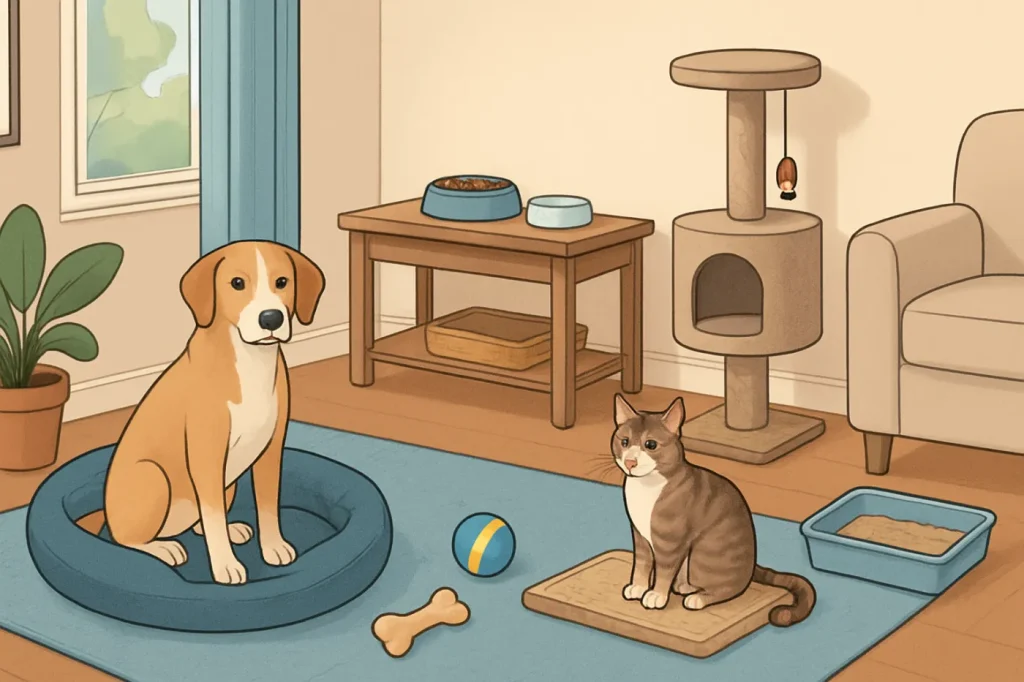
To set up a pet friendly home, start by removing obvious hazards (toxic foods and plants, loose cords, unsafe trash), then create clear zones for your pet’s core needs: safe resting spots, feeding area, toilet area (litter box or outdoor access), and daily enrichment (toys, scratching posts, chews, and climbing or cozy spaces). From there, adjust each room so it is safe, calm, and easy to clean, and build daily routines around those spaces.
What you should understand before setting up a pet friendly home
Making a home pet friendly is more than hiding wires or buying a cute bed. For indoor dogs and cats in the United States, a good setup should:
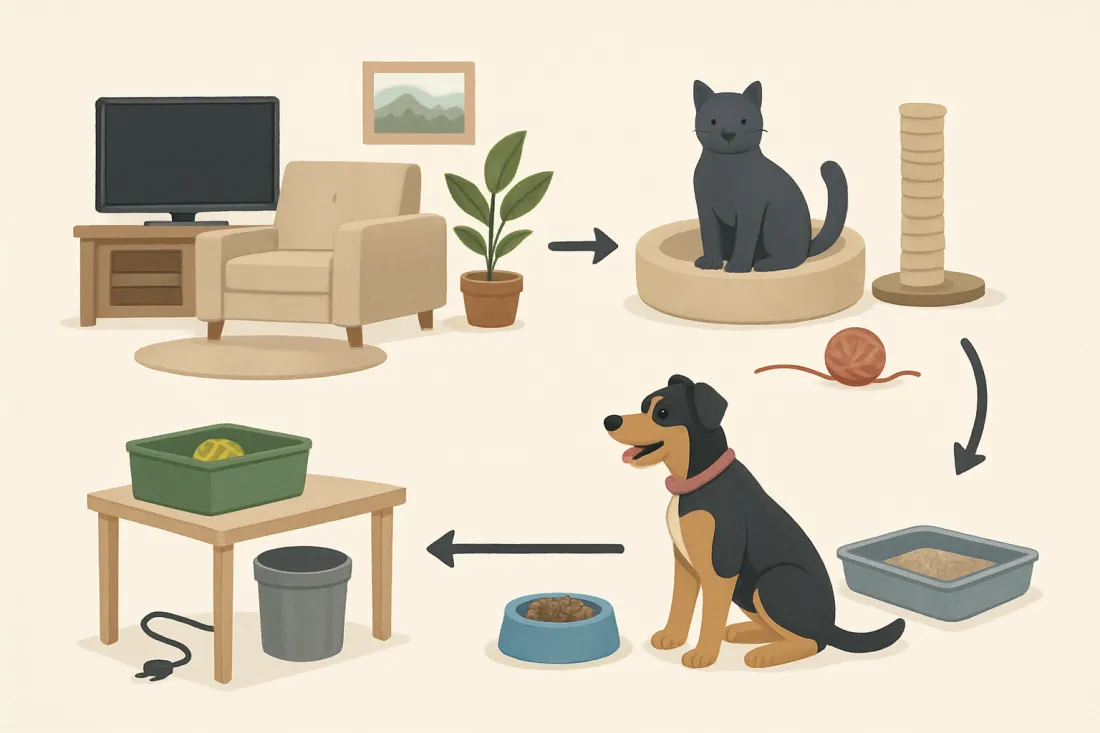
- Protect them from common indoor dangers like toxic foods, plants, medications, and small objects they can swallow.
- Support natural behaviors such as chewing, scratching, climbing, sniffing, and hiding, so those needs do not turn into “bad” behavior.
- Offer predictable routines and zones for sleeping, eating, playing, and toileting.
- Fit your specific pet (age, size, health, energy level) and your living space (apartment vs house, carpet vs hard floors, open plan vs small rooms).
- Be realistic for you to maintain so you can keep it clean and safe without constant stress.
Look at your home from your pet’s eye level: what can they reach, chew, knock over, or get trapped in? That perspective will guide almost every decision below.
Core needs of indoor dogs and cats you must plan for
Before going room by room, cover the basic needs that apply across the whole home.
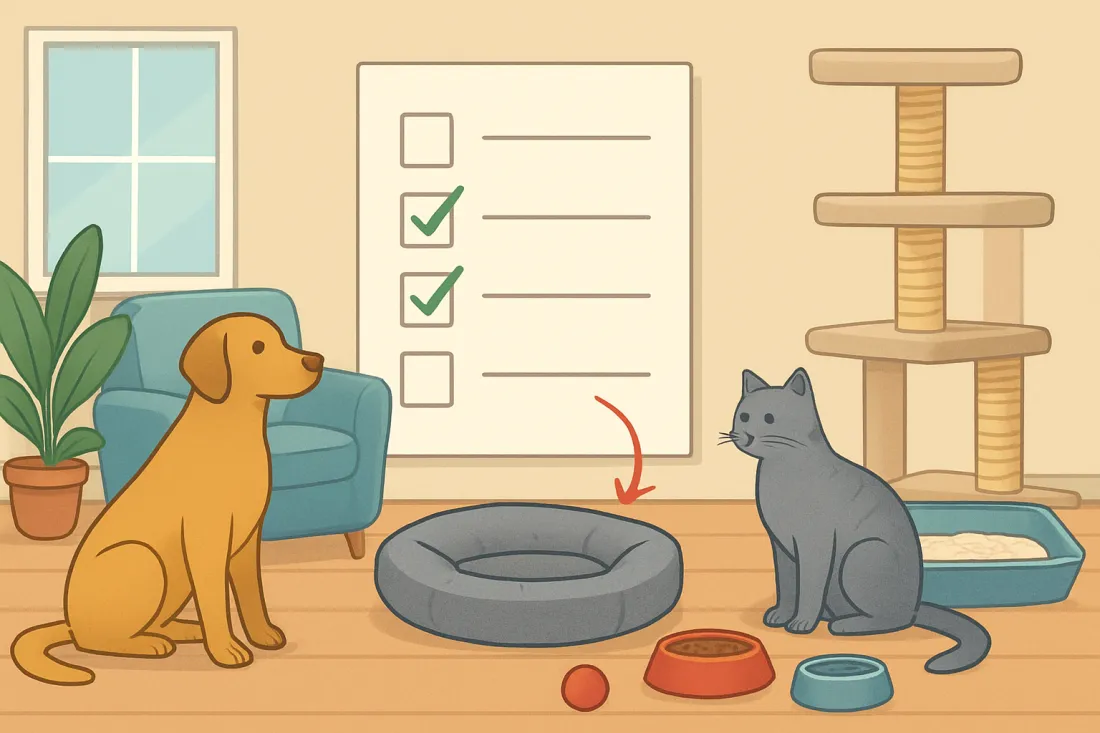
1. Safe resting and sleeping spots
- Dogs: At least one main bed or crate in a low-traffic, draft-free area, plus optional secondary spots (for example, a living room mat) where the family hangs out.
- Cats: Multiple resting options at different heights: a soft bed, a window perch, and a safe elevated spot (cat tree shelf or top of a sturdy piece of furniture).
- General rule: Rest areas should feel secure, not in the middle of a busy walkway or right next to loud appliances.
2. Food and water stations
- Place bowls where pets will not be constantly bumped or startled.
- Use non-slip mats under bowls to keep them stable and protect floors.
- For multi-pet homes, give each pet some space so they are not guarding or rushing meals.
- Consider raised bowls for large or older dogs if recommended by your vet.
- Many cats drink more from wide, shallow bowls or a fountain placed away from the litter box.
3. Toilet and elimination needs
- Cats: Provide enough litter boxes in quiet, accessible spots. Many owners use at least one box per cat, plus an extra, and spread them out so cats do not have to share a single location.
- Dogs: Create a clear routine for outdoor potty breaks and, if needed, a designated indoor backup (pee pads or a dog potty area) that is easy to clean.
- Toilet areas should be separate from feeding and main resting zones.
4. Daily mental and physical enrichment
- Dogs: Chews, puzzle feeders, sniffing games, and safe toys that match their chewing style.
- Cats: Scratching posts, climbing structures, window views, interactive toys, and solo toys they can bat around.
- Rotate toys regularly so they stay interesting instead of buying more and more.
5. Safety and supervision
- Use baby gates or closed doors to block unsafe rooms.
- Have a plan for when you are not home: where the pet stays, what they can access, and how they are kept comfortable.
- Store cleaning products, medications, and chemicals in cabinets your pet cannot open.
Room-by-room pet-safe setup: living room, kitchen, bedroom
Most indoor pets spend the bulk of their time in these three areas. Here is how to set them up thoughtfully.
Living room: shared family and pet space
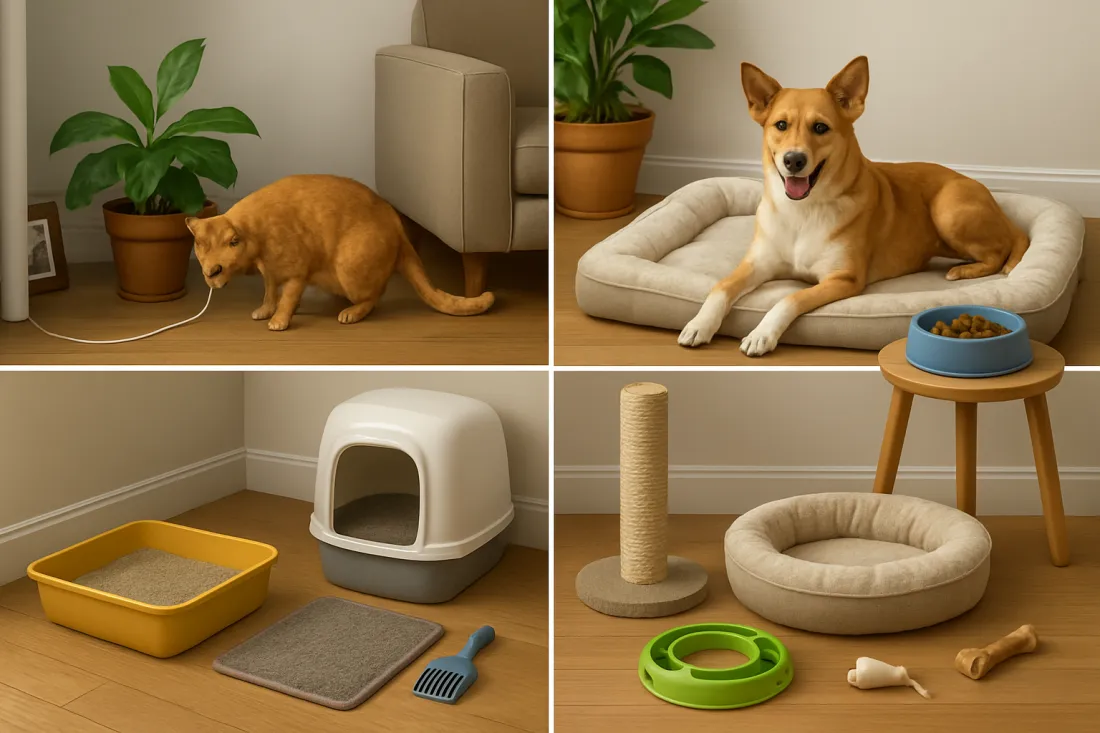
The living room is usually where pets relax with you, so aim for comfort plus hazard control.
- Electronics and cords: Bundle and hide cords behind furniture or in cord covers. For chewers, use cord protectors and unplug chargers when not in use.
- Furniture: Choose washable throws or slipcovers if your pet is allowed on the couch. Provide at least one pet-only spot (bed, mat, or blanket) so they have a clear place to settle.
- Clutter and small objects: Remote batteries, coins, hair ties, kids’ toys, and craft supplies can all be swallowed. Keep them in closed containers or drawers.
- Plants: If you are unsure whether a plant is safe, move it out of reach and confirm with a reliable pet-safe plant list or your vet.
- Windows and balconies: Ensure screens are secure. For high-rise apartments, keep windows closed or use safety latches when pets are unsupervised.
- Rugs and floors: Non-slip rugs help older pets and energetic puppies avoid sliding and joint strain.
Kitchen: high-risk zone for dogs and cats
The kitchen holds many of the most serious risks, so planning here matters.
- Trash: Use a lidded, heavy, or cabinet-mounted trash can to help prevent access to food scraps, bones, and packaging.
- Food safety: Keep chocolate, onions, grapes, alcohol, products that may contain xylitol, and other risky foods in closed cabinets or the fridge. Avoid leaving food cooling at the edge of counters where pets can reach.
- Stove and hot surfaces: Turn pot handles inward. Keep cats from jumping near hot burners by offering alternative perches away from the stove.
- Cleaning supplies: Store dish pods, sprays, and detergents in cabinets with child locks if needed.
- Water bowls: The kitchen can be a good place for a water station, but avoid placing bowls where you constantly step over them or kick them.
- Floor spills: Wipe up grease, oil, and sugary spills quickly to reduce licking and slipping risks.
Bedroom: calm retreat for you and your pet
The bedroom often becomes a quiet safe zone, especially for anxious pets.
- Resting spots: Place a dog bed or cat bed away from doors and windows where outside noise is loud. Many pets relax better if they can see you but are not in the direct path of foot traffic.
- Cords and chargers: Tuck phone and lamp cords behind furniture. Unplug chargers when not in use to reduce chewing risk.
- Clothing and shoes: Store socks, underwear, and shoes in closets or drawers so they are not chewed or swallowed.
- Nighttime routine: If your dog sleeps in a crate, keep it in a corner with a light blanket over part of it to create a den-like feel while still allowing airflow.
- Safe hideaways for cats: A covered bed, box, or space under the bed can help shy cats feel secure during visitors or loud events.
Litter box placement and maintenance for cats
Litter box setup is one of the biggest factors in whether cats use the box reliably and feel comfortable indoors.
Where to place litter boxes
- Quiet but not isolated: Avoid loud laundry rooms or right next to noisy appliances. A low-traffic corner of a bathroom, hallway, or spare room often works well.
- Easy access: Cats should not have to pass a “bully” pet or squeeze through a tight space to reach the box. For older or disabled cats, avoid stairs if possible.
- Away from food and water: Most cats prefer their toilet area separate from eating and drinking areas.
- Multiple levels: In multi-story homes, offer at least one box on each level where your cat spends time.
Choosing and arranging boxes
- Size: Boxes should be large enough for your cat to turn around comfortably and dig.
- Covered vs uncovered: Many cats prefer uncovered boxes because they feel less trapped and odors do not build up as much. If you use a covered box, watch for signs your cat avoids it.
- Number of boxes: In multi-cat homes, more boxes can reduce stress and competition. Spread them out rather than lining them up in one spot.
- Floor protection: Use a mat under the box to catch litter scatter and help protect floors from accidents.
Maintenance habits that keep your home and cat happy
- Scoop daily: Most cats prefer a clean box and may avoid it if waste builds up.
- Refresh litter regularly: Follow the litter manufacturer’s guidance and adjust based on your cat’s preferences.
- Wash boxes: Clean boxes with mild, unscented soap periodically to help prevent odor buildup.
- Monitor changes: If your cat suddenly avoids the box or strains, contact your vet to rule out medical issues.
Crate, bed, and rest areas for dogs
For dogs, rest areas are about both physical comfort and emotional security.
Setting up a dog crate as a safe den
- Location: Place the crate where your dog can see family activity but is not in the middle of noise and traffic. A corner of the living room or bedroom often works well.
- Size: Your dog should be able to stand up, turn around, and lie down comfortably.
- Bedding: Use a washable mat or bed that matches your dog’s chewing habits. Heavy chewers may need tougher, simpler bedding.
- Positive association: Feed some meals in the crate, offer special chews there, and avoid using it as punishment.
- Ventilation and light: Ensure good airflow and avoid placing the crate in direct sun or right next to a heater.
Dog beds and secondary rest spots
- Main bed: Choose a supportive bed sized for your dog, placed away from drafts and doorways.
- Secondary spots: A mat or blanket in the living room gives your dog a clear place to settle during family time.
- Multi-dog homes: Provide at least one comfortable resting spot per dog to reduce resource guarding.
- Older dogs: Consider orthopedic-style beds and non-slip rugs to help them get up and down.
Temperature, noise, and light considerations for indoor pets
Even if your home feels comfortable to you, pets experience temperature, noise, and light differently.
Temperature and drafts
- Avoid extremes: Try not to place beds or crates right next to heaters, fireplaces, or air conditioning vents.
- Floor level checks: Sit or lie at your pet’s level and feel for drafts or hot spots; adjust bed placement accordingly.
- Seasonal adjustments: Offer cooler resting surfaces in hot weather (tile, thin mats) and warmer, cushioned spots in colder months.
Noise and stress
- Quiet zones: Create at least one room or corner where noise is minimal for pets to retreat during storms, fireworks, or gatherings.
- Appliances: Avoid placing litter boxes, beds, or crates next to loud washers, dryers, or TVs.
- Visitors and kids: Teach children to leave pets alone when they are in their beds or crates.
Light and daily rhythm
- Natural light: Many pets enjoy a sunny spot for naps, but ensure they can move to shade easily.
- Night lighting: A small night light in hallways can help older pets navigate safely at night.
- Routine: Try to keep feeding, play, and bedtime roughly consistent so pets know what to expect.
Enrichment: scratching posts, climbing, toys, and chews
Enrichment helps prevent boredom, reduces destructive behavior, and supports your pet’s physical and mental health.
Scratching posts and climbing for cats
- Scratching posts: Offer both vertical and horizontal options. Place them near areas your cat already likes (sofas, doorways, windows).
- Climbing structures: Cat trees, shelves, or window perches give cats safe vertical territory and exercise.
- Placement strategy: Put at least one scratching option in the main living area, not hidden away where your cat rarely goes.
- Encouragement: Use toys or treats to lure your cat onto new posts and praise them when they use them.
Toys and chews for dogs
- Match toy to dog: Choose toys and chews that fit your dog’s size and chewing strength. Avoid items that can be easily swallowed or splinter.
- Variety: Include soft toys, tougher chew toys, and puzzle feeders to cover different needs.
- Rotation: Keep a few toys out and store the rest. Swap them regularly to keep interest high.
- Supervision: Supervise with new chews or toys until you know how your dog handles them.
Shared enrichment ideas for dogs and cats
- Food puzzles: Slow feeders, treat balls, or homemade puzzles using boxes and paper.
- Window watching: Safe window perches or beds where pets can watch the outside world.
- Training and play sessions: Short daily sessions of training or interactive play build your bond and burn mental energy.
Comparison table: different home setups and how pet friendly they are
Use this table to think through how your type of home affects your setup decisions.
| Home situation | Pet-friendly advantages | Key risks or limits | What to prioritize in your setup |
|---|---|---|---|
| Small apartment with no yard | Easier to supervise; fewer rooms to pet-proof | Limited space; noise from neighbors; fewer indoor potty options for dogs | Daily walks and play for dogs, vertical space and window perches for cats, strict clutter control, and quiet retreat spots |
| Large house with multiple floors | Plenty of space for zones and enrichment | Harder to supervise; more stairs for older pets; more hazards to check | Litter boxes or potty access on each level, gates for stairs if needed, multiple beds, and clear rules about off-limit rooms |
| Home with young kids | Lots of play and social interaction for pets | Toys and small objects on floors; kids may disturb resting pets | Teach kids pet-safe behavior, create kid-free rest zones, use storage bins for small toys, and supervise interactions |
| Multi-pet household (dogs and/or cats) | Companionship and play between animals | Resource guarding over beds, food, and litter; stress for shy pets | Separate feeding areas, multiple beds and litter boxes, vertical escape routes for cats, and supervised introductions |
| Rental with restrictions (for example, no major changes) | Often smaller spaces that are easier to manage | Cannot install permanent fixtures; may have flooring that is hard to clean | Use removable gates, freestanding cat trees, washable rugs, and furniture covers; check lease rules before changes |
Structured checklist: home setup for daily comfort
Use this checklist as a practical setup and review tool. Walk through your home and check each item.
Whole-home basics
- All medications, cleaning products, and chemicals are stored in closed cabinets.
- Trash cans are lidded or secured so pets cannot tip them over.
- Electrical cords are bundled, covered, or out of reach.
- Toxic or suspicious plants are removed from pet reach or replaced with pet-safe options.
- At least one quiet retreat area exists where pets can rest undisturbed.
For cats
- Enough litter boxes in quiet, accessible locations, away from food and water.
- At least one scratching post in the main living area and one near favorite resting spots.
- Vertical spaces (cat tree, shelves, or window perch) are available.
- Hiding spots (covered bed, box, or safe under-bed space) are available.
For dogs
- A crate or main bed is placed in a low-traffic, draft-free area.
- A secondary resting spot (mat or bed) exists in the main family area.
- Safe chews and toys are available and rotated regularly.
- A clear potty routine and location (outdoor or indoor backup) is established.
Room-by-room quick checks
- Living room: Small objects, batteries, and cords are out of reach; plants are checked for safety.
- Kitchen: Trash is secured; risky foods are stored; pets cannot access hot surfaces unsupervised.
- Bedroom: Cords and small items are stored; beds are placed away from drafts and loud noises.
- Hallways and stairs: No loose rugs or clutter that pets can trip on.
Common indoor hazards to remove or secure
Many hazards are easy to overlook because they are part of everyday life. Walk through your home with this list in mind.
Food and kitchen hazards
- Chocolate, grapes, raisins, onions, garlic, alcohol, and products that may contain xylitol.
- Cooked bones, skewers, and food packaging that can cause blockages.
- Grease, oil, and sugary spills on floors.
Household and bathroom hazards
- Medications, vitamins, and supplements left on counters or nightstands.
- Cleaning sprays, detergents, and laundry pods stored under sinks without secure doors.
- Hair ties, dental floss, cotton swabs, and razor blades in open trash cans.
- Open toilet lids if your pet is prone to drinking from the bowl.
Living area and bedroom hazards
- Loose electrical cords, phone chargers, and dangling blind cords.
- Small children’s toys, batteries, coins, and jewelry on the floor or low tables.
- Unstable furniture or shelves that a climbing cat could knock over.
Outdoor access and entryway hazards
- Doors that do not latch fully, allowing pets to slip outside.
- Entryway chemicals like ice melt or certain garden products that can be tracked in on paws.
- Shoes and bags that may contain gum, snacks, or medications.
If you are preparing for a home visit as part of a pet adoption process, reviewing these hazards and your overall setup can help you feel more confident. For more on that process, see home visit for pet adoption what to expect.
Typical mistakes to avoid when making your home pet friendly
Even well-intentioned owners fall into some common traps. Watching for these can save you stress later.
- Relying only on rules, not environment: Telling a puppy “no chewing” while leaving shoes and cords everywhere sets everyone up to fail. Change the environment first.
- Hiding litter boxes or crates too much: Putting them in noisy, hard-to-reach, or scary spots can cause accidents and stress.
- Buying lots of toys but not rotating them: A huge pile of toys becomes background clutter. Fewer, well-chosen toys rotated regularly work better.
- Ignoring vertical space for cats: Without shelves or cat trees, cats may claim the back of the couch or kitchen counters instead.
- Allowing no quiet zone: Pets need a place where visitors and kids are taught not to follow.
- Skipping grooming and nail care: Overgrown nails can damage floors and furniture and make walking uncomfortable. If you want to handle this at home, a guide to budget friendly dog and cat grooming at home can help you set up tools and routines.
- Not adjusting as pets age: Older pets may need ramps, lower perches, more litter boxes, or softer beds.
What to do next: turning ideas into a concrete plan
Once you understand the basics, move from ideas to action with a simple process:
- Walk through your home at pet level. Kneel or sit on the floor and look for hazards, drafts, and clutter in each room.
- Decide on core zones. Choose where your pet will sleep, eat, play, and toilet. Make sure each zone is practical for daily use.
- Address the biggest risks first. Secure trash, medications, cleaning products, and cords before focusing on décor or accessories.
- Add enrichment gradually. Start with a few well-placed toys, posts, or chews and adjust based on what your pet actually uses.
- Test and adjust. Watch how your pet moves through the home for several days. If they ignore a bed or struggle with a stair, change the setup.
- Review regularly. Recheck your setup after major changes: new furniture, a move, a new baby, or another pet. If you are preparing for a new puppy, a more detailed room-by-room safety guide like pet proofing a home for a new puppy can help you go deeper on chewing, housetraining, and supervision.
FAQ about setting up a pet friendly home
What should I focus on first when setting up a pet friendly home?
Start with safety basics that could cause the most harm in a single moment: secure trash, medications, cleaning products, and loose cords, and remove small swallowable items from floors and low tables. Once those are under control, set up clear zones for resting, eating, toileting, and play so your pet knows where to go for each need.
How can I tell if my current home setup is stressing my dog or cat?
Watch for changes such as hiding more than usual, avoiding certain rooms, accidents away from the litter box or usual potty area, pacing, excessive grooming, or sudden destructive behavior. These can indicate that a space feels unsafe, too noisy, too busy, or that core needs (like a clean litter box or quiet bed) are not being met. Adjust one thing at a time—such as moving a bed away from a loud appliance or adding an extra litter box—and observe whether your pet relaxes.
What are the biggest mistakes people make with litter boxes and dog crates?
Common mistakes include placing litter boxes or crates in cramped corners where pets feel trapped, right next to loud machines like washers and dryers, or in areas that are hard for older pets to reach. Another frequent issue is using crates as punishment or hiding litter boxes so far away that pets rarely want to go there. Instead, choose quiet, accessible spots and build positive associations with treats, praise, and calm routines.
What should I do after I finish my initial pet friendly setup?
After your initial setup, spend about a week observing how your pet actually uses the space. Note which beds, toys, and routes they prefer and which they ignore. Adjust placement of beds, boxes, and enrichment based on that feedback, and revisit your checklist every few months or whenever your household changes—such as moving, adopting another pet, or when your pet becomes a senior.