How to build a truly pet friendly cleaning routine that works
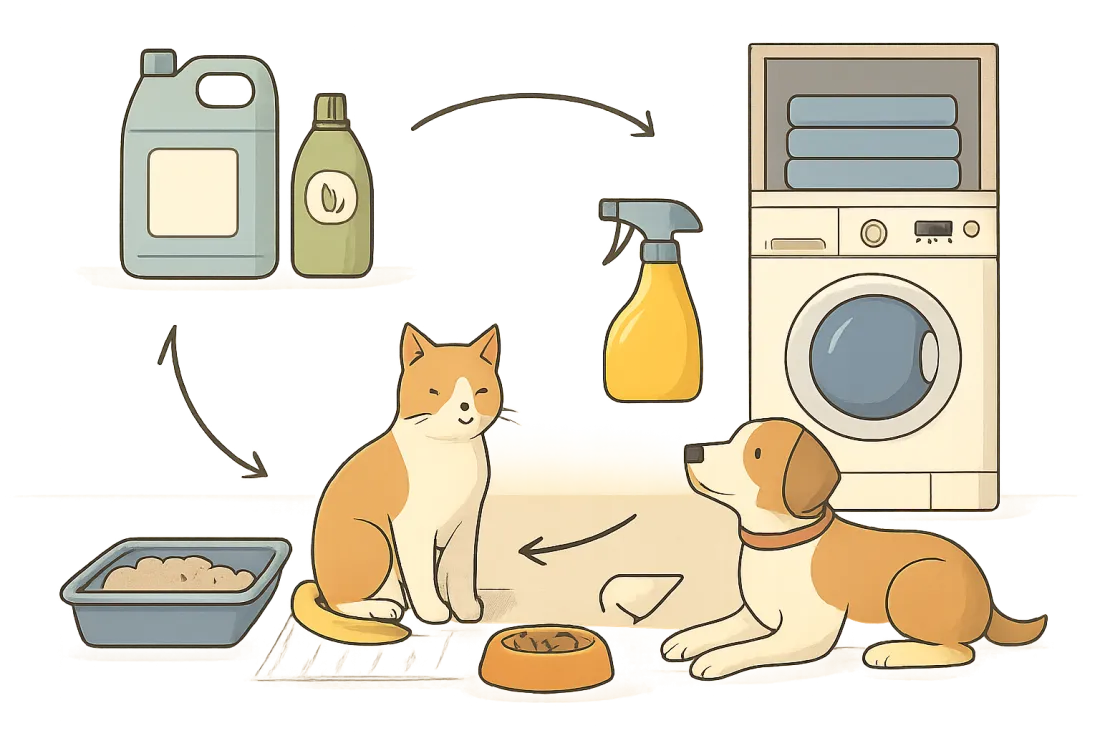
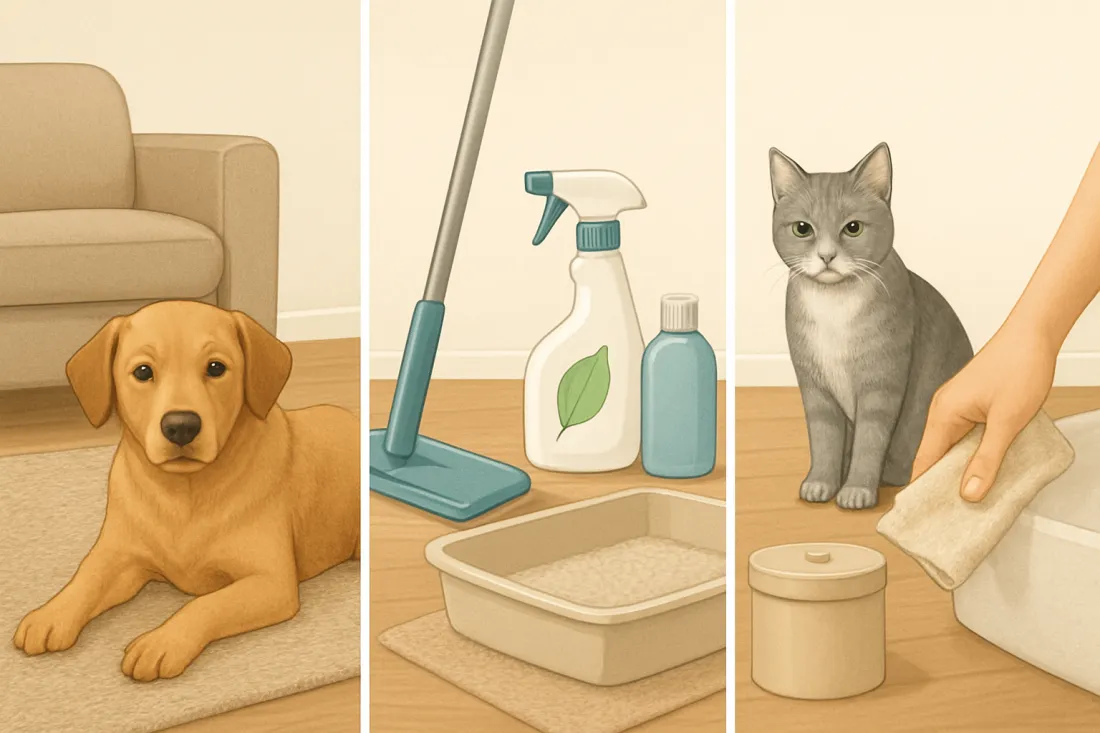
A pet friendly cleaning routine keeps your home clean and odor-controlled while protecting your animals from harsh chemicals. The practical formula is:
- Clean more often (daily, weekly, monthly blocks),
- Use gentler, well-rinsed products, and
- Target the places your pet walks, sleeps, eats, and eliminates.
In most homes this means:
- Daily: scoop litter or change pads, wash bowls, wipe food areas, spot-clean accidents.
- Weekly: wash bedding, vacuum high-traffic pet zones, fully wash litter boxes and crates.
- Monthly: deep clean carpets and soft furnishings, clean behind furniture, refresh air filters.
- Always: choose products labeled safe when used as directed, ventilate well, and keep pets off wet surfaces.
If you have time for only one change, aim for 5–10 minutes of pet-area cleaning every day. That small daily block reduces odors far more than a once-a-month marathon with strong chemicals.
Why clean pet areas regularly: health reasons for you and your animals
A pet friendly cleaning routine is part of responsible pet ownership. It protects both animals and people from avoidable irritation, stress, and germs.
How dirty pet areas affect pets
Unclean or strongly scented spaces can contribute to:
- Skin irritation and hot spots from damp, dirty bedding or harsh residues on floors and blankets.
- Paw and nail problems when pets walk on sticky floors, dried urine, or gritty litter tracked around the house.
- Eye and respiratory irritation from dusty litter, aerosol sprays, or heavy fragrances at pet nose level.
- Stress and behavior issues when litter boxes, cages, or potty areas are dirty, leading to accidents elsewhere.
Pets are closer to the floor, groom themselves, and lick their paws, so anything left on surfaces can end up in their mouth, eyes, or nose.
How pet mess affects people
For humans, especially children, older adults, and people with allergies or asthma, poor cleaning around pets can mean:
- More allergens from dander and hair trapped in carpets, upholstery, and bedding.
- Lingering odors that cling to soft furnishings, clothing, and even hair.
- Higher risk of bacteria spread from dirty bowls, litter, or accidents that are not cleaned properly.
You do not need to disinfect every surface every day. You do need a steady, repeatable routine that keeps high-contact pet areas reasonably clean.
Safe vs unsafe cleaning products around pets
Choosing products is one of the biggest decisions in a pet friendly cleaning routine. Many standard cleaners are designed for humans who wear shoes and do not lick the floor.
Decision criteria for pet safe cleaners
Use these criteria whenever you buy or mix a cleaner:
- Fragrance level: Prefer unscented or lightly scented over strong perfumes, especially in small rooms.
- Rinseability: For surfaces pets walk, sleep, or eat on, choose products that can be rinsed or wiped with plain water afterward.
- Ingredient simplicity: Fewer active chemicals usually mean fewer ways to irritate skin or airways.
- Clear label guidance: Only use products that state how to dilute, how long to leave them, and whether pets should be kept away until dry.
- Purpose-made when possible: For urine and organic stains, enzyme-based products labeled for pet use are often more effective than general-purpose cleaners.
Examples of gentler choices when used correctly
These options are commonly used in pet homes when diluted and rinsed properly:
- Mild dish soap and warm water for bowls, toys, and hard surfaces.
- Unscented or lightly scented laundry detergent for bedding and soft toys.
- Enzyme-based cleaners specifically labeled for pet stains and odors.
- Plain water and microfiber cloths for frequent wipe-downs of fur, drool, and paw prints.
Always test new products on a small area first and watch your pet for any signs of irritation or avoidance.
Products and habits to treat with caution
Some common approaches can be risky if misused:
- Strong bleach or heavy-duty disinfectants on floors and bedding, especially if not rinsed and dried thoroughly.
- Mixing chemicals (for example, different bathroom cleaners), which can create irritating fumes.
- Oven, drain, and toilet cleaners used in small, poorly ventilated spaces where pets are present.
- Air freshener sprays and plug-ins used continuously in rooms where pets spend many hours.
If you must use a stronger product, keep pets out of the room, ventilate well, and do not let them back in until surfaces are dry and the smell has mostly gone.
Daily pet friendly cleaning tasks: litter, bedding, and food areas
Daily tasks are the backbone of a pet friendly cleaning routine. They prevent buildup so you do not need harsh chemicals later.
Daily litter box or potty area care
For cats, indoor rabbits, or small pets using litter:
- Scoop solids and clumps at least once a day; twice a day is helpful in multi-pet homes.
- Top up litter to the depth recommended by the brand so urine can clump instead of soaking the bottom.
- Wipe around the box with a damp cloth to remove stray litter and dust.
- Check for changes in urine or stool appearance or smell that might signal health issues.
For dogs using pee pads or a designated indoor spot:
- Change pads promptly after use; do not leave a soiled pad down for hours.
- Wipe the floor underneath with a mild cleaner if any liquid seeps through.
- Keep the area dry to avoid lingering smells and slippery surfaces.
Daily food and water station cleaning
Food and water areas can become sticky and smelly quickly.
- Rinse water bowls and refill with fresh water at least once every 24 hours; more often in hot weather.
- Wash food bowls with hot water and mild dish soap after each meal, or at least once daily for free-feeding pets.
- Wipe the feeding mat or floor under bowls to remove crumbs and spills.
- Store food in sealed containers to reduce odors and discourage pests.
Daily bedding and resting spot checks
You do not need to wash bedding every day, but you should:
- Shake out blankets or beds outdoors to remove loose hair and dust.
- Spot clean visible dirt or drool with a damp cloth and mild soap.
- Check for dampness from accidents or water spills and dry or replace items promptly.
Daily accident response: step-by-step
Accidents happen, especially with puppies, kittens, seniors, or new rescues. Use this simple algorithm:
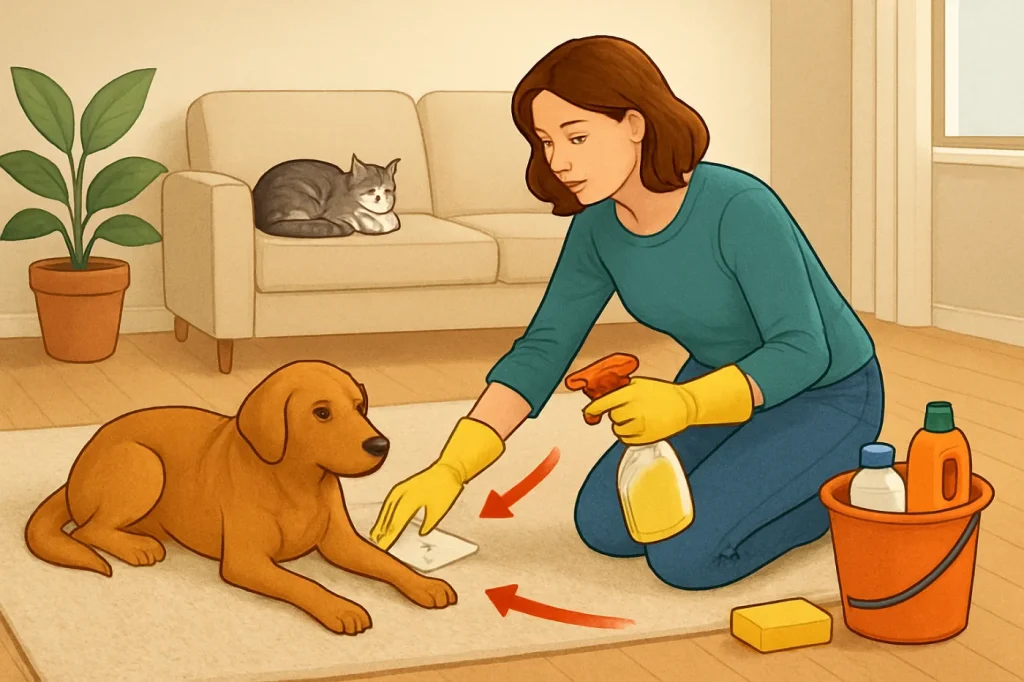
- Act quickly: the sooner you respond (ideally within 5–10 minutes), the less likely odors will set.
- Blot, do not rub: press paper towels or a cloth onto urine or vomit to absorb as much as possible.
- Apply an enzyme-based cleaner designed for pet messes, following label directions.
- Allow full contact time (often 5–15 minutes, depending on the product) so it can break down odor-causing residues.
- Blot again and air dry: remove excess moisture and ventilate the area; keep pets away until fully dry.
Weekly and monthly deep cleaning tasks for pet homes
Weekly and monthly tasks handle the buildup that daily cleaning cannot fully address.
Weekly pet friendly deep cleaning
Aim to do these once a week:
- Wash pet bedding and blankets in warm or hot water with unscented detergent. Dry completely before use.
- Clean litter boxes fully: empty, wash with mild soap and warm water, dry, and refill with fresh litter.
- Sanitize food and water bowls more thoroughly using hot water and a separate sponge from your dish sponge.
- Vacuum floors and upholstery in pet areas, including under furniture and along baseboards.
- Wipe down crates, carriers, and playpens with a mild cleaner and rinse or wipe with plain water.
Monthly or twice-monthly deep cleaning
Depending on how many pets you have and how much they shed, add these tasks monthly or every couple of weeks:
- Deep clean carpets and rugs with a pet-safe carpet cleaner or a rented machine, following all drying and ventilation instructions.
- Wash removable couch covers, cushion covers, and throw blankets from pet zones.
- Clean behind and under furniture where hair, dust, and toys collect.
- Wipe walls and doors at pet height to remove nose prints, drool, and scuff marks.
- Clean air vents and change filters according to the manufacturer’s guidance to help reduce dander in the air.
Managing shedding and dander without harsh chemicals
Hair and dander are often the biggest challenges in a pet home. The goal is to remove them mechanically (brushing, vacuuming, washing) instead of relying on strong sprays.
Grooming as a cleaning tool
Regular grooming reduces how much hair ends up on your floors and furniture.
- Brush dogs and cats as often as their coat type needs—some short-haired pets may need brushing once or twice a week, while heavy shedders may need it several times a week.
- Use the right brush for your pet’s coat (short, long, double coat, curly) to avoid skin irritation.
- Wipe pets with a damp cloth or pet-safe grooming wipes after outdoor walks to remove loose dirt and pollen.
If you want to combine grooming with saving money, you may find it helpful to read about budget friendly dog and cat grooming at home.
Home cleaning tactics for hair and dander
Use these strategies to keep hair and dander under control:
- Vacuum with a pet-focused attachment on carpets, rugs, and upholstery at least once a week; in multi-pet homes, aim for two or three quick sessions.
- Use a lint roller or rubber glove on fabric surfaces where hair clings, such as couch arms and car seats.
- Wash throws and cushion covers from pet areas regularly to remove trapped hair and odor.
- Consider washable rugs in high-traffic pet zones so you can launder them instead of relying on strong sprays.
- Dust from top to bottom so you capture dander that settles lower down.
Pet safe odor control strategies that actually work
Odor control is where many owners are tempted to reach for the strongest products. A pet friendly cleaning routine focuses on removing the source instead of masking smells.
Start with the basics: remove and ventilate
- Clean the source: litter, bedding, accidents, and food spills should be removed, not just covered with fragrance.
- Open windows when weather and safety allow to let fresh air circulate.
- Use exhaust fans in bathrooms and laundry rooms where litter boxes or cages may be kept.
Use enzyme cleaners for urine and organic odors
Enzyme-based cleaners are designed to break down the compounds that cause pet smells.
- Apply generously to fully soak the affected area, especially on carpets and soft furnishings.
- Allow the recommended dwell time before blotting or vacuuming.
- Repeat if needed for older or deeper stains.
Gentle odor control habits
Instead of heavy perfumes, build these habits into your routine:
- Wash fabrics often: bedding, throws, and washable rugs hold a lot of odor.
- Empty trash and litter waste promptly instead of letting it sit indoors.
- Keep pet grooming regular so natural oils and dirt do not build up on fur.
- Use baking soda cautiously on carpets or in litter, making sure pets cannot ingest it directly.
Comparison: strong chemicals vs pet friendly cleaning routine
| Approach | Typical reason people choose it | Short-term effect | Risks for pets | Pet friendly alternative |
|---|---|---|---|---|
| Frequent use of strong disinfectants on all floors | Wanting the home to feel “extra clean” after pets shed or have accidents | Shiny floors, strong “clean” smell for several hours | Residue on paws, possible skin or eye irritation, fumes at pet nose level | Use mild cleaner and hot water for routine mopping; reserve stronger disinfectants for small, specific messes and rinse well |
| Heavy air fresheners and scented sprays | Trying to mask litter or dog odors quickly before guests arrive | Immediate scent change that can last for hours | Can irritate sensitive noses and airways, especially in small or closed rooms | Clean the odor source, ventilate, wash fabrics, and use enzyme cleaners on problem spots |
| Infrequent deep cleaning with harsh products | Busy schedules; doing one big clean every few weeks | Short bursts of intense cleaning, then long gaps | High exposure on cleaning days, strong fumes, wet slippery floors | Break tasks into 10–20 minute weekly sessions with milder products and good ventilation |
| Bleach on litter boxes and pet dishes | Trying to “sanitize” everything thoroughly after illness or strong smells | Removes stains and some germs | Risk if not rinsed completely; strong smell may put pets off eating or using the box | Wash with mild dish soap and hot water; if stronger products are needed, rinse several times and let items air out fully |
| Ignoring grooming and relying on room sprays | Saving time by skipping brushing and baths | Less immediate effort, but odors return quickly | Persistent odors, more hair and dander, more cleaning needed later | Regular brushing, washing bedding, and vacuuming to reduce odor at the source |
Structured checklist: pet cleaning routine you can follow
Use this checklist to design a routine that fits your home. Adjust frequency based on how many pets you have, their size, and whether they live mostly indoors.
Daily checklist (about 5–15 minutes)
- Scoop litter boxes or change pee pads.
- Wipe around litter or potty areas.
- Wash or rinse food bowls; refresh water.
- Wipe the feeding area floor or mat.
- Shake out pet bedding and blankets.
- Spot clean any accidents with an enzyme cleaner.
- Do a quick hair sweep or vacuum in main pet zones.
Weekly checklist (about 30–60 minutes, can be split)
- Wash pet bedding, blankets, and frequently used throws.
- Deep clean litter boxes with mild soap and water.
- Sanitize food and water bowls with hot water.
- Vacuum carpets, rugs, and upholstery in pet areas.
- Wipe down crates, carriers, and playpens.
- Brush pets thoroughly in an easy-to-clean area.
Monthly checklist
- Deep clean carpets and rugs in main pet spaces.
- Wash removable couch covers and cushion covers.
- Clean behind and under furniture in pet zones.
- Wipe walls and doors at pet height.
- Check and clean air vents; replace filters as recommended.
- Review your products and replace anything that is too harsh or heavily scented.
When smells signal a possible health problem
Not every smell is a cleaning issue. Sometimes, persistent or unusual odors point to a health concern.
Signs the smell may be more than a cleaning problem
Pay attention if you notice:
- Sudden, strong urine odor that does not improve after cleaning and litter changes.
- Frequent accidents from a previously house-trained pet.
- Unusual stool smell along with diarrhea or constipation.
- Bad breath that is new or much worse than usual.
- Strong body odor even after grooming and clean bedding.
- Ear or skin smells along with redness, scratching, or discharge.
These changes can be linked to issues such as dental disease, ear infections, skin problems, or internal illness. Cleaning alone will not fix them.
What to do if you suspect a health-related odor
- Note when the smell appears (after urination, from the mouth, from ears, from skin folds, etc.).
- Keep the area clean with mild products while avoiding over-bathing or harsh chemicals.
- Contact your veterinarian and describe the change in smell and any other symptoms you see.
- Bring information about diet changes, new products, or recent stressors to the appointment.
Decision guide: how to adjust your routine for your home
Every household is different. Use these decision criteria to fine-tune your pet friendly cleaning routine.
- Number and type of pets: More pets or larger breeds usually mean more frequent vacuuming, litter changes, and bedding washes.
- Flooring type: Carpets hold more hair and odor than hard floors and may need deeper cleaning more often.
- Allergies in the household: If someone has allergies or asthma, prioritize vacuuming, washing fabrics, and changing air filters.
- Time available: If you are busy, break tasks into small daily actions instead of saving everything for one long session.
- Indoor vs outdoor lifestyle: Mostly indoor pets may need more litter and bedding care; outdoor-loving pets may bring in more dirt and pollen.
If you are building routines around a new pet, especially a rescue dog, you may also find it useful to look at a structured first 30 days with a rescue dog routine to coordinate training and cleaning.
FAQ about pet friendly cleaning routines
What should I understand first about a pet friendly cleaning routine?
The key idea is that a pet friendly routine relies on regular, gentle cleaning of the places your pet uses most, not occasional heavy use of strong chemicals. Frequent scooping, washing bowls, grooming, and vacuuming do more to control odor and mess than powerful products used rarely. Always think about what your pet walks on, lies on, and might lick, and choose cleaners and methods that leave those surfaces safe once dry.
What mistakes should I avoid when cleaning a home with pets?
Common mistakes include using too much cleaner, skipping ventilation, cleaning while pets are in the room, and relying on air fresheners instead of removing odor sources. Another frequent error is letting litter boxes, bedding, or bowls go too long between cleanings, which makes odors harder to remove and can stress pets. Finally, do not assume that every “natural” or heavily scented product is automatically safe for animals; always read and follow the label.
How do I know if my pet friendly cleaning routine is working?
Your routine is on the right track if your home smells neutral or lightly fresh without heavy perfume, surfaces in pet areas look clean, and you are not seeing buildup in litter boxes, bowls, or bedding. You should also notice fewer last-minute deep cleans because regular tasks keep things under control. If you still have persistent odors after cleaning, revisit your routine to see whether you are cleaning the actual source often enough or whether there might be a health issue that needs a veterinarian’s attention.
What should I do next after setting up a basic pet friendly cleaning plan?
Once you have a basic plan, try it for a couple of weeks and adjust based on what actually happens in your home. If you find that hair builds up quickly, add an extra vacuum session. If litter smells sooner than expected, increase scooping or consider a different litter type. You can also refine your pet care routine more broadly by looking at a daily dog care routine for working owners or a daily care routine for indoor cats so that cleaning, feeding, and exercise all support each other.
Conclusion: a clean, pet safe home is about habits, not harsh products
A pet friendly cleaning routine does not require a cupboard full of powerful chemicals. It depends on:
- Consistent daily, weekly, and monthly tasks.
- Gentle, well-chosen products used as directed.
- Attention to the areas your pets use most.
- Awareness of when smells might signal a health problem instead of a cleaning issue.
By focusing on frequency, ventilation, and removing odor at the source, you can keep your home comfortable for both humans and animals while protecting your pets from unnecessary exposure to harsh cleaners.