
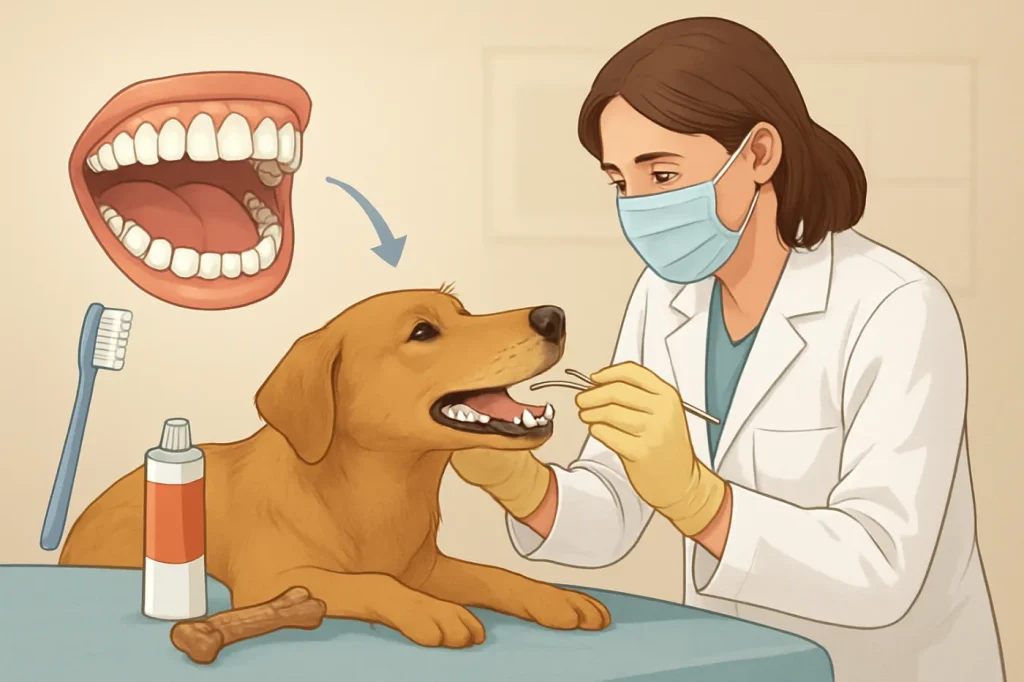
For most dogs and cats, the best dental plan is a mix of two things: consistent home care and periodic professional cleanings under anesthesia. Home care slows plaque and tartar buildup; professional cleanings reset the mouth when home care is no longer enough. Used together, they protect teeth, gums, and organs while keeping stress and costs more manageable over your pet’s lifetime.
Why combining home dental care and professional cleanings works best
Home care and professional cleanings do different jobs:
- Home dental care (brushing, dental chews, rinses, special diets) helps prevent plaque from hardening into tartar and keeps gums healthier day to day.
- Professional cleanings under anesthesia allow the vet team to clean under the gumline, take dental X-rays, and treat disease that home care cannot reach.
Relying on only one side of this equation usually backfires:
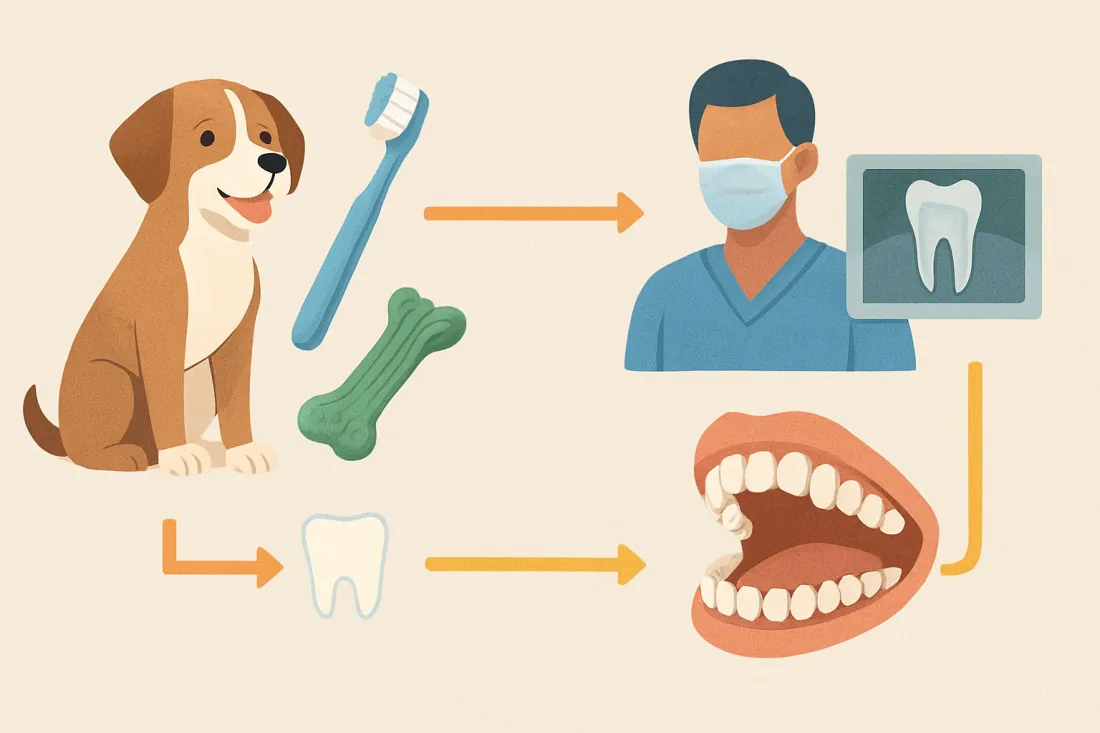
- Only home care: plaque and tartar still build up in hidden areas, especially under the gums and between teeth.
- Only professional cleanings: your pet may need anesthesia more often, and disease can progress between visits.
The goal is to stretch the time between necessary professional cleanings without letting disease smolder. Good home care can often mean fewer, safer anesthetic procedures over your pet’s life, but it does not replace them entirely.
How home care and professional cleanings support each other
Think of your pet’s dental care like house cleaning:
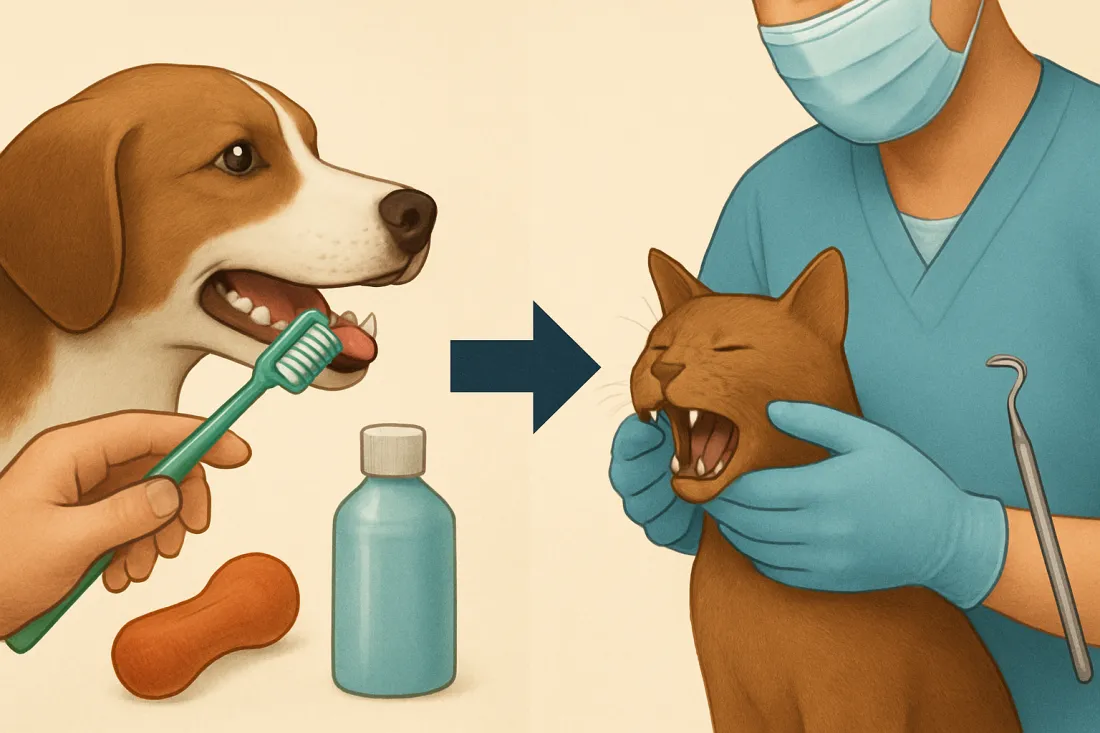
- Daily and weekly home care = tidying, wiping counters, and doing dishes.
- Professional cleanings = a deep clean where someone moves furniture, scrubs corners, and checks for damage.
Here is how they work together in practice:
- Before a professional cleaning: Start or improve home care so gums are less inflamed. This can make the procedure smoother and recovery easier.
- Right after a cleaning: This is your “fresh start.” Begin a strong home-care routine within a few days of the vet’s green light. You are protecting a clean mouth instead of fighting built-up tartar.
- Between cleanings: Daily brushing and approved dental products slow down new plaque and tartar. Your vet can then adjust timing of the next cleaning based on how well things are holding up.
- At each wellness visit: Your vet checks teeth and gums, updates the dental grade (see below), and may tweak your home-care plan or recommend scheduling the next cleaning.
Recommended cleaning frequency by life stage
Every pet is different, but life stage strongly affects dental risk. Use these ranges as a starting point, then refine them with your vet based on your pet’s breed, mouth, and health.
Puppies and kittens
- Professional cleanings: Many healthy puppies and kittens do not need a full dental cleaning in the first year if their baby teeth fall out normally and there is no disease. Some breeds with crowded teeth or retained baby teeth may need an early procedure. Ask your vet to check the mouth at each vaccine visit.
- Home care focus:
- Get your pet used to mouth handling and toothbrushing in short, positive sessions.
- Use a pet-safe toothpaste and soft brush or finger brush.
- Ask your vet which dental chews or toys are safe for young teeth.
- Key decision point: By the time adult teeth are fully in (around 6–7 months for many pets), ask your vet if a baseline dental X-ray or cleaning is recommended, especially for small-breed dogs and brachycephalic (short-nosed) breeds.
Adult dogs and cats
- Professional cleanings: Many adult pets benefit from a cleaning roughly every 1–3 years, depending on breed, home care, and dental grade. Small dogs and some cats often need them more often than large dogs.
- Home care focus:
- Daily or near-daily brushing.
- Approved dental chews or diets if brushing is limited.
- Regular checks of breath, gum color, and tartar buildup.
- Key decision point: If your vet notes worsening tartar, gum redness, or tooth mobility at a wellness exam, plan a cleaning rather than waiting for obvious pain.
Senior pets
- Professional cleanings: Seniors often have more dental disease but may also have higher anesthetic risk. Your vet will balance these factors. Some seniors still benefit from regular cleanings; others may have more targeted procedures.
- Home care focus:
- Gentler brushing and softer dental products if gums are sensitive.
- Watching closely for changes in eating, drooling, or behavior that might signal pain.
- Key decision point: For seniors, decisions about cleanings should include bloodwork, heart and kidney checks, and a discussion of risks versus benefits for your individual pet.
Tailoring home care to your pet’s dental grade
Vets often describe dental disease in stages or “grades.” Exact labels vary, but the idea is similar: lower grades mean mild plaque and gingivitis; higher grades mean deeper damage and possible tooth loss. You can use these grades to decide how intense home care should be and how soon to schedule a cleaning.
| Vet dental grade (typical description) | What it usually means | Home care intensity | Professional cleaning timing |
|---|---|---|---|
| Grade 0–1 (normal to mild plaque/gingivitis) | Teeth mostly clean, mild redness at gumline, no loose teeth. |
|
|
| Grade 2 (moderate tartar and gingivitis) | Visible tartar, red or swollen gums, bad breath, but teeth still stable. |
|
|
| Grade 3 (periodontal disease) | Heavy tartar, gum recession, pockets around teeth, possible loose teeth. |
|
|
| Grade 4 (advanced disease) | Severe bone loss, very loose or broken teeth, infection, pain. |
|
|
If you are not sure of your pet’s current dental grade, ask your vet at the next visit and write it down. Use that grade to guide how aggressive your home care should be and how soon to plan the next cleaning.
Structured checklist: annual dental care plan for your pet
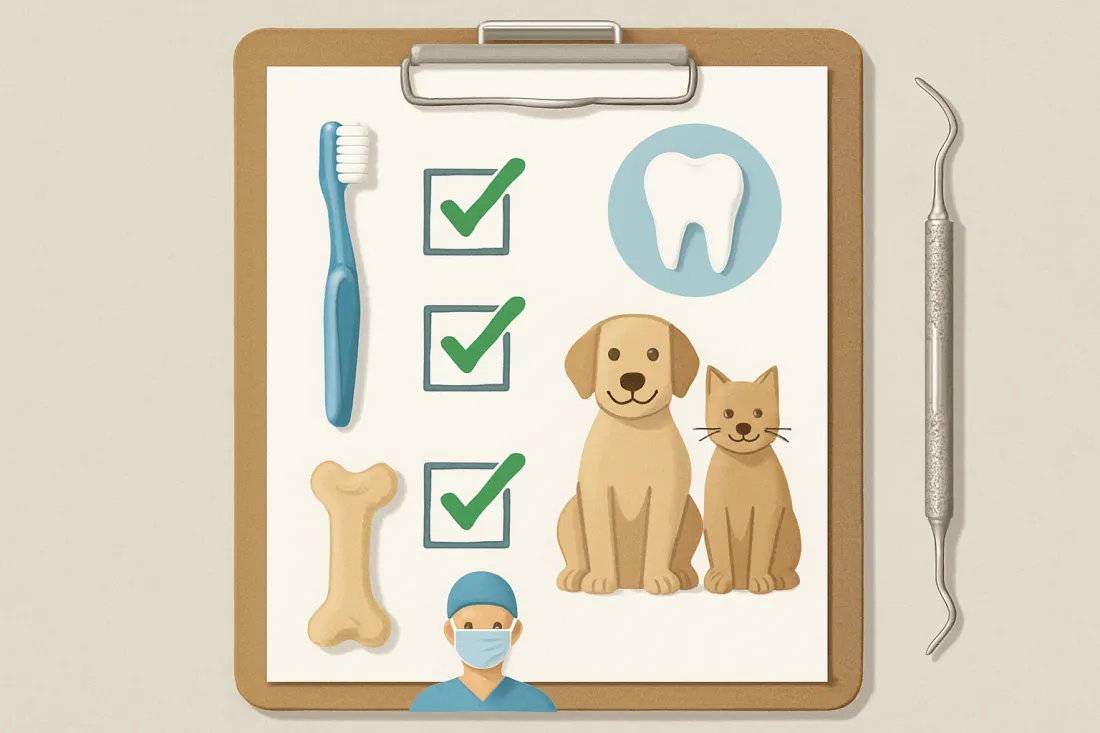
Use this checklist as a practical yearly plan. Adjust timing with your vet based on your pet’s age, breed, and dental grade.
Daily or near-daily tasks
- Brush teeth with a pet-safe toothpaste and soft brush.
- Start with a few seconds and build up to 30–60 seconds per side.
- Reward with praise or a small treat afterward.
- Offer approved dental chews or toys as recommended by your vet.
- Avoid very hard objects that could crack teeth (like real bones or antlers).
- Quick mouth check while you pet your dog or cat.
- Notice breath, gum color, and any visible tartar.
Weekly tasks
- Do a more careful inspection of the mouth if your pet allows.
- Lift lips to check front and back teeth.
- Look for redness, swelling, or chipped teeth.
- Review your brushing success.
- If you skipped several days, reset your routine: choose a consistent time of day and keep sessions short and positive.
Monthly tasks
- Record a quick dental snapshot.
- Note breath changes, visible tartar, or bleeding when brushing.
- Take a clear photo of your pet’s teeth if possible to compare over time.
- Check your supplies.
- Make sure you have enough toothpaste, chews, and any rinses or additives.
Every 6–12 months
- Schedule a wellness exam that includes a dental check.
- Ask your vet to update the dental grade.
- Discuss whether it is time to plan a professional cleaning.
- Review your home-care plan.
- Ask if your current products are still appropriate.
- Adjust brushing frequency or add tools if tartar is increasing.
Yearly (or as recommended)
- Plan professional cleaning when your vet recommends it.
- Schedule bloodwork and any pre-anesthetic tests.
- Ask about expected procedures (X-rays, possible extractions).
- Reset your home-care routine after the cleaning.
- Start brushing again when your vet says it is safe.
- Use the “fresh start” to build a consistent habit.
Coordinating dental care with other vet visits
Combining dental care with other routine vet visits can reduce stress for your pet and help manage costs and time.
- Pair dental checks with vaccine or wellness visits.
- Ask for a brief dental exam every time your pet comes in for vaccines or an annual check.
- Use these visits to update the dental grade and adjust your plan.
- Discuss timing of cleanings around other procedures.
- If your pet needs another anesthetic procedure (for example, a lump removal or spay/neuter), ask whether dental X-rays or cleaning can be safely combined.
- Use wellness plans or preventive-care packages if your clinic offers them.
- Some plans bundle wellness exams, vaccines, and dental discounts, which can make preventive care more predictable. For broader budgeting strategies, you can also look at guides on affordable preventive care for pets.
- Bring your home-care questions to each visit.
- Show your vet the toothbrush, chews, or rinses you are using.
- Ask if they are still appropriate for your pet’s age and dental grade.
Special considerations for seniors and pets with chronic disease
Older pets and those with chronic conditions (like kidney disease, heart disease, or diabetes) often need dental care the most, but they may also have higher anesthetic risk. The key is careful planning with your vet.
Balancing risk and benefit
- Ask for a full pre-anesthetic workup.
- This usually includes bloodwork and may include heart or imaging tests, depending on your pet’s condition.
- Discuss alternatives and priorities.
- In some cases, your vet may recommend treating the most painful or infected areas rather than a full-mouth procedure.
- Plan for extra monitoring.
- Seniors and chronically ill pets may need closer monitoring during and after anesthesia and more frequent follow-up checks.
Adjusting home care for fragile mouths
- Use softer tools.
- Try a very soft brush or a finger brush.
- If brushing is painful, ask about wipes, gels, or rinses that are easier to tolerate.
- Watch for subtle signs of pain.
- Eating more slowly, dropping food, pawing at the mouth, or avoiding hard kibble can all be clues.
- Coordinate with other medications.
- Some dental products may not be ideal with certain diseases or drugs. Always check with your vet before adding new products.
Common mistakes when combining home care and professional cleanings
Avoiding a few frequent errors can make your pet’s dental plan more effective and less stressful.
- Waiting for obvious pain before scheduling a cleaning.
- By the time a pet stops eating or cries out, dental disease is often advanced. Use vet dental grades and regular checks instead of waiting for dramatic signs.
- Thinking good home care alone is enough forever.
- Even with perfect brushing, plaque and tartar still build up in hidden areas. Professional cleanings are still needed at intervals.
- Stopping home care after a professional cleaning.
- The weeks after a cleaning are the best time to build a strong brushing habit. Stopping now means tartar will return faster.
- Using unsafe “DIY” tools or human products.
- Avoid human toothpaste, harsh scrapers, or very hard chews that can damage enamel or gums.
- Ignoring breed and individual risk.
- Small-breed dogs, short-nosed breeds, and some cats are prone to faster dental disease and may need more frequent cleanings and stricter home care.
- Not adjusting the plan as your pet ages.
- A plan that worked at age 2 may not be enough at age 10. Revisit frequency and tools with your vet regularly.
Decision guide: is your current plan working?
Use these questions to decide whether your pet’s dental care plan is on track or needs an update.
- Has your vet’s dental grade stayed the same or improved over the last year?
- If yes, your combination of home care and professional cleanings is likely effective.
- If the grade has worsened, ask about increasing brushing frequency or scheduling a cleaning sooner.
- How does your pet’s mouth look and smell?
- Mild dog or cat breath is normal, but strong odor, visible tartar, or red gums suggest the plan needs adjustment.
- Is your pet comfortable with your home-care routine?
- Some resistance is normal at first, but ongoing struggle or pain signals that tools or technique should change.
- When was the last professional cleaning?
- If it has been several years and your pet has visible tartar or bad breath, ask your vet whether it is time to schedule one.
FAQ about combining home dental care and professional cleanings for pets
Can good home dental care replace professional cleanings for my pet?
Consistent home care can often delay the need for professional cleanings and may reduce how often they are required, but it usually cannot replace them entirely. Brushing and dental products clean the visible surfaces of teeth and help gums stay healthier, yet they cannot remove tartar under the gumline or address bone loss and hidden tooth damage. Professional cleanings under anesthesia allow the vet to clean below the gums, take X-rays, and treat disease that home care cannot reach. The most effective plan uses both: daily home care plus cleanings when your vet sees signs that disease is progressing.
How do I know if my pet’s combined dental plan is working?
A good combined plan shows up in three ways: your vet’s dental grade stays stable or improves, your pet’s mouth looks and smells better, and your pet eats and chews comfortably. At each wellness visit, ask your vet to compare the current dental grade with the last one and tell you whether tartar, gum redness, or pockets around teeth are better, worse, or unchanged. At home, watch for fresher breath, less visible tartar, and gums that are pink rather than red and swollen. If you notice worsening odor, more tartar, or changes in eating, it is a sign to review your routine and possibly schedule a cleaning.
What mistakes should I avoid when combining home care and professional cleanings?
Common mistakes include waiting for obvious pain before scheduling a cleaning, assuming daily brushing alone will prevent all dental disease, and stopping home care after a professional cleaning. It is also important to avoid unsafe tools such as human toothpaste, harsh metal scrapers, or very hard chews that can crack teeth. Finally, do not ignore breed, age, or chronic health conditions when planning dental care; small-breed and senior pets often need more frequent checkups and tailored home-care tools.
What should I do next to set up a long-term dental plan for my pet?
Start by booking a wellness exam that includes a dental check and ask your vet to tell you your pet’s current dental grade and risk factors. Together, decide on a target range for professional cleaning frequency and choose specific home-care tools such as a toothbrush, toothpaste, and any recommended chews or rinses. At home, build a simple routine: brief daily brushing, a weekly mouth check, and a monthly photo or note about changes. If you are also reviewing your broader health budget, you may find it helpful to read about low cost preventive care for pets so dental care fits smoothly into your overall plan.
Conclusion: long-term monitoring and adjustment
Combining home dental care with professional cleanings is not a one-time decision but an ongoing partnership between you, your pet, and your veterinary team. Daily brushing and smart product choices slow disease; scheduled cleanings and regular dental grades catch problems early and reset the mouth when needed.
Over your pet’s life, expect to adjust the plan as they move from puppy or kitten to adult to senior, and as health conditions change. Keep track of dental grades, note changes in breath or eating, and bring questions to each vet visit. With steady home care and timely professional support, most pets can enjoy more comfortable mouths, easier eating, and better overall health for years.