
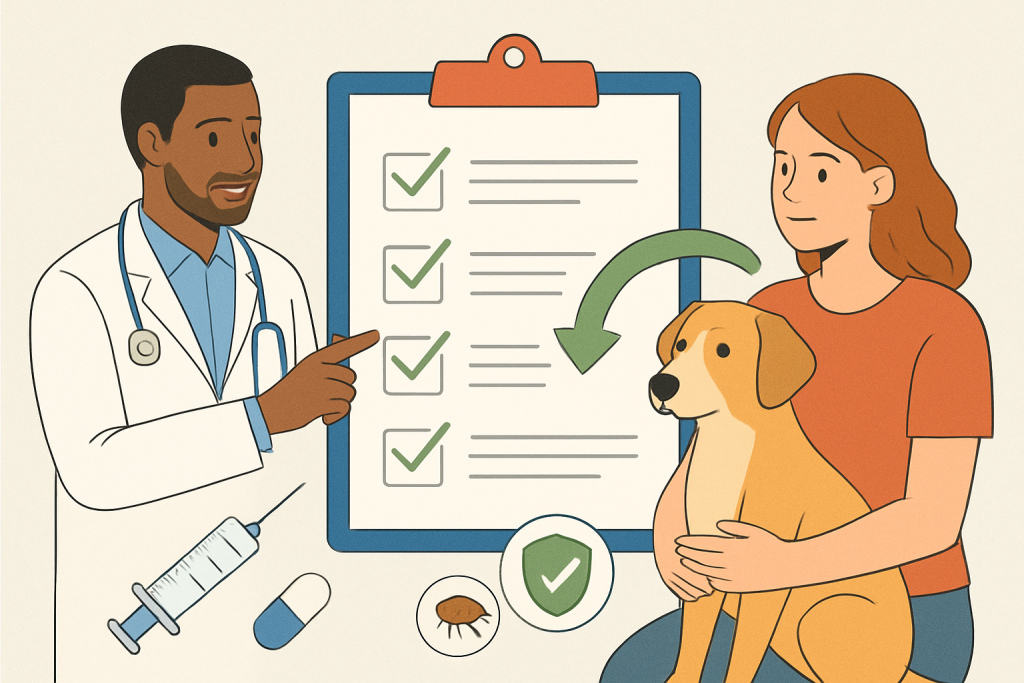
For most dogs and cats in the USA, a practical preventive care schedule usually includes:
- Wellness exams at least once a year, and often twice a year for seniors or pets with health issues.
- Core vaccinations on a puppy/kitten series, then boosters on a multi‑year schedule as your vet recommends.
- Year‑round parasite prevention (heartworm, fleas, ticks, and intestinal worms) in many U.S. regions.
- Regular tests such as heartworm tests, fecal checks for intestinal parasites, and dental/oral evaluations.
- Weight, nutrition, and dental checks at each visit, with adjustments as your pet ages.
The exact timing depends on your pet’s species, age, lifestyle, and local disease risks. Use the schedules, comparison table, and checklists below as a starting point, then confirm details with your veterinarian.
How preventive vet care typically works in the USA
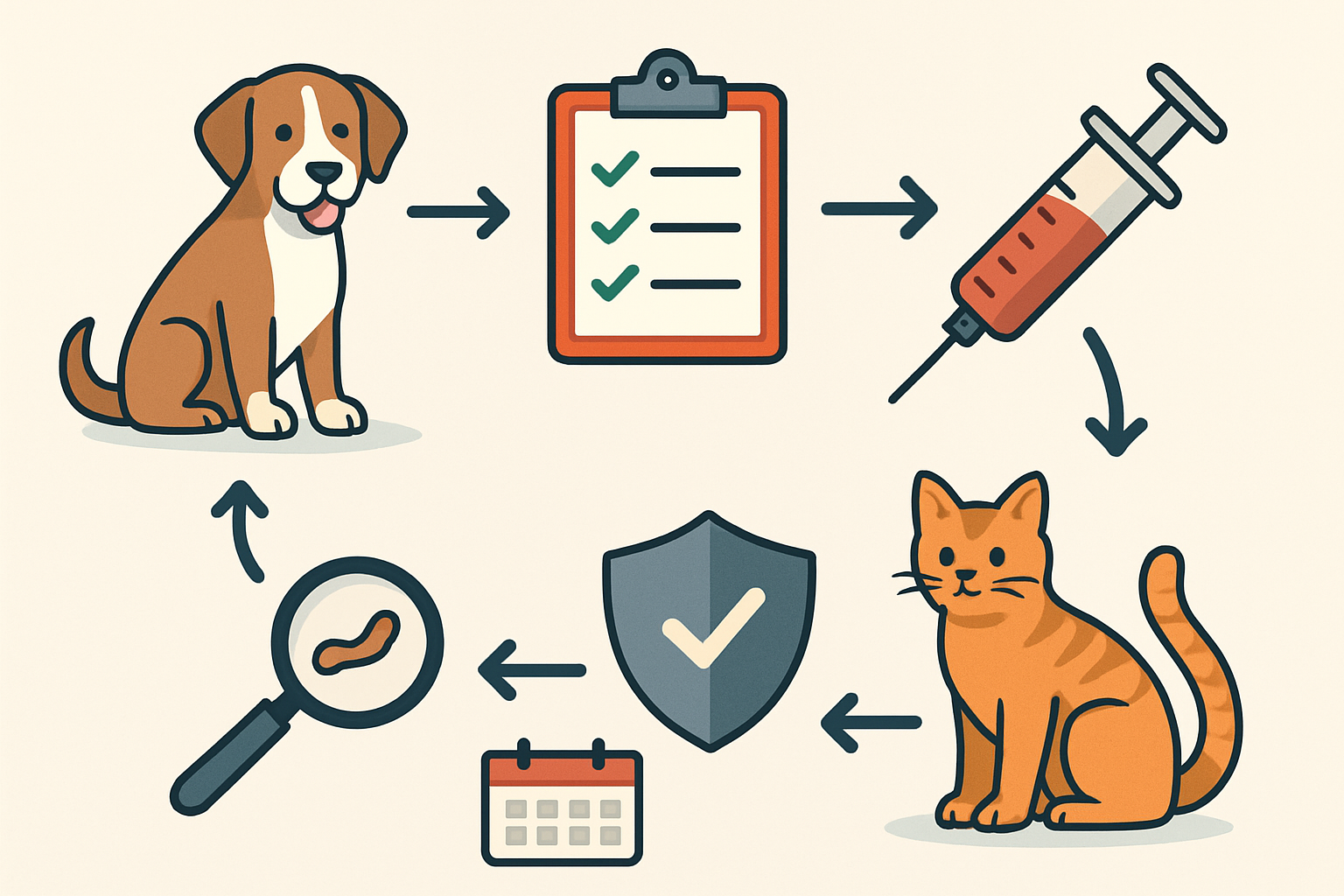
In the U.S., preventive care is built around catching problems early and blocking common diseases before they start. Most clinics organize care around these elements:
- Comprehensive wellness exams – nose‑to‑tail physical exams, listening to heart and lungs, checking eyes, ears, skin, joints, and body condition.
- Personalized vaccination plans – core vaccines for almost all pets, plus optional (“lifestyle”) vaccines based on travel, boarding, or outdoor exposure.
- Year‑round parasite prevention – medications and topical products to prevent heartworm, fleas, ticks, and intestinal worms.
- Dental care – from at‑home brushing and dental chews to professional cleanings and oral evaluations.
- Nutrition and weight management – choosing the right diet and calories for age, breed, and health.
- Screening tests – bloodwork, urine tests, and specific disease screens when needed, especially as pets age.
Many U.S. clinics offer wellness plans or reminder systems to keep you on schedule. For a visit‑by‑visit breakdown across the year, you can also review an annual vet care schedule for dogs and cats USA and adapt it to your household.
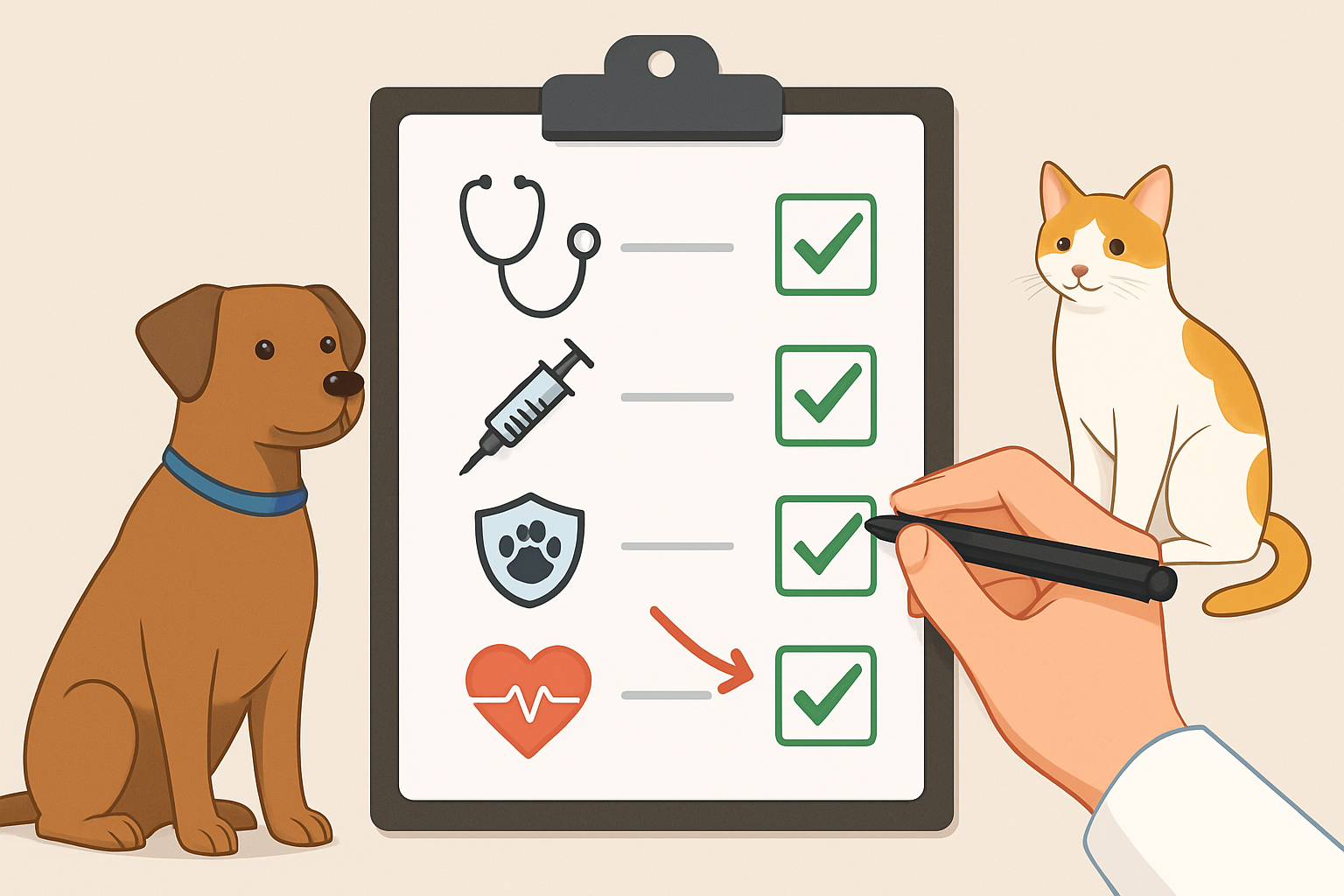
Dog preventive care schedule in the USA by age
The table below shows a typical pattern for dogs in the U.S. Exact timing and vaccine names can vary, so always confirm with your vet.
| Dog age / life stage | Vet visits | Core vaccines (examples) | Tests & screenings | Parasite prevention |
|---|---|---|---|---|
| Puppy 6–8 weeks | First wellness exam | Start puppy vaccine series (e.g., distemper/parvo combo) | Basic physical exam; discuss deworming | Begin deworming plan; discuss flea/tick control if needed |
| Puppy 9–12 weeks | Follow‑up exam | Next puppy vaccine boosters; discuss lifestyle vaccines | Monitor growth and behavior | Continue deworming; start flea/tick prevention if appropriate |
| Puppy 12–16 weeks | Exam and final puppy shots | Final puppy core vaccines; initial rabies vaccine as recommended | Check teeth, joints, and overall development | Begin or continue heartworm prevention as advised |
| Adolescent 4–12 months | At least 1 wellness visit | Booster for core vaccines if due; lifestyle vaccines if needed | Spay/neuter discussion or surgery; behavior and training review | Ongoing monthly heartworm, flea, and tick prevention in many regions |
| Adult 1–6 years | Usually 1–2 wellness exams per year | Core vaccine boosters on a multi‑year schedule as your vet recommends | Periodic heartworm test; periodic fecal checks; baseline bloodwork as advised | Often year‑round heartworm, flea, and tick prevention in much of the U.S. |
| Senior 7+ years | Often 2 wellness exams per year | Core boosters as due; adjust plan for chronic diseases | More frequent bloodwork, urine tests, and monitoring for arthritis, organ disease, and lumps | Continue parasite prevention; adjust products if other meds are added |
If you want a deeper dive into timing and examples of dog shots, you can compare this overview with a dedicated dog vaccination schedule USA and then ask your vet to customize it.
Cat preventive care schedule in the USA by age
Cats also benefit from structured preventive care, even if they live strictly indoors. Here is a general pattern for U.S. cats.
| Cat age / life stage | Vet visits | Core vaccines (examples) | Tests & screenings | Parasite prevention |
|---|---|---|---|---|
| Kitten 6–8 weeks | First wellness exam | Start kitten vaccine series (e.g., common respiratory and distemper combo) | Physical exam; discuss deworming and litter box setup | Initial deworming; discuss flea control if exposure risk |
| Kitten 9–12 weeks | Follow‑up exam | Next kitten vaccine boosters; consider FeLV vaccine based on lifestyle | Monitor growth, behavior, and socialization | Continue deworming; start flea prevention if needed |
| Kitten 12–16 weeks | Exam and final kitten shots | Final core kitten vaccines; initial rabies vaccine as recommended | Discuss spay/neuter timing; check for congenital issues | Begin or continue parasite prevention plan |
| Adolescent 4–12 months | At least 1 wellness visit | Booster for core vaccines if due; lifestyle vaccines for outdoor cats | Spay/neuter surgery if not already done; behavior and scratching management | Flea and tick prevention if exposure; deworming as advised |
| Adult 1–7 years | Usually 1–2 wellness exams per year | Core vaccine boosters on a multi‑year schedule as your vet recommends | Periodic bloodwork and urine tests; dental evaluations | Flea, tick, and worm prevention based on indoor/outdoor lifestyle |
| Senior 8+ years | Often 2 wellness exams per year | Core boosters as due; adjust plan for chronic conditions | More frequent blood and urine tests; blood pressure checks; arthritis and kidney monitoring | Continue parasite prevention; adjust products for kidney or liver disease if present |
For indoor cats, daily routines matter as much as vaccines. A structured daily care routine for indoor cats can help you combine play, grooming, and health checks with your preventive schedule.
Dog vs. cat preventive care in the USA: comparison table
Use this comparison to see where dog and cat care is similar and where it differs. It is a guide, not a replacement for a personalized plan.
| Aspect | Dogs | Cats |
|---|---|---|
| Typical wellness visit frequency | At least annually; often twice yearly for seniors or chronic conditions | At least annually; often twice yearly for seniors or chronic conditions |
| Core vaccines | Focus on common viral diseases and rabies; puppy series then multi‑year boosters | Focus on respiratory and distemper‑type diseases and rabies; kitten series then multi‑year boosters |
| Lifestyle vaccines | Common for dogs that board, hike, visit dog parks, or live in high‑risk regions | Often recommended for outdoor or multi‑cat households; indoor‑only cats may need fewer |
| Heartworm prevention | Standard in many U.S. regions; often year‑round | Used in some regions and situations; discuss local risk with your vet |
| Flea and tick control | Commonly year‑round, especially in warmer climates | Important for outdoor cats and in multi‑pet homes; indoor‑only cats may still be at risk |
| Dental disease risk | High; many dogs need professional cleanings during adulthood | Also high; cats often develop gum disease or tooth resorption |
| Impact of indoor‑only lifestyle | Reduces some risks but does not remove need for exams and vaccines | Reduces many infection and parasite risks but still requires exams and tailored vaccines |
Heartworm, flea, tick, and parasite prevention basics in the USA
Parasites are a major reason preventive care matters. In many parts of the U.S., vets recommend consistent protection because winters can be mild and parasites can survive indoors.
Heartworm prevention
- What it is: Heartworm is spread by mosquitoes and can cause serious heart and lung disease, especially in dogs.
- Typical schedule: Regular preventive medication (often monthly or on another fixed interval) and periodic heartworm tests. Your vet will set the exact test interval.
- Regional differences: Risk is often higher in warm, humid areas, but cases are reported in many states. Ask your vet how common heartworm is locally.
- Key check: Never restart or change heartworm meds without asking your vet, especially if doses were missed.
Flea and tick control
- Why it matters: Fleas cause itching, allergies, and can transmit tapeworms; ticks can carry serious diseases.
- Typical schedule: Regular preventive products (often monthly or on another fixed interval). Some regions may allow seasonal use; others need near year‑round control.
- Home checks: Comb your pet, check around the tail, neck, and ears, and look for flea dirt (black specks) or attached ticks after outdoor time.
- Household rule: If one pet has fleas, talk to your vet about treating all pets and the environment.
Intestinal parasite prevention
- Common worms: Roundworms, hookworms, whipworms, and tapeworms are all possible in U.S. pets.
- Typical schedule: Deworming during puppy/kittenhood, then periodic fecal tests and preventive medications as advised.
- Hygiene tips: Pick up dog waste promptly, keep litter boxes clean, and wash hands after handling soil or sand.
Step‑by‑step checklist to build your pet’s preventive care schedule
Use this practical checklist to turn general guidance into a concrete 12‑month plan for your dog or cat.
- Confirm your pet’s life stage
- Is your pet a puppy/kitten, adolescent, adult, or senior?
- Note their age in months (for young pets) or years (for adults and seniors).
- List lifestyle and risk factors
- Indoor‑only, outdoor, or mixed?
- Travel to other states or regions?
- Boarding, daycare, dog parks, or multi‑pet household?
- Access to wildlife, standing water, or farm environments?
- Gather current records
- Last vaccine date and type (if known).
- Last heartworm test and fecal test dates.
- Current flea, tick, and heartworm products and how often you give them.
- Any previous reactions to vaccines or medications.
- Schedule a wellness exam
- If it has been about a year or more since the last exam, book a visit.
- For seniors or pets with chronic issues, ask if they should be seen more often.
- Ask your vet to map out the next 12 months
- Which vaccines are due and when.
- When to repeat heartworm and fecal tests.
- Which parasite preventives to use and how often.
- Which blood or urine tests are recommended for your pet’s age.
- Set reminders you will actually see
- Use a calendar app, paper calendar, or printed chart on your fridge.
- Set recurring reminders for monthly preventives and annual exams.
- Use the same day each month (for example, the 1st) for parasite meds.
- Review the plan every year
- Update based on age, new health conditions, or changes in lifestyle (for example, moving states).
- Adjust budget and products if needed.
- Ask your vet if any vaccines can move to a longer interval.
How to budget for annual vet care and preventive treatments
Preventive care spreads costs over the year and can help avoid larger emergency bills later. Exact prices vary widely by clinic and region, so use these steps to build a realistic budget instead of relying on fixed numbers.
1. List expected yearly services
For a typical healthy adult pet in the U.S., your annual list might include:
- 1–2 wellness exams.
- Vaccine boosters when due (often not every year for all vaccines).
- At least one heartworm test, as recommended.
- One or more fecal tests.
- Year‑round parasite prevention products (heartworm, flea, tick, and possibly intestinal worm control).
- Periodic dental cleanings, especially for middle‑aged and senior pets.
2. Call local clinics for ballpark ranges
Because costs can differ significantly between cities and rural areas, do a quick local check:
- Call two or three nearby clinics and ask for typical ranges for a wellness exam, vaccines, tests, and monthly parasite prevention.
- Ask if they offer wellness plans or preventive care packages that spread costs into monthly payments.
- Ask about discounts for multi‑pet households, seniors, or military families if relevant.
3. Build a simple annual estimate
Once you have rough ranges, you can create a simple estimate:
- Add up the expected cost of one year of exams and tests.
- Add the cost of 12 months of parasite prevention (heartworm, flea, tick, and any combined products).
- Divide the total by 12 to get a monthly target to set aside.
This is an example of a calculation method, not a quote. Always confirm current prices with your clinic.
4. Plan for dental and aging‑related care
- Ask your vet how often your pet is likely to need professional dental cleanings.
- For senior pets, ask what extra tests they recommend each year and add those to your estimate.
- Consider setting aside an additional buffer each month for unexpected findings during preventive visits.
Key decision criteria when choosing vaccines, tests, and preventives
Not every pet needs every possible vaccine or test every year. Vets in the U.S. usually tailor plans based on these factors:
- Age
- Puppies and kittens need a series of shots close together.
- Adults often move to a multi‑year booster schedule.
- Seniors may need more frequent monitoring tests.
- Lifestyle
- Outdoor access, hiking, hunting, or farm life increases exposure to ticks, wildlife, and standing water.
- Boarding, daycare, and dog parks increase exposure to contagious diseases.
- Indoor‑only cats may need fewer lifestyle vaccines but still need core protection.
- Geography
- Some diseases and parasites are more common in certain regions or climates.
- Moving states or traveling regularly can change your pet’s risk profile.
- Household factors
- Multi‑pet homes can spread parasites and infections more easily.
- Immunocompromised people in the home may influence parasite control choices.
- Medical history
- Previous reactions to vaccines or medications may change the plan.
- Chronic illnesses can affect which vaccines and preventives are safest.
For dogs, you can cross‑check your vet’s recommendations with a recommended vet visit schedule for dogs USA to understand how visit frequency changes with age.
Questions to ask your veterinarian about your pet’s preventive care schedule
Going into your appointment with clear questions helps you leave with a concrete, written plan. Use or adapt the list below.
- About vaccines
- Which vaccines are core for my pet, and which are optional based on lifestyle?
- How often does my pet need boosters for each vaccine?
- Are there any vaccines you do not recommend for my pet, and why?
- About parasite prevention
- What is the heartworm risk in our area, and how often should we test?
- Which flea and tick products do you recommend for my pet’s age and health?
- Can we use a combined product to simplify dosing, or is it better to separate them?
- About tests and screenings
- Which blood and urine tests do you recommend for my pet’s age?
- How often should we do fecal tests for intestinal parasites?
- For seniors, what extra screenings should we add each year?
- About home care
- How often should I brush my pet’s teeth, and what products are safe?
- Is my pet at a healthy weight, and how much should they eat daily?
- What early warning signs should I watch for between visits?
- About costs and planning
- Can you outline what preventive care you expect my pet will need over the next 12 months?
- Are there wellness plans or packages that could help spread out costs?
- Which items are must‑do this year, and which can be scheduled later if needed?
Common mistakes U.S. pet owners make with preventive care schedules
Avoiding a few frequent errors can make a big difference in your pet’s long‑term health.
- Assuming indoor pets don’t need care
- Indoor cats and small indoor dogs still need exams, vaccines, and parasite checks. Pests and diseases can come in on shoes, other pets, or visitors.
- Stopping parasite prevention in winter without local advice
- In many U.S. regions, fleas, ticks, and mosquitoes remain active for much of the year. Always ask your vet before pausing products.
- Missing booster deadlines
- Delays can leave gaps in protection, especially for puppies and kittens who have not finished their series.
- Skipping wellness exams because the pet “seems fine”
- Many issues (dental disease, early kidney or heart problems, weight gain) are easier and less costly to manage when caught early.
- Mixing products without guidance
- Using multiple flea, tick, or worm medications at once without vet input can lead to overdosing or interactions.
- Relying only on internet schedules
- Online charts are helpful starting points, but they cannot account for your pet’s medical history or local disease patterns.
Downloadable‑style preventive care calendar: make the schedule visible
Once you and your vet have agreed on a plan, turn it into a simple calendar you can actually follow. A printable or digital calendar should include:
- Monthly boxes to check off heartworm, flea, and tick preventives.
- Spaces for vaccine due dates and upcoming wellness exams.
- Notes sections for weight, appetite changes, or questions for your next visit.
To create your own calendar that works like a downloadable template:
- Take a blank 12‑month calendar (paper or digital).
- Write in the dates your vet recommends for vaccines and tests.
- Choose a recurring day each month (for example, the first Saturday) for parasite preventives and mark it clearly.
- Color‑code dog vs. cat entries if you have multiple pets.
- Keep the calendar somewhere you see daily, or set recurring reminders on your phone.
If your clinic offers printed schedules or reminder cards, ask for one and copy the dates into your calendar so everything stays in one place.
FAQ about building a pet preventive care schedule in the USA
How often should my dog or cat see the vet for preventive care?
Most healthy adult pets in the U.S. benefit from at least one wellness exam per year. Many vets recommend twice‑yearly visits for seniors or pets with ongoing health issues. Puppies and kittens usually need several visits in their first few months for vaccine series and growth checks.
Do indoor cats really need vaccines and parasite prevention?
Yes, most indoor cats still need core vaccines and regular exams. Parasites and diseases can enter the home on shoes, clothing, other pets, or pests. Your vet may recommend fewer lifestyle vaccines and a tailored parasite plan, but indoor‑only does not mean no preventive care.
Can I give my dog or cat over‑the‑counter parasite products without asking a vet?
There are many over‑the‑counter options, but not all are appropriate for every pet. Some products are species‑specific, and dosing depends on weight and health status. It is safer to confirm with your vet before starting or changing any parasite medication, especially if your pet is very young, very small, senior, pregnant, or has other medical conditions.
What if I miss a heartworm or flea preventive dose?
Do not double‑dose without guidance. Check the product label and call your vet to ask whether to give the missed dose, restart the schedule, or schedule a test. The right step depends on how long it has been and your local risk level.
How do I know which vaccines are absolutely necessary?
Core vaccines are generally recommended for almost all pets because they help protect against common, serious diseases. Lifestyle vaccines depend on your pet’s activities and environment. Ask your vet to clearly label which vaccines are core and which are optional for your dog or cat, and why.
What should I do next to get my pet on a preventive care schedule?
First, check when your pet last had a full wellness exam, vaccines, and parasite tests. If it has been about a year or you are unsure, book a preventive visit. Bring any records you have, plus your questions and the checklist above. Together with your vet, map out the next 12 months, then copy the plan into a calendar and set reminders so you can follow it consistently.
With a clear schedule, regular checkups, and simple monthly routines, preventive care becomes manageable—and your dog or cat has a better chance at a long, comfortable life.