
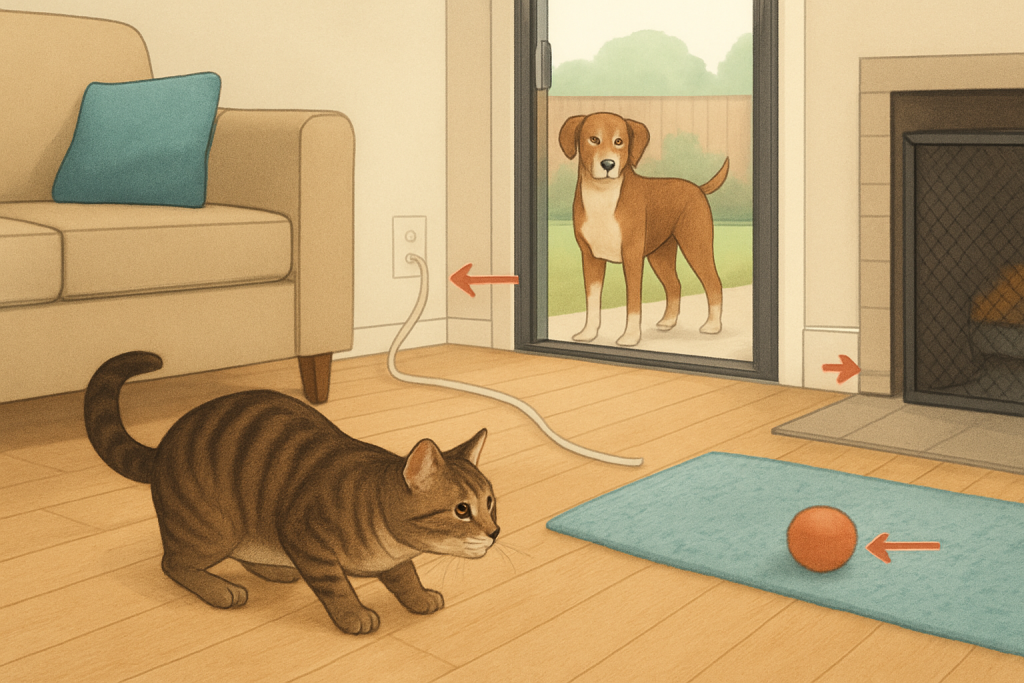
Pet-proofing your home and yard means walking through your space the way your dog or cat does: low to the ground, curious, and fast. The goal is simple: remove or block common hazards before they turn into an emergency, without turning your house into a fortress.
Below is a practical, U.S.-focused guide you can follow room by room and step by step, plus outdoor and seasonal safety, simple budget fixes, and an emergency plan you can actually use.
See your home from your pet’s point of view
Before you grab any tools, do a 10–15 minute walk-through at your pet’s eye level:
- Kneel or sit on the floor and look for dangling cords, small objects, and gaps they could squeeze into.
- Open the doors you usually leave open (bathroom, laundry, pantry) and notice what’s within nose or paw reach.
- Step outside and trace your fence line, deck, and any areas with plants, tools, or standing water.
Make a quick list on your phone of anything that looks chewable, swallowable, sharp, toxic, or easy to escape through. You’ll use this list with the checklists below.
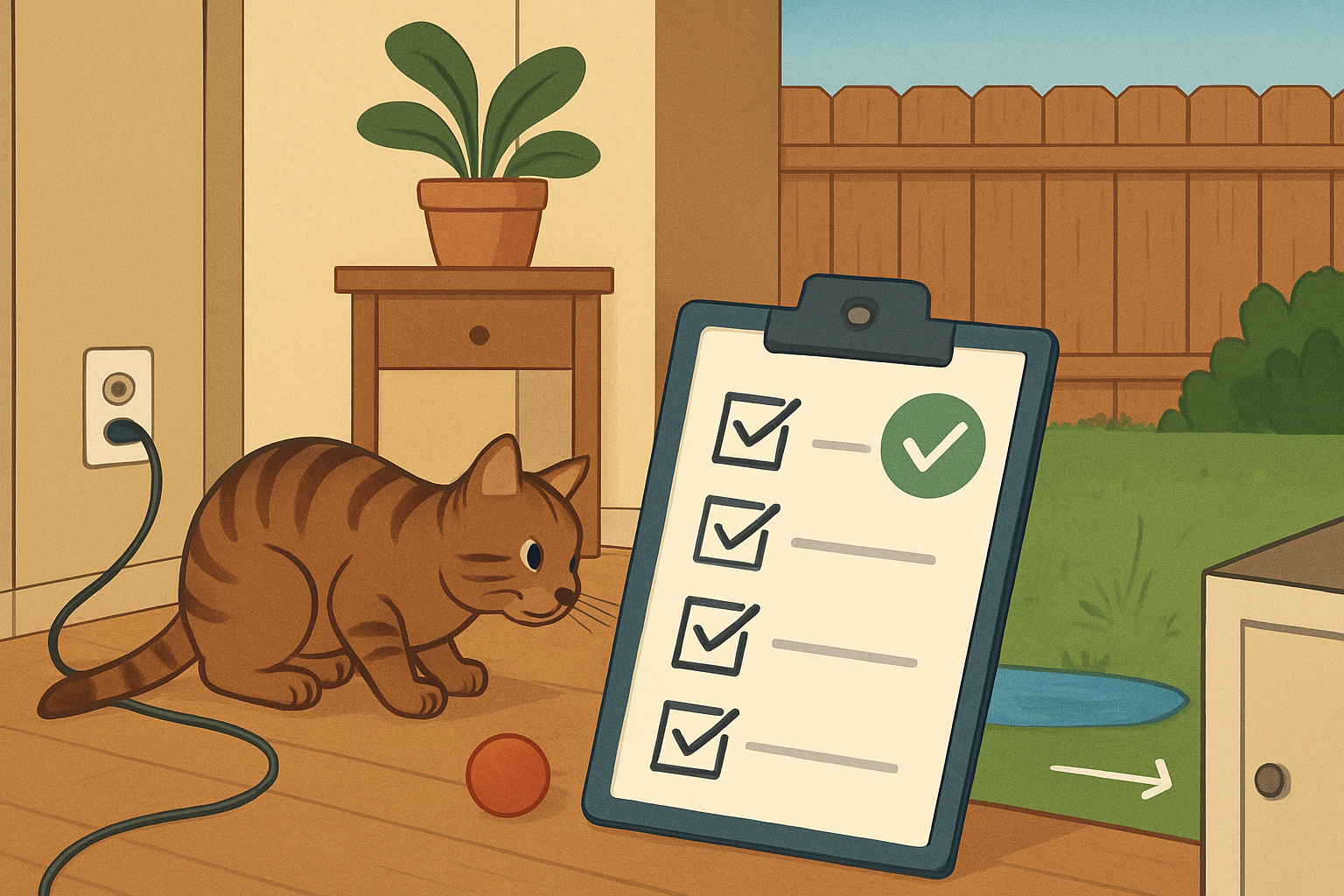
Many new owners find it helpful to combine this safety walk-through with a broader planning list such as a first time dog owner checklist USA, so training, vet care, and home safety all move forward together.
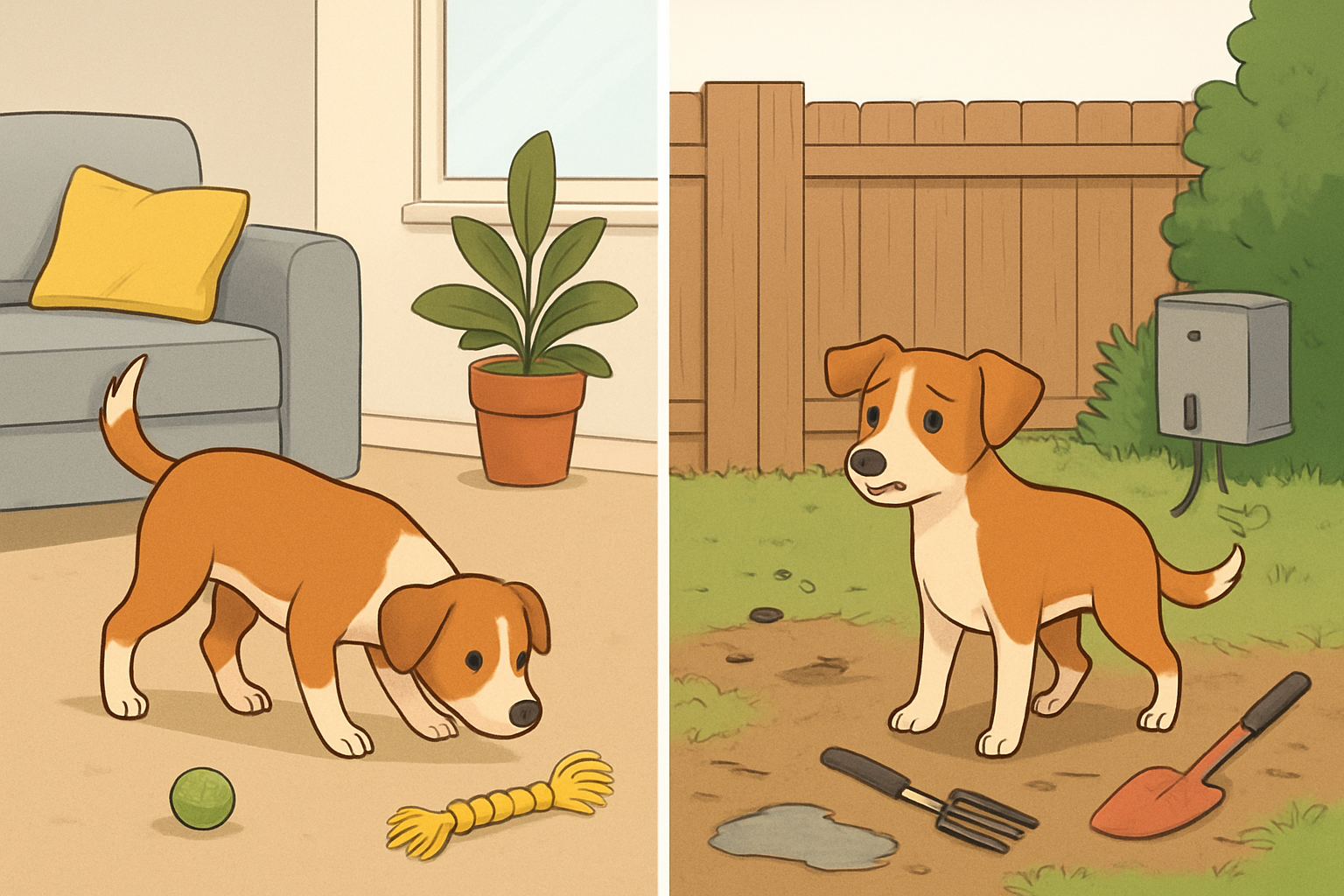
Room-by-room safety checklist for kitchens, bathrooms, bedrooms, and living areas
Use this checklist to work through the most common hazard zones in U.S. homes. You can copy it into a note or print it and check items off as you go.
Kitchen safety checklist
- Trash can secured – Use a lidded, heavy, or under-sink trash can so pets can’t access food scraps, bones, or packaging.
- Food off counters – Store food in closed cabinets or containers; avoid leaving cooling racks, plates, or snack bowls unattended.
- Toxic foods separated – Keep chocolate, xylitol-sweetened items (like some sugar-free gum), onions, garlic, grapes, and alcohol in closed cabinets or high shelves.
- Stove and oven safety – Turn pot handles inward; avoid dangling oven mitts or towels that invite jumping or pulling.
- Dishwasher and fridge closed – Don’t leave them open unattended; check for curious pets before closing.
- Small objects contained – Rubber bands, twist ties, bread clips, and bottle caps should go into drawers or containers, not bowls on the counter.
- Cleaning supplies locked away – Use childproof latches or high cabinets for dish pods, sprays, and degreasers.
Bathroom and laundry room safety checklist
- Toilet lid down – Prevent drinking treated water or falling in.
- Medications stored high – Keep all human and pet meds in closed cabinets, not on counters or nightstands.
- Cleaning products secured – Bleach, toilet cleaners, and detergents should be behind doors with latches or on high shelves.
- Laundry hazards contained – Store pods, fabric softener sheets, and stain sticks out of reach; keep laundry baskets away from stringy items like drawstrings.
- Trash can with lid – Bathroom trash often contains floss, cotton swabs, and hygiene products that can be swallowed.
- Appliance doors checked – Always look inside washers and dryers before use; some cats like to nap there.
Bedroom safety checklist
- Cords and chargers managed – Bundle or cover phone and laptop cords; avoid leaving them dangling from nightstands.
- Jewelry and small items in boxes – Rings, earrings, hair ties, and pills should live in containers, not on surfaces.
- Under-bed clutter reduced – Remove plastic bags, strings, and small toys that pets might drag out and chew.
- Houseplants checked – Verify if plants are pet-safe; move questionable ones out of the room or to high shelves.
- Windows and blinds – Use cord winders or cut blind cords into two short pieces with a safety tassel to help reduce strangulation risk.
Living room and common area safety checklist
- Electrical cords protected – Use cord covers, cable raceways, or furniture placement to block access.
- Power strips hidden – Place behind furniture or use covers to help prevent chewing.
- Breakables moved – Shift fragile decor from low tables and shelves to higher, more stable spots.
- Kids’ toys contained – Use bins with lids for small toys, building blocks, and art supplies.
- Recliners and rocking chairs checked – Confirm pets are clear before closing or rocking.
- Fireplace and candles guarded – Use screens for fireplaces; place candles where tails and whiskers can’t reach.
- Rugs and floors – Clean up spills quickly; consider non-slip rugs to help older pets.
Comparison table: common indoor hazards and safer alternatives
Use this table to quickly swap risky items for safer options.
| Hazard | Why it’s risky | Safer alternative or fix |
|---|---|---|
| Open-top kitchen trash can | Easy access to bones, packaging, and spoiled food | Lidded, heavy trash can or under-sink bin with latch |
| Loose electrical cords on floor | Chewing, tripping, or entanglement | Cord covers, cable organizers, or routing behind furniture |
| Houseplants of unknown type | Some plants can irritate or harm pets if chewed | Verify plant safety and replace with pet-safe varieties |
| Open laundry room with detergents | Concentrated pods and liquids can be very irritating if ingested | Closed cabinets, high shelving, and door or gate control |
| Small kids’ toys on floor | Choking or intestinal blockage if swallowed | Storage bins with lids and daily toy pickup routine |
| Unsecured medications on nightstand | Pets can chew bottles or pills directly | Closed medicine cabinet or drawer with latch |
Yard and outdoor space safety for U.S. climates
Outdoor risks vary depending on where you live in the U.S., but the core checks are similar. Walk your yard boundary and every area your pet can access.
Fence and gate safety for dogs
- Check for gaps and weak spots – Look for loose boards, bent chain link, or gaps under fences where digging is easy.
- Gate latches secure – Use latches that can’t be opened by a nose push or strong wind; consider adding a secondary clip.
- Visibility to street – If your dog barks or lunges at passersby, consider privacy panels or landscaping to help reduce stress and escape attempts.
- Deck and balcony rails – Ensure gaps are small enough that a pet can’t slip through or get stuck; use mesh or plexiglass if needed.
Ground-level hazards
- Standing water – Empty buckets, kiddie pools, and plant saucers regularly to reduce insects and contamination.
- Yard tools and equipment – Store rakes, trimmers, and lawnmowers in a shed or garage; unplug electric tools when not in use.
- Fertilizers and yard chemicals – Follow product labels carefully and keep pets off treated areas until they are dry or as directed; store products in closed containers.
- Mulch and rocks – Avoid sharp rocks or cocoa mulch; choose smoother materials that are less tempting to chew.
Climate-specific checks
- Hot climates and summers – Provide shade and fresh water; test surfaces like concrete or asphalt with your hand before walks or play.
- Cold and snowy regions – Rinse paws after walks to remove ice melt products; provide a dry, draft-free shelter if pets spend time outside.
- Storm-prone areas – Secure loose items that could blow into fences; check that gates close properly after high winds.
Toxic plants and foods commonly found around U.S. homes
Many popular plants and foods can cause stomach upset or worse if pets ingest them. Because specific toxicity can vary by species and amount, treat unknown items with caution and confirm details with a veterinarian or reliable pet resource.
Plants to double-check
Common decorative and yard plants in the U.S. are often flagged as unsafe for pets, including some lilies, sago palm, and certain bulb plants. Since plant varieties and toxicity levels differ, verify each plant you own by name before assuming it is safe. If you are unsure:
- Move the plant out of reach (high shelf, hanging basket, or separate room).
- Use barriers like plant stands inside dog-free zones.
- Consider replacing with plants labeled as pet-friendly by the seller.
Human foods to keep away from pets
Some foods commonly found in U.S. kitchens are known to be unsafe for many dogs and cats. Examples often include:
- Chocolate and cocoa-based desserts.
- Foods and gums containing certain sugar substitutes (for example, some products with xylitol).
- Onions, garlic, and related seasonings.
- Alcoholic drinks and unbaked yeast dough.
- Grapes, raisins, and some trail mixes.
Because sensitivity can vary by pet and product, store all “people food” out of reach and check with your veterinarian before sharing table scraps.
Safe storage of medications and household chemicals
Many emergency vet visits start with a chewed pill bottle or a spilled cleaner. A few storage habits go a long way.
Medication safety
- Separate human and pet meds – Keep them in different containers or shelves to help avoid mix-ups.
- Use closed cabinets – Store all medications in a cabinet or drawer that closes fully; consider childproof latches if your pet can open doors.
- Handle pills over a counter – If you drop one, you’re more likely to see and pick it up.
- Never leave pill organizers out – Daily pill boxes are easy to chew and spill.
Chemicals and cleaners
- Original containers only – Keep products in their labeled containers so you know what they are in case of exposure.
- High shelves or locked cabinets – Especially for concentrated cleaners, automotive fluids, and pesticides.
- Ventilation and drying time – After using sprays or floor cleaners, allow surfaces to dry fully before letting pets walk on them.
- Garage and basement checks – Secure paints, solvents, and antifreeze; clean up spills promptly.
Safe confinement: crates, gates, and doors
Confinement is about safety and structure, not punishment. Used correctly, it helps prevent accidents and injuries when you can’t supervise.
Choosing and using crates
- Size matters – Your dog or cat should be able to stand, turn around, and lie down comfortably.
- Positive association – Introduce the crate gradually with treats and soft bedding; avoid using it only when you leave.
- Location – Place crates in a quiet, temperature-controlled area away from direct sun or drafts.
- Time limits – Long stretches in a crate without breaks can be stressful; plan potty, play, and stretch breaks into your schedule.
Gates and closed doors
- Block high-risk rooms – Use baby gates or closed doors for kitchens, stairs, or rooms with many cords or breakables.
- Secure installation – Follow manufacturer instructions; pressure-mounted gates may not be enough for strong or jumping dogs.
- Cat-safe options – For cats, consider tall gates or doors with small pet doors to separate dogs and litter areas.
Seasonal safety tips: heat, cold, holidays, and fireworks
Hazards change with the season. A quick seasonal check can help prevent common problems.
Warm weather and heat
- Never leave pets in parked cars – Interior temperatures can rise quickly even on mild days.
- Provide shade and water outdoors – Refresh water frequently; add a second bowl as backup.
- Adjust exercise times – Walk early morning or late evening to avoid hot pavement.
- Watch for heat stress – Rapid breathing, excessive drooling, or weakness mean it’s time to cool down and contact a vet.
Cold weather
- Limit time outside for sensitive pets – Small, short-haired, or elderly pets may need shorter outings and coats.
- Paw care – Rinse and dry paws after walks to remove ice melt products and help prevent irritation.
- Warm resting spots – Provide beds away from drafts and cold floors.
Holidays and fireworks
- Secure decorations – Keep tinsel, ribbons, and small ornaments out of reach; avoid leaving lit candles unattended.
- Food vigilance – Remind guests not to feed table scraps; clear plates promptly.
- Safe retreat room – During fireworks or parties, set up a quiet room with a bed, water, and familiar toys.
- Noise management – Close windows, use white noise or calming music, and consider discussing anxiety options with your vet.
Simple home modifications on a budget
You don’t need a full remodel to make your home safer. Many effective changes are low-cost or free.
- Repurpose baby gear – Use baby gates, cabinet latches, and outlet covers to block access and protect cords.
- Furniture rearrangement – Move sofas or shelves to hide cords and block access to wobbly side tables.
- DIY cord management – Use inexpensive cord sleeves, zip ties, or even cardboard tubes to bundle and hide cables.
- Non-slip solutions – Add rug pads or non-slip backing to area rugs to help older pets navigate.
- Storage baskets and hooks – Keep leashes, toys, and grooming tools in baskets or on hooks instead of scattered on the floor.
- Door signs – Simple signs like “Pet inside – close gate” can remind visitors to shut gates and doors promptly.
If you live in a rental or apartment and need to protect walls and floors while keeping your deposit, you may also find ideas in guides on how to pet proof an apartment for a cat, many of which apply to dogs and other pets too.
Emergency plan and first-aid basics overview
Even with careful pet-proofing, accidents can happen. A simple plan helps you act quickly and calmly.
Basic emergency steps
- Stay calm and secure your pet – Move them away from the hazard and into a safe, contained area.
- Check for immediate danger – Look for breathing difficulty, severe bleeding, or collapse.
- Contact a veterinarian – Call your regular vet or the nearest emergency clinic; keep their numbers saved in your phone and posted at home.
- Follow professional instructions – Describe what happened, what your pet may have eaten or been exposed to, and any symptoms.
- Transport safely – Use a carrier for cats and small dogs; for larger dogs, use a blanket or board as a makeshift stretcher if needed.
Pet first-aid kit basics
Ask your veterinarian what they recommend for your area and your specific pet, but many owners choose to keep:
- Gauze pads and bandage material.
- Adhesive tape or self-adhesive wrap designed for pets.
- Clean cloths or towels.
- Digital thermometer and lubricant.
- Small scissors with blunt tips.
- Disposable gloves.
- Copy of your pet’s medical records and vaccination history.
Confirm with your vet which, if any, over-the-counter products are appropriate for your pet before adding them to your kit. For a broader view of routine care that supports safety, you can also review an annual vet care schedule for dogs and cats USA.
Step-by-step algorithm to pet proof your home and yard
Use this simple process to tackle pet-proofing without feeling overwhelmed.
- List your pet’s risks
Note age, size, chewing habits, and any medical issues. Puppies and kittens, for example, usually need more protection than calm adult pets. - Do a quick walkthrough
Spend 10–15 minutes scanning each room and your yard from your pet’s eye level. Take photos or notes of hazards. - Prioritize high-risk areas
Start with the kitchen, bathroom, and yard, where chemicals, foods, and escape routes are most common. - Fix easy items first
Close cabinets, move plants, bundle cords, and pick up small objects. These changes often take minutes. - Add barriers where needed
Install gates, crate-train if appropriate, and block access to rooms you can’t fully pet-proof yet. - Plan for seasons
Adjust for current weather: shade and water in summer, paw care and warm bedding in winter, noise management for holidays. - Set a reminder to review
Re-check your home every few months or whenever your pet’s behavior or living situation changes.
Common mistakes when pet-proofing and how to avoid them
- Focusing only on chewing – Pets can jump, dig, and open doors. Think vertically and horizontally, not just about what’s on the floor.
- Underestimating “one-time” risks – Holiday decorations, visiting kids’ toys, or a single dropped pill can cause problems. Treat temporary setups with the same care.
- Assuming indoor-only pets are always safe – Indoor cats and small dogs still encounter cords, plants, and open windows.
- Skipping the yard check – Many escapes and injuries happen outdoors; walk your fence line and yard regularly.
- Not updating as pets age – Senior pets may need ramps, non-slip rugs, and fewer stairs, even if they were fine before.
Downloadable or printable safety checklist description
To make pet-proofing easier to maintain, create a one-page checklist you can print and keep on the fridge or near your pet’s supplies. Include:
- Room-by-room boxes – Kitchen, bathroom, bedroom, living areas, and yard, each with 5–10 key items to check.
- Seasonal section – A short list for heat, cold, and holidays so you can review before each season or event.
- Emergency contacts – Spaces to write your regular vet, nearest emergency clinic, and a trusted neighbor or pet sitter.
- Review dates – A small calendar or blank lines where you can note the last time you walked through your home and yard.
You can design this in a simple document or note app, then print and update it as your home or pet’s needs change.
FAQ about pet proofing your home and yard
How do I pet proof my house quickly before bringing a new pet home?
Focus on the highest-risk areas first: secure trash and food in the kitchen, move medications and cleaners into closed cabinets, bundle or cover cords in living areas, and block access to rooms you can’t check thoroughly yet. Set up a safe starter space (like a bathroom or small room) with a bed, water, litter box or potty area, and a few toys so your new pet can settle in while you finish the rest of the home.
What is the 7 7 7 rule with dogs?
People sometimes use informal “rules” like 7–7–7 to describe how long a dog may need to adjust to a new home or routine. The exact wording and timing can vary between trainers and owners. Instead of relying on a specific formula, watch your dog’s behavior and comfort level over the first days and weeks, and work with a trainer or veterinarian if you see ongoing stress or behavior issues.
How can I dog proof my backyard?
Start by checking your fence and gates for gaps, loose boards, or areas your dog could dig under or jump over. Remove or secure tools, chemicals, and sharp objects. Provide shade and fresh water, and avoid leaving dogs outside unsupervised for long periods, especially in extreme heat or cold. If your dog is a skilled escape artist, consider supervised leash time or a smaller, more secure run instead of full-yard access.
Is it okay to leave my dog home alone for 8 hours, 5 days a week?
How long a dog can stay home alone depends on age, health, training, and access to bathroom breaks and mental stimulation. Many people work full-time, but long stretches alone can be stressful or unhealthy if dogs have no chance to relieve themselves or interact. If your schedule regularly keeps you away for about a full workday, consider options like a midday dog walker, dog daycare, or help from a neighbor, and discuss your specific dog’s needs with your veterinarian or a qualified trainer.
How do I balance pet safety with giving my pet freedom at home?
Use a layered approach: remove or secure obvious hazards, then give your pet more freedom in stages. Start with one safe room, add baby gates or closed doors for high-risk areas, and gradually expand access as your pet shows they can handle it. Regular exercise, mental enrichment, and training help reduce boredom-driven mischief, making it easier to keep your home both safe and relaxed. For a broader view of daily care and responsibilities, you can also look at a responsible pet ownership checklist for new dog owners to pair safety with routines and training.