
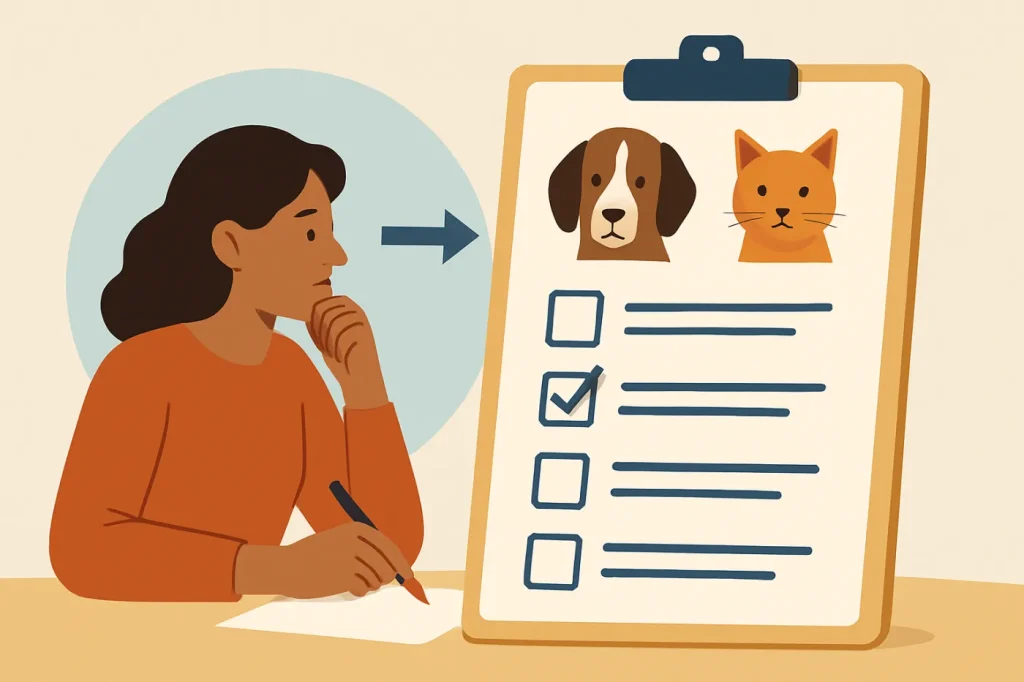
Wondering, “Should I adopt a dog or cat?” and hoping a quiz will decide for you? Use this guide like a realistic, interactive quiz: answer the questions honestly, total your score, and then follow the next‑step lists.
This guide is for people in the United States who:
- Are choosing between a dog and a cat as a first pet
- Need to factor in time, budget, housing rules, and allergies
- Want to know if they should adopt now or wait
You will get:
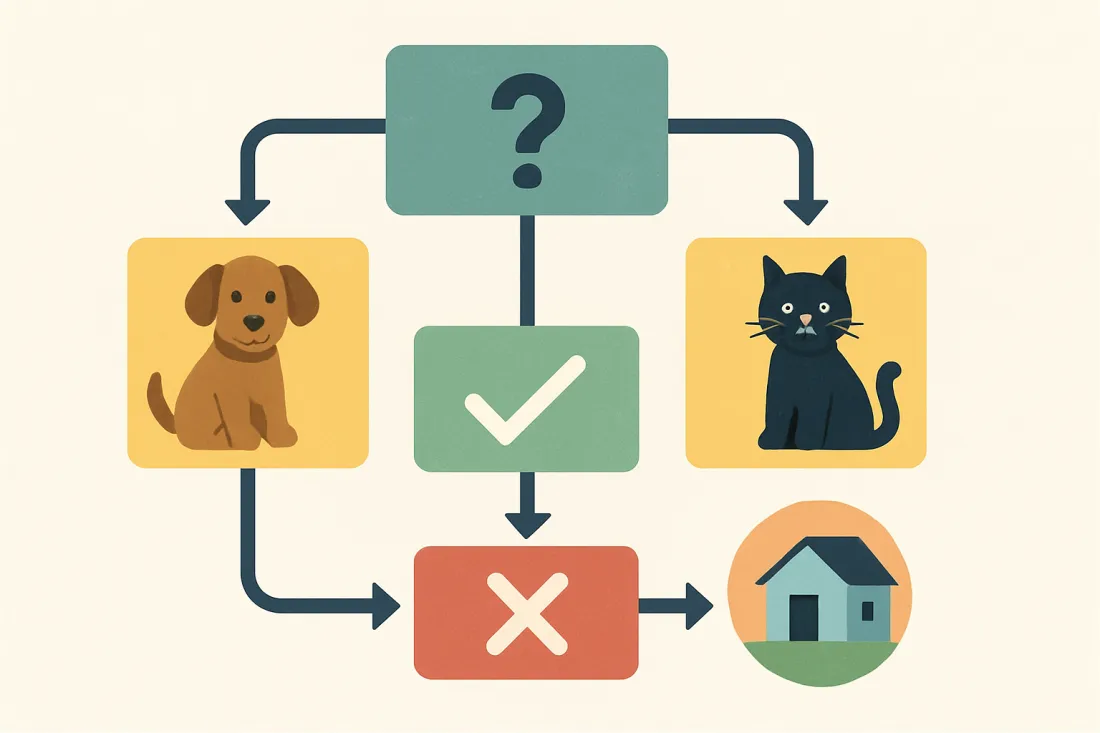
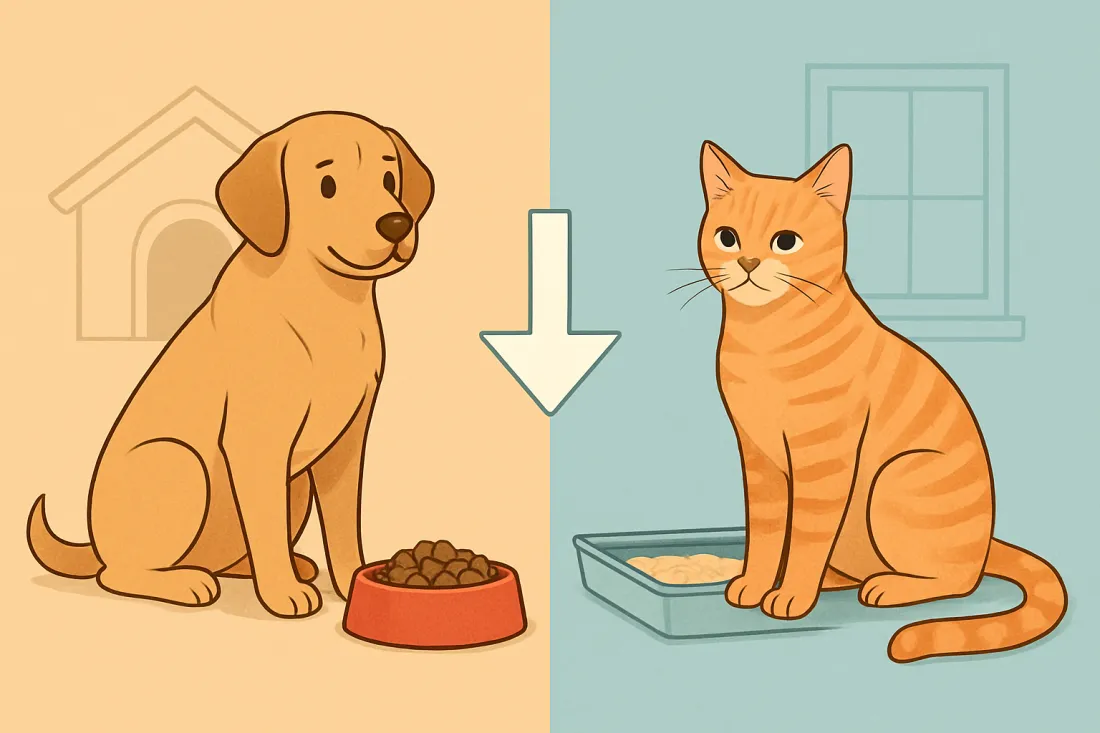
- A practical quiz with scoring and four result types: Dog, Cat, Either, or Not yet
- Real‑life lifestyle scenarios (shift workers, families, retirees, renters)
- US‑specific constraints: landlord rules, pet deposits, and insurance breed limits
- Red flags that mean you should delay adoption
- Concrete next‑step lists after you see your result
How this dog vs cat quiz supports your decision
This quiz does not label you forever as a “dog person” or “cat person.” Instead, it highlights how your current lifestyle lines up with the real needs of dogs and cats, and whether it is kinder to wait. Think of it as a structured conversation about responsible pet ownership, not a personality test.

- Dog is more likely a fit if you want daily outdoor activity, can commit to training and routine, and are home enough for multiple walks and company.
- Cat is more likely a fit if you want companionship with more independence, have limited time for walks, and live in a smaller space or stricter rental.
- Either could work if your schedule is flexible, your housing is pet‑friendly, and you are open to adjusting your lifestyle.
- Not yet is wisest if your housing is unstable, money is very tight, or your schedule is so unpredictable that basic care would be a struggle.
The quiz below turns those ideas into a structured decision.
Interactive‑style quiz: should you adopt a dog or cat?
For each question, choose the option that best matches your current reality (not your ideal future). Then follow the scoring instructions.
1. Daily time you can reliably give to a pet
- Less than 30 minutes most days
Score: Cat +2, Dog 0 - About 30–60 minutes most days
Score: Cat +2, Dog +1 - About 1–2 hours most days
Score: Cat +1, Dog +2 - More than 2 hours most days
Score: Cat +1, Dog +3
2. Typical weekly schedule
- Home most of the day (remote work, retired, stay‑at‑home)
Score: Cat +1, Dog +3 - Standard work hours (roughly 9–5, out 7–9 hours)
Score: Cat +2, Dog +1 - Shift work, nights, or very irregular hours
Score: Cat +3, Dog 0 - Travel overnight for work at least twice a month
Score: Cat +2, Dog 0, Not‑yet flag +1
3. Activity level and lifestyle
- Prefer quiet evenings, reading, gaming, or TV
Score: Cat +3, Dog 0 - Enjoy short walks but not intense exercise
Score: Cat +2, Dog +1 - Like daily walks, hikes, or runs
Score: Cat +1, Dog +3 - Very active and want a companion for outdoor activities
Score: Cat 0, Dog +4
4. Housing type and rules (US‑specific)
- Own a house with a private yard and no HOA pet limits
Score: Cat +1, Dog +3 - Own a condo or townhouse with some pet rules
Score: Cat +2, Dog +1 - Rent an apartment with pet‑friendly policies
Score: Cat +3, Dog +1 - Rent and your lease is unclear or restrictive about pets
Score: Cat +1, Dog 0, Not‑yet flag +2
Important: In the US, many landlords require written approval, pet deposits, or monthly pet rent. Some buildings allow cats but not dogs, or have weight and breed limits. Always confirm your lease and talk to your landlord before adopting.
5. Budget comfort level (ongoing monthly costs)
- Money is very tight; an unexpected vet bill would be a serious problem
Score: Cat +1, Dog 0, Not‑yet flag +2 - You can handle basic food and routine care but big emergencies would be hard
Score: Cat +3, Dog +1 - You have room in your budget and some savings for emergencies
Score: Cat +2, Dog +3 - You have strong savings and are comfortable with higher ongoing costs
Score: Cat +1, Dog +4
For a deeper look at cat expenses, you can read the monthly cost of owning a cat in the US guide and compare it with your budget.
6. Allergies in your household
- No known allergies to pets
Score: Cat +2, Dog +2 - Mild allergies to cats only
Score: Cat 0, Dog +3 - Mild allergies to dogs only
Score: Cat +3, Dog 0 - Moderate or severe allergies to cats and dogs
Score: Cat 0, Dog 0, Not‑yet flag +3
If anyone has asthma or strong allergies, speak with a medical professional before adopting. Hypoallergenic marketing claims are not guarantees.
7. Training and behavior expectations
- I want a low‑maintenance pet; I do not want to do much training
Score: Cat +3, Dog 0 - I can handle basic training but not intensive work
Score: Cat +2, Dog +1 - I am willing to invest time in training and socializing
Score: Cat +1, Dog +3 - I am excited about training and behavior work
Score: Cat 0, Dog +4
If you lean toward a dog and want to understand what training really involves, the basic dog training rules for responsible owners resource is a good next read.
8. Noise tolerance and neighbors
- Thin walls or noise‑sensitive neighbors; complaints are likely
Score: Cat +3, Dog 0 - Some noise is okay but frequent barking would be a problem
Score: Cat +2, Dog +1 - Detached home or very tolerant neighbors
Score: Cat +1, Dog +3 - Rural or very private setting
Score: Cat +1, Dog +4
9. Long‑term stability (next 2–3 years)
- Likely to move, change jobs, or face major life changes soon
Score: Cat +2, Dog +1, Not‑yet flag +1 - Some changes possible but nothing major planned
Score: Cat +2, Dog +2 - Very stable housing and job situation
Score: Cat +2, Dog +3 - Planning big changes but can confidently include a pet in those plans
Score: Cat +1, Dog +2
10. What you want emotionally from a pet
- Quiet companionship nearby while I do my own thing
Score: Cat +3, Dog +1 - Affection and interaction but not constant attention
Score: Cat +2, Dog +2 - A best friend to do activities with and focus on daily
Score: Cat +1, Dog +3 - A strong bond and a reason to get outside and be active
Score: Cat 0, Dog +4
Scoring your quiz and comparing dog vs cat fit
Now total your points:
- Add up all your Cat points.
- Add up all your Dog points.
- Add up all your Not‑yet flag points.
Use this comparison table to interpret your scores. These are guidelines, not rigid rules.
| Score pattern | What it usually means | Likely result | Key next step |
|---|---|---|---|
| Dog ≥ Cat + 5 and Not‑yet flag ≤ 2 | Your lifestyle, time, and housing lean clearly toward a dog, with no major red flags. | Dog | Research breeds and mixes that match your activity level and housing; plan for training and walks. |
| Cat ≥ Dog + 5 and Not‑yet flag ≤ 2 | Your schedule, space, and preferences fit a cat better, with manageable constraints. | Cat | Prepare your home for a cat, including litter box space and scratching options. |
| |Dog − Cat| < 5 and Not‑yet flag ≤ 2 | Both species could work if you choose an individual animal whose energy and needs match you. | Either | Visit shelters, meet both cats and dogs, and focus on individual personality and energy. |
| Not‑yet flag ≥ 3 (regardless of Dog/Cat scores) | There are significant risks: unstable housing, tight finances, heavy travel, or serious allergies. | Not yet | Address the red flags first, then revisit adoption when your situation is more stable. |
Result profiles: what your quiz outcome really means
If your result leans Dog
A dog may be a good fit if you:
- Have time for multiple daily walks and bathroom breaks
- Can commit to training, socialization, and mental stimulation
- Live somewhere that allows dogs and can handle some noise
- Are ready for a more hands‑on, involved relationship
Trade‑offs:
- More time‑intensive than most cats, especially puppies or young dogs
- Often higher ongoing costs (food, training, boarding, grooming for some breeds)
- Harder to leave alone for long workdays or travel without planning pet care
If you are leaning toward a dog and want a structured preparation plan, the first time dog owner checklist USA can help you understand the day‑to‑day responsibilities.
If your result leans Cat
A cat may be a better fit if you:
- Have limited time for walks but can provide daily interaction and play
- Live in an apartment or rental with stricter pet rules
- Prefer a quieter home with less noise risk for neighbors
- Want companionship that allows more independence on both sides
Trade‑offs:
- Cats still need daily care: feeding, litter box cleaning, play, and vet visits
- Some cats are very social and may not like long periods alone
- Allergies to cats are common; unmanaged allergies can be a serious issue
If you rent, it is worth learning how to pet proof an apartment for a cat so you protect both your pet and your security deposit.
If your result is Either
“Either” means your lifestyle could support both a dog or a cat, and the better choice will come down to:
- Your emotional preference after meeting real animals
- Specific housing rules (for example, cats allowed but dogs over a certain weight are not)
- How much training and outdoor time you truly want to add to your life
In this case, visit shelters or rescues and:
- Spend time in both the cat and dog areas
- Ask staff which animals are calm, beginner‑friendly, or good with your type of home
- Notice which interactions feel natural and sustainable for you
If your result is Not yet
“Not yet” is not a failure. It is a sign of responsible pet ownership. Common reasons include:
- Unstable housing or a lease that does not clearly allow pets
- Very tight finances or no cushion for vet care
- Frequent overnight travel or extremely long workdays
- Moderate to severe allergies or health concerns in the household
Use the red‑flag list below to see what to fix before adopting.
Realistic lifestyle scenarios for your quiz results
Scenario 1: Shift worker in a small apartment
You work rotating night shifts, sleep during the day, and rent a small apartment with thin walls. You are often gone 10–12 hours at a time.
- Quiz impact: High points for cats on schedule, housing, and noise; Not‑yet flags if your lease is unclear.
- Likely result: Cat or Not yet, depending on your lease and budget.
- Key checks: Confirm pet rules in writing, plan for quiet play, and consider whether you can give a cat enough interaction when you are awake.
Scenario 2: Family with kids and a yard
You have school‑age children, a house with a fenced yard, and a fairly regular 9–5 schedule. You want a pet to join family activities.
- Quiz impact: Strong dog points for housing, activity, and time; some cat points if you also like quieter companionship.
- Likely result: Dog or Either, depending on your training commitment and budget.
- Key checks: Make sure adults, not just kids, are committed to daily care and training.
Scenario 3: Retiree at home most of the day
You are retired, home most of the time, and want company. You may have some physical limitations but enjoy gentle walks.
- Quiz impact: High points for both cats and dogs on time and stability; the deciding factor is your energy and mobility.
- Likely result: Either, with a lean toward a calm adult dog or an affectionate adult cat.
- Key checks: Consider whether you can safely walk a dog and handle vet visits and grooming.
Scenario 4: Young renter with uncertain plans
You rent with roommates, may move cities in a year or two, and are early in your career with a tight budget.
- Quiz impact: Not‑yet flags for housing and stability; some cat points if your building allows them.
- Likely result: Not yet, or possibly Cat only if your lease is clear and your budget allows.
- Key checks: Think about how you would handle a move, roommate changes, or rent increases with a pet.
US‑specific rules that affect dog or cat adoption
Landlord rules and pet deposits
- Many leases specify whether pets are allowed, which species, and any size or number limits.
- Landlords often charge a pet deposit or monthly pet rent, especially for dogs.
- Some buildings allow only cats or only small pets; others ban certain dog sizes or types.
- Unauthorized pets can lead to fines, forced rehoming, or even eviction.
Action: Read your lease carefully and get written permission before adopting. Do not rely on verbal “it should be fine” comments.
Insurance and breed‑related restrictions for dogs
- Some homeowners and renters insurance policies have conditions related to certain dog types.
- Landlords or homeowners associations may also have their own lists of restricted breeds or size limits.
- These rules vary widely, so you must check your specific policy and community rules.
Action: Before adopting a dog, especially a large one, contact your insurance provider and review any community rules so you are not surprised later.
Local ordinances and pet limits
- Some cities or counties limit the number of pets per household.
- Licensing, vaccination, and leash rules can differ by area.
- Noise and nuisance rules may affect how complaints about barking are handled.
Action: Check your city or county website or call local animal control to confirm current pet rules where you live.
Next‑step list after your quiz result
If your result is Dog
- Confirm housing and insurance
- Check your lease or HOA rules for dog size, number, and any restrictions.
- Contact your insurance provider about any dog‑related conditions.
- Plan your daily routine
- Decide who will handle morning, midday, and evening walks.
- Plan for bathroom breaks if you are gone more than a typical workday.
- Budget realistically
- List recurring costs: food, routine vet care, flea/tick prevention, and grooming if needed.
- Set aside an emergency fund or explore pet insurance options.
- Prepare your home
- Choose a safe space for a crate or bed.
- Remove hazards like loose cords, toxic plants, or accessible trash.
- Plan for training and socialization
- Look up local positive‑reinforcement trainers or group classes.
- Decide house rules in advance (furniture, feeding, off‑limits rooms).
- Use a responsible pet ownership list for new dog owners to make sure you are ready.
If your result is Cat
- Confirm housing rules
- Check your lease for cat policies, deposits, and any limits.
- Ask about pet screening services or extra paperwork if you rent.
- Plan the litter box setup
- Choose a quiet, low‑traffic spot that is easy to clean.
- Ensure you can scoop daily and fully change litter regularly.
- Budget for ongoing care
- List recurring costs: food, litter, routine vet care, flea prevention if recommended.
- Consider saving for unexpected vet visits.
- Prepare your home
- Provide scratching posts or pads to protect furniture.
- Secure windows and balconies; check screens for safety.
- Think about future changes
- Plan how you will move with a cat if you change apartments or cities.
- Consider who could help with care if you travel.
If your result is Either
- Clarify your real preference
- Write down what excites you more: walks and training, or quiet companionship and play.
- Talk to friends or family who own dogs and cats about their daily routines.
- Visit shelters and rescues
- Meet both cats and dogs; notice which interactions feel natural.
- Ask staff which animals are low‑energy, beginner‑friendly, or good with your housing type.
- Match individual personality, not just species
- Look for animals whose energy level and temperament match your lifestyle.
- Be open to adult or senior pets, not just puppies or kittens.
If your result is Not yet
- Identify your top 2–3 red flags
- Is it housing, money, schedule, health, or something else?
- Write them down clearly.
- Set realistic goals
- For housing: aim for a future lease that clearly allows pets.
- For budget: build a small emergency fund dedicated to future pet care.
- Get pet time without full responsibility
- Volunteer at a shelter or rescue.
- Offer to pet‑sit or walk a friend’s dog or visit their cat.
- Revisit the quiz later
- After your situation changes, take the quiz again with updated answers.
Red flags that mean you should delay adoption
If several of these apply to you right now, waiting is the kinder and more responsible choice for both you and any future pet.
- Unstable housing: You may move soon, your lease is month‑to‑month, or your landlord is not supportive of pets.
- Unclear or restrictive lease: Your lease does not mention pets, bans them, or allows them only with written approval you do not yet have.
- Very tight finances: You struggle to cover current bills or have no way to handle an unexpected vet visit.
- Extremely long or unpredictable hours: You are away 10–14 hours most days with no reliable backup for pet care.
- Frequent overnight travel: You are away from home several nights a month and have no trusted, affordable pet care plan.
- Serious allergies or health issues: Someone in the home has strong reactions to pets or health conditions that would make care difficult.
- Major life changes coming soon: You expect a new baby, a demanding new job, or a big move in the near future and already feel stretched.
- Unwillingness to adjust lifestyle: You want a pet but do not want to change your routine, budget, or home setup at all.
Delaying adoption until these issues are addressed is a sign of respect for the long‑term commitment pets require.
Common mistakes with “should I adopt a dog or cat” quizzes
- Answering for an ideal self, not real life
Choosing the “I walk every day” answer when you rarely do leads to a mismatch, especially with active dogs. - Ignoring housing and legal constraints
Falling in love with a dog online without checking your lease, pet deposits, or insurance can create serious problems later. - Underestimating costs
Assuming food and a few toys are the only expenses, and not planning for vet care, grooming, or emergencies. - Over‑relying on breed stereotypes
Assuming all cats are aloof or all dogs are hyper; individual personality matters more than labels. - Expecting a pet to fix major life problems
Adopting to solve loneliness, relationship issues, or mental health struggles without support can put unfair pressure on the animal. - Skipping long‑term planning
Not thinking about who will care for the pet during vacations, moves, or life changes.
FAQ about the “should I adopt a dog or cat” quiz
What should I understand about a “should I adopt a dog or cat” quiz?
Use the quiz as a structured way to think about your time, budget, housing, and preferences, not as a final verdict. It highlights whether your current lifestyle fits better with a dog, a cat, either, or if you should wait until your situation is more stable.
Can a quiz really tell me which pet to adopt?
No quiz can guarantee the perfect choice. It can narrow your options and reveal red flags, but you still need to meet real animals, talk to shelter staff, and be honest about your daily life before deciding.
What mistakes should I avoid when using a dog or cat quiz?
Avoid answering based on who you wish you were instead of your real habits, ignoring housing and financial limits, and assuming all dogs or all cats behave the same. Do not skip checking your lease or insurance just because a quiz said you are a “dog person” or “cat person.”
What should I do next after reading and taking the quiz?
First, interpret your result using the scoring table. Then follow the matching next‑step list: confirm housing and budget, plan your daily routine, and visit shelters or rescues to meet animals that fit your lifestyle. If your result is “Not yet,” focus on stabilizing housing, finances, or schedule before revisiting adoption.
How do I know if I am ready for any pet at all?
You are more likely ready if your housing is stable and clearly pet‑friendly, you can afford ongoing care and occasional vet visits, you have daily time for interaction and basic care, and you are willing to adjust your lifestyle for 10–15 years or more. If several of those are not true yet, work on them first and consider temporary options like fostering or volunteering in the meantime.