
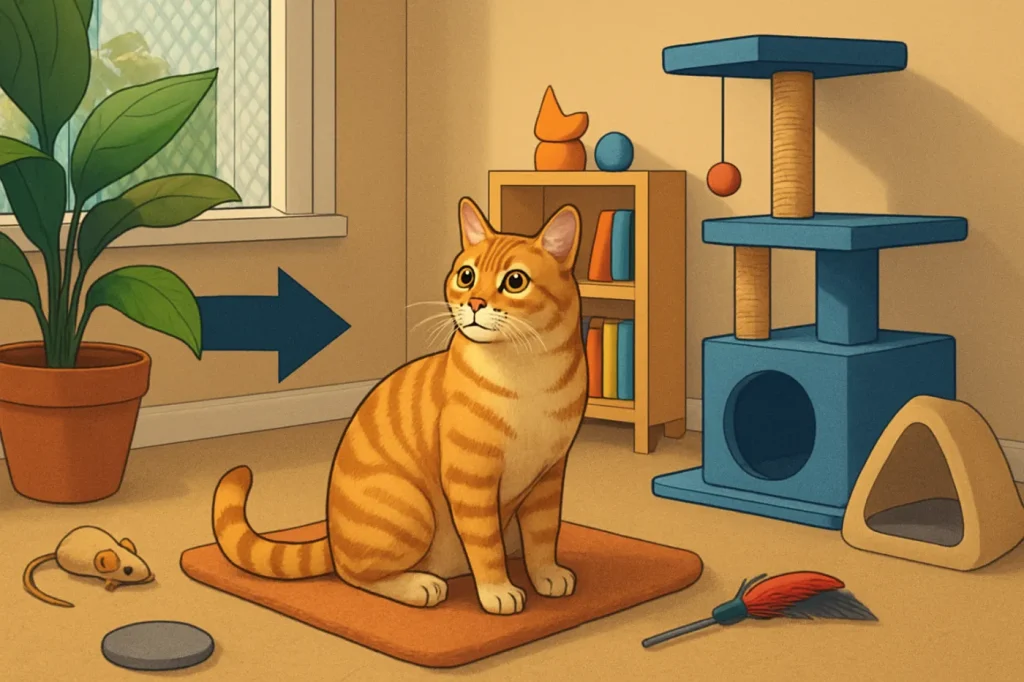
To keep an indoor cat happy and safe, focus on three daily pillars: a cat-proofed home, a predictable care routine, and enough play and enrichment to let your cat “be a cat” (hunt, climb, scratch, explore, and rest). When these are in place, many behavior and health problems become less likely.
Key welfare needs of indoor-only cats
Indoor cats are protected from cars, predators, and many outdoor diseases, but they rely entirely on you for every basic need. A content indoor cat has:
- Safety – secure windows and balconies, no toxic plants, cords, or small objects that can injure or be swallowed.
- Food and water – an appropriate diet, portion control, and fresh water available every day.
- Toilet needs – clean, easy-to-access litter boxes in quiet, low-stress spots.
- Comfort and rest – warm, soft sleeping areas and safe hiding spots.
- Mental stimulation – toys, play, climbing, scratching, and chances to “hunt” for food.
- Social contact – gentle interaction with people and, if present, other pets.
- Healthcare – regular vet visits, vaccinations recommended by your vet, and parasite prevention suited to your region.
When any of these are missing, indoor cats often show it through behavior: scratching furniture, meowing at night, peeing outside the litter box, overeating, or seeming withdrawn and “bored.”
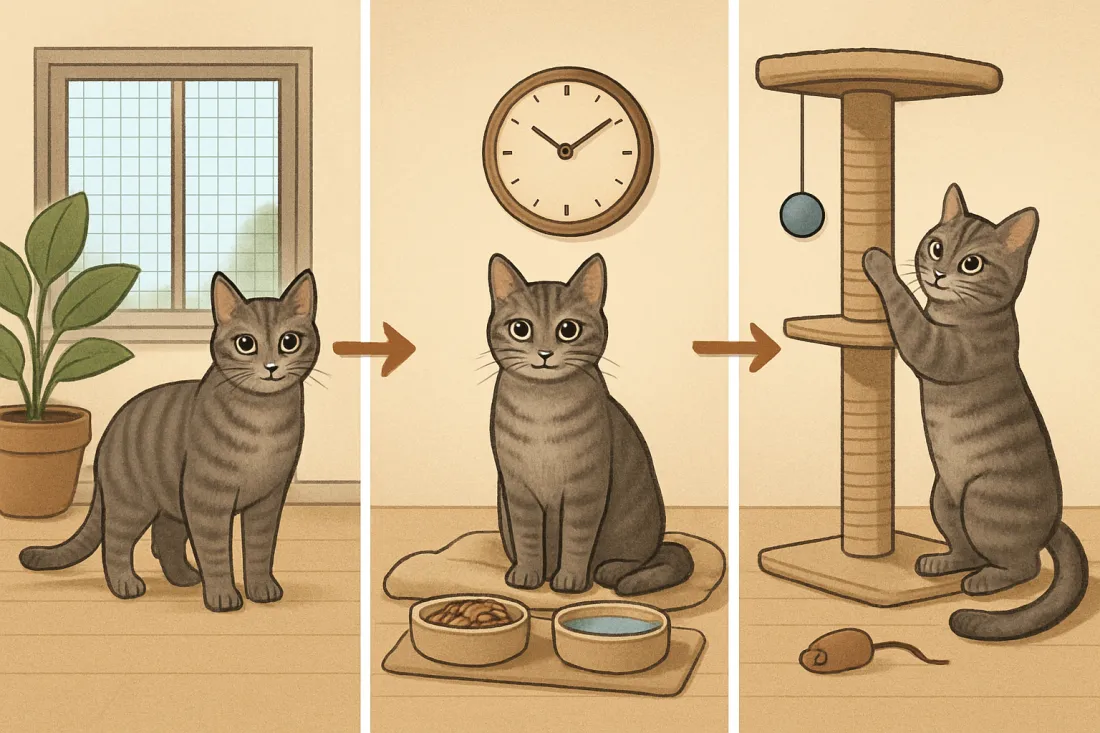
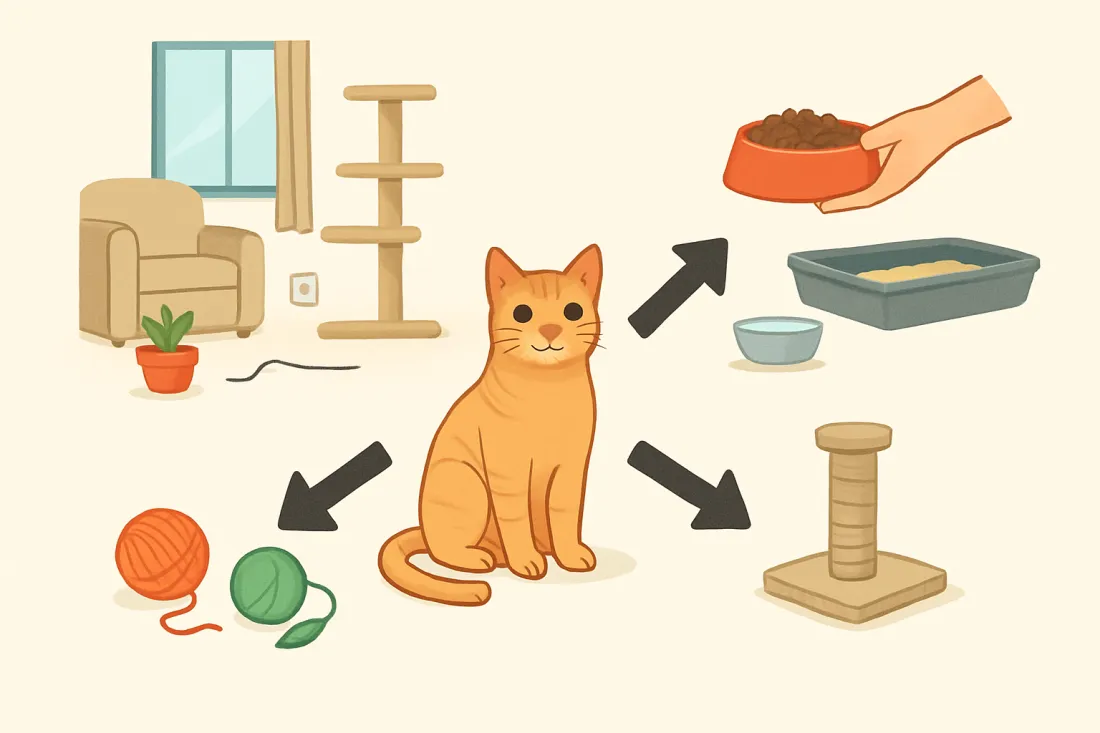
Home safety checklist for indoor cats
Use this home-safety checklist to walk through your space room by room. Fix anything risky before leaving your cat unsupervised.

Windows, balconies, and doors
- Install sturdy screens on all openable windows; check regularly for tears and loose frames.
- Keep tilted or partially open windows secured so a cat cannot squeeze through or push them wider.
- Never leave a cat alone on an open balcony; use secure netting or keep the door closed.
- Use slow-closing or self-closing doors where possible to reduce escape chances.
- Teach family members and roommates to look for the cat before opening exterior doors.
Cords, strings, and small objects
- Bundle and secure blind cords; use cord winders or cut looped cords into two separate strands to reduce strangulation risk.
- Hide or cover electrical cords with cord protectors; offer safe chew toys if your cat likes cords.
- Store string-like items (yarn, thread, ribbons, hair ties, rubber bands) in closed containers.
- Pick up small objects (earbuds, beads, kids’ toys) that could be swallowed or cause choking.
Plants and household toxins
Many common houseplants and household products can harm cats. Because exact toxicity varies, treat anything you are unsure about as unsafe until you check it.
- Check every plant by name against a cat-safe plant list from a trusted veterinary source.
- Remove or place out of reach any plant that is listed as toxic to cats.
- Store cleaning products, detergents, and bleach in cabinets the cat cannot open.
- Keep medications, supplements, and cosmetics in closed drawers or cabinets.
- Be careful with essential oils, diffusers, and scented products; many are not safe for cats. Confirm safety with your vet before using them around your cat.
- Keep human food that can be dangerous to cats (such as chocolate, alcohol, and other items your vet warns about) out of reach.
Appliances and furniture
- Always check washers, dryers, and dishwashers before closing and starting them.
- Secure heavy objects and leaning furniture that a climbing cat could tip over.
- Use stove knob covers if your cat jumps on counters and could turn knobs.
- Block access to reclining chairs and fold-out sofas when operating them.
Filled comparison table: safety vs enrichment priorities
| Area of the home | Top safety action | Top enrichment action | What to double-check |
|---|---|---|---|
| Windows and balcony | Install secure screens and prevent falls or escapes. | Add a padded window perch for bird and street watching. | Screen frames are tight; no gaps large enough for a cat’s head. |
| Living room | Secure TV, bookshelves, and cords so they cannot be pulled down. | Place a tall scratching post and cat tree near family seating. | Scratching post is stable and tall enough for a full-body stretch. |
| Kitchen | Keep cleaning products and trash in closed cabinets or bins. | Use a puzzle feeder or treat ball during meal prep time. | No food left on counters that could be toxic or cause stomach upset. |
| Bedroom | Remove string toys and hair ties from nightstands and floors. | Provide a cozy bed or box where the cat can sleep undisturbed. | Check under the bed for small objects and plastic wrappers. |
| Laundry / utility room | Keep washer and dryer doors closed when not in use; check before starting. | Limit access unless supervised; this room is usually more about safety. | No open detergent pods or loose powders within reach. |
Printable-style home-safety and enrichment checklist
Use this ready-to-review list. You can copy it into a notes app or print it and keep it on the fridge.
- All windows have secure screens; balcony access is supervised or cat-proofed.
- Blind cords and electrical cords are bundled, covered, or out of reach.
- String, yarn, ribbons, and hair ties are stored in closed containers.
- Every plant has been checked for cat safety; toxic plants are removed or blocked.
- Cleaning products, medications, and cosmetics are in cat-proof cabinets.
- Trash cans have lids or are kept inside cabinets.
- Washer, dryer, and dishwasher are checked before use.
- At least one tall, stable scratching post is available.
- At least one cat tree or elevated perch is available near a window.
- Daily play sessions are scheduled and actually happen.
- Litter boxes are clean, easy to reach, and in quiet locations.
- Fresh water is available in at least two spots.
Daily care routine example for an indoor cat
A predictable routine helps cats feel secure and reduces stress. Adjust the times to your schedule, but keep the order and spacing similar from day to day. For more detail on structuring your day, you can also look at a dedicated daily care routine for indoor cats.
Sample weekday routine for one healthy adult indoor cat
- Morning
- Feed measured breakfast (wet, dry, or combination as advised by your vet).
- 5–10 minutes of interactive play (wand toy, chase game) before or after breakfast.
- Quick litter box scoop; check for any changes in stool or urine.
- Midday (if someone is home)
- Short play or grooming session.
- Refresh water; add a few pieces of kibble to a puzzle feeder if part of your feeding plan.
- Evening
- Feed dinner at a similar time each day.
- 10–20 minutes of active play broken into 2–3 mini sessions.
- Clean food bowls; refill water.
- Scoop litter box again.
- Before bed
- Calm interaction: petting, brushing, or quiet lap time if your cat enjoys it.
- Quick safety check: windows closed or screened, cords and small items picked up.
Environmental enrichment ideas that actually work
Enrichment is what keeps an indoor cat from feeling like they live in a “soft cage.” Aim to give your cat ways to climb, scratch, hide, hunt, and observe.
Vertical space and safe hiding spots
- Cat trees with multiple levels and a heavy base so they do not tip.
- Window perches with secure brackets so your cat can watch birds and people.
- Wall shelves designed for cats to create a “cat highway” along the wall.
- Hideaways like covered beds, cardboard boxes, or tunnels where your cat can retreat.
Scratching posts and surfaces
- Provide at least one tall vertical scratcher (taller than your cat when fully stretched).
- Add horizontal scratchers (cardboard or sisal mats) for variety.
- Place scratchers near sleeping spots and near furniture your cat has tried to scratch.
- Make scratchers attractive with toys, catnip (if your cat responds to it), or treats.
Puzzle feeders and “hunting” for food
- Use puzzle bowls or treat balls that make your cat work a little for part of their meal.
- Hide small portions of dry food in different safe spots so your cat can “hunt.”
- Rotate puzzle feeders to keep them interesting.
- Adjust the total daily food amount so you are not overfeeding.
Toys and rotation
- Have a mix of wand toys, balls, soft toys, and crinkle toys to match different moods.
- Keep string toys and wand toys out of reach when you are not supervising.
- Rotate toys every few days so they feel “new” and exciting.
- Use simple household items (paper bags without handles, cardboard boxes) as supervised toys.
Play and exercise schedule by age
Different ages need different amounts and types of play. Use this as a guideline and adjust based on your cat’s health and energy level. If your cat has medical issues, ask your vet what level of exercise is safe.
| Age group | Daily active play target | Best play types | Watch-outs |
|---|---|---|---|
| Kitten (up to about 12 months) | Several short sessions totaling roughly 30–60 minutes spread through the day | Chasing wand toys, small balls, climbing cat trees, gentle wrestling with soft toys | They tire quickly; avoid rough play with hands and unsafe small or stringy toys. |
| Young adult (1–5 years) | At least 20–40 minutes of interactive play daily, in 2–4 sessions | Fast chase games, jumping for wand toys, puzzle feeders, clicker training | Monitor weight and energy; high-energy cats may need more play to reduce night zoomies. |
| Mature adult (6–10 years) | About 15–30 minutes of moderate play daily, in 2–3 sessions | Short chase bursts, slower wand play, food puzzles, scent games | Watch joints and breathing; keep jumps lower and surfaces non-slip. |
| Senior (10+ years) | Multiple gentle sessions totaling roughly 10–20 minutes, at the cat’s pace | Gentle batting at toys, slow wand movements, easy food puzzles, scent exploration | Arthritis and other health issues are common; confirm exercise ideas with your vet. |
Litter box setup and maintenance guide
Many “behavior problems” are really litter box problems. A good setup prevents stress and accidents and is one of the easiest ways to keep an indoor cat comfortable.
Basic litter box rules
- Have one box per cat, plus one extra when possible, especially in multi-cat homes.
- Choose a box that is large enough for your cat to turn around comfortably.
- Use unscented clumping litter or another texture your cat already likes.
- Place boxes in quiet, low-traffic areas away from loud appliances.
- Avoid putting boxes right next to food and water bowls.
Cleaning schedule
- Scoop at least once daily; twice is better for multi-cat homes.
- Top up litter to keep a consistent depth your cat prefers.
- Wash the box with mild, unscented soap and water on a regular schedule (for example, every 2–4 weeks) or sooner if soiled.
- Replace boxes that are scratched, cracked, or heavily stained.
Common litter box mistakes
- Using strongly scented litter that bothers a cat’s sensitive nose.
- Hiding the box in a hard-to-reach or scary place (noisy laundry room, busy hallway).
- Switching litter type abruptly without a gradual mix-and-transition period.
- Not having enough boxes in multi-cat homes, which can cause bullying and accidents.
Signs of stress or boredom in indoor cats
Indoor cats often show stress or boredom through subtle changes first. Catching these early lets you adjust the environment or get veterinary help before problems grow.
Common signs of stress or boredom
- Overgrooming (licking or chewing fur until it thins or bald spots appear).
- Hiding more than usual or avoiding people and other pets.
- Increased vocalization (meowing, yowling) especially at night.
- Destructive scratching on furniture or doors despite having scratchers.
- Changes in appetite – eating much more or much less than usual.
- Litter box changes – peeing or pooping outside the box, straining, or visiting frequently.
- Restlessness – pacing, zooming around, or seeming unable to settle.
What to do if you notice these signs
- Rule out medical problems first. Sudden behavior changes, litter box issues, or appetite changes always deserve a call to your vet.
- Check the basics. Is the litter box clean and easy to reach? Are food and water fresh? Has anything changed in the home (new pet, move, construction noise)?
- Increase predictable play. Add at least one extra short play session each day for a week and see if behavior improves.
- Upgrade enrichment. Add a new scratching post, puzzle feeder, or window perch; rotate toys more often.
- Create safe zones. Provide quiet hiding spots where your cat will not be disturbed.
- Ask your vet about behavior support. For ongoing stress, your vet may suggest behavior strategies or refer you to a behavior professional.
Vet care and vaccinations for indoor cats
Indoor cats still need regular veterinary care. Even if they never go outside, they can be exposed to diseases through people, other pets, or insects that come indoors.
Routine vet care
- Wellness exams on a schedule recommended by your vet (often at least once a year for healthy adults, more often for kittens and seniors).
- Vaccinations based on your cat’s age, health, and risk level, as advised by your veterinarian.
- Parasite prevention (fleas, ticks, intestinal parasites) appropriate for your region and lifestyle.
- Dental checks during wellness visits; home dental care if your vet recommends it.
- Weight and body condition monitoring to catch weight gain or loss early.
For a structured look at timing and topics to discuss with your vet, see a preventive care schedule for indoor cats.
Simple algorithm: how to keep an indoor cat happy and safe
Use this step-by-step process when you bring a cat indoors or when you want to improve your current setup.
- Secure the space
- Walk through your home with the safety checklist.
- Fix window screens, remove or secure cords, and store toxins safely.
- Set up core resources
- Place litter boxes, food and water stations, scratchers, and sleeping spots.
- Make sure each resource is easy to access and not all crowded into one corner.
- Create vertical and hiding options
- Add at least one cat tree or window perch.
- Provide boxes or covered beds for hiding.
- Plan a daily routine
- Choose consistent times for feeding, play, and litter box cleaning.
- Write them down or set reminders until they become habit.
- Introduce enrichment gradually
- Start with one or two puzzle feeders or new toys.
- Rotate items weekly so your cat does not get bored.
- Monitor behavior and health
- Watch for changes in appetite, litter box use, grooming, or energy.
- Contact your vet if you notice sudden or worrying changes.
- Adjust as your cat ages
- Lower perches and add ramps for seniors.
- Change play style to match energy and any medical needs.
Common mistakes that make indoor cats unhappy
A few patterns show up again and again in homes where indoor cats are stressed. Avoiding these mistakes makes life easier for both you and your cat.
- Thinking “indoor” automatically means “easy.” Indoor cats still need daily attention, play, and vet care.
- Leaving cats alone with no stimulation. No toys, no window view, and no playtime often leads to boredom and behavior issues.
- Using punishment for unwanted behavior. Yelling or spraying water usually increases fear and does not teach what to do instead. Redirect to appropriate outlets (scratching posts, toys) and reward good choices.
- Ignoring subtle stress signs. Waiting until a cat is peeing on the bed or hiding all day makes problems harder to fix.
- Not cat-proofing before bringing a new cat home. New cats explore everything; unsecured hazards are more dangerous in the first days.
- Assuming indoor cats do not need vaccines or parasite prevention. Your vet can explain which protections still matter indoors.
If you are also setting basic boundaries for behavior, a guide to basic house rules for dogs and cats can help you keep the home calm for everyone.
FAQ about keeping indoor cats happy and safe
What is the 3-3-3 rule for cats?
The “3-3-3 rule” is a popular way to describe how long it can take many cats to settle into a new home. While every cat is different, people often use it as a reminder that:
- In the first few days, a cat may hide, eat less, or seem overwhelmed.
- After a few weeks, many cats start to relax, explore more, and show their personality.
- It can take a few months for a cat to fully trust, learn the routine, and feel at home.
Use this as a patience reminder, not a strict timeline. Go at your cat’s pace and keep the environment calm and predictable.
How do I make my indoor cat happier?
Focus on three daily habits:
- Play every day with interactive toys that mimic hunting.
- Offer choices – multiple resting spots, scratchers, and hiding places.
- Keep a routine – feed, play, and clean the litter box at fairly consistent times.
Then add variety: rotate toys, use puzzle feeders, and give your cat safe views of the outdoors through windows or a secure screened area.
What is “I love you” in cat language?
Cats do not use words, but they show affection through body language. Common “I love you” signals include:
- Slow blinking while looking at you.
- Head bunting (gently bumping you with their head).
- Kneading with their paws when relaxed on or near you.
- Choosing to be near you even when they have other options.
You can “say it back” by slow blinking at your cat, speaking softly, and respecting their boundaries when they walk away.
What’s the silent killer for cats?
People sometimes use the phrase “silent killer” for several different risks, including certain toxins and diseases that may not show obvious signs at first. Because there is no single agreed meaning, the safest approach is to:
- Keep all potential toxins (plants, human medications, cleaning products, and unsafe foods) out of reach.
- Schedule regular vet checkups so hidden health problems can be found early.
- Watch for subtle changes in behavior, appetite, weight, or litter box use and discuss them with your vet.
Your veterinarian can explain which specific risks are most important for cats in your area and household.
Do indoor cats get bored?
Indoor cats can get bored if they do not have enough stimulation. Signs include overgrooming, meowing for attention, or destructive behavior. Prevent boredom with daily play, climbing and scratching options, puzzle feeders, and regular interaction with you.
Is it cruel to keep a cat indoors all the time?
Keeping a cat indoors is not cruel when their physical and emotional needs are met. A safe, enriched indoor life usually protects cats from many outdoor dangers. The key is to provide space to climb and hide, daily play, social contact, and regular vet care so your cat can express natural behaviors while staying protected.