
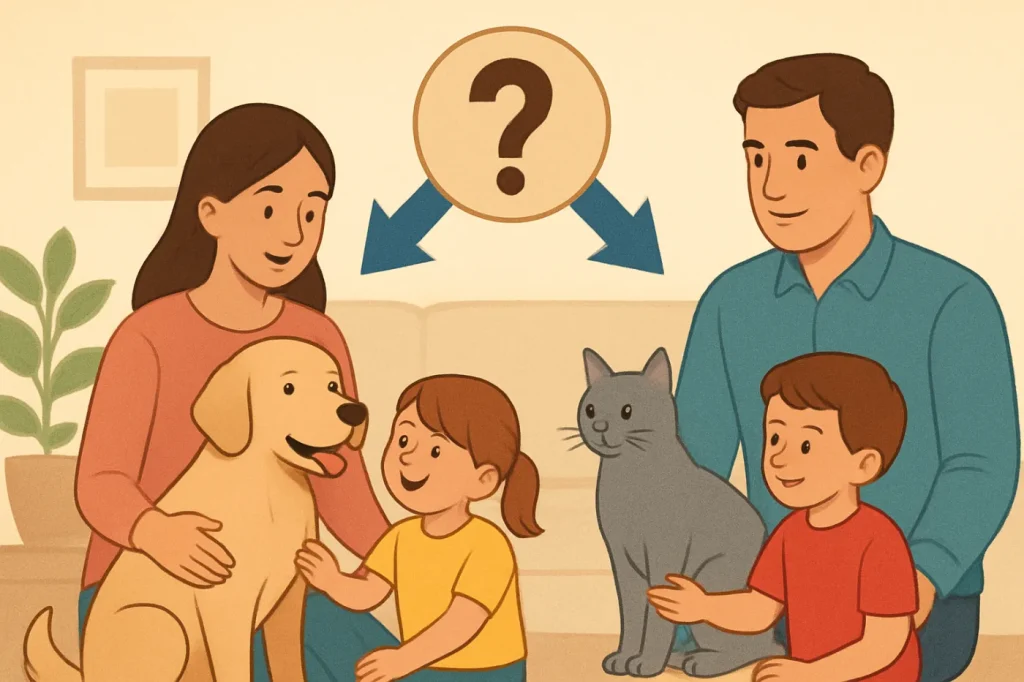
For most families with young children in the United States, the safest and most suitable first pet is usually a calm, people-social adult dog or cat with a gentle, tolerant temperament—not a tiny puppy or kitten and not a high-energy or nervous animal. Whether a dog or cat is “best” depends less on species and more on your kids’ ages, your schedule, your home, and the individual animal’s personality.
This guide walks through how to choose between a dog and a cat, which traits to look for and avoid, and a step-by-step checklist to decide if a specific pet is a good fit for your family.
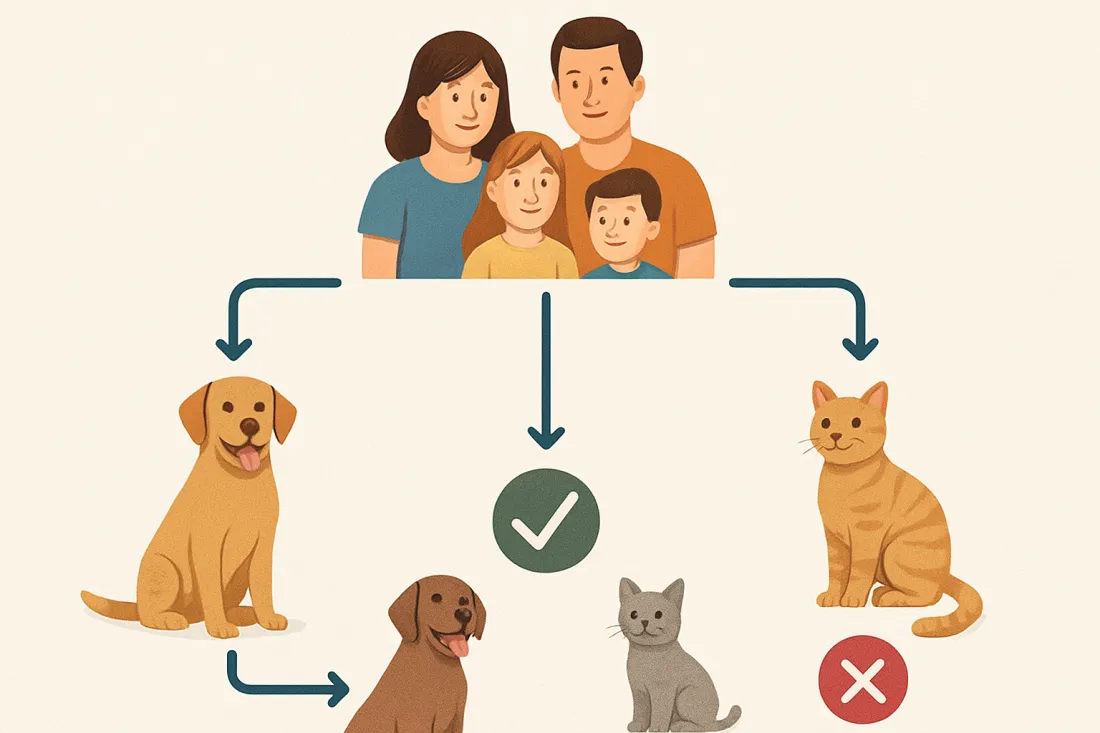
Dog vs cat for families with young children: which fits your situation?
Both dogs and cats can be wonderful with kids, but they fit different lifestyles. Use this overview to narrow your direction before you look at individual animals.
When a dog usually fits better
- You want a very interactive companion for outdoor play, walks, and training games.
- At least one adult can reliably handle daily walks, training, and supervision.
- Your children are old enough (often around early elementary age) to follow rules like “no hugging the dog while it eats” and “let the dog walk away.”
- You have stable housing that allows dogs and enough indoor space for a dog bed and play area.
When a cat usually fits better
- You want a lower-maintenance companion that does not need walks.
- Your schedule is busy, and you can manage daily feeding, litter box cleaning, and some play, but not long outdoor sessions.
- You live in an apartment or rental with limited space or pet restrictions.
- Your children are gentle by nature or still very young, and you can supervise their interactions closely.
Dog vs cat for young families: side-by-side comparison
| Factor | Family dog | Family cat |
|---|---|---|
| Daily time needed from adults | Higher – walks, training, outdoor potty breaks, grooming depending on coat | Moderate – feeding, litter box, short play sessions, basic grooming |
| Typical kid interaction | Very hands-on – fetch, walks, training, cuddles (with supervision) | On the cat’s terms – play and petting when the cat chooses, more independent |
| Space needs | More – bed/crate, indoor play space, safe outdoor access for walks | Less – vertical space (cat trees, shelves) often more important than floor space |
| Noise level | Can bark at visitors, noises, or excitement | Usually quieter – meows and occasional zoomies |
| Best for | Active families who enjoy outdoor time and training | Families wanting a calmer, more independent pet |
| Risk with rough handling | Large dog can knock kids over; small dog can be injured by kids | Cat may scratch or hide; small body makes them easy to injure if grabbed |
If you are leaning toward a dog and want help choosing a specific type, you can also look at guidance on best dog breeds for families with kids in the US once you understand your family’s needs.

Key factors to consider before choosing any pet
Before you fall in love with a cute face, step back and look at your family’s reality. These factors matter more than the animal’s species or breed label.
1. Children’s ages and behavior
- Toddlers and preschoolers (roughly 1–4 years)
They move unpredictably, grab, and fall. They cannot reliably follow safety rules yet. For this age group, prioritize:- Very calm, tolerant adult animals.
- Pets that are already used to children.
- Constant adult supervision during any interaction.
Avoid tiny, fragile pets or very nervous animals that might bite or scratch when startled.
- Early elementary kids
They can learn and follow simple rules with reminders. This is often when families successfully add a pet. Focus on:- Teaching kids how to read basic body language (tail tucked, ears back, hiding).
- Clear rules: no disturbing the pet while eating or sleeping, no riding or hugging tightly.
- Shared chores appropriate to their age (filling water bowl, helping with brushing).
- Older children and preteens
They can take on more responsibility but still need adult backup. A wider range of pets can work, including slightly higher-energy dogs, as long as adults remain the primary caregivers.
2. Family energy level and routine
Be honest about how you live on a typical weekday, not how you wish you lived.
- Very active families who already walk, hike, or play outside most days may enjoy a dog that joins those activities.
- Busy or low-energy families who spend more time indoors may be happier with a calm dog that needs short walks or a friendly cat that plays inside.
- If adults work long hours away from home, a pet that tolerates alone time (often a cat or a very laid-back dog with support like a dog walker) is safer than a high-energy dog that becomes frustrated.
3. Allergies and health considerations
- If anyone in the household has allergies or asthma, talk with their healthcare provider before adopting a pet.
- Spend time around dogs or cats first (friends’ homes, shelters) to see how severe reactions are.
- Remember that no pet is truly “hypoallergenic.” Some individuals may shed less, but dander and saliva can still trigger symptoms.
- Factor in cleaning: frequent vacuuming, washing bedding, and using air filters can help reduce allergens.
4. Housing, space, and rules
- Renters: Check your lease for pet policies, size limits, and deposits before you adopt.
- Space: Large, energetic dogs need more room to move and a safe place to rest away from kids when they are tired. Cats often care more about vertical space (cat trees, shelves) than square footage.
- Outdoor access: Dogs need safe outdoor potty breaks and exercise. Cats can live happily indoors if you provide scratching posts, toys, and climbing spots.
5. Time and budget over the pet’s lifetime
Pets are a long-term commitment. Many dogs and cats live well over a decade. Beyond food and basic supplies, plan for preventive vet care, possible emergencies, and boarding or pet-sitting when you travel. For a deeper look at budgeting, you can review typical pet costs for families with children to understand the ongoing financial commitment.
Family-friendly traits in dogs and cats (beyond specific breeds)
Labels like “family dog” or “good with kids” are not enough. Focus on the individual animal’s behavior and history.
Dog traits that tend to work well with young children
- Calm, steady energy – Enjoys play but can settle down easily. Does not stay in constant overexcited mode.
- Gentle mouth and body control – Takes treats softly, does not nip during play, and does not body-slam people when excited.
- Friendly but not clingy – Likes people and seeks attention, but can also relax alone on a bed or mat.
- Comfortable being touched – Tolerates gentle petting on back, shoulders, and sides. Ideally comfortable with basic handling like brushing.
- Low to moderate prey drive – Not obsessed with chasing every moving thing, which can be safer around running children.
- Already house-trained and past the baby stage – Many families do better with an adult dog that is done with teething and middle-of-the-night potty breaks.
Cat traits that tend to work well with young children
- Social and curious – Approaches people, explores calmly, and does not hide constantly.
- Enjoys gentle petting – Leans into touch, purrs, and chooses to stay near people.
- Predictable reactions – Walks away or hides when done interacting instead of swatting without warning.
- Playful but not rough – Uses toys rather than hands as targets; does not routinely bite or claw during play.
- Comfortable with some noise – Does not panic at normal household sounds like kids talking, TV, or vacuuming.
Why adult pets are often safer than puppies or kittens
- Temperament is more visible – With adults, you can see their true personality and energy level.
- Less fragile – Puppies and kittens are physically delicate and can be injured by accidental rough handling.
- Fewer sharp baby teeth and claws in constant use – Young animals explore the world with their mouths and paws, which can be hard on small children.
- Training foundation – Many adult pets already know basic manners and house rules.
Red-flag traits to avoid when you have small kids
Even if an animal is cute or a favorite breed, certain traits are risky around young children. Take these seriously when you meet potential pets.
Behavior red flags in dogs
- Guarding food, toys, or resting spots – Growling, stiffening, or snapping when someone approaches their bowl, bone, or bed.
- Strong startle reactions – Lunging, snapping, or panicking at sudden movements or noises.
- History of biting or serious aggression – Especially toward children or when touched.
- Extreme fearfulness – Constant cowering, hiding, or freezing; may bite if cornered.
- Very high, uncontrolled energy – Constant jumping, mouthing, and inability to calm down even with guidance.
- Fragile size with rough kids – Tiny dogs can be easily injured if a child falls on them or picks them up incorrectly.
Behavior red flags in cats
- Frequent swatting or biting – Uses claws or teeth quickly when touched, even gently.
- Very low tolerance for handling – Hisses, growls, or struggles intensely when picked up or petted.
- Extreme skittishness – Spends nearly all time hiding; may panic if cornered by a curious child.
- Play aggression – Regularly attacks hands and feet during play, making it hard for kids to interact safely.
Household mismatch red flags
- No adult time available – Expecting a child to be the main caregiver is unfair to both child and pet.
- Unwillingness to supervise – Young kids and animals should not be left together unsupervised, especially in the early months.
- Ignoring housing rules – Adopting a pet that violates your lease or local rules can lead to stressful rehoming later.
Dog vs cat for different family situations: detailed comparison table
Use this table to compare how dogs and cats fit common family situations with young children.
| Family situation | Dog – how it fits | Cat – how it fits | Key risks and what to watch |
|---|---|---|---|
| Both parents work full-time away from home | Can work if you arrange midday breaks (dog walker, neighbor) and choose a calm adult dog that tolerates alone time. | Often easier – many cats cope better with daytime alone time if they have food, water, litter, and enrichment. | Dog: boredom, accidents, separation stress. Cat: loneliness if no play or interaction in mornings/evenings. |
| Apartment or small home, no yard | Possible with commitment to multiple daily walks and indoor play; smaller or moderate-energy dogs may fit better. | Usually a good match – indoor cats can thrive with scratching posts, toys, and window views. | Dog: lack of exercise if walks are skipped. Cat: scratching furniture if no proper outlets. |
| Very active family that hikes or runs | Great fit for a healthy, active dog that enjoys outdoor adventures. | Some confident cats may enjoy supervised outdoor time, but most will stay home. | Dog: overestimating kids’ ability to control a strong dog on trails. Cat: risk if forced outdoors when fearful. |
| One or more toddlers in the home | Best with a calm, sturdy adult dog that already likes children and has excellent tolerance. | Best with a patient, people-oriented adult cat that chooses when to interact and has safe high places to retreat. | Rough handling, tail pulling, and startle reactions; constant supervision is essential for both species. |
| Child is shy or anxious | A gentle, predictable dog can build confidence but may feel overwhelming if large or boisterous. | A calm, affectionate cat that approaches quietly can be less intimidating. | Forcing interaction can backfire; let child and pet set the pace. |
| Family travels often | Requires planning for boarding, pet sitters, or trusted friends; some dogs find frequent boarding stressful. | Often easier to arrange in-home cat sitters or short boarding stays. | Last-minute travel without pet care plans can lead to neglect or rushed rehoming. |
Structured checklist: is this specific pet suitable for your family?
Use this structured checklist when you meet a dog or cat you are considering. If you answer “no” to several key items, that animal may not be the right match for a home with young children.
Step 1 – Family readiness
- Adult commitment
At least one adult is prepared to be the primary caregiver for feeding, cleaning, training, and vet visits.
If no: pause and reconsider getting a pet right now. - Time reality check
On a typical weekday, you can reliably set aside:- For a dog: multiple short walks and training/play sessions.
- For a cat: time for feeding, litter box cleaning, and play.
If no: consider waiting or choosing a simpler pet later.
- Budget planning
You have room in your monthly budget for food, supplies, and routine vet care, plus a plan for unexpected medical needs.
If no: research realistic costs and build a pet fund first.
Step 2 – Children’s safety and education
- Kids understand basic rules
Each child old enough to understand can repeat back rules like “no pulling tails,” “no bothering the pet while it eats or sleeps,” and “let the pet walk away.” - Supervision plan
You have a clear plan that young children will never be left alone with the new pet, especially in the first months. - Safe spaces
You can set up at least one child-free zone for the pet (crate, room, or high perch) and one pet-free zone for the child (nursery, playpen) if needed.
Step 3 – Meeting the animal
- First impression
The dog or cat shows curiosity or calm interest, not intense fear or aggression, when you and your children are nearby. - Handling test
With guidance from shelter or rescue staff, you see how the animal reacts to gentle petting and basic handling. They should stay relaxed or move away calmly, not snap or swat. - Noise and movement test
Ask if you can let your child walk, talk, or play at a normal level nearby. The pet should cope without panicking or lunging. - History with kids
Whenever possible, you get honest information about how the pet has behaved around children in the past.
Step 4 – Final decision
- Everyone’s comfort
All adults in the home feel comfortable with the pet’s size, energy, and behavior. - Backup plan
You have a plan if things do not work out (support from the shelter or rescue, training help, or a trial period). - Responsible adoption
You understand and are ready to meet any pet adoption requirements for families with children in your area, including home checks or age guidelines.
If you can honestly check off most items and feel calm, not pressured, you are more likely to choose a pet that will thrive with your children.
Common mistakes families make when choosing a pet
Avoiding a few typical errors can prevent stress, bites, and heartbreaking rehoming later.
1. Choosing by looks or breed reputation alone
Families often pick a pet because it is cute or because they heard a certain breed is “great with kids.” Individual animals vary widely. Always meet the specific dog or cat, ask about their history, and pay attention to their behavior around your children.
2. Underestimating the work of puppies and kittens
Very young animals need constant supervision, training, and nighttime care. Combining that with toddlers or babies can overwhelm even organized parents. An adult pet with a known temperament is usually a safer first choice.
3. Expecting children to be the main caregivers
Even responsible kids get busy, forget, or lose interest. Adults must stay in charge of feeding, cleaning, training, and vet care. Kids can help, but the pet’s well-being cannot depend on them.
4. Skipping supervision and boundaries
Many bites and scratches happen when a child hugs, climbs on, or disturbs a resting animal. Supervision and clear rules are non-negotiable, especially in the first months when everyone is still learning each other’s signals.
5. Ignoring early warning signs
Growling, hissing, hiding, or stiff body language are early warnings that a pet is uncomfortable. Punishing these signals can make things worse. Instead, give the pet space, adjust how kids interact, and seek professional behavior help if needed.
What to do next once you know what you are looking for
Once you have a clear picture of your ideal family pet, take these practical steps.
- Write your must-haves and dealbreakers
Examples:- Must be friendly with children and adults.
- Must tolerate some household noise.
- Dealbreaker: history of aggression toward kids.
- Dealbreaker: extreme fearfulness that will be hard to manage around active children.
- Decide dog vs cat (or stay open to both)
Use the comparison table and your schedule to decide which species fits better. If you are open to either, focus on temperament and lifestyle match. - Contact reputable shelters, rescues, or local humane organizations
Share your family details honestly: kids’ ages, schedule, housing, experience with pets. Ask them to suggest calm, kid-friendly adult animals that match your list. If you are considering a shelter dog specifically, it can help to read up on how to safely adopt a shelter dog with young children so you know what to ask and observe. - Plan multiple visits if possible
Meet the animal more than once, at different times of day. Watch how they react to your children each time. - Prepare your home before adoption day
Set up:- Feeding and water area.
- Safe resting space (crate, bed, or quiet room for dogs; quiet room and high perches for cats).
- Basic supplies: food, bowls, leash and collar or harness for dogs, litter box and scratching posts for cats, toys for both.
- Teach and practice kid–pet rules
Role-play with your children before the pet arrives: how to offer a hand to sniff, how to pet gently, and how to stop when the pet walks away. - Give everyone time to adjust
The first days and weeks are an adjustment period. Keep routines calm and predictable, supervise closely, and allow the pet to retreat to their safe space when tired.
FAQ: Best pets for families with young children
What should parents understand about the best pets for families with young children?
The “best” pet is not a specific breed or species but an individual animal whose temperament, energy level, and needs match your family’s reality. Calm, people-social adult dogs and cats that already tolerate handling are usually safer for young kids than very young, high-energy, or fearful animals. Parents should also understand that adults, not children, must take long-term responsibility for care, training, and safety.
What mistakes should families with young children avoid when choosing a dog or cat?
Common mistakes include choosing a pet based only on looks or breed reputation, underestimating how demanding puppies and kittens are, expecting children to be the main caregivers, and skipping supervision during kid–pet interactions. Another serious mistake is ignoring early warning signs like growling, hissing, or hiding instead of adjusting how children interact and giving the pet safe spaces.
Is a dog or a cat generally safer for homes with toddlers?
Safety depends more on the individual animal and supervision than on species. Many families with toddlers do well with a calm, tolerant adult dog or cat that is already used to children and has a gentle temperament. Toddlers move unpredictably and cannot follow rules consistently, so constant adult supervision and clear boundaries are essential regardless of whether you choose a dog or a cat.
What should families do next after deciding they are ready for a pet with young children?
After deciding you are ready, write down your must-have traits and dealbreakers, choose whether a dog or cat fits your schedule and housing, and contact reputable shelters or rescues with honest information about your family. Plan to meet potential pets more than once, involve your children in calm, supervised introductions, and prepare your home with safe spaces and clear kid–pet rules before adoption day.