
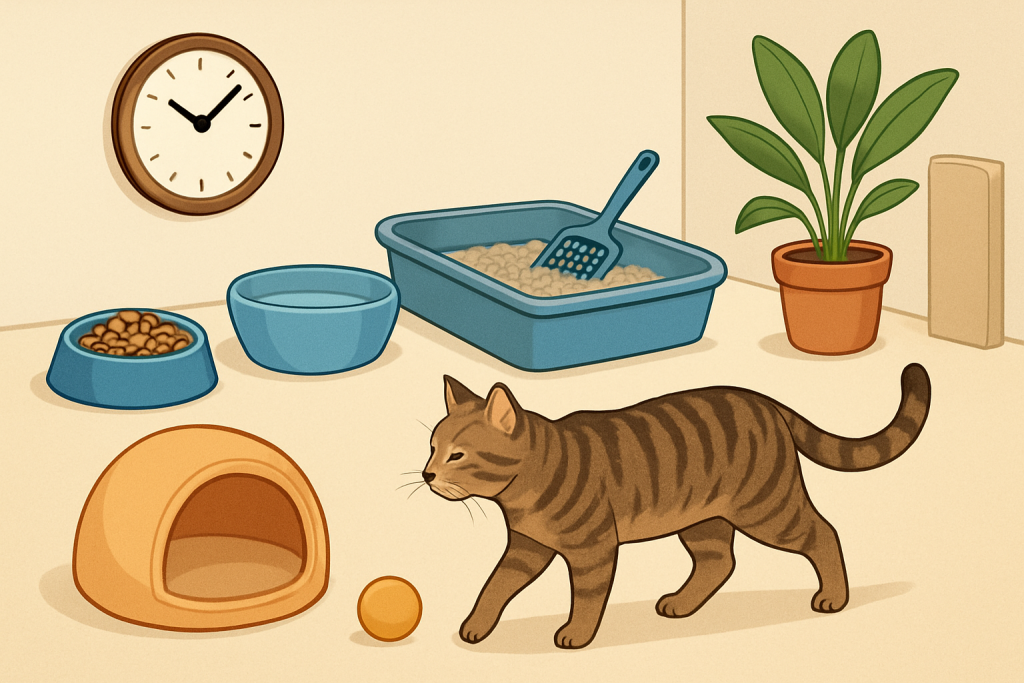
Indoor cats stay safest when life at home is predictable, clean, and interesting. A good daily care routine does not have to be complicated, but it should be consistent. Below is a practical, repeatable schedule you can adapt to your own work hours to keep an indoor cat healthy, stimulated, and safe in a typical U.S. home.
Core daily needs of an indoor cat
Before building a schedule, it helps to know what must happen every single day. Most healthy indoor cats need:
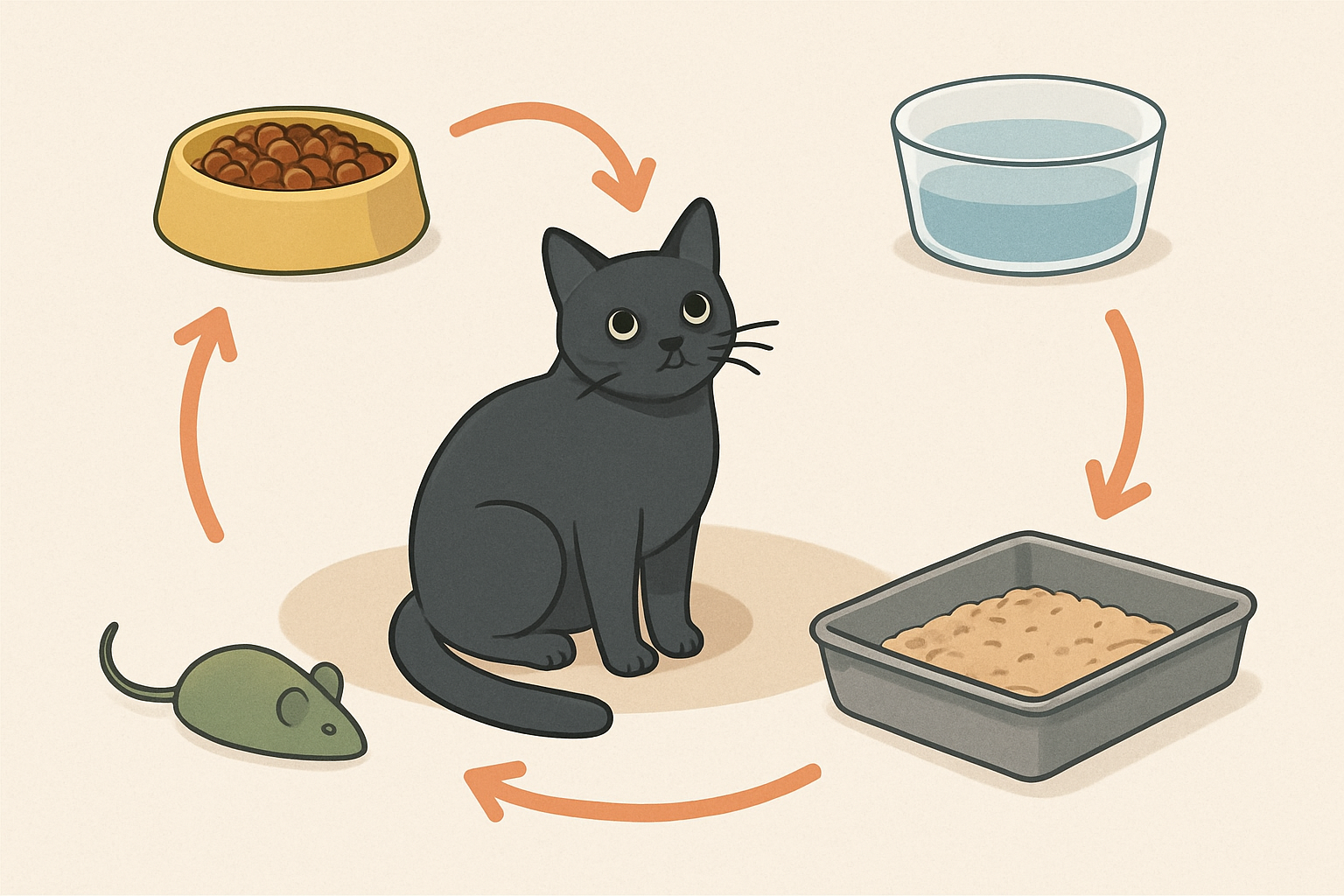
- Regular meals – usually split into at least two portions per day, on a predictable schedule.
- Fresh water – bowls or a fountain rinsed and refilled daily, with more frequent checks in hot weather.
- Clean litter box access – scooped at least once a day; more often for multi-cat homes.
- Play and hunting-style activity – several short sessions of active play to burn energy and help prevent boredom.
- Rest and safe hiding spots – quiet places where the cat can sleep undisturbed.
- Grooming help – brushing as needed for coat type, plus quick checks of eyes, ears, and nails.
- Social contact – gentle petting, talking, and routine handling so the cat stays confident and bonded.
- Environmental enrichment – scratching posts, climbing options, window views, and puzzle toys.
Think of your daily routine as a way to make sure each of these needs is covered in a simple, repeatable pattern.
Sample daily schedule for indoor cats (comparison table)
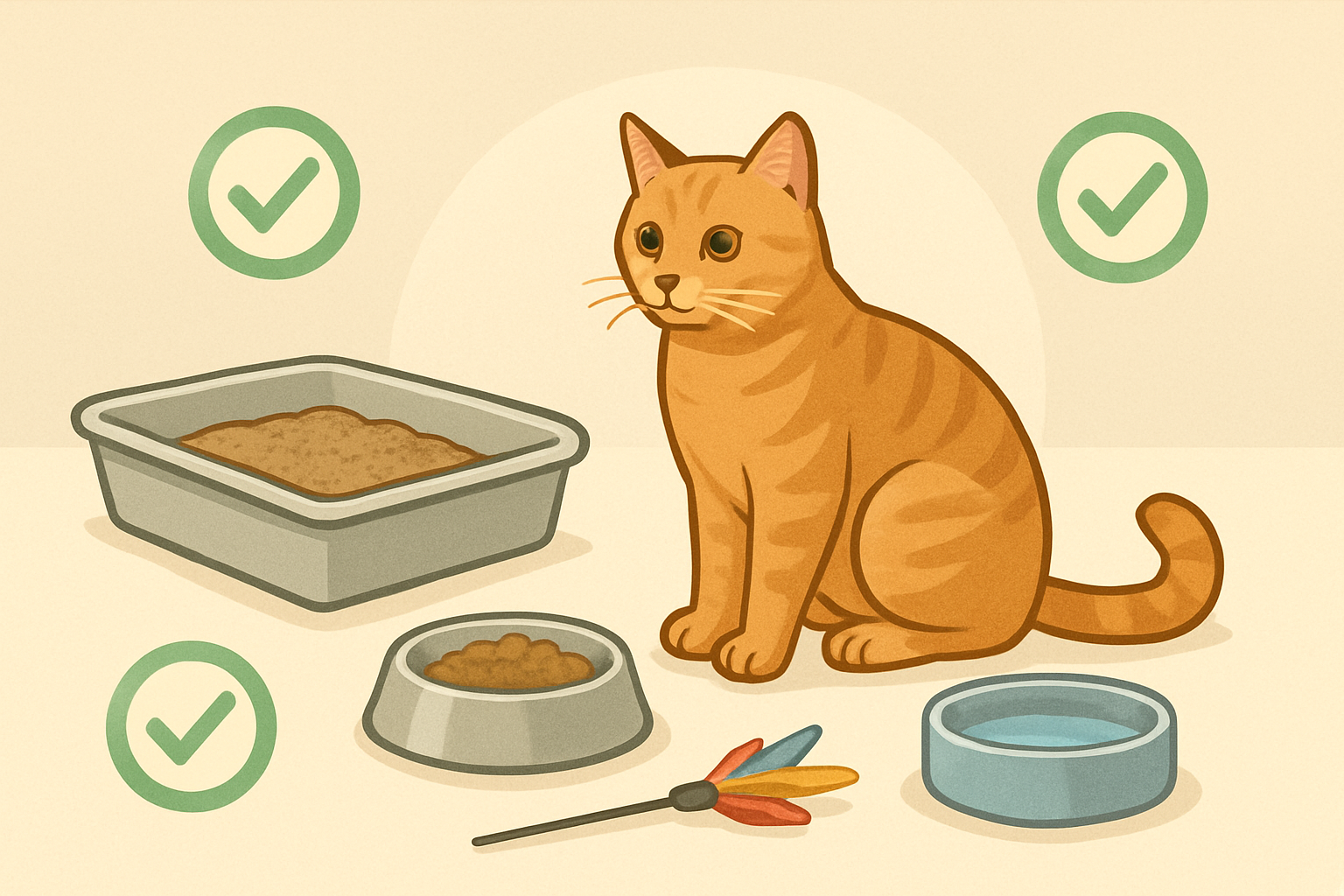
Use this table as a starting point. Adjust times to match your wake-up, work, and sleep schedule. The key is consistency, not the exact clock time.
| Time of day | Essential tasks | Nice-to-have extras |
|---|---|---|
| Early morning |
|
|
| Midday (if someone is home) |
|
|
| Late afternoon / early evening |
|
|
| Before bed |
|
|
If your cat eats more than two meals, slot the extra portions into the morning, afternoon, or evening rows while keeping the same overall structure.
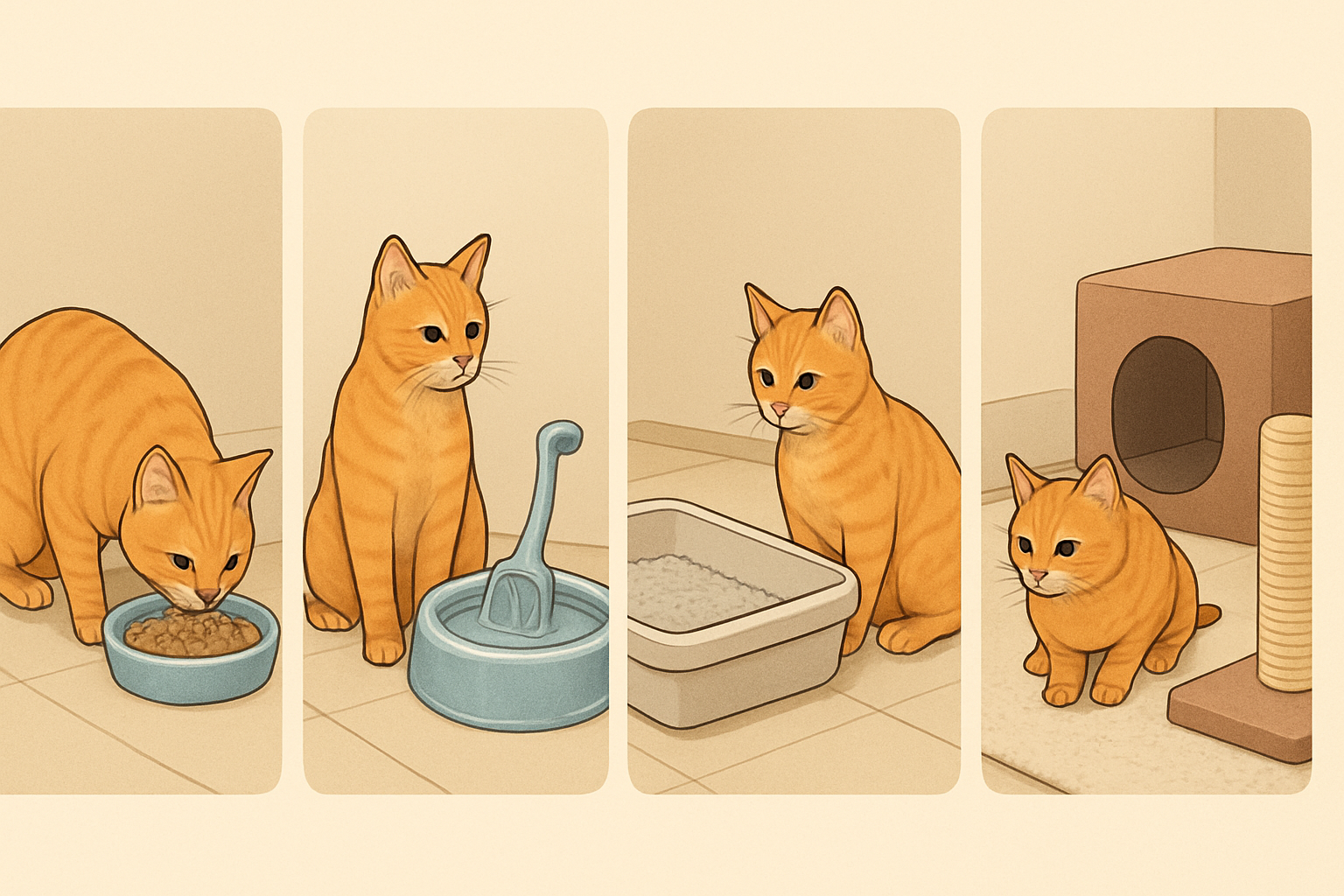
Morning routine checklist: start the day calm and predictable
Morning is when many indoor cats are most active. A short, consistent routine helps reduce dawn wake-up demands and sets the tone for the day.
Step-by-step morning routine
- Bathroom and litter check first
Before feeding, scoop the litter box. This lets you quickly notice changes in urine or stool and keeps odors down for the rest of the day. - Refresh water
Empty, rinse, and refill water bowls or top up the fountain. In multi-level homes, consider one water source per floor so the cat always has easy access. - Serve breakfast on a schedule
Feed at roughly the same time each morning. If your cat begs very early, avoid feeding immediately when you wake up; do a short non-food task first (like opening blinds) so waking up does not always equal instant food. - Short play session
Spend several minutes with a wand toy or small ball. Focus on a simple “hunt–catch–eat–groom–sleep” pattern: let the cat stalk, pounce, then offer breakfast. This mimics a natural hunting cycle. - Quick environment reset
Open blinds or curtains for window views, check that scratching posts are accessible, and remove any overnight hazards such as plastic bags, string, or hair ties. If you are in a rental, it can also help to review how to pet proof an apartment for a cat so the space stays safe.
Even if you are rushing to work, this routine can usually fit into a short 10–15 minute window and can noticeably improve behavior through the day.
Evening routine checklist: burn energy and wind down
Evening is the best time to give your indoor cat a longer play and bonding window. This is also when many cats get the “zoomies,” so channeling that energy helps everyone sleep.
Step-by-step evening routine
- Check litter box and living areas
Scoop the box again and look for accidents or hairballs. If you notice frequent messes outside the box, it is a sign to review box cleanliness, location, or possible health issues. - Serve dinner or evening meal
Feed at a consistent time. If your cat eats multiple small meals, the evening portion can be slightly larger to help them feel satisfied overnight, as long as total daily food stays appropriate. - Main play session
Use interactive toys that make the cat move: wand toys, chase toys, or toss-and-fetch with small soft objects. Break this into a few mini sessions if your cat prefers short bursts. - Quiet bonding time
Offer petting, brushing, or lap time if your cat enjoys it. Talk softly and move slowly so this feels different from high-energy play. - Final checks before bed
- Top up water.
- Do a last litter scoop if needed.
- Put away string toys or anything unsafe to chew unsupervised.
- Confirm doors and windows are secure so the cat cannot slip outside.
Repeating this pattern most nights can help reduce nighttime meowing, door scratching, and pouncing on sleeping humans.
Litter box maintenance schedule that actually works
A clean litter box is one of the most important parts of a daily care routine. Many behavior and health problems show up here first.
Daily litter box tasks
- Scoop at least once per day – morning or evening; twice is often better, especially for multi-cat homes.
- Top up litter – add a small amount when you notice low spots so the cat can dig and cover comfortably.
- Quick area wipe – sweep or wipe around the box to remove scattered litter and keep the area inviting.
Weekly and periodic tasks
- Weekly cleaning – empty and wash the box with mild, unscented soap and water, then refill with fresh litter. If your cat is very sensitive, you may stretch or shorten this based on odor and clumping performance.
- Regular box check – look for cracks, strong lingering odor, or stains. Replace boxes that are scratched up or hard to clean.
As a general guideline, many households use at least one box per cat, plus one extra. In a small apartment, you may need to be more diligent about scooping to keep odors down.
Feeding and water guidelines for indoor cats
Food and water routines affect weight, digestion, and behavior. Exact amounts depend on age, size, and health, but you can build a solid daily pattern.
How many times a day to feed an indoor cat
- Adult cats – often do well with two main meals (morning and evening). Some owners split the daily amount into three or more smaller meals to help reduce begging and vomiting from empty stomachs.
- Kittens – typically need more frequent meals spread through the day. Follow your veterinarian’s guidance for age and growth stage.
- Senior or medical diets – may require specific timing or portioning; follow your vet’s instructions.
Check the feeding guide on your cat’s food as a starting point, then adjust with your veterinarian based on body condition and activity level.
Daily feeding routine tips
- Measure food – use a scoop or kitchen scale so portions are consistent.
- Use puzzle feeders – occasionally serve part of a meal in a puzzle toy or slow feeder to add mental stimulation.
- Separate pets – if you have multiple animals, feed in separate spots or rooms to help prevent stealing and stress.
- Store food properly – keep dry food in a sealed container and refrigerate opened wet food according to package directions.
Water routine
- Refresh daily – rinse and refill bowls at least once a day; more often if you see fur, dust, or food in the water.
- Multiple stations – place water in more than one location, especially in multi-level homes or where doors may be closed.
- Fountains – some cats drink more from moving water. If you use a fountain, include it in your weekly cleaning routine.
If you are budgeting for supplies, it can help to look at the monthly cost of owning a cat in the US so food and litter choices fit your long-term plan.
Play and enrichment ideas to keep indoor cats happy
Indoor cats rely on you and their environment for mental and physical stimulation. Short, regular play sessions are usually more effective than rare long ones.
Daily play structure
- Multiple interactive sessions per day – aim for at least a couple of focused play windows, such as morning and evening, with each session lasting several minutes.
- Mix of toy types – rotate between wand toys, balls, soft mice, and crinkle toys to keep interest high.
- End with a “catch” – let the cat grab and “win” the toy at the end of play to avoid frustration.
Simple enrichment ideas
- Window perches – set up a safe perch or bed near a window with a view of birds, trees, or the street.
- Vertical space – provide a cat tree, shelves, or the top of sturdy furniture as climbing options.
- Scratching options – offer both vertical and horizontal scratchers in key areas like near sleeping spots and doorways.
- Food puzzles – hide small portions of dry food in puzzle toys or cardboard tubes for the cat to “hunt.”
- DIY scent games – hide a favorite toy under a towel or in a paper bag without handles and let the cat search.
Rotate toys every few days. Put some away and bring them back later so they feel new again.
Printable-style daily routine template (fill-in guide)
Use this template to design a routine that fits your household. You can copy it into a note app or print and fill it out.
Daily indoor cat routine template
- Cat’s name: [write here]
- Morning (wake-up to leaving home)
- Time I usually wake up: [write here]
- Breakfast time: [write here]
- Morning tasks (check all that apply):
- Scoop litter box
- Refresh water
- 5–10 minutes play
- Brush coat
- Quick health check
- Midday (if home)
- Check water
- Quick litter scoop
- Short play or treat puzzle
- Evening (after work)
- Dinner time: [write here]
- Scoop litter box
- 10–20 minutes interactive play
- Rotate toys or set up puzzle feeder
- Quiet bonding time
- Before bed
- Final litter check
- Top up water
- Put away string or unsafe toys
- Confirm doors and windows are secure
- Weekly tasks (choose a day): [write here]
- Wash litter box
- Wash food and water bowls
- Deep clean favorite sleeping spots
- Check nails and trim if needed
How to adapt the routine to your lifestyle
No two households are the same. Use these decision points to customize your cat’s schedule.
If you work long hours away from home
- Focus on a strong morning and evening routine with extra play before and after work.
- Use timed feeders or puzzle feeders to spread meals while you are gone.
- Set up multiple water stations and at least one extra litter box so the cat always has options.
If you work from home
- Schedule short play breaks between tasks instead of scrolling your phone.
- Offer quiet enrichment near your workspace, like a window perch or cardboard box.
- Keep feeding times consistent so the cat does not learn to interrupt video calls for snacks.
If you have children or multiple pets
- Teach kids a simple “cat routine” they can help with: refilling water, gentle play, or brushing under supervision.
- Give the cat at least one pet-free safe room with a litter box, food, and hiding spots.
- Feed pets separately and supervise play to prevent rough handling or chasing.
Common mistakes that quietly break a good routine
Even well-meaning owners fall into patterns that make indoor life stressful for cats. Watch for these pitfalls.
- Feeding at random times – irregular meals can lead to constant begging, early-morning wake-ups, and digestive upset.
- Only free-feeding dry food – leaving food out all day can contribute to overeating for some cats. If you free-feed, still build in play and interaction around “meal moments.”
- Skipping litter scooping – a box that is not scooped daily can push a cat to eliminate elsewhere and makes it harder to notice health changes.
- Playing with hands or feet – this teaches the cat that human skin is a toy, leading to bites and scratches.
- Using punishment – yelling, spraying water, or physical corrections increase fear and do not teach what to do instead. Redirect to appropriate toys or scratching posts.
- Ignoring subtle behavior changes – a cat hiding more, eating less, or suddenly avoiding the litter box may be signaling pain or stress.
- Leaving unsafe items out – string, hair ties, sewing thread, and some plants can be dangerous if chewed or swallowed.
Building a routine is not about perfection; it is about catching these patterns early and adjusting.
Signs your daily routine is not working for your cat
Use this as a quick diagnostic checklist. If you notice several of these signs, it is time to adjust the routine and, if needed, talk with a veterinarian.
- Persistent early-morning or late-night vocalizing – may indicate hunger, boredom, or lack of evening play.
- Destructive scratching on furniture or doors – often a sign of excess energy or not enough acceptable scratching options.
- Eliminating outside the litter box – can signal box cleanliness issues, dislike of litter type, stress, or medical problems.
- Overgrooming or bald patches – may be related to stress, allergies, or skin issues.
- Sudden changes in appetite or water intake – eating or drinking much more or less than usual deserves prompt veterinary attention.
- Hiding more than usual – a normally social cat that suddenly hides may be scared, in pain, or overwhelmed.
- Weight gain or loss over time – suggests that food portions or activity levels need adjustment.
If you are unsure whether a change is behavioral or medical, err on the side of a vet visit. You can also review your broader health plan using an annual vet care schedule for dogs and cats USA as a reference for checkup timing.
Quick-start checklist: build your indoor cat’s routine today
Use this condensed checklist to put everything into action.
- Pick two main meal times you can keep consistent most days.
- Decide on two or three daily play windows (morning, after work, before bed).
- Place or confirm litter box locations and commit to scooping at least once a day.
- Set up at least one window perch and one scratching post in a high-traffic area.
- Choose a weekly cleaning day for washing bowls and the litter box.
- Remove or store string, thread, and small chewable items out of reach.
- Write your routine on the template and post it where the household can see it.
- Plan a yearly wellness visit with your veterinarian to review weight, behavior, and any needed routine changes.
FAQ about daily care routines for indoor cats
What should a cat’s daily routine be?
A solid daily routine for an indoor cat includes at least two scheduled meals, fresh water, once- or twice-daily litter box scooping, several short play sessions, and quiet bonding time. The exact clock times can vary, but keeping the pattern consistent helps your cat feel secure and can reduce problem behaviors.
How many times a day should an indoor cat be fed?
Many healthy adult indoor cats do well with two main meals per day, morning and evening. Some owners split the daily amount into three or more smaller meals to help reduce begging or vomiting on an empty stomach. Kittens and cats with medical conditions often need more frequent feeding, so follow your veterinarian’s advice.
What is the 3-3-3 rule for cats?
People sometimes use a “3-3-3” idea as a reminder that new cats often need time to adjust: a few days to start decompressing, a few weeks to learn the household routine, and several months to fully settle in. The exact timeline varies by cat, but the message is to be patient, keep the routine predictable, and avoid expecting instant perfection.
What is “I love you” in cat language?
Cats show affection through body language more than words. Common signs include slow blinking at you, choosing to sit or sleep near you, gentle head bumps, purring while relaxed, and showing their belly (even if they do not want it touched). You can “say” you love your cat back with soft eye blinks, gentle petting in favorite spots, and keeping their daily routine calm and reliable.
How do I keep an indoor cat from getting bored?
Help prevent boredom by combining a predictable routine with variety in toys and activities. Schedule daily interactive play, rotate toys every few days, provide window views and vertical spaces, and occasionally use food puzzles or scent games. Even short, focused play sessions twice a day can make a noticeable difference for an indoor cat’s mood and behavior.
How does a daily routine fit into responsible pet ownership?
A consistent routine is one part of responsible pet ownership. Along with daily care, plan for regular veterinary visits, safe housing, and a realistic budget for food, litter, and medical care. If you are also caring for dogs, a responsible pet ownership checklist for new dog owners can help you coordinate routines across species.
Once your basic routine is in place, you can fine-tune it over time. Watch your cat’s behavior, energy level, and body condition, and adjust feeding, play, and quiet time until you find the rhythm that keeps both of you comfortable.