
To avoid ever reaching the point where you feel you must give up your dog or cat, treat pet-keeping like any long-term commitment: spot problems early, plan for money and housing, and build backup support before a crisis hits. In the United States, many families keep their pets through tough times by combining three things:
- honest self-audit of risks (housing, money, time, health)
- using low-cost help that already exists (training, vet, financial aid, temporary care)
- making written backup plans for big life changes (moving, babies, divorce, deployment)
this guide walk through each of these with concrete steps, examples, and a comparison table to help you choose the right options for your situation.
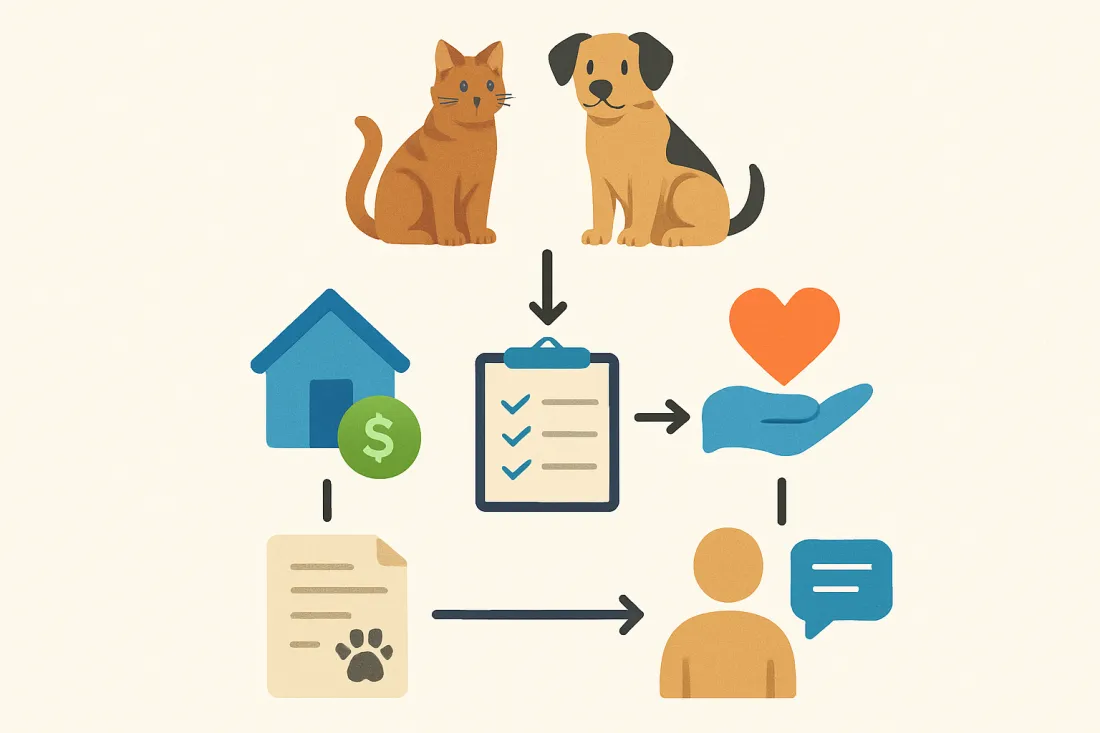
Why Pets Are Commonly Surrendered in the US – And What You Can Control
Across US shelters and rescues, the same reasons for surrender show up again and again. You cannot control everything, but you can reduce the risk of many of these:
- Housing problems – landlord bans pets, new building is not pet-friendly, pet is over weight or breed limits, complaints from neighbors.
- Money stress – job loss, medical bills, unexpected vet emergency, ongoing costs higher than expected.
- Behavior issues – barking, aggression, destructive chewing or scratching, litter box problems, separation anxiety.
- Time and energy – long work hours, burnout from caregiving, new baby, illness or disability.
- Life changes – divorce, moving across the country, military deployment, college, caring for elderly relatives.
- Owner health – allergies, mobility issues, hospitalization.
Most of these do not require surrender if you act early. The rest of this guide focuses on how to spot your own risk areas and what to do now, before things feel impossible.

Self-Audit: Check Your Current Risks Around Housing, Money, and Time
Use this quick self-audit as a reality check. You do not need to be perfect; you just need to know where you are vulnerable so you can plan.
Housing risk questions
- Is your current lease explicitly pet-friendly in writing, including your pet’s species, size, and number?
- Could your landlord legally decide not to renew and leave you searching for new housing soon?
- Would it be hard to find another rental in your area that allows your type of pet (large dog, multiple cats, certain breeds)?
- Have you had any complaints about noise, damage, or smells related to your pet?
If you answered “yes” to any of these, housing is a risk area. You will want to read the housing strategies section carefully and start building options now.
Money risk questions
- Do you know roughly how much you spend on your pet each month (food, litter, meds, grooming, insurance, etc.)?
- Could you cover an unexpected vet bill of a few hundred dollars without going into crisis, or do you have no cushion at all?
- Have you recently had a job change, medical bills, or debt that makes pet costs feel heavy?
- Are you already skipping recommended vet visits, vaccines, or preventive meds because of cost?
If money is tight, focus on the financial planning and low-cost vet care sections. There are more options than many owners realize.
Time and energy risk questions
- Is your dog regularly alone more than 9–10 hours a day without a break?
- Do you feel resentful or exhausted by daily pet care more than once a week?
- Have you skipped walks, play, or litter box cleaning several times this week because you were too tired or busy?
- Is anyone in the home unwilling to help with pet care, even in emergencies?
If time and energy are stretched, the backup plans and support network sections will be especially important.
Behavior and relationship risk questions
- Has your pet bitten, scratched, or seriously frightened anyone?
- Is there a behavior (barking, accidents, destruction) that makes you think “I can’t live like this much longer”?
- Have you avoided inviting people over because of your pet’s behavior?
- Do you feel more stressed than happy around your pet lately?
These are early warning signs that you need behavior and training support. Waiting usually makes it harder, not easier.
Financial Planning for Pet Care: Budget, Insurance, and Savings
Money stress is one of the most common reasons people consider surrendering a pet. You cannot control every emergency, but you can reduce the chance that a single bill forces an impossible choice.
Build a simple pet budget
Start by listing your regular monthly and yearly costs. Typical categories include:
- Food and treats
- Litter or poop bags
- Routine vet care (vaccines, checkups, flea/tick and heartworm prevention)
- Grooming or nail trims
- Medications or supplements
- Pet insurance premiums (if you have it)
- Licensing and microchip updates
- Training classes or behavior help
- Pet sitting, dog walking, or boarding when you travel
Add these up to get a rough monthly average. If you are not sure, track actual spending for 1–2 months. Even an estimate helps you see where you can adjust.
Decide between pet insurance and a savings buffer
Many US owners use one of two main strategies for vet emergencies:
- Pet insurance – you pay a monthly premium and the insurer reimburses part of covered vet bills after a deductible.
- Self-funded savings – you set aside money in a separate savings account specifically for pet care.
Which is better depends on your income, your pet’s age and health, and your risk comfort. The table below compares them.
| Option | Best for owners who | Main benefits | Main drawbacks | Key decision checks |
|---|---|---|---|---|
| Pet insurance | Can handle a steady monthly payment but would struggle with a large sudden bill | Helps with big, unexpected costs; can make advanced treatment more realistic | Does not cover every condition; pre-existing issues often excluded; you still pay upfront then wait for reimbursement | Check what conditions are covered, waiting periods, annual limits, and how claims are paid before signing up |
| Savings buffer | Can regularly set aside a small amount and prefer full control over the money | Flexible; can be used for any pet expense; no claim forms or exclusions | Takes time to build; if an emergency happens early, the fund may be too small | Decide on a realistic monthly amount and set up automatic transfers to a separate account |
| Combination of both | Want insurance for big emergencies and savings for deductibles and uncovered costs | More protection overall; savings can also cover routine care | Requires discipline to maintain both premiums and savings | Review your budget yearly to adjust coverage and savings as your pet ages |
Practical money-saving tips that do not harm your pet
- Preventive care first – routine vaccines and parasite prevention often cost less than treating serious disease later.
- Ask about generic medications – vets can sometimes prescribe generics or human pharmacy options that cost less.
- Buy food smart, not just cheap – switching to the absolute cheapest food can cause health issues; instead, look for sales, loyalty programs, or slightly larger bags that reduce cost per pound.
- Plan grooming – learn basic brushing and nail trimming at home if safe for your pet, and schedule professional grooming at intervals that keep your pet comfortable without overdoing it.
- Use payment options carefully – some clinics offer payment plans or third-party credit; use these only if you are confident you can manage the payments.
If you are unsure whether you can afford to keep your dog long term, a deeper dive into costs and help options like can I afford to keep my dog can help you plan more precisely.
Behavior and Training Support: Fix Problems Early Before They Break the Bond
Many surrender decisions start with a behavior problem that feels small at first: barking at the window, a cat missing the litter box, a dog pulling on leash. Over time, stress builds until the relationship feels broken. Early help is almost always easier and cheaper than waiting.
Common dog behavior issues and early actions
- Pulling on leash – switch to a well-fitted front-clip harness, reward your dog for walking near you, and keep walks shorter but more frequent while you practice. Learning about US leash laws and responsible dog walking can also reduce stress on walks.
- Excessive barking – identify triggers (people passing, boredom, anxiety). Increase exercise and mental enrichment (puzzle toys, training games), and teach a “quiet” cue with rewards.
- Destructive chewing – rule out medical issues, then provide appropriate chew toys, rotate them to keep interest, and limit unsupervised access to tempting items.
- Separation anxiety signs – whining, barking, or destruction when alone. Start with very short absences, use food puzzles, and avoid big emotional goodbyes and reunions.
Common cat behavior issues and early actions
- Litter box problems – first, rule out medical issues with a vet visit. Then check box cleanliness, number of boxes (often one per cat plus one extra), type of litter, and location (quiet, easy to reach).
- Scratching furniture – provide sturdy scratching posts in the spots your cat already likes, use catnip or toys to attract them, and cover or move off-limits surfaces while they learn.
- Hiding or aggression – give safe spaces, vertical perches, and predictable routines; avoid forcing interaction and use play to build positive associations.
When to bring in a professional
Consider a qualified trainer or behavior professional when:
- There is any bite, serious scratch, or safety concern.
- The behavior has lasted more than a month without improvement.
- You feel angry, scared, or hopeless around your pet.
- Family members are arguing about the pet or threatening to get rid of them.
Look for trainers who use humane, reward-based methods and are willing to explain their approach clearly. For complex issues, your vet may recommend a veterinary behavior specialist.
Housing Strategies: Pet-Friendly Rentals, ESA vs. Pet Rules, and Deposits
Housing is one of the hardest parts of keeping a pet in the US, especially for renters. Planning ahead can prevent last-minute crises where you feel forced to surrender your pet.
Start your next housing search early
- Begin looking for pet-friendly rentals months before your current lease ends.
- Filter listings by pet policies and call to confirm details (species, size, number, breed restrictions, deposits, and monthly pet rent).
- Prepare a “pet resume” with photos, vet records, proof of spay/neuter, and references from previous landlords or neighbors.
Understand deposits, fees, and rules
Many landlords charge one or more of the following:
- Pet deposit – usually refundable if there is no damage.
- Pet fee – often nonrefundable, a one-time charge.
- Pet rent – extra monthly amount added to your rent.
Ask for all pet-related costs in writing before you apply, and factor them into your budget. Also ask about:
- Weight or breed limits for dogs.
- Maximum number of pets allowed.
- Rules about noise, balconies, shared yards, and off-leash areas.
ESA vs. regular pet rules
Some people consider emotional support animal (ESA) status when facing housing issues. It is important to understand that:
- ESA status is tied to a person’s documented mental health needs, not just a desire to avoid pet fees.
- Housing providers may have different rules for ESAs than for regular pets, but there are still processes and documentation requirements.
- Online “instant ESA certificates” may not meet legal or ethical standards; check current local requirements with a trusted health professional or housing advisor.
Using ESA status only when it is genuinely appropriate protects both you and others who rely on these accommodations.
Reduce the risk of complaints and eviction
- Keep your dog well-exercised and mentally stimulated to reduce barking and destructive behavior.
- Clean up after your pet immediately in shared spaces.
- Address any damage quickly and communicate with your landlord about repairs.
- Teach solid house rules so your pet is a good neighbor; resources like house rules every responsible dog owner should have and house rules for dogs and cats new home can help.
Low-Cost Vet Care and Assistance Programs
When a pet gets sick or injured, costs can rise quickly. Across the US, there are options that may reduce the financial pressure so you do not have to choose between treatment and surrender.
Where to look for lower-cost care
- Nonprofit clinics and humane societies – many offer lower-cost vaccines, spay/neuter, and basic care.
- Mobile vaccine clinics – often provide vaccines and microchips at reduced prices on specific days.
- Veterinary schools – some have teaching hospitals that may offer certain services at different price structures.
- Local aid programs – some areas have funds or vouchers to help with emergency vet bills or specific treatments.
Because programs change over time and vary by state, the most reliable approach is to:
- Ask your regular vet if they know of any local assistance programs.
- Contact nearby shelters and rescues and ask about financial aid or low-cost clinic referrals.
- Check whether your city or county animal services department lists local pet assistance resources.
How to talk to your vet about money
Many owners are embarrassed to discuss costs, but transparency can open up options:
- Tell your vet your budget range before they design a treatment plan.
- Ask if there is a “must do now” plan and a “nice to have” plan.
- Ask about payment options or whether parts of the treatment can be staged over time.
- Request written estimates so you can compare options calmly at home.
Backup Plans: Temporary Fostering, Pet Sitters, and Boarding
Sometimes the issue is not permanent inability to keep a pet, but a temporary crisis: hospitalization, short-term housing loss, or a family emergency. Having backup care options can prevent a short-term problem from turning into permanent surrender.
Temporary fostering
Temporary foster care means someone else cares for your pet for a limited time while you resolve a crisis. Options may include:
- Trusted friends or family members who can host your pet.
- Local rescue groups that offer short-term foster programs in emergencies.
- Community networks or faith-based groups that sometimes help with pet care during crises.
Because availability varies widely, it is wise to:
- Ask local rescues now whether they ever help with temporary fostering.
- Make a list of people who have already met your pet and might be willing to help in an emergency.
- Prepare a written “pet profile” with feeding, routines, medical needs, and vet contact information.
Pet sitters, dog walkers, and boarding
Paid care can help when long work hours or travel are the main stressors:
- Dog walkers – break up long days alone and reduce behavior issues from boredom.
- Pet sitters – visit your home or stay overnight when you travel.
- Boarding facilities – care for your pet at their location for short periods.
When choosing a provider, ask about:
- Experience with your pet’s species, size, and any special needs.
- Emergency procedures and vet access.
- Insurance and references.
- How they handle dogs or cats that are shy, anxious, or reactive.
Planning for Life Changes: Babies, Divorce, Moving, and Deployment
Major life changes are predictable in the sense that they are common, even if you do not know exactly when they will happen. Thinking ahead reduces the chance that your pet becomes a casualty of those changes.
New baby or growing family
- Start training your dog or cat on new routines months before the baby arrives (for example, walking next to a stroller, staying off certain furniture, being calm around baby sounds).
- Gradually adjust feeding and walk times toward the schedule you expect after the baby arrives.
- Set up safe zones where the pet can retreat and where the baby will not have access.
- Ask friends or family if they can help with walks or playtime during the first weeks after birth.
Divorce or separation
- Discuss pet custody early and calmly, ideally before conflict escalates.
- Consider who has the time, housing stability, and financial ability to care for the pet long term.
- If shared custody is considered, plan how moves between homes will work and how costs will be split.
- Put agreements in writing, even informally, to reduce future disputes.
Moving or relocation
- Research pet regulations and housing options in the new area before you commit to the move.
- Check travel requirements (vaccines, health certificates, carriers) well in advance.
- Plan for a quiet, secure space in the new home where your pet can adjust gradually.
- Keep routines (feeding, walks, play) as consistent as possible during the move.
Military deployment, long hospital stays, or extended travel
- Identify at least one person or organization that could care for your pet for several months if needed.
- Prepare a written care plan including feeding, medications, behavior notes, and vet contacts.
- Consider legal arrangements, such as naming a temporary caregiver in a written document, and check with a legal professional if you need formal agreements.
Building a Support Network: People and Organizations on Your Side
Keeping a pet through hard times is much easier when you are not alone. A support network can include:
- Family members who can help with care or temporary housing.
- Friends or neighbors who can walk your dog or check on your cat.
- Local pet owners you meet at parks, classes, or online community groups.
- Veterinarians, trainers, and groomers who know your pet.
- Local shelters and rescue groups that offer advice, training referrals, or assistance programs.
Practical ways to build this network:
- Introduce your pet to trusted friends and family now, not only in emergencies.
- Exchange “backup care” favors with another pet owner (for example, you each agree to help the other in a short-term crisis).
- Attend a basic training class or community event to meet other owners.
- Follow local shelters or rescues on social media to stay aware of programs and resources.
When to Seek Professional Help Beyond Training
Sometimes the problems that make you think about giving up your pet are not just about the pet. They may be tied to financial stress, housing instability, or mental health challenges. In those cases, additional professional help can make a big difference.
Who might help and when
- Veterinarian – when behavior changes suddenly, when you suspect pain or illness, or when you need guidance on quality of life.
- Certified trainer or behavior specialist – when behavior issues affect safety, daily life, or your relationship with your pet.
- Social worker or counselor – when financial, housing, or emotional stress is overwhelming and affecting your ability to care for your pet.
- Housing counselor or legal aid – when you face eviction, foreclosure, or complex housing disputes involving your pet.
Asking for help early is a sign of responsibility, not failure. The earlier you reach out, the more options you are likely to have.
Comparison Table: Which Prevention Options Fit Your Situation?
Use this table to compare common situations that lead to surrender with practical prevention strategies and key risks if you delay action.
| Your main challenge | Most helpful first steps | Who should you contact | Risks if you wait |
|---|---|---|---|
| Struggling to afford pet care | Make a pet budget, explore low-cost clinics, consider insurance or a savings plan | Veterinarian, local shelters/rescues for aid program referrals | Skipping preventive care, higher emergency costs, feeling forced to surrender after a sudden bill |
| Behavior problems at home | Rule out medical issues, start basic training, increase exercise and enrichment | Veterinarian, reward-based trainer or behavior specialist | Escalating aggression or damage, landlord complaints, breakdown of trust with your pet |
| Upcoming move or housing change | Search pet-friendly rentals early, prepare a pet resume, clarify pet policies in writing | Landlord or property managers, housing counselors if needed | Last-minute housing with no pets allowed, pressure to rehome quickly |
| Major life change (baby, divorce, deployment) | Adjust routines in advance, identify temporary caregivers, put agreements in writing | Family, friends, legal or counseling support if appropriate | Conflict over the pet, inconsistent care, rushed surrender decisions |
| Limited time or energy | Share tasks at home, consider walkers or sitters, simplify routines | Household members, pet care providers | Neglecting exercise or interaction, resentment, worsening behavior |
Decision Checklist: Act Now Before You Feel Out of Options
Use this checklist as a step-by-step algorithm to reduce your risk of ever having to give up your pet. You do not need to complete everything at once; pick one or two items per week.
Step-by-step prevention checklist
- Clarify your risks
- Complete the self-audit questions on housing, money, time, and behavior.
- Circle the top two areas that feel most fragile right now.
- Stabilize your budget
- List all pet-related expenses and estimate a monthly total.
- Decide whether to explore pet insurance, a savings buffer, or both.
- Set up an automatic transfer, even a small one, into a pet savings fund.
- Address one behavior issue
- Pick the behavior that stresses you most.
- Schedule a vet check if the behavior is new or severe.
- Start one simple training or management change this week.
- Secure your housing
- Review your lease or housing agreement for pet rules.
- If your lease ends within a year, start saving for deposits and researching pet-friendly options.
- Keep your pet’s vet records and references ready for future landlords.
- Build your support network
- List at least three people who could help with your pet in an emergency.
- Ask each person if they are willing to be on your “pet emergency contact” list.
- Introduce your pet to them in low-stress situations.
- Prepare for life changes
- If you expect a major change (baby, move, job shift), write down how your pet’s routine will need to change.
- Start practicing parts of that new routine now.
- Write a simple prevention plan
- On one page, note your main risks, key contacts, and next three actions.
- Keep it with your pet’s records so you can update it as life changes.
Printable Prevention Plan Template and Resource List (Text Version)
You can copy this template into a notebook or document and fill it out for your own situation.
Pet surrender prevention plan template
5. My professional contacts
Veterinarian: clinic name, phone
Trainer/behavior help: name, phone/email
Local shelter/rescue contact: name, phone/email
Resource list to research for your area
- Low-cost vet clinics and mobile vaccine events.
- Local shelters and rescues that offer behavior help or financial aid.
- Pet-friendly rental listings or housing support organizations.
- Reputable trainers who use humane, reward-based methods.
- Community groups or networks that share pet care support.
Early Warning Signs You Should Act On Now
Many people only think about surrender when they feel desperate. Paying attention to early warning signs gives you time to fix problems while you still have options.
Warning signs in your feelings
- You often think, “I can’t do this much longer.”
- You avoid spending time with your pet because it feels stressful, not enjoyable.
- You feel embarrassed or ashamed of your pet’s behavior around others.
- You are hiding problems (like accidents or damage) from family or your landlord.
Warning signs in your situation
- You are behind on vet care or cannot afford basic supplies.
- Your landlord has warned you about noise, damage, or pet rules.
- Family members argue about the pet or threaten to get rid of them.
- You are facing a move, breakup, or job change with no plan for your pet.
If any of these sound familiar, choose one section of this guide—money, housing, behavior, or support network—and take one concrete step this week. Small actions now can prevent painful choices later.
FAQ: Common Questions About Avoiding Pet Surrender
What is the 3-3-3 rule for pets, and how does it relate to keeping my new pet?
The 3-3-3 rule is a simple way to remember how long it can take a newly adopted dog or cat to adjust: roughly three days to start recovering from the shock of change, three weeks to begin learning the household routine, and about three months to feel truly settled and secure. These time frames are not exact, but they remind you that confusion, accidents, or clingy behavior in the first weeks are normal. Understanding this can help you be patient instead of assuming your new pet is a “bad fit” and giving up too soon. During those first months, keep routines predictable, limit overwhelming situations, and focus on gentle training and bonding.
What is the 7-7-7 rule for dogs?
The 7-7-7 rule is another way some people describe a dog’s adjustment after a big change, such as adoption or a move. It suggests that in about seven days a dog starts to come out of their shell, in about seven weeks they understand much more of the routine and rules, and around seven months they are usually fully settled into their new life and personality in that home. The exact timing varies by dog, but the idea is that deeper adjustment takes months, not days. Knowing this can help you plan for ongoing training and support instead of expecting instant perfection.
How do I know when it might truly be time to give up my dog?
Deciding to rehome a dog is deeply personal and often painful. It may be necessary when, despite serious effort and professional help, you cannot keep your dog and your household safe or meet their basic needs. Examples include ongoing aggression that endangers people or other animals, severe health or housing crises with no realistic way to provide care, or situations where your dog’s quality of life is very poor and cannot be improved in your home. Before reaching that point, talk honestly with your veterinarian, a qualified trainer or behavior specialist, and trusted people who know you and your dog. They can help you explore all realistic options, including temporary fostering or rehoming through a responsible rescue if needed.
Do dogs and cats feel sad when you give them away?
Dogs and cats form strong bonds with their families, and a sudden separation can be stressful and confusing. Many pets show signs of distress after being rehomed, such as changes in appetite, sleep, or behavior, especially in the early days. Over time, with kind, consistent care in a new home, most pets can form new bonds and feel secure again. Knowing this does not erase the emotional weight of surrender, but it highlights why planning and prevention matter: keeping a stable, loving home is usually the best outcome for both you and your pet. If you are struggling, seeking help early gives you and your pet the best chance to stay together.