
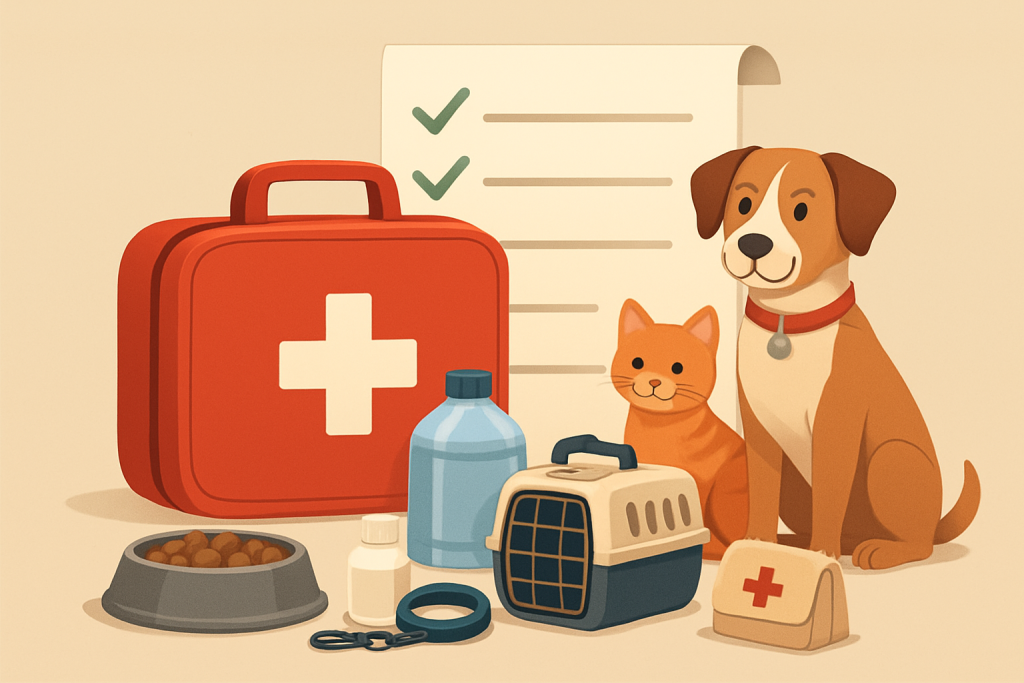
If you had to leave your home with your pets in 5 minutes, your emergency kit is either ready or it isn’t. Use this checklist to build a realistic pet emergency kit for US households, plus a simple evacuation plan you can actually follow under stress.
Essential pet emergency kit for US households
For most US families with dogs or cats, aim to have:
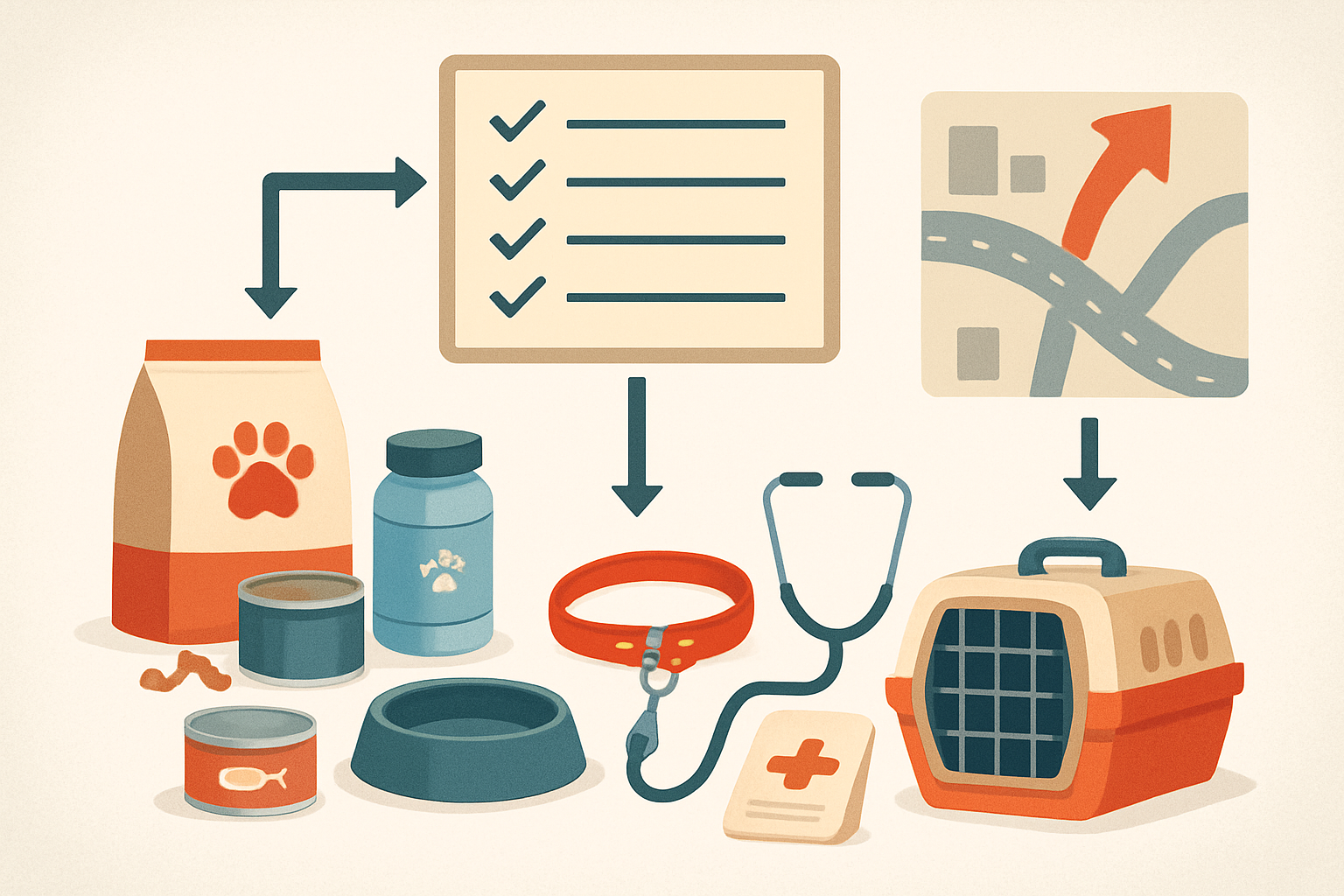
- 7–10 days of pet food (canned or dry) stored in a waterproof container, rotated regularly.
- At least several days of drinking water set aside specifically for pets (separate from the family supply).
- Medications and copies of prescriptions in a waterproof pouch.
- Printed and digital vet records, vaccination history, and a recent photo of each pet.
- Sturdy leash, collar with ID, and harness for each dog; carrier and litter setup for each cat.
- Pet first-aid basics and a short guide from your vet or a trusted pet health source.
- Comfort items (favorite toy, blanket) to reduce stress in shelters or hotels.
- Written evacuation plan that covers who grabs what, where you will go, and how you will transport each pet.
This guide explains what to pack, how to adapt your kit for common US disasters, and how to keep everything updated so you can actually evacuate with your pets when it counts.
Why pet emergency prep matters specifically in the US
Pet emergency planning is part of responsible pet ownership in the United States because:
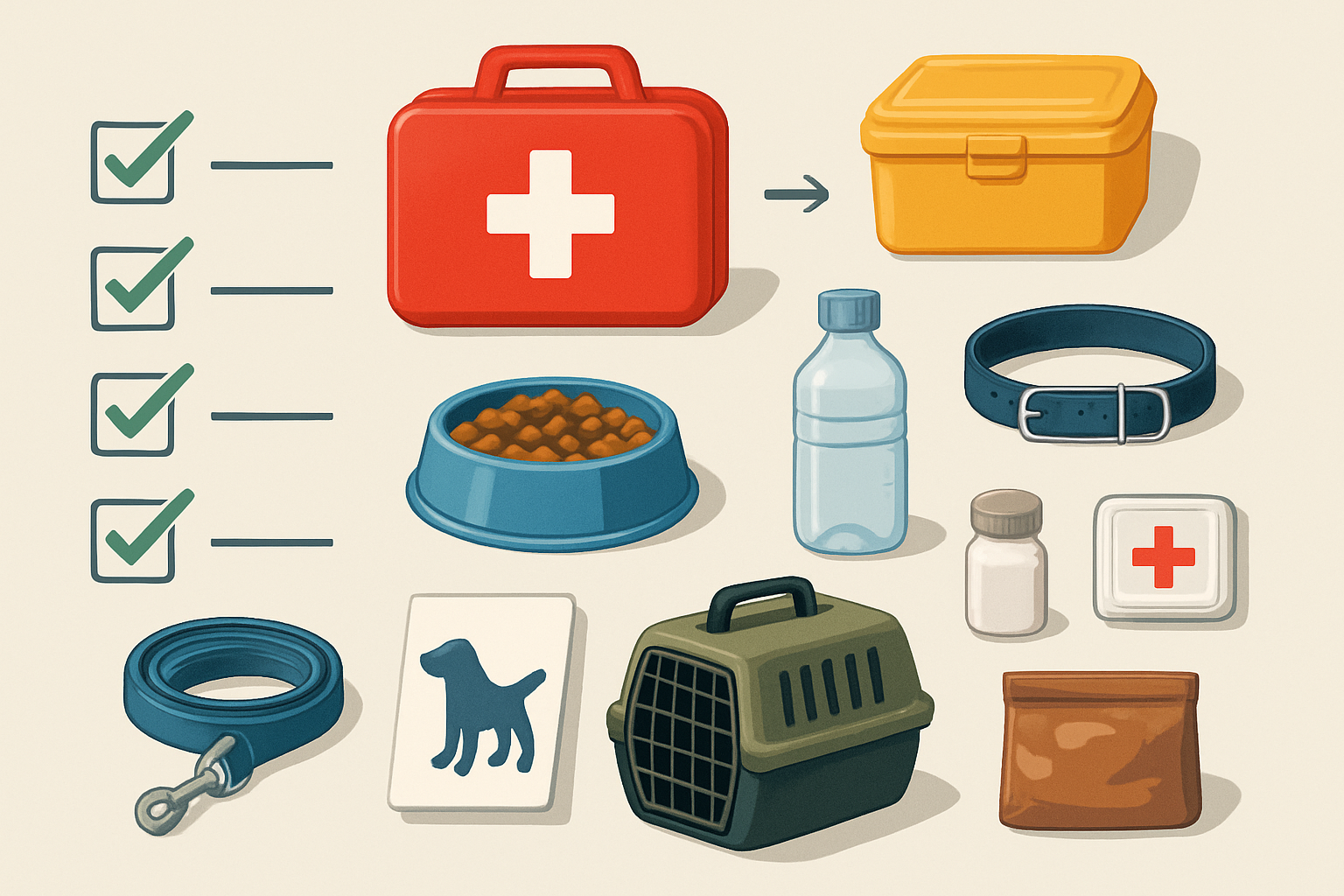
- Many disasters come with little warning. Hurricanes, tornadoes, wildfires, flash floods, and winter storms can all trigger sudden evacuations or power outages.
- Public shelters and hotels often have limits for animals. Some accept only crated pets, some only small pets, and some not at all. You may need to prove vaccinations or keep pets fully under control.
- Veterinary care may be disrupted. Clinics can close, roads can be blocked, and supply chains can be delayed. Having food, meds, and basic first-aid supplies buys you time.
- Emergency responders may not be able to rescue pets left behind. Planning to evacuate with your animals is safer than hoping someone else can get to them.
If your household is prepared but your pets are not, you are still not ready. A pet emergency kit and plan make it more likely everyone can leave together quickly and safely.
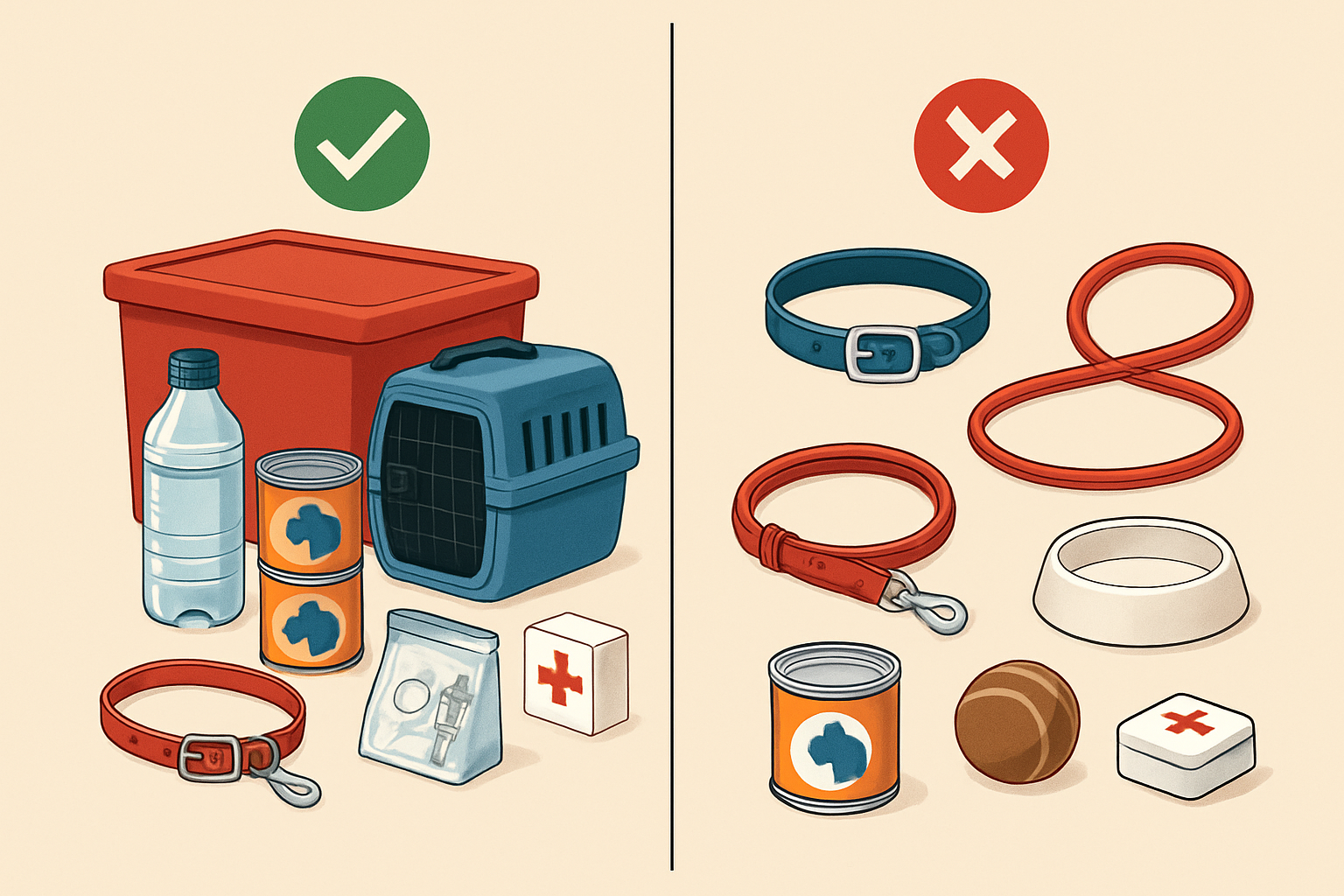
Core pet emergency kit checklist for US households
Use this as your master packing list. Adjust quantities based on the number, size, and species of pets.
Food and water
- 7–10 days of pet food per animal (canned with pop-tops or dry in sealed bags).
- Manual can opener if you use cans without pop-tops.
- Portable food and water bowls (collapsible or lightweight).
- Separate water supply for pets. A simple way is to set aside extra bottles or jugs labeled for pets only.
- Measuring cup or scoop so you can keep portions consistent under stress.
Medications and health supplies
- At least a week’s worth of prescription medications for each pet, in original containers if possible.
- Written medication schedule (drug name, dose, timing, and what it is for).
- Copies of prescriptions in case you need refills from a different pharmacy or vet.
- Pet first-aid basics such as bandage material, gauze, non-adhesive pads, tape, and any items your vet recommends for your pet’s conditions.
- Pet-safe cleaner or wipes for accidents, plus small trash bags or poop bags.
Documents and identification
- Printed vet records (vaccinations, chronic conditions, allergies).
- Microchip number and company contact written down and stored digitally.
- Recent photos of each pet (printed and on your phone) showing markings and you with the pet for proof of ownership.
- Emergency contact list: your vet, 24/7 emergency vet, local animal control, trusted friends or family who can help.
Gear and containment
- Leash and properly fitted collar with ID tag for every dog; consider a backup leash.
- Secure harness for dogs that pull, slip collars, or ride in cars.
- Carrier or crate for each pet (dogs and cats), large enough to stand, turn, and lie down.
- Blanket, towel, or crate pad for warmth and comfort.
- Muzzle for dogs that may bite when scared or in pain (even if they are normally gentle).
- Pet-safe litter and a small litter pan for cats, plus a scoop and bags.
- Waste bags for dogs and small trash bags for general cleanup.
Comfort and stress reduction
- Favorite toy or chew for each pet.
- Old T-shirt or blanket that smells like home.
- Treats to reward calm behavior and help with handling.
Dog vs. cat emergency kit: comparison table
Dogs and cats have different needs in an emergency. Use this table to see what overlaps and what is species-specific.
| Item | Dogs | Cats | Why it matters |
|---|---|---|---|
| Food (7–10 days) | Dog-specific food, usual brand if possible | Cat-specific food, including wet food if normally used | Sudden diet changes can cause stomach upset; familiar food reduces stress. |
| Water supply | Shared household water, but plan enough for each dog’s size | Shared household water, plus extra if using wet food less | Dehydration is a risk in heat, illness, and long evacuations. |
| Leash, collar, harness | Essential for every dog; consider a backup leash | Optional harness and leash for cats used to walking | Control and safety in crowded shelters, parking lots, and hotels. |
| Carrier or crate | Crate or carrier strongly recommended, especially for travel and shelter stays | Hard or soft carrier required for each cat | Prevents escape and injury; many shelters require pets to be contained. |
| Litter and litter pan | Not usually needed; use poop bags and outdoor walks when safe | Essential: litter, small pan, scoop, bags | Cats may refuse to eliminate without a proper setup, leading to health issues. |
| Muzzle | Recommended for dogs that may bite when scared or in pain | Not typically used | Even friendly dogs can react unpredictably under stress. |
| Waste management | Poop bags, paper towels, pet-safe cleaner | Trash bags for used litter, paper towels, cleaner | Cleanliness helps prevent disease and keeps shared spaces usable. |
| Comfort items | Favorite toy, chew, blanket | Favorite toy, soft blanket, hiding towel | Familiar smells and textures help reduce anxiety. |
| Identification | Collar with ID tag, microchip | Breakaway collar with ID tag, microchip | Increases chances of reunion if separated. |
Region-specific pet emergency kit tweaks for common US disasters
Different parts of the US face different primary risks. Focus on the scenarios that match your area and travel patterns.
Hurricane and coastal storm areas
- Plan for early evacuation. Leaving before mandatory orders helps you find pet-friendly lodging.
- Waterproof storage. Use plastic bins or dry bags for food, documents, and meds in case of flooding.
- Extra absorbent bedding and towels for wet pets and damp shelters.
- Car-ready kit. Keep a smaller duplicate kit in your vehicle during hurricane season.
Wildfire-prone regions
- Fast evacuation focus. Keep carriers assembled and leashes hanging by the door.
- Smoke protection. A light towel or blanket over carriers can reduce ash and embers; never block airflow.
- Vehicle crate setup. Plan how many crates fit safely in your car with people and luggage.
- Backup housing plan. Identify pet-friendly friends or boarding options outside the main fire zone.
Blizzard and extreme cold
- Warmth supplies. Extra blankets, pet sweaters or coats, and booties for dogs that tolerate them.
- Indoor potty solutions. Puppy pads or a backup litter setup if you cannot safely go outside.
- Power outage prep. Battery-powered lights, hand warmers stored safely away from pets, and a way to keep water from freezing.
- Car travel caution. If you must evacuate in winter, pack extra blankets and keep pets secured away from cold drafts.
Earthquake zones
- Secure heavy items at home. Reduce the chance of falling objects injuring pets or blocking carriers.
- Sturdy carriers near exits. Quakes can damage doors and hallways; you may need to move quickly through debris.
- Backup leashes and collars in multiple rooms in case you cannot reach your main kit.
- Aftershock awareness. Keep pets leashed or crated for a while after the initial quake; they may bolt during aftershocks.
How to store, rotate, and maintain your pet emergency kit
A kit is only useful if it is fresh and easy to grab. Build a simple maintenance routine:
- Choose a central storage spot. A closet near your main exit or garage door works well. Keep everything in one or two clearly labeled bins.
- Use sealed containers. Store dry food in airtight containers inside your bin to deter pests and moisture.
- Label with dates. Write the purchase or expiration date on food, treats, and meds with a marker.
- Rotate food regularly. For example, every couple of months, feed the stored food to your pets and replace it with fresh food of the same type.
- Check meds on a schedule. Add a reminder on your calendar to review medication expiration dates and refill as needed.
- Update documents yearly. After annual vet visits, print updated records and replace the old copies in your kit. You can use your annual vet care schedule for dogs and cats in the US as a natural time to do this.
- Test your grab-and-go time. Once or twice a year, practice getting pets into carriers, grabbing the kit, and reaching the car. Aim to do it calmly and safely.
Grab-and-go checklist by number of pets
Use this as a quick reference when packing or doing a practice drill. Adjust quantities for very large or very small animals.
| Category | 1 pet | 2–3 pets | 4+ pets | Notes |
|---|---|---|---|---|
| Food | 7–10 days of food | 7–10 days per pet (pack in labeled bags) | Bulk bags or bins, clearly labeled by pet or species | Pre-portion daily rations to avoid confusion under stress. |
| Water | Several days of drinking water | Increase total water set aside; larger shared container | Multiple containers; consider weight for carrying | Store separately from human supply but in the same area. |
| Medications | 1 week of meds, list of doses | Separate labeled bags or pill organizers per pet | Master list plus individual bags or boxes | Keep a written schedule to avoid missed doses. |
| Carriers/crates | 1 carrier or crate | 1 per pet, stackable if safe | Plan vehicle layout in advance | Practice loading all carriers into your vehicle. |
| Leashes/collars | 1 leash, collar, ID tag | 1 set per dog, spare leash if possible | Extra leashes and slip leads | Store leashes clipped to carriers or by the exit. |
| Litter/waste supplies | Small litter bag or poop bags | Medium litter supply, extra bags | Larger litter container, multiple pans if cats | Plan where waste will be stored until disposal. |
| Documents | 1 document pouch | 1 pouch with separate sections per pet | Binder or folder with dividers | Include photos and microchip info for each pet. |
| Comfort items | 1 toy, 1 blanket | 1–2 items per pet | Shared toys plus a few favorites per pet | Choose items that are small but meaningful. |
Microchips, ID tags, and records: how to keep pets traceable
Identification is as important as food and water in an emergency. Many pets become lost during evacuations or after storms and fires.
- Microchip every dog and cat if possible. Ask your vet to check that the chip is readable at regular visits.
- Keep registration details current. If you move or change phone numbers, update your microchip registration and any pet licensing records.
- Use visible ID tags. Dogs should wear a collar with a tag that lists at least one phone number. For cats, use a breakaway collar with an ID tag.
- Carry proof of ownership. Photos of you with your pet, adoption papers, or registration documents can help if there are disputes in crowded shelters.
- Store digital backups. Keep scanned copies of records and photos in cloud storage or on your phone in case paper copies are damaged.
Simple family and pet evacuation plan template
Use this structure to create a one-page plan and keep it with your kit and on your fridge.
- List your pets. Names, species, breeds, colors, and any special needs (medications, mobility issues, behavior concerns).
- Assign roles.
- Who is responsible for each pet?
- Who grabs the emergency kit and documents?
- Who loads the car and checks doors and windows?
- Choose primary and backup destinations.
- Primary: friend or family home, pet-friendly hotel, or boarding facility outside the main risk area.
- Backup: another location in a different direction in case roads are blocked.
- Plan transportation.
- Which vehicle or vehicles will you use?
- Where will each carrier or crate go?
- Do you need help transporting large dogs or multiple pets?
- Decide on communication methods.
- Primary contact method (text, call, group chat).
- Out-of-area contact person who can relay messages if local networks are overloaded.
- Write a quick action checklist. For example:
- Put collars and harnesses on pets.
- Place cats in carriers; leash dogs.
- Grab emergency kit and documents.
- Turn off appliances if time allows.
- Lock doors and leave.
- Practice once or twice a year. A short drill helps you spot problems, like carriers that are too small or pets that resist being crated.
If you are a renter, combine this plan with a broader pet safety checklist for renters in the US so you know building rules and exit routes.
Who should prioritize which type of pet emergency kit
Not every household needs the same level of preparation. Use these scenarios to decide where to focus.
- Apartment dwellers in cities. Focus on carriers that fit stairwells, a compact kit you can carry by hand, and knowing pet-friendly routes if elevators are out.
- Suburban families with cars. Build a larger home kit plus a smaller car kit. Plan how to load multiple pets quickly.
- Rural homes and farms. In addition to dogs and cats, plan for livestock or outdoor animals. Prioritize water storage, fencing or pens, and backup power if you rely on electric wells.
- Households with senior or special-needs pets. Add mobility aids, extra bedding, and detailed medication instructions. Consider whether you need help lifting or carrying your pet.
- First-time pet owners. Start with a basic kit and build up over time. A responsible pet ownership checklist for new dog owners can help you integrate emergency prep into your everyday routine.
Trade-offs and risks when building your pet emergency kit
Every kit involves trade-offs between space, cost, and convenience. Understanding them helps you make better decisions.
- Weight vs. completeness. A fully stocked bin for multiple large dogs can be heavy. Consider splitting supplies into two lighter containers or keeping some items in your vehicle.
- Cost vs. quality. Budget carriers and leashes may be tempting, but flimsy gear can fail when a panicked pet pulls or chews. Prioritize sturdy containment and reliable ID.
- Convenience vs. freshness. Pre-packing food and meds is convenient, but they expire. Build a rotation habit so you are not stuck with unusable supplies.
- Minimal vs. duplicate kits. One central kit is easier to maintain; a second, smaller kit in your car or at a relative’s home offers backup if you cannot reach the main one.
Common mistakes in pet emergency preparedness
Avoid these frequent problems that show up only when it is too late to fix them:
- Carriers that pets hate or have never used. Introduce carriers gradually with treats and short practice sessions so pets are less likely to panic.
- Outdated contact info on tags and microchips. Moving or changing phone numbers without updating records makes reunions harder.
- Relying only on digital records. Phones can die or lose signal. Keep printed copies of key documents and photos.
- Storing the kit in a hard-to-reach place. If you cannot grab it in under a couple of minutes, move it closer to an exit.
- Forgetting your own safety. Never chase a loose, terrified pet into dangerous areas. Use calm voices, treats, and familiar items, and ask for help if needed.
Decision checklist: are you actually ready to evacuate with your pets
Use this quick checklist to see where you stand today. If you answer “no” to any item, that is your next action.
- You can list every pet in your home and any special needs they have.
- You have at least several days of water and 7–10 days of food set aside for each pet.
- All pets have collars or harnesses with current ID tags and are microchipped or have another reliable ID method.
- You have printed vet records and photos of each pet stored with your kit.
- You own a secure carrier or crate for every pet that needs one, and they fit comfortably.
- Your kit includes basic first-aid supplies and at least a week of any prescription medications.
- You know at least one pet-friendly place you could go in an evacuation, plus a backup option.
- Your family has talked through who is responsible for each pet and who grabs the kit.
- You can reach your kit quickly from your main exit.
- You have a reminder set to review and rotate supplies at least once a year.
FAQ about pet emergency kit checklists for US households
How much food and water should I store for my pets?
A practical goal is to have about a week or more of food for each pet and a separate water supply set aside for them. Adjust based on your pet’s size, health, and local risks, and check with your vet if your pet has special dietary needs.
Where should I keep my pet emergency kit?
Store it in a cool, dry place near your main exit or garage, where you can grab it quickly. Avoid high shelves or deep storage areas that are hard to access in a hurry.
What if my pet is too big or heavy to carry in a carrier?
For large dogs, focus on a strong harness, leash, and a plan for safely loading them into a vehicle. If your dog has mobility issues, talk to your vet about slings, ramps, or other aids and practice using them in calm conditions.
Do I really need separate carriers for each cat?
Separate carriers are usually safer, especially for cats that do not get along or are easily stressed. In an emergency, cramped shared carriers can lead to fights or injuries.
How often should I update my pet emergency kit?
Check food and medications regularly and rotate them before they expire. Reviewing your kit at least once a year, or whenever you have a major life change such as a move, a new pet, or a new diagnosis, keeps it accurate and usable.
What should I do next after building my kit?
Walk through your evacuation plan with your household, practice getting pets into carriers, and note any problems. Then set a reminder to review your kit and plan on a regular schedule so they stay current. If you are a new dog owner, combining this with a first time dog owner checklist for the US can help you cover everyday care and emergencies together.