
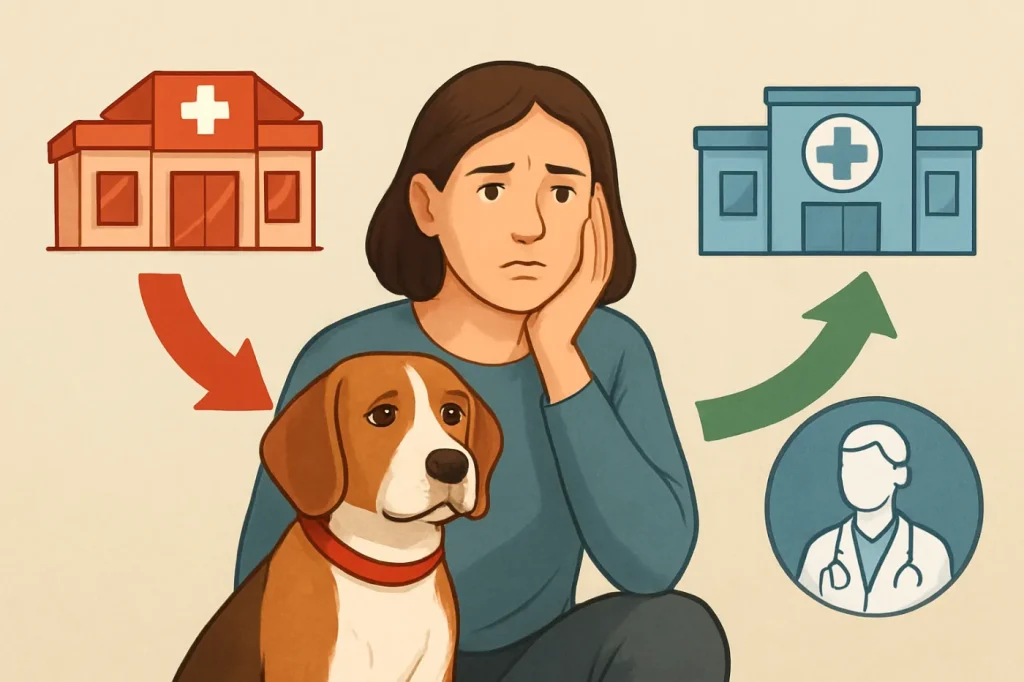
You should go to an emergency vet immediately if your pet has any life-threatening or rapidly worsening symptoms. If the problem seems mild, your pet is acting mostly normal, and you can reach a vet by phone quickly, it is often reasonable to call first and ask whether it is safe to wait for your regular vet.
The hard part is knowing which is which in the moment. This guide gives you a practical way to decide under stress, without guessing.
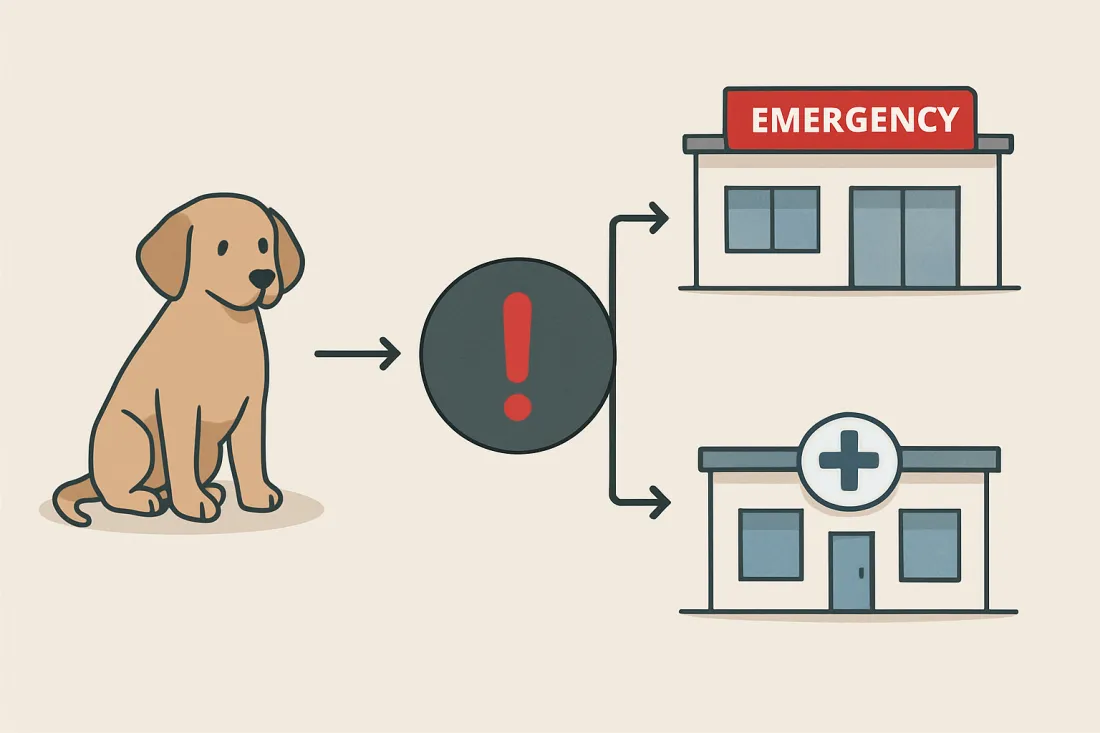
Balancing cost, stress, and safety when choosing ER vs regular vet
Emergency vet visits in the United States are usually more expensive, often involve long waits, and can be stressful for both you and your pet. Regular vets know your pet’s history, are usually calmer environments, and cost less. But emergencies do not wait for office hours.
When you are asking, “Should I wait for my regular vet or go to emergency?”, you are really balancing three things:
- Risk to life or long-term health – Could waiting cause permanent damage or death?
- Time until your regular vet can see you – Is it in a few hours, tomorrow, or several days away?
- Your pet’s behavior right now – Are they stable and mostly themselves, or clearly in crisis?
Safety always comes first. If you are genuinely unsure and something feels seriously wrong, it is safer to treat it as an emergency.
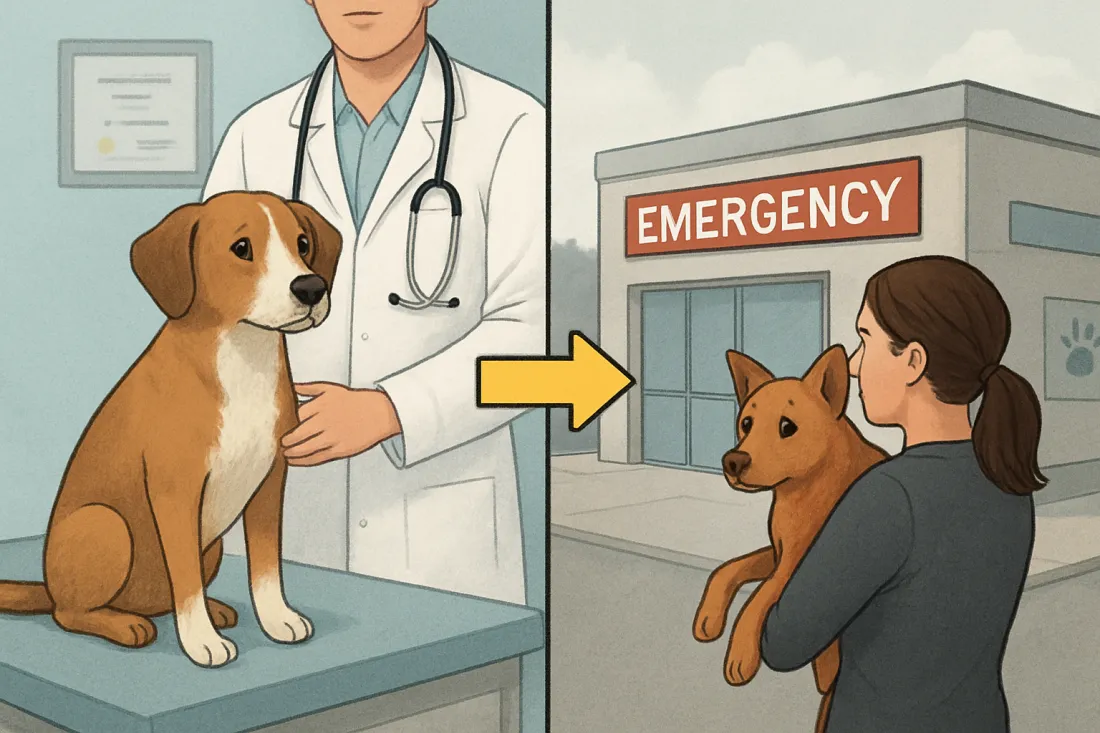
Red-flag symptoms that should not wait for your regular vet
Some signs almost always justify an immediate trip to an emergency clinic, even if it is late at night, a weekend, or a holiday. These are situations where minutes or hours can make a big difference.
Breathing and consciousness emergencies
- Struggling to breathe – open-mouth breathing in cats, gasping, blue or very pale gums, loud wheezing, or using belly muscles heavily to breathe.
- Collapse or inability to stand – suddenly falling over, unable to get up, or extremely weak and floppy.
- Unresponsiveness or confusion – staring, not reacting to your voice or touch, walking in circles, or seeming “out of it.”
- Seizures – a first-time seizure, a seizure lasting more than a couple of minutes, or multiple seizures close together.
Bleeding, trauma, and obvious injury
- Heavy or uncontrolled bleeding – blood soaking through towels, spurting, or not slowing after several minutes of firm pressure.
- Hit by a car or major fall – even if your pet stands up afterward; internal injuries may not show immediately.
- Obvious broken bone or dislocated joint – limb at a strange angle, bone visible, or your pet screaming when the area is touched.
- Deep wounds or bites – especially to the chest, abdomen, or near eyes and joints.
Stomach, poisoning, and urinary red flags
- Repeated vomiting with no ability to keep water down, especially in puppies, kittens, or small pets.
- Bloated, hard, or painful belly – especially in large, deep-chested dogs, or if your pet is pacing, drooling, and trying to vomit without bringing anything up.
- Suspected poisoning – ate medication not prescribed to them, household chemicals, toxic plants, chocolate, xylitol, or unknown substances.
- Straining to urinate with little or no output, crying in the litter box, or frequent attempts to pee with nothing coming out – especially in male cats and male dogs.
Other signs that usually mean “go now”
- Sudden severe pain – crying out, not letting you touch them, hiding, or aggressive only when an area is approached.
- Very pale, blue, or yellow gums – can signal shock, blood loss, or liver problems.
- Heat stroke signs – collapse after heat exposure, very high body temperature if you know how to check safely, bright red gums, excessive panting, or vomiting after being in the heat.
- Allergic reaction with swelling or breathing changes – facial swelling, hives, or trouble breathing after a bite, sting, or new food/medication.
If you see any of these, do not wait for your regular vet’s next opening. Go to the nearest open emergency clinic or urgent care for pets. If you are unsure where to go, call your regular vet’s number; many practices list an after-hours emergency partner on their voicemail.
Yellow-flag symptoms where a call-first approach can be reasonable
Yellow-flag symptoms are worrying but not obviously life-threatening in the next few hours. They still deserve attention, but you may have time to call your regular vet or an urgent care clinic to ask whether it is safe to wait.
Examples of yellow-flag situations
- Mild vomiting or soft stool but your pet is bright, drinking, and acting normal otherwise.
- Small skin wounds or minor limping without severe pain, swelling, or obvious deformity.
- Occasional coughing or sneezing in a pet that is breathing comfortably and eating well.
- Itchy skin, ear scratching, or head shaking without open sores, severe swelling, or signs of pain.
- Decreased appetite for less than a day in an otherwise healthy adult pet that is still drinking and not vomiting.
- Known chronic condition flaring mildly (for example, a dog with arthritis that seems a bit stiffer than usual, but still walks and eats).
For these yellow flags, a good approach is:
- Observe closely for 1–2 hours if the symptom just started and your pet seems comfortable.
- Call your regular vet during business hours and describe exactly what you see.
- If it is after hours, call an emergency clinic for guidance if the symptom is getting worse or you feel uneasy.
If a yellow-flag symptom worsens, turns into a red-flag sign, or your pet’s behavior changes suddenly (lethargy, hiding, refusing food, or new pain), treat it as an emergency.
Comparison table: when to wait, call, or go to emergency
| Situation | Typical examples | Reasonable first step | When to switch to emergency |
|---|---|---|---|
| Clear emergency | Struggling to breathe, collapse, heavy bleeding, suspected poisoning, blocked urination | Go directly to the nearest open emergency vet | Already an emergency – do not wait for your regular vet |
| Urgent but stable | Repeated vomiting but still alert, sudden but mild lameness, eye redness or squinting | Call any open vet clinic immediately for advice; prepare to go in the same day | If vomiting becomes constant, pain increases, or eye/limb worsens within hours |
| Yellow-flag mild issue | Soft stool once, mild cough, small cut, slight appetite drop | Monitor closely and call your regular vet during office hours | If symptoms persist beyond a day, spread, or your pet becomes lethargic |
| Chronic condition acting up | Known arthritis a bit worse, mild increase in thirst in a monitored diabetic pet | Call your regular vet for an earlier appointment or medication adjustment | If your pet cannot walk, stops eating, or shows red-flag signs |
| Behavior change without clear cause | Hiding, restlessness, clinginess, or irritability | Check for injuries, monitor, and call your regular vet if it continues | If behavior change comes with vomiting, breathing issues, or pain |
Structured checklist: what to gather before calling any vet
Having clear information ready makes phone triage faster and more accurate. Use this checklist whenever you call your regular vet or an emergency clinic.
- Basic details
- Your pet’s species, breed, age, and sex.
- Whether your pet is spayed/neutered.
- Current weight if you know it.
- Medical history
- Any chronic illnesses (for example, heart disease, kidney disease, diabetes, epilepsy, allergies).
- Current medications and supplements, including dose and when you last gave them.
- Recent surgeries, injuries, or hospital stays.
- Vaccination and parasite control
- Approximate date of last vaccines (especially rabies and core vaccines).
- Whether your pet is on flea, tick, and heartworm prevention.
- Current problem details
- Exact symptoms you see – vomiting, diarrhea, coughing, limping, bleeding, etc.
- When the problem started – minutes, hours, or days ago.
- How it has changed – better, worse, or the same.
- How often – number of vomiting episodes, seizures, bathroom trips, etc.
- What your pet is doing now – alert, hiding, restless, sleeping more, refusing to move.
- Eating, drinking, and bathroom habits
- Last time your pet ate and drank normally.
- Any change in thirst or urination – more, less, or straining.
- Last normal bowel movement and any changes (diarrhea, constipation, blood).
- Possible triggers or exposures
- Access to medications, chemicals, plants, trash, or new foods.
- Recent travel, boarding, grooming, or dog park visits.
- Any trauma – fall, hit by object, rough play, or animal fight.
- Home care already tried
- Any medications or remedies you have already given, including human medications.
- How your pet responded to what you tried.
Keep a written list of your pet’s medications, conditions, and regular vet contact info in one place, or store it in your phone. For broader preparedness, you can also review guidance on how to make a pet emergency kit for dogs and cats so you are not scrambling during a crisis.
How to describe your pet’s symptoms clearly over the phone
Vets and vet nurses rely on your description to decide whether you should come in now, later today, or at the next available appointment. Clear, concrete details help them give safer advice.
Focus on what you see, not what you think it is
Instead of saying, “I think my dog has a stomach bug,” describe the actual signs:
- “He vomited three times in the last hour, mostly food and yellow liquid.”
- “She is pacing, panting, and her belly feels tight when I touch it.”
- “He is trying to pee every few minutes but only a few drops come out.”
Concrete observations are more helpful than guesses like “He seems off” or “She looks sick.”
Use simple structure when you talk to the vet
When the receptionist or nurse answers, walk through your situation in this order:
- Start with the most serious sign – “My cat is breathing with her mouth open and seems very distressed.”
- Say when it started – “This began about 20 minutes ago.”
- Mention any red flags – collapse, seizures, heavy bleeding, or inability to urinate.
- Share key history – age, chronic illnesses, current medications.
- Explain what you have already done – moved to a cool area, removed access to toxins, etc.
If you are very anxious, write down bullet points before you call so you do not forget important details.
Be honest about medications and home remedies
Tell the vet team exactly what you have given, including human pain relievers, over-the-counter products, or home remedies. Some human medications are dangerous for pets, and the clinic needs accurate information to treat safely.
Decision tree: time of day, symptom severity, and pet history
Use this simple decision tree to guide your choice between waiting for your regular vet and going to emergency. It is not a substitute for professional judgment, but it can help you act faster and with more confidence.
Step 1: Check for red-flag symptoms
- If any red-flag symptom from the earlier list is present, go to emergency now, regardless of time of day or day of the week.
- If you are unsure whether a symptom is red-flag, call the nearest open vet clinic and describe it exactly.
Step 2: Consider time of day and access to care
- During regular office hours
- Call your regular vet first for both red and yellow flags.
- If they cannot see you soon enough and the team sounds concerned, ask for the nearest emergency or urgent care clinic.
- Evenings, nights, weekends, and holidays
- If symptoms are severe or rapidly worsening, go straight to emergency.
- If symptoms are mild and stable, call an emergency clinic for advice on whether you can safely wait until your regular vet opens.
Step 3: Factor in your pet’s age and chronic conditions
- Puppies and kittens – treat vomiting, diarrhea, not eating, or lethargy more urgently; they can get dehydrated quickly.
- Senior pets – sudden changes in behavior, appetite, or mobility can signal serious issues; lean toward earlier vet evaluation.
- Pets with chronic illnesses – if they stop eating, vomit repeatedly, or seem weaker than usual, call a vet immediately; waiting can destabilize their condition.
Step 4: Evaluate how fast things are changing
- Getting worse over minutes to hours – treat as urgent or emergency.
- Stable for several hours with mild symptoms – call for guidance and ask whether a next-day appointment is safe.
- Improving – continue to monitor, but still inform your regular vet if the original symptom was significant.
Step 5: Trust your gut, but verify with a professional
If you feel something is very wrong, even if you cannot explain why, it is worth calling an emergency clinic. You live with your pet every day; noticing that they are “not themselves” can be an important early warning.
How age and chronic illness change the emergency decision
Age and underlying health problems can turn a “maybe we can wait” situation into a “we should be seen now” situation.
Puppies and kittens
- Higher risk of dehydration and low blood sugar – a few episodes of vomiting or diarrhea can be dangerous much faster than in adults.
- Immature immune systems – infections can escalate quickly.
- Parasites and viruses – common in young animals and can cause rapid decline.
For young pets, be more cautious. If they are not eating, are vomiting or having diarrhea repeatedly, or seem unusually quiet or weak, call a vet right away and be prepared to go to emergency if advised.
Senior dogs and cats
- Hidden heart, kidney, or liver disease is more common.
- Subtle signs like slight breathing changes, mild confusion, or decreased appetite can signal serious problems.
- Recovery is often slower, and delays in treatment can have a bigger impact.
For seniors, do not ignore new symptoms just because they are mild. A sudden change from their usual routine is a reason to at least call your vet.
Pets with known chronic conditions
If your pet has a diagnosed condition such as heart disease, kidney disease, diabetes, epilepsy, or a bleeding disorder, ask your regular vet in advance:
- Which specific signs should always trigger an emergency visit.
- Which signs can usually wait until the next day.
- What home monitoring you should do (for example, blood sugar checks, breathing rate at rest).
Keep written instructions from your vet where you can find them quickly. For chronic conditions, a small change can be more serious than the same change in a healthy pet.
Common mistakes when deciding between regular vet and emergency
Under stress, it is easy to make choices you later regret. Being aware of typical mistakes can help you avoid them.
Waiting too long because the pet “seems okay now”
Some emergencies, like internal bleeding, urinary blockages, or stomach twists, can have ups and downs. A pet may seem better for a short time before crashing. If there was a serious sign earlier (collapse, inability to urinate, extreme pain), do not ignore it just because your pet looks a bit better later.
Relying only on internet searches or social media
Online information can help you understand possibilities, but it cannot see your pet. Two animals with the same symptom can have very different levels of risk. Use online information to prepare better questions, not to replace a vet’s assessment.
Giving human medications without vet guidance
Some human pain relievers and cold medicines are toxic to pets. Trying to “hold them over” until your regular vet opens by giving human drugs can make things worse and complicate treatment.
Driving far to your usual vet when a closer emergency clinic is available
In a true emergency, time and stability matter more than continuity. If your regular vet is far away or closed, a closer emergency clinic is usually the safer choice.
Not planning ahead for emergencies
Many owners do not know where the nearest 24/7 emergency clinic is until they are in the car with a sick pet. Take a few minutes now to:
- Save the phone numbers and addresses of the nearest emergency clinics in your phone.
- Ask your regular vet which emergency clinic they recommend.
- Prepare a basic pet emergency kit and keep it in a known spot at home and in your car.
Planning ahead is part of responsible pet ownership, just like setting house rules every responsible dog owner should have for safety and routine.
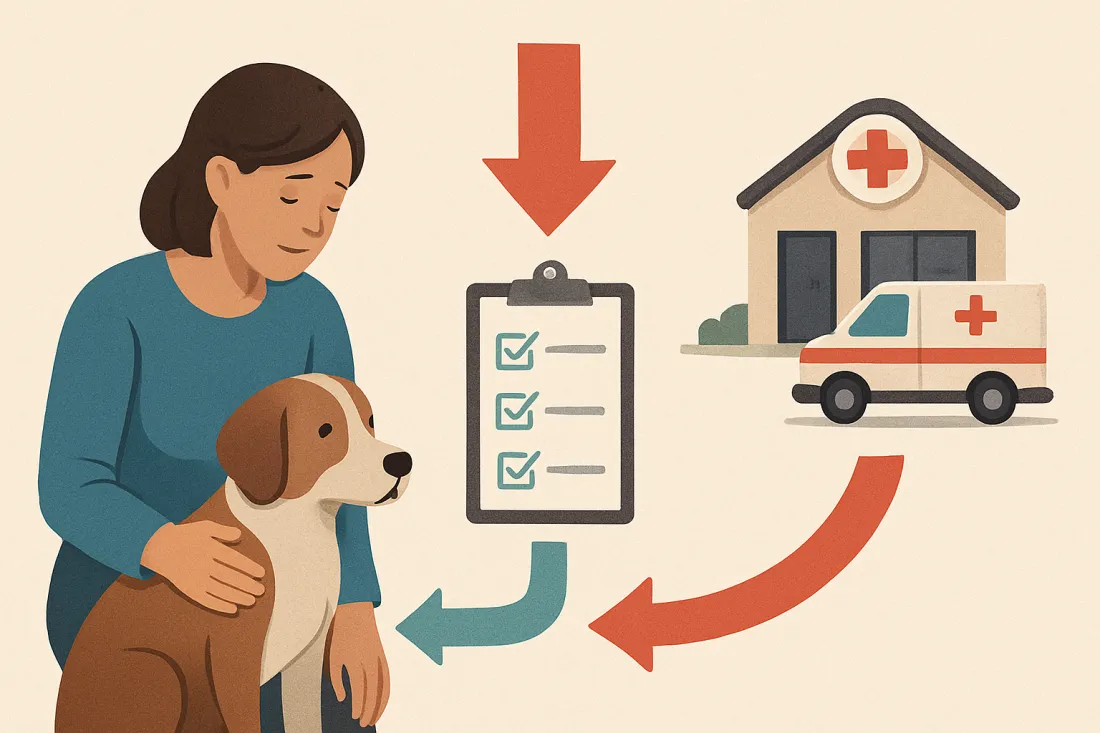
Step-by-step algorithm for your next urgent pet situation
When something suddenly seems wrong with your pet, use this simple algorithm to stay focused.
- Check breathing and responsiveness
- Is your pet breathing normally, too fast, too slow, or struggling?
- Are they responsive to your voice and touch?
- If breathing is difficult or they are unresponsive, go to emergency immediately.
- Look for visible injuries or major changes
- Check for heavy bleeding, obvious wounds, or limbs at odd angles.
- Note any seizures, collapse, or inability to stand.
- If present, treat as an emergency.
- Assess bathroom habits
- Is your pet able to urinate and defecate normally?
- Are they straining with little or no output, especially male cats and dogs?
- If they cannot urinate, go to emergency.
- Check for vomiting, diarrhea, or bloating
- Count how many times they have vomited or had diarrhea.
- Gently feel the belly – is it soft or hard and painful?
- Repeated vomiting, bloody diarrhea, or a hard, painful belly are urgent.
- Note time of day and access to care
- If your regular vet is open, call them with your observations.
- If closed, call an emergency clinic and ask whether you should come in now.
- Use your checklist while on the phone
- Share your pet’s age, history, medications, and exact symptoms.
- Ask directly: “Do you recommend I come in to emergency now, or can this safely wait until my regular vet opens?”
- Follow the professional recommendation
- If they say to come in, do not delay to see if it gets better.
- If they say it can wait, ask what changes should make you come in sooner.
FAQ: weekend, holiday, and real-world “wait or go” questions
What should I understand before deciding to wait for my regular vet instead of going to emergency?
You should understand that the main risk of waiting is that a treatable problem can become much worse, more painful, or even life-threatening. The main downside of going to emergency “just in case” is higher cost and stress, but it is rarely harmful medically. If there is any doubt about serious symptoms, it is safer to go in or at least call an emergency clinic for triage.
Is it safe to wait until Monday if my pet gets sick on the weekend?
It depends entirely on the symptoms. If your pet has red-flag signs like trouble breathing, repeated vomiting, collapse, heavy bleeding, or inability to urinate, it is not safe to wait until Monday; go to emergency. If the issue is mild and your pet is acting mostly normal, you can often monitor closely and call an emergency clinic for guidance on whether waiting is reasonable.
What are the biggest mistakes pet owners make when choosing between regular vet and emergency?
Common mistakes include waiting too long with serious signs, giving human medications without vet advice, relying only on online information instead of calling a clinic, and driving long distances to a familiar vet when a closer emergency clinic is available. Another frequent mistake is not having emergency clinic information saved ahead of time, which wastes precious minutes during a crisis.
What should I do right after reading this guide to be better prepared?
Take three practical steps: first, save the phone numbers and addresses of the nearest emergency clinics and your regular vet in your phone. Second, create a simple written record of your pet’s medical history, medications, and any chronic conditions. Third, assemble or update a basic pet emergency kit so you can leave quickly if needed. If you are still deciding whether a pet fits your lifestyle at all, you might also explore tools like a should I adopt a dog or cat quiz to think through long-term responsibilities.
How long can I safely watch and wait before calling a vet about new symptoms?
For mild, yellow-flag symptoms in an otherwise healthy adult pet (like soft stool once, a single vomit with normal behavior, or mild limping without pain), watching closely for a few hours is often reasonable. If the symptom repeats, worsens, or your pet’s behavior changes, call a vet the same day. For puppies, kittens, seniors, or pets with chronic illness, shorten your watch-and-wait window and call sooner, because they can decline faster.
What if I cannot afford an emergency vet visit but I am worried about my pet?
Call an emergency clinic and be honest about your financial limits. They may still recommend that you come in if the situation is serious, but they can sometimes help you prioritize tests and treatments or suggest local resources. Some areas have urgent care clinics for pets that are less expensive than full emergency hospitals. Whenever possible, plan ahead by setting aside a small emergency fund for your pet or exploring pet insurance before a crisis happens.