Typical U.S. puppy vaccination schedule at a glance
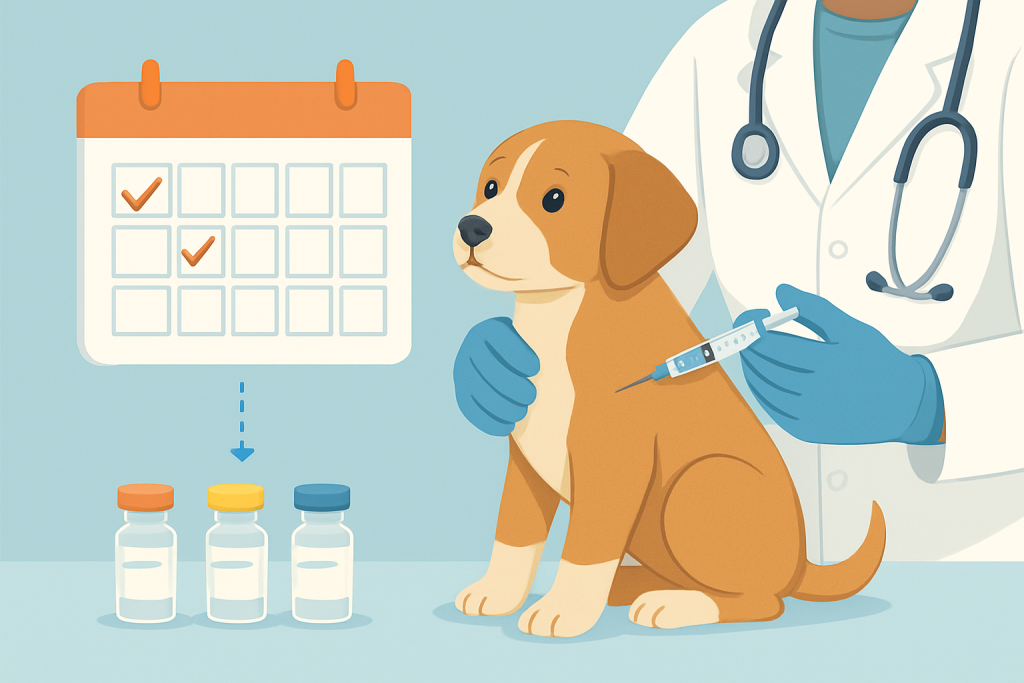
For a healthy puppy in the United States, many veterinarians commonly start vaccines around 6–8 weeks of age and repeat them every few weeks until at least 16 weeks. A frequently used pattern (your vet may adjust it) looks like this:
- 6–8 weeks old – First combination “puppy shot” (often called a DHPP-type vaccine, protecting against several serious viruses).
- 10–12 weeks old – Booster of the combination vaccine; some lifestyle vaccines may start if needed.
- 14–16 weeks old – Final puppy booster of the combination vaccine; the first rabies vaccine is often given in this window, depending on local rules and your vet’s guidance.
- 12–16 months old – Booster of core vaccines (combination and rabies) and any lifestyle vaccines your vet recommends.
After that, adult dogs usually receive boosters on a regular schedule, often every 1–3 years depending on the vaccine type, your dog’s health, and local guidance. Important disclaimer: This is general educational information for the United States, not veterinary advice or a legal guideline. Exact vaccines, timing, and requirements vary by state, city, and your puppy’s health and lifestyle. Always confirm your puppy’s schedule with a licensed veterinarian in your area.
How vaccines support responsible puppy ownership in the U.S.
Vaccinating a puppy is one of the most important parts of responsible pet ownership and preventive vet care. Why vaccines matter for your puppy and community
- Protect your puppy from severe, often life-threatening illnesses such as parvovirus and distemper.
- Protect other pets in your home, neighborhood, and dog parks by reducing the spread of contagious diseases.
- Protect people from diseases that can pass from dogs to humans, such as rabies.
- Meet local rules – many U.S. states and cities require certain vaccines (especially rabies) for licensing and public safety.
- Reduce long-term costs – preventing a serious disease is usually far less expensive than emergency treatment and hospitalization.
Skipping or delaying vaccines can lead to:
- Higher risk of parvovirus or distemper outbreaks in neighborhoods, shelters, and dog parks.
- Difficulty boarding your dog, using daycare, or attending training classes, which often require proof of vaccination.
- Potential legal and safety concerns if your unvaccinated dog bites someone and you cannot show current rabies vaccination.
If you are a first-time dog owner, pairing a clear vaccine plan with a broader care routine can help. A resource such as a first time dog owner checklist USA can keep you organized beyond just shots.
Core vs lifestyle vaccines for U.S. puppies: what’s the difference
Veterinarians in the United States usually group vaccines into two broad categories: core and lifestyle (non-core).
Core vaccines: recommended for almost all puppies
These protect against diseases that are widespread, very severe, or both.
- Combination puppy vaccine (often called DHPP or similar)
Typically covers several viruses such as distemper, adenovirus/hepatitis, parvovirus, and parainfluenza. It is usually given as a series of shots starting around 6–8 weeks and repeated every few weeks until at least 16 weeks. - Rabies vaccine
Rabies is fatal and can spread to humans. In the U.S., rabies vaccination is widely required for dogs. The first dose is often given once the puppy is a bit older (commonly in the 12–16 week range), with boosters later as required by local rules and your vet.
Lifestyle (non-core) vaccines: based on risk and region
These are recommended depending on where you live and how your puppy lives.
- Bordetella (kennel cough) – Often recommended if your puppy will be around many other dogs (daycare, boarding, grooming, training classes, dog parks).
- Leptospirosis – Considered when there is risk from wildlife, standing water, or certain regional patterns. Your vet will advise if it is relevant in your area.
- Lyme disease – Considered in areas with significant tick exposure and depending on your puppy’s outdoor activities.
- Canine influenza – Sometimes recommended in regions or facilities where dog flu outbreaks have occurred or where dogs mix in large groups.
Practical decision criteria for non-core vaccines
- Describe your puppy’s daily routine and future plans (dog parks, hiking, travel, daycare) to your vet.
- Ask which diseases are currently a concern in your county or state.
- Review the pros and cons of each optional vaccine, including how often boosters are needed and any common side effects.
Age-by-age comparison table: typical U.S. puppy vaccine timeline
The matrix below compares what many U.S. vets commonly do at each age range. Your vet may adjust based on your puppy’s health, breed, and local disease patterns.
| Age range | Core vaccines usually discussed | Lifestyle vaccines often considered | Visit goals and owner tasks |
|---|---|---|---|
| 6–8 weeks | First combination puppy shot (e.g., DHPP-type) | Sometimes Bordetella if high exposure is expected | Physical exam, weight check, deworming discussion, start vaccine record |
| 10–12 weeks | Booster of combination puppy shot | Begin or boost Bordetella, leptospirosis, Lyme, or influenza if recommended | Monitor growth, discuss behavior and socialization, adjust deworming and flea/tick plan |
| 14–16 weeks | Final puppy booster of combination shot; first rabies vaccine often given in this window | Additional lifestyle vaccine doses if part of a series | Confirm completion of puppy series, discuss safe outdoor activities and training |
| 12–16 months | Booster of combination vaccine; rabies booster as required | Boosters of lifestyle vaccines if your dog’s risk remains | Transition to adult schedule, review diet, exercise, and preventive care plan |
| Adult (ongoing) | Core boosters on a regular schedule (often every 1–3 years, depending on vaccine type and vet guidance) | Lifestyle boosters as long as risk continues | Annual or regular wellness exams, lab work as advised, dental and weight checks |
Because schedules can vary, many owners find it helpful to compare their vet’s plan with a general dog vaccination schedule USA to understand how puppy shots fit into lifelong care.
Regional and lifestyle-based vaccine choices in the United States
Not every puppy in the United States needs the same set of vaccines beyond the core ones. Your location and lifestyle strongly influence the plan.
Regional factors to review with your vet
- Climate and wildlife – Areas with more standing water or wildlife may have higher risk for certain diseases, which can influence recommendations for vaccines like leptospirosis.
- Tick exposure – If you live where ticks are common or hike in wooded or grassy areas, your vet may be more likely to recommend vaccines that address tick-related diseases.
- Local disease activity – If there have been recent cases of kennel cough or canine influenza in your area, your vet may suggest additional protection.
- State and city rules – Rabies vaccine timing and booster requirements can differ by state and sometimes by city. Your vet’s clinic usually follows the rules for your location.
Indoor-only puppies vs social or outdoor puppies
Even mostly indoor puppies still go outside for bathroom breaks and vet visits, and people can carry germs on shoes and clothing. That is why core vaccines are still recommended. However, lifestyle vaccines may differ:
- Mostly indoor, low-contact puppy
Core vaccines are still important. Your vet may be more selective about lifestyle vaccines if your puppy rarely meets other dogs and has limited outdoor exposure. - Social butterfly puppy (parks, daycare, training classes)
Your vet is more likely to recommend Bordetella and possibly canine influenza, because your puppy will be around many other dogs. - Outdoor adventurer puppy (hiking, camping, rural property)
Your vet may emphasize vaccines related to water exposure and wildlife, and will likely discuss tick prevention and related vaccines.
Key lifestyle questions to answer before your appointment
- How often will your puppy be around unfamiliar dogs?
- Will your puppy attend daycare, boarding, grooming, or group training?
- Do you live in or visit areas with many ticks, wildlife, or standing water?
- Are there known disease concerns in your county or state right now?
What actually happens at each puppy vaccine visit
Each visit is more than just a shot. It is a chance to check your puppy’s overall health and behavior.
Before the appointment
- Bring any records you already have (breeder, shelter, or rescue paperwork).
- Write down questions about behavior, diet, or training.
- Plan safe transport in a crate or on a leash.
- Feed a normal meal unless your vet advises otherwise.
During the visit
Most puppy vaccine visits include:
- Physical exam – The vet checks heart, lungs, eyes, ears, teeth, skin, and body condition.
- Weight and growth review – Helps adjust food portions and monitor healthy development.
- Discussion of lifestyle – So the vet can tailor vaccine and parasite prevention recommendations.
- Vaccinations – Given by injection or, for some types, possibly by mouth or nose, depending on the product.
- Observation period – Many clinics ask you to wait briefly after shots so staff can watch for any immediate reactions.
After the visit
- Your puppy may be a bit sleepy or have mild soreness at the injection site.
- Follow any activity or bathing restrictions your vet suggests for the rest of the day.
- Schedule the next visit before you leave the clinic so you stay on track.
- Update your calendar or reminder app with the next due date.
Managing side effects and safe aftercare for puppy shots
Most puppies handle vaccines well, but it is important to know what is normal and what is not.
Common mild effects you may see
These can appear within a day and usually pass on their own:
- Mild sleepiness or lower energy.
- Slight swelling or tenderness where the shot was given.
- Temporary decrease in appetite.
Ask your vet what to expect for your puppy and how long mild signs may last.
Warning signs that need urgent vet attention
Contact your vet or an emergency clinic immediately if you notice:
- Difficulty breathing, repeated vomiting, or collapse.
- Severe facial swelling, hives, or widespread itching.
- Extreme lethargy that does not improve or a high, persistent fever.
If your puppy has had a reaction before, tell your vet before the next vaccine visit. They may adjust the plan, spacing, or type of vaccine used.
Simple aftercare tips at home
- Keep the rest of the day calm – avoid intense play or long walks right after shots.
- Offer fresh water and your puppy’s usual food; do not force-feed.
- Check the injection site once or twice a day for unusual swelling, heat, or discharge.
- Follow any pain relief or medication instructions exactly; do not give human medicines unless your vet specifically tells you to.
Keeping vaccination records and proof organized
Good records make life easier when you:
- Apply for a dog license in your city.
- Enroll in training classes or daycare.
- Board your dog or use a groomer that requires proof of vaccines.
- Travel or move to another state.
Practical record-keeping system
- Ask your vet for a printed vaccine record or card at each visit.
- Take a clear photo of the record and store it in a dedicated folder on your phone.
- Note vaccine dates and next-due dates on a calendar or reminder app.
- If you change vets, request that your records be transferred to the new clinic.
- Keep digital and paper copies together in a labeled folder or binder.
Some owners like to keep all health tasks together. Pairing your vaccine record with an annual vet care schedule for dogs and cats USA can help you see how shots fit into exams, dental care, and testing.
Cost expectations and budgeting for puppy vaccines (without exact prices)
Exact prices vary widely across the United States and even between clinics in the same city. Instead of focusing on specific numbers, think in terms of planning and comparison.
Factors that usually affect vaccine costs
- Number of vaccines given at each visit.
- Whether lifestyle vaccines are added to core vaccines.
- Clinic type (full-service hospital, low-cost clinic, mobile clinic, etc.).
- Region and local cost of living.
- Whether exams, tests, or parasite preventives are included in the same visit.
Budgeting tips for the first year
- Ask for a written puppy plan – Many clinics can outline the expected series of visits and which vaccines are likely at each one.
- Spread costs over time – Puppy vaccines are usually given over several visits, which naturally spreads expenses across a few months.
- Ask about wellness plans or packages – Some clinics offer bundled puppy packages that include exams and vaccines for a set fee; compare what is included.
- Plan for adult boosters – After the first year, set aside money for regular boosters and annual exams.
- Consider pet insurance carefully – Some plans focus on accidents and illness, while others may include preventive care; compare what is covered before enrolling.
Common mistakes with puppy vaccination schedules in the U.S.
Avoiding a few frequent errors can keep your puppy safer and your schedule smoother.
- Stopping the series too early
Mistake: Getting one or two shots and assuming the puppy is fully protected.
Fix: Continue the series until your vet confirms the final puppy booster is done, often at or after 16 weeks. - Letting gaps between shots become too long
Mistake: Missing appointments and going many weeks or months between puppy boosters.
Fix: If you fall behind, call your vet. They will decide whether to continue or restart parts of the series. - Assuming indoor puppies do not need vaccines
Mistake: Skipping core vaccines because the puppy mostly stays inside.
Fix: Remember that people, other pets, and brief outdoor trips can still bring exposure. Discuss a minimal safe plan with your vet. - Relying only on breeder or rescue shots
Mistake: Thinking early vaccines given before adoption are enough.
Fix: Bring all paperwork to your vet. They will build on what has been done and complete the series. - Taking puppies to high-risk places too soon
Mistake: Visiting dog parks, pet stores, or daycare before the puppy series is finished.
Fix: Ask your vet when it is reasonably safe to start each type of outing and how long after a given shot you should wait.
Decision checklist: choosing the right vaccine plan for your puppy
Use this practical checklist to prepare for your next vet visit and compare options.
Before your first vaccine visit
- Gather any existing records (breeder, shelter, rescue).
- List where your puppy will spend time (home, yard, parks, daycare, travel).
- Note any health concerns you have noticed (coughing, diarrhea, low energy).
- Decide your budget range for puppy care over the next 6–12 months.
- Think about travel plans that might change disease risks (different states or climates).
Questions to ask your veterinarian
- Which vaccines are considered core for all puppies in this area?
- Which lifestyle vaccines do you recommend for my puppy, and why?
- What is the proposed schedule from now until my puppy is about 16 weeks old?
- How flexible is the timing if I need to reschedule?
- What mild side effects should I watch for, and when should I call you?
- Can you provide an estimate for the full puppy series and first-year boosters?
- Are there local rules I should know about for rabies and licensing?
After each vaccine visit
- Record the date, vaccine names, and lot numbers if provided.
- Add the next appointment to your calendar with reminders.
- Note any side effects and tell your vet at the next visit.
- Review whether your puppy’s lifestyle has changed (more dog park visits, travel, etc.).
- Update your long-term care plan as your puppy grows into an adult dog.
Short FAQ on U.S. puppy vaccination timing and choices
What is the typical vaccine schedule for puppies?
Many U.S. vets start vaccines around 6–8 weeks of age, then give boosters every few weeks until at least 16 weeks. This usually includes a series of combination shots and a rabies vaccine in the 12–16 week range, followed by boosters around 12–16 months and then on a regular adult schedule. Your vet will tailor the exact timing.
How long after the second vaccine can a puppy go out?
Puppies need socialization, but they are not fully protected until the vaccine series is complete. Many vets suggest controlled, lower-risk outings (such as visits to friends’ healthy, vaccinated dogs) earlier, while avoiding high-risk places like busy dog parks until after the final puppy booster. Ask your vet for a timeline that balances safety and socialization for your area.
Do puppy shots need to be exactly 4 weeks apart?
Vets often aim for intervals of a few weeks between puppy boosters, but they do not always have to be on the exact same day of the month. There is usually a recommended window. If you miss a date, call your vet promptly; they will decide whether to adjust the schedule or repeat a dose.
Do indoor puppies need all vaccines?
Indoor puppies still need core vaccines because diseases can come into the home on shoes, clothing, or other pets, and puppies still go outside for bathroom breaks and vet visits. However, your vet may recommend fewer lifestyle vaccines if your puppy has very limited contact with other dogs and outdoor environments.
Can I delay vaccines until my puppy is older?
Delaying vaccines leaves your puppy unprotected during a time when they are especially vulnerable to serious diseases. If you have concerns about timing, discuss them with your vet rather than postponing on your own. They can explain risks and may adjust the plan if there are medical reasons.
What if I adopt an older puppy with unknown vaccine history?
Bring any paperwork you have to your vet. If records are incomplete or missing, your vet may recommend starting or repeating a series of core vaccines to be sure your dog is protected. They will also help you plan boosters going forward.
How do I know which optional vaccines my puppy really needs?
Your vet will base recommendations on where you live, how often your puppy meets other dogs, travel plans, and outdoor activities. Be honest about your puppy’s lifestyle and ask which vaccines are considered essential for your situation and which are more optional.
Coordinating your puppy’s vaccine schedule with a local veterinarian
The best vaccination schedule for your puppy in the United States is the one you and your vet build together. Step-by-step coordination plan
- Schedule a first exam as soon as you bring your puppy home, even if they already had some shots.
- Bring all existing records and a list of your puppy’s typical and planned activities.
- Ask your vet to outline a full plan from now through the first adult booster, including which vaccines are core and which are lifestyle-based.
- Use reminders, a written checklist, and organized records to stay on schedule.
- Revisit the plan at least once a year as your dog’s lifestyle or location changes.
By treating vaccination as part of a broader preventive care routine, you support your puppy’s health, protect your community, and make responsible pet ownership more manageable for years to come.