
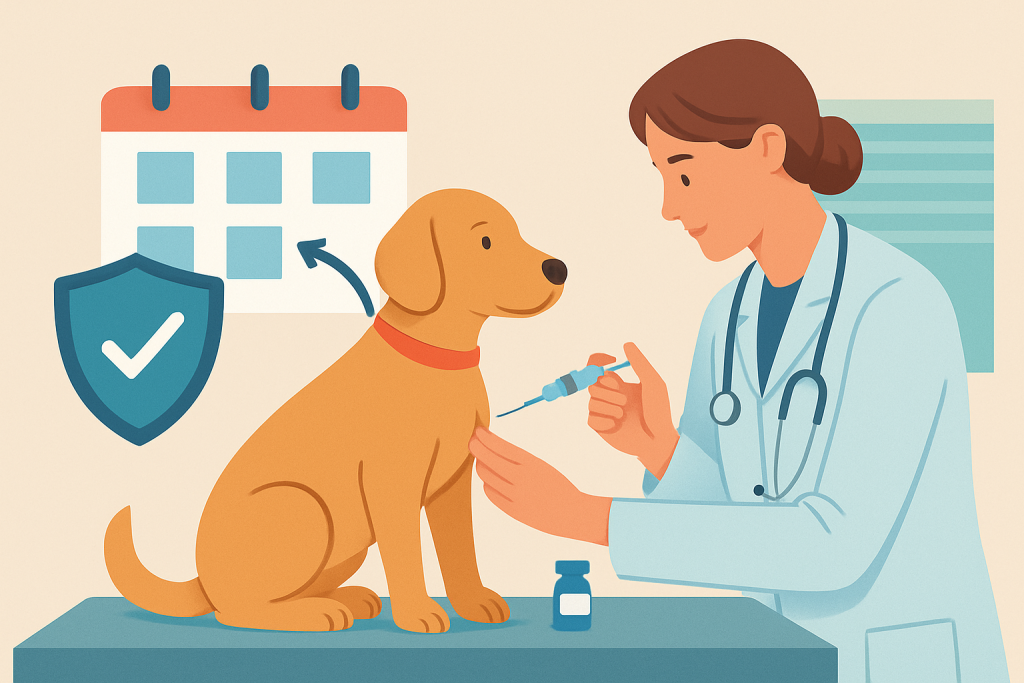
If you live in the United States and want a healthy, well-protected dog, you generally need to:
- Start puppy vaccines around 6–8 weeks of age
- Repeat core puppy shots every few weeks until about 16 weeks
- Get a booster for core vaccines about 1 year after the puppy series
- Continue adult boosters on a regular schedule recommended by your veterinarian
- Add regional vaccines (like Lyme or leptospirosis) if your dog’s lifestyle and local risk justify them
The exact timing and combination of vaccines should always be confirmed with your veterinarian, who will follow current professional guidelines and adjust for your dog’s health and local rules.
How dog vaccines protect individual pets and U.S. communities
Vaccines train your dog’s immune system to recognize and fight dangerous diseases before they cause serious illness. For dogs in the U.S., this matters on three levels:
- Protecting your dog – Diseases like parvovirus and distemper can be life-threatening, especially in puppies. Vaccinated dogs are much less likely to become severely ill.
- Protecting other animals – Many infections spread quickly in parks, boarding facilities, shelters, and multi-dog homes. A vaccinated dog is less likely to bring disease into these spaces.
- Protecting people – Some dog diseases, especially rabies, can infect humans. Keeping your dog vaccinated helps reduce risk for your family, neighbors, and anyone who interacts with your dog.
In many parts of the U.S., proof of rabies vaccination is required for licensing and for services like boarding or grooming. Even when a vaccine is not legally required, it may still be strongly recommended for your dog’s safety.
Core vs non-core vaccines for U.S. dogs: what really belongs on the schedule
Veterinary guidelines in the U.S. usually divide dog vaccines into two broad groups: core and non-core. Understanding the difference helps you decide what must be on the calendar and what depends on lifestyle.
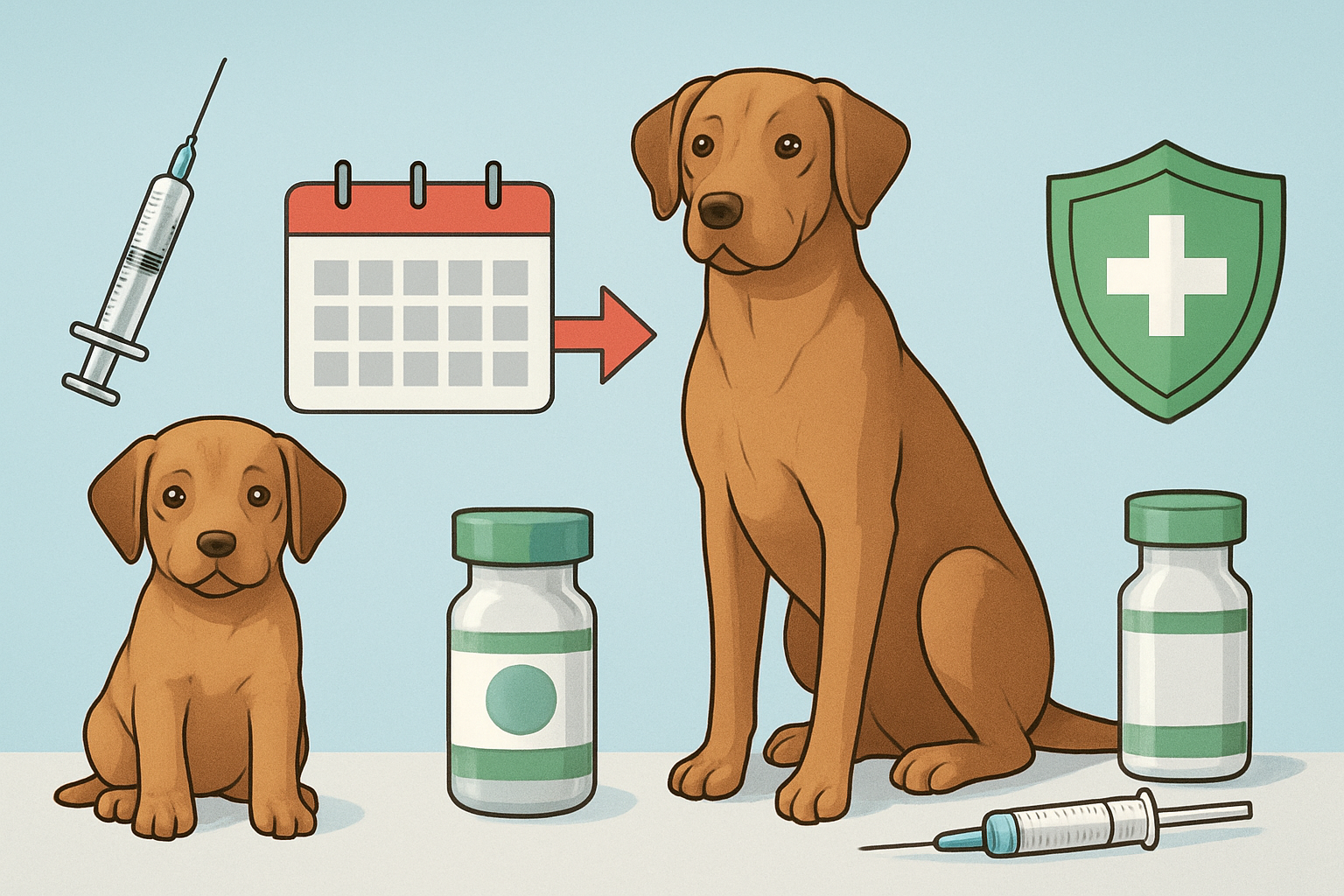
Core vaccines (recommended for almost all dogs)
Core vaccines are recommended for nearly every dog, regardless of where they live or their lifestyle, because the diseases are widespread or very severe. Common core vaccines for dogs in the U.S. include:
- Rabies – Protects against a fatal virus that can infect both dogs and people. Often required by law. Given as a puppy, then boosted later at intervals based on the specific vaccine and local rules.
- Distemper – Usually combined in a single shot with other viruses. Distemper can cause severe respiratory, digestive, and nervous system disease.
- Parvovirus – A highly contagious virus that can cause severe vomiting, diarrhea, and dehydration, especially in puppies.
- Adenovirus (hepatitis) – Often included in the same combination shot as distemper and parvovirus.
The distemper, parvovirus, and adenovirus components are often given together in a combination vaccine sometimes labeled with letters like “DAPP” or similar abbreviations. Your dog may receive this combo multiple times as a puppy and then as periodic boosters.
Non-core vaccines (added based on risk and region)
Non-core vaccines are recommended based on your dog’s lifestyle, travel, and local disease patterns. Common non-core vaccines in the U.S. include:
- Bordetella (kennel cough) – Often required by boarding kennels, groomers, and training classes. Helps reduce the risk or severity of certain respiratory infections.
- Leptospirosis – A bacterial disease that can affect the kidneys and liver and can also infect people. Often recommended for dogs that spend time outdoors, near wildlife, or around standing water.
- Lyme disease – Transmitted by certain ticks. Often recommended in areas where Lyme is common or for dogs that hike, camp, or spend time in tick-heavy environments.
- Canine influenza – A respiratory virus that can spread in places where many dogs gather, such as boarding facilities or dog shows.
- Rattlesnake vaccines and other regional options – In some parts of the U.S., veterinarians may offer vaccines aimed at reducing the severity of certain regional risks. These are typically considered only for dogs with specific exposure.
Your veterinarian will help you decide which non-core vaccines make sense for your dog based on where you live, where you travel, and how your dog spends time.
Puppy vaccination timeline vs adult schedule: age-based comparison
Puppy vaccines in the U.S. usually start when puppies are around 6–8 weeks old and continue at regular intervals until they are about 16 weeks old. The goal is to build strong, lasting immunity as the protection from their mother’s milk fades. After that, the schedule slows down into an adult booster pattern.
The exact timing and combination can vary, but many puppies follow a pattern similar to the comparison below. Always confirm the schedule with your veterinarian.
Puppy vaccination timeline chart by age and visit focus
| Puppy age (approx.) | Typical focus of visit | Common core vaccines given | Common non-core options (if needed) | Owner priorities at this stage |
|---|---|---|---|---|
| 6–8 weeks | First vet visit and baseline health check | First combination shot for distemper, parvovirus, and adenovirus (often a single injection) | Sometimes Bordetella, depending on risk and clinic policy | Set up vaccine plan, discuss deworming, ask about safe socialization |
| 9–12 weeks | Second round of puppy shots | Booster of the combination distemper/parvo/adenovirus vaccine | Start leptospirosis, Lyme, or influenza if recommended for your region and lifestyle | Review early training, discuss flea/tick and heartworm prevention |
| 12–16 weeks | Final puppy series visit | Another booster of the combination vaccine; rabies vaccine usually given once at or after a certain age set by local rules | Second doses of non-core vaccines that require a series | Plan spay/neuter timing, discuss transition to adult schedule |
| About 1 year old | First adult booster visit | Booster for core vaccines given during puppyhood | Boosters for non-core vaccines if your vet recommends continuing them | Confirm long-term booster intervals and update records |
Because puppies are especially vulnerable to diseases like parvovirus, many veterinarians recommend limiting visits to dog parks, pet stores, and group classes until the puppy has completed the core series and your vet confirms it is safe to expand social contact.
Adult dog booster timing compared with puppy shots
Once your dog has finished the puppy series and received the first adult booster (often around 1 year of age), the schedule usually becomes less frequent. However, the pattern is different for core and non-core vaccines.
How adult boosters typically compare to puppy visits
- Puppy series – Multiple visits, usually every few weeks, to build immunity while maternal antibodies fade.
- First adult booster – Often around 1 year after the puppy series, to reinforce immunity.
- Ongoing adult boosters – Given at intervals recommended by your veterinarian, which may differ between core and non-core vaccines.
For example, some rabies vaccines used in the U.S. are labeled for a 1-year interval after the first dose and then up to 3 years between boosters when a 3-year product is used, as long as local rules allow it. Other vaccines may be recommended more frequently, especially non-core vaccines that protect against diseases with shorter-lasting immunity or higher ongoing exposure.
Because products and guidelines can change, and local rules vary, your veterinarian is the best source for the exact timing for your dog.
Regional vaccine choices in the U.S.: comparing Lyme, lepto, rattlesnake and more
Beyond core vaccines, many U.S. dog owners need to decide whether to add regional or lifestyle-based vaccines. These decisions depend on where you live, where you travel, and how your dog spends time.
| Vaccine type | More likely recommended when | Less likely needed when | Key decision questions for owners |
|---|---|---|---|
| Leptospirosis | Dogs spend time outdoors, near wildlife, farms, or standing water; some urban areas with rodent issues | Strictly indoor dogs in low-risk regions, as judged by the veterinarian | Does my dog drink from puddles or ponds? Are wildlife or farm animals common nearby? |
| Lyme disease | Regions with known tick activity and Lyme cases; dogs that hike, camp, or visit wooded or grassy areas | Low-tick regions where your vet sees very few Lyme cases | Do we see ticks on our dog? Do local vets report Lyme disease often? |
| Bordetella (kennel cough) | Dogs that board, attend daycare, grooming, training classes, or dog shows | Dogs that rarely leave home and have minimal contact with other dogs | Will my dog be around many unfamiliar dogs in close quarters? |
| Canine influenza | Areas with known outbreaks; dogs that travel, board, or attend events with many dogs | Low-risk areas with little dog-to-dog contact | Has my vet seen recent flu cases? Does my dog travel or board frequently? |
| Rattlesnake and other regional options | Dogs in certain regions that hike or roam where specific wildlife risks are common | Urban dogs with minimal outdoor exposure in low-risk areas | Does my dog regularly visit areas with known wildlife hazards? |
Because disease patterns can change over time, it is wise to ask your veterinarian at least once a year whether any new regional risks have appeared or whether certain vaccines are no longer necessary.
Reading vet records vs keeping your own vaccine log
Keeping accurate vaccine records helps you avoid missed boosters, duplicate shots, and confusion when you move, board your dog, or change veterinarians. You can rely on clinic records, your own log, or both—ideally they match.
Common abbreviations you may see in clinic records
Vaccine names on records are often shortened. While exact abbreviations vary, you may see patterns like:
- DA2PP, DAPP, DHPP, or similar – A combination vaccine that includes distemper and parvovirus, often with adenovirus and sometimes parainfluenza.
- RABIES – Rabies vaccine, sometimes with a note indicating 1-year or 3-year product.
- LEPTO – Leptospirosis vaccine.
- LYME – Lyme disease vaccine.
- BORD – Bordetella vaccine.
- CIV – Canine influenza vaccine.
If any abbreviation is unclear, ask your veterinarian or clinic staff to explain it and write the full name on your copy.
What a complete vaccine entry should include
For each vaccine, your records should ideally show:
- Vaccine name or abbreviation
- Date given
- Clinic name and veterinarian’s name or initials
- Vaccine manufacturer and lot number (often on a sticker)
- Recommended date for the next booster, if applicable
Many clinics provide a printed or digital summary after each visit. Keep these in a safe place, and consider taking a photo or scanning them so you have a backup.
Simple printable schedule template you can recreate at home
You can create a printable schedule and log in a notebook, spreadsheet, or document app. A simple layout might include columns like:
- Vaccine name
- Date given
- Dog’s age at vaccination
- Clinic / veterinarian
- Next due date
- Notes (reactions, reminders, questions)
To make it more visual, you can add a calendar-style page for each year and mark vaccine due dates, then check them off once completed. Many owners find it helpful to keep this log with other important pet documents such as microchip information and insurance details.
Cost expectations vs cost-saving strategies for U.S. dog vaccines
Vaccine costs in the U.S. vary widely depending on region, clinic type, and whether vaccines are bundled with an exam. Because exact prices change over time and differ between providers, it is best to call local clinics for current estimates. However, you can plan and manage costs using a few practical strategies.
Factors that influence vaccine costs
- Location – Urban clinics and specialty hospitals may charge more than some rural or community clinics.
- Type of visit – Vaccines are often given during a wellness exam, which adds to the total but also provides a full health check.
- Number of vaccines – Puppies need several visits and multiple vaccines; adult dogs may need fewer shots per year.
- Non-core add-ons – Regional vaccines like Lyme or leptospirosis add to the total but may help prevent costly illness.
Responsible ways to manage and reduce costs
- Ask about wellness plans – Some clinics offer monthly payment plans that include exams, vaccines, and basic tests.
- Look for low-cost vaccine clinics – Many communities host periodic vaccine events through shelters or local organizations. Confirm that a licensed veterinarian oversees the clinic.
- Prioritize core vaccines – If budget is tight, discuss with your veterinarian which vaccines are absolutely essential and which can be delayed or skipped based on your dog’s risk.
- Plan ahead – Spread out non-urgent vaccines over several visits instead of doing everything at once if your vet agrees this is safe.
- Keep records organized – Avoid paying for unnecessary repeat vaccines because records were lost or unclear.
Never try to vaccinate your dog at home using products from unverified sources without veterinary guidance. Improper storage, handling, or administration can make vaccines ineffective or unsafe.
Normal post-vaccine reactions vs warning signs
Most dogs handle vaccines well, but it is important to know what is expected and what requires urgent care.
Common, mild reactions that usually resolve quickly
Many dogs experience mild, short-lived effects such as:
- Soreness or a small lump at the injection site
- Mild tiredness or decreased activity for a day
- Slight decrease in appetite
- Very mild fever that resolves on its own
These signs often improve within about 24 hours. If your dog seems uncomfortable, call your veterinarian before giving any pain medication; some human medicines are unsafe for dogs.
Reactions that should prompt a same-day call to your vet
Contact your veterinarian promptly if you notice:
- Swelling of the face, muzzle, or around the eyes
- Hives or widespread itchy bumps on the skin
- Persistent vomiting or diarrhea
- Extreme lethargy that does not improve after rest
- A lump at the injection site that keeps growing or does not improve over several weeks
Emergency signs after vaccination
Seek emergency veterinary care immediately if your dog shows:
- Difficulty breathing, wheezing, or open-mouth breathing
- Collapse or inability to stand
- Pale gums or a very rapid heartbeat
- Seizures
Severe allergic reactions are uncommon, but they can develop quickly. If your dog has ever had a strong reaction, tell your veterinarian before future vaccines so they can adjust the plan, pre-medicate if appropriate, or space out vaccines.
Which schedule fits which dog: comparing common U.S. lifestyles
Not every dog needs the same non-core vaccines, but nearly all dogs in the U.S. benefit from a full core schedule. Here is how different situations might influence decisions, which you should confirm with your veterinarian.
- Indoor-only apartment dog in a low-risk area
Core vaccines and rabies are still important. Your vet may recommend fewer non-core vaccines if exposure to other dogs, wildlife, and ticks is minimal. - Active family dog visiting parks and daycare
Core vaccines plus Bordetella are often recommended, and your vet may suggest canine influenza and leptospirosis depending on local patterns. - Hiking and camping dog in tick-heavy regions
Core vaccines plus Lyme and leptospirosis are commonly considered. Tick prevention is also critical. - Dog living on a farm or near wildlife
Core vaccines plus leptospirosis and possibly other region-specific vaccines may be recommended, depending on local wildlife and water sources. - Senior dog with chronic health issues
Core protection remains important, but your vet may adjust which vaccines are given, how often, and whether to separate them into multiple visits.
Decision checklist for staying on schedule with dog vaccines
Use this practical checklist to plan and review your dog’s vaccination schedule in the U.S.
- Confirm your dog’s current status
- Gather all existing records from breeders, shelters, or previous vets.
- List which vaccines were given and on what dates.
- Note any past reactions or health issues.
- Schedule a wellness exam
- Book a visit with a local veterinarian and bring your records.
- Ask for a written vaccine plan covering at least the next year.
- Clarify core vs non-core needs
- Ask which vaccines are considered core for your dog.
- Discuss non-core options based on your region, travel, and lifestyle.
- Map out puppy or adult boosters
- For puppies, mark each planned visit on your calendar from 6–8 weeks through about 16 weeks and the 1-year booster.
- For adults, note the due dates for each booster, especially rabies and combination vaccines.
- Plan for regional risks
- Ask your vet about local leptospirosis, Lyme, influenza, and other regional concerns.
- Decide together which additional vaccines are worth including.
- Set a budget and explore options
- Request an estimate for the next year’s vaccines and exams.
- Ask about wellness plans or low-cost clinics if needed.
- Track and review annually
- Update your vaccine log after every visit.
- Review the plan at least once a year to adjust for new risks or lifestyle changes.
- Monitor after each vaccination
- Watch your dog closely for the first few hours and again that evening.
- Call your vet if you see any concerning signs.
Common mistakes with U.S. dog vaccination schedules
Avoiding a few frequent errors can keep your dog safer and save money over time.
- Stopping puppy shots too early – Ending the series before about 16 weeks can leave gaps in protection, especially against parvovirus.
- Assuming indoor dogs do not need vaccines – Even indoor dogs can escape, visit the vet, or encounter wildlife and insects that carry disease.
- Skipping rabies because the dog “never bites” – Rabies rules are based on public safety, not temperament. Bites are often accidental and unpredictable.
- Relying on memory instead of records – Without written proof, new clinics or boarding facilities may require extra vaccines.
- Vaccinating when a dog is clearly ill – If your dog is sick, call your vet to see whether vaccines should be postponed.
- Ignoring mild reactions – Even if a reaction is mild, tell your vet so they can note it and adjust future plans if needed.
- Choosing or rejecting vaccines based only on online opinions – Local disease patterns and your dog’s health history matter more than general advice.
Questions to ask your veterinarian about your dog’s vaccine plan
Bringing a short list of questions can make your visit more productive and help you feel confident in your decisions.
- Which vaccines are core for my dog, and why?
- Which non-core vaccines do you recommend for our area and my dog’s lifestyle?
- What is the recommended schedule for each vaccine over the next few years?
- Are any vaccines required by local rules or for services like boarding and grooming?
- Has my dog ever had a reaction to a vaccine, based on your records?
- Can we safely space out vaccines if I am concerned about giving several at once?
- What mild reactions should I expect, and when should I call you?
- Do you offer wellness plans or other options to help manage costs?
- How will I receive reminders when boosters are due?
FAQ about dog vaccination schedules in the USA
What is the standard vaccine schedule for dogs in the U.S.
Many dogs in the U.S. start vaccines around 6–8 weeks of age, receive boosters every few weeks until about 16 weeks, get a booster around 1 year of age, and then continue with adult boosters at intervals recommended by their veterinarian. The exact schedule depends on the products used, your dog’s health, and local rules.
What vaccines do dogs really need every year?
Most dogs need regular boosters for core vaccines such as distemper and parvovirus, and they must keep rabies vaccination current according to local rules and product labeling. Some non-core vaccines, like Bordetella or leptospirosis, may be recommended annually or more often in higher-risk situations. Your veterinarian will tailor the timing to your dog.
What vaccines are mandatory for dogs in the USA?
Rabies vaccination is widely required for dogs in the U.S., but the exact age for the first dose, booster timing, and proof requirements vary by state and sometimes by county or city. Other vaccines are usually strongly recommended rather than legally required, though boarding facilities, groomers, and training centers may have their own rules. Always check local requirements and service policies.
How can I tell if my dog is overdue for vaccines?
Look at your dog’s vaccine records for the “next due” dates or call your veterinarian’s office and ask them to review your file. If you have moved or changed clinics, bring any paperwork you have so the new clinic can estimate what is needed and when.
Is it safe to vaccinate an older dog?
Many senior dogs benefit from continued vaccination, but the plan may be adjusted based on overall health, chronic conditions, and lifestyle. Your veterinarian will weigh the benefits and risks and may recommend fewer non-core vaccines or longer intervals for some boosters.
What if I adopted a dog and do not know its vaccine history?
Bring any paperwork you received to your veterinarian. If records are incomplete or missing, your vet may recommend treating your dog as unvaccinated and starting or restarting a core vaccine series to help ensure protection. They will explain which vaccines are needed and how many doses are required.
Can religious beliefs affect vaccination decisions?
Families from many backgrounds, including Muslim families, choose to vaccinate their children and pets as part of caring for their health. If you have religious or personal concerns, discuss them openly with your veterinarian so you can find a plan that respects your beliefs while protecting your dog and community within local rules.
Can I delay vaccines if my dog is sick?
If your dog is unwell, call your veterinarian before the appointment. In many cases, vaccines are postponed until the dog is stable, but the decision depends on the type of illness and the urgency of staying current on certain vaccines.
How do I get a printable vaccination schedule template?
You can create a simple template at home by making a table with columns for vaccine name, date given, age, clinic, next due date, and notes. Print several copies and keep them with your pet’s records. Many clinics also provide printed schedules or reminder cards that you can file or photograph for easy reference.