
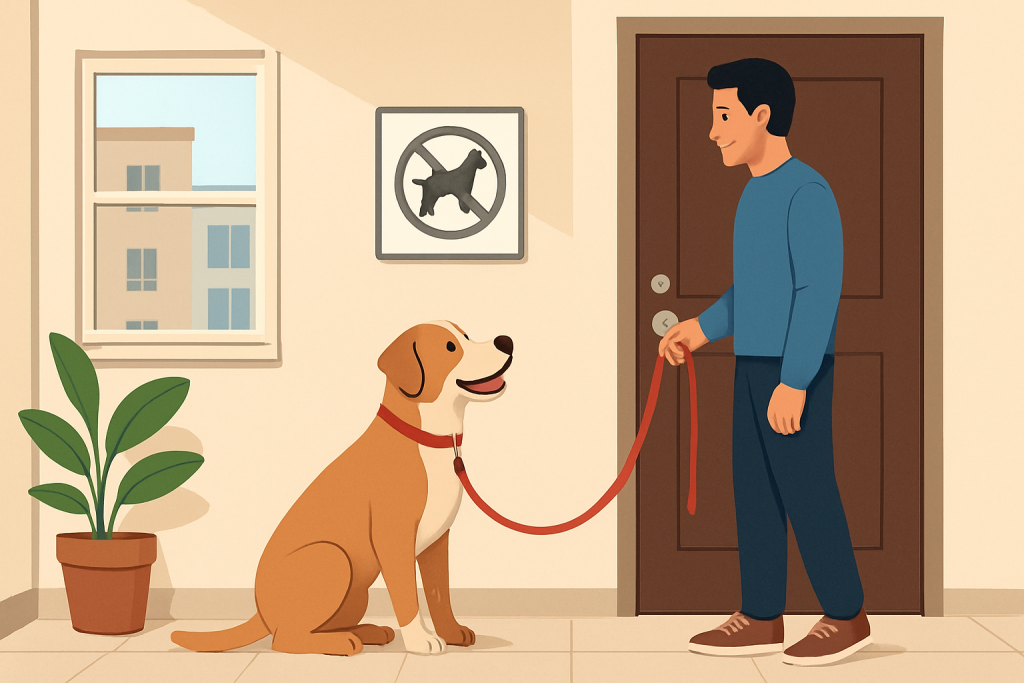
Apartment pet rules for dogs can feel confusing, but most of them boil down to three goals: protect the property, keep neighbors comfortable, and keep pets safe. If you understand how those goals show up in your lease and daily routine, it becomes much easier to stay compliant and avoid conflict.
Key apartment pet rules for dogs in the U.S. and what they mean day to day
For most U.S. renters with dogs, you will run into some combination of these rules:
- Pet approval: You must disclose your dog and get written permission before move-in or before adding a dog later.
- Limits: Many buildings cap the number of pets per unit and may set weight or breed limits.
- Fees: Common charges include a pet deposit, a one-time pet fee, and/or monthly pet rent.
- Behavior rules: Leash requirements, quiet hours, and nuisance rules (barking, aggression, messes) usually apply.
- Damage responsibility: You pay for any extra cleaning or repairs caused by your dog.
- Shared-space etiquette: Rules for elevators, hallways, and designated dog relief areas.
- Special status for assistance animals: Service animals and some support animals are often treated differently from pets, but you still must follow basic behavior and safety rules.
Once you know which of these apply in your building, you can build a routine that keeps your dog comfortable and your landlord and neighbors confident that you are a responsible owner.
Why apartment pet rules matter for responsible dog ownership
Following apartment pet rules is about more than avoiding fees. It is a core part of responsible pet ownership and community safety:
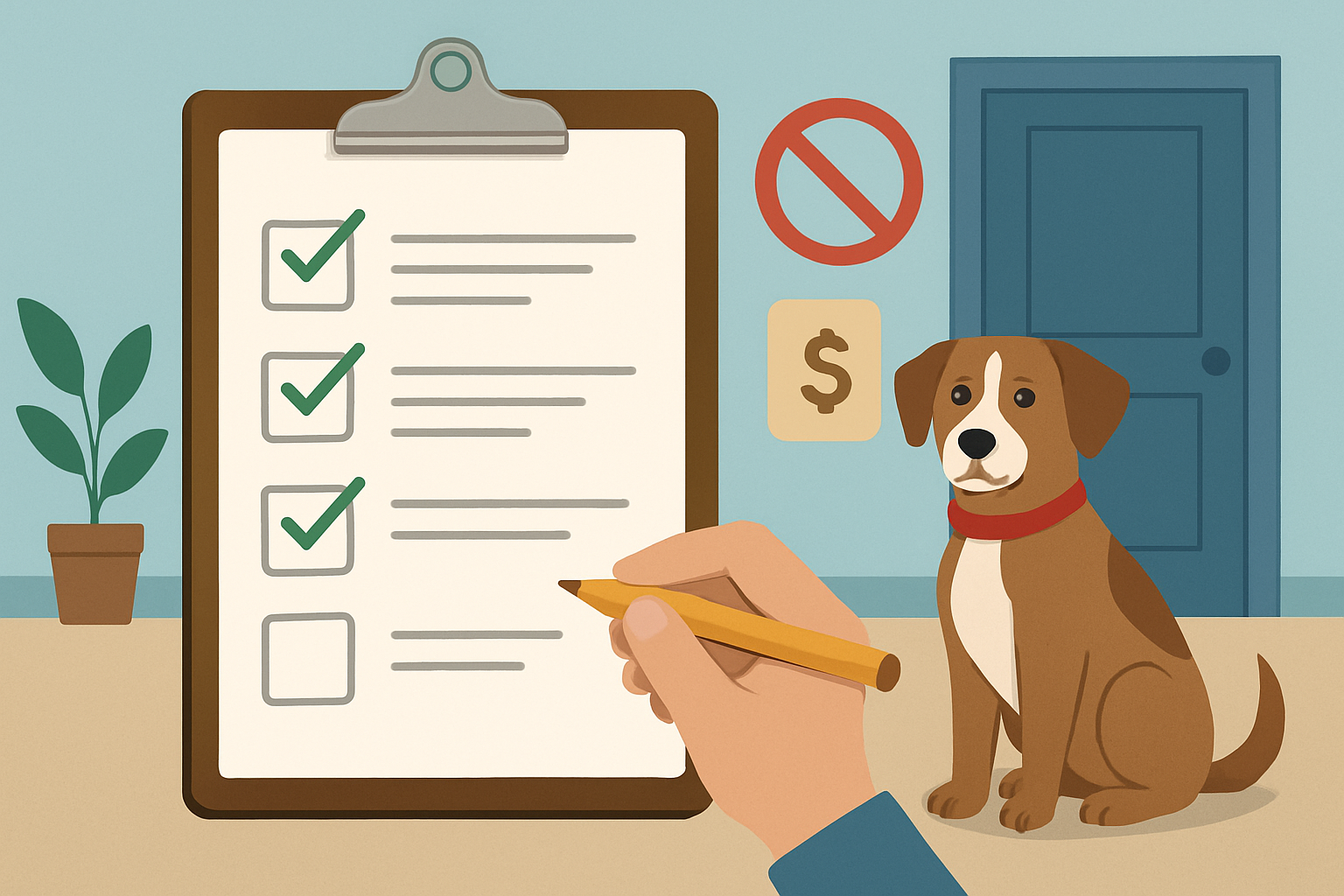
- Your dog’s wellbeing: Clear routines for exercise, potty breaks, and quiet time reduce stress and behavior issues.
- Neighbor comfort: Barking, hallway encounters, and elevator rides can be stressful for people who are afraid of dogs, have allergies, or work night shifts.
- Landlord trust: When pet owners consistently follow rules, landlords are more likely to keep or expand pet-friendly policies.
- Housing stability: Serious or repeated violations can lead to fines, non-renewal, or in some cases even eviction.
Thinking about rules as part of caring for your dog and your community makes it easier to accept and work with them instead of feeling constantly policed.
Common U.S. apartment pet policies and how they affect your choices
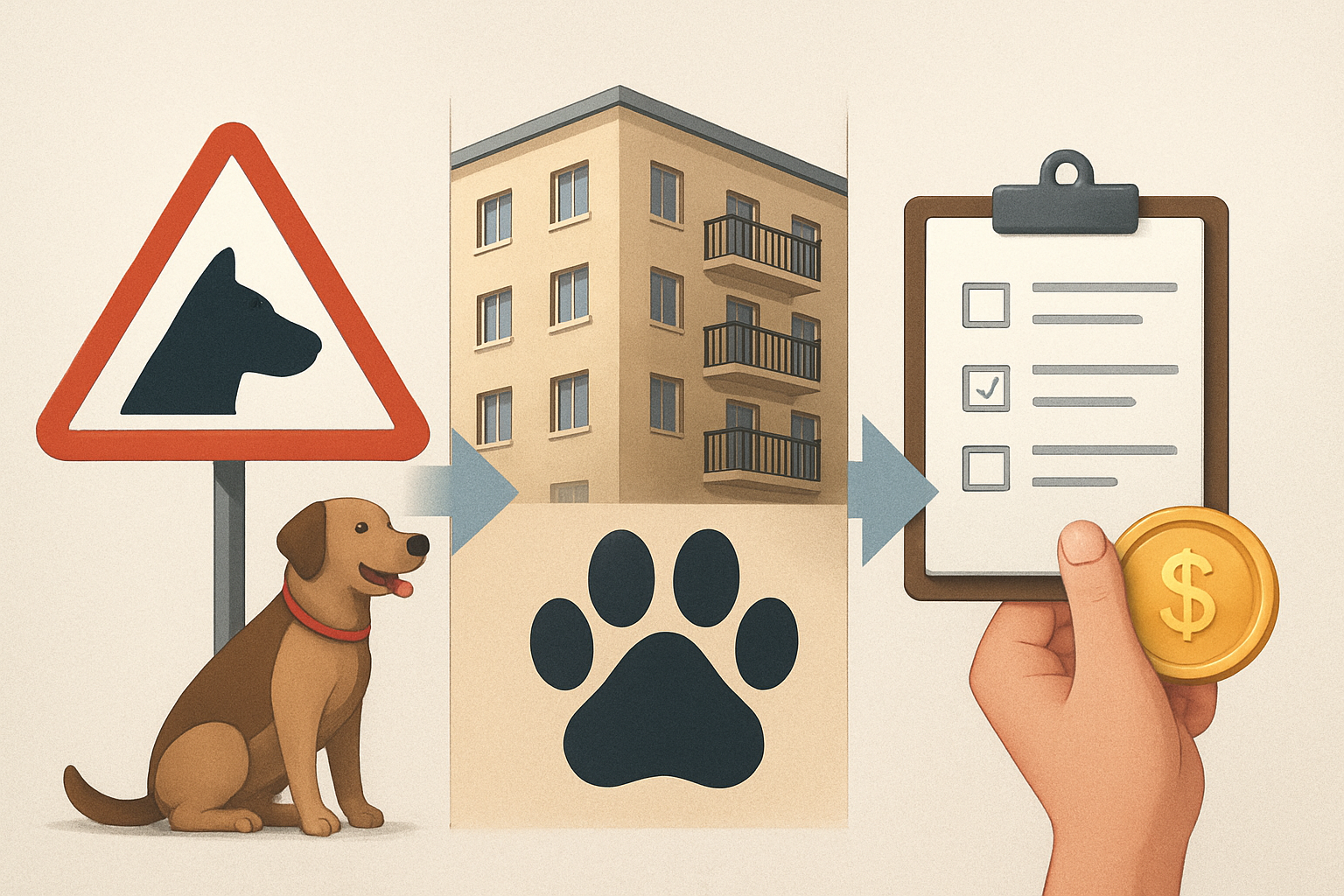
Exact rules vary by building and state, but many U.S. apartments use similar types of policies. Always confirm the details in your own lease and with your landlord or property manager.
Typical elements of apartment pet policies
- Pet limits: A maximum number of pets per unit (for example, a limit on dogs, or a combined limit on dogs and cats).
- Weight limits: Some buildings only allow dogs up to a certain weight. Others have no weight limit but focus on behavior.
- Breed-related rules: Some landlords use breed lists or insurance guidelines to decide which dogs they will accept. Others evaluate dogs individually.
- Pet deposits and fees: Many apartments charge a refundable pet deposit, a non-refundable pet fee, monthly pet rent, or a mix of these.
- Vaccination and ID requirements: You may need to show proof of current vaccines and keep ID tags on your dog.
- Leash and supervision rules: Dogs are usually required to be on leash in all common areas and under control at all times.
- Waste cleanup rules: Immediate cleanup is typically required anywhere on the property, including designated dog areas.
- Noise and nuisance clauses: Excessive barking, aggression, or repeated complaints can be considered a lease violation.
Comparison table: how common pet rules change daily life with your dog
| Policy type | What it usually says | How it affects you and your dog | What to double-check in your lease |
|---|---|---|---|
| Pet limit | Maximum number of pets per unit | Decides whether you can add a second dog or other pets later | Is the limit per unit or per person? Are small animals counted? |
| Weight limit | Only dogs under a certain weight allowed | May rule out some medium/large breeds even if calm | How is weight verified? What happens if your dog grows past the limit? |
| Breed rules | Some breeds not accepted or reviewed case by case | Can affect adoption choices and renewals | Is it a strict list or can temperament testing override it? |
| Pet deposit / fee | Extra money collected for potential damage or admin | Changes your move-in budget and move-out cleaning expectations | Is any part refundable? What counts as “normal wear and tear”? |
| Pet rent | Monthly charge per pet or per unit | Raises your ongoing housing cost | Is it per pet? Does it increase on renewal? |
| Noise / nuisance | No excessive barking or disruptive behavior | Requires training, enrichment, and sometimes management tools | How are complaints handled? Is there a warning system? |
| Shared-space rules | Leash, elevator, and hallway etiquette | Shapes your daily comings and goings | Are there pet-free floors or entrances you must avoid? |
How to read and interpret your lease’s pet clause without missing anything
Many problems start because tenants skim the pet clause or rely on verbal promises. A careful read before you sign can prevent surprises later.
Step-by-step checklist for reviewing the pet clause
- Find every mention of pets
- Search for words like “pet,” “animal,” “dog,” “service animal,” and “nuisance.”
- Check the main lease, addendums, and house rules or community guidelines.
- Confirm whether dogs are allowed at all
- Look for clear language that dogs are permitted, not just “pets” in general.
- Make sure any “no dogs” or “cats only” rules do not apply to your unit.
- Identify all limits that apply to your dog
- Species (dogs vs. other pets).
- Number of pets.
- Weight or size limits.
- Any breed-related rules or insurance requirements.
- List all costs related to your dog
- Pet deposit (and whether it is refundable).
- One-time pet fee.
- Monthly pet rent.
- Any extra cleaning fees that may apply at move-out.
- Note behavior and noise expectations
- What counts as “excessive” barking or nuisance?
- Are there quiet hours?
- What happens after a complaint (warning, fine, required training)?
- Check shared-space rules
- Leash requirements in hallways and outside.
- Elevator rules (for example, waiting for the next elevator if someone objects).
- Where dogs can and cannot relieve themselves.
- Look for documentation requirements
- Vaccination records, licensing, or proof of spay/neuter.
- Any required photos of your dog for the file.
- Clarify assistance animal language
- See how the lease distinguishes pets from service or support animals.
- Note what documentation is requested and how fees are handled.
- Get everything in writing
- If the landlord agrees to an exception (for example, a slightly larger dog), ask for that exception to be added to the lease or a signed addendum.
Questions to ask your landlord before getting or moving in with a dog
Even with a clear pet clause, it is smart to ask direct questions so expectations are aligned. Use these as a starting point:
- “Are dogs currently allowed in my specific unit and building?” (Some complexes have pet-friendly and pet-free sections.)
- “Is there a limit on dog size or weight, and how is that checked?”
- “Do you have any breed-related rules or insurance requirements?”
- “What are the total upfront and monthly costs for having a dog here?” (Deposit, fees, pet rent.)
- “How do you handle noise complaints about barking?” (Ask whether there is a warning system or immediate fines.)
- “Where are dogs allowed to relieve themselves on the property?” (And where they are not allowed.)
- “Are there any pet-free floors, entrances, or amenities I should know about?”
- “What kind of damage would you consider beyond normal wear and tear?”
- “If I adopt a second dog later, what is the approval process?”
- “If my dog is an assistance animal, how should I document that with you?”
Ask these questions before you adopt or bring your dog home. If you already have a dog, it is still worth clarifying anything that seems vague.
Choosing and supporting a dog that fits apartment life
Some dogs adapt to apartments more easily than others. While every dog is an individual, you can use a few decision criteria to reduce the risk of conflicts.
Decision criteria when selecting a dog for an apartment
- Energy level: High-energy dogs can thrive in apartments if you commit to exercise, but they are more likely to bark or become destructive if under-stimulated.
- Noise tendency: Some breeds and individual dogs are more vocal. Ask shelters or breeders about barking habits.
- Size vs. space: A calm large dog may be easier than a hyper small dog, but size still matters for elevators, hallways, and weight limits.
- Age: Puppies need frequent potty breaks and training; adult dogs may already be house-trained but could need time to adjust.
- History: Dogs with severe separation anxiety or reactivity may need extra support to succeed in close quarters.
If you are a first-time dog owner, it can help to review a broader first time dog owner checklist USA to understand the overall commitment before layering on apartment-specific rules.
Setting up an apartment-friendly routine for your dog
A predictable routine is one of the best tools for staying compliant with apartment pet rules and keeping your dog relaxed.
Core elements of an apartment dog routine
- Regular exercise
- Plan daily walks that match your dog’s age and energy level.
- Include at least one walk focused on sniffing and exploring, not just quick bathroom breaks.
- Consistent potty schedule
- Take puppies out frequently; adult dogs usually need multiple breaks spaced through the day.
- Use the same exit and relief area so your dog learns the pattern.
- Quiet hours
- Schedule high-energy play earlier in the day so your dog is calmer during typical quiet hours.
- Offer chews or puzzle toys in the evening instead of rough play.
- Alone-time training
- Gradually build up the time your dog spends alone to reduce anxiety and barking.
- Use background noise (like a fan or soft music) if sudden hallway sounds trigger barking.
Simple daily checklist for apartment dog owners
- Give a morning potty break and short walk.
- Check food and water and tidy bowls and feeding area.
- Provide a midday potty break or arrange help if you are away for long hours.
- Schedule at least one longer exercise session (walk, play, or training).
- Add mental enrichment such as puzzle feeders, sniffing games, or basic obedience practice.
- Offer a calm evening activity (chew, snuffle mat) during typical quiet hours.
- Do a quick sweep or vacuum of fur in main areas.
- Inspect for new scratches, chewed spots, or accidents and clean or report issues promptly.
Noise and nuisance prevention for dogs in close quarters
Noise complaints are one of the fastest ways for apartment pet situations to go wrong. A proactive plan makes a big difference.
Common triggers for barking in apartments
- Footsteps or voices in the hallway.
- Elevator dings or doorbells.
- Other dogs passing your door.
- Construction or street noise.
- Loneliness or separation anxiety when you leave.
Practical ways to reduce barking and nuisance behavior
- Teach a “quiet” cue: Reward your dog when they stop barking on cue, starting in low-distraction situations.
- Block visual triggers: Use curtains or window film if your dog barks at people or dogs outside.
- Sound management: A white-noise machine or fan can soften hallway sounds.
- Enrichment: Offer puzzle feeders, snuffle mats, and safe chew toys to keep your dog mentally busy.
- Crate or safe space training: Many dogs feel calmer in a familiar, cozy area when alone.
- Short practice departures: Leave for a few minutes, return before your dog becomes distressed, and slowly increase the time.
Quick troubleshooting flow if neighbors report barking
- Confirm the pattern
- Ask when the barking happens (time of day, how long).
- Use a simple audio recorder or camera to understand what triggers it.
- Rule out basic needs
- Check that your dog is getting enough exercise and potty breaks.
- Make sure they are not hungry, thirsty, or uncomfortable.
- Add management tools
- Provide a stuffed chew or puzzle toy before you leave.
- Close blinds and use background noise.
- Work on training
- Practice “quiet” and calm behavior with rewards.
- Consider a trainer if separation anxiety seems severe.
- Update your landlord or neighbor
- Explain what you are doing and ask if they notice improvement.
Etiquette in shared spaces: elevators, hallways, and dog relief areas
Shared spaces are where your dog’s behavior is most visible to neighbors. Good etiquette can prevent complaints even if your dog is large or energetic.
Hallways and stairwells
- Keep your dog on a short leash near your side, not at the end of a long leash.
- Teach a “heel” or “close” cue for passing people in tight spaces.
- Step aside to let others pass if your dog is nervous or excitable.
- Do not allow your dog to approach people or other dogs without clear permission.
Elevators
- Ask, “Is it okay if we ride with you?” before entering with your dog.
- If someone looks uncomfortable, wait for the next elevator.
- Position your dog in a corner or behind you, away from the door opening.
- Keep your dog’s nose and paws away from elevator doors.
Dog relief areas
- Use designated dog areas whenever they are available.
- Always pick up waste immediately and dispose of it in the correct bin.
- Avoid letting your dog relieve themselves on building entrances, flower beds, or children’s play areas.
- If your dog has an accident indoors, clean it thoroughly and report any damage that needs professional attention.
Damage prevention and cleaning strategies to protect the property
Preventing damage is usually easier and cheaper than fixing it later. It also shows your landlord that you take their property seriously.
Common types of dog-related damage in apartments
- Scratches on doors, floors, and walls.
- Chewed baseboards, blinds, or door frames.
- Stains or odors on carpets and rugs.
- Fur buildup in vents and on surfaces.
Practical damage-prevention checklist
- Protect floors
- Use rugs or runners in high-traffic areas.
- Keep your dog’s nails trimmed to reduce scratching.
- Protect doors and frames
- Use baby gates to prevent your dog from scratching at the main door.
- Provide a safe chew toy near doors if your dog chews when anxious.
- Manage chewing
- Offer appropriate chew toys and rotate them to keep them interesting.
- Confine your dog to a “dog-safe” area when unsupervised.
- Stay ahead of cleaning
- Vacuum fur regularly, especially before inspections or maintenance visits.
- Clean accidents promptly with an enzyme cleaner designed for pet messes.
- Document pre-existing damage
- Take photos when you move in and share them with your landlord so you are not blamed for old issues.
If you are also living with a cat or considering one, it can help to review guidance on how to pet proof an apartment for a cat, since many of the same ideas (protecting surfaces, planning cleaning) apply to dogs as well.
High-level notes on assistance animals and housing rules
In the U.S., assistance animals are generally treated differently from pets, but details depend on the type of animal and the housing situation. This is a high-level overview, not legal advice.
- Service dogs are trained to perform specific tasks for a person with a disability. Housing providers often must allow them even in buildings that do not allow pets, and they are typically not subject to pet fees or pet rent.
- Other assistance animals, such as some emotional support animals, may have different rules depending on current laws and local guidance. Documentation requirements and fee rules can vary.
- Behavior still matters: Even assistance animals are usually expected to be under control, house-trained, and not pose a direct safety risk.
- Local differences: Cities and states can have additional rules or guidance about pets and assistance animals in housing. For example, large cities may publish their own housing and pet guidance for tenants and landlords.
Because laws and policies can change, it is important to:
- Check current information from a reliable local housing or legal resource.
- Ask your landlord how they handle assistance animals and what documentation they request.
- Keep copies of any letters or forms you provide.
Sample communication templates for landlords and neighbors
Clear, calm communication can prevent small issues from turning into conflicts. Adapt these templates to your situation.
Template: Asking your landlord for dog approval
Subject: Request for approval to keep a dog in [Apartment Number]
Hi [Landlord/Manager Name],
I am writing to request approval to keep a dog in my apartment, [unit number].
The dog I am considering is a [age]-year-old [breed or mix] who weighs approximately [weight range]. I understand and respect the building’s pet policies and will comply with all requirements, including any pet deposit, fees, or pet rent listed in the lease.
I plan to:
- Keep my dog up to date on vaccinations and licensing.
- Follow all leash and shared-space rules.
- Prevent damage by using rugs, regular nail trims, and appropriate training.
- Address any noise concerns promptly if they arise.
Please let me know if you need additional information, such as vet records or a photo, or if there are any forms I should complete.
Best regards,
[Your Name]
[Apartment Number]
Template: Proactively introducing your dog to neighbors
Hi [Neighbor’s Name],
I am [Your Name] from [apartment number]. You may see me around with my dog, [Dog’s Name]. I wanted to introduce us and let you know that I am committed to being a considerate neighbor.
If you ever have concerns about noise or anything related to my dog, please feel free to let me know directly or leave a note. I will do my best to address it quickly.
Thank you, and I hope we can share the space comfortably.
Best,
[Your Name]
Template: Responding to a noise complaint about barking
Subject: Re: Barking concern about [Dog’s Name]
Hi [Landlord/Neighbor Name],
Thank you for letting me know about the barking issue. I am sorry for the disturbance.
I am taking the following steps to reduce barking:
- Increasing exercise and mental enrichment.
- Working on training a “quiet” cue.
- Using background noise to reduce hallway sounds that trigger barking.
Please let me know if the situation improves over the next week, or if you notice specific times when the barking is most disruptive so I can focus on those periods.
Thank you for your patience while I work on this.
Best regards,
[Your Name]
Common mistakes apartment dog owners make (and how to avoid them)
- Not reading the pet clause carefully: Leads to surprise fees or violations. Always review and ask questions before signing.
- Underestimating exercise needs: A bored dog is more likely to bark or chew. Build exercise into your daily schedule.
- Ignoring early complaints: Small issues can escalate. Respond quickly and show what you are doing to improve.
- Letting dogs greet everyone in hallways: Not everyone likes dogs, and some are afraid. Always ask before allowing contact.
- Skipping routine vet care: Health issues can cause accidents, odor, or behavior changes. A consistent annual vet care schedule for dogs and cats USA helps keep your dog comfortable and your apartment cleaner.
- Assuming assistance animal status removes all rules: Behavior and safety expectations still apply, even when fees or pet limits are handled differently.
FAQ about apartment pet rules for dogs
What dogs are typically not allowed in apartments?
There is no single nationwide list of banned dogs. Some landlords use their own breed lists or follow insurance guidance, while others focus on individual behavior and size. Always ask the landlord which breeds or types of dogs they accept, and get any exceptions in writing.
What is the 3-3-3 rule for dogs moving into a new home?
The “3-3-3 rule” is a general guideline some trainers use to describe how dogs may adjust after a move: roughly three days to start decompressing, three weeks to begin learning the routine, and three months to feel fully settled. It is not a strict timeline, but it is a reminder to be patient and consistent while your dog adapts to apartment life.
What is the 7-second rule for dogs?
Many owners use a “7-second rule” as a quick check for hot surfaces: if you cannot comfortably hold the back of your hand on the pavement for several seconds, it may be too hot for your dog’s paws. The exact number of seconds is less important than the idea—always test surfaces and adjust walk times in extreme weather to protect your dog.
Can my landlord charge pet rent for a dog in an apartment?
Many landlords do charge pet rent or other pet-related fees for dogs. Whether a specific fee is allowed can depend on your state, local rules, and whether your dog is considered a pet or an assistance animal. Review your lease carefully and, if needed, check current local guidance or speak with a housing professional.
What should I do if my dog has an accident in the apartment?
Clean it up immediately using an enzyme-based cleaner designed for pet messes, ventilate the area, and monitor for repeat accidents. If accidents continue, talk to your vet to rule out medical issues and adjust your potty schedule. For larger damage, inform your landlord so it can be addressed before it worsens.
How can I prove to my landlord that my dog is well-behaved?
You can share basic training certificates, references from previous landlords, or notes from a trainer. Offering to introduce your dog in a controlled way and explaining your routine (exercise, crate training, cleaning) can also build trust.
With clear communication, a realistic routine, and attention to both your dog’s needs and your building’s rules, apartment living with a dog can be comfortable for everyone involved.