
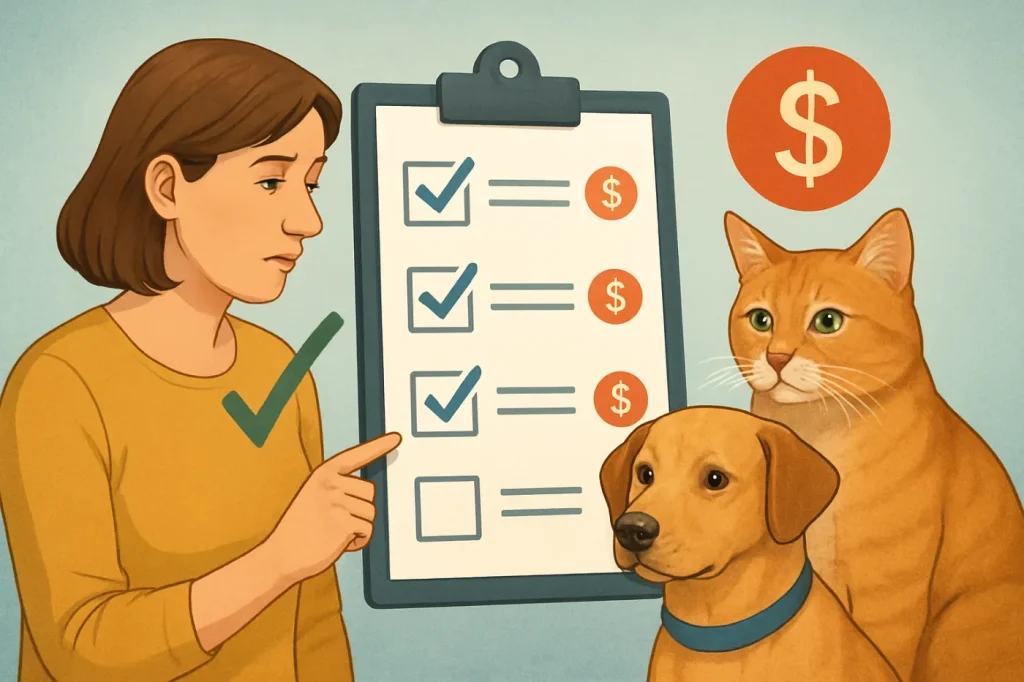
If your dog or cat is at risk of diabetes, kidney disease, allergies, or another long-term illness, the best pet insurance is usually a comprehensive accident and illness plan with strong chronic-condition coverage. For most US pet owners, the winning policy is the one that:
- Covers chronic illnesses for the pet’s lifetime as long as you keep the policy active
- Explains clearly how it treats pre-existing conditions and any “limitation” periods
- Has limits and deductibles that still make sense when you add up years of treatment, not just one emergency visit
Instead of hunting for a single “best company,” focus on which type of policy fits your pet, budget, and risk level. this guide walk through that decision step by step.
If you are still unsure whether to insure at all, a broader guide on is pet insurance worth it in the US can help you decide before you dive into chronic-condition details.
How chronic-condition coverage differs from basic pet insurance
Basic pet insurance is often designed around one-off events: a broken leg, a swallowed toy, a cut paw. Chronic illnesses are different. They can last for the rest of your pet’s life and often involve:
- Regular vet visits and bloodwork, sometimes 3–6 times per year
- Daily medications or injections that may continue for many years
- Prescription diets or supplements that add a steady monthly cost
- Occasional emergency care when the condition suddenly worsens
Because of this, you need to look at policies through a chronic-illness lens, not just “Will this help if my dog eats a sock?” Key differences between basic and chronic-friendly coverage include:

- How long a condition stays covered: Some plans keep paying for a chronic disease year after year, while others have low annual or per-condition caps that can be reached in just one or two bad flare-ups.
- How pre-existing conditions are defined: Any signs, symptoms, or diagnoses before enrollment or during the waiting period are usually excluded from coverage.
- Whether curable pre-existing issues can be covered later: Certain policies may reconsider a condition after it has been symptom-free for a set period; incurable diseases usually remain excluded.
Key comparison criteria for chronic-condition pet insurance
When you compare plans, ignore most marketing slogans and focus on these concrete criteria that matter for chronic illnesses.

- Chronic condition coverage type
Look for clear wording that chronic and ongoing conditions are covered for the pet’s lifetime as long as the policy stays active. Be cautious if the policy has per-condition payout caps or “time-limited” coverage for illnesses. - Pre-existing condition rules
Check how the policy defines a pre-existing condition. Many insurers treat any related signs or vet notes before enrollment as pre-existing, even if there was no formal diagnosis. - Annual and lifetime limits
Chronic illnesses can add up quickly. A low annual limit can be reached in a few visits. For perspective, a single year of chronic care can easily involve multiple vet exams, several rounds of lab work, and ongoing medication refills. - Reimbursement percentage and deductible
Most plans let you choose from several reimbursement levels (for example, a lower share, a mid-range share, or a higher share of each eligible bill) and different deductibles. Higher reimbursement and lower deductibles usually mean higher premiums. - Waiting periods
Illness coverage usually starts after a waiting period. Some conditions, such as orthopedic issues, may have longer waits. Anything that appears during the waiting period is often treated as pre-existing. - Coverage for related care
Chronic illnesses rarely involve just one vet visit. Check whether the plan helps with prescription medications, follow-up tests, imaging, and sometimes alternative therapies. - Age and enrollment limits
Some insurers limit enrollment for older pets or adjust deductibles and reimbursement levels as pets age. This matters for chronic conditions that often appear in middle age or later. - Exclusions and limitations
Look for any chronic or hereditary conditions that are excluded, as well as any “pre-existing condition limitation” period where coverage is restricted for a set time.
Comparison table: policy types for chronic conditions
This table compares the main types of pet insurance you will see in the US and how they usually handle chronic illnesses. Use it as a starting point when you look at specific providers.
| Policy type | How it handles chronic conditions | Best fit | Main risks and trade-offs |
|---|---|---|---|
| Accident-only plan | Generally does not cover illnesses at all, including chronic diseases like diabetes, kidney disease, or allergies. | Owners who mainly worry about injuries (car accidents, falls) and truly cannot afford broader coverage. | Zero help with chronic or hereditary conditions; a pet with diabetes or kidney disease could still generate hundreds or thousands of dollars in yearly bills with no reimbursement. |
| Basic accident and illness plan with low annual limits | Usually covers chronic illnesses that are not pre-existing, but only up to a relatively low annual payout limit. | Young, currently healthy pets when you want some illness protection but need to keep premiums modest. | If the annual limit is low, long-term conditions can exhaust coverage each year, sometimes after just 2–3 specialist visits, leaving you to pay the rest. |
| Comprehensive accident and illness plan with higher limits | Designed to cover chronic and hereditary conditions that arise after enrollment, often with higher annual limits and sometimes no lifetime cap. | Breeds prone to chronic issues or owners who want strong long-term financial protection for serious illnesses. | Higher premiums; you still need to read the fine print on pre-existing definitions and any per-condition caps. |
| Plan that may cover some curable pre-existing conditions after a period | Some insurers may consider certain curable pre-existing conditions covered again after a symptom-free period; incurable issues usually remain excluded. | Pets with one-off, resolved issues (for example, a past infection) but otherwise clean medical histories. | Rules are strict and vary widely; chronic, incurable diseases are usually never re-covered once labeled pre-existing. |
| Wellness-only or preventive care plan | Covers routine care like vaccines, exams, and dental cleanings; does not cover chronic illness treatment. | Owners who want help smoothing out predictable preventive costs. | Can create a false sense of security if you assume it helps with serious illnesses when it does not; you could still face a four-figure chronic-care bill with no coverage. |
Who should choose which type of pet insurance for chronic conditions
Different pets and households need different levels of protection. Use these scenarios to match your situation to a policy type.
Young, currently healthy pet
- Recommended policy: Comprehensive accident and illness plan with a solid annual limit.
- Why: Enrolling before any symptoms appear gives you the best chance that future chronic issues will be covered and not treated as pre-existing.
- What to prioritize: Lifetime coverage for chronic conditions, clear hereditary coverage, and a deductible you can realistically pay each year.
Pet with an existing chronic diagnosis
- Reality check: Most insurers treat existing diagnoses as pre-existing and will not cover that specific condition.
- Recommended policy: Accident and illness plan that will at least cover new unrelated illnesses and injuries.
- What to ask: Whether complications or related body systems (for example, heart issues related to an existing thyroid problem) would also be excluded.
- Budget tip: Combine insurance for new problems with a separate savings plan for the known chronic condition. A guide on budgeting for chronic illness vet bills can help you plan.
High-risk breed or family history of chronic disease
- Examples: Breeds prone to hip or elbow issues, heart disease, skin allergies, or certain cancers.
- Recommended policy: Comprehensive accident and illness plan that explicitly covers hereditary and congenital conditions.
- What to prioritize: Higher annual limits, coverage for diagnostic imaging and specialist care, and no per-condition payout caps if possible.
Very tight monthly budget
- Recommended policy: A modest accident and illness plan with a higher deductible, or in some cases accident-only if you truly cannot afford more.
- Trade-off: You will pay more out of pocket for routine care and smaller issues, but you still have a safety net for major events.
- Important: Understand that accident-only plans will not help with chronic diseases; you are accepting that risk.
Pros and cons of strong chronic-condition coverage
Here is a balanced look at the advantages and trade-offs of choosing a policy that is robust for chronic illnesses.
Advantages
- More predictable long-term costs: Regular reimbursements for medications, tests, and checkups can make chronic care more manageable over many years.
- Ability to follow your vet’s recommendations: You may feel more comfortable choosing the treatment your vet recommends instead of the cheapest option.
- Protection against unlucky diagnoses: Conditions like diabetes, kidney disease, or heart problems can appear even in well-cared-for pets.
- Lifetime peace of mind: A condition diagnosed at age three can still be covered at age ten if the policy stays active and limits are adequate.
Trade-offs
- Higher monthly premiums: Stronger coverage usually costs more, especially for older pets or high-risk breeds.
- Pre-existing exclusions still apply: Even robust plans generally will not cover conditions that existed before enrollment.
- Complex fine print: Understanding limits, waiting periods, and exclusions takes time and careful reading.
- Not every pet will use the coverage heavily: A healthy pet may never develop a serious chronic illness, which can make the cost feel wasted in hindsight.
Cost range explainer for chronic-condition coverage
Exact premiums vary by company, breed, age, and location, but you can still think about costs in a structured way and use simple ranges to stress-test your budget.
What typically drives the cost
- Pet age: Premiums usually increase as pets get older, especially once they reach senior years. A policy that is affordable at age two can be noticeably more expensive by age eight.
- Breed risk: Breeds with known hereditary issues often cost more to insure because they are more likely to develop chronic conditions.
- Coverage level: Higher annual limits, higher reimbursement percentages, and lower deductibles all tend to increase premiums.
- Location: Areas with higher veterinary costs often see higher premiums, because claims in those regions are more expensive.
How to compare cost vs benefit using simple numbers
Instead of chasing the lowest premium, compare a few realistic figures:
- Annual premium total: Multiply the monthly cost by 12 so you know roughly how much you commit each year. For example, if a plan costs a certain amount per month, you are committing roughly twelve times that amount per year before any claims.
- Your “bad-year minimum”: Add your annual premium total to the policy’s annual deductible. That combined figure is roughly what you would expect to pay in a year when your pet has at least one significant illness claim.
- Potential chronic-care range: Ask your vet for a low-to-high estimate of what a typical chronic condition might cost per year for your pet’s breed and size. Even a broad range (for example, a few hundred dollars on the low end vs several thousand on the high end) helps you see whether your policy limit is realistic.
Then ask yourself:
- Could I realistically pay a year or two of chronic care out of pocket if I did not have insurance?
- Would I have to delay or skip recommended treatment without insurance?
- Am I comfortable paying a predictable amount each month to avoid a much larger, unpredictable bill later?
If you decide to self-insure part of the risk, resources on is pet insurance worth it for dogs annual cost comparison can help you think through long-term numbers.
Decision flow: narrowing down the right policy type
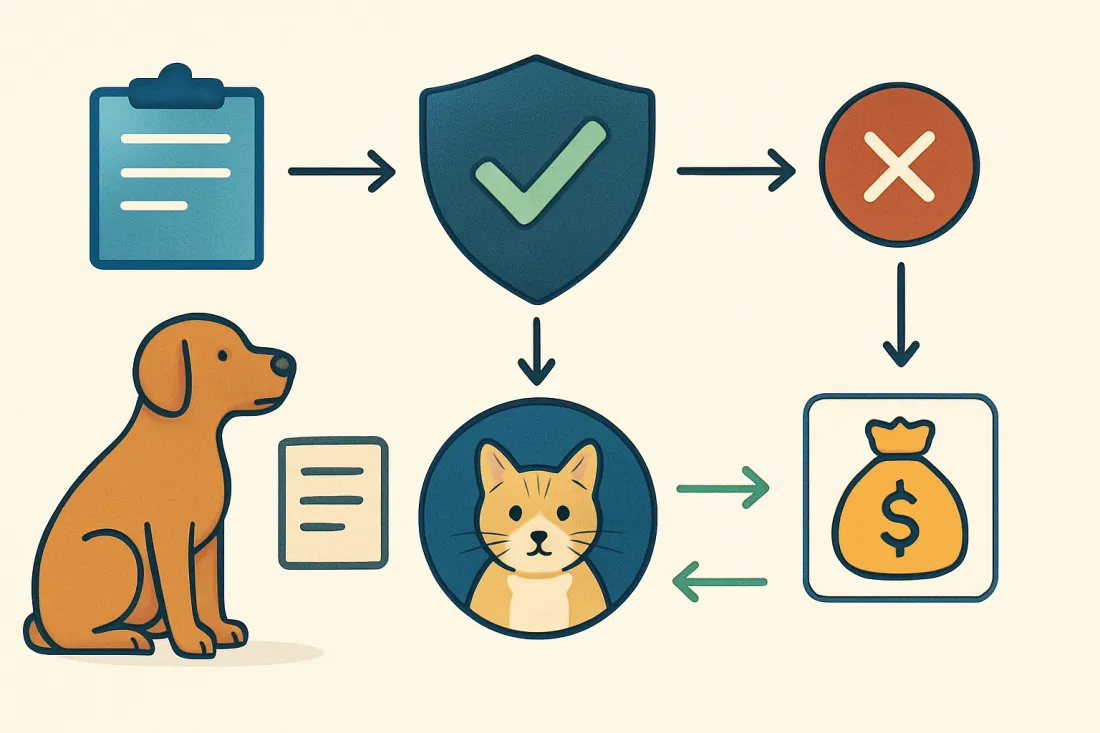
Use this step-by-step flow to move from “overwhelmed by options” to a short list that fits your pet and budget.
- Check your pet’s current health status
- If your pet already has a diagnosed chronic condition, assume that specific issue will be excluded as pre-existing.
- If your pet is symptom-free and has no diagnoses, you have the best chance of broad future coverage.
- Define your main goal
- Goal A – Protect against big, unpredictable bills (including chronic diseases): Focus on comprehensive accident and illness plans.
- Goal B – Only protect against accidents: Consider accident-only, understanding it will not help with chronic illness.
- Goal C – Help with routine care: Consider wellness add-ons, but do not confuse them with illness coverage.
- Set a realistic monthly budget
- Decide what you can pay comfortably every month without straining essentials like rent, food, or emergency savings.
- Within that budget, adjust deductible and reimbursement to balance cost and protection.
- Shortlist 2–3 insurers
- Look for those that clearly mention chronic and hereditary condition coverage.
- Check that they explain pre-existing condition rules in plain language, not just legal jargon.
- Compare chronic-specific features
- Annual and lifetime limits and whether they seem realistic for several years of treatment.
- Whether chronic conditions are covered for the pet’s lifetime as long as the policy stays active.
- Coverage for medications, follow-up tests, imaging, and specialist care.
- Read the pre-existing condition section carefully
- Note how they define “pre-existing” (signs, symptoms, or diagnoses before enrollment or during waiting periods).
- Check if any curable conditions can be covered again after a symptom-free period.
- Look for any “pre-existing condition limitation” period where coverage is restricted for a set time.
- Contact the insurer with your pet’s history
- Share your pet’s age, breed, and any known issues.
- Ask how specific past problems (for example, recurring ear infections or limping) would be treated under the policy.
- Choose the plan that balances budget and long-term protection
- If you are torn between two options, favor better chronic coverage over a small monthly saving, especially for young or high-risk pets.
Structured checklist: reviewing a policy for chronic-condition coverage
Use this checklist while reading any pet insurance policy. If you cannot confidently tick an item, treat it as a red flag or a question to ask the insurer.
- Coverage scope
- The plan clearly states it covers illnesses, not just accidents.
- Chronic and hereditary conditions are mentioned as covered categories.
- There are no obvious exclusions for conditions that are common in my pet’s breed.
- Pre-existing condition rules
- I understand how the policy defines a pre-existing condition (signs, symptoms, or diagnoses before enrollment or during waiting periods).
- I know whether any curable pre-existing conditions can be covered again after a symptom-free period.
- I have checked for any “pre-existing condition limitation” period that restricts coverage early in the policy.
- Limits and deductibles
- The annual limit is high enough that a serious chronic illness is unlikely to exhaust it quickly.
- There are no low per-condition caps that would cut off coverage for a long-term disease.
- I know whether the deductible is per year or per condition, and I can afford to pay it if my pet becomes ill.
- Ongoing care coverage
- Prescription medications for chronic conditions are covered.
- Follow-up tests and monitoring (such as bloodwork or imaging) are covered.
- Specialist visits or referrals are covered or at least partially reimbursed.
- Practical details
- I know the waiting periods for accidents and illnesses.
- I understand how to file a claim and how reimbursements are paid.
- I am aware of any age-related changes in coverage or deductible as my pet gets older.
Common mistakes when choosing insurance for chronic conditions
Avoid these frequent pitfalls that can leave you underinsured when a chronic illness appears.
- Waiting until after a diagnosis to buy insurance
Once your pet is diagnosed, that condition is almost always considered pre-existing and excluded. Enrolling earlier gives you far more protection. - Assuming all illness coverage includes chronic diseases
Some policies may limit coverage after a certain payout or treat ongoing conditions differently. Always check how long a condition stays covered and whether there are per-condition caps. - Ignoring annual and per-condition limits
A low limit might look affordable, but a single chronic disease can reach it quickly, especially with specialist care and repeated testing. - Confusing wellness plans with chronic-care coverage
Wellness add-ons are for routine care, not for managing diabetes, kidney disease, or cancer. They do not replace illness coverage. - Not reading the pre-existing condition definition
Even mild past symptoms noted in vet records can be used to classify a condition as pre-existing. If you are unsure, ask the insurer how they would treat a specific history. - Choosing the cheapest plan without checking exclusions
A low premium is not a bargain if the plan excludes the very conditions your pet is most likely to face based on age or breed.
FAQ about pet insurance and chronic or pre-existing conditions
What pre-existing conditions are usually not covered by pet insurance?
Most pet insurance policies in the US exclude conditions that showed signs, symptoms, or were diagnosed before your coverage started or during the waiting period. This can include chronic diseases like diabetes, kidney disease, heart disease, long-standing skin allergies, or arthritis if they were present beforehand. Even intermittent issues, such as recurring ear infections or limping, may be treated as pre-existing if they appear in your pet’s medical records. Because definitions vary, it is important to ask the insurer how they would classify any past problems your pet has had.
Is ADHD or attention-related behavior in pets considered a pre-existing condition?
Behavioral and attention-related issues in pets are handled differently by each insurer. If your pet has documented behavioral problems, those notes can be treated as a pre-existing behavioral condition once you apply for coverage. Some policies include limited behavioral coverage, while others exclude it entirely. If your pet has any history of behavior or attention concerns, ask the insurer whether those records would affect coverage and whether related treatment would be reimbursed.
What is a pre-existing condition limitation in pet insurance?
A pre-existing condition limitation is a policy rule that restricts coverage for conditions that existed before enrollment or during the waiting period. This can mean complete exclusion of those conditions, or in some cases, a temporary limitation where the insurer will not cover related care for a set time. The limitation section of the policy usually explains how long it applies and whether any conditions can later be reconsidered for coverage. Reading this section carefully is essential if your pet has any medical history.
Does long-term disability insurance for people cover pet pre-existing conditions?
Long-term disability insurance for people is separate from pet insurance and does not cover veterinary bills or pet medical conditions. To manage costs for a pet’s chronic illness, you need a dedicated pet insurance policy or a personal savings plan. Human disability coverage may help with your own income if you become unable to work, but it will not reimburse treatment for your dog or cat.
How early should I buy pet insurance to protect against future chronic conditions?
From a coverage standpoint, the earlier you enroll a healthy pet, the better. Buying a policy when your dog or cat is young and symptom-free reduces the chance that future chronic illnesses will be classified as pre-existing. If you wait until you notice recurring issues or receive a diagnosis, that specific condition will almost certainly be excluded. Enrolling early and keeping the policy active is one of the more reliable ways to secure long-term protection for chronic diseases.