
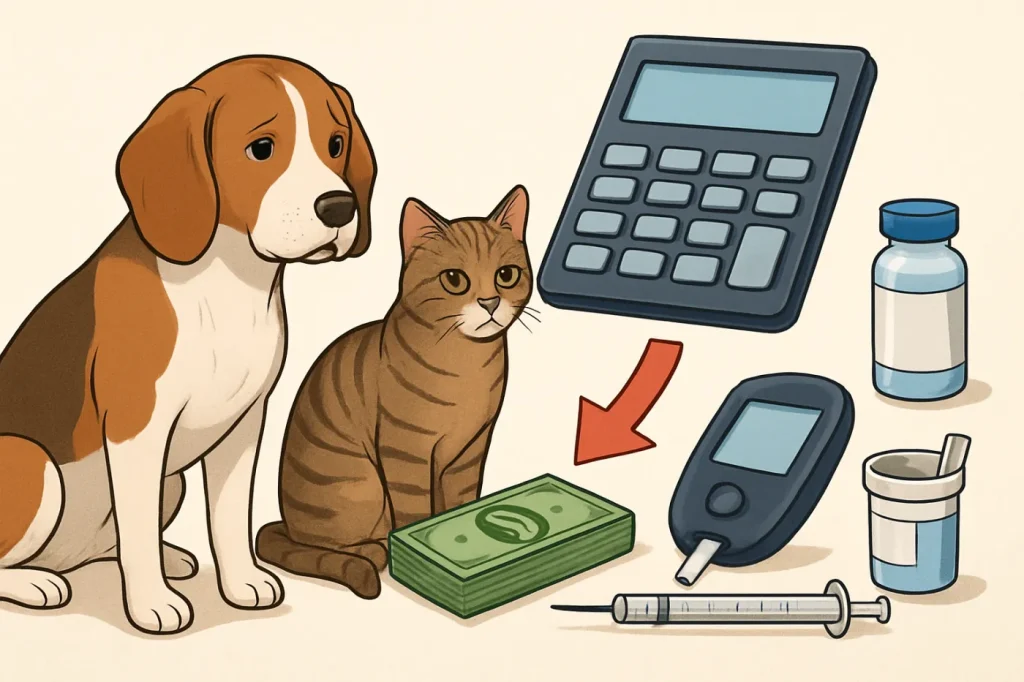
What managing diabetes in dogs and cats really costs in the US
Managing diabetes in a dog or cat in the United States is usually a steady, long-term expense rather than a single big bill. Based on typical ranges mentioned by veterinary sources:
- Insulin for dogs is often quoted in the range of about $30–$150 per month, depending on insulin type and dose.
- Insulin for cats can vary widely; some sources mention insulin vials that can range from roughly a few dozen dollars up to several hundred dollars, depending on brand, size, and where you buy it.
- Testing supplies (glucose monitors, strips, lancets) for pets are often estimated at tens of dollars per month when testing at home.
- One veterinary estimate suggests that if a diabetic pet is relatively easy to regulate, total monthly costs (insulin, syringes, some testing, and basic follow-up) may fall in the ballpark of $50–$150 per month in many cases.
Those are broad ranges, not quotes. Your actual cost depends on your pet’s size, insulin type, how often you test, local prices, and how stable your pet’s diabetes is. There are also upfront diagnostic costs and periodic recheck visits that add to the total.
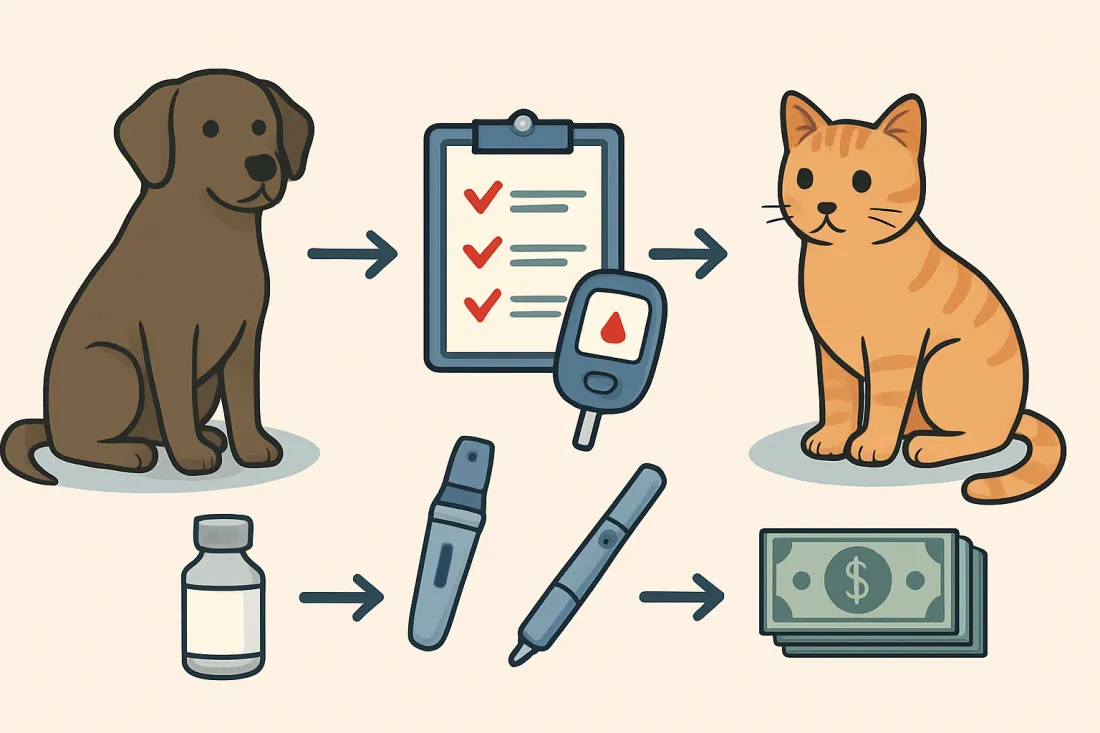
Financially, diabetes is usually manageable but not trivial. The bigger question is whether you can commit to both the monthly budget and the daily routine of injections, feeding schedules, and monitoring for years. this guide walk through what diabetes means for dogs and cats, the main treatment options, realistic cost patterns, lifestyle changes, and how to decide what is right for your household.
Understanding diabetes in dogs and cats before you budget
What diabetes means in pets
Diabetes mellitus in pets means the body cannot properly use sugar (glucose) for energy because of problems with insulin. That leads to high blood sugar and a cascade of health issues if untreated.

Common signs that lead owners to the vet include:
- Drinking more water than usual
- Urinating more often or having accidents
- Increased appetite but weight loss
- Low energy or weakness
- In dogs, sometimes cloudy eyes (cataracts) after diabetes develops
Diagnosis usually involves:
- Physical exam
- Bloodwork to check blood sugar and other organ values
- Urinalysis to look for sugar and possible infection
These initial tests are part of the upfront cost of managing diabetes. If your pet is very sick at diagnosis, there may also be hospitalization and intensive care costs while stabilizing blood sugar.
Why treatment is usually long term
For most diabetic dogs and many diabetic cats, treatment is a lifelong commitment. The goal is not to “cure” diabetes but to control blood sugar well enough that your pet:
- Feels comfortable and energetic
- Maintains a healthy weight
- Avoids dangerous complications like diabetic ketoacidosis
That is why the main costs are ongoing monthly expenses rather than a one-time fix.
Where the money goes: main treatment components and costs
Most diabetic dogs and cats are managed with a similar toolkit:
- Insulin injections
- Syringes or pen needles
- Special diet or consistent feeding plan
- Blood sugar monitoring (at home and/or at the vet)
- Regular vet rechecks and lab work
Here is how each part typically affects your budget.
Insulin for dogs vs. cats
Dogs
- Many dogs need insulin twice a day.
- Evidence suggests insulin for dogs can often cost around $30–$150 per month, depending on dose, brand, and where it is purchased.
- Larger dogs usually need higher doses, which can push costs toward the higher end of that range.
Cats
- Cats also commonly receive insulin twice a day.
- Some sources mention insulin vials for cats ranging from roughly a few dozen dollars to several hundred dollars, depending on type and size.
- Cats are smaller, so a vial may last longer, but some cat-specific insulins are more expensive per vial.
Because insulin pricing can change and varies by pharmacy, always confirm current costs with your vet and local or online pharmacies before committing to a plan.
Syringes, pen needles, and basic supplies
You will also need:
- Insulin syringes or pen needles – used for each injection, usually twice daily.
- Sharps container – for safe disposal of used needles (a heavy plastic household container may be acceptable in some areas; check local rules and your vet’s advice).
- Alcohol swabs or cotton – if recommended by your vet.
These are usually a smaller part of the monthly budget compared with insulin itself, but they are ongoing and should be included in your planning.
Blood sugar monitoring costs
Monitoring can be done in two main ways:
- At the vet – periodic blood glucose curves or spot checks.
- At home – using a pet or human glucometer, test strips, and lancets.
Some estimates for home testing supplies suggest tens of dollars per month for glucose monitors and strips when testing regularly. The exact amount depends on:
- Whether you use a pet-specific meter or a human meter (if your vet approves)
- How often you test (daily, weekly, or mainly during dose changes)
- Brand and where you buy supplies
Vet-based monitoring adds cost per visit but may reduce how often you need to test at home. Many owners use a combination: more vet curves early on, then more home testing once they are comfortable with the process.
Diet and treats for diabetic pets
Many diabetic pets benefit from a prescription or specialized diet:
- Dogs may be placed on a high-fiber, consistent-calorie diet.
- Cats often do well on high-protein, lower-carbohydrate diets.
Special diets can cost more than standard food, but the difference varies widely by brand and where you shop. Some owners manage diabetes successfully using carefully chosen over-the-counter diets under veterinary guidance, which can lower costs.
Regardless of diet type, the key cost driver is consistency: feeding the same food in the same portions at predictable times so insulin dosing stays appropriate.
Vet visits and lab work
You should plan for:
- Initial diagnostic workup – exam, bloodwork, urinalysis, and possibly hospitalization if your pet is very sick.
- Follow-up visits – especially in the first few months while adjusting insulin dose.
- Ongoing rechecks – periodic exams and blood tests to monitor long-term control and screen for complications.
One veterinary estimate suggests that if a diabetic pet is relatively easy to regulate, total monthly costs including insulin and basic monitoring may fall around $50–$150 per month in many cases once stable. Pets that are difficult to regulate, have other illnesses, or need hospitalization can cost more.
Cost comparison: dogs vs. cats and low vs. higher budgets
The table below compares typical patterns rather than exact quotes. Use it to see where your situation might fall, then confirm specifics with your vet.
| Scenario | Typical pet | Insulin and supply pattern | Monitoring approach | Overall cost tendency | Key trade-offs |
|---|---|---|---|---|---|
| Lower-end dog budget | Small to medium dog, easy to regulate | Insulin toward the lower end of the $30–$150/month range; careful use of syringes and basic supplies | More vet-based curves early on, limited home testing once stable | Often closer to the lower side of the $50–$150/month total range once stable | Fewer home tests can save supply costs but may mean more vet visits during dose changes |
| Higher-end dog budget | Large dog or harder-to-regulate dog | Higher insulin dose, pushing insulin cost toward the upper end of the $30–$150/month range | Combination of frequent home testing and regular vet rechecks | Can trend toward or above the upper side of the $50–$150/month range, especially with extra visits | Better data and tighter control but higher monthly spending and time commitment |
| Lower-end cat budget | Cat on a cost-conscious insulin and diet plan | Insulin vial that lasts longer due to small doses; careful shopping for supplies | Strategic home testing plus occasional vet curves | Can sometimes fall in a similar ballpark to a small dog’s lower-range costs | Requires owner comfort with home testing to limit vet visit frequency |
| Higher-end cat budget | Cat on a more expensive insulin or prescription diet | Insulin vials that may be at the higher end of the broad cost range mentioned for cats | Frequent monitoring, possibly with pet-specific meters and more vet visits | Monthly costs can approach or exceed the higher end of the $50–$150/month estimate, especially early on | Potentially smoother regulation but higher ongoing costs and more intensive care |
Use this table as a framework, not a quote. For a realistic budget, ask your vet to outline:
- Which insulin they recommend and why
- Estimated dose range for your pet’s size
- How often they expect to see your pet for rechecks once stable
- Whether home monitoring is recommended and how often
Daily lifestyle changes and time commitment for diabetic pets
Money is only half of the decision. Diabetes also changes your daily routine and your household’s flexibility.
What your day looks like with a diabetic dog or cat
Most diabetic pets need:
- Twice-daily insulin injections – usually about 12 hours apart.
- Regular, consistent meals – often timed with injections.
- Monitoring for signs of low or high blood sugar – such as weakness, wobbliness, vomiting, or extreme thirst.
- Occasional blood sugar checks – at home or at the vet, especially when doses change.
For many owners, this means:
- Waking up and being home at roughly the same times every day
- Arranging pet care when traveling or working late
- Learning to give injections confidently
- Keeping a log of doses, meals, and any unusual symptoms
Impact on travel and work schedules
You may need to:
- Find pet sitters or boarding facilities comfortable giving insulin
- Adjust work hours or ask family members to help with injections
- Plan ahead for holidays and emergencies
If your schedule is very unpredictable, discuss with your vet whether diabetes management is realistic and what backup plans you would need.
Emotional and mental load
Managing a chronic disease can be emotionally taxing. Common feelings include:
- Worry about hypoglycemia (low blood sugar)
- Guilt if you miss a dose or test
- Stress about costs and future complications
Many owners find that once a routine is established, diabetes becomes a manageable part of daily life, but the first few months can be intense. Having a clear plan and realistic budget can reduce anxiety.
Step-by-step checklist for budgeting and planning diabetes care
Use this structured checklist to decide whether you can realistically manage diabetes in your dog or cat and to prepare if you move forward.
1. Confirm the diagnosis and current stability
- Ask your vet to explain your pet’s diagnosis in plain language, including what type of diabetes they suspect.
- Clarify whether your pet is currently stable or needs hospitalization first.
- Request a written summary of the treatment plan (insulin type, starting dose, feeding schedule).
- Ask which symptoms should trigger an urgent call or emergency visit.
2. Get a personalized cost estimate
- Ask your vet which insulin they recommend and why it fits your pet.
- Request an estimate of monthly insulin usage based on your pet’s size and typical dose ranges.
- Get a rough estimate of initial diagnostic costs and first 3 months of recheck visits.
- Ask about the expected long-term visit schedule once your pet is stable.
- Call or check local and online pharmacies for current insulin and supply prices using the dose estimate.
- Include food, syringes, and testing supplies in your monthly budget, not just insulin.
3. Decide on a monitoring strategy
- Discuss with your vet whether home blood glucose monitoring is recommended for your pet.
- If yes, ask which meter they prefer and how often you should test once your pet is stable.
- Request training on how to get a blood sample safely and how to log results.
- Compare the cost of more frequent vet curves vs. investing in home monitoring supplies.
- Agree on a “minimal safe” monitoring plan if money is tight, so you know the lowest testing frequency your vet is comfortable with.
4. Plan your daily routine and backup coverage
- Choose injection times that you can reliably maintain every day, including weekends.
- Decide who will give injections if you are away or delayed (partner, roommate, trusted neighbor, or professional sitter).
- Set up a feeding schedule that matches insulin timing and is realistic for your household.
- Create a simple log (notebook, phone notes, or app) for doses, meals, blood sugar readings, and symptoms.
- Identify at least one boarding facility or sitter experienced with diabetic pets before you need them.
5. Prepare for emergencies and financial strain
- Ask your vet what signs of low blood sugar to watch for and what to do at home if they occur.
- Keep an emergency contact list: regular vet, 24/7 emergency clinic, and a backup caregiver who knows your pet’s routine.
- Review your budget and decide a realistic monthly amount you can commit to diabetes care.
- If costs are tight, explore options such as how to afford vet bills for dogs and cats and ask your vet about lower-cost insulin or monitoring strategies.
- Ask your clinic if they offer payment plans or know of local assistance programs for pet owners.
6. Reassess quality of life regularly
- Periodically ask yourself: Is my pet comfortable, eating, and enjoying life most days?
- Discuss any changes in behavior, appetite, or mobility with your vet promptly.
- Revisit treatment goals if your pet develops other serious health problems or if your financial situation changes.
- Keep a short list of “good day” signs (eating, greeting you, playing) and “bad day” signs to help guide future decisions.
Common mistakes when budgeting and caring for a diabetic pet
Being aware of typical pitfalls can save both money and stress.
Underestimating the first few months
Many owners expect a steady monthly cost from day one. In reality:
- The first 1–3 months often involve more vet visits and lab work while insulin doses are adjusted.
- There may be extra costs if your pet needs hospitalization or treatment for complications like infections.
Plan for a higher initial period, then a more predictable monthly pattern once your pet is stable.
Choosing insulin only by price
It is tempting to pick the cheapest insulin option, but:
- Some insulins may work better for dogs than cats or vice versa.
- A cheaper insulin that is harder to regulate may lead to more vet visits and testing, increasing total cost.
Decision tip: ask your vet to explain the pros and cons of each insulin option, including expected regulation difficulty and monitoring needs, not just price per vial.
Skipping monitoring to save money
Trying to cut costs by avoiding blood sugar checks can backfire:
- Unnoticed low blood sugar can be life-threatening.
- Poorly controlled diabetes can lead to expensive emergencies.
If cost is a concern, work with your vet to design a minimal but safe monitoring plan rather than skipping it entirely.
Inconsistent feeding and dosing
Irregular meals or missed doses can:
- Make diabetes harder to control
- Increase the risk of both high and low blood sugar episodes
- Lead to more vet visits and lab work
If your schedule is unpredictable, discuss realistic options with your vet before committing to long-term treatment.
Not planning for other health issues
Diabetic pets are often middle-aged or older and may develop other conditions over time. Additional illnesses can:
- Increase vet visit frequency
- Require more medications
- Change your overall budget and quality-of-life decisions
Revisit your plan with your vet if new diagnoses appear so you can adjust both medical care and financial expectations.
Is it worth treating a dog or cat with diabetes?
Whether treatment is “worth it” is deeply personal and depends on three main factors:
- Your pet’s overall health and comfort
- Your financial situation
- Your time and emotional capacity for daily care
When treatment often makes sense
Treatment is more likely to feel worthwhile when:
- Your pet is otherwise relatively healthy.
- They still enjoy daily activities (eating, playing, interacting with family).
- You can reasonably afford the estimated monthly costs.
- Your household can manage twice-daily injections and monitoring.
Many diabetic pets, once regulated, can have a good quality of life for years.
When hard decisions may be kinder
It may be appropriate to reconsider or decline treatment if:
- Your pet has multiple serious illnesses or advanced disease that already limits comfort.
- Even a lower-end monthly cost would cause ongoing financial crisis.
- Your schedule or physical abilities make safe, consistent care unrealistic.
In those situations, talk openly with your vet about quality of life, palliative care, and humane options. Honest conversations early can prevent prolonged suffering for both you and your pet.
How to think through the decision
Ask yourself:
- Can I commit to a routine of injections and feeding every 12 hours, most days, for years?
- Can I handle a monthly cost that may fall somewhere in the general ranges discussed, with higher expenses in the first months or during complications?
- Does my pet seem like they still enjoy life, or are they already struggling with multiple issues?
Discuss your answers with your vet; they can help you weigh medical facts against your practical reality and values.
What if you cannot afford insulin or full diabetes care?
Finances are a real constraint for many families. If you are worried about affording insulin or ongoing care, you are not alone.
Talk honestly with your veterinarian
Before assuming you have no options:
- Explain your budget limits clearly and early.
- Ask if there are lower-cost insulin options that are still appropriate for your pet.
- Discuss a minimal safe monitoring plan that balances risk and cost.
- Ask whether any medications or tests can be spaced out once your pet is stable.
Some clinics may also offer payment plans or know of local assistance programs.
Explore broader financial strategies
Depending on your situation, you might consider:
- Reviewing general guidance on is pet insurance worth it for dogs annual cost comparison for future pets (most policies do not cover pre-existing conditions, but it can inform long-term planning).
- Looking into community resources, charities, or veterinary schools that sometimes offer lower-cost care.
- Adjusting other pet-related expenses (grooming, non-essential treats, toys) to free up funds for medical care.
- Reviewing your overall pet budget using tools such as annual vet costs for dogs and cats in the US so diabetes costs are seen in context.
When treatment truly is not possible
If, after exploring options, you still cannot afford insulin or basic monitoring:
- Discuss with your vet what short-term comfort-focused care could look like.
- Ask about signs that indicate your pet is suffering or approaching a crisis.
- Talk openly about humane euthanasia as an option to prevent severe suffering.
There is no shame in acknowledging financial limits. Your responsibility is to make the kindest decision you can within your reality.
FAQ about the cost of managing diabetes in dogs and cats
Is it expensive to treat a dog with diabetes?
Treating a diabetic dog is a significant but often manageable ongoing expense. Evidence-based ranges suggest that insulin alone for dogs can often fall around $30–$150 per month, depending on dose and product. When you add syringes, some testing, and periodic vet visits, one veterinary estimate suggests that a relatively easy-to-regulate diabetic pet might cost around $50–$150 per month in total once stable. Costs can be higher in the first few months (due to more visits and lab work) or if your dog is large, difficult to regulate, or develops complications. The best way to know what to expect is to ask your vet for a written estimate for the first 3–6 months and for a typical stable month.
How expensive is it to manage diabetes in cats?
Managing diabetes in cats can range from similar to a small dog’s costs to noticeably higher, depending on insulin choice, diet, and monitoring. Some sources mention insulin vials for cats that can range from roughly a few dozen dollars up to several hundred dollars, depending on brand and size. Testing supplies for home monitoring are often estimated at tens of dollars per month. Because cats are smaller, a single vial may last longer, which can offset a higher per-vial price. However, if your cat needs a more expensive insulin or prescription diet and frequent monitoring, monthly costs can approach or exceed the higher end of the $50–$150 per month estimate that is sometimes cited for relatively straightforward diabetic pets. Ask your vet which insulin and diet they recommend and request a personalized monthly cost range.
Is it worth treating a dog with diabetes if money is tight?
It can be worth treating a dog with diabetes even on a limited budget, but only if you can safely cover a basic level of care. That usually means:
- Being able to afford insulin and syringes every month
- Paying for initial diagnostics and a few follow-up visits to stabilize your dog
- Covering at least minimal monitoring (some combination of vet visits and/or home testing)
If you can manage those and your dog is otherwise reasonably healthy and happy, treatment often leads to a good quality of life. If even a lower-end monthly cost would cause ongoing financial crisis, talk with your vet about lower-cost strategies, assistance options, and, if needed, humane alternatives.
What if I cannot afford insulin for my dog at all?
If you truly cannot afford insulin for your dog:
- Tell your vet honestly; they may know of lower-cost options, assistance programs, or pharmacies.
- Ask whether there is a short-term comfort-focused plan while you explore help.
- Discuss what signs indicate that your dog is suffering or approaching a medical crisis.
- Talk about humane euthanasia as an option if long-term treatment is impossible.
Leaving diabetes untreated without a plan usually leads to serious illness and suffering. Your vet’s role is to help you find the kindest path within your financial limits, not to judge your situation.
Can pet insurance help with the cost of diabetes in dogs and cats?
Pet insurance can sometimes help with chronic conditions like diabetes, but most policies do not cover pre-existing conditions. That means if your dog or cat is already diagnosed with diabetes, new insurance is unlikely to cover it. However, for future pets or for pets not yet diagnosed, reviewing resources such as general insurance guides and typical annual vet costs for dogs and cats in the US can help you decide whether insurance is a good fit to buffer against major medical expenses down the line.