
Becoming a first-time dog owner in the U.S. is exciting, but it also brings daily work, real costs, and long-term responsibility. To keep it manageable, you need a clear plan for what to do before adoption, what to buy, and how to handle the first 48 hours and first 30 days.
Below is a practical, U.S.-focused checklist that covers decisions, supplies, legal basics, and routines, plus a printable-style summary at the end you can copy or adapt.
Key responsibilities for first-time dog owners in the U.S.
Owning a dog in the United States usually means taking responsibility in five main areas:
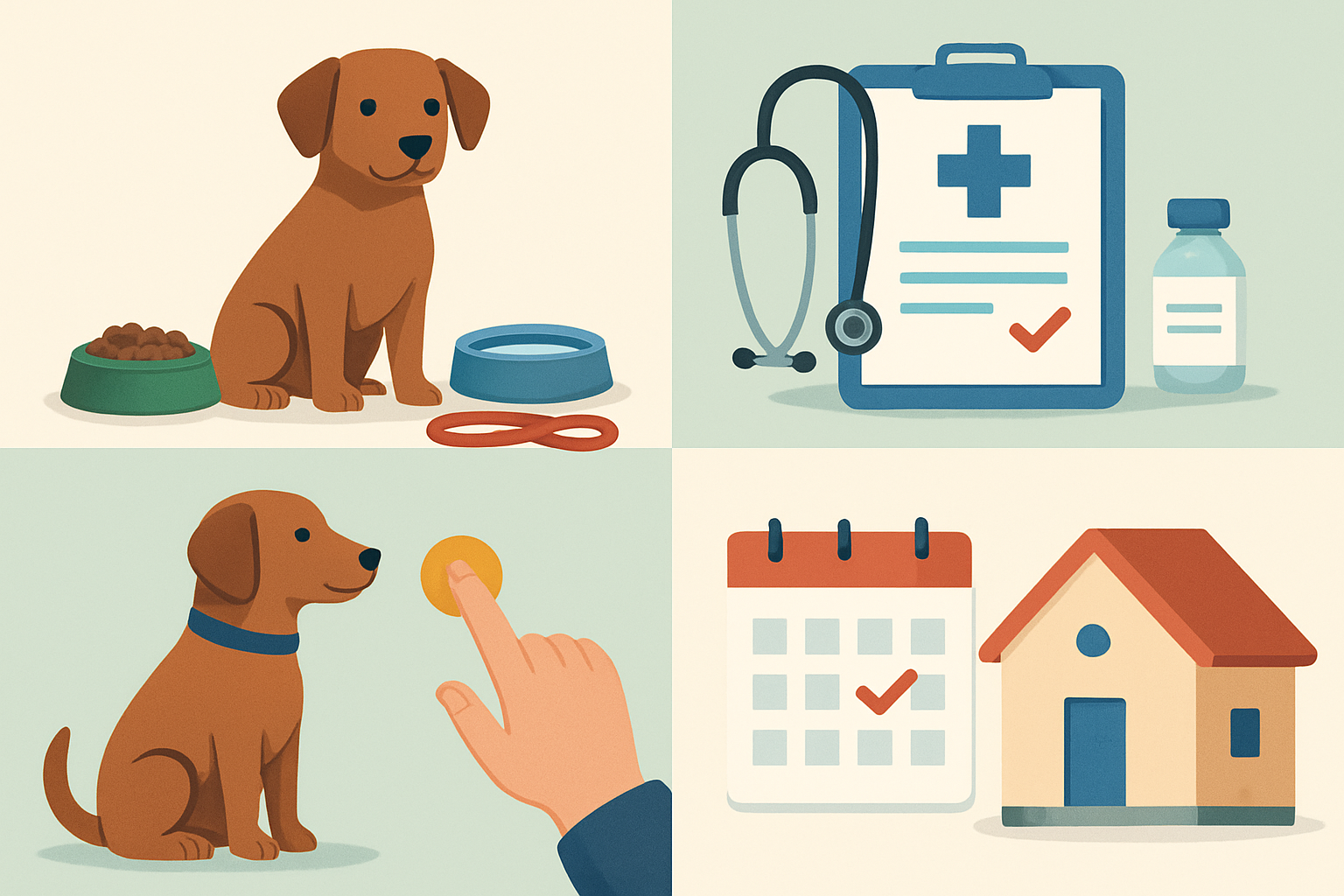
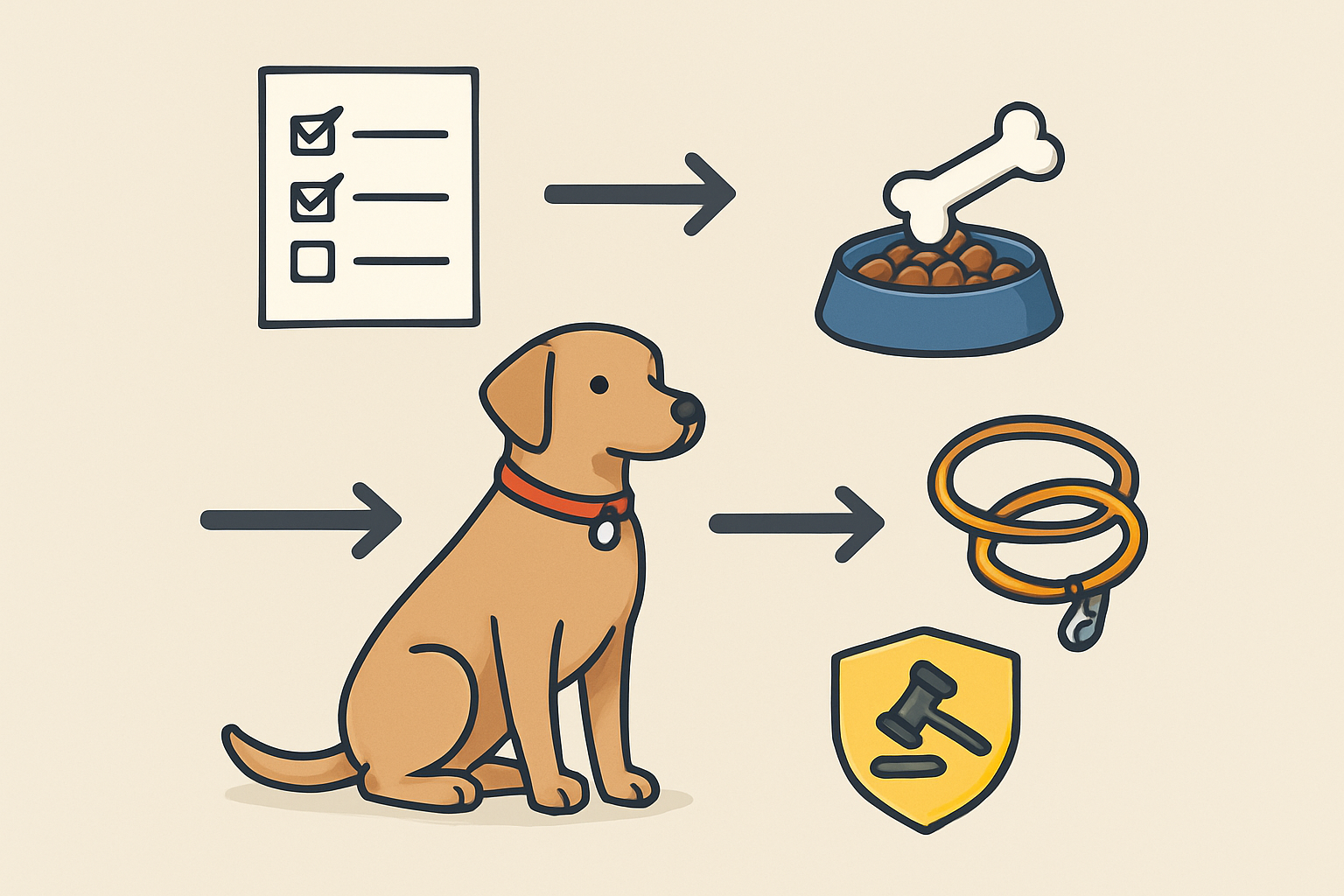
- Daily care – feeding, fresh water, bathroom breaks, exercise, grooming, and safe shelter every day.
- Health care – routine vet visits, vaccines, parasite prevention, and prompt care if the dog is sick or injured.
- Training and socialization – teaching basic manners (sit, come, leash walking), house training, and helping the dog feel safe around people, other dogs, and new places.
- Legal and safety duties – following local leash rules, licensing your dog where required, keeping rabies vaccines up to date, and preventing your dog from harming or disturbing others.
- Long-term commitment – planning for many years of care, including changes in your work, housing, or family situation.
If these five areas feel realistic for your life, move into the decision checklist before you bring a dog home.
Pre-adoption decision checklist for U.S. first-time dog owners
Use this as a yes/no filter before you commit. If several answers are “no” or “not sure,” pause and adjust your plan instead of rushing into adoption.
Checklist: lifestyle and time commitment
- Daily time: Can you reliably give a dog multiple short walks or potty breaks every day, plus at least one longer exercise or play session? Puppies and young dogs usually need more frequent breaks than adults.
- Work schedule: If you’re gone long hours, do you have a plan (dog walker, doggy daycare, trusted friend/family) so the dog isn’t left alone for an entire workday?
- Energy match: Are you choosing a breed or mix whose typical energy level matches yours? High-energy dogs usually need more structured exercise and mental stimulation than low-energy dogs.
- Noise tolerance: Can you handle barking, zoomies, and occasional nighttime disruptions, especially in apartments or shared walls?
- Travel: When you travel, do you have a realistic plan for boarding, pet sitters, or taking the dog with you?
Checklist: budget and ongoing costs
Instead of guessing, write down a rough monthly range for:
- Food – depends on size and diet type; larger dogs generally cost more to feed than small dogs.
- Routine vet care – wellness exams, vaccines, and parasite prevention spread across the year.
- Grooming – especially for long-haired or curly-coated breeds that may need regular professional grooming.
- Supplies and replacements – toys, poop bags, cleaning products, and occasional gear upgrades.
- Training – group classes, private sessions, or online programs if needed.
Then add a buffer for unexpected vet bills. Even healthy dogs can need urgent care for accidents or sudden illness. If you don’t have savings, consider whether pet insurance or a dedicated emergency fund fits your situation. Exact costs vary widely by region and dog size, so check with a local vet or shelter for typical ranges in your area.
Checklist: housing rules and environment
- Landlord approval: If you rent, confirm in writing that dogs are allowed. Ask about breed or size limits and any pet deposits or monthly pet fees.
- HOA or community rules: If you live in a community with shared rules, check for limits on number of pets, weight, or breeds, and any leash or noise rules.
- Space and layout: Do you have a safe area for the dog to sleep, eat, and rest? A yard is helpful but not required if you can commit to walks.
- Nearby relief areas: If you don’t have a yard, is there a safe, legal place nearby for potty breaks, even late at night or in bad weather?
- Allergies and household members: Make sure everyone in the home agrees to having a dog and understands their role in care.
Decision checkpoint for readiness
If you can honestly say “yes” to all of these statements, you’re likely ready to move to the setup and shopping stage:
- I can afford routine and emergency care with a buffer.
- My schedule allows for daily care, exercise, and training.
- My housing situation clearly allows dogs and I know the rules.
- Everyone in the home is on board and understands the commitment.
- I have a realistic backup plan for travel and long workdays.
Comparison table: puppy vs adult dog for first-time owners
If you haven’t chosen your dog yet, this comparison can help you decide whether a puppy or adult dog better fits your situation.
| Factor | Puppy | Adult dog |
|---|---|---|
| House training | Usually needs to be taught from scratch; frequent potty breaks. | May already be house trained, but some adjustment is still likely. |
| Time commitment | High; requires close supervision and multiple short training sessions daily. | Often more settled; may handle alone time better with proper introduction. |
| Energy level | Typically very high; lots of play and chewing. | Varies; many adults are calmer than puppies. |
| Predictability | Adult size and temperament are still developing. | Size and general personality are more established. |
| Training flexibility | Can shape habits from the beginning. | May come with some training and habits, good or bad. |
| Sleep schedule | Nighttime potty breaks often needed. | More likely to sleep through the night. |
Match your choice to your lifestyle. If your schedule is very tight, an adult dog with known behavior may be easier than a young puppy.
One-time setup shopping list for first-time dog owners (USA)
Before your dog comes home, aim to have the essentials ready. Exact prices vary by brand, size, and region, so use this as a category checklist and confirm current price ranges locally or online.
| Item | Purpose | How to choose |
|---|---|---|
| Crate or secure pen | Safe space for sleep, rest, and confinement when unsupervised. | Big enough for the dog to stand, turn, and lie down comfortably; consider a divider for growing puppies. |
| Bed or crate mat | Comfortable resting spot; can be placed in crate or a quiet corner. | Washable cover; size matched to crate or dog length. |
| Food and water bowls | Daily feeding and hydration. | Sturdy, easy-to-clean materials; non-slip base is helpful. |
| Collar with ID tag | Holds ID and rabies tag; used for walks if appropriate. | Two-finger fit between collar and neck; include your phone number on tag. |
| Leash | Safe control on walks and in public. | Standard fixed-length leash; avoid relying on retractable leashes early on. |
| Harness (optional but recommended) | Distributes pressure more safely than a collar during walks. | Adjustable fit; check that it doesn’t rub behind legs or at armpits. |
| Poop bags and dispenser | Required for cleaning up after your dog in public. | Rolls that fit your dispenser; keep extras in car or bag. |
| Dog food | Primary nutrition. | Start with the food your shelter, rescue, or breeder uses; transition slowly if you change brands. |
| Treats | Training rewards and bonding. | Small, soft treats that can be eaten quickly during training. |
| Chew toys | Mental stimulation and teething relief. | Size-appropriate and durable; avoid toys that can be swallowed whole. |
| Interactive toys (puzzle feeders, lick mats) | Enrichment and calm activity. | Choose difficulty level based on your dog’s age and experience. |
| Grooming tools | Brushing, nail care, basic hygiene. | Brush type matched to coat; nail clippers or grinder if you’ll trim at home. |
| Cleaning supplies | Accident cleanup and odor control. | Pet-safe enzymatic cleaner for urine and stool accidents. |
| Baby gates (optional) | Block off rooms or stairs. | Pressure-mounted or hardware-mounted depending on location. |
To estimate your one-time setup budget, list each category you need and check current prices from at least two local or online sources. Add a buffer for size changes (for example, a growing puppy may outgrow the first harness or crate divider).
Step-by-step plan for the first 48 hours at home
The first two days set the tone for your relationship. Use this simple algorithm to keep things calm and predictable.
Step 1: Before pickup
- Confirm pickup time and what food the dog is currently eating.
- Prepare a quiet room or area with crate/bed, water bowl, and a few toys.
- Dog-proof the area by removing cords, shoes, and anything small enough to swallow.
- Have a leash, collar/harness, and poop bags ready in the car.
- Save your checklist on your phone so you can quickly confirm you have everything.
Step 2: The car ride home
- Secure the dog with a crate or harness designed for car travel if possible.
- Keep the ride calm and quiet; avoid loud music and frequent unnecessary stops.
- Take a short potty break before going inside your home.
Step 3: First entry into your home
- Walk the dog on leash to the designated potty area first. Wait quietly; praise and reward if they go.
- Then bring the dog inside on leash and guide them to the prepared area.
- Keep greetings low-key. If you have family members, let the dog approach them one at a time.
- Do not immediately give full house access; start with one or two rooms.
Step 4: Establish the first routine
- Offer water and a small meal if it’s mealtime, using the same food they’re used to.
- Show the dog their crate or bed; toss a treat inside to make it positive.
- Start a simple pattern: potty break, short exploration on leash, quiet time in their area.
- Note the times of eating, drinking, and potty breaks to help you predict their schedule.
Step 5: First night
- Place the crate or bed where you can hear the dog. Many dogs settle better if they can see or hear you.
- Expect some whining or restlessness; give brief reassurance without turning it into a long play session.
- For puppies, plan for at least one nighttime potty break; set an alarm rather than waiting for crying if possible.
- Keep lights low and voices calm so the dog learns that night is for sleeping.
Step 6: Day 2
- Repeat the feeding and potty schedule you’ll use long term.
- Introduce short training moments: reward the dog for their name, coming when called, and sitting.
- Keep visitors limited; let the dog rest often. Over-tired dogs can become mouthy or cranky.
- Gather any questions for your upcoming vet visit (food, vaccines, behavior).
First 30 days schedule for feeding, potty, socialization, and vet care
The first month is about building habits. Use this as a template and adjust based on your dog’s age, health, and your vet’s advice.
Example daily rhythm for a new dog
Morning
- Potty break immediately after waking.
- Breakfast, then another quick potty break.
- Short walk or play session for exercise and bonding.
Midday
- Potty break (more often for puppies).
- Short training session focusing on one or two cues.
- Quiet time in crate or bed with a safe chew or toy.
Evening
- Dinner, followed by a potty break.
- Walk or play session; practice leash manners and recall.
- Wind-down time with gentle petting or calm enrichment (lick mat, puzzle toy).
Night
- Final potty break before bed.
- Settle in crate or bed with a safe chew if helpful.
Feeding and potty frequency by life stage
Exact schedules depend on your vet’s guidance, but a common pattern is:
- Puppies: Several small meals per day and frequent potty breaks, often after waking, playing, and eating.
- Adult dogs: Usually two meals per day with regular potty breaks spaced through the day.
- Senior dogs: May need more frequent potty breaks and adjusted food portions based on health.
Ask your vet how many meals per day and what portion sizes are appropriate for your dog’s age, size, and health. Use their guidance rather than relying on packaging alone.
Socialization and training plan for the first month
- Week 1: Focus on bonding, name recognition, and simple cues like “sit” and “come.” Keep new experiences gentle and positive.
- Week 2: Introduce short car rides, different surfaces (grass, sidewalk), and calm people. Reward calm behavior.
- Week 3: If your vet says it’s safe, begin meeting friendly, vaccinated dogs in controlled settings.
- Week 4: Consider enrolling in a basic obedience or puppy class if available and recommended by your vet.
Keep training sessions short and frequent rather than long and exhausting. Ending on a success helps your dog stay engaged.
Vet visit timing in the first month
In the U.S., most new dog owners will need at least one vet visit in the first month. The exact timing depends on where the dog came from and their current vaccine status:
- If you adopt from a shelter or rescue, they often provide initial vaccines and a basic exam. Schedule a follow-up with your own vet soon after adoption to review records and plan next steps.
- If you get a puppy from a breeder or private source, ask for all medical records and schedule a vet visit shortly after bringing the puppy home to confirm health and set up a vaccine and deworming schedule.
- If you adopt an adult dog with unknown history, a prompt vet visit is especially important to check overall health and discuss vaccines, parasite testing, and spay/neuter status.
Because vaccine schedules and parasite risks vary by region and lifestyle, confirm the exact timing and type of vaccines and preventives with your local veterinarian.
U.S.-specific legal basics for new dog owners
Legal requirements for dog owners in the United States are set at the state, county, and city level, so details vary. Use this section as a checklist of topics to research where you live.
Licensing and identification requirements
- Dog license: Many U.S. cities and counties require dogs to be licensed. Check your local animal control or municipal website for whether a license is required, how to apply, and how often it must be renewed.
- Rabies tag: When your dog receives a rabies vaccine, you may receive a tag to attach to the collar. Keep it on your dog when they’re outside your home if recommended locally.
- ID tag: Even if not legally required, an ID tag with your phone number is a practical safety step in case your dog gets lost.
- Microchipping: Microchips are widely used in the U.S. as a permanent form of identification. Ask your vet or shelter whether your dog already has one and how to register or update your contact information.
Rabies vaccines and health-related rules
- Rabies vaccination: Many U.S. states require dogs to be vaccinated against rabies. The age at first vaccination and booster schedule can vary, so confirm with your vet and local regulations.
- Proof of vaccination: Keep a copy of your dog’s rabies certificate and other vaccine records. You may need them for licensing, boarding, grooming, or training classes.
- Health certificates for travel: If you plan to cross state lines or fly with your dog, check airline and state requirements for health certificates and vaccines.
Leash laws, waste rules, and public behavior
- Leash requirements: Many cities require dogs to be on leash in public areas unless in designated off-leash zones. Check local rules for parks, trails, and beaches.
- Waste pickup: You are generally responsible for cleaning up after your dog in public spaces. Carry poop bags and use trash receptacles where allowed.
- Noise and nuisance rules: Some communities have rules about excessive barking or dogs roaming at large. If your dog is causing a disturbance, you may be contacted by neighbors or local authorities.
HOA, landlord, and insurance considerations
- Landlord and HOA rules: Confirm any breed, size, or number limits, and whether certain areas (like shared lawns) have special rules.
- Deposits and fees: Ask about pet deposits, monthly pet rent, or cleaning fees so you can include them in your budget.
- Home or renter’s insurance: Some insurance policies have conditions related to dogs. Check your policy and talk to your insurer if you’re unsure.
Because legal requirements can change, verify current rules with your local government, animal control, or a local attorney if you have specific concerns.
Common beginner mistakes in the first month and how to avoid them
New dog owners often run into the same problems. Knowing them in advance helps you avoid stress for both you and your dog.
Mistake 1: Expecting instant perfect behavior
Problem: Assuming a dog “should know better” and getting frustrated when they have accidents, chew things, or pull on leash.
Better approach: Treat the first months as a learning period. Supervise closely, manage the environment (crate, gates, putting shoes away), and reward the behaviors you want. Consistency over time is what creates good habits.
Mistake 2: Giving too much freedom too soon
Problem: Letting a new dog roam the entire house unsupervised, leading to accidents, chewing, or unsafe situations.
Better approach: Start with a smaller, dog-proofed area and expand access gradually as your dog shows they can handle it. Use crates, pens, and gates as tools, not punishment.
Mistake 3: Inconsistent rules between family members
Problem: One person allows couch time, another doesn’t; one feeds table scraps, another forbids it. The dog gets confused and pushes boundaries.
Better approach: Before the dog arrives, agree on basic rules: furniture access, feeding times, who walks the dog, and what commands you’ll use. Write them down and post them where everyone can see.
Mistake 4: Skipping early vet and training support
Problem: Delaying vet visits or training until problems are serious.
Better approach: Schedule a vet visit early to catch health issues and set up a preventive care plan. Look into basic training classes or reputable resources in the first month, especially if you’re new to dogs.
Mistake 5: Overwhelming the dog with visitors and outings
Problem: Inviting many people over or visiting busy places immediately, which can scare or overstimulate a new dog.
Better approach: Start with quiet time at home. Introduce new people and places gradually, pairing them with treats and praise. Watch your dog’s body language and give breaks when they seem stressed.
Mistake 6: Ignoring early signs of stress or illness
Problem: Assuming changes in appetite, energy, or behavior are “just settling in” and waiting too long to ask for help.
Better approach: If your dog suddenly seems very tired, refuses food, has repeated vomiting or diarrhea, or shows signs of pain, contact a veterinarian. When in doubt, a quick call to a vet clinic can help you decide what to do next.
Printable-style checklist summary for first-time dog owners (USA)
Use this section as a ready-to-copy checklist. You can paste it into a document or notes app to print or keep on your phone.
Before you adopt or buy
- Confirm everyone in the household agrees to getting a dog.
- Check landlord, lease, or HOA rules about dogs (breed/size limits, deposits, fees).
- Estimate monthly budget for food, vet care, grooming, and supplies.
- Plan for emergency vet expenses (savings, insurance, or other backup).
- Decide on puppy vs adult dog based on your time and experience.
- Research breeds or mixes that match your energy level and lifestyle.
- Identify a local veterinarian accepting new clients.
- Research local licensing, rabies vaccine, and leash rules.
- Decide where the dog will sleep, eat, and go for potty breaks.
Shopping and home setup
- Crate or secure pen sized for your dog.
- Dog bed or crate mat.
- Food and water bowls.
- Collar with ID tag (include your phone number).
- Leash (standard fixed length).
- Harness (if recommended for your dog).
- Dog food (start with what the dog is currently eating).
- Training treats and chew toys.
- Interactive toys (puzzle feeder, lick mat, etc.).
- Grooming tools (brush, nail clippers or grinder, dog-safe shampoo if needed).
- Poop bags and dispenser.
- Pet-safe enzymatic cleaner for accidents.
- Baby gates or barriers if you need to limit access.
- Safe, quiet area prepared for the dog’s first days.
- Contact information for an emergency vet clinic in your area.
First 48 hours
- Confirm pickup time and bring leash, collar/harness, and poop bags.
- Ask for medical and vaccine records from shelter, rescue, or seller.
- Take a potty break before entering your home.
- Introduce the dog to their potty area and reward success.
- Keep greetings calm and limit visitors.
- Offer water and food according to previous schedule.
- Show the dog their crate/bed and make it positive with treats.
- Start a simple routine: potty, short play, rest.
- Plan for nighttime potty breaks if you have a puppy.
First 30 days
- Schedule a vet visit to review health, vaccines, and parasite prevention.
- Ask your vet about appropriate food type, portion sizes, and feeding frequency.
- Set a daily schedule for meals, walks, potty breaks, and training.
- Begin basic training (name, sit, come, leash walking).
- Introduce new people and places gradually and positively.
- Research and enroll in a basic obedience or puppy class if recommended.
- Apply for a dog license if required in your area.
- Keep vaccine and license records in a safe, easy-to-find place.
- Review and adjust house rules with your family as needed.
Ongoing responsibilities
- Maintain regular vet checkups and vaccines as advised.
- Keep up with parasite prevention (fleas, ticks, heartworm) per vet guidance.
- Provide daily exercise and mental enrichment.
- Refresh training and work on new skills over time.
- Monitor weight, appetite, and behavior for changes and consult your vet if concerned.
- Stay updated on any changes to local pet laws or community rules.
FAQ for first-time dog owner checklist USA
What is the most important focus for a first-time dog owner in the first week?
Focus on creating a predictable routine: regular feeding times, frequent potty breaks, short training sessions, and plenty of rest. Schedule a vet visit to review health and vaccines, and keep new experiences calm and positive so your dog can settle in.
How soon should I take my new dog to the vet?
Plan a vet visit soon after bringing your dog home, especially if you don’t have a clear medical history. The vet can check overall health, review or start vaccines, discuss parasite prevention, and help you set up a feeding and care plan tailored to your dog.
Do I need a dog license in the USA?
Many U.S. cities and counties require dog licenses, but rules vary. Check your local government or animal control website to see if a license is required, how to apply, and how often to renew.
What should I do if my new dog has accidents in the house?
Stay calm and avoid punishment. Take the dog outside frequently, especially after eating, drinking, playing, or waking up. Reward them immediately when they go in the right place. Clean accidents thoroughly with an enzymatic cleaner to remove odors that might attract repeat accidents.
How much exercise does a new dog need?
Exercise needs depend on age, breed, and health. Most dogs benefit from at least one or two daily walks plus play and mental enrichment. Puppies and high-energy breeds often need more frequent, shorter sessions. Ask your vet for guidance based on your specific dog.
What should I do next after using this first-time dog owner checklist?
First, confirm your readiness using the pre-adoption checklist. Next, set a realistic budget and check your housing and local rules. Then, choose your dog (puppy or adult), schedule a vet appointment, and complete your shopping list and home setup before the dog arrives. Finally, follow the first 48 hours and first 30 days plans to build a stable, positive routine for you and your new companion.