

If you live in the United States and are planning for a cat, you can expect a steady new line in your monthly budget plus some one-time setup and emergency costs. You don’t need exact dollar figures to plan well, but you do need to understand which costs are predictable, which can spike, and how your lifestyle (indoor vs outdoor, one cat vs several) changes the total.
Evidence from major US animal welfare organizations suggests that a typical annual cost for a cat can be framed as a moderate three-figure amount per year, which works out to a moderate two-figure amount per month for basic care. Other estimates that include higher-end food, more frequent vet visits, and extra services can push the monthly total into a higher two-figure or low three-figure range. The exact number depends heavily on your choices and your cat’s health.
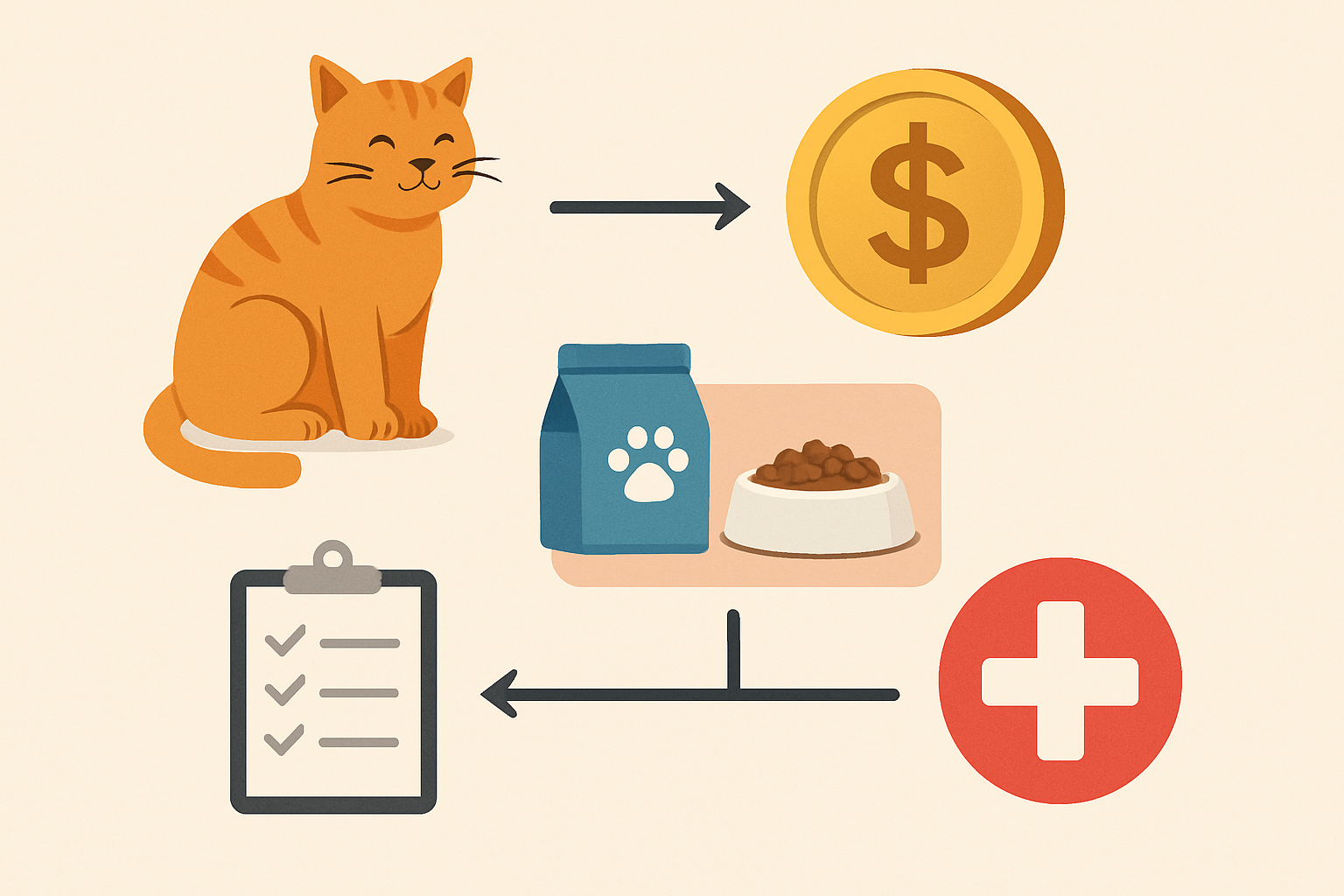
Instead of chasing a single “average,” it’s more useful to compare how each category behaves: which ones are stable, which can be trimmed, and which can suddenly jump. The sections that follow help you compare scenarios, avoid common money mistakes, and decide whether you’re financially ready for a cat right now.
Comparing the main cost categories of owning a cat in the US
Most cat budgets in the US fall into a few predictable categories:
- Food
- Litter and basic hygiene
- Routine veterinary care
- Pet insurance or savings for medical care
- Supplies and enrichment (toys, scratchers, beds, carriers)
- Grooming and cleaning products
- Boarding or pet sitting when you travel
- Emergency and unexpected costs
Some of these are monthly, some are annual, and some are rare but large. Understanding the pattern is more important than memorizing any single number.
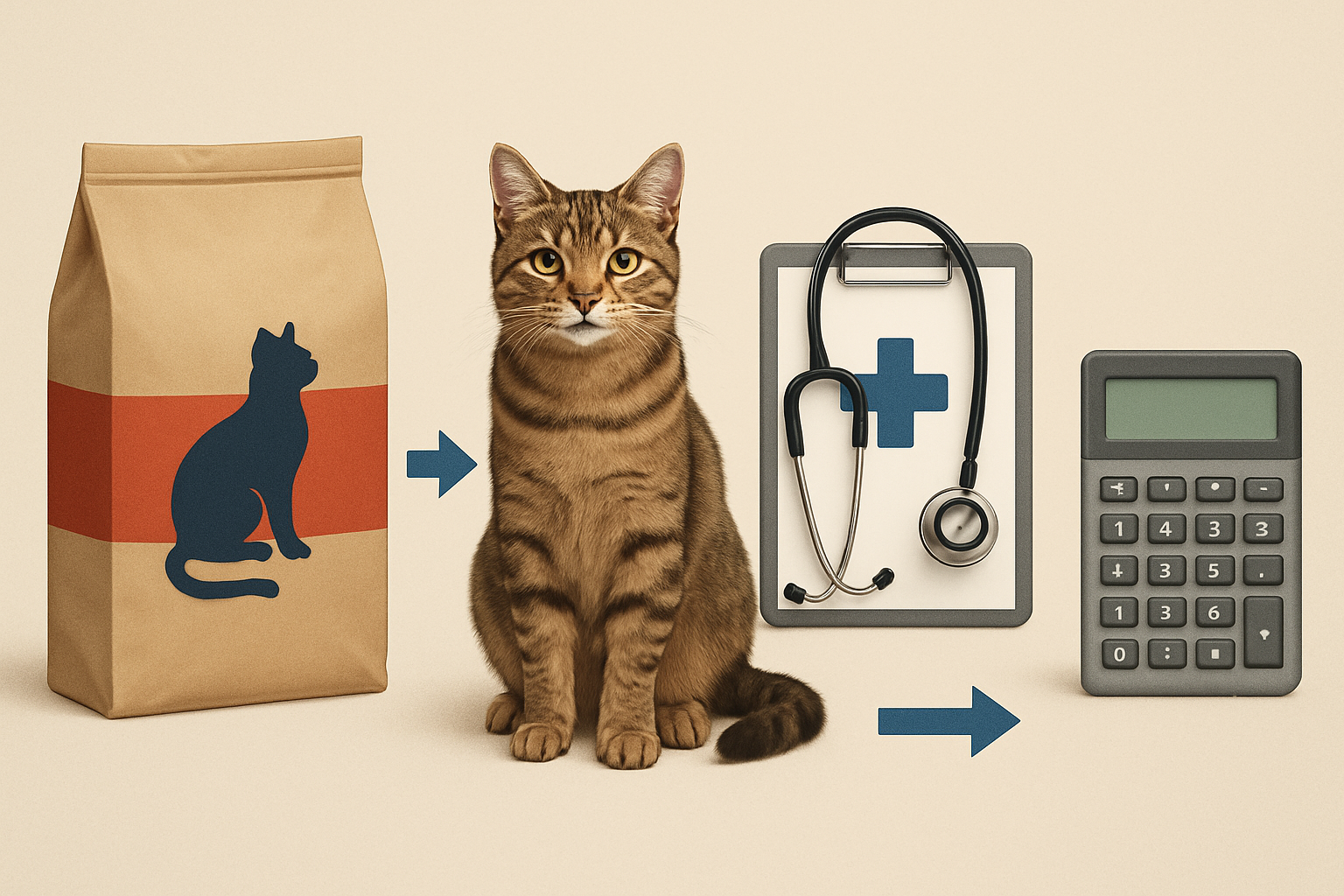
Cost breakdown table for food, litter, vet, insurance, and supplies
The table below compares the main cost categories by how often they occur, how predictable they are, and how much control you have over them. Use it as a framework to plug in your own local prices and quotes.
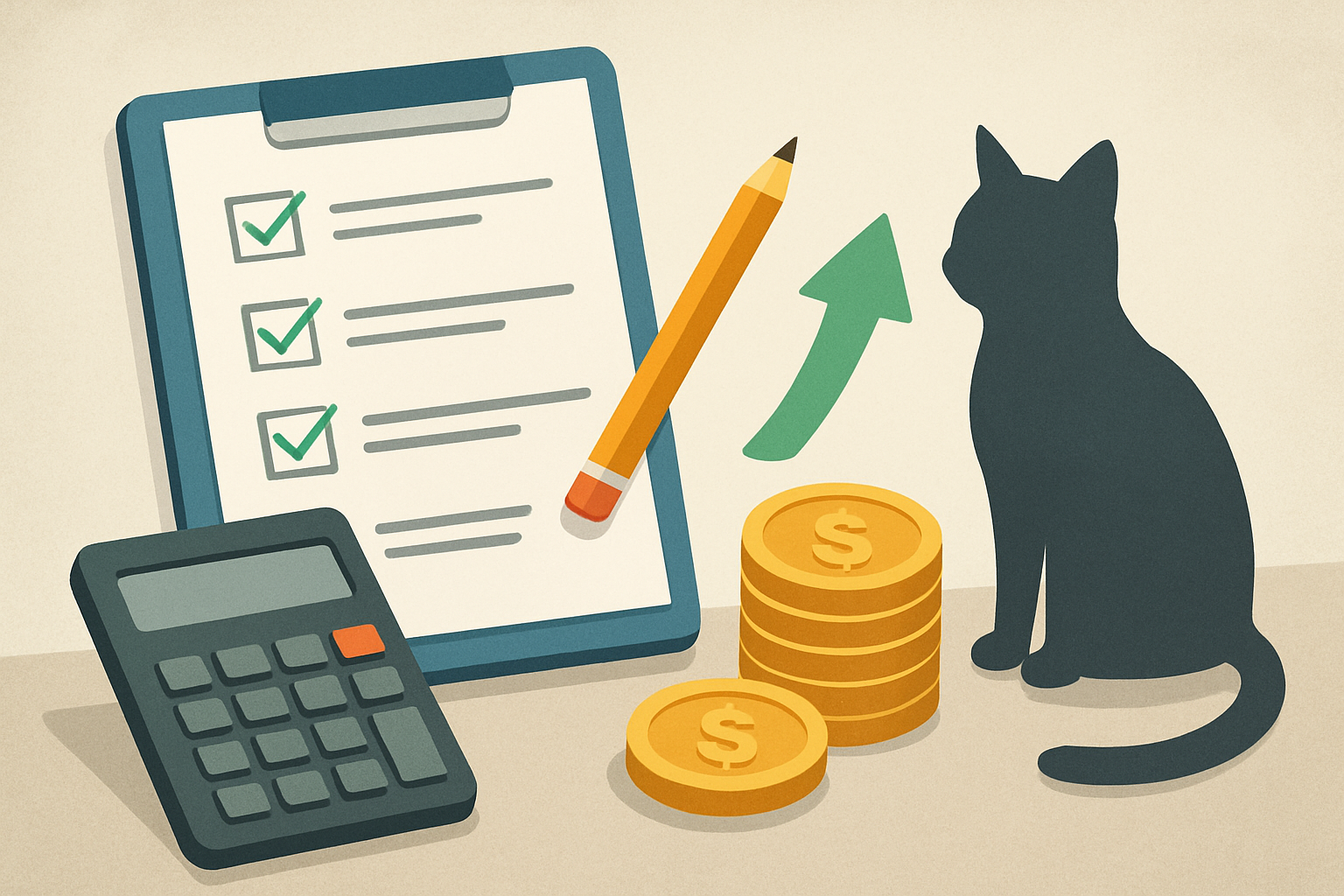
| Cost category | Type (one-time vs recurring) | Predictability over a year | What drives the amount | How much control you have |
|---|---|---|---|---|
| Food | Recurring (monthly) | High – similar every month | Brand quality, wet vs dry, cat’s size/age, special diets | Medium – you can choose brand and format, but not your cat’s needs |
| Litter | Recurring (monthly) | High – usage is fairly steady | Type of litter, number of cats, number of boxes, how often you change it | Medium – cheaper types exist, but quality affects odor and comfort |
| Routine vet care | Recurring (annual or semiannual) | Medium – timing is predictable, exact bill can vary | Exam fees, vaccines, lab tests, geographic region | Low to medium – you can compare clinics, but should not skip core care |
| Pet insurance | Recurring (monthly) | High – fixed premium while policy is active | Cat’s age, breed, coverage level, deductible | High – you choose whether to have it and what level |
| Supplies (bowls, carrier, bed, scratcher) | Mostly one-time, with occasional replacement | High – you control when to buy/upgrade | Quality, style, how many items you want | High – you can start basic and upgrade later |
| Toys and enrichment | Recurring but flexible | Medium – depends on how often you buy | Number of toys, subscription boxes vs DIY | High – many low-cost or homemade options |
| Grooming and cleaning | Recurring (monthly) | Medium – depends on coat type and your standards | Brushes, nail clippers, shampoo, lint rollers, cleaning sprays | Medium – you can choose reusable tools and bulk cleaners |
| Boarding / pet sitting | Occasional (travel-related) | Low – depends on your lifestyle | How often you travel, length of trips, type of care | Medium – you can ask friends/family or hire professionals |
| Emergency vet care | Unpredictable | Low – can be zero for years, then very high once | Accidents, sudden illness, chronic conditions | Low – you can reduce risk but not eliminate it |
One-time setup costs vs recurring monthly and annual costs
Planning for a cat in the US means separating what you pay once from what you’ll pay over and over. This helps you avoid blowing your first-month budget and then struggling later.
Typical one-time or rare costs for a new cat
- Adoption fee or purchase cost – varies widely by source and region. Many shelters include spay/neuter and initial vaccines in the fee.
- Spay/neuter surgery – often done once, sometimes already completed before adoption.
- Initial supplies – litter box, scoop, food and water bowls, carrier, bed, scratching post, brush, nail clippers, ID tag, and possibly a microchip if not already done.
- Initial vet visit – health check, vaccines, deworming, and testing if not already covered.
- Home prep – baby gates, cord protectors, or window screens if needed.
These one-time costs can easily add up to a noticeable three-figure total in the first month, especially if you buy everything new at once. A common strategy is to spread non-essential purchases (extra beds, fancy trees) over several months.
Recurring monthly and annual costs you should expect
- Monthly: food, litter, some toys, cleaning products, and possibly insurance premiums.
- Annual or semiannual: wellness exams, vaccines, parasite prevention, dental cleanings when recommended.
To get a realistic picture, take your expected annual vet and other periodic costs and divide by 12. Add that to your monthly food and litter estimate. This gives a more honest “all-in” monthly cost instead of underestimating and then being surprised by a big bill once a year.
Cost ranges by lifestyle: indoor-only, indoor/outdoor, and multi-cat homes
Your lifestyle choices change both the size and the volatility of your cat budget. Two households can spend very different amounts each month even if they both “have a cat.”
Indoor-only cat: more predictable, fewer risk spikes
An indoor-only cat usually has:
- Stable food and litter costs – you control the diet and litter type.
- Lower accident risk – fewer traffic injuries or fights with other animals.
- Higher enrichment needs – you may spend more on toys, climbing structures, and interactive play to prevent boredom.
Financially, indoor-only cats often have a moderate, steady monthly cost with fewer extreme emergencies, though chronic health issues can still occur.
Indoor/outdoor cat: potentially lower boredom costs, higher medical risk
Cats that go outdoors may:
- Need more frequent parasite prevention and checkups.
- Face higher risk of injuries from cars, other animals, or environmental hazards.
- Sometimes require more frequent wound care or emergency visits.
- Be less dependent on purchased toys but still need indoor enrichment.
Financially, some owners feel they spend less on indoor entertainment, but this can be offset by higher medical risk. The monthly average might look similar to an indoor-only cat, but the variance is higher: more months at the basic level, with occasional very expensive months.
Multi-cat household: economies of scale vs multiplied risk
Adding a second or third cat changes the math:
- Food and litter – scale roughly with the number of cats, though bulk buying can reduce the cost per cat.
- Supplies – some items (carrier, large cat tree, grooming tools) can be shared, so you don’t double everything.
- Vet care – each cat needs its own exams, vaccines, and treatments.
- Emergency risk – more cats mean more chances that at least one will need expensive care in a given year.
Many US households find that the total monthly cost for two cats is less than exactly double one cat, but still significantly higher. Before adopting a second cat, assume at least a substantial percentage increase in your monthly budget and a larger emergency fund.
Sample monthly budgets for different income comfort levels
Instead of exact prices, use “budget tiers” that you can adapt to your local costs. Below are three example profiles for a single indoor cat. You can scale them up for multiple cats by increasing food, litter, and vet estimates.
Tight-budget owner: focusing on essentials
Profile: Student or early-career worker with limited disposable income, but stable housing.
- Food: reliable but not premium brand, mostly dry with some wet food.
- Litter: cost-effective clumping litter bought in bulk.
- Vet care: uses low-cost clinics or wellness days for vaccines and checkups.
- Insurance: may skip insurance and instead build a small emergency fund.
- Toys/enrichment: DIY toys (paper balls, cardboard boxes), a basic scratching post.
- Travel: relies on friends or roommates for pet sitting.
For this profile, the monthly budget should comfortably cover food and litter with a modest buffer each month for a “vet and emergency” envelope. A common mistake is to budget only for food and litter and assume vet care will somehow work out later.
Middle-budget owner: balancing quality and savings
Profile: Steady income, wants higher-quality food and regular preventive care.
- Food: mid-range brand, mix of wet and dry, possibly a special formula if recommended.
- Litter: clumping or low-dust litter, possibly odor-control formulas.
- Vet care: annual wellness exams, recommended vaccines, and routine lab work.
- Insurance: may choose a basic accident-and-illness plan or set aside a larger emergency fund.
- Toys/enrichment: rotating toys, a sturdy scratching post or tree, puzzle feeders.
- Travel: occasional paid pet sitter or boarding.
This profile typically sets aside a comfortable two-figure amount each month for the cat, including a built-in allowance for future vet bills. The key is consistency: treating the cat’s budget like a non-negotiable bill.
High-flexibility owner: prioritizing premium options
Profile: Higher disposable income, wants premium food, comprehensive vet care, and convenience services.
- Food: premium or specialty diets, mostly wet or fresh food.
- Litter: high-end low-dust or specialty litters, possibly automatic litter box supplies.
- Vet care: twice-yearly exams, dental cleanings as recommended, advanced diagnostics when needed.
- Insurance: comprehensive plan with lower deductibles, or a large dedicated savings fund.
- Toys/enrichment: subscription boxes, multiple cat trees, window perches, interactive tech toys.
- Travel: professional sitters, in-home care, or luxury boarding.
Even with a higher budget, it’s still wise to track spending and maintain an emergency fund, because serious medical issues can exceed what many people expect.
How to save money on cat care without harming welfare
Cutting costs is fine as long as you don’t cut corners on health and safety. Here are practical ways to save responsibly.
Smart ways to reduce cat-related expenses
- Adopt from a shelter – many include spay/neuter, microchip, and initial vaccines in the adoption fee, which can be cheaper than paying for each separately.
- Buy in bulk when it makes sense – larger bags of food or litter often cost less per unit, but only if your cat will use them before they go stale.
- Use loyalty programs and coupons – many pet stores and vet clinics offer rewards or discounts.
- DIY toys and enrichment – cardboard boxes, paper bags (handles removed), and homemade wand toys can be as fun as store-bought ones.
- Preventive care – regular checkups and parasite prevention can catch issues early, when they’re usually cheaper to treat.
- Keep your cat at a healthy weight – obesity can lead to expensive chronic conditions.
- Spay/neuter – helps prevent certain health and behavior issues that can be costly later.
Places you should not cut corners
- Skipping vet visits entirely – waiting until your cat is obviously sick often means higher bills and worse outcomes.
- Very low-quality food – may lead to health problems; aim for a diet that meets basic nutritional standards.
- Unsafe DIY litter or cleaning products – some materials and chemicals are toxic to cats.
- Declawing or other harmful shortcuts – can cause long-term pain and behavior issues, leading to more costs and stress.
When pet insurance makes sense compared with self-funding
Pet insurance in the US works like human health insurance in some ways: you pay a monthly premium in exchange for help with large, unexpected bills. Whether it’s worth it depends on your risk tolerance and savings habits.
Situations where insurance is often helpful
- Limited savings but stable monthly income – easier to handle a predictable premium than a sudden four-figure bill.
- Young cat – policies are often easier to obtain and may have broader coverage when started early.
- Breeds prone to certain conditions – some purebred cats have higher risk of specific health issues.
- Indoor/outdoor lifestyle – higher risk of accidents and injuries.
Situations where you might rely on savings instead
- Strong emergency fund – you consistently keep a dedicated pet savings account at a level that could handle major surgery or hospitalization.
- Older cat with pre-existing conditions – some conditions may not be covered; you’ll need to read policy details carefully.
- Very tight budget – if premiums would crowd out basic care, it may be better to focus on essentials and slowly build savings.
Whichever route you choose, the key is to plan for at least one serious medical event during your cat’s lifetime, not hope it never happens.
Emergency fund guidelines and realistic planning examples
Emergency vet visits in the US can be significantly more expensive than routine care. While exact amounts vary by region and clinic, it’s reasonable to assume that a single emergency could cost several times more than a regular checkup.
How much to aim for in a cat emergency fund
Instead of a single “magic number,” think in tiers:
- Starter goal: enough to cover an urgent exam, basic tests, and medications – often a mid three-figure amount.
- Comfort goal: enough for an emergency visit plus imaging or an overnight stay – potentially a high three-figure to low four-figure amount.
- Stretch goal: enough for surgery or intensive care – often a higher four-figure amount, which many people reach gradually or back up with credit.
Example saving strategies for US cat owners
- Set up a separate savings account labeled “Cat Emergency Fund.”
- Automate a small monthly transfer, even if it’s only the cost of a few coffees.
- Send part of any tax refund or bonus to this fund.
- After paying off a debt, redirect that payment amount into the emergency fund for a few months.
Even a modest emergency fund is better than none. The goal is to reduce the chance that you’ll have to choose between your cat’s health and your rent or groceries.
Financial readiness checklist before adopting a cat
Use this brief checklist before committing to adoption in the US. It helps you compare your current situation with the long-term commitment a cat needs.
- Housing
- Is your lease or housing situation pet-friendly, including any pet deposits or monthly pet fees?
- Can you afford these extra housing costs for the length of your lease?
- Monthly budget
- Have you added a realistic line for food and litter to your budget?
- Have you estimated an average monthly amount for vet care by dividing expected annual costs by 12?
- Will this total still leave enough for your own essentials and savings?
- One-time setup
- Do you have enough saved for adoption fees and initial supplies?
- Can you cover an initial vet visit soon after adoption?
- Emergency planning
- Have you decided between pet insurance, an emergency fund, or a mix of both?
- Do you have at least a starter amount set aside or a clear plan to build it?
- Lifestyle fit
- Do you travel often, and if so, have you budgeted for pet sitting or boarding?
- Can you commit time for daily interaction and play, not just money?
If you can answer “yes” to most of these questions without stretching your finances to the breaking point, you’re in a good position to adopt responsibly.
Typical money mistakes new US cat owners make
Avoiding a few typical errors can save both stress and money over the years.
- Underestimating vet costs – planning only for vaccines and forgetting about dental care, lab work, or age-related issues.
- Ignoring long-term commitments – cats can live well into their teens; your budget needs to work for many years, not just the first one.
- Impulse adoption – bringing home a cat without checking your lease, savings, or schedule.
- Buying every gadget at once – you don’t need the fanciest tree, fountain, and automatic litter box on day one.
- Not planning for behavior-related costs – scratching furniture or inappropriate urination can lead to spending on training, extra litter boxes, or vet visits.
- Relying on credit alone – using high-interest credit cards for emergencies without a plan to pay them down.
FAQ on monthly cat costs, lifestyle, and care
What is the 3-3-3 rule for cats and how does it affect budgeting?
The “3-3-3 rule” is a popular guideline for how long it can take a newly adopted cat to adjust:
- First 3 days: your cat may be overwhelmed, hiding, or unsure of the new environment.
- First 3 weeks: your cat starts to learn the routine, feel safer, and show more personality.
- First 3 months: many cats feel fully settled, bonded, and comfortable.
This isn’t a strict rule, but it’s a helpful reminder to be patient and to budget time and resources for a gradual adjustment. During the first weeks you may spend a bit more on extra litter, different food options, or additional enrichment to help your cat settle in.
What is the main health risk I should plan for financially?
There isn’t a single universally agreed “number one” cause of death for cats, because it varies by age, lifestyle, and region. Common serious issues include kidney disease, certain cancers, heart disease, and complications from accidents or untreated illnesses. From a financial planning perspective, the key takeaway is that chronic diseases and emergencies can both be costly, which is why regular vet care and an emergency plan are important.
Can cats be left alone for 8 hours while I’m at work?
Many healthy adult cats can be left alone during a typical workday (around 8 hours) as long as they have:
- Fresh water and enough food (ideally in a way that doesn’t encourage overeating).
- A clean litter box.
- Safe, cat-proofed space with no obvious hazards.
- Environmental enrichment (window views, toys, scratching posts).
If you regularly work longer hours or travel, you may need to budget for pet sitters, automated feeders, or additional enrichment to keep your cat healthy and mentally stimulated.
Is owning a cat considered high maintenance compared with other pets?
Compared with some pets, cats are often considered moderate maintenance. They usually don’t need walks like dogs, but they do require:
- Daily feeding and fresh water.
- Regular litter box cleaning.
- Playtime and interaction to prevent boredom and behavior issues.
- Routine vet care and grooming (especially for long-haired cats).
Financially, cats are not “no-cost” pets. Even a healthy, low-maintenance cat will need a consistent monthly budget and some savings for the unexpected.
How can I quickly estimate my own monthly cat budget in the US?
Use this simple three-step method:
- List your basics: estimate local monthly costs for food and litter for one cat.
- Add vet care: ask a nearby clinic for a rough annual cost for wellness care, then divide by 12.
- Add a safety margin: add an extra percentage on top (for example, a quarter to a third of your subtotal) to cover toys, cleaning supplies, and small surprises.
If the final number fits comfortably into your budget alongside rent, utilities, groceries, and savings, you’re likely in a good position to adopt. If it feels tight, consider waiting, adjusting your lifestyle, or building more savings first.