
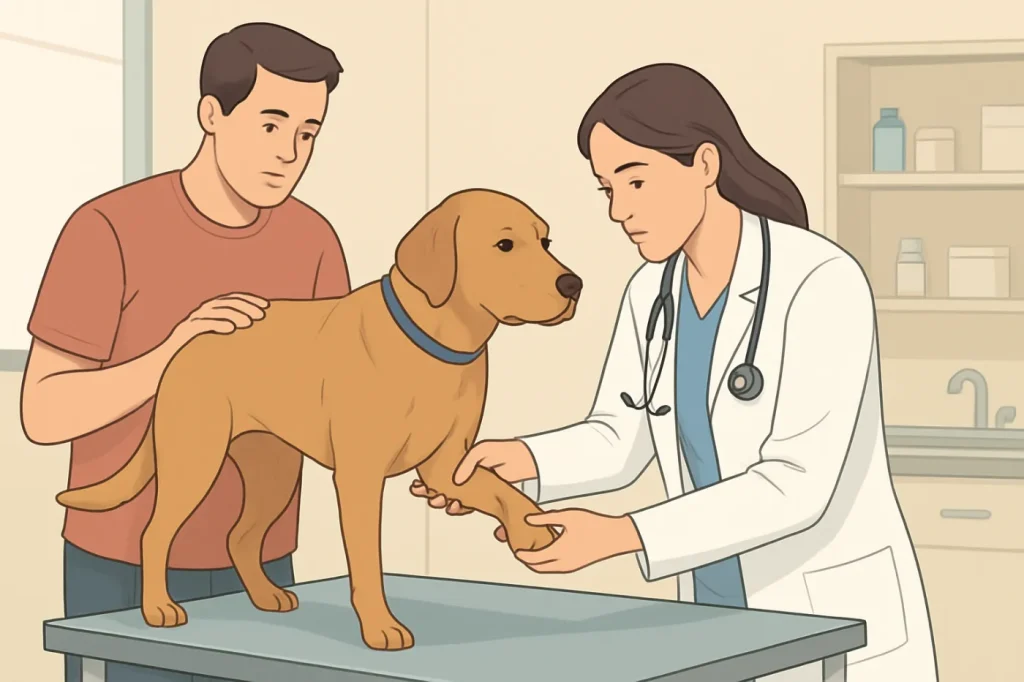
Arthritis in dogs is diagnosed by combining three things: your dog’s history, a detailed physical and orthopedic exam, and, when needed, imaging and lab tests. There is no single “arthritis test.” Instead, your veterinarian builds a picture from what you report, what they find on exam, and what X‑rays or other tests show.
Knowing this process ahead of time helps you walk into the appointment prepared, ask focused questions, and make better decisions about tests and costs.
What to expect step by step at a dog arthritis vet visit
Most arthritis evaluations in the United States follow a similar flow. The exact order can vary, but you can expect these stages:
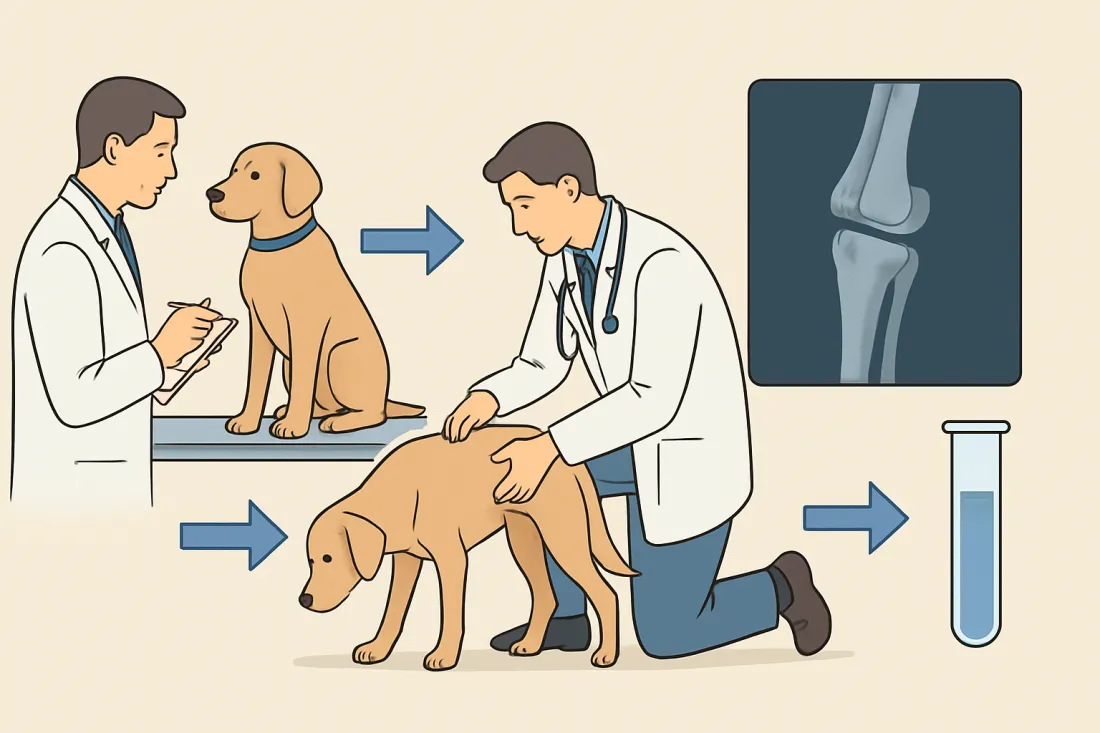
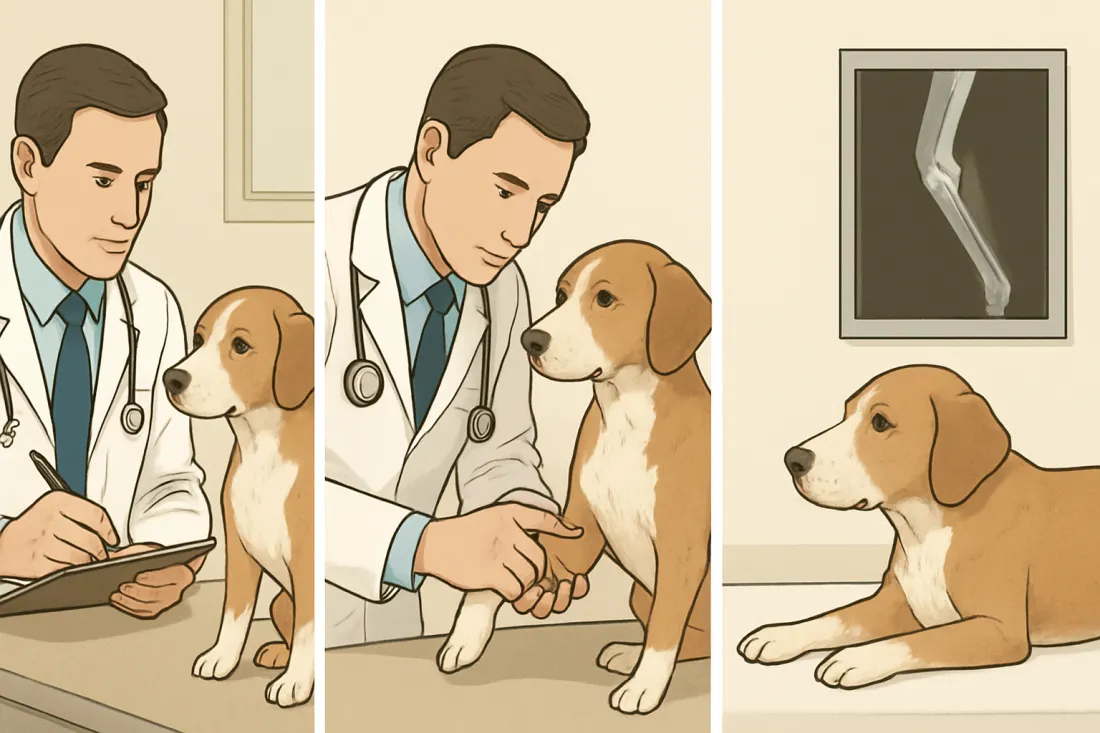
- Check‑in and brief triage
Staff confirm your dog’s age, weight, medications, and main concern (for example, “rear‑leg stiffness for 3 months”). They may ask you to rate your dog’s pain on a simple scale (for example, 0–10) to guide urgency. - History and symptom review
The vet or technician asks detailed questions about when you first noticed problems, how they have changed, and what daily life looks like for your dog. - General physical exam
The vet checks overall health: heart, lungs, temperature, weight, body condition, eyes, ears, and basic neurologic function. This helps rule out other illnesses that can cause weakness or stiffness. - Orthopedic and gait exam
The vet watches your dog move, then feels and gently moves joints, spine, and muscles to locate pain, stiffness, or instability. - Initial assessment and discussion
Based on steps 2–4, the vet explains how likely arthritis is, which joints seem involved, and whether anything suggests a different problem (such as ligament tears or neurologic disease). - Imaging and lab tests (if indicated)
Common options include X‑rays, bloodwork, and sometimes joint fluid analysis or advanced imaging. The vet explains what each test could add and how it might change treatment. - Diagnosis and first treatment plan
The vet summarizes findings, gives a working diagnosis (for example, “osteoarthritis in both hips”), and recommends pain control, lifestyle changes, and follow‑up.
Some older dogs with very typical signs may start arthritis treatment after steps 1–5, with imaging scheduled later. In younger dogs, dogs with sudden severe lameness, or dogs with fever or multiple swollen joints, vets are more likely to recommend a fuller diagnostic workup right away.
History questions owners should be ready to answer
Your observations at home are one of the most powerful “diagnostic tools” for arthritis. Vets only see your dog for 15–30 minutes; you see them every day. Expect questions in these areas:
Timing and progression
- When did you first notice stiffness, limping, or slowing down (days, weeks, or months ago)?
- Did the problem appear suddenly or build up gradually?
- Has it stayed the same, improved, or steadily worsened?
- Are there good days and bad days, or is it consistent?
Daily pattern of stiffness and pain
- Is your dog worst after resting (for example, first thing in the morning or after naps)?
- Do they “warm up” and move better after 5–10 minutes of gentle activity?
- Do cold, damp, or very active days seem to make things worse?
Mobility and activity changes
- Any new trouble with stairs, jumping into the car, or getting on the couch or bed?
- Do walks need to be shorter now (for example, from 30 minutes down to 10–15 minutes)?
- Does your dog lag behind, stop more often, or lie down mid‑walk?
- Have they stopped doing favorite activities such as running after a ball or playing with other dogs?
Limping details
- Which leg or area seems affected (front, rear, left, right, hips, back)?
- Is the limp constant or only after heavy activity?
- Does the limp improve after a period of rest, or does rest make it worse?
- Have you noticed toe‑dragging, knuckling, or stumbling that might suggest nerve issues?
Behavior and comfort
- Any new irritability, growling, or snapping when touched in certain spots?
- Less interest in greeting you at the door, going for walks, or playing?
- Restlessness at night, frequent position changes, or panting when resting?
Bathroom habits and self‑care
- Difficulty squatting to urinate or defecate?
- Accidents in the house that might be linked to difficulty moving quickly enough?
- Trouble grooming certain areas, such as licking or chewing at sore joints or not being able to reach the back end?
Past medical history and lifestyle
- Previous joint injuries (for example, cruciate ligament tears, fractures, dislocations)?
- Any orthopedic surgeries (hips, knees, elbows, spine)?
- Known joint conditions such as hip or elbow dysplasia.
- Typical exercise routine (for example, 2–3 short walks per day, weekend hikes, agility, off‑leash running).
- Type of flooring at home (slippery hardwood or tile vs. carpet or rugs).
- Recent weight changes you have noticed (for example, “he feels heavier when I lift him” or “her collar is looser”).
Medications, supplements, and previous treatments
- All prescription medications, including doses and how often you give them.
- Any over‑the‑counter or human pain medications you have given (name, amount, and when).
- Joint supplements, special diets, or previous arthritis treatments.
- How your dog responded to any of these (better, worse, or no change).
It helps to jot down notes for at least 5–7 days before the appointment. Include which leg seems sore, what your dog can no longer do, and specific examples (for example, “needs two tries to get into the car” or “stops after 5 minutes on walks”). Short videos of your dog walking, trotting, using stairs, and getting up from rest are especially valuable.
What the physical and orthopedic exam for arthritis includes
After reviewing the history, your vet performs a full physical and orthopedic exam. This is where they look for objective signs that match your description.
General physical exam
Before focusing on joints, the vet usually checks:
- Weight and body condition – Extra weight increases stress on joints. Even a modest weight loss can significantly reduce joint load, so this is a key part of arthritis management.
- Temperature, heart rate, and breathing – These help detect infection, pain, or other systemic disease that might mimic or complicate arthritis.
- Coat, skin, and muscle condition – Poor grooming over hips or back can suggest your dog is too sore to turn or bend. Muscle loss (atrophy) in one or both legs can indicate chronic disuse from pain.
- Basic neurologic function – Paw placement, reflexes, and spinal responses help distinguish joint pain from nerve or spinal cord problems.
Orthopedic and gait exam
The orthopedic exam is more focused and hands‑on. It may look like a combination of gentle stretching, massage, and specific maneuvers.
- Watching your dog move
- Observation at a walk and sometimes a trot, from the front, side, and behind.
- Looking for limping, shortened stride, stiffness, “bunny hopping” in the rear legs, or head‑bobbing that suggests front‑leg pain.
- Watching how your dog sits, lies down, and stands up. Dogs with hip arthritis may avoid sitting squarely or may push up with front legs more than rear legs.
- Palpation (feeling) of muscles and joints
- Feeling along the spine, hips, knees, elbows, shoulders, and other joints for heat, swelling, or thickening.
- Checking for muscle asymmetry between left and right sides.
- Applying gentle pressure over specific structures to pinpoint painful spots.
- Range of motion testing
- Gently flexing and extending each joint to see how far it moves.
- Noting any stiffness, resistance, or pain at certain angles.
- Comparing one side to the other to detect subtle differences.
- Joint stability tests
- Specific maneuvers to check for ligament damage (for example, in the knee) that can lead to or mimic arthritis.
- Feeling for abnormal looseness or “sliding” in the joint.
- Crepitus and chronic changes
- Feeling or hearing grinding or crackling (crepitus) when the joint moves, which can occur with long‑standing arthritis.
- Detecting bony enlargements or thickened joint capsules that suggest chronic joint disease.
Some dogs are stoic and hide pain; others are anxious and tense at the clinic. If your dog is very painful or fearful, your vet may recommend mild sedation so the exam can be done more comfortably and safely.
Imaging and lab tests used to diagnose arthritis in dogs
Physical exam findings often strongly suggest arthritis, but imaging and lab tests help confirm the diagnosis, rule out other problems, and plan treatment. Not every dog needs every test; your vet will tailor recommendations to your dog’s age, signs, and risk factors.
X‑rays (radiographs)
X‑rays are the most common imaging test for suspected arthritis in dogs. They do not show cartilage directly, but they show the changes arthritis causes in and around the joint, such as:
- Bony spurs (osteophytes) around joint edges.
- Narrowing of the joint space compared with a normal joint.
- Changes in bone shape or density near the joint.
- Evidence of old injuries, fractures, or joint instability.
What to expect with X‑rays:
- Positioning – Your dog is placed in specific positions to get clear views of the affected joints. This can be briefly uncomfortable for painful dogs.
- Sedation – Many dogs need light sedation to lie still and allow accurate positioning, especially for hips and spine. Sedation time is usually measured in minutes, not hours, but your vet will discuss risks and monitoring.
- Multiple views – The vet usually takes at least two views of each joint and may X‑ray both sides for comparison.
- Results – Many general practice vets interpret X‑rays during the visit. In complex cases, images may be sent to a radiologist or orthopedic specialist for a more detailed report.
Bloodwork and basic lab tests
Blood tests do not diagnose arthritis directly, but they are important for the bigger picture:
- Ruling out other diseases – Some infections, metabolic diseases, or immune‑mediated conditions can cause stiffness, weakness, or joint swelling.
- Checking organ function – Before starting long‑term pain medications, vets usually want to know how the liver and kidneys are functioning.
- Looking for inflammation or infection – Certain patterns in bloodwork can push the vet to investigate beyond simple wear‑and‑tear arthritis.
Your vet may also recommend a urinalysis to complete the health screen, especially for middle‑aged and senior dogs.
Joint fluid analysis (arthrocentesis)
Joint fluid analysis is not needed for every dog with arthritis, but it can be crucial when signs are unusual:
- The vet collects a small sample of fluid from inside one or more joints using a sterile needle, usually under sedation or light anesthesia.
- The fluid is examined under a microscope to look for infection, crystals, or immune‑mediated disease.
- This test is more common when multiple joints are swollen, there is fever, or the onset is sudden and severe.
Advanced imaging (CT, MRI, ultrasound)
Advanced imaging is typically done at specialty centers:
- CT scans provide detailed 3‑D images of bones and can be useful for complex joint or spinal problems.
- MRI shows soft tissues such as ligaments, tendons, and spinal cord in high detail.
- Ultrasound can help evaluate soft tissues around joints and the spine in some cases.
These tests are usually reserved for complex or unclear cases, surgical planning, or when neurologic disease is suspected.
Comparison table: common diagnostic tools for canine arthritis
| Diagnostic tool | What it shows | Best used when | Key limitations |
|---|---|---|---|
| History and physical exam | Which joints hurt, how your dog moves, overall health status | First step for every dog with stiffness, limping, or mobility changes | Cannot see inside joints; anxious or stoic dogs may hide pain or move differently at the clinic |
| X‑rays (radiographs) | Bony changes, joint space narrowing, old injuries, some types of instability | To confirm arthritis, assess severity, and rule out fractures or bone tumors | Do not show cartilage directly; early arthritis may look normal; often requires sedation for clear images |
| Bloodwork and urinalysis | Organ function, signs of systemic inflammation, other underlying disease | Before starting long‑term pain meds and when signs are severe, sudden, or unusual | Does not diagnose arthritis itself; only supports overall assessment and safety of treatment |
| Joint fluid analysis | Cell types, infection, crystals, or immune‑mediated changes in joint fluid | When multiple joints are affected, there is fever, or infection/immune disease is suspected | Requires sedation and a needle in the joint; not needed for straightforward wear‑and‑tear arthritis |
| CT/MRI/ultrasound | Detailed view of bones, soft tissues, and sometimes nerves and spinal cord | Complex or unclear cases, surgical planning, or suspected spinal/ligament problems | More expensive and time‑consuming; usually requires referral and deeper anesthesia |
Typical U.S. cost patterns for diagnosing arthritis in dogs
Exact prices vary widely by region, clinic type, and your dog’s size, so you will need to confirm current estimates with your own vet. Instead of fixed numbers, use these patterns to plan and ask informed questions:
- Office visit and basic exam – Every clinic sets its own exam fee. Specialty hospitals often charge more than general practices, and emergency visits usually cost more than scheduled daytime appointments.
- X‑rays – Costs depend on how many views are taken, which joints are imaged, and whether sedation is required. Imaging a single joint is generally less expensive than imaging multiple joints or the entire spine.
- Sedation or anesthesia – Sedation is often billed separately and is influenced by your dog’s weight, age, and health status. Larger dogs typically require more medication than smaller dogs.
- Bloodwork and urinalysis – A basic blood panel and urine test add to the diagnostic total but are important for safe long‑term medication use, especially in middle‑aged and senior dogs.
- Advanced tests – Joint fluid analysis, CT, or MRI are usually significantly more expensive than X‑rays and often involve referral to a specialty center.
If cost is a concern, say so early in the visit. Many vets are comfortable prioritizing tests in stages, starting with the ones most likely to change treatment decisions. For planning long‑term care once a diagnosis is made, it can be helpful to review resources on treatment options and costs for dogs with arthritis.
Structured checklist: what to bring and ask at the arthritis appointment
Use this checklist to prepare for a vet visit focused on possible arthritis. Having these items ready can save time and make the diagnosis more accurate.
What to bring to the appointment
- Symptom log (5–7 days)
- Dates when you first noticed stiffness, limping, or slowing down.
- Times of day when your dog is worst (for example, mornings vs. evenings).
- Specific activities that cause trouble (stairs, jumping, long walks, getting into the car).
- Short video clips
- 30–60 second videos of your dog walking and trotting on a flat surface.
- Videos of your dog using stairs and getting up from lying down.
- Record from the side and from behind in good light if possible.
- Medication and supplement list
- Names, strengths, and how often you give each medication.
- Any over‑the‑counter or human meds given recently (even once).
- All joint supplements, herbal products, or special diets.
- Previous medical records
- Records or X‑rays from other clinics, especially for past joint injuries or surgeries.
- Recent lab results if your dog has chronic health conditions.
- Diet and treat details
- Brand and type of food, how much you feed, and how many times per day.
- Types and amounts of treats or table scraps.
- Insurance and budget information
- Pet insurance policy details if you have coverage.
- A rough idea of what you can spend on diagnostics at this visit so the vet can prioritize.
Key questions to ask your vet during the visit
- About the diagnosis
- Which joints do you think are affected, and how confident are you that this is arthritis?
- Are there other conditions that could be causing similar signs in my dog?
- Do you recommend X‑rays or other tests today? What will each test tell us?
- About tests and safety
- Will my dog need sedation for X‑rays or joint taps? How is sedation monitored?
- How long will my dog be at the clinic for imaging or lab work?
- If we delay certain tests, what are we potentially missing?
- About treatment planning
- If we confirm arthritis, what are the main treatment options for my dog right now?
- How will you measure whether treatment is working (for example, pain scores, mobility tests, follow‑up X‑rays)?
- What lifestyle changes at home (exercise, weight, flooring, ramps) would help the most?
- About long‑term outlook and follow‑up
- How often should we recheck my dog once treatment starts?
- What changes at home should make me call you sooner?
- At what point would you consider referring us to a specialist?
- About costs and priorities
- If we cannot do every recommended test today, which ones are highest priority?
- Are there lower‑cost ways to monitor my dog’s progress between visits (for example, home mobility scoring or video check‑ins)?
Decision criteria: when to push for more testing vs. start with basics
Not every dog with suspected arthritis needs the same level of diagnostics on day one. These practical criteria often guide decisions for both vets and owners:
- Age and onset of signs
- Older dog, gradual onset – If a senior dog has slowly progressive stiffness and typical exam findings, many vets are comfortable starting treatment with basic tests and targeted X‑rays.
- Young dog or sudden onset – A young dog or a dog with sudden, severe lameness is more likely to need X‑rays and possibly advanced tests to rule out injuries, developmental problems, or infection.
- Number of joints involved
- One or two joints – Often consistent with wear‑and‑tear arthritis or an old injury.
- Many joints plus fever or lethargy – May suggest infection or immune‑mediated disease; bloodwork and joint fluid analysis become more important.
- Severity and impact on daily life
- Mild stiffness – Dog still enjoys walks and play with only minor limitations; conservative management and basic imaging may be reasonable.
- Severe pain or inability to walk – More urgent and thorough diagnostics are usually recommended to avoid missing a treatable cause.
- Response to initial treatment
- Good improvement – If your dog improves clearly on early arthritis treatment, that supports the working diagnosis; your vet may continue and monitor.
- Poor or no improvement – Little change, or worsening signs, is a common trigger to add more imaging or lab tests.
- Budget and access to care
- Limited budget – Ask which tests are most likely to change the treatment plan and start there.
- Access to specialists – If you live near a specialty hospital, referral for advanced imaging may be more practical if basic tests are inconclusive.
Common mistakes to avoid during the arthritis diagnosis journey
A few avoidable missteps can delay diagnosis or make it harder for your vet to help your dog.
- Assuming it is “just old age”
- Slowing down is common in older dogs, but it is often a sign of pain, not just aging.
- Waiting months or years can allow pain to build and muscles to weaken, making management harder.
- Giving human pain medications without veterinary guidance
- Some human pain relievers can be dangerous or even life‑threatening for dogs.
- They can also mask signs your vet needs to see and limit medication options later.
- Not sharing the full medication and supplement list
- Vets need a complete list to avoid drug interactions and understand what has already been tried.
- Leaving out “natural” products or over‑the‑counter meds can lead to incomplete or unsafe plans.
- Arriving unprepared to describe symptoms
- Vague statements like “he is slowing down” are less helpful than specific examples and videos.
- Without a clear timeline, subtle issues can be missed or misinterpreted.
- Focusing only on one obvious joint
- Owners often notice the worst limp, but arthritis can affect multiple joints.
- Let your vet examine the whole dog, even if you are sure the problem is “just the hip” or “just the knee.”
- Declining all diagnostics without discussing trade‑offs
- Sometimes it is reasonable to start treatment based on exam alone, but it is important to understand what you might miss by skipping tests.
- A short conversation about pros and cons of each test helps you make an informed choice.
- Expecting a quick cure instead of long‑term management
- Arthritis is usually a chronic condition. The goal is to reduce pain and maintain function, not to completely “fix” the joint.
- Realistic expectations make it easier to commit to ongoing care, rechecks, and home adjustments.
What to do after your dog’s arthritis diagnosis
Once your vet has diagnosed or strongly suspects arthritis, the next steps usually include:
- Starting a tailored treatment plan
- Your vet may prescribe pain relief, anti‑inflammatory medication, joint supplements, or special diets.
- They may also suggest at‑home changes such as non‑slip rugs, ramps, raised food bowls, or adjusted exercise routines. For more ideas, you can explore arthritis treatment options for dogs at home.
- Scheduling follow‑up visits
- Rechecks allow your vet to adjust medications, monitor side effects, and track your dog’s comfort and mobility.
- Many clinics like to recheck dogs on long‑term arthritis medications at regular intervals to review bloodwork and overall progress.
- Monitoring at home
- Watch for changes in walking, willingness to exercise, appetite, and behavior.
- Keep a simple log of good and bad days, especially after changing medications or activity levels.
- Revisiting the plan as your dog ages
- Arthritis can progress over time; what works now may need adjustment later.
- Regular check‑ins help you stay ahead of pain and maintain quality of life.
If you have not yet scheduled a vet visit but suspect arthritis, use the checklist above to prepare, then call your clinic and explain that you want an appointment to evaluate possible joint pain or stiffness. Clear communication from the start helps the team plan enough time for exam and imaging if needed.
FAQ: diagnosing arthritis in dogs
What should I understand about how arthritis in dogs is diagnosed overall?
Diagnosing arthritis is more like building a case than running a single test. Your observations at home, the vet’s physical and orthopedic exam, and targeted tests such as X‑rays all contribute pieces of information. The goals are to confirm that joint pain is due to degenerative changes rather than another disease, to identify which joints are involved, and to rule out conditions that need different treatment. You play an active role by describing symptoms clearly, bringing videos, and asking how each recommended test will change the treatment plan.
How do vets tell if my dog’s limp is arthritis or something else?
Vets look at the pattern of signs, the exam findings, and sometimes imaging. Arthritis often causes gradual stiffness that improves with gentle movement, especially in middle‑aged and older dogs. Sudden, severe lameness, marked swelling, or involvement of only one joint can point more toward injury, infection, or other joint disease. During the exam, your vet checks joint stability, range of motion, and specific pain points. X‑rays help distinguish arthritis from fractures, ligament tears, or bone tumors. If signs are unusual – for example, multiple joints are suddenly painful or your dog has a fever – bloodwork and joint fluid analysis may be added to look for infection or immune‑mediated disease.
Can a dog be diagnosed with arthritis without X‑rays?
In some straightforward cases, especially in older dogs with classic signs and exam findings, vets may make a working diagnosis of arthritis without immediate X‑rays. They might start treatment and see how your dog responds. However, X‑rays provide important information about which joints are affected, how advanced the changes are, and whether there are other issues such as old injuries or bone changes. They are also useful for planning long‑term management and ruling out more serious problems. If you and your vet decide to delay imaging, it is important to understand the uncertainties and to schedule follow‑up to reassess your dog’s progress.
What mistakes should I avoid when my dog is being checked for arthritis?
Avoid delaying the vet visit by assuming your dog is “just getting old,” and do not give human pain medications without veterinary advice. Try not to arrive unprepared – specific examples and videos are far more helpful than general comments. Also, do not focus only on one obvious sore leg; arthritis often affects multiple joints, so allow your vet to examine your whole dog. Finally, if cost is a concern, say so early and ask which tests are most important, instead of declining everything without discussing trade‑offs.
What should I do next if I think my dog has arthritis?
First, schedule a vet appointment specifically to discuss stiffness, limping, or mobility changes. Before the visit, record when symptoms started, capture short videos of your dog moving at home, and gather a list of all medications and supplements. At the appointment, ask your vet which joints seem affected, whether they recommend X‑rays or bloodwork, and how the findings will guide treatment. After the visit, follow the agreed‑upon plan, monitor your dog’s comfort and activity, and arrange rechecks so the plan can be adjusted as needed.
How often should a dog with diagnosed arthritis be rechecked?
The ideal recheck schedule depends on your dog’s age, severity of arthritis, and medications. Many vets like to see dogs more frequently at the start of treatment to fine‑tune pain control, then at regular intervals to monitor comfort and organ function, especially if long‑term medications are used. Ask your vet for a specific follow‑up plan for your dog, and consider aligning arthritis checkups with your dog’s general preventive care visits so everything can be reviewed together.