
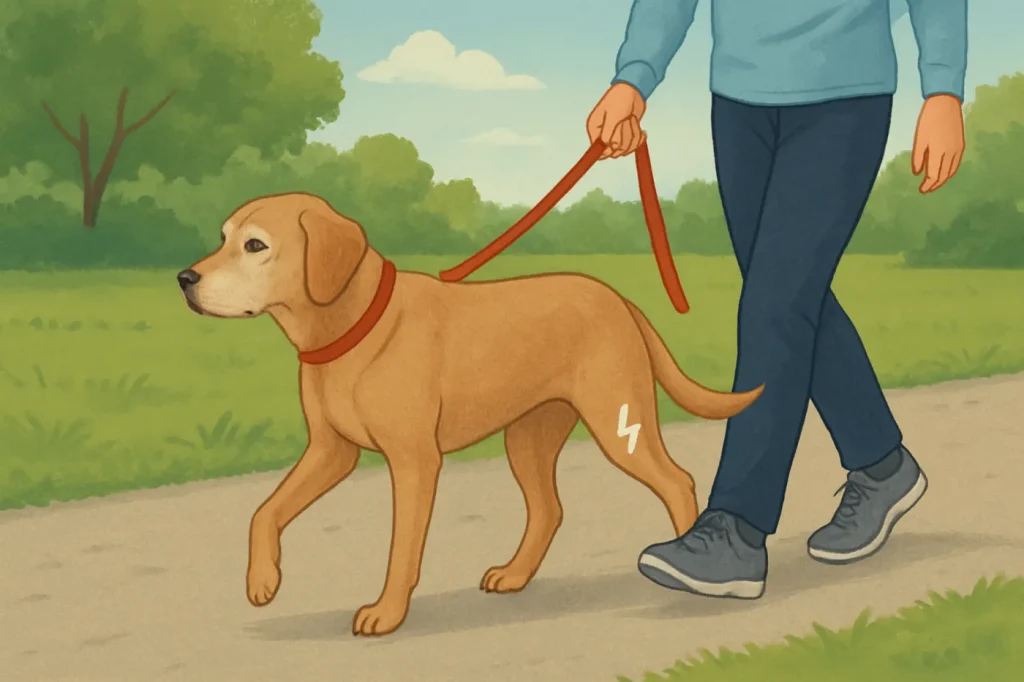
For most dogs with arthritis, the best exercise is frequent, gentle, low-impact movement that keeps joints flexible without triggering pain. In practice, that usually means short, slow walks on soft, non-slippery surfaces, plus controlled play and, when appropriate, swimming if your dog enjoys water and your veterinarian agrees.
There is no single perfect exercise that suits every arthritic dog. The goal is a custom routine that matches your dog’s age, weight, joint damage, fitness, and daily pain level. After the right kind of activity, your dog should be pleasantly tired but still moving comfortably later in the day and the next morning.
Why regular movement matters for dogs with arthritis
When a dog is stiff or limping, it is natural to want to protect them by letting them rest. With arthritis, though, too much rest can actually make things worse. Gentle, regular movement helps in several important ways:
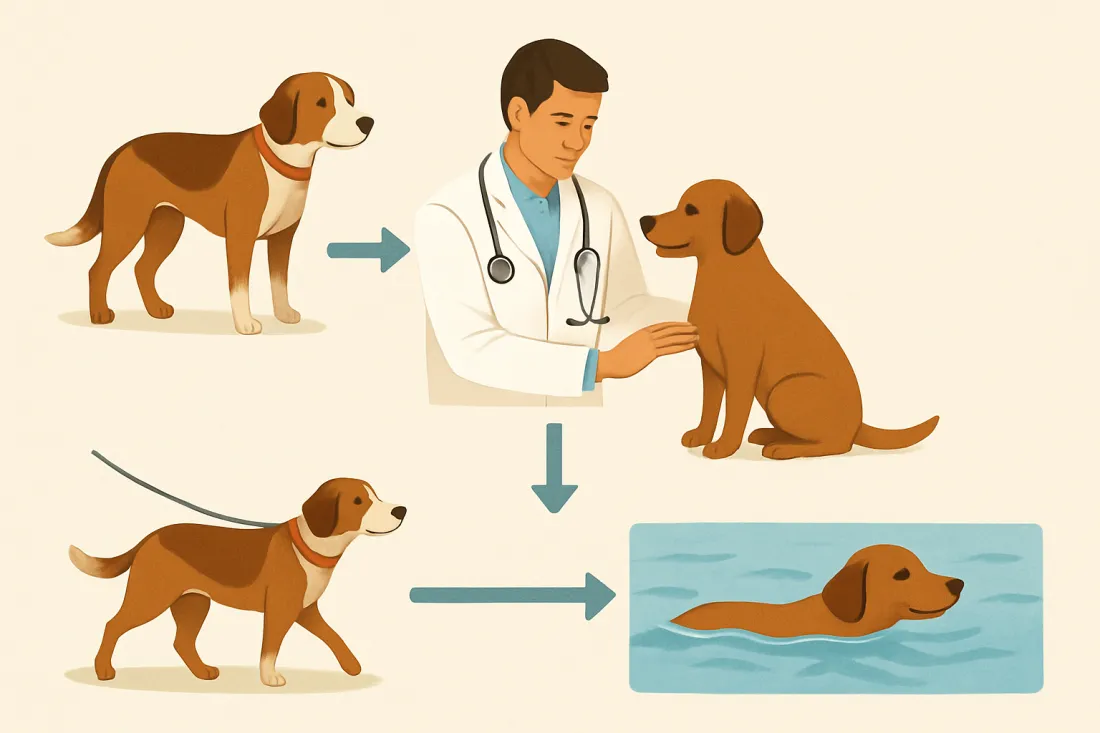
- Joint lubrication: Movement spreads joint fluid over cartilage, which can reduce friction and stiffness.
- Muscle support: Stronger muscles act like shock absorbers and help support painful joints.
- Weight management: Even modest activity helps prevent weight gain, which otherwise adds extra load to sore hips, knees, and elbows.
- Circulation and flexibility: Moving regularly keeps blood flowing to tissues and helps maintain range of motion.
- Mental health: Bored, under-exercised dogs may become anxious, vocal, or destructive. Gentle exercise provides mental stimulation as well as physical benefits.
At the same time, overdoing exercise can cause pain flares that last hours or days. The sweet spot is consistent, low-impact activity with careful monitoring. If you are also working on pain relief and home care, it may help to combine exercise with options from guides on arthritis treatment options for dogs at home.
Best low-impact exercise types for dogs with arthritis
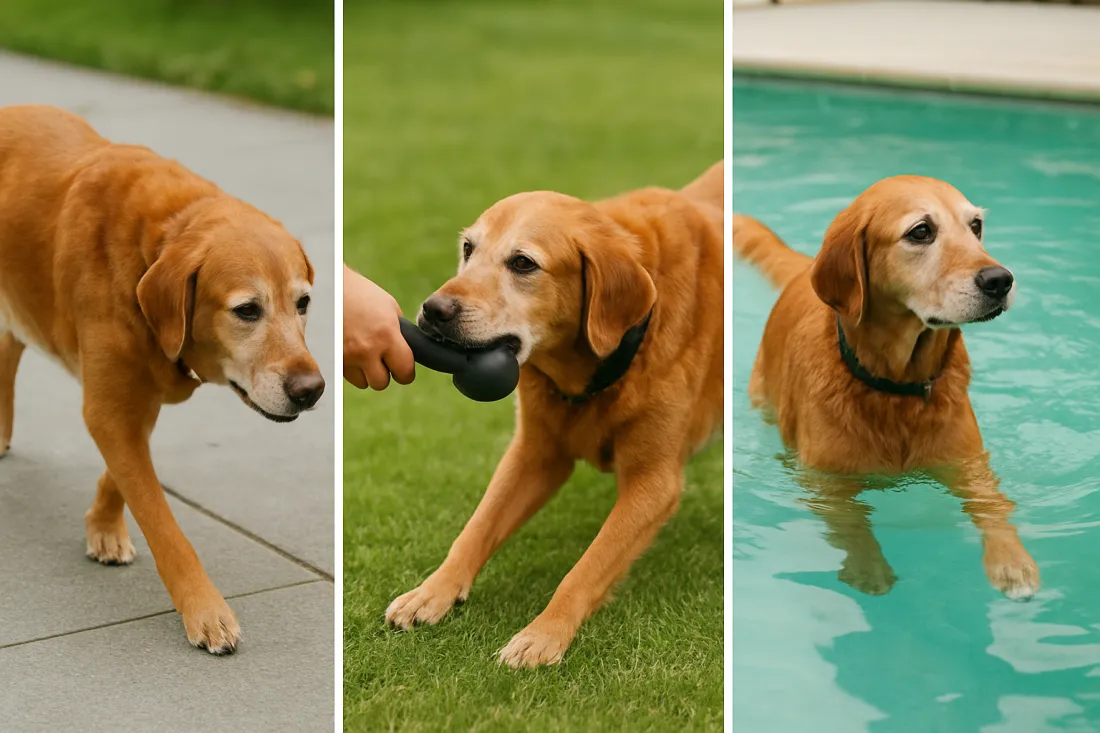
Most arthritic dogs do best with a mix of walking, controlled play, and (when suitable) water-based exercise. The right combination depends on your dog’s joints, confidence, and environment.
| Exercise type | When it fits best | How to do it safely | Main risks if overdone | When to limit or avoid |
|---|---|---|---|---|
| Leashed walks on soft ground | Most arthritic dogs that can walk independently | Use a harness, keep a slow steady pace, choose grass or dirt, start with short distances and build gradually | Increased limping, stiffness later in the day, reluctance to go on the next walk | During severe pain flares, on ice, deep snow, steep hills, or very hot pavement |
| Swimming in calm water | Dogs that enjoy water and can enter/exit safely; especially helpful for medium and large breeds | Use a dog life jacket, keep early sessions very short, avoid strong currents and very cold water, supervise closely | Over-fatigue, muscle soreness, slipping on wet surfaces, getting chilled or stressed | Dogs that panic in water, have trouble breathing, heart disease, open wounds, or ear problems unless your vet approves |
| Underwater treadmill (with rehab professional) | Dogs needing highly controlled rehab, post-surgery, or with marked weakness | Performed by a trained professional who adjusts water height and belt speed to your dog’s ability | Usually low when supervised; soreness if intensity increases too quickly | When you do not have access to a qualified facility or your vet advises against it |
| Gentle indoor games (treat searches, puzzle toys, slow tug) | Dogs that cannot walk far, bad-weather days, or apartment living | Use non-slip flooring or rugs, keep movements slow and controlled, limit excitement | Twisting, slipping, or jumping if the game becomes too intense | Skip rough tugging, fast chasing, or games that make your dog spin or leap |
| Controlled hill walking | Some dogs with mild arthritis who need strength building and tolerate slopes | Pick very gentle slopes, keep distances short, watch closely for fatigue or worsening limp | Overloading hips, knees, or elbows; increased lameness after walks | Moderate to severe arthritis in hips, knees, or spine unless your vet specifically recommends it |
| Simple balance and strength exercises | Dogs that tolerate handling and can stand with support | Practice weight shifts, stepping over low poles, or standing with front paws on a low step, always on non-slip surfaces | Loss of balance, falls, or joint strain if props are too high or surfaces are slippery | Dogs that are very painful to touch, cannot stand safely, or are extremely unsteady |
For many families, short leashed walks on soft ground become the foundation, with indoor games and, when appropriate, swimming added as extras.
How to adjust exercise duration and intensity safely
There is no universal “right” number of minutes for every arthritic dog. Instead, use a test-and-adjust process based on how your dog feels during and after activity.
Step-by-step process to find the right walk length
- Start very conservatively.
For a dog that has mostly been resting, begin with about 5–10 minutes of slow walking on flat, soft ground once or twice a day. If your dog is already fairly active, you may start slightly higher, but still keep it modest. - Use the “two-hour check.”
Look at your dog about two hours after the walk. If they are more lame, stiff, or reluctant to get up than usual, the walk was probably too long or too intense. - Change in small steps.
After several days at a comfortable length, increase by a small amount, such as 2–5 minutes per walk. If your dog seems worse, cut back by a similar amount or add an extra rest day. - Split big outings into smaller ones.
Many arthritic dogs do better with several short walks instead of one long one. For example, three 10-minute walks spread through the day are often easier than a single 30-minute outing. - Adjust pace and terrain as “intensity dials.”
Slow pace, flat ground, and soft surfaces = lower intensity.
Faster pace, hills, stairs, and hard pavement = higher intensity. Change only one factor at a time so you can see what your dog tolerates.
How to tell if the current exercise level is appropriate
- Your dog is a bit tired after activity but recovers within about an hour.
- No new or clearly increased limping later in the day or the next morning.
- Your dog is eager for the next walk and does not hide, hesitate, or need heavy coaxing.
- Over several weeks of consistent routine, stiffness gradually improves or at least does not worsen.
Weather, temperature, and surface choices for arthritic dogs
Arthritic joints are sensitive to temperature, humidity, and footing. Adjusting walks for weather can prevent slips and pain spikes.
Exercising an arthritic dog in heat and humidity
- Avoid the hottest hours. In many U.S. areas, that means walking in early morning and late evening during summer.
- Check pavement temperature. If you cannot comfortably hold your hand on the pavement for several seconds, it is too hot for your dog’s paws and may make them rush or limp.
- Shorten and slow down. Arthritic dogs often tire faster in heat. Keep sessions shorter, offer shade breaks, and bring water.
- Watch breathing and tongue color. Heavy, prolonged panting or bright red or very dark gums are warning signs to stop and cool down.
Exercising in cold, damp, or windy weather
- Use a coat for thin-coated or senior dogs. Keeping muscles warm can reduce stiffness and shivering.
- Warm up indoors first. A few minutes of gentle movement inside (slow pacing, easy sit-to-stand if tolerated) before going out can help.
- Choose several short outings. In cold or damp weather, multiple brief walks are usually better than one long one.
- Dry your dog after walks. Towel-dry wet fur and paws to avoid chilling, especially in older dogs.
Footing and surfaces that help or hurt
- Avoid slippery or unstable ground. Ice, wet tile, polished wood, loose gravel, and steep slopes increase the risk of falls and joint twists.
- Use rugs or runners indoors. Create non-slip paths to food, water, beds, and doors so your dog can move without sliding.
- Pick forgiving outdoor surfaces. Grass, dirt paths, or rubberized surfaces are usually kinder to arthritic joints than concrete or asphalt.
- Limit stairs and jumping. Use ramps or steps for cars and furniture when possible to reduce impact on hips and elbows.
Red-flag signs that mean you should stop exercise
Mild stiffness can be expected in arthritic dogs, but certain signs mean you should stop activity immediately and let your dog rest. Contact your veterinarian if these signs are strong, sudden, or keep returning.
- Sudden yelp, cry, or refusal to move during activity.
- Dragging a paw or knuckling over (walking on the top of the paw).
- New or severe limp that appears during or right after exercise.
- Collapse, wobbliness, or loss of balance.
- Heavy panting that does not settle after several minutes of rest, especially in cool weather.
- Refusal to put weight on a leg after activity.
- Whining, growling, or snapping when you touch a joint that was not this sensitive before.
If you see these signs, stop the exercise, keep your dog calm, and contact your veterinarian for guidance. You may need to adjust both the exercise plan and pain management. For a broader view of medical and home care options, you can also review treatment options and costs for dogs with arthritis to understand what support might be available.
Sample weekly activity plans by arthritis severity
Every dog is different, but these sample patterns show how you might structure a week. Always adapt to your dog’s age, fitness, and your vet’s advice. If your dog seems worse after several days on a plan, scale back.
Mild arthritis (occasional stiffness, still active)
- Daily walks: 2–3 walks of roughly 15–25 minutes at a relaxed pace on mostly soft, flat surfaces.
- Play: 1–2 short sessions of gentle fetch on grass or controlled tug (no jumping, spinning, or sudden stops).
- Strength work: About 3 days per week of simple exercises like slow sit-to-stand (if comfortable) or stepping over low poles.
- Rest days: No complete rest, but one or two lighter days with shorter walks and more calm indoor games.
Moderate arthritis (regular stiffness, visible limp after harder activity)
- Daily walks: 3–4 walks of roughly 10–15 minutes each, very steady pace, no running or rough terrain.
- Play: Gentle nose-work games (hide-and-seek with treats or toys), short controlled fetch with only a few throws.
- Water work (if available): 1–2 short swimming or underwater treadmill sessions per week under professional or veterinary guidance.
- Strength and balance: 2–3 days per week of very simple weight-shifting or front-paws-on-low-step exercises on non-slip surfaces.
- Rest days: At least one lighter day with only short walks and quiet indoor activities.
Severe arthritis (daily stiffness, difficulty rising, limited mobility)
- Daily walks: Several very short outings, such as 5–10 minutes, mainly for toileting and gentle movement.
- Indoor movement: Slow pacing around the house on non-slip paths a few times per day to prevent complete inactivity.
- Assisted exercises: Simple range-of-motion or supported standing exercises if your vet or rehab professional has shown you how.
- Water work: May be helpful if your dog enjoys it and can enter and exit safely with support; always check with your vet first.
- More frequent rest breaks: Provide soft, supportive bedding and help your dog change positions regularly.
These patterns are starting points, not strict rules. Some owners also explore arthritis treatment options for dogs at home to combine exercise with supportive care.
Structured checklist: pre- and post-walk mobility check
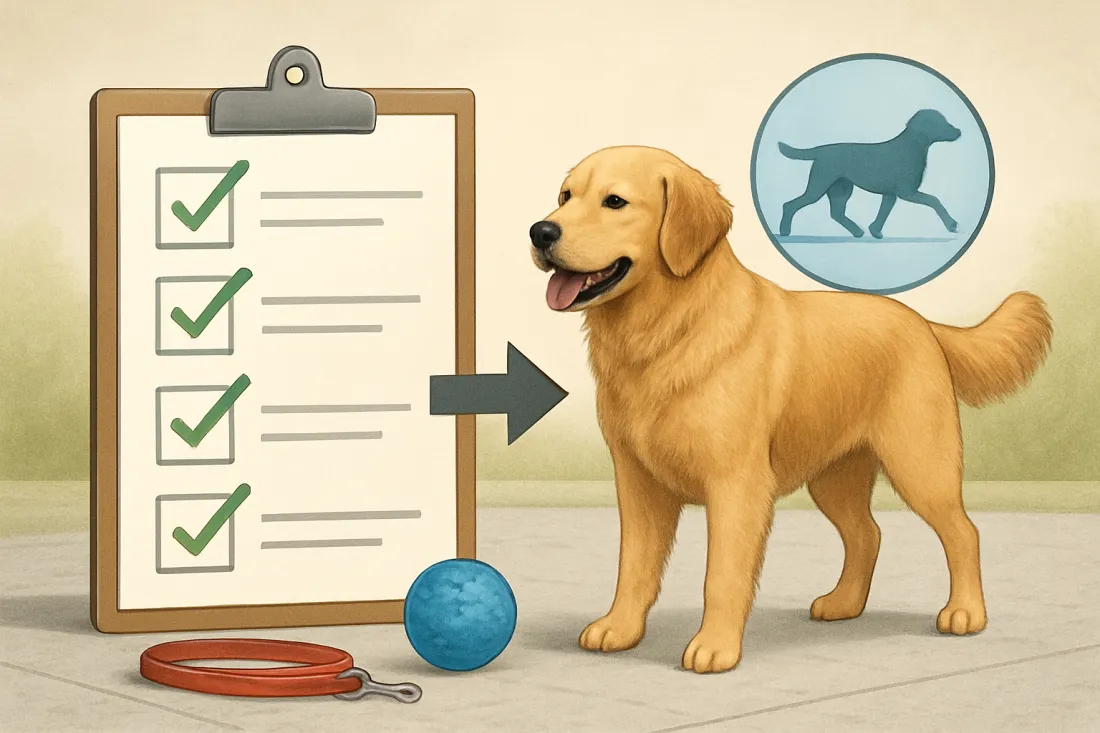
Use this practical checklist before and after each walk to decide whether to go, how far, and what to change next time.
Pre-walk mobility and safety check
- Getting up: Did your dog stand up from lying down without crying, collapsing, or needing heavy assistance?
- Baseline limp: Is there a limp at rest? If yes, is it mild and similar to usual, or clearly worse than normal?
- Joint appearance: Do any joints look obviously more swollen or feel much warmer than they usually do?
- Attitude and interest: When you pick up the leash, does your dog come over willingly, or do they hide, freeze, or look worried?
- Weather and footing: Is it very hot, icy, or slippery outside? Do you have a safe, mostly flat route planned?
Pre-walk decision guide
- Green light: Dog is eager, moving about as usual, and conditions are safe → proceed with the planned walk.
- Yellow light: Dog is a bit stiffer than usual but still willing → do a shorter, slower walk and recheck afterward.
- Red light: Dog is much more lame, cries when standing, or refuses to move → skip the walk, allow toilet breaks only, and contact your vet.
Post-walk comfort and recovery check
- Gait after rest: Within 30–60 minutes, is the limp the same, better, or worse than before the walk?
- Rising after lying down: After a short rest, can your dog get up without extra struggle or new signs of pain?
- Behavior and mood: Is your dog relaxed and content, or restless, panting, hiding, or unusually clingy?
- Joint sensitivity: Are previously sore joints more sensitive to gentle touch than before the walk?
- Attitude toward the next outing: At the next scheduled walk, does your dog come willingly or hesitate and avoid you?
Post-walk adjustment guide
- If your dog looks comfortable and moves about the same → you can keep the same routine or very gradually increase.
- If your dog is slightly stiffer but recovers within a few hours → try slightly shorter walks next time or add an extra rest break.
- If your dog is clearly worse, reluctant to move, or in visible pain → reduce duration significantly, consider a rest day, and talk with your vet about pain control and exercise changes.
Common mistakes when exercising a dog with arthritis
A few frequent errors can undo the benefits of good exercise. Watching for these patterns helps protect your dog’s joints.
- “Weekend warrior” routines: Doing very little all week and then taking your dog on a long hike or intense play session on days off. This stop-start pattern often leads to pain flares.
- Letting enthusiasm set the pace: Many dogs will push through pain to chase a ball or keep up with you. You need to be the one who limits duration and intensity.
- Allowing jumping and sharp turns: Repeated jumping in and out of cars, off furniture, or after toys, and fast twists during fetch can strain arthritic joints.
- Ignoring early fatigue signs: Slowing down, lagging behind, stopping to lie down, or turning back toward home are early warnings that your dog has had enough.
- Exercising only on “good days”: Inconsistent activity (big bursts followed by long rest) is harder on joints than steady, moderate movement most days.
- Skipping warm-up and cool-down: Going straight from deep sleep to fast activity can increase stiffness and risk of injury. A few minutes of gentle walking at the start and end of each session helps.
- Not coordinating exercise with pain control: If your dog takes arthritis medication or supplements, ask your vet how to time doses so that peak comfort lines up with activity.
Decision criteria for choosing the best exercise mix
Use these practical criteria to design a routine that fits your dog’s specific situation instead of copying another dog’s plan.
- Which joints are affected: Hip and knee arthritis often makes hills, stairs, and jumping into cars harder. Elbow and shoulder arthritis can make downhill walking and sharp turns more painful.
- Body weight and fitness level: Overweight or very unfit dogs usually need shorter, more frequent sessions and slower progress. Weight loss, if recommended by your vet, can greatly reduce joint strain.
- Age and other health issues: Heart, lung, or neurologic problems may limit intensity and call for extra caution, especially with heat or swimming.
- Temperament and drive: High-energy dogs may need more mental games and controlled tasks (like nose work or puzzle toys) so they do not overdo physical play.
- Home environment: Apartment vs. yard, stairs vs. ramps, and local climate all affect what is realistic and safe. For example, a dog in a hot, humid area may rely more on early-morning walks and indoor games.
- Access to professional support: If you can see a canine rehab professional, you may be able to add structured strengthening and water therapy safely.
When you are unsure, choose the gentler option, monitor closely, and increase only when your dog shows they can handle more without setbacks.
FAQ about the best exercise for dogs with arthritis
What is the most important thing to understand about exercise for a dog with arthritis?
The key idea is that regular, gentle movement is usually better than either complete rest or rare, intense exercise. Many owners worry that any activity will damage arthritic joints, but doing nothing leads to weaker muscles and stiffer joints. The goal is a level of low-impact exercise that your dog can repeat most days without extra pain. Use how your dog looks a few hours after activity as your main guide: if they are more lame or reluctant to move, the last session was too much.
What exercise mistakes should I avoid with my arthritic dog?
Try to avoid long, high-energy sessions after several quiet days, letting your dog run, jump, and twist for toys, and walking for long periods on slippery or very hard surfaces. Do not assume that enthusiasm means comfort; many dogs will chase a ball far beyond what their joints can handle. Instead, keep sessions short and controlled, stop while your dog still looks comfortable, and use your pre- and post-walk checklist to catch early signs of overdoing it.
What should I do next after learning about exercise options for my arthritic dog?
First, talk with your veterinarian about which joints are affected, your dog’s current pain level, and any medications or supplements they are taking. Then, create a simple one-week plan with short, low-impact walks and a couple of gentle indoor games. Use the structured pre- and post-walk mobility check to track how your dog responds. If they stay comfortable, you can slowly increase duration or add variety; if they struggle, scale back and ask your vet whether changes in pain control, weight management, or additional therapies would help.
Is swimming always the best exercise choice for dogs with arthritis?
Swimming is often helpful because water supports body weight and reduces joint impact, but it is not automatically the best option for every dog. Some dogs dislike water, become anxious, or have trouble getting in and out safely. Others have heart, lung, or ear problems that make swimming risky. If your dog enjoys water and your vet approves, short, supervised swims with a life jacket can be a great addition, but gentle walks on safe surfaces usually remain the foundation of an arthritis-friendly routine.
Can a dog with arthritis still play fetch or visit the dog park safely?
Many arthritic dogs can still enjoy fetch or social time, but these activities need strict limits. Fast sprints, sudden stops, and collisions with other dogs can strain painful joints. If you play fetch, keep throws short, use soft footing like grass, and stop after just a few throws while your dog still looks comfortable. Busy dog parks with lots of running and rough play may be too intense; quieter visits, leashed walks around the perimeter, or playdates with calm dogs are usually safer choices.