
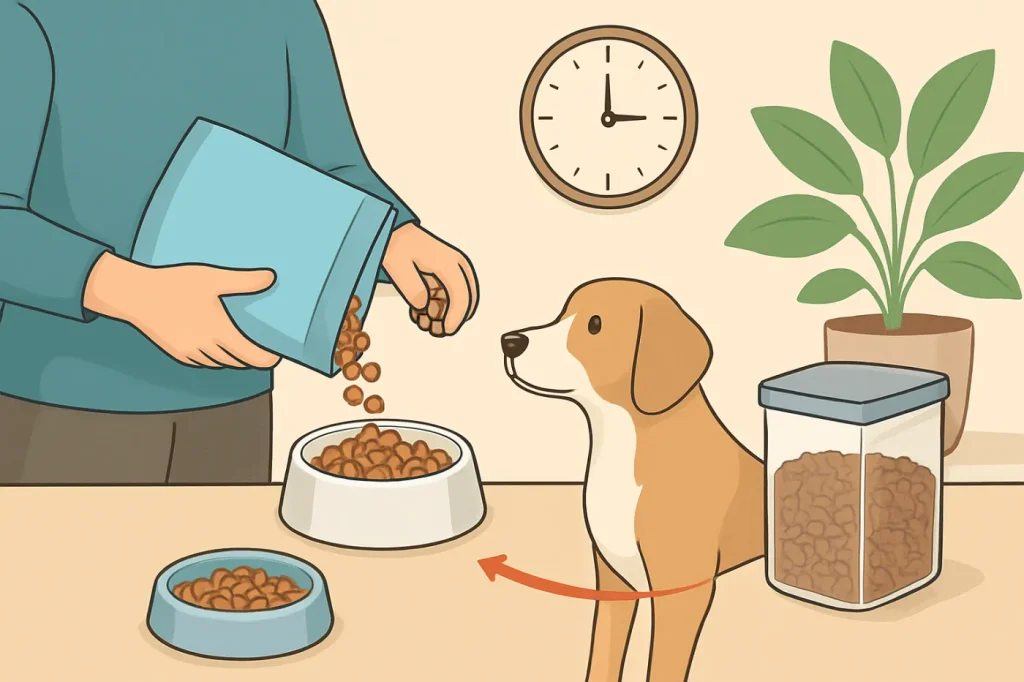
A responsible pet feeding schedule means three things working together every day: the right food, the right amount, and the right timing – all handled safely. For most healthy dogs and cats in the United States, that looks like:
- Measured portions based on weight, body condition, and activity – not guessing from the bag.
- Regular meal times (usually 2–3 meals a day) instead of constant free-feeding.
- Fresh, safely stored food and clean bowls at every meal.
Once you set up a simple routine and stick to it, feeding becomes one of the easiest ways to protect your pet’s health at home.
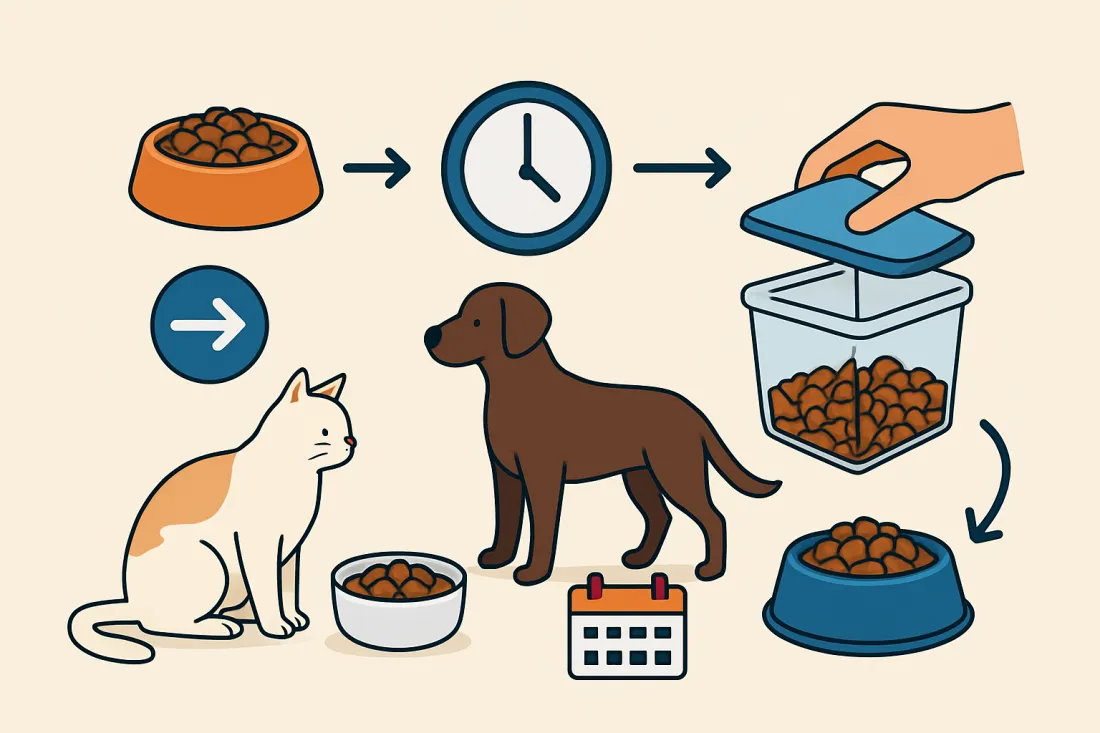
Daily feeding schedule vs free-feeding: which is more responsible
Pet owners often choose between two main approaches:
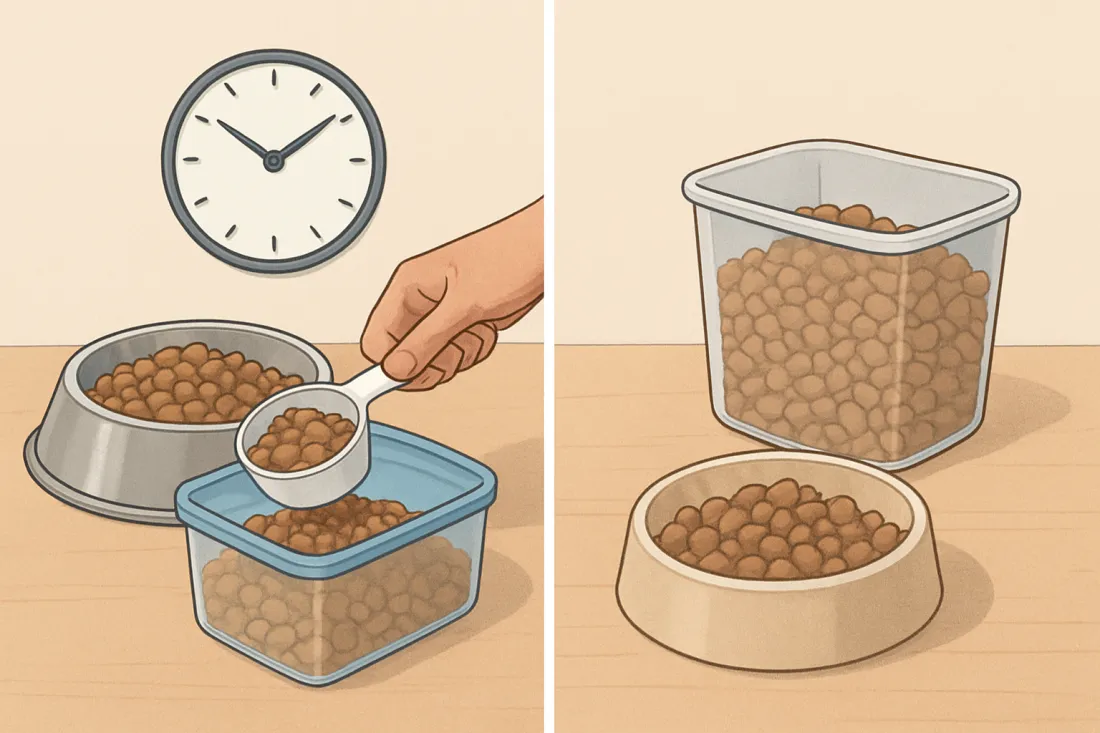
- Scheduled meals: You offer measured food at set times, then pick up leftovers.
- Free-feeding: You leave dry food out all day and refill when the bowl looks low.
Both can keep a pet alive, but they are not equally responsible in terms of weight control, behavior, and health monitoring.
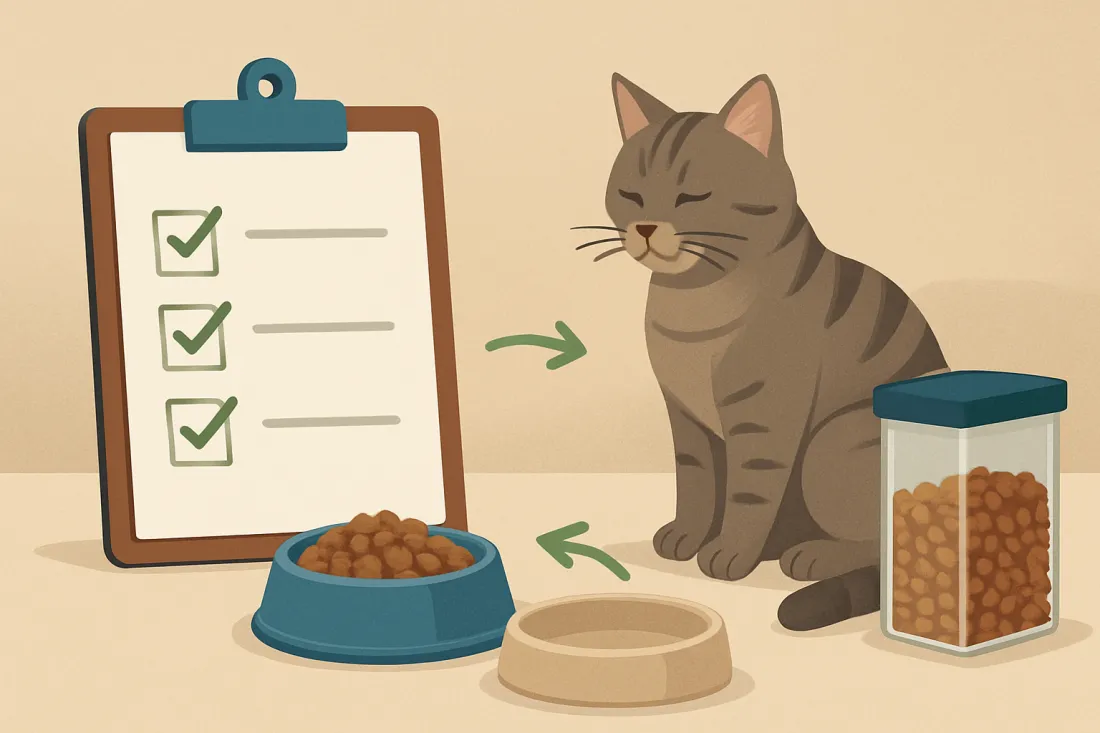
| Feeding approach | When it can work | Main benefits | Main risks | More responsible choice for most homes |
|---|---|---|---|---|
| Scheduled meals (2–3 times/day) | Dogs and cats of any age who can eat a meal in one sitting | Controls calories, easier weight management, clear routine, you notice appetite changes quickly | Requires you to be home or arrange a feeder; some pets beg between meals at first | Yes – usually the best option, especially for puppies, kittens, and indoor pets |
| Free-feeding dry food | Some very self-regulated cats, or multi-pet homes where everyone is lean and healthy | Convenient, less pressure on exact timing, food always available | Easy to overeat, hard to track who ate what, slower to notice illness, encourages boredom snacking | Use with caution and only if weight and health are closely watched |
For responsible pet ownership, a scheduled feeding routine is usually the safer default. You can always adjust the exact times to fit your workday, but keeping meals predictable helps your pet’s digestion, behavior, and long-term weight.
Basics of dog and cat nutrition for a responsible schedule
A schedule only works if what is in the bowl matches your pet’s needs. Dogs and cats share some basics but also have important differences.
Core nutrition needs dogs and cats share
- Complete and balanced diet: Look for commercial foods labeled as complete and balanced for your pet’s life stage (puppy/kitten, adult, senior). This means the food is formulated to provide all essential nutrients when fed as directed.
- Life stage-appropriate: Growing puppies and kittens need more calories and certain nutrients per pound than adults. Seniors often need fewer calories but good-quality protein.
- Fresh water: Clean water should be available at all times, especially if you feed mostly dry food.
- Consistent formula: Sudden food changes can upset the stomach. Transition gradually over several days when you switch brands or recipes.
Key differences between dogs and cats
- Cats are obligate carnivores: They rely heavily on animal-based protein and specific nutrients that come from animal tissues. They are not small dogs and should not be fed dog food.
- Dogs are more flexible omnivores: They can handle a wider variety of ingredients, but still need a diet designed for dogs.
- Thirst drive: Many cats have a low thirst drive and may benefit from wet food as part of their routine to support hydration.
- Snack sensitivity: Small dogs and cats can exceed their daily calorie needs quickly with treats and table scraps. Their schedule must include limits on extras.
If you are setting up a full home routine for a new dog, a responsible pet ownership checklist for new dog owners can help you line up feeding with training, exercise, and house rules.
How to read US pet food labels for schedule planning
Pet food labels in the United States give you the starting point for a responsible feeding schedule. They are not perfect, but they tell you how the food is intended to be used.
Label sections that matter for your daily routine
- Life stage statement: Look for wording that indicates the food is complete and balanced for a specific life stage such as growth (puppy/kitten), adult maintenance, or all life stages. Match this to your pet’s age.
- Species: Confirm it clearly states dog or cat food. Never substitute one for the other.
- Feeding guidelines: Usually a chart by weight and sometimes activity level. Use this as a starting estimate, not a final rule.
- Calorie content (kcal per cup, can, or kilogram): This helps you compare foods and adjust portions if you switch brands or formulas.
- Storage directions: Many bags and cans include basic storage advice such as keeping food in a cool, dry place and using opened cans within a certain number of days once refrigerated.
Using the feeding chart responsibly
- Find your pet’s current weight on the chart.
- Check if the chart assumes a certain activity level (for example, “average adult”).
- Note the total daily amount recommended.
- Divide that daily amount by the number of meals you plan to feed (for example, 2 or 3).
- Measure each meal with a proper measuring cup, not a random mug or scoop.
Then watch your pet’s body condition over several weeks and adjust up or down with your veterinarian’s guidance. The chart is a starting point, not a guarantee.
Portion control by weight and activity level
Responsible feeding means feeding for the body your pet should have, not just the one they have today. Two dogs of the same weight can need very different amounts of food depending on activity, age, and health.
Simple decision criteria for adjusting portions
- Body condition: You should be able to feel ribs easily under a thin layer of fat, see a visible waist from above, and a slight tummy tuck from the side. If ribs are hard to find, portions may be too large.
- Activity level: A couch-loving indoor cat or a dog with short walks will usually need less food than the label suggests. A very active dog or playful young cat may need more.
- Life stage:
- Puppies and kittens: higher calories per pound, more frequent meals.
- Adults: stable portions, usually 2 meals per day.
- Seniors: often fewer calories but similar or slightly higher protein, depending on health.
- Health conditions: Some conditions (for example, certain metabolic or digestive issues) require specific diets and strict portion control. Always follow your vet’s plan.
When in doubt, ask your veterinarian to help you set a target weight and daily calorie range. You can then match that to the calorie information on your chosen food to calculate a daily portion.
Sample feeding schedules for puppies, adult dogs, and senior dogs
Every dog is different, but these sample schedules show how to structure a responsible day. Always adapt timing to your household routine and your vet’s advice.
Puppy feeding schedule (example for a healthy, growing puppy)
- 6:30–7:00 a.m. – Breakfast: 1/3 of the daily portion of puppy food. Offer water, then a potty break and short play.
- 12:00–1:00 p.m. – Lunch: 1/3 of the daily portion. Another potty break and calm activity.
- 5:30–6:30 p.m. – Dinner: Final 1/3 of the daily portion. Last big potty break and gentle play.
Most puppies do best with 3–4 meals a day until they are several months old. Avoid feeding right before intense play or car rides to reduce stomach upset.
Adult dog feeding schedule (example for a healthy, moderately active dog)
- 7:00–8:00 a.m. – Morning meal: Half of the daily portion. Short walk before or after.
- 5:30–7:00 p.m. – Evening meal: Remaining half of the daily portion. Walk and calm time afterward.
Some very active or large-breed dogs may do better with 3 smaller meals to support digestion and energy levels. Keep meal times consistent from day to day.
Senior dog feeding schedule (example for an older dog)
- 7:00–8:00 a.m. – Morning meal: About half of the daily portion of a senior-appropriate diet, adjusted for any health issues.
- 12:00–1:00 p.m. – Optional small mid-day meal: For dogs who do better with smaller, more frequent meals.
- 5:00–6:00 p.m. – Evening meal: Remaining portion, leaving enough time for bathroom breaks before bedtime.
Senior dogs may need more frequent but smaller meals if they have digestive issues, are on certain medications, or feel nauseated when their stomach is empty. Your vet can help you fine-tune this.
Sample feeding schedules for kittens, adult cats, and senior cats
Cats often prefer smaller, more frequent meals. A responsible schedule balances their natural grazing tendency with portion control.
Kitten feeding schedule (example for a growing kitten)
- 7:00 a.m. – Breakfast: 1/4 of the daily portion of kitten food (wet, dry, or a mix).
- 12:00 p.m. – Midday meal: 1/4 of the daily portion.
- 5:00 p.m. – Evening meal: 1/4 of the daily portion.
- 9:00–10:00 p.m. – Late snack: Final 1/4 of the daily portion to carry them through the night.
Very young kittens may need even more frequent feedings. Follow your veterinarian’s guidance closely during the first months.
Adult cat feeding schedule (example for an indoor adult cat)
- 7:00–8:00 a.m. – Morning meal: Half of the daily portion. Many owners offer a mix of wet and dry.
- 6:00–8:00 p.m. – Evening meal: Remaining half of the daily portion.
If your cat tends to beg or eat too fast, you can split the same daily amount into 3–4 smaller meals using timed feeders or puzzle feeders.
Senior cat feeding schedule (example for an older cat)
- 7:00 a.m. – Morning meal: About one-third to one-half of the daily portion of a senior-appropriate diet.
- 12:00–1:00 p.m. – Midday meal: Small portion, especially helpful if the cat has lost weight or has trouble eating large meals.
- 6:00–7:00 p.m. – Evening meal: Remaining portion.
Senior cats are more prone to weight loss and dental issues. A predictable schedule helps you notice changes in appetite quickly so you can talk to your vet.
Safe food storage and hygiene at home
Even the best schedule can fail if food is spoiled, contaminated, or handled carelessly. Safe storage and hygiene are part of responsible feeding.
Dry food (kibble) storage
- Keep dry food in its original bag, which is designed to protect freshness, and place the bag inside a clean, airtight container.
- Store in a cool, dry place away from direct sunlight and moisture.
- Close the bag tightly after each use to limit air exposure.
- Do not mix new food into the bottom of an old bag; finish or discard the old food first so you can track freshness and any recalls.
Wet food (canned, pouched) storage
- Refrigerate any opened cans or pouches promptly, covered, and use within the timeframe suggested on the packaging.
- Do not leave wet food out for long periods; discard uneaten wet food after a reasonable time at room temperature to reduce the risk of spoilage.
- Warm refrigerated leftovers slightly to room temperature before serving if your pet dislikes cold food, but do not leave it sitting out for hours.
Raw and home-prepared foods
- Handle raw meat with the same care you would for your own food: separate cutting boards, handwashing, and cleaning surfaces.
- Follow your veterinarian’s guidance on safe preparation and storage if you use home-prepared or raw diets.
- Be especially careful in homes with young children, older adults, or anyone with a weakened immune system.
Bowl and feeding area hygiene
- Wash food and water bowls regularly with hot, soapy water and rinse thoroughly.
- Wipe up spills and crumbs to avoid attracting pests.
- Check water bowls several times a day and refill with fresh water as needed.
Human foods: safe vs dangerous for dogs and cats
Sharing food feels kind, but many human foods are risky for pets. Responsible feeding means knowing when to say no.
Examples of human foods that are often considered safer in small amounts
Always introduce new foods slowly and in tiny portions, and confirm with your veterinarian if your pet has any health conditions.
- Plain cooked lean meats with no seasoning (for example, small pieces of baked chicken without skin or bones).
- Plain cooked vegetables like green beans or carrots, offered as low-calorie treats.
- Small amounts of certain plain fruits for dogs (for example, a slice of apple without seeds) if they tolerate them.
Examples of human foods commonly considered dangerous
This is not a complete list. When in doubt, do not offer the food and ask your vet.
- Chocolate and products containing cocoa.
- Grapes and raisins.
- Onions, garlic, and related ingredients in concentrated forms.
- Alcohol and foods cooked with alcohol.
- Xylitol and some other sugar substitutes found in sugar-free gum, candies, and some baked goods.
- Cooked bones, which can splinter.
Table scraps also add unmeasured calories, salt, and fat. Even if a food is not toxic, frequent sharing can quickly unbalance a carefully planned feeding schedule.
Structured checklist: daily responsible feeding routine
Use this checklist to build a consistent, responsible feeding schedule for your dog or cat.
- Before the day starts
- Confirm you have enough pet food on hand for at least the next few days.
- Check that food is stored properly (bag sealed, containers closed, no signs of pests or moisture).
- Review any medications or supplements that must be given with meals.
- At each meal time
- Measure the correct portion using a standard measuring cup or scale.
- Confirm you are using the right food for your pet’s species and life stage.
- Serve food in a clean bowl in a calm, safe area away from household hazards.
- Allow a set amount of time for eating, then pick up uneaten food (especially wet food).
- Refresh water if the bowl is low or dirty.
- During the day
- Limit treats to a small part of your pet’s daily calories; avoid constant snacking.
- Do not leave human food unattended where your pet can reach it.
- Observe your pet’s appetite, energy, and bathroom habits.
- End of the day
- Rinse or wash food and water bowls.
- Make a mental note of how much your pet ate compared to normal.
- Check your pet’s body condition regularly and note any gradual changes in weight or shape.
Common mistakes that undermine a responsible feeding schedule
Even well-meaning owners can accidentally disrupt a good routine. Watching for these mistakes helps you stay on track.
- Guessing portions: Pouring food “until the bowl looks right” often leads to overfeeding. Always measure.
- Changing foods abruptly: Sudden switches can cause vomiting or diarrhea. Transition gradually over several days.
- Using treats instead of meals: Treats should not replace balanced food. Too many snacks can crowd out essential nutrients.
- Ignoring body condition: Relying only on the scale can be misleading. A heavy but muscular dog and a heavy but overweight dog may weigh the same but need different feeding plans.
- Feeding for convenience only: Leaving food out all day because it fits your schedule may not fit your pet’s health needs.
- Not adjusting with age: Puppies, kittens, and seniors have different needs than adults. Sticking with the same routine for years can cause problems over time.
- Letting kids overfeed: Children may offer extra treats or share snacks. Supervise and use clear teaching kids responsible pet ownership rules.
When to call the vet about changes in eating
A stable feeding schedule makes it easier to spot early signs of trouble. Contact your veterinarian promptly if you notice:
- Sudden loss of appetite: Refusing food for more than a short period, especially if your pet usually eats eagerly.
- Sudden increase in appetite: Constant hunger or begging that is new, especially if combined with weight loss or gain.
- Vomiting or diarrhea: Especially if it happens repeatedly, contains blood, or your pet seems weak or in pain.
- Choking, gagging, or difficulty swallowing: This may indicate a blockage or dental problem.
- Rapid weight change: Noticeable weight loss or gain over a short time, even if appetite seems normal.
- Changes in drinking: Drinking much more or much less than usual can signal health issues.
If your pet has a chronic condition or is on a special diet, follow your veterinarian’s specific instructions about when to seek help. A consistent schedule and a simple log of what and when your pet eats can be very helpful during vet visits. For broader health planning, a pet preventive care schedule USA can help you align feeding with checkups and vaccinations.
Decision checklist: choosing the right feeding pattern for your home
Use these questions to decide how many meals, what type of food, and how strict your schedule should be.
- How old is your pet?
- Puppy/kitten: Plan for 3–4 meals per day.
- Adult: Usually 2 meals per day.
- Senior: 2–3 smaller meals may be more comfortable.
- What is your pet’s current body condition?
- Too thin: Ask your vet about increasing calories or checking for underlying issues.
- Ideal: Maintain current portions and schedule.
- Overweight: Consider more structured meal times and fewer treats.
- What is your daily routine?
- Home most of the day: You can offer more frequent, smaller meals.
- Away for long hours: Use timed feeders or adjust to two well-spaced meals.
- Do you have multiple pets?
- Yes: Scheduled, supervised meals help ensure each pet gets the right amount.
- No: You still benefit from scheduled meals for weight control and monitoring.
- Does your pet have special medical needs?
- Yes: Follow your vet’s specific diet and timing instructions.
- No: Use label guidelines as a starting point and adjust based on body condition.
FAQ about responsible pet feeding schedules
What is the most important thing to understand about a responsible pet feeding schedule?
The key idea is consistency with flexibility. Your pet should receive the right amount of complete and balanced food at predictable times every day, with clean water and safe storage. Within that framework, you can adjust meal times and portions as your pet’s age, activity level, and health change, ideally with your veterinarian’s guidance.
What common mistakes should I avoid when setting up a feeding schedule for my dog or cat?
Avoid guessing portions, changing foods abruptly, relying on treats or table scraps instead of balanced meals, and ignoring gradual changes in body condition. Free-feeding without tracking intake can also lead to weight gain and makes it harder to notice early signs of illness. Measuring food, keeping a simple routine, and watching your pet’s shape over time help prevent these problems.
How strict do I need to be with feeding times for my pet?
Feeding times do not have to be exact to the minute, but they should be reasonably consistent from day to day. Aim for regular morning and evening meals at roughly the same times, with additional meals for puppies, kittens, or pets with special needs. If your schedule changes occasionally, adjust meal times gradually rather than skipping or doubling up on portions.
What should I do after setting up a new feeding schedule for my pet?
Once you choose a schedule, follow it consistently for several weeks while you monitor your pet’s appetite, energy, stool quality, and body condition. Keep notes about how much you feed and any changes you see. Share this information with your veterinarian at your next visit so you can fine-tune portions or timing together. If you live with family members or roommates, agree on clear house rules about who feeds the pet and how often, similar to the structure suggested in house rules every responsible dog owner should have, so no one accidentally double-feeds or over-treats your pet.
How can I tell if my pet’s portion size is right over time?
Use both the scale and your hands. Weigh your pet regularly and feel for ribs under a thin layer of fat, a visible waist from above, and a slight tummy tuck from the side. If your pet is gradually gaining or losing weight without a planned reason, adjust the daily portion slightly and check in with your veterinarian. Any sudden or unexplained change in weight or appetite deserves a prompt professional review.
Conclusion: turning feeding into a reliable daily habit
A responsible pet feeding schedule is less about perfection and more about steady, thoughtful habits. Choose a complete and balanced food for your pet’s life stage, measure portions based on weight and activity, and serve meals at regular times with clean bowls and safe storage. Watch your pet’s body condition and behavior, adjust as needed, and involve your veterinarian whenever you see changes in appetite or weight. With a simple routine and a bit of attention, feeding becomes one of the most powerful tools you have to support your pet’s health and happiness at home.