Daily litter box maintenance that actually keeps your home fresh
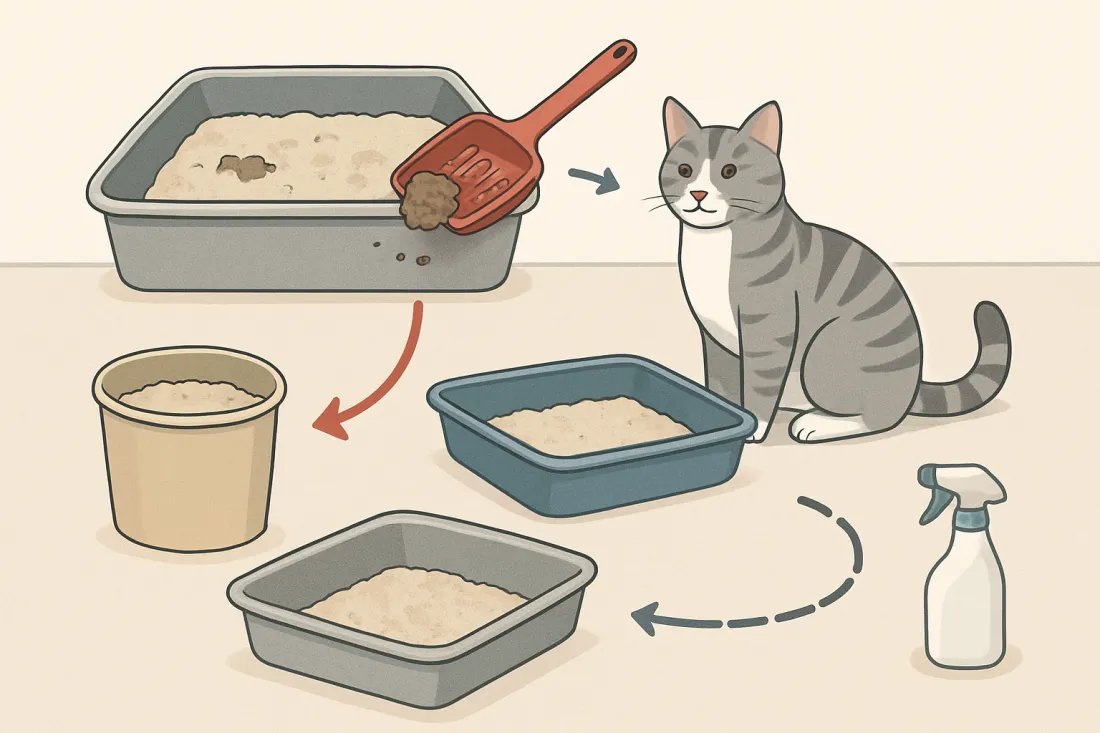
Daily litter box maintenance comes down to three non‑negotiables: scoop all solid waste and clumps at least once a day, top up clean litter as needed, and do a quick visual and smell check so problems do not build up. If you also keep the box in a well‑ventilated, easy‑to‑reach spot and fully wash it on a regular schedule, you can keep your home clean and odor‑controlled without harsh chemicals. This guide walks through how many boxes you really need, where to put them in a typical U.S. home or apartment, what to clean daily vs. weekly vs. monthly, how to choose litter and disposal options, and how to handle indoor potty setups for small dogs.
How many litter boxes you really need in a multi‑pet home
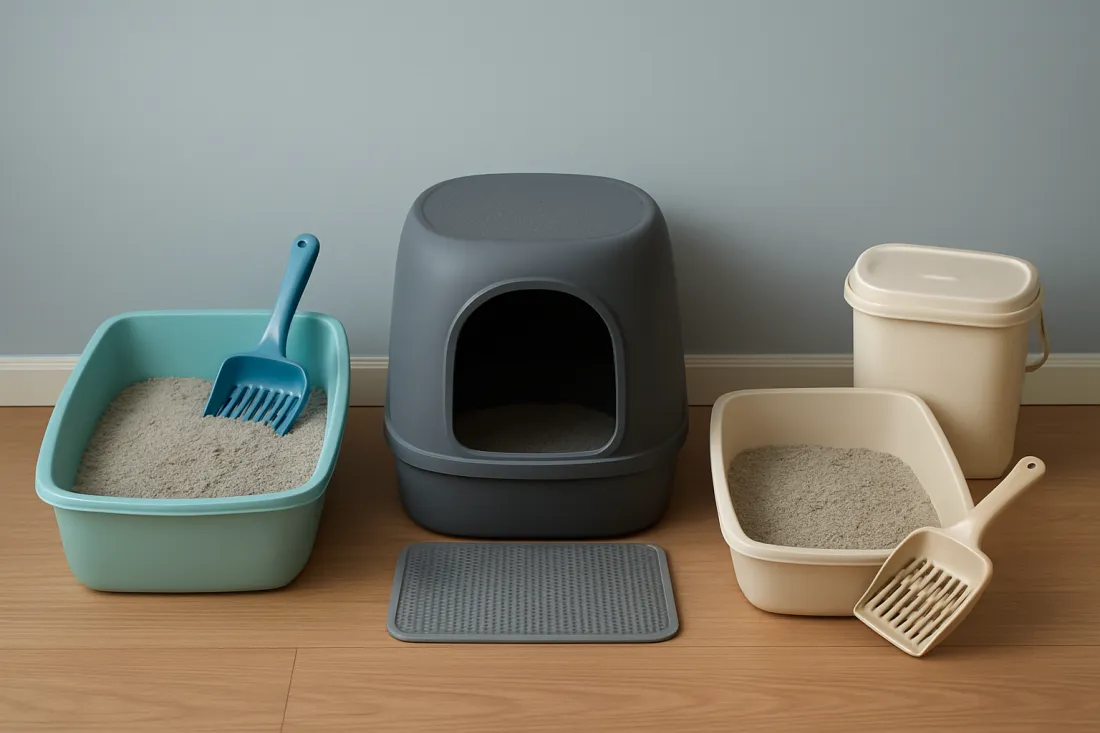
A simple rule of thumb works for most cats: aim for one litter box per cat, plus one extra. For example:
- 1 cat → 2 boxes
- 2 cats → 3 boxes
- 3 cats → 4 boxes
This rule helps because:
- Territory and privacy: Some cats refuse to share, especially in multi‑cat homes.
- Cleanliness: If one box is temporarily dirty, there is still a clean option.
- Stress reduction: Extra boxes reduce competition and bullying around the box.
However, you can adjust based on your situation:
- Small apartment, one cat: You may manage with one box if you scoop more than once daily and the cat shows no signs of stress or accidents. If you notice smells or occasional misses, add a second box.
- Senior or arthritic cats: More boxes in different rooms can prevent accidents because the cat does not have to walk far.
- Large homes with stairs: Try to have at least one box on each level your cat uses regularly.
- Temporary setups: During illness, travel, or litter changes, adding an extra box can make transitions smoother.
If your cat is suddenly avoiding the box even though you have enough, review cleanliness, box style (covered vs. open), and any recent changes. Persistent avoidance or straining is a medical red flag and needs a vet visit.
Best litter box locations in U.S. homes and apartments
Where you put the box matters almost as much as how often you clean it. Cats want privacy, safety, and easy access. You want ventilation and minimal mess in high‑traffic areas. Good litter box locations in typical U.S. homes
- Guest bathroom corner: Easy to clean, tiled floors, and usually has a fan or window.
- Laundry room (away from machines): Works if the washer/dryer is not too loud or vibrating when the cat uses the box.
- Quiet hallway nook: Especially near bedrooms where the cat spends time.
- Spare bedroom or office: A low‑traffic corner with a mat under the box can work well.
Good locations in apartments
- Bathroom near the toilet: Convenient for scooping and flushing if your litter is flush‑safe and your plumbing can handle it (always check packaging and local plumbing guidance first).
- Entryway closet with door ajar or cut‑out: Provides privacy while keeping litter tracked in a contained area.
- Balcony or patio (enclosed and climate‑safe): Only if fully secure, weather‑appropriate, and the cat can access it freely.
Places to avoid
- Next to loud appliances: Dishwashers, furnaces, or noisy HVAC units can scare cats away.
- Right by food and water bowls: Most cats dislike eating next to their toilet area.
- High‑traffic hallways: Constant foot traffic can make cats feel exposed.
- Hard‑to‑reach corners or behind heavy furniture: If it is annoying for you to reach, you will clean it less often.
- Basements with steep stairs: Older or small cats may avoid long stair trips, especially at night.
Ventilation and flooring tips
- Choose a spot with some airflow (bathroom fan, window, or open doorway) to help with odor.
- Place a washable mat under and in front of the box to catch tracked litter.
- If you must use carpeted areas, use a waterproof tray or large mat under the box to protect the floor from accidents.
Daily, weekly, and monthly litter box cleaning tasks
A clear routine keeps smells down and makes it easier to notice changes in your pet’s health.
Daily litter box tasks
Aim to do these at least once per day; twice daily is even better for multi‑cat homes.
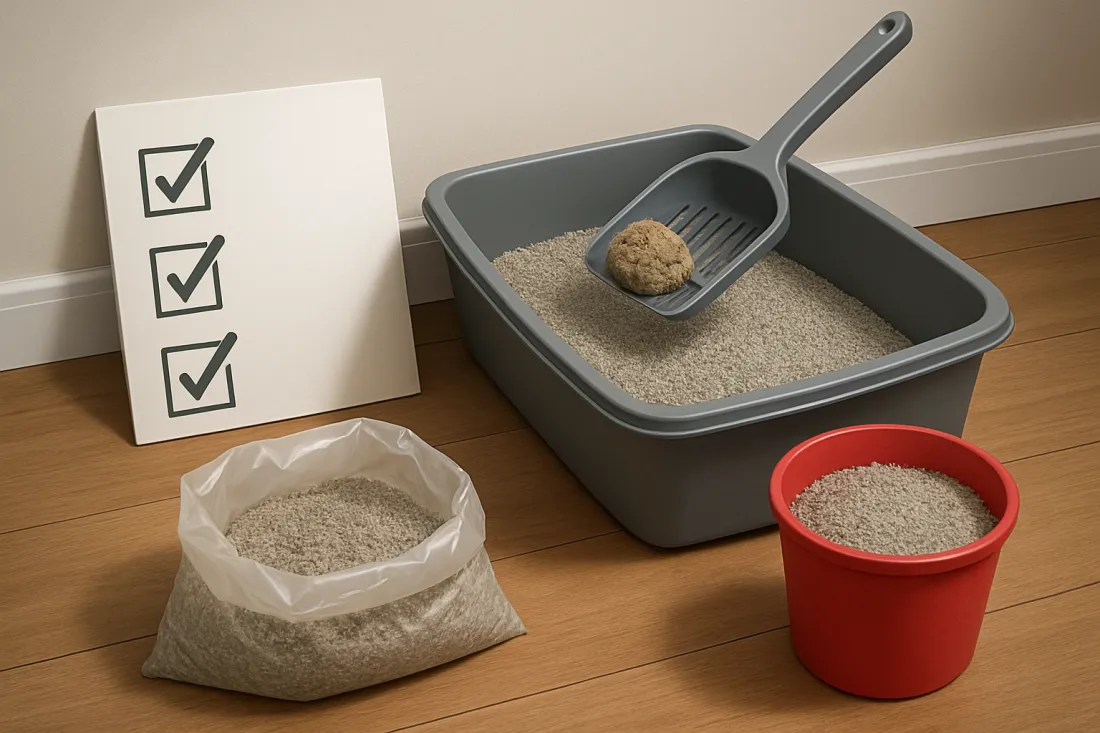
- Scoop all solid waste and clumps: Use a sturdy scoop and remove every clump you can see.
- Top up clean litter: Maintain a consistent depth (often around a couple of inches; check your litter’s packaging for guidance). Too little litter leads to sticking and scraping; too much can cause more tracking.
- Quick smell and visual check: If the box smells strong right after scooping, it may be time for a full change or a different litter type.
- Wipe nearby surfaces if needed: Sweep or vacuum scattered litter and wipe any splashes or smears on walls or floors.
Weekly litter box tasks
Depending on how many cats use each box and the type of litter, you may need to do these weekly or every couple of weeks.
- Partial litter refresh: Remove a portion of the old litter and replace with fresh to keep the overall box clean.
- Clean the scoop and mat: Rinse the scoop with warm water and mild, pet‑safe soap. Shake out or vacuum the litter mat.
- Check for wear and tear: Look for cracks in plastic boxes, broken lids, or sharp edges that could hurt paws.
Monthly (or regular) deep cleaning tasks
At least once a month, or more often if the box smells or stains quickly:
- Empty all litter from the box: Dispose of it according to your chosen method (trash, compost where allowed, or flush‑safe where appropriate).
- Wash the box: Use warm water and a mild, unscented soap or pet‑safe cleaner. Avoid strong bleach or ammonia‑based products unless you can rinse thoroughly and let the box air out completely.
- Scrub corners and seams: Use a dedicated sponge or brush for litter boxes only.
- Dry completely: Let the box air dry or towel dry before adding fresh litter to prevent clumping issues.
- Replace liners if you use them: Old liners can tear and trap odors.
If plastic boxes are deeply scratched or permanently smelly even after washing, consider replacing them. Scratches can trap odor and bacteria.
Choosing litter types and disposal options
The “best” litter depends on your cat, your home, and how you prefer to dispose of waste. Below is a comparison to help you decide.
| Litter type | When it fits best | Pros | Drawbacks | Typical disposal options to check |
|---|---|---|---|---|
| Clumping clay | Most indoor cats; owners who scoop daily and want easy clump removal | Easy to scoop; widely available; many odor‑control formulas | Can be dusty; heavier bags; some cats dislike scented versions | Usually bagged and put in household trash; verify local rules before flushing |
| Non‑clumping clay | Owners who prefer full litter changes more often | Often cheaper; simple texture | Holds urine; can smell faster; requires frequent full changes | Bag and place in trash; avoid flushing |
| Plant‑based (corn, wheat, walnut, etc.) | Households wanting more natural materials or lighter weight | Lighter; often lower dust; some are compostable where allowed | Some cats dislike texture; may attract insects if stored poorly | Some can be composted in dedicated pet‑waste systems; otherwise trash; check packaging for flush guidance |
| Paper pellets | Cats with respiratory issues or post‑surgery; declawed cats needing soft texture | Low dust; soft on paws; absorbs well | Does not clump; can be harder to scoop; may need frequent full changes | Usually trash; some areas allow composting in special systems |
| Crystal/silica | Owners wanting low tracking and longer‑lasting odor control | Good odor control; low dust; low tracking | Some cats dislike the texture; can be more expensive | Typically trash only; do not flush |
How to choose the right litter for your home Use these decision points:
- Your cat’s preference: If your cat is already using a certain litter happily, avoid sudden changes. If you must switch, do it gradually by mixing old and new.
- Dust and allergies: If anyone in the home has asthma or allergies, look for low‑dust or paper‑based options.
- Tracking and mess: Larger pellets or crystals tend to track less than fine clay, but mats can also help.
- Disposal method: If you rely on flushing, only use litters labeled as flush‑safe and confirm that your plumbing and local rules allow it. When in doubt, bag and trash is usually safer.
- Budget and storage: Large bags of clay can be heavy; plant‑based litters are often lighter but may cost more per pound.
Managing litter box odor without harmful chemicals
Strong fragrances can bother both pets and humans. Focus on removing the source of odor instead of masking it. Odor control basics
- Scooping frequency: The single biggest odor control tool is scooping at least once daily.
- Enough litter depth: Too little litter lets urine hit the bottom and stick, causing strong smells.
- Ventilation: A small fan, open window, or bathroom exhaust can make a big difference.
- Box material: Smooth plastic is easier to clean than textured surfaces that trap odor.
Safer odor‑control options
- Unscented, high‑quality litter: Many unscented litters control odor well without perfumes.
- Baking soda (used carefully): A light sprinkle under the litter layer can help absorb smells. Avoid dumping large amounts directly where your cat digs.
- Charcoal or carbon filters: Some covered boxes use filters to reduce odor. Replace them as recommended by the manufacturer.
- Room ventilation and regular cleaning: Wiping nearby walls and floors removes splashes and dust that hold odor.
What to avoid
- Strong household cleaners inside the box: Bleach or ammonia smells can repel cats and may be irritating if not rinsed thoroughly.
- Heavy air fresheners near the box: Strong scents can discourage pets from using the area.
- Covering up instead of cleaning: If you need constant sprays or plug‑ins, your cleaning schedule or litter choice likely needs adjusting.
Indoor potty setups for small dogs
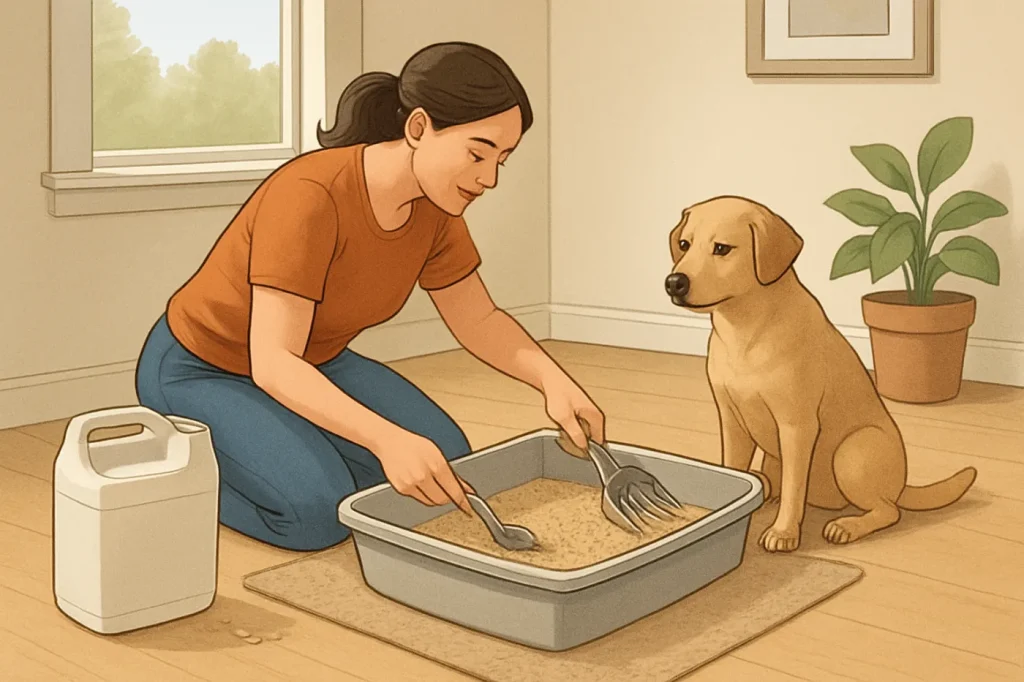
Small dogs, especially in apartments or for owners with limited mobility, may use indoor potty options. The same principles apply: clear routine, good location, and regular cleaning. Common indoor potty options for small dogs
- Pee pads: Disposable or washable pads placed in a fixed spot.
- Artificial grass trays: A plastic tray with synthetic turf on top and a collection area underneath.
- Real sod boxes: A shallow box filled with real grass or sod, often used on balconies.
Where to place an indoor dog potty
- Consistent, quiet corner: Dogs learn faster when the potty spot never moves.
- Easy‑to‑clean flooring: Tile, vinyl, or a waterproof mat under the potty system.
- Away from food and beds: Keep a clear separation between potty, feeding, and sleeping areas.
- Accessible at all times: Do not block the path with baby gates or furniture.
Daily maintenance for indoor dog potties
- Pee pads: Change soiled pads promptly, at least once daily, more often for frequent use.
- Artificial grass trays: Remove solid waste as soon as you see it; rinse or wipe the grass daily if heavily used.
- Real sod boxes: Pick up solid waste daily and monitor for oversaturation or strong odor.
- Surrounding area: Wipe any splashes and wash nearby mats regularly.
For a broader view of how indoor potty time fits into your pet’s day, you can also look at a daily pet care checklist for working owners.
Structured checklist: daily litter and potty tasks
Use this checklist to build a simple routine. Adjust times to match your schedule.
- Morning
- Scoop all litter boxes (solid waste and clumps).
- Check litter depth and top up if needed.
- Inspect indoor dog potty area; remove any solid waste and replace soiled pads.
- Do a quick smell check in litter and potty areas; open a window or run a fan if needed.
- Midday (if someone is home)
- Spot‑scoop heavily used boxes, especially in multi‑cat homes.
- Check that pets can easily access all boxes and potty areas (no closed doors or blocked paths).
- Evening
- Scoop all boxes again.
- Wipe any visible litter dust or smudges on floors around boxes.
- Empty small trash bags or sealed containers used for litter waste.
- Check for any accidents outside the box and clean promptly.
- Weekly
- Refresh part of the litter in each box.
- Wash scoops and litter mats.
- Rinse artificial grass potty trays or wash reusable pads.
- Monthly (or as needed)
- Empty and wash each litter box thoroughly.
- Inspect boxes and potty equipment for cracks, stains, or lingering odors.
- Replace any worn‑out items that no longer clean well.
Troubleshooting accidents and litter box avoidance
Even with a good routine, accidents can happen. Use them as information, not just a mess to clean. Step 1: Rule out medical issues If a previously reliable cat or dog suddenly starts having frequent accidents, straining, or seems uncomfortable, contact a veterinarian promptly. Urinary and digestive problems can show up first as changes in bathroom habits. Step 2: Check cleanliness and box numbers Ask yourself:
- Have I been scooping at least once daily?
- Does each cat have enough boxes, or are they sharing one small box?
- Is the litter very old, dusty, or smelly?
If the answer to any of these is “no,” increase scooping, refresh the litter, or add another box. Step 3: Review box and potty locations Look for recent changes:
- Did you move the box to a noisier or busier area?
- Did you start running a new loud appliance nearby?
- Is a door now closing off the usual route to the box?
If so, move the box back to a quieter, more accessible spot or provide an additional box in a better location. Step 4: Consider litter or box changes Cats can be sensitive to changes in texture, scent, or box style.
- If you recently changed litter brands, try mixing the old and new over several days instead of switching overnight.
- If you added a cover to an open box, try removing it; some cats dislike covered boxes.
- If the box is too small or has high sides, a larger or lower‑entry box may be more comfortable, especially for kittens or seniors.
Step 5: Clean accidents thoroughly If a pet smells old urine or feces in a spot, they may reuse it.
- Blot up as much as possible with paper towels.
- Use a cleaner designed for pet messes that helps break down odor‑causing residues.
- Allow the area to dry completely before letting pets back into the room.
Step 6: Reinforce good habits For cats:
- Keep boxes easy to find and access.
- Reward calm behavior around the box with gentle praise or petting after they finish.
For small dogs using indoor potties:
- Supervise closely and guide them to the potty spot after meals, naps, and play.
- Reward immediately after they use the correct spot.
- Avoid punishment for accidents; it can make them hide future accidents instead of using the right place.
Common mistakes in daily litter box maintenance
Avoiding a few typical errors can make your routine much easier and your home fresher.
- Not scooping often enough: Waiting several days between scoops leads to strong odors and can push pets to find cleaner spots elsewhere.
- Using too few boxes: One small box for multiple cats often causes crowding, stress, and accidents.
- Hiding the box in an inconvenient spot: If it is hard for you to reach, you will clean it less; if it is hard for your pet to reach, they may avoid it.
- Switching litter suddenly: Abrupt changes can cause some cats to refuse the box entirely.
- Relying on strong fragrances instead of cleaning: Air fresheners and scented litters cannot fully cover the smell of a dirty box.
- Ignoring early warning signs: Occasional accidents, straining, or vocalizing in the box are signals to investigate, not just clean up.
What to do next: build a realistic daily routine
Once you understand the basics, the next step is to turn them into habits that fit your life.
- Decide on your schedule: Choose specific times (for example, right after breakfast and after dinner) for scooping and stick to them.
- Set reminders: Use phone alarms or a shared family calendar so everyone knows when it is their turn.
- Stock supplies: Keep extra litter, trash bags, gloves, and cleaning wipes near the box so you are never tempted to “do it later.”
- Review monthly: Once a month, ask: Does the house smell fresh? Are there any accidents? If not, your routine is working. If yes, adjust scooping frequency, litter type, or box locations.
- Fit it into overall pet care: Combine litter and potty checks with feeding, playtime, or your own morning and evening routines. For broader ideas, you can explore a daily care routine for indoor cats or a low maintenance pets for busy owners guide if your schedule is very tight.
FAQ about daily litter box and indoor potty maintenance
What should I understand first about daily litter box maintenance?
Daily maintenance is less about deep cleaning and more about consistency. Scooping once or twice a day, keeping enough clean litter in the box, and checking for changes in your pet’s habits are the core tasks. When these are done regularly, full box washes and odor control become much easier and your home stays fresher.
What are the biggest mistakes people make with daily litter box care?
The most common mistakes are not scooping often enough, using too few boxes for the number of cats, placing boxes in noisy or hard‑to‑reach spots, and relying on strong fragrances instead of actual cleaning. Sudden changes in litter type or box style without a gradual transition also cause many avoidance problems.
How can I tell if my daily routine is working for my cat?
Signs that your routine is working include: your cat uses the box consistently, there are no strong odors when you enter the room, and you do not find accidents elsewhere in the home. The litter should look mostly clean between scoops, and your cat should enter, use, and leave the box calmly without hesitation or vocalizing.
What should I do right after reading this to improve my litter box setup?
Start by counting your boxes and comparing them to the number of cats, then choose one or two times each day for scooping and set reminders. Next, stand where your boxes are and check for noise, drafts, and accessibility. If anything seems off, move or add a box to a quieter, easier‑to‑reach spot. Finally, plan your next full box wash and make sure you have mild cleaner and fresh litter ready.
How often should I replace the entire litter instead of just scooping?
The right interval depends on the litter type, how many pets use each box, and how sensitive you are to odor. Many owners find that even with daily scooping, the box feels fresher if they replace a portion of the litter weekly and do a full empty and wash at least once a month. If you notice strong smells or dark, damp litter sooner, shorten that interval.