DIY grooming vs professional grooming: how to save without risking your pet’s health
If you want to save money on pet grooming, the key is not to skip care, but to move as many safe tasks as possible to home grooming and use professionals only when they add real value. That means:
- Doing regular brushing, basic baths, nail trims, ear cleaning, and simple dental care at home.
- Booking a groomer for haircuts on tricky coats, severe matting, handling‑sensitive pets, or anything involving sharp tools near eyes and sensitive areas.
- Using a simple, durable grooming kit instead of frequent impulse buys or salon add‑ons.
- Sticking to a realistic weekly and monthly routine so you prevent problems instead of paying to fix them.
The rest of the guide walks through how to make those decisions, what you can safely do yourself, and how to avoid the common mistakes that end up costing more in vet bills or emergency grooming.
How DIY and professional grooming compare for saving money
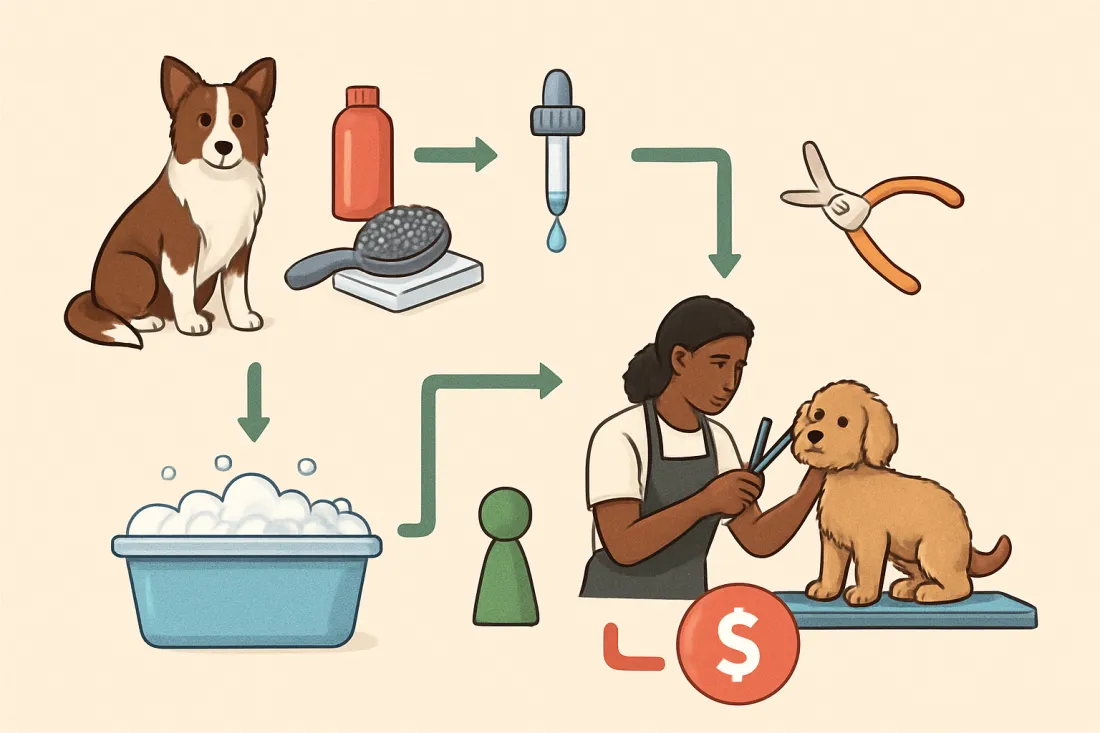
You do not have to choose “all DIY” or “all salon.” Most pet owners save the most by mixing both. Here is a comparison to help you decide where each option fits.
| Grooming option | Best for | Money impact over time | Risks if misused | When it makes sense |
|---|---|---|---|---|
| Mainly DIY at home | Short‑haired dogs and cats, calm pets, owners willing to learn basic skills | Lower ongoing costs; you invest once in tools and pay mostly in time and effort | Minor injuries (nicks, quicked nails), missed health issues if you do not inspect the skin, ears, and teeth | When your pet’s coat is simple, you have space to bathe and dry, and you can commit to a routine |
| Mixed: DIY + periodic professional grooming | Most long‑haired dogs, doodles, double‑coated breeds, anxious pets | Moderate costs; you stretch the time between full grooms by keeping up with brushing and hygiene at home | Matting or skin issues if you let the routine slip between appointments | When you want a polished haircut or help with tricky areas but still want to save on frequent visits |
| Mostly professional grooming | Complex coats, heavy shedders, pets that are aggressive or very fearful for handling | Highest grooming costs; you pay for time, tools, and expertise each visit | Low if you choose a reputable groomer, but costs rise if you add many extras | When safety, behavior, or medical needs make DIY stressful or unsafe |
If you are unsure where to start, aim for the middle option: do daily and weekly basics at home, and use a groomer for haircuts or deep clean‑ups a few times a year, adjusting based on your pet’s coat and lifestyle.
Why grooming and hygiene matter for health and vet costs
Skipping grooming rarely saves money. It usually shifts the cost from the groomer to the vet or an emergency groom.
- Coat and skin health: Regular brushing removes loose hair, spreads natural oils, and lets you spot lumps, rashes, fleas, or ticks early. Untreated mats can pull on the skin, hide infections, and sometimes require a vet to sedate and shave the pet.
- Ears: Clean, dry ears are less likely to develop painful infections. Ear infections often need vet visits, medication, and rechecks.
- Nails: Overgrown nails can split, curl into paw pads, or change how a pet walks, which may lead to joint pain. Fixing a torn nail can be more expensive than keeping nails trimmed.
- Teeth: Daily or near‑daily dental care at home slows tartar buildup and can delay or reduce the need for professional dental cleanings under anesthesia, which are a significant vet expense.
- Parasites: Bathing and combing help you notice fleas, ticks, and skin parasites early, so you can treat them before they cause bigger problems or spread around your home.
Regular grooming is part of responsible pet ownership and often pairs well with broader strategies for saving money on pet care without sacrificing quality.
What you can safely do at home vs when you need a professional
Most owners can learn the basics, but some jobs are better left to groomers or vets. Use these decision criteria to stay on the safe side.
Tasks most owners can do at home
These are usually safe to learn with patience, treats, and the right tools:
- Brushing and combing: Suitable for all dogs and cats. Choose tools that match coat type (more on that below). Start with short, positive sessions.
- Basic baths: For healthy pets without skin conditions. Use pet‑safe shampoo, lukewarm water, and rinse thoroughly. Avoid getting water and soap in eyes and ears.
- Nail trims (with care): Many owners can trim nails using a clipper or grinder once they learn where the quick is and how to go slowly.
- Ear cleaning: Wiping the outer ear with a vet‑approved ear cleaner and cotton pads (never cotton swabs deep in the ear canal).
- Simple sanitary trims: Carefully snipping long hair around the rear or paws with blunt‑tipped scissors on calm, cooperative pets.
- Daily dental care: Brushing teeth with pet toothpaste, using dental wipes, or offering vet‑approved dental chews.
Tasks that usually need a professional groomer
Consider a groomer for:
- Full haircuts on complex coats: Poodles, doodles, many terriers, and some long‑haired breeds need skilled clipping and scissoring to avoid uneven cuts and accidental nicks.
- Severe matting: Trying to comb out tight mats can hurt. Groomers have tools and techniques to remove them more safely, sometimes shaving under the mat.
- Styling around eyes, face, and feet: Clippers and scissors near eyes and paw pads are risky if your pet moves suddenly.
- Heavy shedding blow‑outs: Double‑coated breeds (like many northern or herding dogs) sometimes benefit from professional deshedding with high‑velocity dryers and coat‑specific tools.
- Anal gland expression: Many owners prefer to leave this to groomers or vets, especially if the pet has a history of gland issues.
Situations where a vet is the safer choice
Skip DIY and call your vet if you notice:
- Red, hot, or painful skin, open sores, or a strong odor from the skin or ears.
- Sudden hair loss, intense itching, or signs of parasites that do not improve with basic care.
- Broken or bleeding nails, or nails that seem painful to touch.
- Bad breath with drooling, difficulty eating, or loose teeth.
- Any lump, bump, or growth that is new or changing.
When in doubt, a quick vet check can prevent a small issue from turning into a costly emergency.
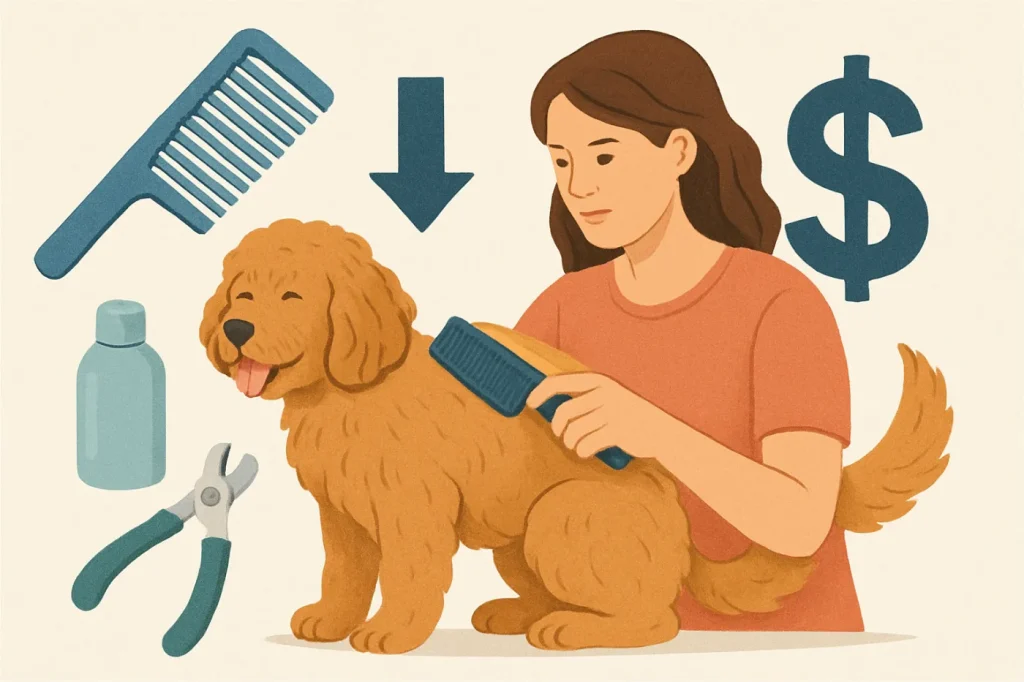
Budget grooming kit essentials for dogs and cats
You do not need a drawer full of gadgets. A small, well‑chosen kit covers most needs and saves money over repeated salon visits.
Core tools for most dogs
- Brush matched to coat type:
- Short, smooth coats: rubber curry brush or grooming glove.
- Medium coats: slicker brush or pin brush.
- Long or curly coats: slicker brush plus a metal comb to check for hidden tangles.
- Nail clippers or grinder: Choose a size that fits your dog’s nails. Many owners find grinders less likely to cause painful quick cuts, though they take longer.
- Pet‑safe shampoo: A gentle formula for dogs; avoid human shampoo, which can irritate skin.
- Absorbent towels and/or a pet dryer: Air‑drying in a warm, draft‑free room works for many dogs; a low‑heat dryer speeds things up for thick coats.
- Ear cleaner: A vet‑recommended liquid ear cleaner and cotton pads or gauze.
- Toothbrush and pet toothpaste: Never use human toothpaste, which can be harmful if swallowed.
- Blunt‑tipped scissors: For small sanitary trims or trimming fur between paw pads on calm dogs.
Core tools for most cats
- Fine comb or slicker brush: Short‑haired cats often do well with a soft brush; long‑haired cats benefit from a slicker brush and metal comb.
- Nail clippers: Small, scissor‑style clippers are usually easiest for cat claws.
- Pet‑safe wipes or damp cloth: For spot cleaning instead of full baths, which many cats dislike.
- Toothbrush or dental wipes: Cat‑specific toothpaste or wipes designed for feline mouths.
Money‑saving tips when building your kit
- Buy fewer, better tools instead of multiple cheap versions that break or do not work well.
- Choose adjustable or multi‑use tools (for example, a brush that works on both your dog and cat).
- Store tools dry and clean so they last longer.
- Ask your vet or groomer which tools they recommend for your pet’s exact coat before buying.
For more ideas on balancing quality and cost across all aspects of care, you can also explore guidance on preventive pet care that saves money long term.
How often different breeds and coat types really need grooming
Grooming frequency depends more on coat type and lifestyle than on breed name alone. Use these ranges as starting points, then adjust based on how your pet looks and feels.
Short‑haired dogs (e.g., many bully breeds, beagles)
- Brushing: 1–2 times per week to remove loose hair and dirt.
- Bathing: About once a month, or when dirty or smelly. Too many baths can dry the skin.
- Nails: Every 3–4 weeks, or whenever you hear nails clicking on hard floors.
- Ears and teeth: Ear checks weekly; dental care ideally daily or at least several times a week.
Medium and double‑coated dogs (e.g., many herding, spitz, and retriever‑type breeds)
- Brushing: 2–4 times per week, daily during heavy shedding seasons.
- Bathing: Every 4–8 weeks, or after muddy adventures.
- Professional deshedding: Some owners schedule a groomer visit a few times a year during peak shedding to reduce hair at home.
Long‑haired and curly‑coated dogs (e.g., many doodles, poodles, spaniels)
- Brushing and combing: At least every other day, often daily, to prevent mats.
- Bathing: Every 4–6 weeks, followed by thorough drying and brushing.
- Haircuts: Many need professional grooming every 4–8 weeks, depending on desired coat length and how consistent you are with brushing.
Cats
- Short‑haired cats: Brushing once or twice a week helps with shedding and hairballs.
- Long‑haired cats: Daily or near‑daily brushing to prevent mats, especially around the armpits, belly, and behind the ears.
- Nails: Trims every 2–4 weeks, depending on how quickly they grow and how much your cat uses scratching posts.
- Bathing: Many healthy indoor cats rarely need full baths; spot cleaning and brushing are often enough unless your vet advises otherwise.
These are general ranges. If your pet swims often, rolls in dirt, or has allergies, you may need to adjust. When unsure, ask your vet or groomer what they recommend for your specific pet.
Step‑by‑step basics: brushing, nails, ears, and teeth
You do not have to do everything in one day. Break grooming into short, positive sessions. Here is a simple process for each core task.
Brushing
- Set up: Choose a quiet area and have treats ready.
- Start small: Let your pet sniff the brush. Reward calm behavior.
- Brush with the coat: Use gentle strokes in the direction the hair grows. For long coats, work in small sections.
- Check for tangles: Use a comb to find any snags. Hold the hair above the tangle so you are not pulling on the skin, and work it out gently.
- Inspect the skin: As you brush, look for redness, bumps, fleas, or ticks.
- End on a good note: Stop before your pet gets frustrated and reward with praise or a treat.
Nail trims
- Get your pet used to paw handling: Gently touch paws and nails during calm moments, rewarding cooperation.
- Identify the quick: On light nails, the quick is the pink area inside. On dark nails, trim tiny bits at a time and look for a pale center on the cut surface.
- Trim small amounts: Cut or grind just the tip of each nail. It is safer to do frequent small trims than rare big ones.
- Have styptic powder ready: If you accidentally cut the quick and it bleeds, apply styptic powder or a styptic pencil to stop the bleeding.
- Take breaks: If your pet gets stressed, do a few nails at a time over several days.
Ear cleaning
- Look first: Check for redness, swelling, strong odor, or discharge. If you see these, call your vet before cleaning.
- Apply cleaner: Fill the ear canal with a vet‑approved ear cleaner as directed on the bottle.
- Massage the base: Gently massage the base of the ear for 20–30 seconds to loosen debris.
- Let your pet shake: Step back and let them shake their head.
- Wipe the outer ear: Use cotton pads or gauze to wipe away loosened debris from the visible part of the ear. Do not insert anything deep into the ear canal.
Dental care
- Start slow: Begin by rubbing your pet’s gums with a finger wrapped in gauze or a dental wipe.
- Add toothpaste: Introduce a pea‑sized amount of pet toothpaste and let your pet lick it.
- Brush gently: Use a soft pet toothbrush or finger brush. Focus on the outer surfaces of the teeth where plaque builds up.
- Keep sessions short: Aim for 30–60 seconds at first, gradually increasing as your pet tolerates more.
- Use dental chews as support: Vet‑approved dental chews or rinses can help, but they do not replace brushing.
Finding affordable groomers and mobile services in the US
Professional grooming does not have to break your budget if you are strategic.
How to compare groomers by value, not just price
When you call or visit potential groomers, ask:
- What is included in a standard groom? Clarify whether the price covers bath, brush, haircut, nails, ears, and basic sanitary trim, or if some are add‑ons.
- How do you handle anxious or senior pets? Look for calm, low‑stress handling and clear policies.
- Do you offer maintenance packages? Some groomers have discounted nail‑trim‑only visits or loyalty programs.
- What coat types do you specialize in? This matters especially for doodles, double‑coated breeds, and cats.
Ways to reduce professional grooming costs
- Stretch time between full grooms: Keep up with brushing and basic hygiene at home so your pet arrives in good condition. Severely matted pets often require extra fees.
- Choose simpler styles: Shorter, low‑maintenance cuts often take less time and may cost less than elaborate styles.
- Ask about off‑peak appointments: Some groomers may have better availability or occasional promotions on slower days.
- Consider mobile groomers for multi‑pet households: While a single visit may cost more than a salon, you save on travel time, and some mobile groomers offer multi‑pet discounts.
- Be honest about your pet’s behavior: Surprises can lead to longer appointments and higher fees. If your pet is fearful, ask whether shorter, more frequent visits can help.
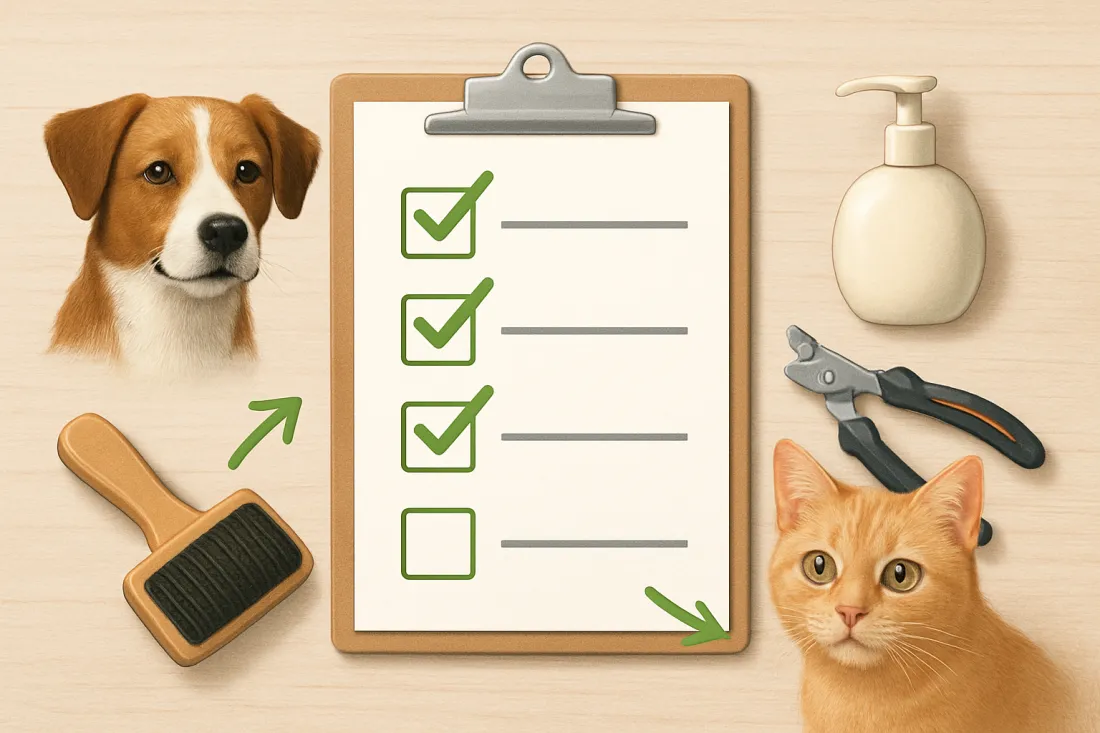
Structured weekly and monthly at‑home grooming checklist
Use this checklist to keep your pet clean and comfortable while avoiding surprise bills. Adjust based on your pet’s coat and lifestyle.
Weekly tasks
- Brushing:
- Short‑haired pets: full brush‑out once or twice.
- Long‑haired or curly‑coated pets: brush and comb at least three times.
- Quick skin and coat check: Look for redness, bumps, parasites, or sore spots.
- Ear check: Look and sniff for redness, odor, or discharge. Wipe the outer ear if it looks clean but a little waxy.
- Teeth: Brush teeth or use dental wipes several times a week; daily is ideal.
- Paw check: Inspect paw pads and between toes for cuts, debris, or mats.
Every 2–4 weeks
- Nail trim: Trim or grind nails as needed so they do not touch the ground heavily or click loudly on hard floors.
- Sanitary tidy: For long‑haired pets, trim hair around the rear and between paw pads if it tends to collect dirt.
- Minor deshedding: Use an appropriate tool on shedding breeds to remove loose undercoat.
Every 4–8 weeks
- Bath: Bathe with pet‑safe shampoo, rinse thoroughly, and dry completely.
- Full groom or haircut (if needed): For long‑haired or curly‑coated dogs, schedule a professional groom or plan a thorough at‑home session if you are experienced.
Print or save this list and check items off as you go. Consistency is what saves money over time.
Common mistakes that end up costing more
Avoid these pitfalls that often turn small grooming tasks into bigger expenses.
- Waiting until the pet is visibly dirty or matted: By the time mats are obvious, they may be painful and require professional shaving.
- Using human products: Human shampoos, conditioners, and toothpaste can irritate skin or be unsafe if swallowed.
- Rushing nail trims: Cutting too much at once increases the chance of hitting the quick, which hurts and makes future trims harder.
- Bathing before brushing out tangles: Water tightens mats, making them harder and more painful to remove.
- Ignoring early signs of problems: A mild ear odor, small patch of redness, or slight limp after a nail snag can all worsen if left alone.
- Forcing a fearful pet: Struggling with a scared pet increases the risk of injury and can create long‑term fear. Slow training or professional help is safer.
Decision checklist: when to DIY, when to book a groomer, when to call the vet
Use this quick decision guide before each grooming task.
- Is my pet calm and handleable today?
- If yes: proceed with DIY, starting with easy tasks.
- If no: consider a short session, training, or asking a groomer for help.
- Is the coat free of severe mats?
- If yes: brush and bathe at home as planned.
- If no: book a groomer, especially for tight mats close to the skin.
- Do I see any signs of infection or pain?
- Red, hot, smelly, or oozing areas, or clear pain: call the vet before grooming.
- Normal skin and ears: continue with gentle grooming.
- Am I using the right tools for this coat?
- If yes: proceed.
- If no or unsure: pause and ask your vet or groomer which tools are appropriate.
- Do I have time to go slowly?
- If yes: DIY is more likely to be safe and positive.
- If no: postpone or book a professional instead of rushing.
Summary and safety warnings: when to stop and call a pro
Saving money on grooming is about smart choices, not doing everything yourself. Regular, gentle care at home keeps your pet comfortable and reduces the need for urgent, expensive fixes. Professional groomers and vets are partners you call in when the job is beyond your tools, skills, or your pet’s comfort level. Stop DIY and call a groomer or vet if you notice:
- Severe matting, especially close to the skin or in sensitive areas.
- Bleeding, sudden swelling, or clear signs of pain during grooming.
- Strong ear odor, dark discharge, or your pet shaking or scratching at the ears constantly.
- Open wounds, hot spots, or widespread hair loss.
- Behavior changes such as sudden aggression, extreme fear, or collapse.
If you keep sessions short, use the right tools, and follow a simple routine, grooming becomes a manageable part of caring for your pet and your budget. For more ideas on balancing costs across food, vet care, and supplies, you can also look at advice on budget friendly dog and cat grooming at home.
FAQ about saving money on pet grooming
What is the single most important thing to understand about saving money on pet grooming?
The most important point is that consistency beats intensity. A few minutes of brushing, nail checks, and quick inspections each week prevent mats, infections, and overgrown nails that are expensive to fix. Skipping routine care to save a little time or money usually leads to higher costs later, either at the groomer or the vet.
What common mistakes make pet grooming more expensive instead of cheaper?
The biggest cost‑raising mistakes are waiting until your pet is badly matted, using the wrong tools or human products, rushing nail trims and causing pain, and ignoring early signs of skin or ear trouble. These missteps often turn a simple home task into a professional or medical problem. Planning short, calm sessions and using pet‑safe products avoids most of these issues.
What should I do right after reading this if I want to cut grooming costs?
Start by taking inventory of what you already have: brushes, nail clippers, shampoo, and dental supplies. Then, choose one or two small habits to add this week, such as brushing every other day and checking nails once. Finally, set a reminder for a monthly “grooming check” to review your pet’s coat, ears, nails, and teeth and decide whether you can handle the next steps at home or need to schedule a groomer visit.
Can I safely groom a very anxious dog or cat at home to save money?
It depends on how severe the anxiety is. Mildly nervous pets often improve with slow, reward‑based training and very short sessions. However, if your pet growls, snaps, hides, or panics during handling, forcing DIY grooming can be dangerous and may make the fear worse. In those cases, look for groomers who specialize in low‑stress or fear‑aware handling, and ask your vet whether behavior support or medication is appropriate before grooming.
How do I know if my pet’s grooming needs are too complex for DIY?
Signs that DIY may not be enough include a coat that mats quickly even with regular brushing, a breed that traditionally needs skilled clipping or hand‑stripping, recurring ear or skin problems, or a pet that is very large, very small, or medically fragile. If you are unsure, schedule one professional groom and ask the groomer which parts you can realistically maintain at home and which they recommend you leave to them.