
How to use cat breed temperament to choose the right cat for your home
If you are choosing a cat, treat breed temperament as a helpful hint, not a guarantee. Use breed and type (shorthair, longhair, pedigree vs. mixed) to predict broad patterns like energy level, talkativeness, and affection, then confirm the individual cat’s personality by meeting them, asking questions, and watching how they behave in real life. A practical way to think about it:
- Start with type-level patterns (for example, many athletic breeds are more active than the average domestic shorthair).
- Layer on what you see in the shelter or foster home (how the cat plays, reacts to touch, and handles noise).
- Compare that to your real lifestyle (hours away from home, kids, other pets, energy for play and grooming).
The best-fit cat for your home is the one whose energy, social needs, and independence match how you actually live day to day, not the one that simply looks cutest in photos.
Temperament basics in cats: what actually shapes personality
Before comparing breeds, it helps to understand what “temperament” really means for cats and what actually shapes it.
Key pieces of cat temperament
- Energy level: how much the cat wants to move, play, and explore over a typical 24-hour period.
- Social style: how much the cat enjoys people and other animals, and how they show it (greeting at the door vs. watching from a distance).
- Affection style: lap cat vs. “near you but not on you,” cuddles on their terms vs. almost any time.
- Confidence vs. shyness: bold and curious vs. cautious and easily stressed by new things.
- Vocalization: quiet vs. chatty, occasional meows vs. full conversations.
- Adaptability: how easily the cat handles change (new home, visitors, kids, other pets).
What influences a cat’s temperament
- Genetics and breed/type: Some lines are more active, social, or vocal than others. For example, many athletic or “Oriental-type” pedigrees tend to be more energetic and talkative than the average mixed-breed house cat.
- Early socialization: Handling and positive experiences with people and other animals in the first weeks and months of life. Kittens that are gently handled by people for even 5–15 minutes a day during their socialization window often grow into more confident adults.
- Past experiences: Trauma, neglect, or frequent rehoming can make a cat more cautious or reactive, even if their genetic temperament leans friendly.
- Health and comfort: Pain, illness, or chronic stress can make even a friendly cat withdrawn or irritable. A cat that suddenly hides more or hisses may need a vet check, not a temperament label.
- Current environment: Quiet vs. busy home, predictable routine vs. constant change. A shy cat may seem much more confident after a few weeks in a calm, stable home.
Two cats of the same breed can still behave very differently. Think of breed temperament as a starting point, then look closely at the individual cat in front of you.
Common cat breed temperament patterns (including domestic shorthair and longhair)
Most pet cats in the United States are not purebred. They are often called domestic shorthair (DSH) or domestic longhair (DLH). These are mixed-breed cats with a huge range of personalities, but some broad patterns show up across types. The table below compares common cat types and how they tend to behave. These are general patterns, not promises.
| Cat type | Typical temperament pattern | Best for households that | Potential challenges |
|---|---|---|---|
| Domestic shorthair (mixed-breed) | Very varied; many are moderately active, playful, and people-friendly once settled. | Want a flexible, low-maintenance companion and are open to meeting several cats to find a good personality match. | Harder to predict from looks alone; you must rely on behavior and shelter notes rather than coat color or body shape. |
| Domestic longhair (mixed-breed) | Often calmer or more laid-back than average, though some are quite playful; may enjoy quiet companionship and long naps. | Prefer a relaxed, cuddly companion and are willing to brush regularly. | Coat care is non‑optional; mats can form in as little as a week if grooming is ignored. |
| Active, athletic breeds or types | High energy, curious, often very interactive; may follow you around and “help” with everything. | Have time for daily play, enjoy training and games, and like a cat that feels like a little roommate. | Can become destructive or demanding if bored; often need at least 2–3 play sessions a day to stay content. |
| Calmer, relaxed breeds or types | More easygoing, often enjoy lounging near people; may be affectionate but not hyper. | Want a companion to hang out with on the couch and do not want a cat climbing the curtains. | May need encouragement to exercise and maintain a healthy weight, especially if they nap for 16+ hours a day. |
| Highly social, people‑oriented types | Seek human contact, may greet visitors, follow family members, and dislike being left alone for long stretches. | Have someone home much of the day or are open to adopting a second cat for company. | Can become lonely and stressed if treated as a “decorative” pet with little interaction; some do poorly if left alone for 10–12 hours most days. |
| More independent, reserved types | Prefer limited handling, may bond strongly with one person, often content to share space without constant touch. | Like cats but do not want a constant lap cat; appreciate a respectful, low‑pressure relationship. | Children may feel rejected; can be misunderstood as “unfriendly” when they are simply private and need extra time to trust. |
Because mixed-breed cats are so common, shelters often focus more on describing the individual cat’s behavior than on labeling a specific breed. That is usually more accurate than guessing based on coat color or body shape. If you want to understand how temperament fits into the bigger picture of being a new cat guardian, it can help to read resources like new cat owner mistakes to avoid so your expectations line up with day-to-day reality.
Energy levels and play styles by cat type
Matching energy level is one of the most important parts of choosing a cat temperament that fits your home.
Typical energy patterns
- High-energy cats
- Love climbing, chasing toys, and exploring new spaces.
- Often have several active bursts a day, not just a quick zoomie.
- Do well with tall cat trees, puzzle feeders, and regular interactive play.
- Fit homes with playful adults, older kids, or other active pets.
- Often need around 30–60 minutes of interactive play spread through the day to stay satisfied.
- Moderate-energy cats
- Enjoy daily play but are also happy to nap nearby for long stretches.
- Often do best with a couple of focused play sessions each day.
- Fit many households, from singles to families, as long as someone interacts with them.
- Usually content with 10–20 minutes of play once or twice a day.
- Low-energy cats
- Prefer lounging, window watching, and gentle interaction.
- May play in short bursts with soft toys or slow games.
- Fit quieter homes, older adults, or people with limited time for active play.
- Still benefit from at least 5–10 minutes of gentle activity daily to keep joints and mind engaged.
Play style matters as much as energy level
- Chase-and-pounce players: Love wand toys, laser pointers, and anything that moves fast. Great for people who enjoy active play sessions and can safely redirect hunting instincts away from hands and ankles.
- Hunter-puzzle players: Prefer food puzzles, treat balls, and slow stalking games. Good for busy owners who can set up enrichment before work.
- Wrestlers and rough players: May enjoy another cat with a similar style; can be too much for very gentle or elderly cats.
- Gentle paw-tappers: Like soft toys, slow movement, and may be better for homes with small children who are still learning to be gentle.
How to spot a cat’s energy level at a shelter
- Ask staff when the cat is most active and how they behave during playtime.
- Visit at a time when the cat is usually awake if possible (for many cats, late morning or early evening).
- Offer a toy (with staff permission) and see how quickly and intensely the cat engages.
- Look for signs of boredom in the kennel: pacing, constant meowing, or trying to escape may signal a cat that needs more stimulation.
- Notice how fast they calm down after play; some cats can switch from wild play to relaxed cuddles in a minute or two, others stay revved up longer.
Affection levels and independence by cat type
Different cats show love in different ways. Some want to be on you; others are happiest simply being near you.
Common affection styles
- Lap cats
- Seek out laps or chests to sleep on, sometimes multiple times a day.
- Often enjoy being carried or held (within reason).
- Best for people who are home a lot and want close physical contact.
- “Next to you” companions
- Prefer to sit beside you on the couch or at your feet.
- May enjoy petting but not prolonged holding.
- Great for people who like company but do not need a cat on them constantly.
- Independent observers
- Spend time in the same room but may choose higher perches or quiet corners.
- Often bond deeply but show it through slow blinks, gentle head bumps, or sleeping nearby.
- Good for busy households or people who appreciate a respectful, low-pressure pet.
How breed and type can influence affection and independence
- Some highly social lines tend to be more people-focused, following family members and seeking frequent interaction.
- More independent lines may be less interested in strangers and more selective about touch.
- Domestic shorthair and longhair cats can fall anywhere on this spectrum; their individual history often matters more than coat type.
Matching affection style to your lifestyle
- If you work long hours, a very clingy, people-dependent cat may struggle. A more independent cat or a bonded pair might cope better.
- If you want a cat for your child, focus less on labels like “lap cat” and more on cats that tolerate gentle handling and recover quickly from surprises.
- If you live alone and want emotional support, look for a cat that actively seeks contact and seems curious about new people.
- If you dislike being climbed on, avoid cats that immediately jump into your lap and instead look for “next to you” companions.
How early experiences shape cat temperament
Breed tendencies matter, but early life experiences can amplify or soften them.
Key early factors
- Handling as a kitten: Kittens gently handled by different people during their early weeks often grow into more confident, people-friendly adults.
- Exposure to normal household life: Everyday sounds like vacuums, TVs, and doorbells can be scary or normal depending on early exposure. Kittens raised in a quiet back room may need extra time to adjust to a busy home.
- Interactions with other animals: Positive experiences with friendly cats or dogs can make future introductions easier. Negative experiences can make a cat defensive.
- Stress and trauma: Rough handling, loud conflicts, or frequent moves can make a cat more cautious or defensive, even if they were confident as kittens.
What this means for adopters
- A shy cat is not “broken.” With patience, predictable routines, and gentle interaction, many become affectionate companions over weeks or months.
- A confident, social cat can become withdrawn if they experience pain, bullying from another pet, or major changes without support.
- When adopting an adult cat, their current behavior often reflects both their genetics and their history. Ask the shelter what they know about both.
- Expect an adjustment period of at least a few days to a few weeks before you see a cat’s true personality in a new home.
Questions to ask shelters about a cat’s temperament
Shelter staff and foster carers often know a lot about each cat’s personality. Use targeted questions to go beyond “Is this cat friendly?”
Essential temperament questions
- Energy and play
- How active is this cat day to day?
- What kind of play does this cat enjoy most?
- How long and how often do they usually want to play?
- Do they get frustrated or overstimulated if play stops suddenly?
- Affection and handling
- Does this cat like being petted? Where do they prefer or dislike being touched?
- How do they feel about being picked up or sitting on laps?
- How do they react to new people approaching them?
- Have they ever scratched or bitten during petting, and what was happening just before?
- Social behavior with others
- Has this cat lived with other cats or dogs? How did it go?
- How does this cat react to children visiting the shelter?
- Does this cat guard food, toys, or resting spots?
- Have you noticed any bullying or being bullied in group housing?
- Stress and adaptability
- How did this cat handle arriving at the shelter or foster home?
- What stresses this cat out (loud noises, sudden movements, other animals)?
- How long does it usually take them to relax in a new environment?
- Do they hide for long periods when something changes?
- Daily routine and habits
- What is this cat’s typical daily routine here?
- Do they use the litter box reliably?
- Do they scratch furniture, doors, or other surfaces a lot?
- How do they behave around food and treats?
Bring a mental picture of your home when you ask these questions. If you have kids, roommates, or other pets, describe them so staff can help you judge fit. If you are still deciding between a cat and a dog, or between different pet options, a resource like the should I adopt a dog or cat quiz can help you think through your lifestyle before you focus on cat temperament details.
Checklist: choosing a cat with the right temperament for your home
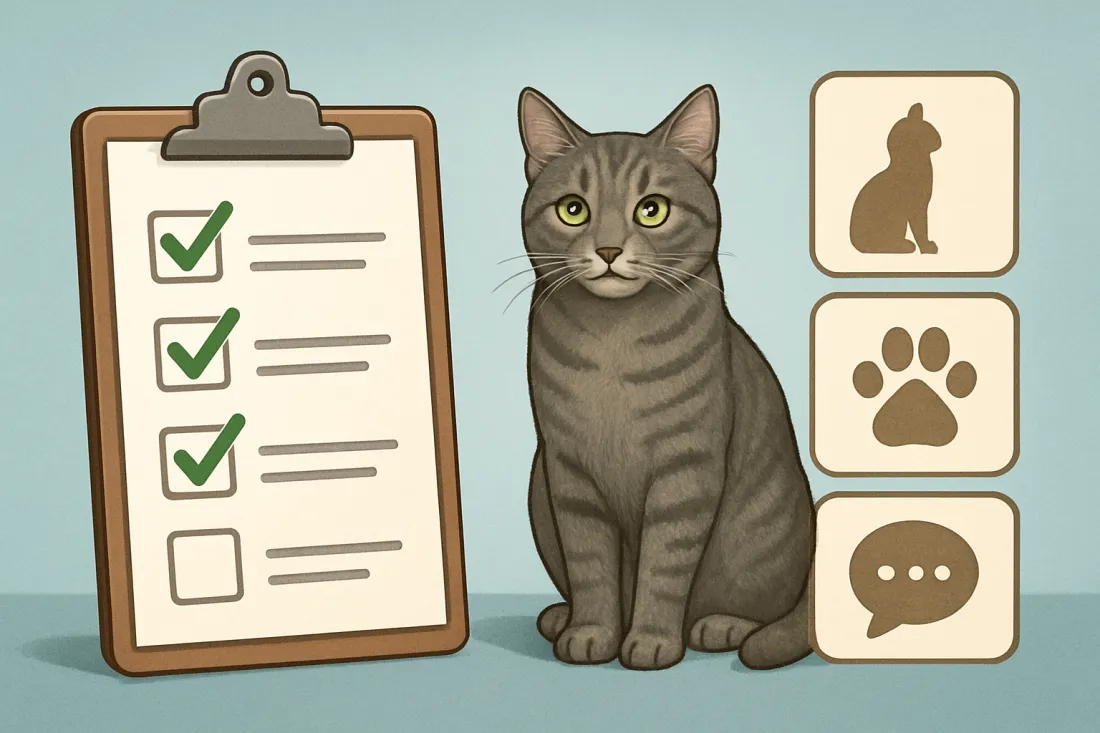
Use this step-by-step checklist to match a cat’s temperament to your real life, not your fantasy.
- Define your household reality
- How many hours are you away from home on a typical weekday (for example, 2–4, 5–8, or 9+)?
- How noisy is your home (kids, music, visitors, shared walls)?
- Do you already have pets? What are their ages and personalities?
- How much time can you realistically spend on play and grooming each day?
- Decide your ideal energy level
- Do you want a cat that plays hard and often, or one that mostly relaxes?
- Can you commit to at least two focused play sessions daily for a high-energy cat?
- Would a calmer cat better match your schedule or mobility?
- Clarify your affection preferences
- Do you want a lap cat, a “next to you” cat, or a more independent companion?
- How do you feel about a cat that follows you from room to room?
- Are you okay if the cat prefers one family member over others?
- Set boundaries for kids and other pets
- Are children old enough to respect a cat’s signals and space?
- Can you supervise interactions consistently at the beginning?
- Do you have a plan to give the cat safe, quiet spaces away from others?
- List your non‑negotiables
- Must be okay with other cats / dogs / kids / frequent visitors.
- Must tolerate some alone time during the workday.
- Must be comfortable with indoor-only living (if that is your plan).
- Meet multiple cats with your list in hand
- Visit the shelter or rescue with your checklist on your phone or on paper.
- Spend time quietly observing each cat before trying to interact.
- Notice who approaches you, who watches from a distance, and who hides.
- Test interaction gently
- Offer your hand for a sniff; watch for relaxed body language vs. tension.
- Use a toy (if allowed) to see how they play and how quickly they get overstimulated.
- Ask staff to show you how the cat responds to petting or being picked up.
- Compare what you see with what you need
- Does this cat’s energy level match what you decided in steps 1–2?
- Does their affection style fit your expectations?
- Can you realistically meet this cat’s social and environmental needs?
- Plan for the adjustment period
- Remember that many cats need days or weeks to show their true personality.
- Prepare a quiet room, hiding spots, and a predictable routine at home.
- Schedule time to be present and patient during the first weeks.
- Commit to ongoing learning
- Read up on body language, enrichment, and common new-owner pitfalls.
- Consider resources on teaching kids responsible pet ownership if children are involved.
- Be ready to adjust your expectations as you get to know your cat.
Common mistakes and limitations of cat breed temperament guides
Understanding what to avoid is just as important as knowing what to look for.
Typical mistakes to avoid
- Treating breed descriptions as guarantees
- Assuming every cat of a certain type will behave the same way.
- Ignoring the individual cat’s history, health, and current behavior.
- Choosing by looks alone
- Picking a cat only because of coat color, eye color, or fluffiness.
- Realizing later that the cat’s energy or independence does not match your lifestyle.
- Underestimating high-energy cats
- Adopting an athletic, curious cat without providing enough play and enrichment.
- Becoming frustrated when they scratch, climb, or vocalize out of boredom.
- Expecting instant affection
- Assuming a cat will be a lap cat from day one.
- Forcing contact instead of letting trust build at the cat’s pace.
- Ignoring the needs of shy or sensitive cats
- Placing a very shy cat in a loud, unpredictable home without safe spaces.
- Labeling a cat “unfriendly” when they are simply overwhelmed.
- Not planning for the long term
- Forgetting that cats can live well into their teens or beyond.
- Not thinking about future changes (moving, children, new pets) and how a particular temperament might cope.
Decision criteria: matching cat temperament to your lifestyle
Use these decision criteria to narrow down your options and turn temperament information into a clear choice.
- Time at home
- Home most of the day: A highly social, people-oriented cat or bonded pair can thrive.
- Out for long workdays: A more independent cat, or adopting two compatible cats, may be kinder.
- Household activity level
- Busy, noisy home: Look for confident, adaptable cats that handle change and noise well.
- Quiet, calm home: Shy or sensitive cats may blossom in this environment.
- Experience level
- First-time owner: A moderate-energy, people-friendly adult cat is often easier than a high-energy kitten.
- Experienced owner: You may be more prepared for high-energy or more complex temperaments.
- Other pets
- Existing cats: Look for a temperament that complements your current cat (for example, not pairing a very timid cat with a very pushy one).
- Dogs: Seek cats that have lived with or been tested around calm, cat-safe dogs.
- Children
- Young kids: Choose tolerant, patient cats that recover quickly from surprises and enjoy gentle handling.
- No kids or older teens: You can consider more sensitive or independent cats that prefer predictable interaction.
- Grooming tolerance
- Okay with regular brushing: Longhaired or plush-coated cats become options.
- Prefer minimal grooming: Shorthaired cats or those with easy-care coats may be better.
FAQ about cat breed temperament and choosing the right cat
What should I really understand about a cat breed temperament guide before I adopt?
A cat breed temperament guide is a tool to help you think in broad categories, not a promise about any one cat. It can tell you that certain types tend to be more active, vocal, or people-focused, and that others are usually calmer or more independent. It cannot tell you exactly how a specific cat will behave in your home. To use a guide well, combine what you read with what you see when you meet the cat, what shelter staff tell you about their history, and an honest look at your own lifestyle.
What mistakes do people most often make when using cat temperament information?
Common mistakes include choosing a cat based only on looks, assuming a breed label guarantees a certain personality, and underestimating how much time a high-energy cat needs for play and interaction. Another frequent issue is expecting instant cuddles and feeling disappointed when a cat needs days or weeks to adjust. You can avoid these problems by meeting several cats, asking detailed questions about behavior in different situations, and planning for a gradual bonding period.
How much weight should I give breed or type versus the individual cat’s behavior?
Use breed or type as a rough starting point—especially for energy level and social needs—but let the individual cat’s behavior carry more weight. If a cat labeled as a typically active type seems calm and reserved even after settling in, believe what you see. Likewise, a domestic shorthair with a shelter history of greeting everyone and playing for long stretches may behave more like a traditionally “social” pedigree. When in doubt, choose the cat whose actual behavior matches your checklist, even if their label is not what you expected.
What should I do next after reading a cat breed temperament guide?
Next, take a few minutes to write down your household’s reality: schedule, noise level, other pets, and how much interaction you can offer most days. Decide what energy level and affection style would truly fit that picture, using the checklist above. Then, when you visit shelters or rescues, bring your notes, meet multiple cats, and focus on how each one behaves rather than how they look. Give yourself permission to walk away if a cat you like visually does not match your lifestyle, and be ready to give your chosen cat time, structure, and patience so their real personality can emerge.