Fast, safe way to get dog urine smell out of carpet
To get dog urine smell out of carpet and rugs and keep your dog from re-marking the spot, focus on three things: act quickly, use the right cleaner, and let it work long enough. For a typical accident on carpet:
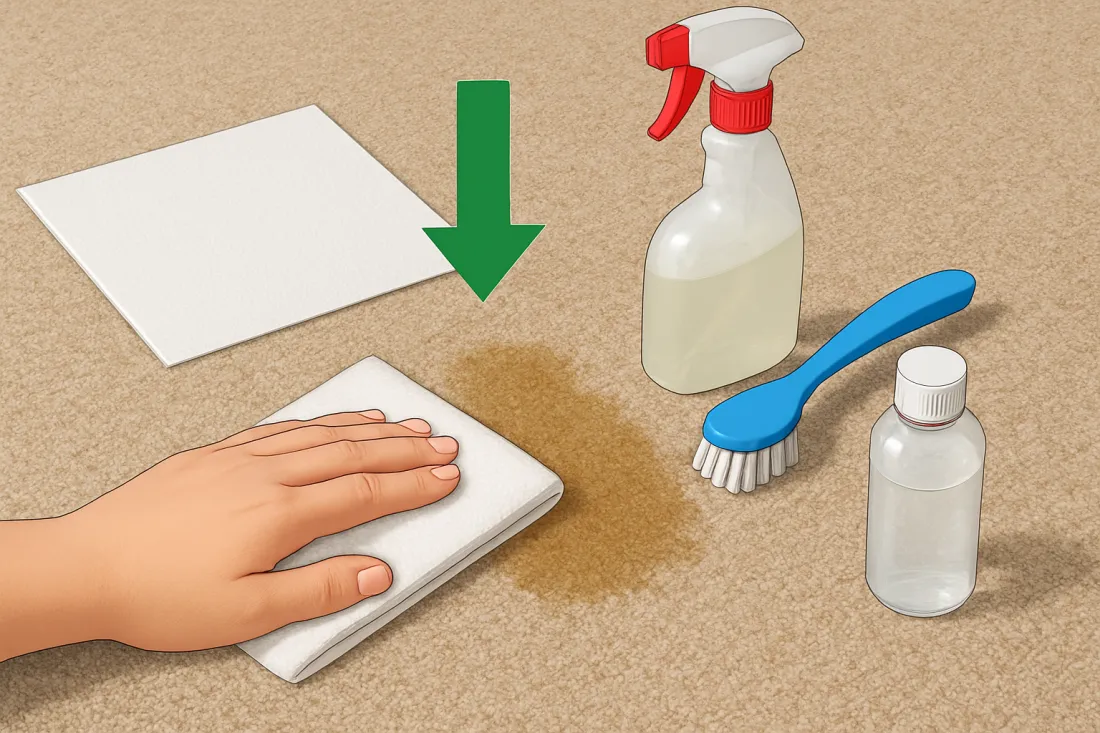
- Blot up as much urine as possible with white paper towels or a clean white cloth. Press firmly; do not rub.
- Lightly rinse the area with a little cool water and blot again to pull more urine out of the fibers.
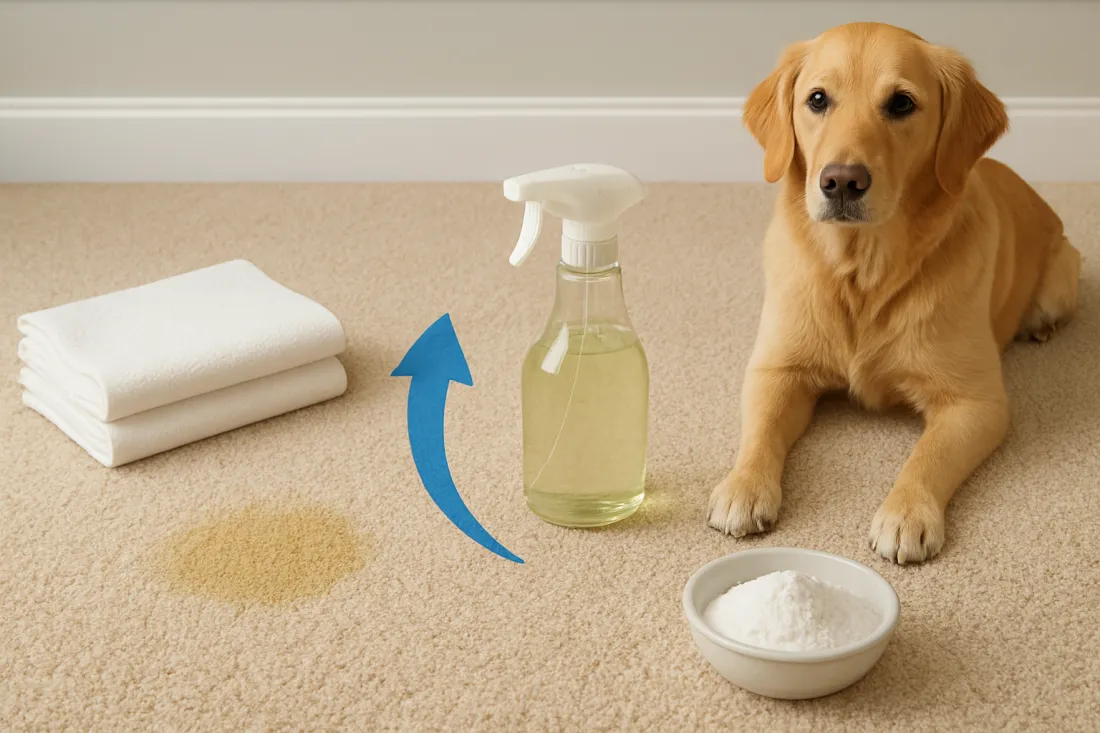
- Saturate the spot with a pet-safe enzyme cleaner made for dog urine and carpets.
- Let it sit for the full time on the label (often 10–30 minutes, longer for old stains).
- Blot up the cleaner, then let the carpet air-dry completely. Use fans to speed drying.
- Repeat if any odor remains once the area is fully dry, and address why your dog is peeing there.
Baking soda and vinegar can help with very fresh, light smells, but enzyme cleaners are usually more effective for dried-in or recurring urine odor.
Fresh vs old dog urine in carpet: what you are really dealing with
Dog urine in carpet is more than a wet spot. It can soak through the fibers, into the backing, and sometimes into the padding and even the subfloor underneath. As it dries, it can leave behind residues that keep releasing odor, especially when the room is warm or humid. Understanding whether you are dealing with fresh or old urine helps you choose the right method.
- Fresh urine (still wet or within a few hours)
- Easier to remove completely if you act quickly.
- Smell is sharp and obvious.
- Usually has not soaked deeply into padding yet.
- Old urine (dry stain, yellowed patch, or smell that appears on humid days)
- Odor may come and go or be stronger in certain weather.
- Often soaked into padding or even subfloor.
- May be a repeat potty spot for your dog.
If you only clean the surface fibers, the smell can return and your dog may keep peeing there. That is why it helps to compare common DIY methods with enzyme-based cleaners and professional treatment.
DIY methods vs enzyme cleaners vs pros: which works best on dog urine smell
The table below compares three common approaches for removing dog urine smell from carpet and rugs.
| Option | Best for | How it tackles odor | Main advantages | Main limits / risks |
|---|---|---|---|---|
| Baking soda + vinegar (DIY) | Very fresh, small accidents on colorfast carpet | Vinegar helps neutralize some odor; baking soda absorbs moisture and some smells from the surface fibers. | Low cost; ingredients often on hand; simple to use for minor spots. | Often cannot reach deep padding; strong vinegar smell; may not fully remove odor so dog may re-mark the area. |
| Pet-safe enzyme cleaner (ready-made) | Fresh and dried stains, repeated pee spots, most household carpets and rugs | Enzymes and helpful bacteria break down urine proteins and residues that cause lingering odor. | Designed for pet messes; usually safe for pets and kids when used as directed; better long-term odor control than basic DIY mixes. | Needs proper soaking and dwell time; may require several treatments on old stains; must test for colorfastness first. |
| Professional carpet cleaning with pet-odor treatment | Large areas, heavy soiling, strong room-wide odor, or suspected padding/subfloor contamination | Specialized solutions and extraction equipment flush urine from deeper layers and treat odor at the source. | Can reach deeper than home tools; saves time and effort; can combine with general carpet cleaning. | Higher cost than DIY; results depend on carpet condition; severe subfloor damage may still need repair or replacement. |
For most homes, a good pet-safe enzyme cleaner plus prompt blotting is the best balance of cost, safety, and effectiveness. Professional cleaning becomes more attractive when the smell lingers across a room or there have been many accidents in the same area.
Step-by-step process: how to get dog urine smell out of carpet safely
Follow these steps for a typical wall-to-wall carpet or area rug. Always check the care label and test any cleaner on a hidden corner first.
Step 1: Act fast and blot, do not rub
- Gather supplies: white paper towels or clean white cloths, a small bowl or spray bottle of cool water, and your chosen cleaner.
- Blot up fresh urine by pressing towels firmly onto the spot. Stand or kneel on them to apply pressure.
- Replace towels as they become wet until little or no moisture transfers.
Why it matters: Rubbing can push urine deeper into fibers and spread the stain outward. Blotting pulls liquid up and limits how far it travels.
Step 2: Lightly rinse the area with cool water
- Pour or spray a small amount of cool water onto the area. Do not soak the carpet yet.
- Blot again with fresh towels to lift more diluted urine out of the fibers.
Avoid hot water at this stage. Heat can set some stains and odors into the carpet.
Step 3: Apply a pet-safe enzyme cleaner correctly
- Choose a pet-specific enzyme cleaner labeled for urine and safe on carpets or rugs.
- Test for colorfastness on a hidden spot: apply a small amount, wait the recommended time, blot, and check for color change or damage.
- Once safe, saturate the stained area with the enzyme cleaner. The spot should be wet enough that the solution can reach at least as deep as the urine did.
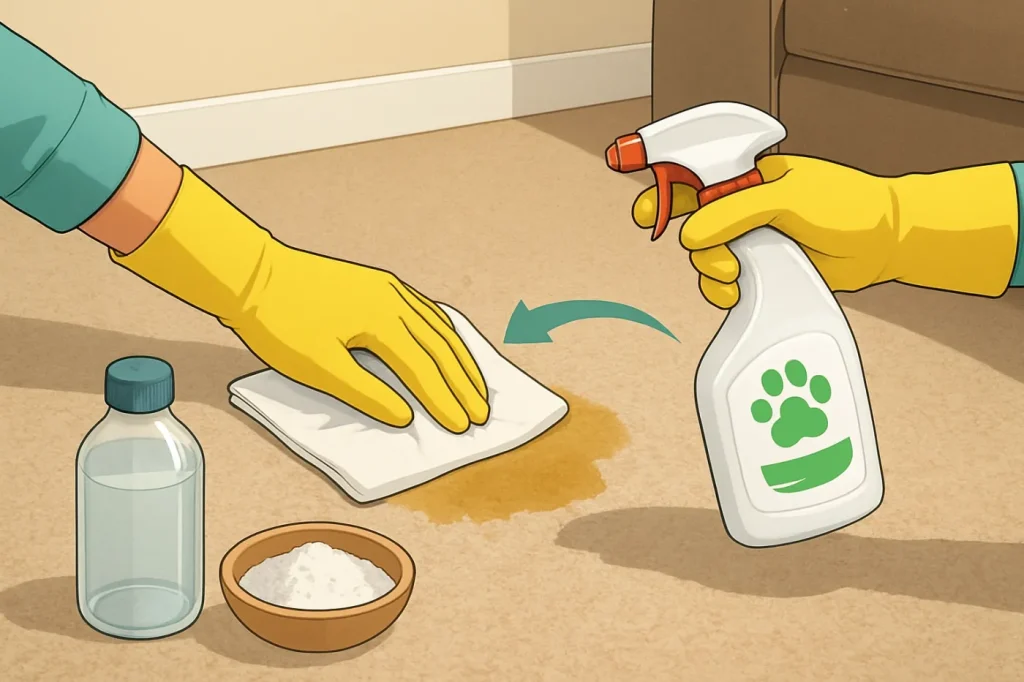
- Gently work the cleaner into the fibers with your fingers (wear gloves) or a soft brush, without aggressive scrubbing.
Step 4: Give the cleaner enough time to work
- Check the label for dwell time. Many products suggest around 10–30 minutes, with longer times for old or heavy stains.
- For old or stubborn spots, cover the area with a damp towel to keep it from drying out too quickly while the enzymes work.
Enzymes need time in a moist environment to break down urine residues. Wiping them up too soon is a common reason smells return.
Step 5: Blot and dry the carpet thoroughly
- After the dwell time, blot up the cleaner with dry towels until the area feels just slightly damp.
- If the carpet is still very wet, place a stack of towels over the spot and weigh them down with something heavy for an hour or two.
- Allow the carpet to air-dry completely. Use fans or open windows to improve airflow.
Avoid using high heat directly on the spot, such as a hot hair dryer or steam, because it can set any remaining odor and may damage fibers.
Step 6: Check for lingering odor and repeat if needed
Once the area is fully dry, smell it up close.
- If the smell is gone: vacuum the area to lift the fibers and remove any dried residue from the cleaner.
- If a faint odor remains: repeat the enzyme treatment, making sure you cover slightly beyond the original spot.
- If the smell is strong or covers a large area: urine may be in the padding or subfloor. Review the section on professional help below.
Checklist: fresh vs old dog urine stains on carpet
Use this practical checklist to decide what to do based on the age and severity of the stain.
Fresh dog urine stain (still wet or within a few hours)
- Find the full wet area (use a gloved hand or dry paper towel to feel for dampness beyond the obvious spot).
- Blot up as much urine as possible with white towels. Do not rub.
- Lightly rinse with cool water and blot again.
- Apply a pet-safe enzyme cleaner, covering slightly beyond the damp area.
- Let it sit for the full label time; keep it slightly moist if needed.
- Blot and dry thoroughly; use fans to speed drying.
- Once dry, sniff-test the area up close.
- Repeat enzyme treatment if any odor remains.
- Clean any nearby spots your dog may also have used.
Old or mystery urine stain (dry, yellowed, or only smells sometimes)
- Locate the source area: look for yellowing, use your nose, or consider a pet urine detector light if needed.
- If safe, check carpet backing and padding in a hidden corner to understand how deeply urine can soak.
- Pre-dampen the stained area with a little cool water so the enzyme cleaner can spread more evenly.
- Apply a generous amount of enzyme cleaner so it can reach deeper layers.
- Allow extra dwell time as recommended for old stains.
- Blot and dry thoroughly; repeat at least once if odor persists after drying.
- If odor is still strong after several treatments or seems to fill the room, consider professional cleaning.
- If your dog keeps returning to the same spot, review house-training and possible health issues with your veterinarian.
Choosing pet-safe products to remove urine smell from carpet
When comparing products, focus on safety, how they handle odor, and whether they are suitable for your specific carpet or rug.
What to look for in a pet-safe urine cleaner
- Clear labeling for pet urine: Look for wording that mentions dog or pet urine and odor removal on carpet or rugs.
- Enzyme or bio-enzymatic formula: These are designed to break down urine proteins rather than just perfume the area.
- Safety statements: Choose products that state they are safe for pets and children when used as directed, and always follow the directions.
- Surface compatibility: Confirm the cleaner is safe for your type of carpet, rug, or upholstery (synthetic, wool, etc.).
- Clear instructions: Good products explain how much to apply, how long to leave it, and whether rinsing is needed.
Helpful tools and supplies for urine cleanup
You do not need a closet full of specialty cleaners, but a small kit makes accidents easier to handle:
- A pet-safe enzyme cleaner for urine and other organic stains.
- Plain baking soda for light odor absorption after cleaning (sprinkle on dry carpet, let sit, then vacuum).
- White paper towels or cloths to avoid color transfer and see how much urine you are lifting.
- A small soft brush to gently work cleaner into fibers when needed.
- Optional: a wet/dry vacuum to extract rinse water and cleaner from deeper in the carpet.
For a broader guide to handling different pet messes on carpet, including poop and vomit, you can also read how to clean dog and cat urine from carpet for more context on cleaning techniques.
Common mistakes to avoid when removing dog urine smell from carpet
Avoiding a few typical errors can save you time and prevent permanent odor.
Using steam cleaners or very hot water directly on urine
High heat can set urine stains and odor into carpet fibers and padding. Steam cleaners may push urine deeper instead of removing it. If you use a carpet machine, choose cool or lukewarm settings and pair it with a pet-safe solution designed for urine.
Rubbing or scrubbing aggressively
Scrubbing can:
- Spread the urine outward, making the stain larger.
- Damage carpet fibers, leaving a rough or fuzzy patch.
- Push urine deeper, making it harder for cleaners to reach.
Firm blotting and gentle agitation with a soft brush are usually enough.
Stopping treatment too soon
Spraying a cleaner once and wiping it up quickly often leaves odor-causing residues behind. If the smell returns when the room is warm or humid, the urine was not fully removed. Give enzyme cleaners enough time and be prepared to repeat the process, especially on old stains.
Masking odor instead of removing it
Strong fragrances, air fresheners, or general-purpose cleaners may cover the smell for a while but do not remove the urine that attracts your dog back to the same spot. Focus on products that break down urine, not just perfume it.
Ignoring repeat accidents
If your dog keeps peeing on the carpet:
- The original odor may still be present and acting as a cue.
- Your dog may not be fully house-trained in that area.
- There could be a medical issue, especially if accidents are new or frequent.
Cleaning is only part of responsible pet ownership. Combine odor removal with training and, if needed, a conversation with your veterinarian.
DIY cleaning vs professional help: how to decide
Not every urine problem needs a professional, but some situations are difficult to fix on your own. Use these decision points to choose.
When DIY cleaning is usually enough
DIY methods with a good enzyme cleaner are often suitable when:
- The accident is small and fresh.
- There are only one or two spots to treat.
- The carpet is in otherwise good condition.
- The odor is mild and improves after one or two enzyme treatments.
When to call a professional carpet cleaner
Consider professional cleaning when:
- You notice a strong urine smell in the room even after cleaning visible spots.
- Your dog has been using the same area repeatedly for a long time.
- There are large or multiple stained areas you cannot fully locate.
- You suspect urine has reached the padding or subfloor (for example, the carpet feels dry but the smell is intense).
- You have tried several rounds of enzyme cleaner and the odor still comes back.
Professional cleaners can use equipment that flushes and extracts more deeply than typical home tools. If the subfloor is damaged or heavily soaked, a flooring specialist may need to assess whether sections of padding or flooring should be replaced.
Preventing repeat urine accidents on carpet
Removing the smell is only half the job. Preventing new accidents protects your carpet and supports responsible pet ownership.
Make the cleaned area unattractive for peeing
- After cleaning and drying, block access to the area for a while using a baby gate, playpen, or closed door if possible.
- Place a bed, toy, or feeding station over the former pee spot once it is fully dry; many dogs avoid soiling where they rest or eat.
- Use a pet-safe deterrent spray if your dog keeps targeting the same area and the product is compatible with your carpet.
Strengthen house rules and routines
Clear house rules help dogs understand where they are allowed to go. If you want ideas for setting boundaries and routines, you may find house rules every responsible dog owner should have helpful. Key habits include:
- Regular, predictable potty breaks, especially for puppies and senior dogs.
- Supervision when your dog is loose on carpeted areas, particularly during training.
- Using crate training or confinement when you cannot supervise, if appropriate for your dog.
- Rewarding your dog generously for going in the right place.
Rule out medical causes
If your dog suddenly starts peeing indoors or cannot hold it as long as usual, contact your veterinarian. Health issues can cause accidents even in well-trained dogs, and no amount of cleaning will solve the problem without addressing the underlying cause.
Decision checklist: what to do next about dog urine smell in your carpet
Use this decision checklist to plan your next steps.
- Is the stain fresh?
- Yes → Blot, rinse lightly, apply enzyme cleaner, let sit, blot and dry. Repeat if needed.
- No / not sure → Treat as an old stain: locate carefully, soak with enzyme cleaner, allow extra dwell time, repeat.
- How big is the affected area?
- Small (one spot) → DIY cleaning is usually fine.
- Large or multiple spots → Consider a combination of DIY and professional cleaning.
- Does the odor return after cleaning?
- No → Vacuum, monitor, and focus on prevention.
- Yes, slightly → Repeat enzyme treatment and ensure full drying.
- Yes, strongly or the whole room still smells → Urine may be in padding or subfloor; get a professional opinion.
- Is your dog having frequent accidents?
- Occasional and understandable (new puppy, schedule change) → Tighten training and supervision.
- New or frequent in a previously house-trained dog → Contact your veterinarian to check for health issues.
FAQ about getting dog urine smell out of carpet
What should I understand first about getting dog urine smell out of carpet?
The most important point is that you must remove or break down the urine itself, not just cover the smell. Dog urine can soak into carpet backing and padding, and as it dries it leaves residues that keep releasing odor. Blotting quickly, using a pet-safe enzyme cleaner, giving it enough time to work, and fully drying the area are all necessary. If you only spray a scented cleaner on the surface, the smell is likely to return and your dog may keep peeing in the same spot.
What common mistakes make dog urine odor stay in carpet longer?
Typical mistakes include scrubbing instead of blotting, using very hot water or steam directly on urine, and relying on strong fragrances instead of enzyme cleaners. Another frequent issue is not giving the cleaner enough dwell time or stopping after one treatment on an old stain. Ignoring repeated accidents without checking training routines or possible health problems can also lead to ongoing odor and damage.
What should I do after I have removed the dog urine smell from my carpet?
Once the area is clean and dry, vacuum to lift the fibers and remove any dried cleaner residue. Then focus on prevention: block or supervise access to the spot for a while, place a bed or feeding station there if appropriate, and tighten your potty routine with regular outdoor breaks and rewards. If accidents continue despite good training, talk with your veterinarian to rule out medical causes and review your overall house rules for your dog.
What is a good next step if I still smell dog urine after several cleanings?
If you still notice a strong urine smell after several careful enzyme treatments and full drying cycles, the urine may be in the padding or subfloor. At that point, it is reasonable to consult a professional carpet cleaner that offers pet-odor treatments. They can assess how deep the contamination goes and whether more intensive cleaning or partial replacement of padding or flooring would be the most effective long-term solution.