
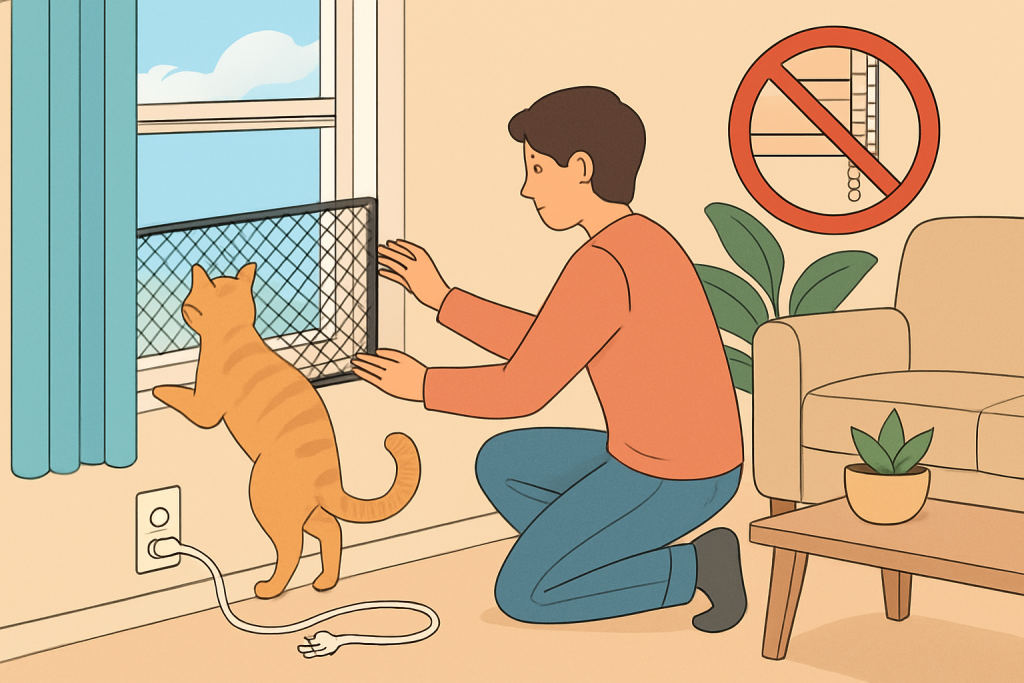
Pet proofing an apartment for a cat means two things at the same time: keeping your cat safe and keeping your landlord happy. You need to block hazards, prevent damage to floors and walls, and set up a small space so your cat feels calm and entertained instead of bored and destructive.
Below is a practical, renter-friendly guide for U.S. apartments: what to change, what to protect, and what to document before and after move-in.
Key apartment-specific risks for cats and your security deposit
Most apartments share the same problem areas. Use this quick overview to spot what matters most in your place:
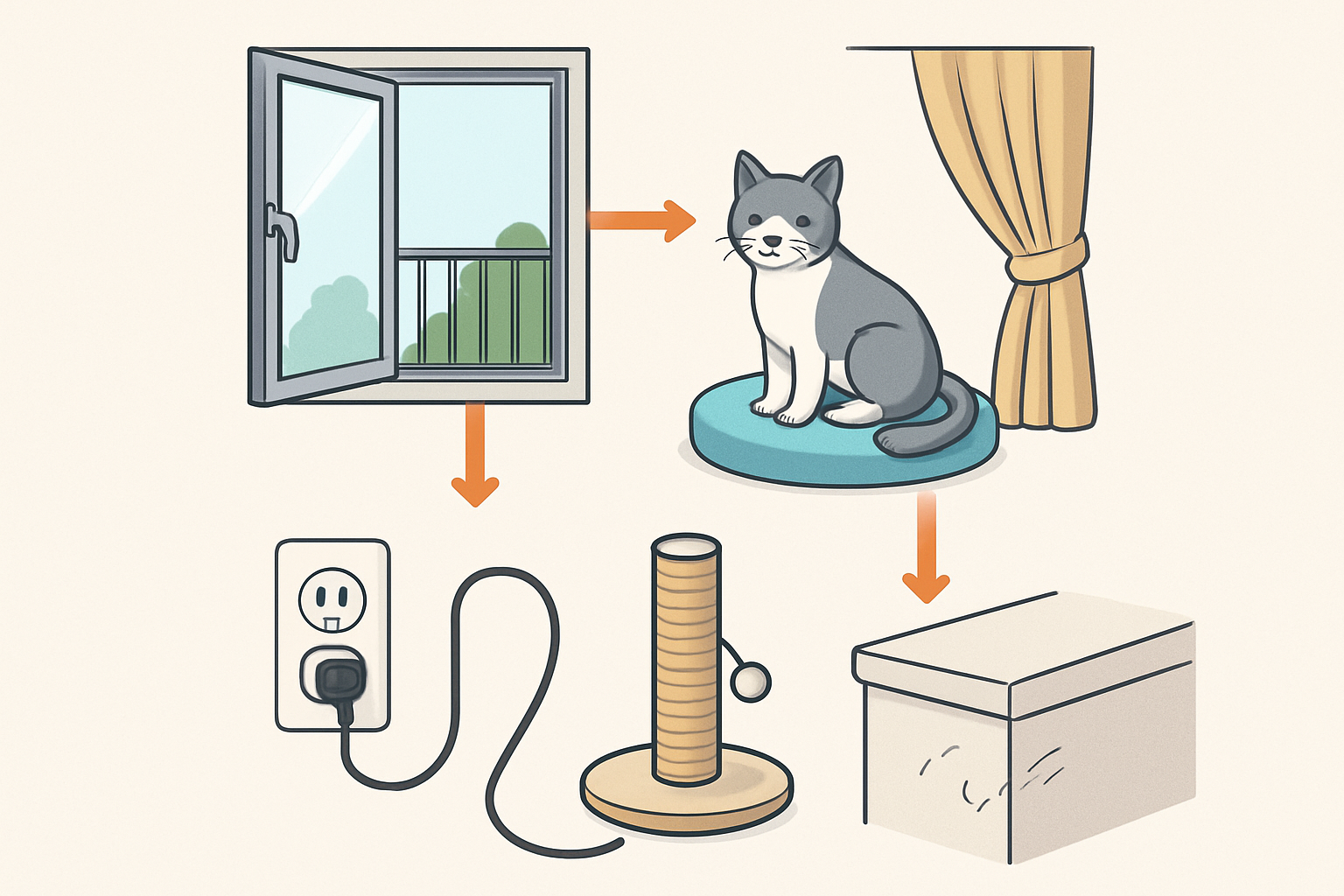

- Windows and balconies – Tilted or open windows, loose screens, and balcony railings can let a cat slip or fall. Even indoor-only cats may try to chase birds or bugs.
- Blind and curtain cords – Long dangling cords can tangle around a cat’s neck or paws and are tempting chew toys.
- Exposed cords and chargers – Power cords, laptop chargers, and phone cables can be chewed, which can damage electronics and may expose your cat to electrical hazards.
- Small objects and clutter – Hair ties, rubber bands, earrings, bottle caps, and kids’ toys can be swallowed or cause choking.
- Toxic plants and flowers – Many common houseplants and bouquets are unsafe for cats if chewed or ingested, so each one needs to be checked.
- Cleaning products and chemicals – Bleach, detergents, drain cleaners, and even some “natural” sprays can irritate paws, mouths, and lungs.
- Soft surfaces and trim – Carpets, door frames, window sills, and baseboards are prime scratching targets that can cost you part of your deposit.
- Noise and thin walls – Meowing at night, running zoomies, or knocking things over can quickly annoy neighbors in multi-unit buildings.
- Lease rules and pet clauses – Pet deposits, monthly pet fees, and damage rules affect what you can install and how you handle repairs.
In a small apartment, these risks are all packed into one space, so a bit of planning up front saves stress later.
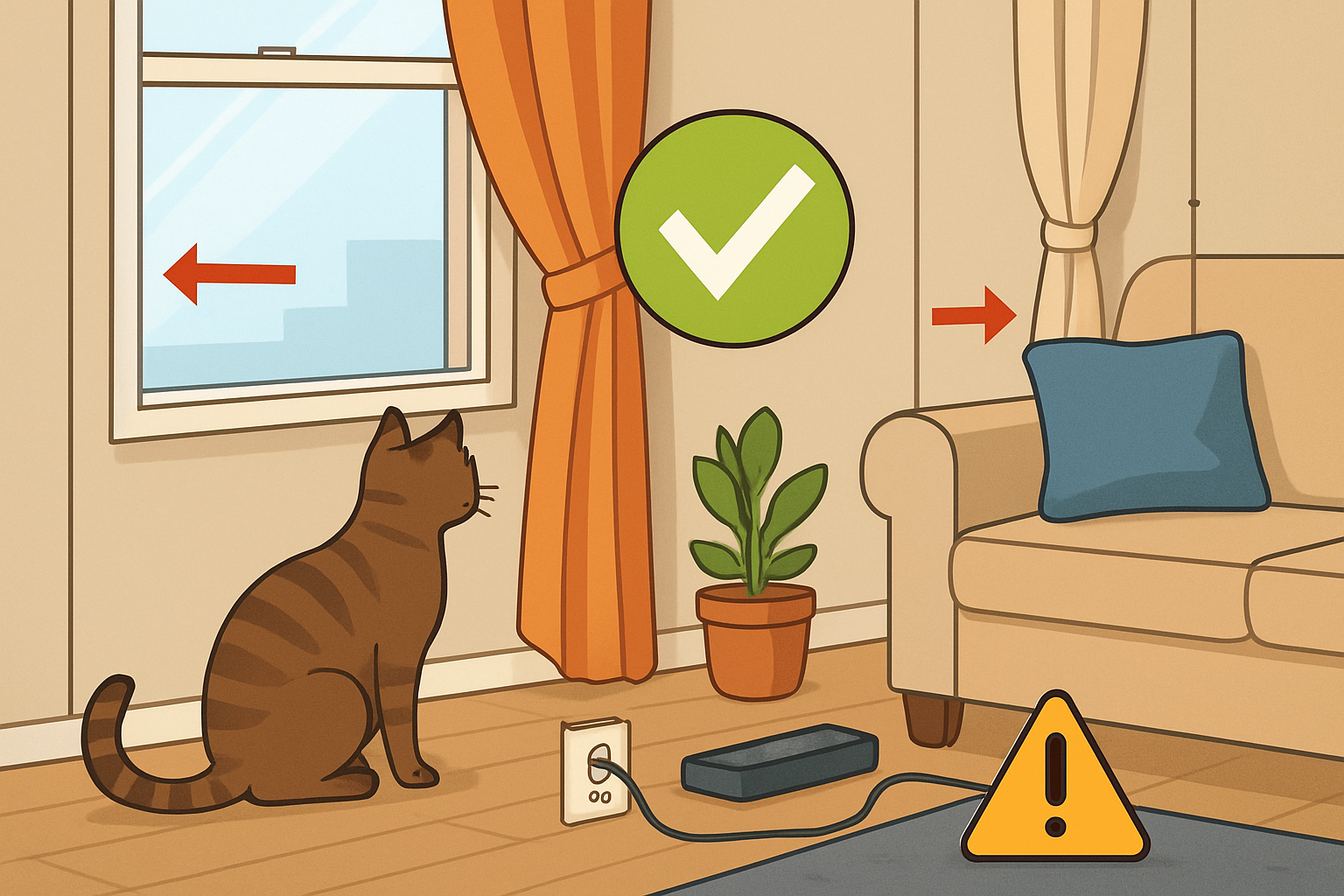
Room-by-room pet-proofing checklist for a cat-friendly apartment
Walk through your apartment with this checklist before your cat arrives and again after the first week, when you’ve seen what they actually try to get into.
Entryway and hallway
- Check for gaps around the door where a cat could slip out; add a draft stopper or rolled towel if needed.
- Hang keys, leashes, and bags on hooks instead of leaving them on the floor or low tables.
- Use a covered shoe rack or bin so laces and insoles don’t become chew toys.
- Place a doormat to catch litter and dirt from paws as your cat comes from the litter box or balcony.
Living room and bedroom
- Secure tall furniture (bookcases, TV stands) to the wall with removable straps so they can’t tip if a cat climbs.
- Move breakables (frames, candles, vases) off open shelves to enclosed cabinets or higher, stable surfaces.
- Bundle and cover cords with cord covers, cable boxes, or split loom tubing; tape loose cords along walls.
- Shorten or tie up blind and curtain cords so they hang well above your cat’s reach.
- Remove or secure small objects like hair ties, jewelry, and coins in lidded containers.
- Provide at least one scratching post or pad near the bed and couch to protect furniture and door frames.
- Add soft resting spots (cat bed, blanket) in quiet corners and near windows.
Kitchen
- Keep trash in a lidded bin or inside a cabinet to prevent rummaging and ingestion of food scraps or packaging.
- Store cleaners and detergents in cabinets with child locks or out of reach.
- Never leave stovetop burners unattended; use back burners when possible and keep handles turned inward.
- Check dishwasher, oven, and fridge before closing; curious cats may climb inside warm or open appliances.
- Keep plastic bags and food wrappers out of reach to reduce suffocation or ingestion risks.
- Wipe spills quickly so your cat doesn’t walk through or lick up cleaners or hot liquids.
Bathroom
- Keep the toilet lid closed to reduce the chance of drinking or falling in.
- Store medications, razors, and cosmetics in cabinets, not on the sink edge.
- Hang shower curtains so they don’t pool on the floor where they can be chewed.
- Use a hamper with a lid so socks and underwear don’t become toys.
- Check behind the toilet and under the sink for gaps where a cat could get stuck.
Windows, balcony, and HVAC
- Inspect window screens for holes or loose frames; ask maintenance to repair or reinforce if needed.
- Use window stops or limited opening so windows only open a small, controlled amount.
- On balconies, supervise your cat and consider temporary netting or barriers if allowed by your lease.
- Check radiators, baseboard heaters, and vents so your cat can’t get trapped or burned; block access if necessary.
Hazard list: plants, cords, windows, cleaners, and small objects
Some risks are easy to overlook because they’re part of everyday life. Use this focused hazard list as a second pass after your room-by-room walk-through.
Plants and flowers
- Assume any plant or bouquet could be unsafe until you’ve checked it against a trusted pet-safety list or with your vet.
- Remove or rehome plants that are known to be dangerous to cats; replace with cat-safe options or artificial plants.
- Place remaining plants on high shelves or in rooms you can close, but remember many cats can jump surprisingly high.
- Avoid using fertilizer sticks or pellets in indoor pots where a cat can dig.
Cords and chargers
- Group cords together and run them through cord protectors or behind furniture.
- Unplug and store phone and laptop chargers when not in use; keep them in drawers or boxes.
- Offer safe chew alternatives like rubber toys or cat-safe chew sticks to redirect chewing behavior.
Windows and doors
- Test each window by gently pushing on the screen; if it moves, request a repair or add a secondary tension rod or brace if allowed.
- Use locking window handles or simple window stops to reduce the chance a cat can push a window wider.
- Consider a double-door routine (entryway gate or closing an inner door) when you come and go to reduce escape risk.
Cleaning products and air fresheners
- Store all cleaners (including “green” products) in closed cabinets.
- Avoid spraying air fresheners or strong cleaners directly on surfaces your cat licks or sleeps on.
- Rinse mops and cloths thoroughly and hang them to dry out of reach.
- Ventilate well after heavy cleaning; open windows with secure screens or use exhaust fans.
Small objects and clutter
- Do a floor-level sweep once a day for hair ties, rubber bands, twist ties, and small toys.
- Use small storage boxes or drawer organizers for craft supplies, sewing kits, and office items.
- Keep kids’ toys in bins with lids or on shelves your cat can’t easily access.
Comparison table: renter-safe vs. risky cat-proofing choices
When you rent, some solutions are smart and reversible, while others can cost you money at move-out. Use this table to choose safer options.
| Goal | Renter-safe option | Risky option for your deposit |
|---|---|---|
| Protect walls from scratching | Freestanding scratching posts, cardboard scratchers, removable wall guards | Permanent wall panels, glued carpet squares, deep claw marks in drywall |
| Secure furniture | Removable anti-tip straps using existing hardware or tension poles | Drilling multiple new holes into walls or floors without permission |
| Block access to a room | Pressure-mounted baby gate or playpen panels | Screwed-in gates or altering doors and frames |
| Protect floors | Area rugs, washable runners, plastic mats under litter box | Glued-down coverings, painting or staining floors |
| Window safety | Requesting maintenance to fix screens, using removable window stops | Installing permanent bars or drilling into window frames |
| Odor control | Covered litter box if cat accepts it, regular scooping, air purifier | Heavy perfumes or candles that can stain surfaces or bother neighbors |
Litter box placement strategies for small apartments
In a small space, the litter box affects both your cat’s comfort and your relationship with neighbors. A few placement rules help reduce accidents and odors.
General placement rules
- Choose a quiet, low-traffic area where your cat won’t be startled by doors, loud appliances, or feet constantly walking by.
- Avoid placing the box right next to food and water; most cats prefer some separation.
- Make sure your cat has 24/7 access; don’t put the box in a room that might be closed off.
- Use a litter mat under and in front of the box to catch tracked litter and protect floors.
Small-space placement ideas
- Bathroom corner – Works well if there’s room away from the shower and door swing. Good ventilation helps with odor.
- Bedroom closet with door propped open – Only if there’s enough airflow and you can keep the door partially open at all times.
- Hallway nook – A small alcove or space behind a screen can hide the box while staying accessible.
- Under a table or desk – Use a tablecloth or curtain to hide the box while leaving a clear entrance for your cat.
Odor and neighbor considerations
- Scoop at least once or twice daily to keep smells down in a small space.
- Use a sealed trash can or litter disposal bin for clumps instead of an open trash can.
- Consider a small air purifier near the litter area if odors travel into shared hallways.
- If your cat suddenly avoids the box or has frequent accidents, consult a vet; medical issues can be involved. A regular checkup schedule like an annual vet care schedule for dogs and cats USA can help you stay ahead of problems.
Noise, meowing, and neighbor-friendly habits in apartments
Apartment walls can be thin, and even normal cat behavior can sound loud next door. A few habits reduce complaints and keep everyone happier.
- Play before bedtime – Schedule an active play session in the evening so your cat is more likely to sleep at night instead of racing around.
- Use soft toys at night – Swap noisy balls with bells for soft toys and tunnels that don’t thump on the floor.
- Add rugs and runners – Soft surfaces reduce the sound of running paws and dropped toys, especially on hard floors.
- Address excessive meowing – Check basics first: food, water, clean litter, and attention. If meowing is new or intense, talk to a vet to rule out health issues.
- Communicate with neighbors – A quick friendly chat to let them know you’re working on noise control can build goodwill if there’s ever a problem.
Renter-specific tips: leases, deposits, and documentation
Before you bring a cat home, protect yourself on paper as well as in your space.
Lease clauses to check
- Whether cats are allowed and if there are any limits on number or type of pets.
- Any pet deposits or monthly pet fees and whether they are refundable.
- Rules about alterations (drilling, painting, installing shelves or gates).
- Requirements for vaccination or vet records if your building asks for them.
- Any noise or nuisance clauses that could apply to pets.
Talking to your landlord or manager
- Ask in writing before installing anything that might leave marks (shelves, wall-mounted cat furniture).
- Offer to use removable solutions first and explain how they protect the property (scratchers, rugs, corner guards).
- Keep copies of emails or messages where you get permission for changes.
Financial planning for pet-related costs
- Include pet deposits and fees in your move-in budget.
- Plan for ongoing costs like food, litter, and vet care. A guide to the monthly cost of owning a cat in the US can help you estimate your budget.
- Set aside a small emergency fund for unexpected vet visits or repairs if your cat damages something.
Simple enrichment ideas for indoor-only apartment cats
A bored cat is more likely to scratch furniture, chew cords, and meow at night. Enrichment doesn’t have to be expensive or permanent.
Vertical space and hiding spots
- Add a cat tree or tower that fits your ceiling height; place it near a window if possible.
- Use sturdy bookshelves with a few cleared shelves as climbing and resting spots.
- Offer cardboard boxes and paper bags (handles removed) as hideouts.
Play and mental stimulation
- Schedule at least one or two interactive play sessions daily with wand toys or balls.
- Rotate toys every few days so they feel new and interesting.
- Use puzzle feeders or treat balls to make mealtime more engaging.
- Set up a window perch so your cat can watch birds, people, or traffic safely.
Comfort and routine
- Keep a consistent feeding and play schedule to help your cat feel secure.
- Provide multiple resting spots in different temperatures (cozy bed, cool floor, sunny window).
- Introduce new items slowly so your cat doesn’t feel overwhelmed in a small space.
Before-and-after move-in inspection and photo checklist
Good documentation can protect your security deposit if there’s ever a question about what your cat actually damaged.
Before your cat moves in
- Read your lease and note all pet-related clauses.
- Walk through with your phone camera and take clear photos or short videos of:
- Floors (scratches, stains, worn areas)
- Walls and baseboards (existing scuffs or holes)
- Doors and frames (scratches, chew marks)
- Window screens and sills (tears, chips)
- Bathroom and kitchen fixtures (chips, rust, stains)
- Label and store photos by room and date in a folder or cloud storage.
- Send a brief note to your landlord or manager listing any major pre-existing issues, with photos attached.
After your cat has lived there a while
- Every few months, re-check high-risk areas (doors, corners, window sills) for new scratches or damage.
- If you notice damage starting, add protection (scratch guards, extra rugs, more scratchers) and redirect your cat.
- Before moving out, take updated photos from similar angles as your original set.
- Do simple touch-ups you’re allowed to do, like filling small nail holes or cleaning scuffs, to show good faith.
Step-by-step algorithm: how to cat-proof your apartment in one weekend
If you’re short on time, follow this simple sequence.
- Walk and list (about 30–45 minutes)
- Walk through each room and write down obvious hazards: cords, plants, open shelves, loose screens.
- Note where you might place the litter box, food, and a scratching post.
- Secure safety basics (about 1–2 hours)
- Shorten blind cords and bundle electrical cables.
- Close and test window screens; request repairs if needed.
- Move cleaners, meds, and small objects into closed storage.
- Set up cat zones (about 1–2 hours)
- Place the litter box, food, and water in stable, separate spots.
- Set up at least one scratching post near your main seating area.
- Create a resting spot near a window and one in a quiet corner.
- Protect your deposit (about 1 hour)
- Lay rugs or mats in high-traffic and litter areas.
- Add corner guards or removable wall protectors where needed.
- Take “before” photos of all key surfaces.
- Fine-tune after arrival (ongoing)
- Watch what your cat actually goes for in the first week.
- Adjust furniture, add more scratchers, or block access to new hazards as you discover them.
Common mistakes when pet proofing an apartment for a cat
- Waiting until after problems start – Scratched doors and chewed cords are harder to fix than to prevent.
- Underestimating vertical reach – Many cats can jump onto refrigerators, high shelves, and curtain rods.
- Hiding the litter box too well – If it’s hard for you to reach, it’s probably inconvenient for your cat too, which can lead to accidents.
- Ignoring boredom – A cat with no toys or climbing options is more likely to create their own “fun” with your belongings.
- Using strong scents to cover odors – Heavy perfumes or cleaners can bother both cats and neighbors; regular cleaning works better.
- Skipping documentation – Without photos and notes, it’s harder to show that some damage was pre-existing.
Focused FAQ on cat-proofing apartments and daily routines
How do I cat proof my apartment?
Start by removing or securing obvious hazards: loose cords, toxic plants, small objects, and unstable furniture. Make windows and balconies safer with secure screens and limited openings. Set up a quiet litter area, a feeding area, and at least one scratching post and resting spot. Finally, add enrichment like toys and climbing options so your cat is less likely to damage the apartment out of boredom.
What is the 3-3-3 rule for cats?
The “3-3-3 rule” is a simple way to think about adjustment time for a new cat. Many cats need roughly three days to start to decompress, about three weeks to learn the household routine, and around three months to settle in and show more of their personality. These time frames are approximate; some cats adjust faster, others slower.
Can I leave a cat alone for 4 days in an apartment?
Leaving a cat completely alone for several days can be risky. Food, water, and litter can run out or become dirty, and health issues can go unnoticed. If you must be away, arrange for a trusted person or professional sitter to check on your cat at least once a day to refresh food and water, scoop the litter box, and make sure your cat is safe and well.
How do I “catify” a small apartment?
Focus on vertical space and variety. Add a cat tree or shelves your cat can safely climb, create window perches for bird-watching, and provide multiple cozy beds or blankets. Rotate toys, use puzzle feeders, and schedule daily play sessions. In a small space, even a few well-placed items can make the apartment feel much larger and more interesting to your cat.
How many litter boxes do I need in a small apartment?
Many people aim for at least one litter box per cat. In a very small apartment, you may not have room for more than one, so focus on keeping it very clean and easy to access. If you have more than one cat, adding a second box in another quiet spot can reduce stress and accidents if space allows.
Do I need special paperwork for my cat in a U.S. apartment?
Requirements vary by landlord and building. Some ask for proof of vaccinations or a recent vet visit, and many require a pet addendum to your lease plus a pet deposit or monthly fee. Check your lease and ask your landlord what they need. Keeping your cat’s vet records organized and up to date is helpful for housing and for your cat’s health.
With a bit of planning, you can create an apartment that feels safe and comfortable for your cat while also protecting your security deposit and keeping peace with neighbors.