
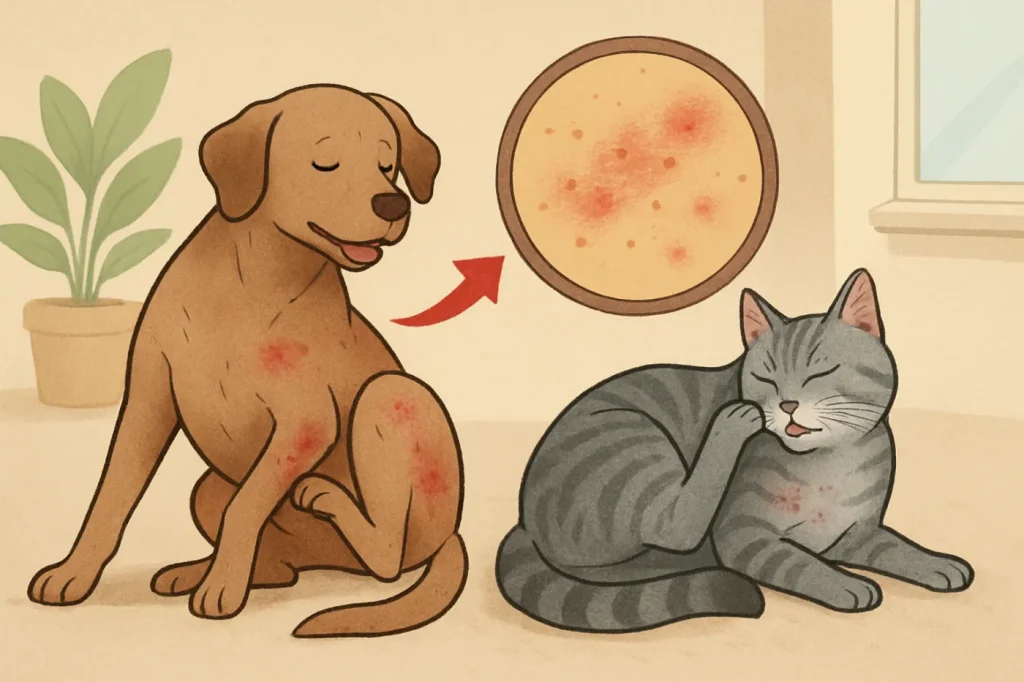
How to tell if your dog or cat’s itching is likely allergies
If your dog or cat is scratching, licking, or getting repeated ear or skin problems, allergies are one of the most common underlying causes in U.S. pets. You cannot confirm an allergy at home, but you can:
- Spot patterns that make allergies more or less likely.
- Rule out obvious problems like fleas or visible infections.
- Decide how urgent a vet visit is.
- Collect the kind of notes and photos that help your vet reach an answer faster.
Allergies in pets usually show up as itchy skin, paw licking, and ear issues more than sneezing or runny noses. If your pet has ongoing or recurring problems in these areas, it is time to think about allergies and plan a structured next step.
Why allergies are so common in dogs and cats in the United States
Allergies are a frequent reason for vet visits in the United States. Several everyday factors make them more likely:
- Indoor lifestyles: Many pets spend most of their time indoors, exposed to dust, dander, and cleaning products all year.
- Close contact with people and fabrics: Pets sleep on beds, couches, and carpets that collect pollen and dust and may carry residues from detergents or fragrances.
- Long allergy seasons: In many U.S. regions, plants release pollen for much of the year, so outdoor allergens are hard to avoid.
- Stable, repetitive diets: Some pets develop sensitivities to ingredients they eat every day for months or years.
For most dogs and cats, allergies are a long-term management issue, not a one-time fix. Recognizing early signs and getting a diagnosis helps you control flare-ups, avoid complications like ear infections, and keep your pet more comfortable over time.
Key signs of allergies in dogs vs cats
Allergies in pets most often affect the skin, ears, and paws. Breathing problems and eye issues can happen but are less common than in people.
Comparison of allergy signs in dogs and cats
| Sign | Dogs – how it usually looks | Cats – how it usually looks | What it may mean |
|---|---|---|---|
| Itching & scratching | Scratching sides, belly, armpits, groin, or base of tail; may wake at night to scratch | More subtle; may scratch head/neck or groom one area repeatedly | Very common with environmental or flea allergies; also with infections or mites |
| Excessive licking | Constant paw licking or chewing; fur between toes may look red or brown-stained | Overgrooming belly, inner thighs, or sides; fur may look thin or broken | Often allergy-related, but can also be pain or stress-related |
| Red, inflamed skin | Red patches on belly, groin, armpits, face, or paws; skin may feel warm | Redness may hide under fur; small scabs or bumps may appear when you part the hair | Can be allergies, infections, or reactions to bites or contact irritants |
| Recurrent ear problems | Head shaking, ear scratching, dark or smelly discharge, redness inside ear | Head shaking, pawing at ears, sensitivity when ears are touched | Very common with allergies; often combined with yeast or bacterial infection |
| Hot spots | Moist, raw, painful patches that appear suddenly on neck, rump, or thighs | Less common but possible; may appear as raw areas from overgrooming | Often triggered by allergies, fleas, or localized irritation |
| Hair loss | Thin coat or bald patches where the dog licks or scratches | Symmetrical hair loss on belly, sides, or legs from overgrooming | Can be allergies, parasites, hormonal issues, or stress |
| Digestive upset | Intermittent soft stool, gas, or vomiting along with skin signs | Occasional vomiting or soft stool plus itching or overgrooming | May point toward food sensitivity, but many other causes are possible |
Patterns that strongly hint at allergies
You are more likely dealing with allergies if you notice:
- Chronic or recurring issues: Problems improve with treatment but keep coming back.
- Seasonal flares: Itching or ear problems worsen at certain times of year (for example, every spring or fall).
- Multiple body areas: Paws, ears, belly, and armpits are all involved, not just one small spot.
- Other pets or people are fine: No one else in the home is itchy or rashy, which makes some contagious causes less likely.
Allergies vs other causes of itching: comparison table
Many conditions can mimic allergies, and pets often have more than one problem at the same time. Use this table to compare what you are seeing with common causes of itching and skin problems.
| Pattern you notice | More typical of allergies | More typical of fleas/parasites | More typical of infection or other issues |
|---|---|---|---|
| Where your pet is most itchy | Paws, face, ears, belly, armpits, groin | Base of tail, rump, back of legs; may see flea dirt or live fleas | One specific area that is red, swollen, or painful |
| How long it has been going on | On and off for months or years; often seasonal flares | Can appear suddenly after exposure; may improve after good parasite control | Often more sudden; may follow a wound, moisture, or intense scratching |
| Other pets or people in the home | Usually unaffected, unless they have their own allergies | Sometimes also itchy if fleas or contagious mites are present | Usually unaffected, unless there is a contagious skin condition |
| Skin appearance | Red, thickened, or darkened skin; chronic licking; several body areas involved | Small red bumps or scabs, especially over back and tail base | Oozing, crusts, pustules, or circular hair loss patches |
| Response to basic changes | May improve with vet-prescribed allergy meds or diet trials | Improves with consistent flea/parasite control and cleaning | Improves with targeted treatment such as antibiotics or antifungal therapy |
This table cannot replace a veterinary exam, but it can help you describe what you are seeing and understand why your vet might test for parasites or infections before confirming allergies.
Home symptoms checklist: dogs vs cats
Use these checklists to organize what you are seeing before you call the vet. They help you notice patterns and give your vet a clearer picture.
Dog allergy signs checklist
Tick anything that applies to your dog over the past few weeks:
- Scratching most days of the week.
- Chewing or licking paws, especially at night or after walks.
- Red, stained, or swollen skin between toes.
- Red or darkened skin on belly, armpits, or groin.
- Head shaking or scratching at ears.
- Ear odor or discharge (brown, yellow, or waxy).
- Hot spots: sudden raw, moist, painful patches of skin.
- Hair thinning or bald spots where your dog licks or scratches.
- Itching that seems worse in certain seasons or after going outside.
- Soft stool, gas, or vomiting that comes and goes along with skin issues.
- Previous improvement with allergy medications prescribed by a vet.
The more boxes you tick—especially if problems are recurring or seasonal—the more likely allergies are part of the picture.
Cat allergy signs checklist
Cats often hide discomfort, so look closely and gently part the fur.
- Frequent grooming that seems more intense or longer than usual.
- Overgroomed belly, inner thighs, or sides with thin or missing fur.
- Small scabs or bumps, especially around head, neck, or back.
- Scratching at ears or head shaking.
- Redness or discharge in the ears.
- Hair loss in symmetrical patterns on both sides of the body.
- Vomiting hairballs more often than usual, especially if combined with overgrooming.
- Itching or skin changes that seem to flare in certain seasons.
- Any change in behavior (hiding, irritability) that appears along with skin issues.
If several of these apply and fleas or obvious parasites are not found, allergies are a strong possibility.
When itching and skin issues might NOT be allergies
Allergies are common, but they are not the only cause of itching. Here are frequent look-alikes and how they differ.
Fleas and flea allergy
Even indoor pets can get fleas, and a single bite can trigger intense itching in sensitive animals.
- What you might see: Scratching, chewing at the base of the tail, rump, and back legs; tiny black specks (flea dirt) on the skin; live fleas if you look closely.
- How it differs from many allergies: Itching is often worst over the lower back and tail base. Environmental allergies often involve paws, face, and belly more.
- What to do: Use a vet-recommended flea control product for all pets in the home and clean bedding and soft furnishings. If itching continues after good flea control, allergies may also be present.
Skin infections (bacterial or yeast)
Infections often develop on top of allergies because inflamed skin is easier to infect.
- What you might see: Red bumps, pimples, scabs, greasy or flaky skin, strong odor, or circular patches of hair loss.
- How it differs: Infections can appear suddenly in one area and may be painful to touch. Allergies alone are usually more about itch than pain.
- What to do: These usually need prescription treatment. Do not use leftover antibiotics or human creams without vet guidance.
Mites and other parasites
Mites can cause intense itching and hair loss.
- What you might see: Patchy hair loss, crusty or scaly skin, especially around ears, elbows, or face; sometimes other pets or people in contact become itchy.
- How it differs: Some mites are contagious between animals, and signs can appear quickly.
- What to do: Your vet can perform skin tests to look for mites. Many modern parasite preventives also cover some mites, but you still need a diagnosis.
Pain, stress, or boredom
Licking and chewing are not always about itch.
- Pain: A dog may lick one joint or one paw because it hurts, not because of allergies. A cat may overgroom a painful area.
- Stress or boredom: Some pets develop compulsive grooming or licking habits when anxious or under-stimulated.
If your pet focuses on one specific spot without obvious skin changes, or licks mostly when left alone, discuss pain and behavior with your vet as well as allergies.
Red-flag signs that need urgent vet care
Most allergy problems are uncomfortable but not emergencies. Some signs, however, mean you should seek veterinary help right away.
Structured urgent-care checklist
Contact a vet or emergency clinic as soon as possible if you notice any of the following:
- Breathing problems
- Rapid, labored, or noisy breathing.
- Open-mouth breathing in cats (especially at rest).
- Gums or tongue that look pale, blue, or gray.
- Facial swelling or hives
- Sudden swelling of lips, eyelids, muzzle, or face.
- Raised bumps (hives) over large areas of the body.
- Severe, sudden itching
- Frantic scratching or biting that will not stop.
- Self-injury, bleeding, or tearing at the skin.
- Large or rapidly spreading skin lesions
- Big raw areas, blisters, or skin peeling.
- Hot spots that spread quickly or ooze heavily.
- Systemic illness signs
- Lethargy, collapse, or unwillingness to stand.
- Repeated vomiting or diarrhea, especially with blood.
- Refusing food and water for more than a day, or any refusal in a very young, elderly, or fragile pet.
These signs can be related to severe allergic reactions or other serious conditions. Home care is not enough in these situations.
How to keep a simple home observation log before the vet visit
A clear record of what you see at home can save time and reduce guesswork. You do not need anything special—your phone notes app or a notebook works well.
What to track day to day
For at least 1–2 weeks (or until your vet visit), jot down:
- Date and time: Note when itching or other signs are worst (for example, evenings, after walks, after meals).
- Itch level: Use a simple 1–5 scale where 1 = barely scratching and 5 = constant, frantic scratching or licking.
- Body areas affected: Paws, ears, belly, armpits, tail base, face, etc.
- Food and treats: Brand and flavor of food, any new treats, table scraps, or chews.
- Environment: Weather (dry, humid, windy), time spent outside, new plants, grass, or locations visited.
- Products used: Any new shampoos, cleaners, air fresheners, laundry detergents, or yard treatments.
- Medications or supplements: Anything given, including over-the-counter products, and whether it seemed to help.
Why this log matters
Your vet will look for patterns such as:
- Itching that worsens after certain foods or treats.
- Flares that follow outdoor time or specific seasons.
- Reactions after baths, grooming, or house cleaning.
These patterns help your vet decide whether to focus first on environmental allergies, food sensitivities, parasites, or other causes.
How to document symptoms with photos and notes for the vet
Good photos and notes can show your vet how your pet looks during a flare, even if the skin looks better on exam day.
Taking useful photos
Follow these tips:
- Use natural light when possible: Take photos near a window or outside in the shade so redness and texture are clear.
- Get both close-up and context shots: One photo of the whole area (for example, the whole paw), and one close-up of the worst spot.
- Show both sides for comparison: For paws, ears, or legs, photograph the affected side and the normal side.
- Include a time reference: Make sure your phone saves the date, or add the date in your notes.
- Keep it low-stress: If your pet resists, keep it brief and calm; safety and comfort come first.
What to write down with each photo
Next to each photo in your notes, record:
- Where on the body it is.
- How long it has looked like this.
- Whether it seems itchy, painful, or both.
- Any changes in smell (for example, yeasty, sour, or no odor).
- Any treatments tried (wipes, creams, shampoos) and how your pet reacted.
Bringing this information to your appointment helps your vet see the full story, not just a single moment.
Common mistakes when dealing with suspected allergies
Avoiding a few frequent missteps can protect your pet and speed up diagnosis.
Assuming all itching is “just allergies”
Itching can come from parasites, infections, pain, or other diseases. Treating everything as allergies can delay finding the real cause.
Better approach: Treat allergies as one possibility. Let your vet rule out fleas, mites, and infections first.
Using human medications without vet guidance
Some human allergy medications are unsafe or require different dosing in pets. Human creams or ointments can be harmful if licked.
Better approach: Call your vet before giving any medication, even if it is over the counter.
Stopping treatment too soon
Owners sometimes stop ear drops, shampoos, or pills as soon as the pet looks better. Incomplete treatment can allow infections or inflammation to return quickly.
Better approach: Follow the full course prescribed, and schedule rechecks if advised.
Changing too many things at once
Switching food, shampoo, cleaning products, and treats all at the same time makes it hard to know what helped.
Better approach: Make changes one at a time, under veterinary guidance, and track them in your log.
Ignoring mild, recurring signs
Mild itching or occasional ear problems that keep returning are easy to brush off, but they often mean a chronic issue is developing.
Better approach: Mention any recurring pattern at your pet’s routine checkups. A proactive plan is easier and often more comfortable for your pet. When you plan regular visits, it can help to look at an annual vet care schedule for dogs and cats USA so allergy checks fit into preventive care.
Decision checklist: what to do next if you suspect allergies
Use this step-by-step process to decide your next moves.
Step 1: Check for obvious parasites and emergencies
- Look for fleas or flea dirt with a fine-toothed comb, especially over the back and tail base.
- Check for ticks or visible mites around ears, neck, and between toes.
- Scan for any red-flag signs from the urgent-care checklist (breathing issues, facial swelling, severe distress). If present, seek emergency care.
Step 2: Confirm parasite control (if safe for your pet)
- If your pet is not on regular flea and tick prevention, ask your vet which product is appropriate and start it as soon as possible.
- If your pet is already on prevention, confirm you are using it consistently and correctly (right dose, on schedule, applied or given as directed).
Step 3: Begin your observation log and photo record
- Track itch level, body areas, food, environment, and products for at least 1–2 weeks.
- Take clear photos of any skin or ear changes when they are at their worst.
Step 4: Schedule a vet appointment
- If your pet is uncomfortable most days, has recurring ear or skin problems, or you suspect allergies, book a visit soon.
- Bring your log, photos, and a list of all foods, treats, medications, and supplements.
Step 5: Follow the diagnostic and treatment plan
Your vet may recommend:
- Skin tests (such as scrapings or swabs) to look for parasites or infection.
- Ear tests to check for yeast or bacteria.
- Blood work or other tests if needed.
- A trial of allergy medication or a special diet.
Follow instructions closely and keep noting changes. This helps your vet adjust the plan over time.
Step 6: Plan for long-term management
Allergies are usually managed, not cured. Long-term plans may include:
- Regular parasite prevention.
- Medications to control itch or inflammation when needed.
- Special diets or ingredient trials for suspected food sensitivities.
- Routine ear cleaning or medicated baths as directed.
- Environmental changes, such as more frequent vacuuming or washing bedding.
As you think about long-term costs, you may also want to consider whether is pet insurance worth it for dogs and cats in your situation, especially if your pet is likely to need ongoing allergy care.
FAQ about signs of allergies in dogs and cats
How can I tell if my dog is allergic to my cat or my cat is allergic to my dog?
True pet-to-pet allergies are possible but not the most common cause of itching. You might suspect a dog–cat allergy if:
- Symptoms started soon after introducing the new pet.
- Itching or skin issues flare when the animals cuddle or share bedding.
- Other common causes (fleas, mites, infections, food) have been ruled out by your vet.
Your vet may suggest separating the pets temporarily, cleaning shared areas more often, and watching whether signs improve. Because many other causes are more likely, a thorough exam is important before blaming the other pet.
What are the most common things dogs and cats are allergic to?
Pets can react to many things, but frequent triggers include:
- Flea bites: Even a small number of bites can cause a big reaction in sensitive pets.
- Environmental allergens: Pollen, mold, dust, and storage mites in carpets or bedding.
- Food ingredients: Some pets develop sensitivities to certain proteins or other components in their diet.
- Contact irritants: Shampoos, cleaning products, or yard treatments that touch the skin.
Your vet can help narrow down which category is most likely based on your pet’s history and exam.
What can be mistaken for allergies in dogs and cats?
Several problems can look like allergies:
- Fleas and other parasites that cause intense itching.
- Skin and ear infections that develop quickly and may be painful.
- Hormonal conditions that cause hair loss or skin changes.
- Pain or behavioral issues that lead to licking or chewing one area.
Because these can overlap with allergies, your vet may test for several things at once before deciding on a treatment plan.
What can I do at home to help my pet’s allergy signs before the vet visit?
You can support your pet’s comfort and prepare for the appointment by:
- Keeping up with vet-approved flea and tick prevention.
- Washing pet bedding regularly in hot water with a mild, fragrance-free detergent.
- Vacuuming carpets and soft furnishings often to reduce dust and dander.
- Rinsing your dog with plain water after walks in high-pollen seasons, if your vet agrees.
- Starting your observation log and photo record.
Avoid starting new medications or drastic diet changes without talking to your vet, as these can complicate diagnosis.
What should I do after recognizing possible allergy signs in my dog or cat?
Once you suspect allergies:
- Rule out obvious emergencies using the red-flag checklist.
- Check for fleas and confirm parasite prevention is in place.
- Begin tracking symptoms and taking photos.
- Schedule a vet appointment and bring your notes, photos, and product list.
- Work with your vet on a long-term plan that fits your pet’s needs and your household.
Recognizing allergy signs early and documenting them clearly is a key part of responsible pet ownership and helps your dog or cat stay more comfortable over the long term.