
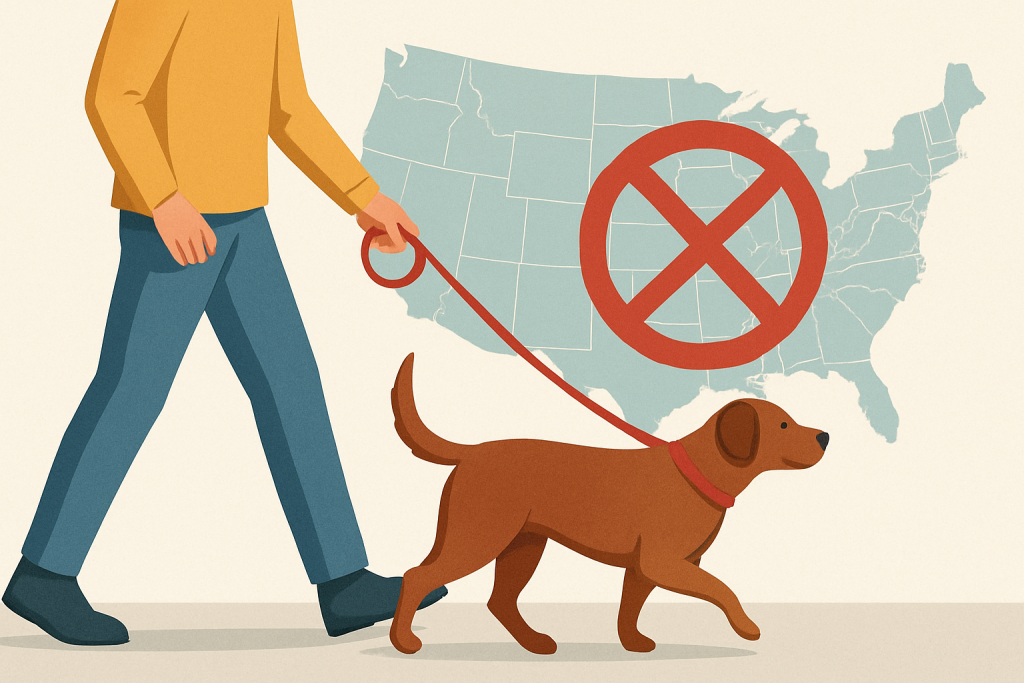
If you walk a dog in the United States, you are expected to keep the dog under control at all times. In many places that means a physical leash; in others it can mean strict voice control or using only designated off‑leash areas. The exact rule depends on your state, city, and even the specific park you are in.
In practical terms, you should assume your dog needs to be leashed in public unless you have checked the current local rules and are in a clearly marked off‑leash or dog park area.
Why dog leash laws exist and what they usually cover
“Leash law” is a general term for rules that require dogs to be restrained or under control in public or outside the owner’s property. These rules can be written at several levels:
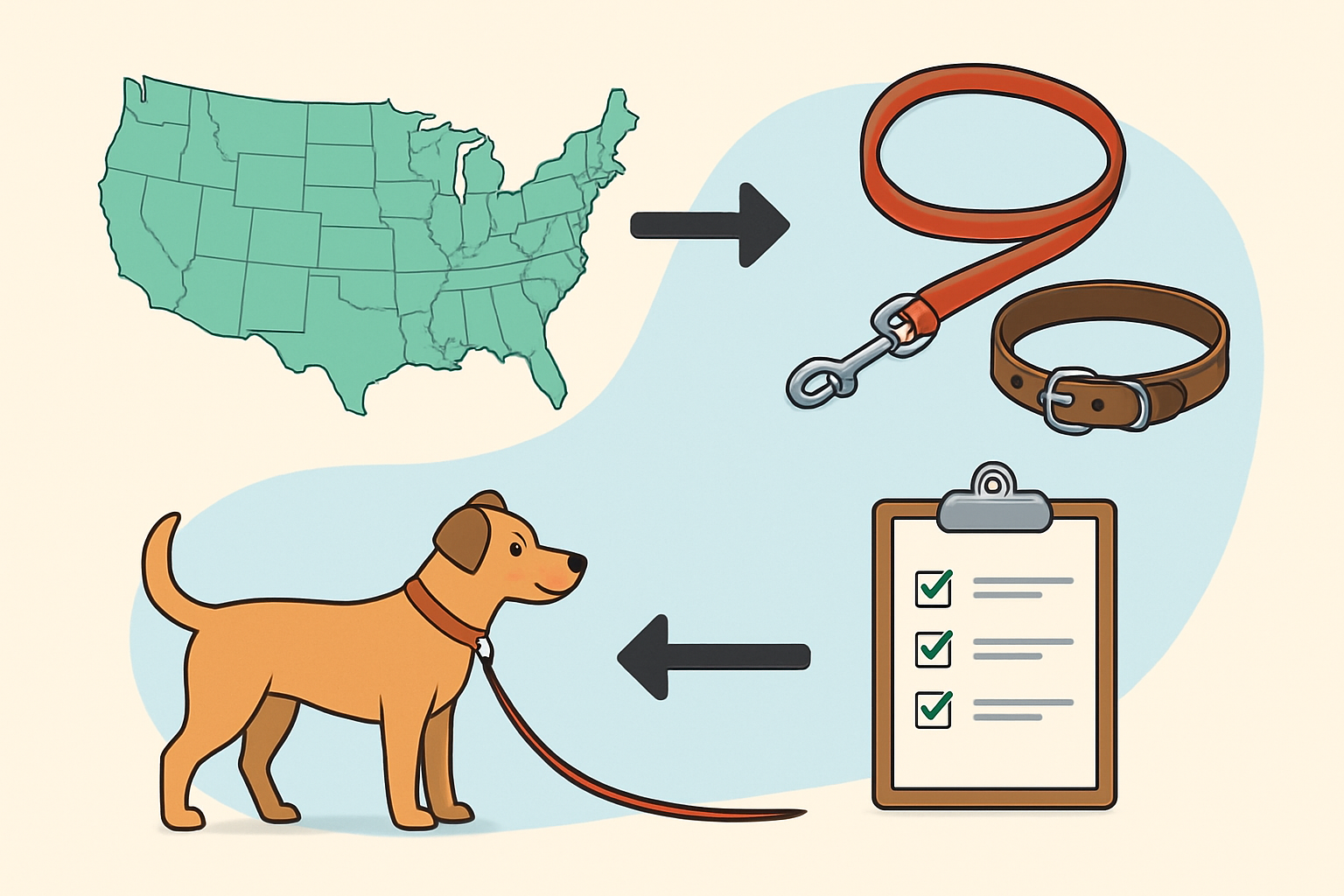
- State-level rules – broad requirements or minimum standards, sometimes only for certain situations (for example, in parks or when a dog is off the owner’s property).
- County or city ordinances – detailed, day‑to‑day rules about leashes, voice control, and off‑leash areas.
- Property rules – policies for apartments, HOAs, parks, trails, beaches, and businesses.
Leash rules exist to balance several interests:
- Public safety – preventing bites, knock‑downs, and traffic accidents.
- Animal welfare – keeping dogs from running into roads, getting lost, or fighting with other animals.
- Wildlife and environmental protection – reducing chasing of wildlife and damage to sensitive habitats.
- Neighbor relations – preventing dogs from roaming onto other people’s property or frightening passersby.
Even when a law allows “voice control” instead of a physical leash, you are still responsible for what your dog does. If your dog injures someone or another animal, you can face fines, civil liability, or other consequences even if you technically complied with a local rule.
Regional patterns in US dog leash laws
Every state handles dog control a little differently. Some states set a basic framework and leave details to cities and counties. Others rely heavily on local ordinances. Because the exact wording and requirements change over time, treat the table below as a pattern guide, not a substitute for checking your current local rules.
To make the patterns easier to use, the table also includes example numeric checks you can apply locally (such as leash length or re‑checking rules on a schedule). These are practical benchmarks, not legal limits, so always verify with your own city or county.
| US region | Common leash law pattern | Typical on‑leash areas | Typical off‑leash / voice‑control situations | Practical numbers to double‑check locally |
|---|---|---|---|---|
| Northeast (e.g., NY, MA, NJ, PA) | Often stricter, with many cities requiring leashes in most public spaces. | City streets, sidewalks, most parks, public transit areas. | Designated dog runs, fenced dog parks, some rural trails. |
|
| Mid‑Atlantic & Great Lakes (e.g., MI, OH, MD) | Mix of state rules and strong local ordinances; control off property is emphasized. | Neighborhoods, school grounds, many public parks. | Some rural areas may allow voice control; private property with permission. |
|
| South (e.g., FL, GA, TX, NC) | Varies widely by city and county; many urban areas have clear leash requirements. | Cities, suburbs, many beaches and boardwalks, shared residential areas. | Some rural counties use “running at large” rules or voice control; private land. |
|
| Midwest (e.g., IL, MN, MO, KS) | Common to see leash requirements in towns and cities; rural areas may be looser. | City limits, town parks, school zones, event areas. | Designated off‑leash parks, some open‑space trails, farms with owner permission. |
|
| Mountain West (e.g., CO, UT, ID, MT) | Strong outdoor culture; mix of leash rules and voice‑control zones. | Downtowns, busy trailheads, campgrounds, wildlife areas. | Certain trails or open spaces allow off‑leash with strict recall. |
|
| Pacific Coast (e.g., CA, OR, WA) | Many cities require leashes; some coastal areas have special rules. | Urban areas, promenades, most public beaches and parks. | Clearly signed off‑leash beaches or dog parks; some forest trails. |
|
| Alaska & Hawaii | Rules vary by island or municipality; sensitive wildlife and tourism areas. | Tourist zones, beaches, parks, residential streets. | Some rural or low‑traffic areas may allow voice control. |
|
Because patterns vary even within a single state, always confirm the current rule for the specific city, county, or park you are visiting.
How leash rules change between states, cities, and properties
Here are typical types of variation you may encounter as you move between states or even neighborhoods. These are examples of how rules are often structured, not exact legal descriptions.
On‑leash requirements
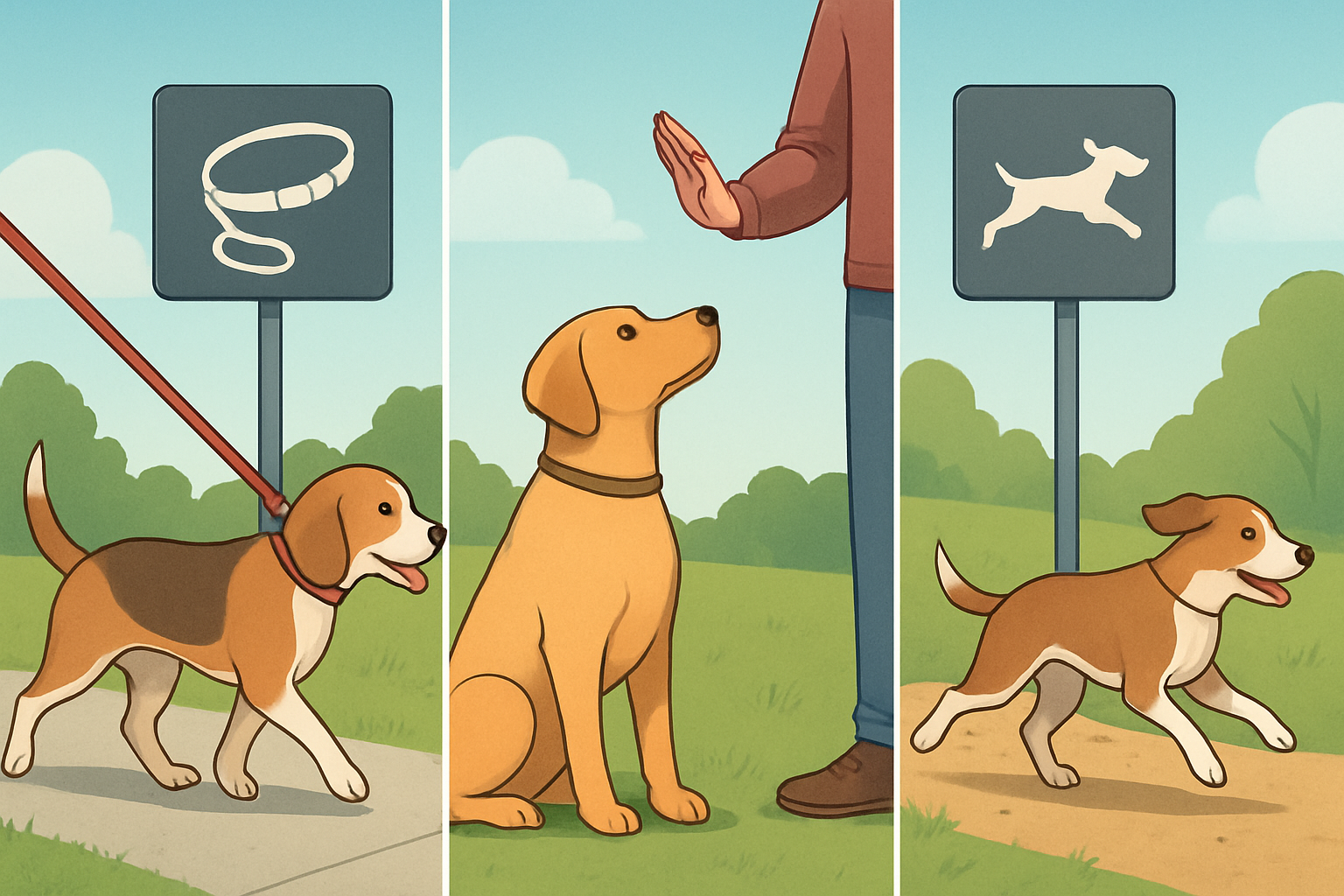
- Standard city rule – dog must be on a physical leash whenever on public streets, sidewalks, or in parks.
- Leash length limits – some cities cap leash length to keep dogs close in crowded areas. A common practical range for crowded sidewalks is about 4–6 feet, but you must check your own city’s limit.
- Time‑based rules – certain beaches or parks may require leashes during busy hours or wildlife nesting seasons but allow more freedom at other times.
Voice‑control or “under control” rules
- Voice control allowed in low‑traffic areas – some rural counties or open‑space areas allow off‑leash dogs if they stay close and respond immediately to commands.
- “Under control” language – a state or city may say a dog must be “under control” off the owner’s property. In practice, this often means the dog must not chase, bite, or harass people or animals and must return promptly when called.
- Breed or behavior conditions – a dog with a history of aggression may be required to be leashed and sometimes muzzled, even where other dogs can be off‑leash.
Designated off‑leash areas
- Fenced dog parks – usually the safest and clearest off‑leash option, with posted rules at the gate.
- Off‑leash hours in regular parks – some cities allow off‑leash use in certain fields early in the morning or late at night.
- Off‑leash beaches or trails – often clearly signed at the entrance; rules may change seasonally to protect wildlife or manage crowds.
Because these examples are general patterns, not precise legal descriptions, always read the posted signs and check local ordinances before unclipping the leash.
Step‑by‑step: how to find your exact local leash ordinances
To know whether your dog must be leashed in a specific place on a specific day, follow this practical search process.
- Identify the governing area
- Start with your city or town name if you are inside city limits.
- If you are outside city limits, note the county name.
- For parks, trails, or beaches, check who manages the land: city, county, state park system, or a federal agency.
- Search city or county codes online
- Go to your city or county’s official website.
- Look for sections labeled “municipal code,” “ordinances,” “animal control,” or “pet regulations.”
- Use the site’s search bar with terms like “dog leash,” “running at large,” “animal control,” or “dogs in parks.”
- Check park or trail rules
- Visit the official page for the park, trail, or beach you plan to visit.
- Look for a “rules,” “visitor information,” or “pets” section.
- When you arrive, read all posted signs at entrances, trailheads, and parking lots.
- Confirm with local authorities if anything is unclear
- Call or email your local animal control office, parks department, or non‑emergency police line with specific questions.
- Ask about any recent changes to leash rules or seasonal restrictions.
- Review private property rules
- For rentals, read your lease and pet addendum carefully.
- For HOAs, review the community rules and regulations or CC&Rs for pet sections.
- For workplaces or businesses, ask for the pet or service‑animal policy in writing.
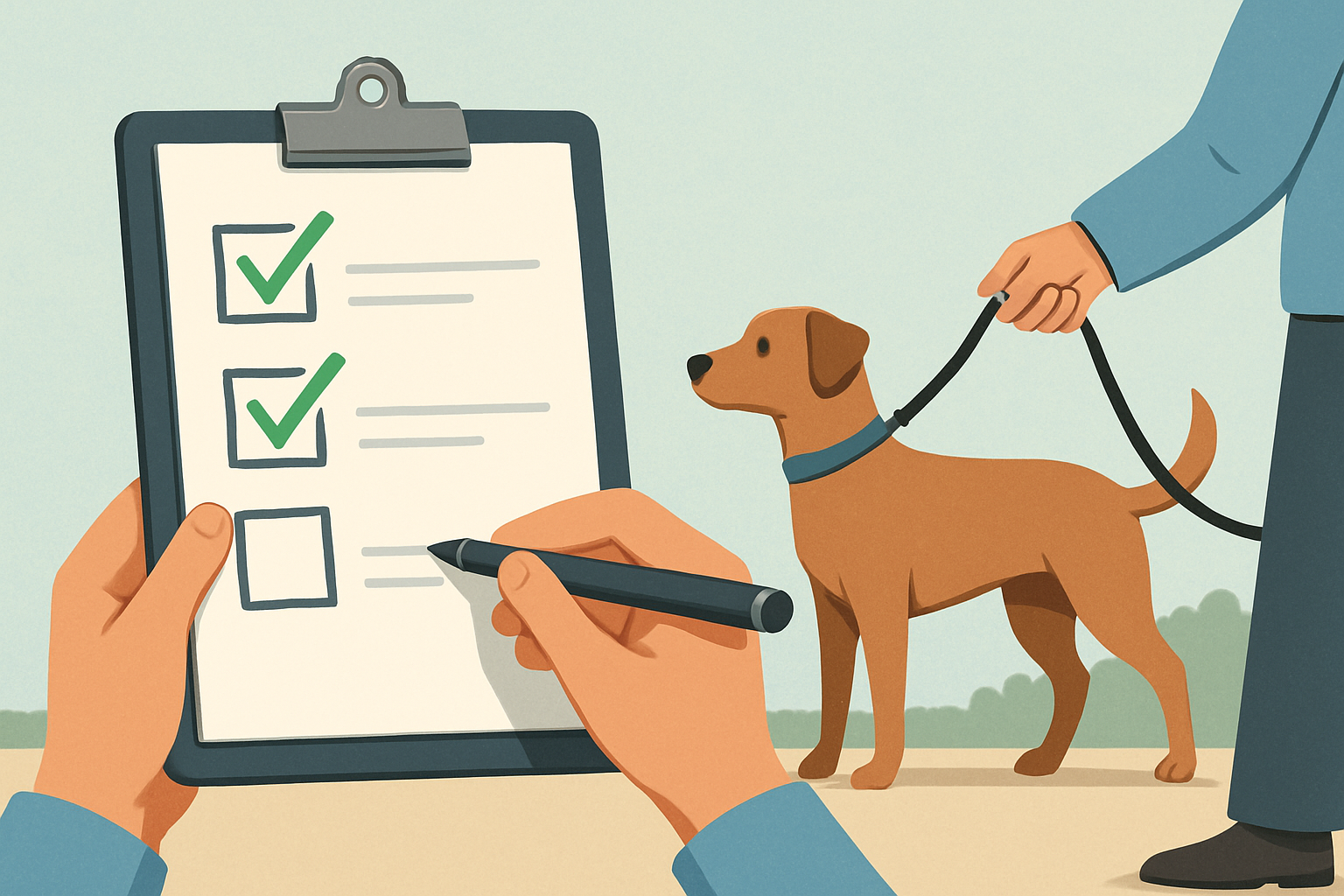
- Document key rules for your routine spots
- Make a short list of rules for your usual walking routes, dog parks, and favorite trails.
- Re‑check at least once a year or whenever you notice new signs or construction.
If you are a renter, it also helps to review a broader pet safety checklist for renters in the US so you understand how building rules and local ordinances work together.
Leash safety tips that go beyond the legal minimum
Following the law is only the starting point. Safe dog walking also depends on equipment, training, and how you behave around other people and animals.
Choosing safe leash and collar equipment
- Use a sturdy, well‑fitting collar or harness
- Check that you can fit about two fingers between the collar and your dog’s neck as a rough comfort guide.
- For dogs that pull or slip collars, a front‑clip harness or escape‑resistant harness often provides better control.
- Pick an appropriate leash type
- Standard fixed‑length leash (often around 4–6 feet) is usually safest in cities and crowded areas.
- Long lines are useful for training in open spaces but can tangle in crowds or near roads.
- Retractable leashes can create sudden slack and are harder to control in busy areas; many trainers recommend avoiding them on sidewalks or near traffic.
- Check equipment regularly
- Inspect clips, stitching, and webbing for wear at least once a month.
- Replace gear that shows fraying, rust, or broken parts.
Training basics for safer walks
- Teach a reliable “come” cue
- Practice indoors first, then in fenced yards, then in gradually more distracting environments.
- Reward generously when your dog returns, even if it takes a moment.
- Practice loose‑leash walking
- Reward your dog for walking beside you with a slack leash.
- When the dog pulls, stop or change direction instead of letting pulling “work.”
- Build calm behavior around triggers
- Work at a distance from other dogs, bikes, or joggers where your dog can still focus on you.
- Gradually decrease the distance as your dog stays calm.
Public etiquette that keeps everyone safer
- Ask before approaching – never let your dog rush up to another dog or person without permission, even if your dog is friendly.
- Shorten the leash in tight spaces – keep your dog close when passing others on sidewalks, trails, or in hallways.
- Pick up waste immediately – carry extra bags and dispose of them in proper bins.
- Avoid blocking paths – step aside when you stop to chat or check your phone so others can pass safely.
For broader home safety habits that complement leash use, you can also review a pet safety checklist for the home.
Special leash situations: parks, trails, beaches, apartments, and HOAs
Even if you know your city’s general leash rule, special locations often add extra layers of requirements.
Parks and playgrounds
- City parks – many require leashes everywhere except in clearly marked dog runs or off‑leash fields.
- Playgrounds and sports fields – dogs are often banned entirely or must stay outside fenced areas, even if the rest of the park allows them.
- Events and festivals – temporary rules may require shorter leashes or restrict dogs from certain zones.
Trails and natural areas
- Multi‑use trails – leashes are commonly required to protect cyclists, runners, and other walkers.
- Wildlife areas – rules may be stricter during nesting or migration seasons; some areas ban dogs entirely to protect sensitive species.
- Backcountry routes – some allow off‑leash with strict voice control; others require leashes at all times. Always check trailhead signs.
Beaches and waterfronts
- Public beaches – many have specific dog hours, seasonal bans, or leash‑only sections.
- Boardwalks and promenades – often require leashes and may limit dogs during peak tourist hours.
- Private or community beaches – HOAs or resorts may set their own pet rules that are stricter than local law.
Apartment complexes and HOAs
- Common areas – hallways, elevators, lobbies, and parking lots usually require leashes regardless of city rules.
- Pet relief zones – some complexes designate specific areas for dog toileting and may require leashes even in fenced courtyards.
- Breed, size, or number limits – these are private rules in leases or HOA documents; violating them can lead to warnings or lease issues even if your dog is legal under local law.
Before moving into a new rental or community, review both the lease and any pet addendum carefully. A first time dog owner checklist USA can help you think through rules, training, and safety together.
Consequences of ignoring leash and control rules
Failing to follow leash or control requirements can have several types of consequences. The exact outcome depends on your state and local ordinances, but these are common categories:
- Warnings and fines
- Animal control or law enforcement may issue a verbal or written warning for a first minor violation.
- Repeat or serious violations can lead to monetary penalties; the amount is set locally and can increase with each offense.
- Civil liability
- If your dog injures a person, another animal, or damages property, you may be responsible for medical or veterinary bills and other costs.
- Insurance policies sometimes consider whether you followed local leash rules when evaluating coverage.
- Animal control actions
- In serious cases, authorities may impound a dog temporarily.
- Dogs involved in severe incidents can be subject to special conditions, such as mandatory leashing, training requirements, or other restrictions.
- Relationship and community impact
- Conflicts with neighbors, landlords, or HOAs can escalate if your dog is repeatedly off‑leash where it should not be.
- Complaints can lead to stricter rules for everyone in the area.
Because exact penalties and procedures differ widely, always check your local ordinances and, if an incident occurs, consult with a local professional such as an attorney or animal control officer for guidance.
Comparison table: leash, voice control, and off‑leash options
The table below compares common control options and when they are usually appropriate. Always confirm what your local rules allow before choosing a method.
| Control option | Typical legal status | Best suited environments | Main benefits | Main risks or limits |
|---|---|---|---|---|
| Short fixed‑length leash with collar or harness | Widely accepted and often required in cities and public spaces. | Sidewalks, busy parks, building common areas, events. | High control, easy to keep dog close, simple to understand for others. | Less freedom for the dog; can cause pulling if not trained. |
| Long line (long leash) | Usually allowed where leashes are required, if you maintain control. | Open fields, quiet parks, training areas away from traffic. | More freedom while still technically leashed; good for recall practice. | Tangles easily; can trip people or other dogs if used in crowds. |
| Retractable leash | Often legal but sometimes discouraged or restricted in certain venues. | Open sidewalks or parks with moderate space and visibility. | Variable length without changing equipment; dog can explore more. | Less precise control; sudden extension can surprise others or reach roads. |
| Off‑leash with strict voice control | Allowed only where rules specifically permit it. | Designated off‑leash trails, open spaces, some rural areas. | Maximum freedom and exercise; good for well‑trained dogs. | High responsibility; risky near roads, wildlife, or other dogs; not legal everywhere. |
| Fully off‑leash in fenced dog park | Generally allowed inside designated dog park boundaries. | Fenced dog parks and dog runs with posted rules. | Socialization and exercise; dogs can run freely. | Requires close supervision; not all dogs enjoy crowded parks. |
Responsible alternatives to off‑leash in unsafe or illegal areas
If your dog needs more exercise or freedom than a typical sidewalk walk provides, there are safer and more responsible options than ignoring leash rules.
- Use fenced dog parks wisely
- Visit during less crowded times if your dog is shy or easily overwhelmed.
- Watch for rough play and step in early if things escalate.
- Try long‑line training in safe spaces
- Use a long line in a large, low‑traffic field or training area where leashes are still allowed.
- Practice recall and loose‑leash skills while giving your dog more room to move.
- Look for supervised play options
- Arrange playdates with compatible dogs in fenced yards.
- Consider supervised daycare or training classes that include controlled off‑leash time.
- Increase mental exercise
- Use sniff walks, puzzle feeders, and training games to tire your dog mentally.
- Short, focused training sessions can be as tiring as long physical walks for many dogs.
These alternatives help meet your dog’s needs without putting others at risk or violating local rules.
Common mistakes that make leash problems worse
Even well‑intentioned owners can unintentionally create risky situations. Avoid these frequent mistakes:
- Assuming “friendly” is enough – letting a “friendly” dog run up to strangers can still cause fear, falls, or fights, especially if the other dog is reactive or on a tight leash.
- Ignoring posted signs – walking past “dogs must be leashed” or “no dogs on field” signs can lead to complaints and fines.
- Using equipment that your dog can slip out of – loose collars or poorly fitted harnesses make escapes more likely if your dog spooks.
- Walking with distractions – focusing on your phone or headphones instead of your surroundings reduces your ability to react quickly.
- Letting children hold the leash in busy areas – children may not be strong or experienced enough to manage sudden lunges or conflicts.
- Assuming rules are the same everywhere – crossing a city boundary or entering a park can change the rules immediately.
Decision criteria: when your dog should definitely be leashed
Even in areas that allow voice control or off‑leash use, it is safer to keep the leash on in these situations:
- Near roads or parking lots – cars, bikes, and sudden noises can trigger unexpected movements.
- Around children, seniors, or people with mobility aids – a small bump can cause a serious fall.
- When your dog is new to you or the environment – recently adopted dogs or unfamiliar trails increase the chance of bolting or getting lost.
- If your dog has a history of reactivity or fear – a leash gives you more control to create distance from triggers.
- In areas with wildlife or livestock – chasing wildlife or farm animals can lead to injuries and serious legal consequences.
- Any time you are unsure of the rule – if you have not confirmed that off‑leash is allowed, keep the leash on.
Quick‑reference checklist for safe dog walking in the US
Use this checklist before and during walks to stay on the safe and legal side.
Before you leave home
- Check that your dog’s collar or harness fits and is in good condition.
- Choose a leash type and length appropriate for where you are going.
- Confirm you have ID tags on your dog and a microchip registered with current contact information.
- Pack waste bags and, if needed, water and a portable bowl.
- Review the basic route and destination (sidewalks, park, trail, beach) and whether you know the current leash rules there.
As you start your walk
- Keep the leash short but relaxed in busy areas.
- Watch for posted signs about dogs, leashes, or restricted areas.
- Scan ahead for other dogs, bikes, joggers, and children so you can adjust early.
During the walk
- Ask permission before allowing your dog to greet people or other dogs.
- Pick up and properly dispose of all waste.
- Move aside or shorten the leash when passing others on narrow paths.
- Watch your dog’s body language for signs of stress, fear, or over‑excitement.
Before going off‑leash anywhere
- Confirm that off‑leash is clearly allowed in that specific area and at that time.
- Test your dog’s recall on a long line first; only unclip if your dog returns promptly even with distractions.
- Check for nearby roads, cliffs, water hazards, wildlife, or livestock.
- Be ready to re‑leash quickly if conditions change or new people or dogs arrive.
FAQ about US dog leash laws and safety
Which states have leash laws for dogs?
Most US states address dog control in some way, but they do it differently. Some focus on preventing dogs from “running at large,” others set rules for dogs off the owner’s property, and many leave day‑to‑day leash details to cities and counties. Because of this variation, the only reliable way to know the rule that applies to you is to check your state and local ordinances and any posted signs where you walk.
Can my neighbors let their dogs run loose?
In many communities, dogs are not allowed to roam off their owner’s property without control. If a neighbor’s dog is regularly loose, check your city or county’s animal control rules to see how “running at large” or off‑leash dogs are handled. If you feel unsafe, you can usually contact local animal control or a non‑emergency police line to report concerns. Try to document dates, times, and locations before you call.
Is it legal to walk a dog without a leash?
Sometimes, but only in places where local rules specifically allow off‑leash or voice‑control walking. Many cities require leashes on sidewalks and in parks, while some rural areas or designated trails allow off‑leash with strict control. If you are not sure, assume a leash is required until you confirm otherwise with local ordinances or posted signs.
Do I legally have to have my dog on a lead?
Whether you must use a physical leash depends on your location and the specific situation. However, you are always responsible for keeping your dog under control and preventing harm. Even in areas that allow off‑leash dogs, you may still be liable if your dog injures someone or causes damage. When in doubt, using a leash is the safer choice.
How can I stay compliant when traveling between states?
Before traveling, look up basic pet rules for your destination state, plus any cities or parks you plan to visit. Check for vaccination requirements, “running at large” rules, and whether dogs are allowed on local beaches, trails, or transit. When you arrive, read posted signs carefully and keep your dog leashed until you are sure off‑leash is allowed.
Are leash laws the same for service dogs and emotional support animals?
Service dogs that are trained to perform tasks for a person with a disability generally must still be under control, which can mean on a leash, harness, or tether unless those devices interfere with the service dog’s work or the person’s disability. Emotional support animals do not have the same public access rights as service dogs and usually must follow the same leash rules as pets. For specific situations, check current federal guidance and your local ordinances.
What should I do if an off‑leash dog approaches my leashed dog?
Stay as calm as you can and avoid tightening the leash to the point that your dog feels trapped. In many cases, stepping between the dogs, using a firm voice to tell the other dog to go home, and moving away at an angle can reduce tension. If you are frequently approached by loose dogs in the same area, report the pattern to local animal control with dates, times, and locations.
Can leash violations affect my housing or insurance?
They can. Repeated complaints about off‑leash dogs in a rental or HOA community may lead to warnings, fees, or even lease issues under building rules. Some insurers also review dog‑related incidents when deciding coverage. Following local leash rules and your property’s pet policies reduces these risks.