
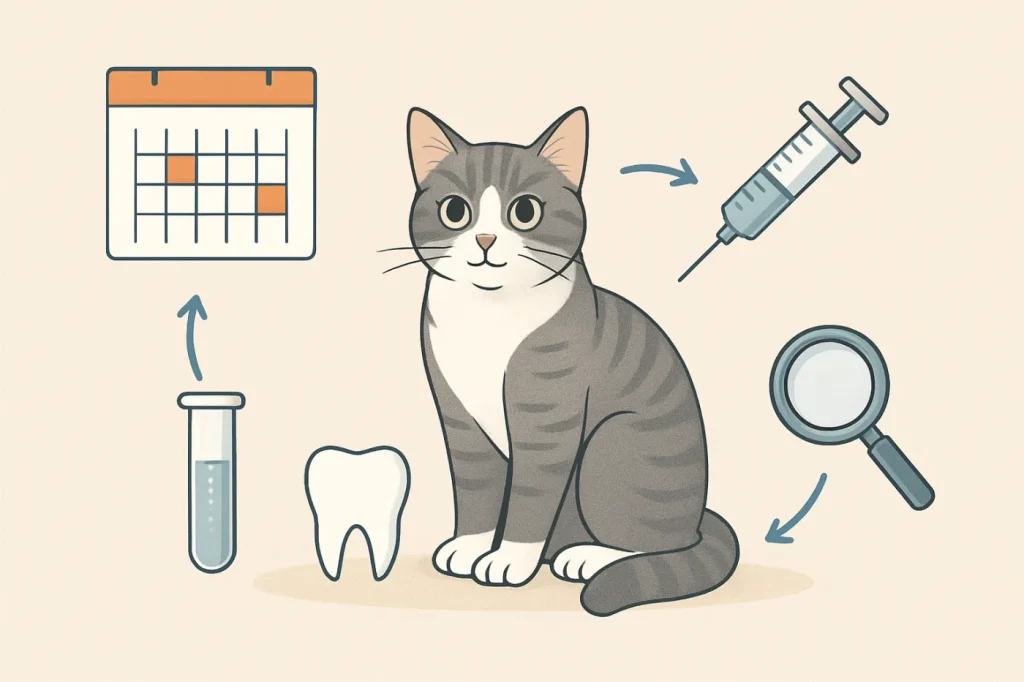
Indoor cats still need a clear preventive care schedule. Even though they live inside, they can gain weight, develop dental disease, pick up parasites, and hide serious illness until it is advanced. A simple rule of thumb for most healthy indoor cats in the United States is:
- Kittens: vet visits every few weeks for vaccines and checks
- Young adults (1–6 years): at least one full wellness exam per year
- Adults and seniors (7+ years): often two wellness exams per year, especially for older or medically fragile cats
From there, you add vaccines, parasite prevention, dental care, and home checks on a regular schedule so problems are caught early instead of in an emergency.
Indoor cat vs outdoor cat preventive care schedules
Indoor cats usually need fewer vaccines and may have lower parasite risk than outdoor cats, but they still need a structured plan. The main differences are exposure risk and how aggressive the schedule needs to be, not whether care is needed at all.
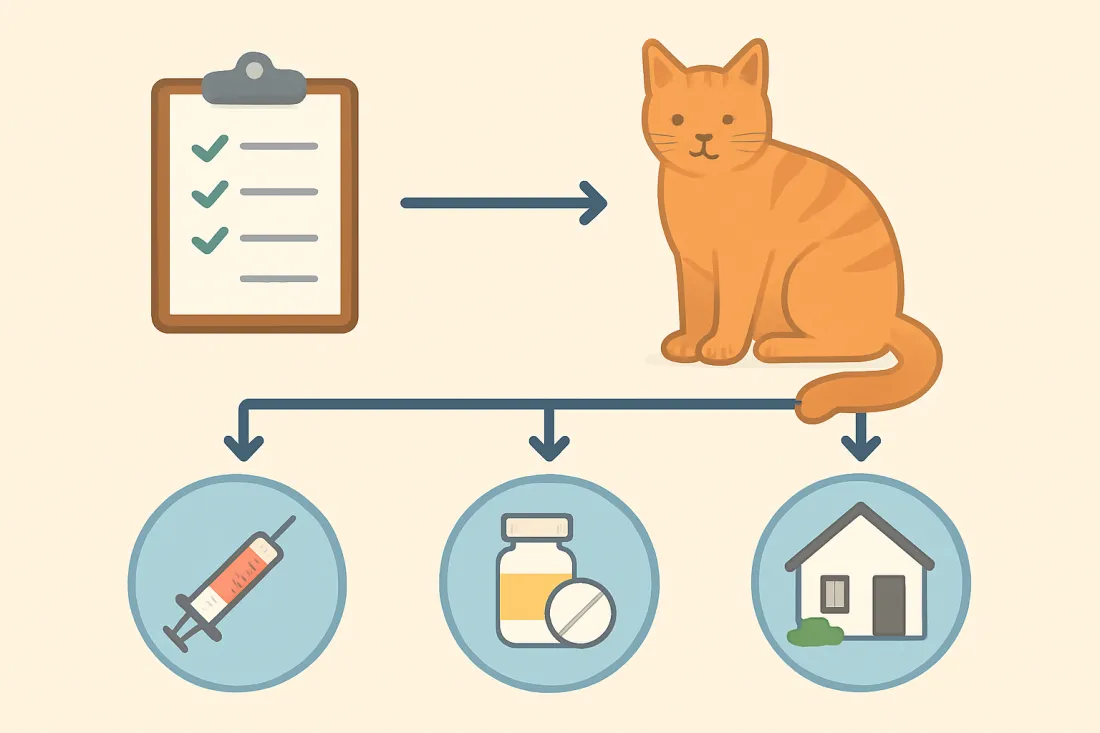
| Care item | Indoor cat (typical) | Outdoor / indoor–outdoor cat (typical) | Why it differs |
|---|---|---|---|
| Wellness exams | At least yearly; often twice yearly for seniors | At least yearly; often twice yearly for all adults | Outdoor cats face more hazards, so closer monitoring is common. |
| Core vaccines (e.g., rabies, FVRCP) | Kitten series, 1-year booster, then vet-guided boosters | Same kitten and 1-year series; boosters may be kept more frequent | Outdoor exposure can increase viral disease risk. |
| Non-core vaccines | Only if lifestyle risk (e.g., contact with other cats) | More often recommended (e.g., multi-cat outdoor homes) | Risk-based; indoor-only cats may not need some vaccines. |
| Parasite prevention | Year-round or seasonal, based on local risk and vet advice | Usually year-round, with broader coverage | Outdoor cats meet more fleas, ticks, and wildlife. |
| Dental cleanings | As advised by vet, often every 1–3 years | Similar; diet and genetics matter more than indoor/outdoor | Dental disease is common regardless of lifestyle. |
| Weight and body condition checks | Monthly at home; at every vet visit | Monthly at home; at every vet visit | Indoor cats are especially prone to weight gain. |
| Home safety checks | At least yearly, plus after any big home change | At least yearly, plus yard/garage checks | Indoor cats face household toxin and fall risks. |
For a broader view of how cat care fits into overall home safety, you can also review the pet safety checklist for the home on this site.
Life-stage framework for indoor cat preventive care
Preventive care needs change as your cat grows. It helps to think in four stages: kitten, young adult, adult, and senior.
Kittens (birth to about 12 months)
- Vet visit frequency: every 3–4 weeks during the vaccine series, then at least once around 12 months.
- Focus areas: vaccines, parasite checks, growth and weight, spay/neuter timing, behavior and litter box training.
- Common risks: intestinal worms, viral infections if exposed, dehydration from diarrhea, injuries from climbing and chewing.
Young adults (1–6 years)
- Vet visit frequency: at least once a year for a full exam and discussion of vaccines and parasite prevention.
- Focus areas: maintaining a healthy weight, dental health, behavior, and environmental enrichment.
- Common risks: weight gain, early dental tartar, stress-related issues in multi-cat homes.
Adults (7–10 years)
- Vet visit frequency: many vets recommend wellness exams every 6–12 months, often shifting to twice a year as subtle age-related changes appear.
- Focus areas: early detection of kidney disease, thyroid issues, arthritis, and dental disease.
- Common risks: gradual weight loss or gain, decreased activity, changes in thirst or urination.
Seniors (10+ years)
- Vet visit frequency: often every 6 months, or more often if your cat has chronic conditions.
- Focus areas: pain control, mobility, organ function, blood pressure, and quality of life.
- Common risks: kidney disease, hyperthyroidism, diabetes, high blood pressure, cancer, and cognitive changes.
Recommended vet visit frequency by life stage
Use this as a starting point and adjust with your veterinarian based on your cat’s health and temperament.

| Life stage | Approximate age | Typical visit frequency | What usually happens |
|---|---|---|---|
| Kitten | 0–12 months | Every 3–4 weeks during vaccine series, then at 12 months | Physical exams, vaccines, parasite checks, growth monitoring, spay/neuter planning. |
| Young adult | 1–6 years | At least once per year | Full physical exam, vaccine updates, parasite prevention plan, weight and dental check. |
| Adult | 7–10 years | Every 6–12 months | Physical exam, lab work as advised, dental evaluation, monitoring for early disease signs. |
| Senior | 10+ years | Every 6 months or as advised | Physical exam, targeted tests, pain and mobility assessment, medication review. |
Even healthy indoor cats benefit from at least yearly exams, and many vets prefer twice-yearly visits for older or medically complex cats so changes are caught earlier.
Vaccine schedule for indoor cats in the U.S.
Vaccine schedules can vary by state law, local disease risk, and the specific product your vet uses. Always confirm timing with your veterinarian. In general, indoor cats are kept current on core vaccines and may or may not need non-core vaccines depending on lifestyle.
Core vaccines for most indoor cats
- Rabies: Often required by law in many parts of the U.S., even for indoor cats. Your vet will follow local rules and product guidelines.
- FVRCP: A combination vaccine that typically covers feline viral rhinotracheitis, calicivirus, and panleukopenia. These are serious viral diseases that can be life-threatening.
Typical vaccine pattern (example framework)
The exact ages and intervals depend on the vaccine brand and your vet’s protocol, but a common pattern looks like this:
- Kittens: Start a series of FVRCP vaccines around 6–8 weeks of age, with boosters every few weeks until at least about 15–16 weeks. Rabies is usually given once your kitten is old enough, often around 12–16 weeks, depending on local rules and the product used.
- 1-year booster: Around 12 months of age, your cat typically receives booster doses of core vaccines.
- Adult boosters: After the 1-year booster, many core vaccines are given every 1–3 years, depending on the vaccine type, your cat’s health, and local regulations.
Non-core vaccines (such as those for specific viruses that spread in multi-cat or outdoor environments) are usually given only if your cat’s lifestyle puts them at risk. Indoor-only cats who never meet other cats outside the household may not need them, but your vet will help you decide.
Parasite prevention basics for indoor cats
Indoor cats can still pick up parasites from people’s shoes, other pets, open windows, or occasional trips outside. Parasite prevention is usually a combination of regular checks and, when appropriate, preventive medications.
Common parasites to discuss with your vet
- Fleas: Can cause itching, allergies, and transmit other parasites. Even one untreated flea can quickly turn into an infestation in a warm home.
- Ticks: More of a risk if your cat has access to porches, yards, or wooded areas, or lives with a dog that goes outside.
- Intestinal worms: Such as roundworms and hookworms, which kittens often pick up early in life. These can sometimes be passed to people, especially children.
- Heartworm: Spread by mosquitoes. Risk varies by region; your vet can advise whether preventive medication is recommended for indoor cats in your area.
Monthly preventives and testing
Many cats use a monthly or regular schedule of topical or oral parasite preventives. The exact product and frequency depend on your cat’s health, weight, and local parasite risk. Your vet may also recommend periodic fecal tests to look for intestinal worms, even if your cat lives indoors.
Dental care schedule and at-home maintenance
Dental disease is one of the most common health issues in adult cats, including indoor cats. Plaque and tartar build up over time and can lead to painful gums, tooth loss, and infections that affect overall health.
Typical dental care pattern
- Kitten stage: Get your kitten used to having their mouth handled. You can gently touch their lips and teeth and offer dental-friendly treats as a reward.
- Young adults: Your vet will check teeth at each annual visit and may recommend a professional cleaning when tartar or gum inflammation appears.
- Adults and seniors: Many cats need professional dental cleanings under anesthesia at intervals such as every 1–3 years, depending on genetics, diet, and home care. Your vet will advise based on exam findings.
At-home dental maintenance
- Use cat-safe toothpaste and a soft brush or finger brush if your cat tolerates it.
- Offer dental treats or diets that are designed to help reduce plaque, if recommended by your vet.
- Watch for signs of dental pain: bad breath, drooling, pawing at the mouth, dropping food, or preferring soft food.
Weight and body condition monitoring for indoor cats
Indoor cats are especially prone to weight gain because they often have fewer opportunities to burn calories. Extra weight increases the risk of diabetes, joint problems, and other diseases.
Simple home weight and body condition routine
- Weigh your cat monthly: Use a baby scale or weigh yourself holding the cat and subtract your own weight. Record the number.
- Check body condition: Run your hands along your cat’s ribs. You should be able to feel the ribs under a thin layer of fat, not see them clearly and not struggle to find them.
- Look from above: Your cat should have a slight waist behind the ribs, not a straight line or bulging sides.
- Look from the side: There should be a gentle upward tuck of the belly, not a heavy sag.
If your cat’s weight is creeping up or down over several months, or if you notice a sudden change, talk to your vet. Rapid weight loss can be a red flag for serious illness, and rapid weight gain can strain joints and organs.
Annual home safety and wellness checklist for indoor cats
Once a year, walk through your home with your cat in mind. Use this checklist to spot risks and improve daily life.
- Food and water
- Confirm your cat is eating a complete and balanced diet appropriate for their life stage.
- Measure food portions instead of free-pouring.
- Provide fresh water in more than one location, especially in multi-level homes.
- Litter boxes
- Provide enough boxes (often at least one per cat, plus one extra).
- Place boxes in quiet, low-stress locations away from noisy appliances.
- Scoop daily and replace litter on a regular schedule.
- Environmental enrichment
- Offer scratching posts, climbing spots, and safe hiding places.
- Rotate toys that encourage hunting and play.
- Set up a safe window perch or viewing spot.
- Safety hazards
- Store toxic plants, medications, and cleaning products out of reach.
- Secure cords, strings, and small objects that could be swallowed.
- Check that windows and balconies are secured so your cat cannot fall or escape.
- Identification and planning
- Keep your cat’s microchip registered with current contact details.
- Use a breakaway collar with an ID tag if your cat tolerates it.
- Make an emergency or evacuation plan that includes your cat.
Budgeting for preventive care vs emergency care
Preventive care costs are usually more predictable and spread out over the year, while emergencies can be sudden and expensive. A simple way to think about budgeting is:
- Plan for routine annual or semi-annual exams and recommended vaccines.
- Include the cost of parasite prevention if your vet recommends it.
- Expect periodic dental cleanings and possible lab work, especially as your cat ages.
- Set aside a separate emergency fund for unexpected illnesses or injuries.
Instead of trying to predict exact dollar amounts, consider setting a monthly amount you can comfortably save toward pet care. Over time, this can help cover both routine visits and surprise issues.
When to consider pet insurance for indoor cats
Pet insurance can help with unexpected veterinary bills. Whether it makes sense depends on your budget, your cat’s age and health, and how you prefer to manage risk.
Situations where pet insurance may be worth exploring
- You would struggle to pay for a sudden major surgery or hospitalization out of pocket.
- Your cat is still young and generally healthy, which may make it easier to get coverage before problems appear.
- You prefer paying a predictable monthly premium instead of relying solely on savings.
Read policy details carefully, especially what is considered a pre-existing condition, how deductibles work, and whether preventive care is included or offered as an add-on.
Life-stage preventive care calendar for indoor cats
This calendar-style overview shows how routine care typically lines up with your cat’s age. Exact timing may shift based on your vet’s advice.
| Life stage | Key time points | Preventive care focus |
|---|---|---|
| Kitten | Every 3–4 weeks until about 15–16 weeks; visit around 12 months | Physical exams, vaccine series, parasite checks and deworming as advised, spay/neuter, microchipping, nutrition and behavior guidance. |
| Young adult | Yearly wellness exam | Physical exam, vaccine boosters, parasite prevention plan, weight and body condition review, dental check. |
| Adult | Every 6–12 months | Physical exam, lab tests as recommended, dental evaluation and possible cleaning, weight and mobility monitoring. |
| Senior | Every 6 months | Physical exam, targeted blood and urine tests as advised, blood pressure checks, pain and mobility management, diet adjustments. |
Red-flag symptoms that need immediate vet attention
Cats are good at hiding illness. Contact a veterinarian urgently or seek emergency care if you notice any of the following:
- Struggling to breathe, open-mouth breathing, or very rapid breathing at rest.
- Repeated vomiting or diarrhea, especially with blood or if your cat seems weak.
- Not eating for a full day, or eating much less than usual for more than a day.
- Straining to urinate, producing little or no urine, or crying in the litter box.
- Sudden collapse, seizures, or inability to stand or walk normally.
- Severe pain signs: loud crying, hiding and resisting touch, or sudden aggression when handled.
- Swollen or injured eye, or anything stuck in the eye area.
- Known or suspected ingestion of a toxin, such as certain human medications, cleaning products, or toxic plants.
When in doubt, call your vet or an emergency clinic and describe what you see. They can guide you on whether your cat needs to be seen right away.
Common mistakes in indoor cat preventive care
A few patterns show up often when indoor cats get sick or develop chronic problems:
- Skipping regular exams because the cat “seems fine”: Many serious conditions, like kidney disease or high blood pressure, may not show obvious signs until they are advanced.
- Assuming indoor cats never need vaccines or parasite prevention: Local rules and risks still apply, and some diseases and parasites can enter the home indirectly.
- Overfeeding and underplaying: Free-feeding dry food and not providing enough play can lead to weight gain and boredom.
- Ignoring subtle behavior changes: Hiding more, avoiding jumping, or changes in litter box habits can be early signs of pain or illness.
- Delaying dental care: Waiting until a cat is obviously in pain can mean more extensive dental work and a tougher recovery.
Decision checklist: building the right preventive care schedule for your indoor cat
Use this quick checklist to tailor a plan with your veterinarian:
- Confirm life stage: Kitten, young adult, adult, or senior.
- List lifestyle factors: Indoor-only or occasional outdoor access; other pets in the home; children or immunocompromised family members.
- Review vaccine status: Note when core vaccines were last given and which boosters are due based on your vet’s schedule and local rules.
- Assess parasite risk: Consider local fleas, ticks, and mosquitoes, and whether your cat travels, boards, or visits groomers.
- Check weight and body condition: Decide if you need a feeding and activity plan to reach or maintain a healthy weight.
- Evaluate dental health: Ask whether your vet recommends a cleaning and what home dental care you can add.
- Walk through home safety: Confirm you have recently checked for toxins, fall risks, and adequate enrichment.
- Plan finances: Choose a monthly amount to set aside for routine care and emergencies, and decide whether pet insurance fits your situation.
- Schedule next steps: Book the next wellness exam, confirm vaccine due dates, and set reminders for parasite prevention and home safety reviews.
FAQ about indoor cat preventive care
Do indoor cats really need yearly vaccinations?
Indoor cats often still need core vaccines such as rabies and FVRCP. Rabies vaccination is required in many parts of the U.S., even for indoor cats, and your vet will follow local rules and product guidelines. FVRCP helps protect against serious viral diseases that can be severe if a cat is exposed. Your veterinarian can help decide how often boosters are needed based on your cat’s health and risk.
What monthly preventives do indoor cats usually need?
Many cats use regular parasite preventives that may cover fleas, some intestinal worms, and sometimes other parasites, depending on the product. The exact medication and schedule depend on your cat’s age, weight, health, and local parasite risk. Your vet can recommend whether your indoor cat needs year-round or seasonal prevention and which products are appropriate.
What is the 3-3-3 rule for cats?
The “3-3-3 rule” is a general guideline often used for adopted pets to describe how long it can take them to adjust: roughly 3 days to decompress, 3 weeks to learn routines, and 3 months to feel fully at home. It is not a medical rule, but it can remind you to be patient with a new cat while you also set up their preventive care schedule.
What is the 3:2:1 rule in cats?
The phrase “3:2:1 rule” is used in different ways and is not a standard medical guideline for all cats. If you see it mentioned in relation to feeding, litter boxes, or behavior, check the context carefully and discuss any specific recommendations with your veterinarian to be sure they fit your cat’s needs.
How often should an indoor cat see the vet?
Healthy young adult indoor cats typically see the vet at least once a year for a wellness exam and vaccine review. Kittens need more frequent visits during their first year, and many older or medically fragile cats benefit from exams about every six months. Your veterinarian can tailor the schedule to your cat’s health and lifestyle.
Does an indoor cat really need parasite prevention?
Indoor cats can still be exposed to fleas, intestinal worms, or other parasites through people, other pets, or open doors and windows. Whether your cat needs regular preventive medication depends on local parasite risk and your cat’s lifestyle. Your vet can help you decide on an appropriate plan and testing schedule.