Key US pet laws every dog owner should know right away
If you own a dog in the United States, you are usually legally responsible for:
- Licensing your dog with your city or county
- Keeping rabies vaccination up to date
- Making sure your dog has identification (tag and often a microchip)
- Following local leash and restraint rules
- Preventing bites and injuries to people and other animals
- Cleaning up after your dog in public places
- Following housing and travel rules set by landlords, HOAs, and airlines
Exact rules vary by state and even by neighborhood, so you always need to check your local ordinances. But the patterns above are common across much of the country and are a useful starting point for staying on the right side of the law.
How US dog laws are structured and what that means for you
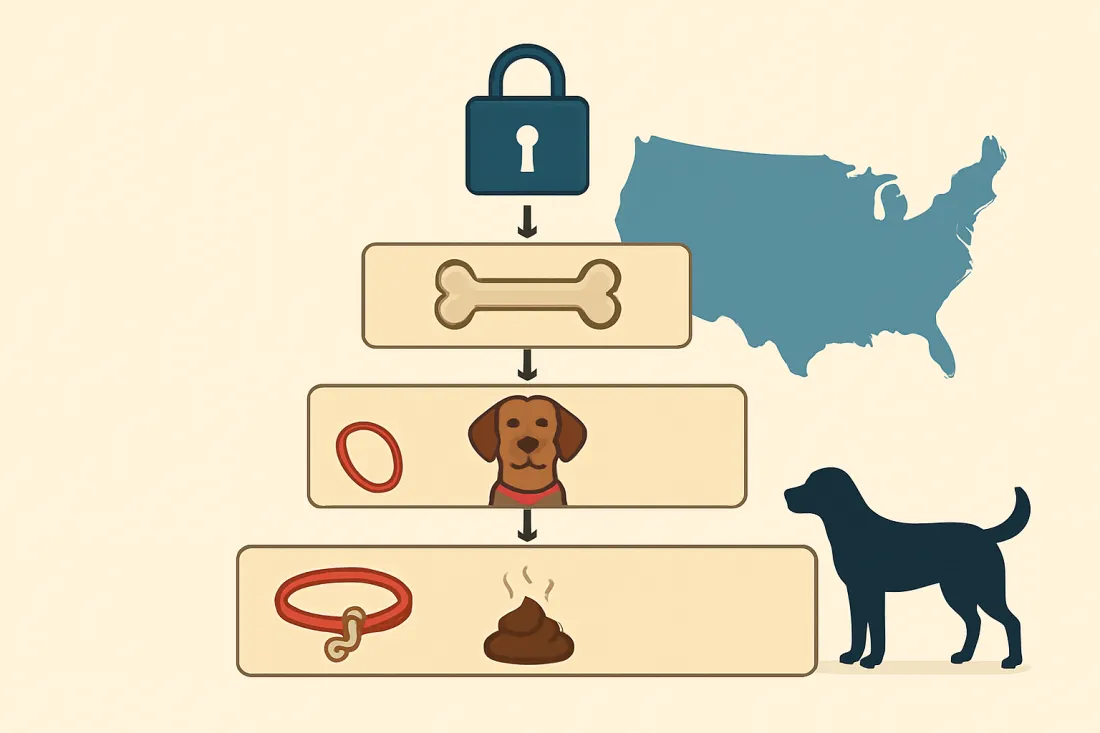
Dog laws in the US are layered:
- State laws – set broad rules on issues like rabies vaccination, dangerous dogs, and sometimes leash or licensing requirements.
- County and city ordinances – add more detailed rules on licensing, leashes, barking, waste pickup, and how many dogs you can keep.
- Private rules – landlords, HOAs, and airlines can set their own conditions for pets on their property or flights.
Across these layers, your core legal duties usually include:
- Control – keeping your dog from roaming, chasing, or injuring others.
- Care – providing food, water, shelter, and veterinary care to avoid neglect or cruelty claims.
- Identification – making it possible to return your dog if lost and to prove ownership.
- Compliance – following local rules on licenses, vaccines, and nuisance behavior (barking, waste, damage).
- Liability – accepting financial responsibility if your dog injures someone or damages property, subject to local law.
Failing in any of these areas can lead to fines, civil lawsuits, and in serious cases, removal of the dog or criminal charges. Because rules differ widely, a good habit is to check state and local requirements any time you move, adopt a new dog, or change housing. If you are just starting out, a resource such as a first time dog owner checklist USA can help you pair legal requirements with everyday care tasks.
Licensing and ID requirements most US dog owners face
Most US cities and counties require dogs over a certain age (often somewhere in the 3–6 month range) to be licensed. The details differ, but common patterns include:
- Where to get a license – usually through your city or county animal control, tax office, or online portal.
- Proof required – rabies vaccination certificate, sometimes proof of spay/neuter.
- Renewal cycle – often yearly or every few years, frequently tied to rabies vaccine expiration.
- Cost structure – many areas charge lower fees for spayed/neutered dogs and higher fees for unaltered dogs.
On top of licensing, identification is strongly encouraged and sometimes required:
- Collar and tag – many local rules require a tag showing license number and/or owner contact details when the dog is off your property.
- Microchip – some jurisdictions require microchipping; others strongly recommend it. Even where it is not mandatory, it is one of the best ways to prove ownership and recover a lost dog.
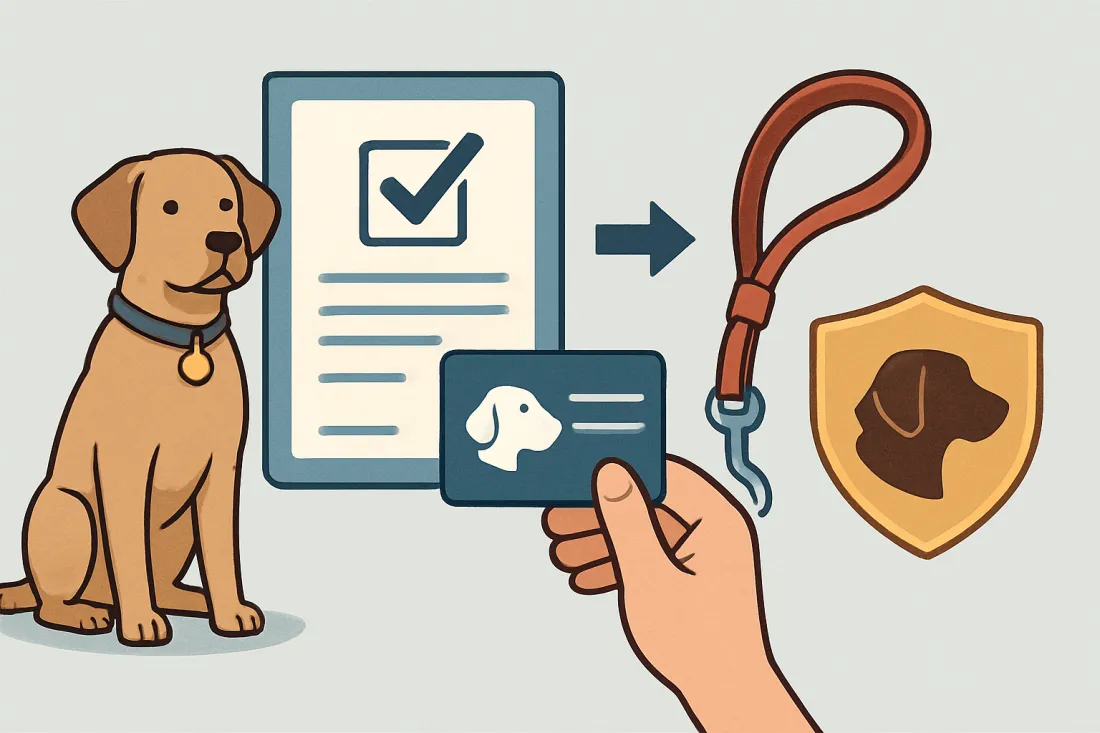
A simple way to stay compliant is to build a small ID kit for your dog:
- Rabies certificate (paper and photo on your phone)
- License tag on the collar
- Microchip number and registry login details
- Recent clear photo of your dog from several angles
Keep these together so you can quickly prove ownership or vaccination if your dog is lost or there is an incident.
Rabies and core vaccination rules you should expect
Rabies vaccination is one of the few dog-related requirements that is close to universal in the US:
- Most states require rabies shots for dogs over a certain age, often around the 3–4 month mark.
- Booster timing is usually set by state rules and vaccine type (for example, an initial shot followed by multi‑year boosters), but you must confirm the exact schedule with your vet and local requirements.
- Proof of vaccination is often needed to get or renew a dog license, board your dog, or use some groomers and daycares.
Other core vaccines (such as distemper or parvovirus) are usually not mandated by law but are widely recommended by veterinarians. For legal compliance, the key is to:
- Ask your vet to explain which vaccines are legally required in your state versus medically recommended.
- Keep paper or digital copies of rabies certificates and license documents in a safe place and on your phone.
- Update your dog’s license whenever you get a new rabies shot, if your local rules require it.
If you are unsure of your dog’s vaccination history, your vet can help you decide whether to restart a series or perform antibody testing where appropriate.
Typical leash and restraint laws across US cities and states
Leash laws are mostly local, but several patterns show up again and again:
- On-leash in public – many cities require dogs to be on a physical leash of a certain maximum length when in public spaces like streets, sidewalks, and parks, unless in a designated off‑leash area.
- Under control – some areas allow off‑leash dogs if they are under “voice control,” but what counts as control can be interpreted strictly if something goes wrong.
- Private property – even on your own property, you may be required to keep your dog fenced, tethered, or otherwise contained so it cannot roam onto public roads or neighbors’ yards.
- Special zones – playgrounds, school grounds, beaches, and nature areas often have stricter rules or complete dog bans at certain times.
Because leash rules can change from one town to the next, it is wise to:
- Assume your dog must be leashed in public unless a posted sign clearly allows off‑leash use.
- Use a sturdy leash and collar or harness, and avoid retractable leashes in crowded areas.
- Review a summary of US leash laws and dog owner responsibilities and then confirm details with your local ordinances.
Dangerous dog rules and bite liability basics
Most states and many cities have special rules for dogs that bite or are labeled “dangerous” or “vicious.” The exact wording and consequences differ, but common elements include:
- Reporting bites – dog bites are often required to be reported to local health or animal control authorities, especially if they break the skin.
- Quarantine – a dog that bites may be placed under home or facility quarantine for a set period to monitor for rabies signs.
- Dangerous dog designation – after a serious incident or repeated aggression, a dog may be formally classified as dangerous, triggering extra rules such as special enclosures, muzzling in public, or higher insurance requirements.
- Potential removal – in severe cases, authorities may seek to remove or euthanize a dog that is considered a serious threat.
Liability for bites and injuries also varies by state. Some states lean toward a “strict liability” approach (owners are often responsible for bites regardless of prior behavior), while others give more weight to whether the owner knew the dog was dangerous. Because the rules are complex and fact‑specific:
- Do everything possible to prevent bites through training, socialization, and supervision.
- If a bite occurs, seek medical care, exchange contact information, and follow local reporting requirements.
- Consider homeowners or renters insurance that covers dog‑related injuries, and ask your agent what is and is not covered.
- Talk to a local attorney if you are involved in a serious incident, as outcomes depend heavily on state law and the facts.
Travel, rentals, and HOA rules that affect dog owners
Beyond government laws, private rules can strongly shape what you can do with your dog.
Rental housing and HOAs
Landlords and homeowners associations (HOAs) often set conditions such as:
- Pet deposits or fees – extra payments or monthly pet rent.
- Size or weight limits – for example, only dogs under a certain weight.
- Number of pets – caps on how many dogs you can keep in one unit.
- Restricted breeds or mixes – some communities limit certain breeds or types, even if local law does not.
- Behavior rules – leash requirements on the property, quiet hours, and cleanup expectations.
These private rules sit on top of local law. You still must follow licensing, vaccination, and leash rules even if your lease or HOA documents do not mention them. If you live in an apartment or condo, it can also help to review guidance on apartment pet rules for dogs so you understand typical expectations.
Airline and car travel
When traveling with your dog:
- Airlines can set their own rules on carrier size, health certificates, and where dogs can ride (cabin vs. cargo). These rules can change, so always check directly with the airline before booking.
- Interstate travel may require proof of rabies vaccination and, in some cases, a health certificate from a veterinarian, especially if you are flying or crossing certain state lines.
- Car safety – a few states have rules about dogs riding in open truck beds or being restrained in vehicles. Even where not required, using a crate or harness is safer for everyone.
If you plan a long trip, build in time to confirm requirements with your vet, airline, and destination state so you are not turned away at the gate or border.
How to look up dog laws and ordinances in your city or county
Because local rules differ so much, knowing how to find the ones that apply to you is essential. Use this simple process:
- Identify your jurisdiction
- Write down your state, county, and city or town names.
- If you live in an unincorporated area, county rules may apply more than city rules.
- Search official sites
- Go to your city or county government website.
- Look for sections labeled “Animal Control,” “Animal Services,” or “Code of Ordinances.”
- Use the site’s search bar with terms like “dog license,” “leash law,” “rabies,” or “dangerous dog.”
- Call or email animal control
- If online information is confusing or outdated, call the listed animal control or clerk’s office.
- Ask specific questions such as: “Do I need a license for my dog?” or “What are the leash rules in city parks?”
- Confirm when rules were last updated
- Check the date on any ordinance or FAQ you read.
- If you see older dates, ask whether any changes have taken effect since then.
- Save key rules
- Bookmark the pages or save PDFs of the sections that apply to you.
- Note renewal dates for licenses and vaccines in your calendar.
Repeat this process whenever you move, change counties, or notice new signs in parks or public spaces.
Consequences of ignoring pet laws
Not following dog laws can have serious consequences. These vary by location and severity, but common outcomes include:
- Fines – for unlicensed dogs, leash violations, failure to vaccinate, or not cleaning up waste. Fines can increase with repeated offenses.
- Impoundment – animal control may pick up roaming dogs or those involved in incidents, and you may have to pay fees to reclaim them.
- Court orders – judges can order training, fencing, muzzling, or other conditions after serious incidents.
- Civil liability – you may have to pay medical bills, lost wages, or property damage if your dog injures someone or causes an accident.
- Criminal charges – in extreme neglect or cruelty cases, or after severe attacks, owners can face criminal penalties.
- Restrictions on the dog – dangerous dog designations, mandatory insurance, or, in the worst cases, removal or euthanasia.
Staying informed and proactive is usually far cheaper and less stressful than dealing with the aftermath of a violation.
Comparison table: common US dog law topics and how they usually work
| Topic | What often applies | What varies locally | Owner action |
|---|---|---|---|
| Licensing | Many cities and counties require licenses for dogs over a set age. | Age threshold, fees, renewal cycle, proof of spay/neuter. | Check your city or county site and license your dog on time. |
| Rabies vaccination | Most states require rabies shots for dogs. | Starting age, booster intervals, accepted vaccine types. | Ask your vet for a schedule that meets state rules and keep certificates. |
| Leash laws | Dogs often must be leashed in public spaces. | Leash length, off‑leash parks, voice‑control exceptions. | Use a leash unless signs clearly allow off‑leash and your dog is under control. |
| Dangerous dog rules | Special restrictions after serious bites or attacks. | Definition of “dangerous,” required enclosures, insurance. | Prevent incidents; if one occurs, follow all orders and seek legal advice. |
| Waste cleanup | Owners are usually expected to pick up dog waste in public. | Fine amounts, specific zones (parks, sidewalks, trails). | Carry bags and dispose of waste properly every walk. |
| Noise/barking | Excessive barking can be treated as a nuisance. | Quiet hours, time limits, enforcement process. | Address barking with training and management before neighbors complain. |
| Housing/HOA rules | Landlords and HOAs can set pet conditions. | Breed limits, size caps, deposits, number of pets. | Read leases and bylaws carefully before bringing a dog home. |
| Travel | Airlines and some states require health and vaccine proof. | Specific forms, timing of health certificates, carrier rules. | Confirm requirements with your vet and airline before each trip. |
Owner responsibility checklist for staying compliant and safe
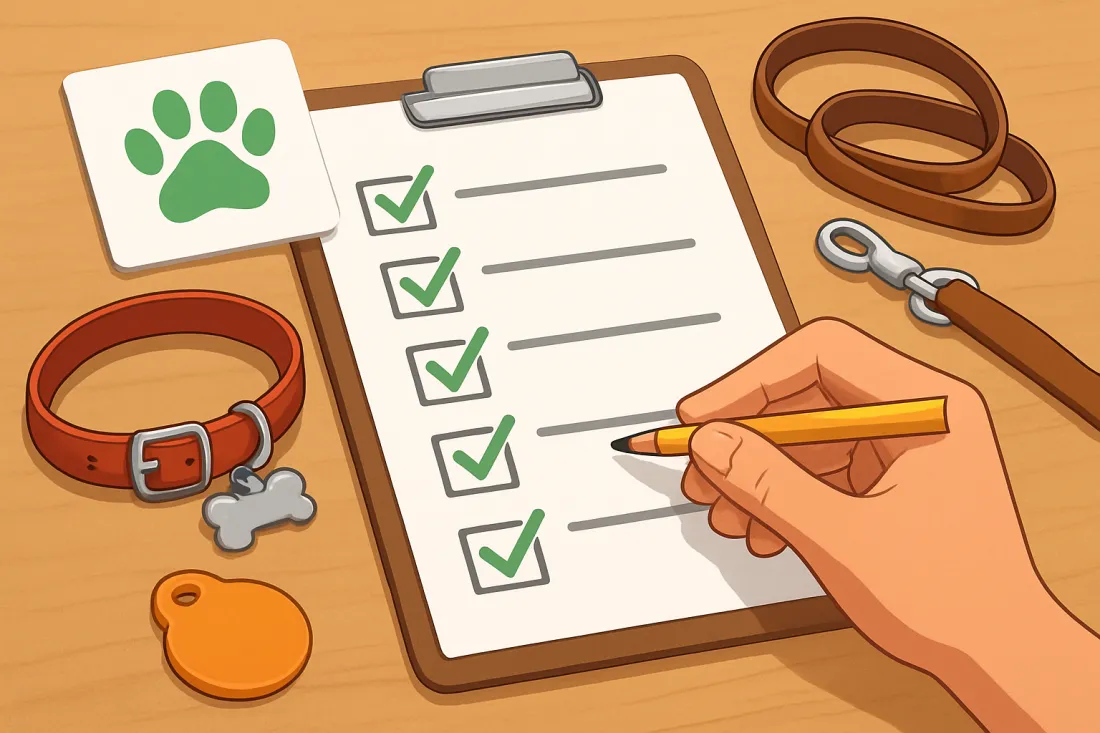
Use this practical list to keep your legal responsibilities under control:
- Before getting a dog
- Confirm your lease, HOA rules, or mortgage allow dogs.
- Check your city and county websites for dog licensing and leash rules.
- Review your homeowners or renters insurance for dog coverage.
- Within the first month
- Schedule a vet visit for a health check and vaccination plan.
- Ask the vet about legally required rabies timing in your state.
- Get a collar with an ID tag showing your phone number.
- Consider microchipping and register your contact details with the chip company.
- Apply for a dog license once you have proof of rabies vaccination.
- Ongoing habits
- Keep your dog on a leash in public unless clearly allowed off‑leash.
- Carry waste bags and clean up every time.
- Maintain secure fencing or containment at home.
- Work on basic training and socialization to reduce bite risks. A resource on basic dog training rules for responsible owners can help you build good habits.
- Monitor barking and address nuisance noise early.
- Renew licenses and vaccinations before they expire.
- Before travel or moving
- Ask your vet about any health certificates or extra vaccines needed.
- Confirm airline or hotel pet policies.
- Look up dog laws in your new city, county, and state.
- If an incident happens
- Make sure everyone is safe and seek medical help if needed.
- Exchange contact information with the other party.
- Follow local reporting requirements for bites or attacks.
- Contact your insurance company and consider legal advice for serious cases.
Common mistakes dog owners make with US pet laws
Several avoidable errors show up again and again:
- Assuming rules are the same everywhere – moving to a new city or state without checking local ordinances can lead to surprise fines.
- Letting licenses or rabies shots lapse – forgetting renewal dates is easy; setting calendar reminders helps.
- Trusting “my dog is friendly” instead of a leash – even friendly dogs can cause accidents or scare people, and many areas still require leashes.
- Ignoring barking complaints – hoping neighbors will “get used to it” can backfire if they file formal nuisance complaints.
- Not updating ID info – a microchip or tag with an old phone number is almost useless if your dog gets lost.
- Skipping training and socialization – lack of basic manners can escalate into bites or dangerous dog designations after a single bad incident.
- Relying on online summaries only – unofficial guides can be helpful, but you still need to confirm details with official local sources.
Avoiding these mistakes usually comes down to three habits: check local rules, document what you do, and keep your dog under control in public.
How to judge how strict your dog management should be
Your personal situation affects how carefully you need to manage legal risks. Consider these factors:
- Where you live
- Dense urban areas often have stricter leash and noise rules than rural areas.
- Tourist towns and beach communities may have seasonal dog restrictions.
- Your dog’s size and temperament
- Larger or more powerful dogs may draw more attention if something goes wrong.
- Shy or reactive dogs may need extra management (muzzles, quiet walking routes) to prevent incidents.
- Household and neighbors
- Shared walls (apartments, condos) increase the impact of barking and hallway encounters.
- Children, elderly neighbors, or people with mobility issues may be more vulnerable to knocks or nips.
- Activities you do
- Dog parks, hiking trails, and outdoor dining all come with different rule sets and risks.
- Working or sport dogs may need special transport or equipment that must still meet local rules.
As a rule of thumb, the more public contact your dog has and the denser your neighborhood, the more carefully you should follow conservative safety practices, even beyond what the law strictly requires.
FAQ about US pet laws and dog ownership
What should every dog owner know about US pet laws?
Every dog owner should know that they are usually responsible for licensing their dog, keeping rabies vaccination current, following local leash and waste rules, and preventing bites or injuries. Rules differ by state and city, so you must check your local ordinances, not just rely on general advice.
What is the 3‑3‑3 rule for dogs?
The “3‑3‑3 rule” is a popular guideline used by many trainers and rescues to describe how long it can take a new dog to settle in: roughly 3 days to decompress, 3 weeks to learn your routine, and 3 months to feel fully at home. It is not a law, but it is a helpful reminder to be patient and give your dog time to adjust.
What is the 7‑7‑7 rule for dogs?
The “7‑7‑7 rule” is another informal concept sometimes used to talk about stages of adjustment or training milestones over different time frames. Like the 3‑3‑3 rule, it is a training idea, not a legal requirement. You will not find it in statutes or ordinances, but you may hear it from trainers or rescues as a way to set expectations.
What is the 10‑10‑10 rule for dogs?
The “10‑10‑10 rule” is not a standard legal or veterinary term. Some people use similar phrases informally to talk about training, exercise, or adjustment timelines, but there is no single agreed‑upon meaning in law. When it comes to legal responsibilities, focus instead on concrete requirements like licensing, vaccination, and leash rules in your area.
How do I know if my dog needs a license?
Check your city or county government website for “dog license” information or contact animal control. Many jurisdictions require licenses for dogs over a certain age, but the exact threshold and renewal schedule differ. If you cannot find clear information online, call the listed phone number and ask directly.
Are leash laws the same in every US state?
No. Some states set broad rules, but most leash laws are written and enforced at the city or county level. Even neighboring towns can have different requirements. Always look up the rules for the specific place you are visiting or living in, and when in doubt, keep your dog on a leash.
Can my landlord or HOA ban certain dog breeds?
In many places, landlords and HOAs can set their own pet policies, including breed or size limits, as long as they follow broader housing and discrimination rules. These private policies can be stricter than local government laws, so read leases and HOA documents carefully before bringing a dog home.
Do I need special paperwork to fly with my dog?
Often yes. Airlines commonly require proof of current rabies vaccination and may ask for a recent health certificate from a veterinarian. They also have detailed rules about carrier size, where dogs can ride, and how many pets are allowed on each flight. Always confirm the latest requirements directly with your airline before booking.
Where can I get reliable information about dog laws in my area?
The most reliable sources are your state, county, and city government websites, especially sections for animal control or code of ordinances. You can also call animal control or your local clerk’s office with specific questions. General guides and summaries are useful starting points, but always confirm details with official local sources.