
Dog leash laws vs. off‑leash freedom in the US: what you can usually expect
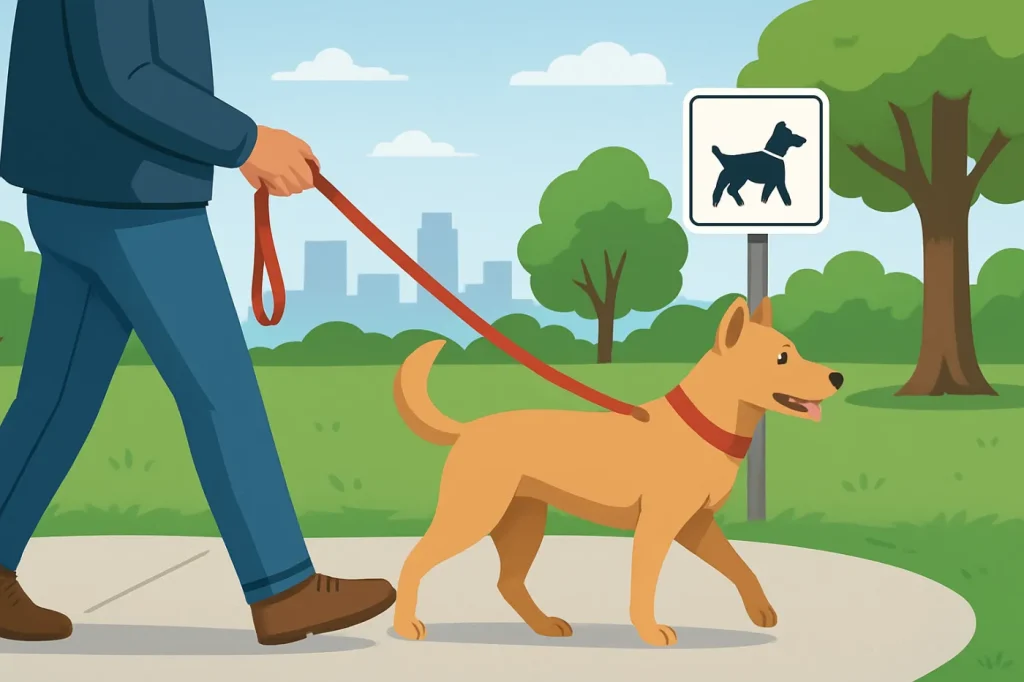
Most places in the United States expect dogs to be on a visible, physical leash in public spaces unless you are in a clearly marked off‑leash area or on private property with permission. Leash rules are usually set by cities, counties, and parks, not just by states, so the exact requirements change from place to place. In practice, that means:
- In most towns and cities, your dog must be on a leash on sidewalks, streets, and in most public parks.
- Some parks and trails have designated off‑leash zones or hours; outside those zones, a leash is still required.
- Rural areas may rely more on “under control” or “running at large” rules, but you can still be held responsible if your loose dog causes harm or damage.
- Electronic collars or “voice control only” usually do not count as a leash where a physical leash is required.
If you want to enjoy off‑leash time without fines or conflicts, you need to understand your local rules and make sure your dog is truly ready to be off leash around people, kids, wildlife, and other dogs.
Legal disclaimer about local variation: Leash laws and dog‑control rules in the US vary widely by state, county, city, and even by individual park or trail. The guidance here is general and does not replace local ordinances or legal advice. Always check the current rules where you live and where you plan to walk your dog, and consult a qualified professional if you need legal guidance.
How US leash law patterns typically differ: city streets, suburbs, trails, and parks
Because rules are local, there is no single nationwide leash law. Still, some patterns show up across much of the US. Use these as a starting point, then verify the details where you are.
Typical patterns in cities and suburbs
In many cities and suburbs, you will often see rules like:
- Leash required in public: Dogs must be on a physical leash when off the owner’s property, especially on sidewalks, streets, and shared paths.
- Maximum leash length: Some places limit leash length; a common range is around 6–8 feet. Extra‑long retractable leashes may not be allowed in some areas.
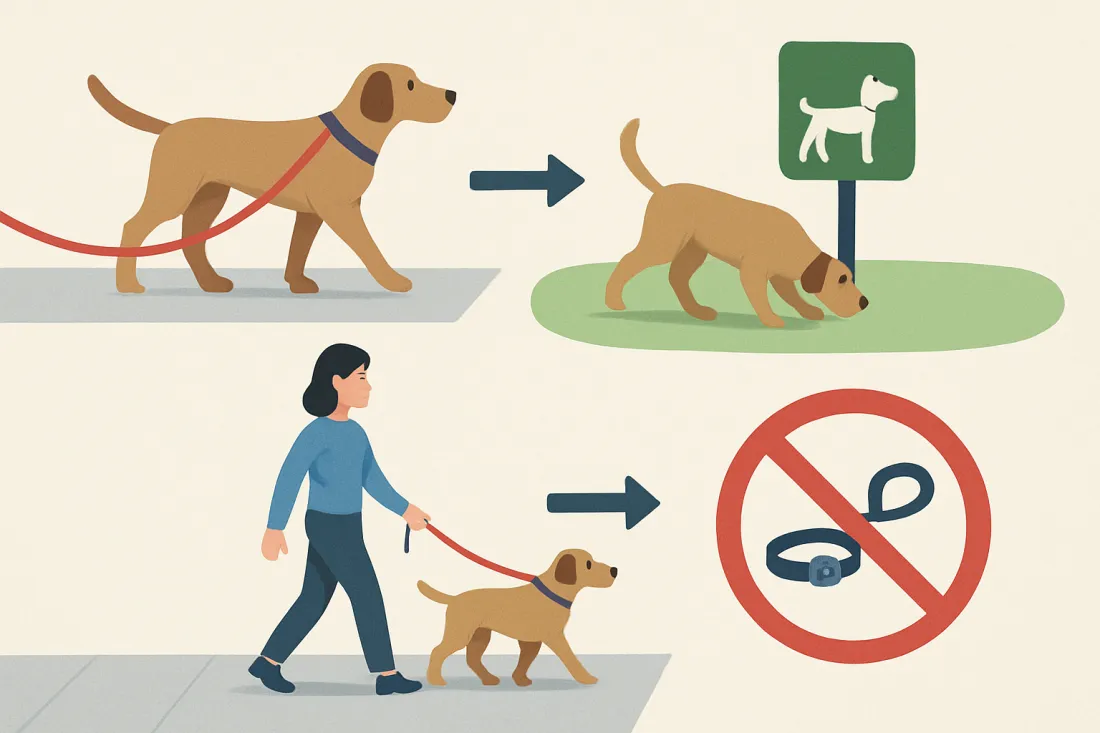
- No electronic‑only “leashes”: A visible leash is often required; electronic collars or invisible fences do not usually meet leash rules in public spaces.
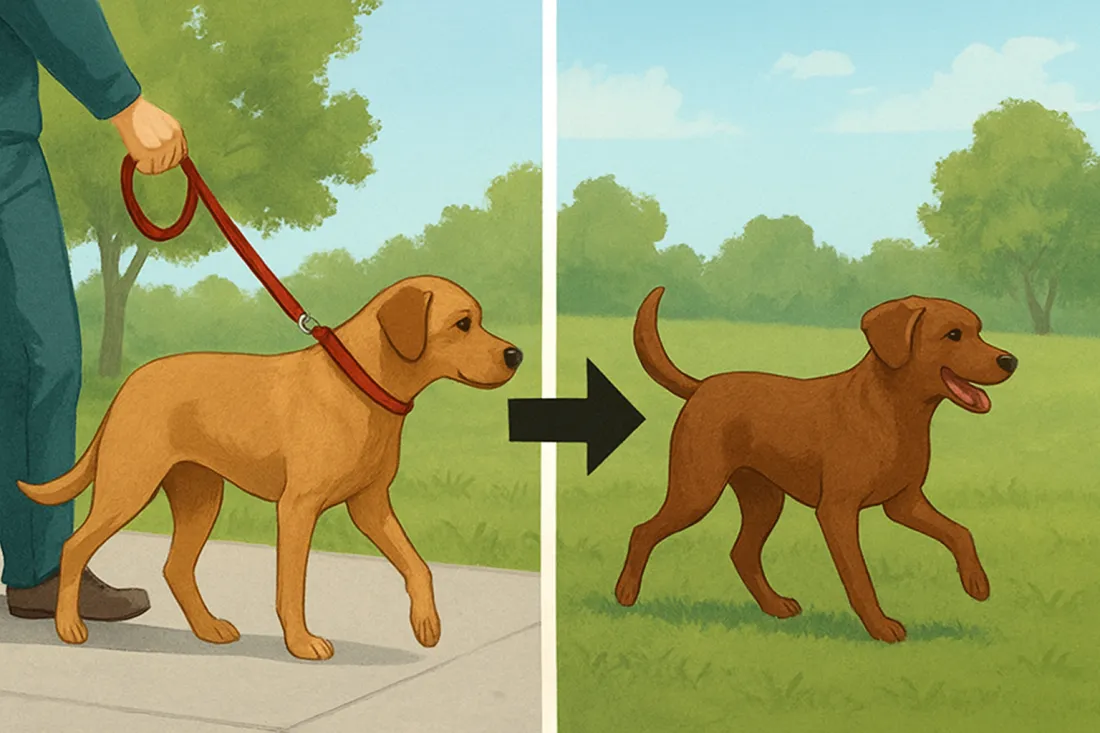
- Designated off‑leash areas: Dog parks or fenced areas may allow off‑leash play if your dog is under control and you follow posted rules.
Because enforcement and wording differ, always read posted signs at parks, beaches, and trailheads. If signs conflict with what you read online, follow the posted signs and ask a local authority if you are unsure.
Common patterns in rural areas and small towns
Rural areas may not always use the word “leash” in their rules. Instead, they may focus on whether a dog is “running at large” or “under control.” In practice, that can mean:
- Dogs may be allowed off leash on the owner’s property or with the landowner’s permission.
- Dogs that roam onto roads, neighbors’ land, or livestock areas can still trigger complaints, fines, or other consequences.
- Hunting, herding, or working dogs may have specific exceptions when actively working, but you are still responsible for damage or injuries.
Even if a leash is not explicitly required, you can still be held responsible if your dog chases wildlife, scares people, or injures another animal.
Public parks, beaches, and trails
Parks and recreation areas often have their own posted rules, which may be stricter than the surrounding city or county. Typical patterns include:
- On‑leash parks: Many general‑use parks require dogs to be on a leash at all times, except in fenced dog runs.
- Off‑leash dog parks: Fenced areas where dogs can be off leash if they are licensed, vaccinated, and under voice control. Rules often ban aggressive dogs and require owners to stay inside the enclosure.
- Time‑based rules: Some beaches or parks allow off‑leash dogs only at certain hours (for example, early mornings) or certain seasons.
- Wildlife‑sensitive areas: Trails near wildlife habitats may have strict leash rules to protect nesting birds, small mammals, or sensitive plants.
If you regularly use public spaces with your dog, it can be helpful to review a broader guide such as US pet laws every dog owner should know so you understand how leash rules fit into the bigger legal picture.
How to find your local leash and off‑leash regulations
Because rules are local, the safest approach is to look up the exact place you plan to walk. Use this simple process:
- Identify your governing area
- Start with your city or town name.
- If you live outside city limits, use your county name.
- For state parks, national parks, or federal land, note the specific park or forest name.
- Search for official sources
- Look for your city or county’s official website and search for terms like “animal control,” “dog leash,” or “dogs in parks.”
- For parks and trails, check the official park or recreation website and read the “pets” or “rules” section.
- Ignore random forum posts; rely on official pages, posted signs, or direct confirmation from staff.
- Confirm key details
- Is a physical leash required in public spaces?
- Is there a maximum leash length?
- Are off‑leash areas listed, and what are their rules (hours, permits, vaccinations)?
- Are there special rules for beaches, playgrounds, sports fields, or wildlife areas?
- Check for updates before trips
- Rules can change after incidents or seasonal wildlife closures.
- Before visiting a new park or beach, check the official site again or call the park office.
- When in doubt, leash up
- If signs are unclear or you cannot confirm the rules, use a leash. It is safer for your dog and usually the legally safer choice.
Comparing on‑leash vs. off‑leash: which is right for your situation?
Use the table below to compare when it makes sense to keep your dog on leash versus when off‑leash time might be appropriate.
| Situation | On‑leash is usually better when… | Off‑leash can be appropriate when… |
|---|---|---|
| Legal rules | Local law or posted signs require a physical leash, or rules are unclear. | You are in a clearly marked off‑leash area or on private land with permission and no conflicting rules. |
| Dog’s training | Your dog ignores recall, pulls hard, or gets easily distracted or overexcited. | Your dog comes when called around other dogs, people, food, and wildlife, and you have practiced in easier settings first. |
| Dog’s temperament | Your dog is fearful, reactive, or has a history of snapping, chasing, or guarding toys or food. | Your dog is stable, social, and has a history of polite interactions with unfamiliar dogs and people. |
| Environment | You are near roads, parking lots, playgrounds, sports fields, or busy multi‑use paths. | You are in a secure fenced dog park or a clearly designated off‑leash area with good visibility. |
| Other people’s comfort | There are children, people who seem nervous, or people who have asked you to keep distance. | Everyone nearby is clearly comfortable with off‑leash dogs, and there is enough space to avoid crowding. |
| Health and safety | Your dog is recovering from illness or surgery, is elderly and unstable, or is not up to date on core vaccinations. | Your dog is healthy, vaccinated as advised by your vet, and physically able to handle off‑leash play. |
If any column strongly points to “on‑leash,” choose the leash. You can still give your dog freedom using a long line, sniffy walks, and structured play.
Off‑leash readiness checklist: is your dog truly ready?
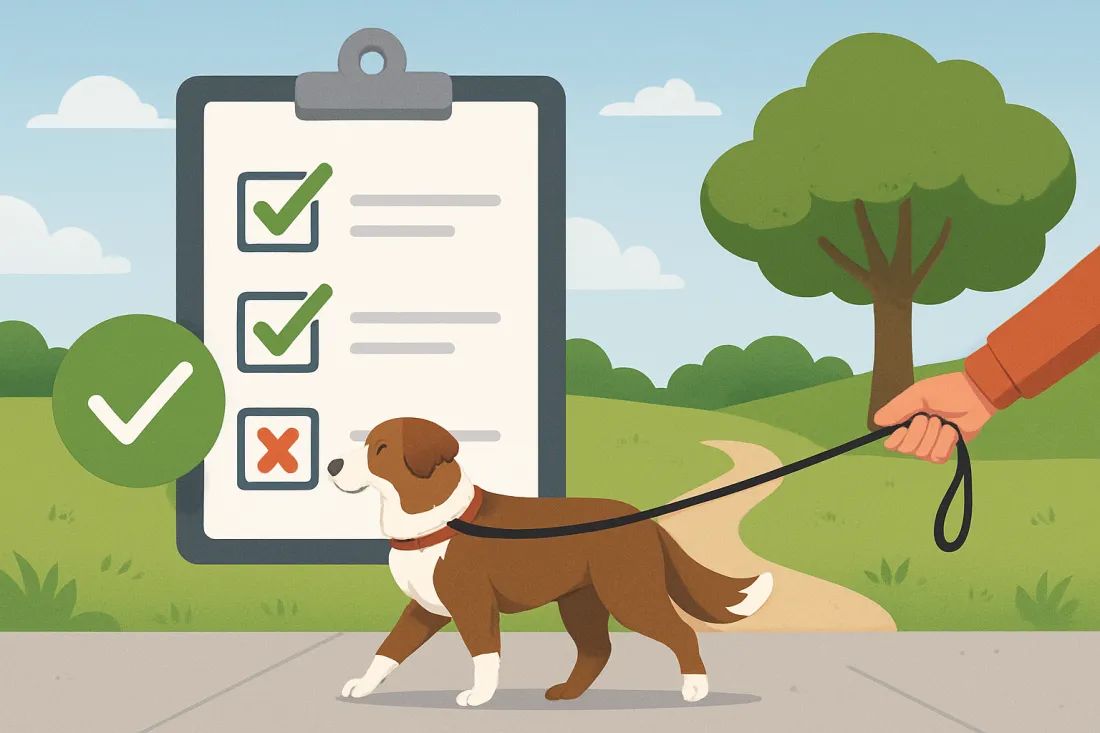
Before unclipping the leash in any allowed off‑leash area, run through this readiness checklist. If you cannot confidently say “yes” to most of these, keep working on training with the leash attached.
1. Recall and basic obedience
- Your dog comes when called the first time in your yard or home, even when mildly distracted.
- You have practiced recall around bigger distractions (other dogs, people, smells) using a long line.
- Your dog understands and responds to basic cues like “sit,” “stay,” “leave it,” and “drop it.”
- You can interrupt your dog when they are moving toward something exciting (a squirrel, another dog, a person with food).
2. Social skills with people and dogs
- Your dog has had positive, supervised experiences with a variety of dogs and people.
- They do not lunge, bark aggressively, or stiffen and stare when they see other dogs.
- They can pass people and dogs on a leash without causing a scene most of the time.
- They do not guard toys, sticks, or food from other dogs or people.
3. Health and physical condition
- Your vet has no concerns about your dog doing off‑leash exercise.
- Your dog is up to date on core vaccinations as recommended by your vet.
- Your dog is on flea, tick, and parasite prevention appropriate for your area, especially for wooded or grassy off‑leash spaces.
- Your dog is wearing a secure collar or harness with ID tags, and you have current microchip information on file.
4. Your own awareness and control
- You can read your dog’s body language well enough to spot stress, fear, or brewing conflict.
- You are willing to call your dog away from play if another dog or person looks uncomfortable.
- You can physically intervene if needed (for example, stepping in to separate dogs or quickly clipping the leash back on).
- You are prepared with treats, a leash, and any tools you normally use to manage your dog.
If you are unsure about any of these, consider working with a trainer or using a long line in allowed areas to safely practice recall and social skills.
Off‑leash etiquette around people, kids, and other dogs
Good etiquette is what keeps off‑leash privileges available for everyone. Even when off‑leash is allowed, you still have a responsibility to keep your dog from bothering others.
Respecting people and children
- Never assume someone wants to meet your dog. Ask before allowing your dog to approach anyone, especially children.
- Give wide space to strollers, wheelchairs, and runners. Call your dog to your side and keep them close until the person has passed.
- Watch for fear or discomfort. If someone stiffens, steps away, or shields a child, call your dog back immediately and leash if needed.
- Keep your dog out of picnics and gear. Do not allow your dog to sniff food, bags, or blankets that belong to other people.
Etiquette with other dogs
- Ask before greeting. A simple “Is your dog OK with other dogs?” gives the other owner a chance to say no.
- Do not let your off‑leash dog rush a leashed dog. Many leashed dogs are reactive, recovering from surgery, or in training. Call your dog away and leash if you cannot maintain distance.
- Interrupt rough play early. If play escalates to hard body slams, pinning, or one dog trying to escape, call your dog out for a break.
- Remove toys if they cause conflict. If multiple dogs are fixated on one ball or stick, it is safer to put it away.
Respecting space and environment
- Keep dogs out of restricted areas such as playgrounds, sports fields, or clearly signed no‑dog zones.
- Always pick up waste and carry it to a trash can; leaving bags on the trail or field is still a problem.
- Protect wildlife by calling your dog away from birds, small animals, and nesting areas, even if chasing looks “fun.”
- Control barking in shared spaces; if your dog is barking nonstop, move to a quieter area or take a break.
Common mistakes that cause conflicts, fines, or accidents
Avoid these frequent errors that often lead to complaints or legal trouble:
- Assuming “friendly” is enough: Many owners let their “friendly” dog run up to strangers. Even a friendly dog can knock over a child, scare someone, or trigger a fight with a less social dog.
- Ignoring posted signs: Walking off‑leash in a clearly marked on‑leash area is one of the fastest ways to get a ticket or upset other park users.
- Using retractable leashes in crowded areas: Long retractable leashes can trip people, allow dogs to dart into traffic, or cause tangles with bikes and other dogs.
- Letting dogs roam the neighborhood: Allowing a dog to wander off your property can lead to bites, traffic accidents, or property damage, and can create serious legal and neighbor‑relation problems.
- Not intervening early: Waiting until dogs are already fighting, or until someone is yelling, makes situations harder to fix and more dangerous.
Decision checklist: should your dog be off leash here, right now?
Use this quick decision checklist each time you consider unclipping the leash.
- Legal check
- Is off‑leash allowed in this exact spot at this time?
- Have you read the most recent posted signs or official rules?
- Environment check
- Are there roads, parking lots, or hazards nearby?
- Is the area fenced or open?
- Are there children, picnics, or people who look uncomfortable with dogs?
- Dog readiness check
- Is your dog calm enough to listen, not already overexcited or stressed?
- Has your dog had recent positive off‑leash experiences in similar environments?
- Can you reliably call your dog away from other dogs, people, or wildlife?
- Your readiness check
- Are you paying full attention, not distracted by your phone?
- Do you have treats, a leash, and any tools you need to regain control?
- Are you willing to leash back up immediately if asked or if conditions change?
- Risk vs. benefit check
- What is the benefit of off‑leash time here (exercise, training, enrichment)?
- What could realistically go wrong (traffic, conflicts, wildlife, fines)?
- If something goes wrong, can you manage it safely?
If you cannot confidently pass each step, keep the leash on and look for a safer or more suitable off‑leash option.
What to do if an incident happens: bites, fights, or property damage
Even careful owners can face unexpected incidents. Knowing what to do can reduce harm and help you handle any legal or financial consequences.
1. If dogs start to fight
- Stay as calm as possible. Yelling can sometimes escalate tension, but a firm, clear voice can help.
- Do not reach between biting dogs. This is a common way for people to get bitten.
- Use distraction if safe: loud claps, a sudden noise, or water can sometimes interrupt a fight.
- Grab back legs or harnesses only if you can do so without putting your hands near the dogs’ mouths, and coordinate with the other owner if possible.
- Separate and leash both dogs as soon as they disengage, then move them far enough apart that they cannot see each other.
2. If a bite occurs (to a person or dog)
- Check for injuries and move to a safe area away from traffic and other dogs.
- Exchange information with the other party: names, phone numbers, and basic dog details (age, size, vaccination status as you understand it).
- Document what happened with notes and photos of injuries, locations, and any visible signs or rules.
- Seek medical or veterinary care promptly, even for small punctures, as bites can become infected.
- Contact local animal control or authorities if required in your area or if injuries are significant. They can explain reporting requirements and next steps.
3. If your dog damages property
- Take responsibility where appropriate. Offer your contact information and be prepared to discuss repair or replacement.
- Document the damage with photos and notes about what happened.
- Check your insurance. Some homeowners or renters policies include liability coverage for dog‑related damage or injuries; contact your insurer to ask about your specific situation.
4. After any serious incident
- Consult your veterinarian to rule out pain or medical issues that may have contributed to aggression.
- Work with a qualified trainer or behavior professional to address behavior concerns before returning to off‑leash areas.
- Review your management plan: you may need to stick to on‑leash walks, avoid dog parks, or use quieter times and locations.
Printable pre‑park checklist: what to review before every dog outing
Use this checklist before heading to a park, trail, or beach. You can copy it into your notes app or print it and keep it near your leash and gear.
- Legal and location checks
- I know whether this specific park or trail allows dogs.
- I have checked whether dogs must be on leash here.
- I have read or will read posted signs at the entrance.
- Dog health and ID
- My dog seems healthy and fit for exercise today.
- My dog is wearing a secure collar or harness with ID tags.
- My dog’s microchip information is up to date (checked recently).
- Training and behavior
- My dog has a reliable recall in most situations we encounter.
- My dog can pass people and dogs without lunging or barking excessively.
- I am ready to keep my dog on leash if they seem stressed or overexcited.
- Gear and supplies
- Sturdy leash (and backup if needed).
- Waste bags for picking up after my dog.
- High‑value treats or rewards for recall and good behavior.
- Water and a bowl if we will be out for a while.
- Personal readiness
- I have time and attention to supervise my dog closely.
- I am prepared to leash up immediately if asked or if conditions change.
- I know what I will do if a conflict, bite, or accident occurs.
FAQ about dog leash laws and off‑leash etiquette in the US
What states allow dogs off leash?
States differ in how they write dog‑control rules, and many leave details to cities and counties. Some places focus on whether a dog is “under control” or “running at large” rather than requiring a leash everywhere. However, even in states that use “under control” language, many cities, parks, and neighborhoods still require a physical leash in public spaces. Because of this variation, do not rely on a simple list of states. Always check your city or county rules and the specific park or trail regulations before letting your dog off leash.
Can my neighbors let their dogs run loose?
In many US communities, letting dogs roam off the owner’s property can lead to complaints, citations, or other consequences, especially if the dog:
- Enters other people’s yards without permission.
- Chases people, cars, bikes, or wildlife.
- Damages property or leaves waste behind.
- Threatens or injures people or other animals.
If a neighbor’s loose dog is causing problems, you can document what is happening (dates, times, photos or video if safe) and contact your local animal control or non‑emergency police line to ask what options are available in your area.
What is the 7‑7‑7 rule for dogs?
People sometimes use “7‑7‑7” as a rough way to think about how long it can take a dog to adjust to a new home or routine (for example, 7 days to start to settle, 7 weeks to learn the routine, 7 months to fully feel at home). It is not a legal rule and does not replace training or management. For leash and off‑leash decisions, focus less on a timeline and more on your dog’s actual behavior: how well they respond to cues, how they handle distractions, and how comfortable they are in different environments.
Can I legally ask someone if their dog is a service dog?
In the US, there are specific limits on what you can ask about a service dog. In many situations, staff or property managers are allowed to ask only two questions:
- Whether the dog is required because of a disability.
- What work or task the dog has been trained to perform.
They generally cannot ask about the person’s disability, require special ID, or demand that the dog demonstrate its task on the spot. Rules can differ in certain settings, so if you are responsible for a business or facility, check current guidance from official sources or consult a legal professional. Regardless of legal status, do not distract, pet, or call to a dog that appears to be working. Keep your own dog at a respectful distance and under control.
What should I do if someone else’s off‑leash dog approaches us?
- Stay calm and avoid yelling, which can excite dogs.
- Put your body between your dog and the approaching dog if safe.
- Use a firm voice: “Please call your dog,” or “My dog needs space.”
- Keep your leash short but not tight, and move away at an angle rather than directly head‑on.
- If you feel unsafe, leave the area and, if necessary, report repeated issues to local authorities or park staff.
How can I give my dog more freedom if off‑leash is not allowed?
You can still provide exercise and enrichment while following leash rules:
- Use a long line (within any local leash‑length limits) in open areas to allow more sniffing and roaming while maintaining control.
- Play structured games like fetch or tug in fenced yards or approved dog parks.
- Practice “sniffy walks” where your dog sets the pace and explores within the leash radius.
- Work on training games that tire your dog mentally, such as scent games or trick training.
By combining legal awareness, realistic training goals, and thoughtful etiquette, you can keep your dog, your neighbors, and your community safer while still giving your dog a rich, enjoyable life.