
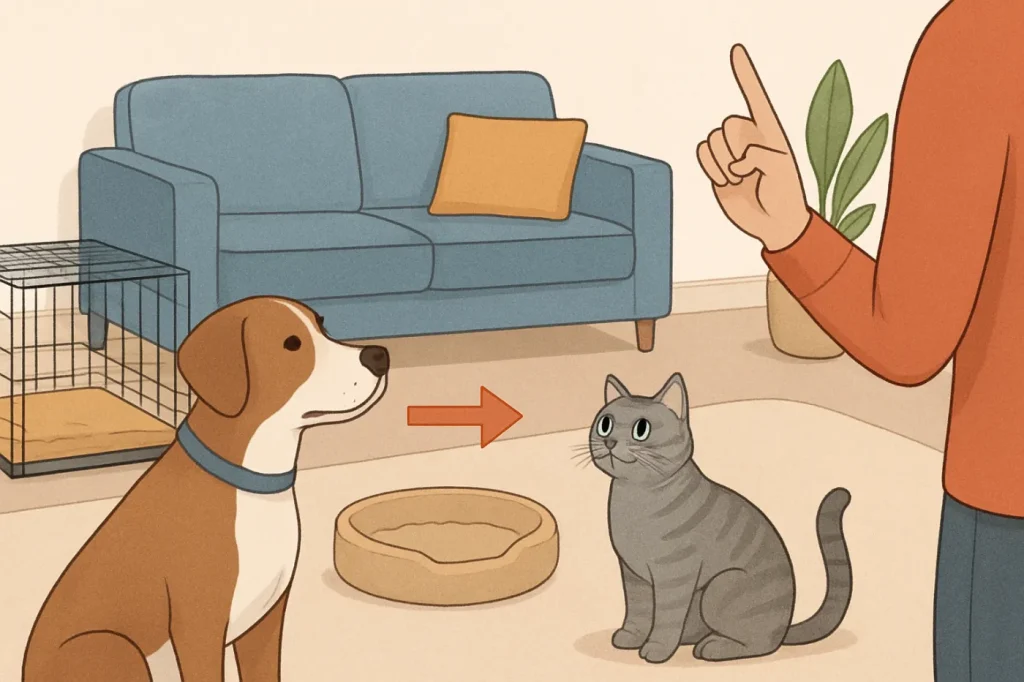
Bringing a new dog or cat home is exciting, but without clear house rules, things can get chaotic fast. Scratched furniture, accidents on the rug, jumping on kids, 3 a.m. zoomies on your bed – most of these problems are easier to prevent than to fix.
The most effective approach is to decide a few simple, kind rules before your pet arrives, then teach them calmly and consistently during the first 7–30 days.
Essential house rules to decide before your new pet comes home
Every family is different, but most new dogs and cats settle faster when these basics are clear from day one. Talk them through with everyone in the household.
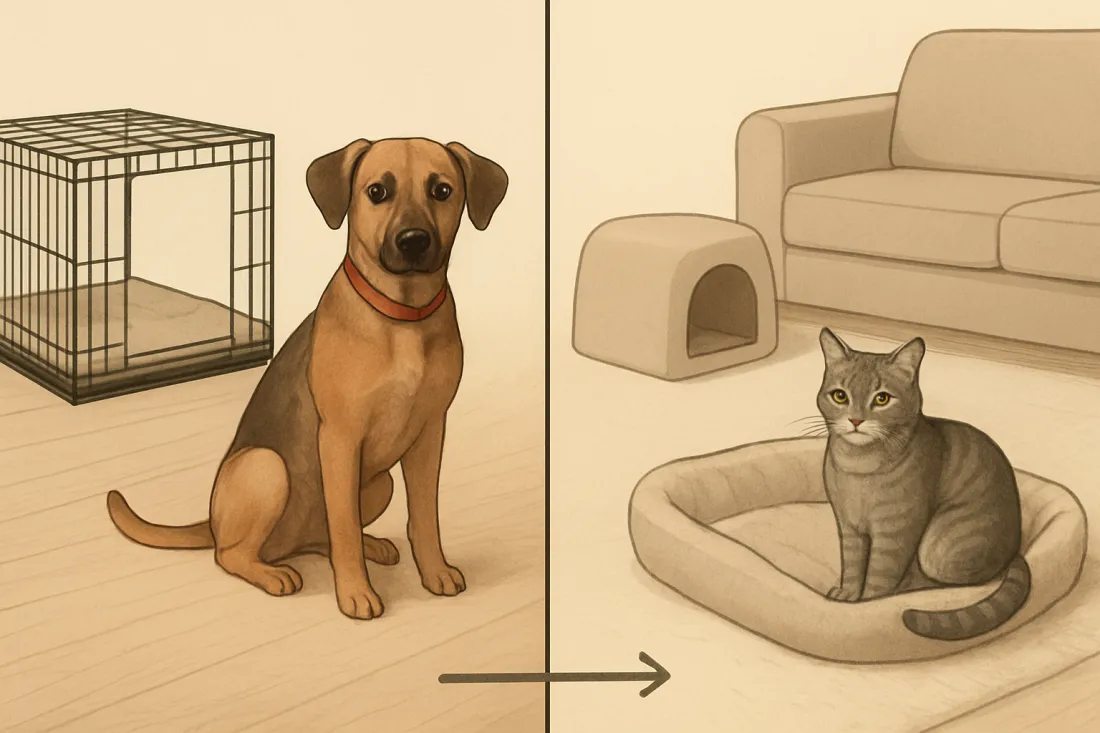
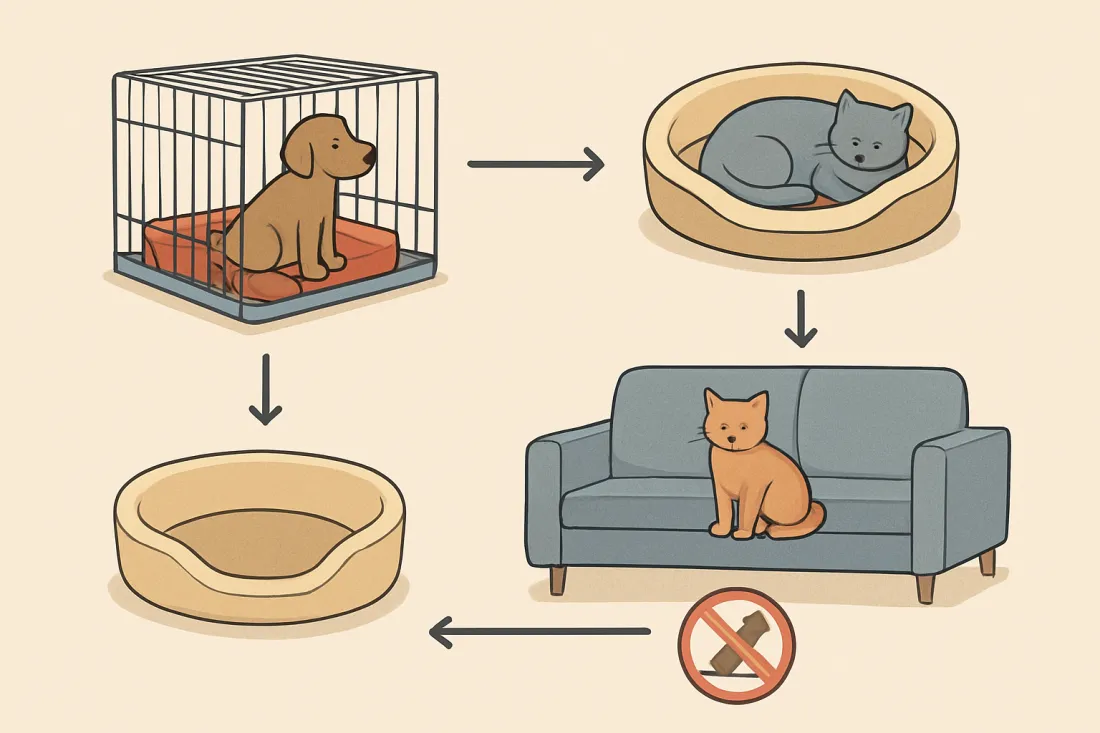
- Sleeping area
Dog examples:- Crate in your bedroom or just outside your door.
- Dog bed in a quiet corner of the living room.
- Gated area in the kitchen or hallway.
Cat examples:
- Cat bed or blanket in a quiet room.
- High perch or cat tree away from busy walkways.
- Decide if the bedroom is allowed at night or not.
- Furniture access
Pick one rule and stick to it:- “No pets on any furniture.”
- “Pets only on the sofa when invited.”
- “Cats can be on the couch but not on kitchen counters or the dining table.”
- Potty and litter habits
Dog:- Choose a specific potty area outside.
- Use a leash to guide the dog there until the habit is strong.
- Plan who takes the dog out and how often.
Cat:
- Provide at least one litter box per cat, plus one extra, in quiet, easy-to-reach spots.
- Keep boxes away from food and water.
- Decide who scoops and how often (usually at least once a day).
- Feeding rules
- Who feeds, when, and where bowls go.
- No feeding from the table; all treats given in the pet’s “spot.”
- Separate feeding spots for multiple pets to prevent guarding or bullying.
- Kids and pet interaction
- No hugging, riding, or pulling tails/ears.
- Leave the pet alone when eating, sleeping, or hiding.
- Adults supervise all kid–pet interactions.
- Alone-time and visitors
- Pet goes to a safe space (crate, room, or pen) when delivery people or guests arrive.
- Limit visitors for the first week so the pet can bond with the household first.
- Decide how long the pet can be left alone and what enrichment they get (toys, chews, window views).
These rules protect both your pet and your family. They also reduce anxiety because the pet quickly learns what to expect.
Why early house rules matter for welfare and safety
Clear, humane rules are not about control for its own sake. They directly support your pet’s welfare and safety in several ways.
- Predictability lowers stress
New pets are often overwhelmed by new smells, sounds, and people. When meals, walks, play, and sleep happen in a similar way every day, the nervous system can relax and the pet feels safer. - Boundaries prevent risky behavior
Rules like “no front door dashing,” “no kids near the food bowl,” and “cat stays indoors unless supervised” reduce the chance of bites, scratches, escapes, or road accidents. - Structure speeds up training
When everyone responds the same way to jumping, scratching, or begging, the pet learns much faster. Inconsistent rules are confusing and can actually increase anxiety. - Good habits form early
It is far easier to prevent counter-surfing, furniture scratching, or barking at windows than to undo those habits later.
If you want a broader overview of typical boundaries before you customize them, it can help to review basic house rules for dogs and cats and then adapt them to your home layout and family.
Step-by-step plan for the first 7–30 days in a new home
The first month sets the tone for your pet’s life with you. Use this phased plan as a guide and adjust to your pet’s age, health, and history.
Day 0–3: Arrival and decompression
Think of this as the “quiet welcome” phase.
- Prepare a safe space before arrival
Dog: crate or gated area with bed, water, and a chew.
Cat: one room with litter box, food, water, hiding spots, and a vertical perch if possible. - Limit the house tour
Dog: on leash indoors at first; show only a few rooms.
Cat: keep in the safe room until eating, using the litter box, and exploring a bit. - Keep visitors to a minimum
Focus on bonding with the core household. Ask friends to wait a few days. - Start the routine immediately
Feed at consistent times, take dogs out frequently, scoop litter daily, and set a regular bedtime. - Watch for stress signs
Dog: panting, pacing, hiding, refusing food, excessive clinginess.
Cat: hiding constantly, not eating, growling, swatting if approached.
Day 4–7: Teaching the basic house rules
Once your pet is eating and resting more normally, begin gently teaching boundaries.
- Dogs
- Practice going to a “spot” (bed or mat) for meals and calm time.
- Reward quiet behavior instead of barking or whining.
- Walk on leash around the house and yard to reinforce potty areas and no-go zones.
- Introduce short alone-times (5–15 minutes) with a chew or toy.
- Cats
- Gradually open more rooms, one at a time, after the cat uses the litter box reliably.
- Redirect scratching to posts by placing them near furniture and rewarding use.
- Start a simple play routine: 5–10 minutes of wand toy play, then a small meal.
Week 2: Expanding freedom with supervision
As your pet relaxes, you can allow more freedom – but only with supervision.
- Increase supervised access
Let the pet into more rooms while you watch. If they jump on counters, chew cords, or scratch furniture, calmly redirect and block access when you cannot supervise. - Fine-tune sleeping arrangements
If you plan to allow the pet in your bedroom long-term, introduce that now. If not, reinforce the chosen sleeping area with treats and calm praise. - Introduce short, positive training sessions
Dogs: 3–5 minute sessions, 2–3 times a day, teaching sit, down, come, and leash manners.
Cats: reward coming when called, going to a perch, or using a scratch post. - Careful introductions to other pets
Use barriers (baby gates, cracked doors) and scent swapping. Keep first meetings short and calm.
Weeks 3–4: Settling into long-term habits
By the end of the first month, most pets are starting to understand the household rhythm.
- Stick to your chosen rules
If you do not want a 60-pound dog in your bed, do not “make an exception” now. Pets learn from what you do most often, not what you say. - Gradually increase alone-time
Build up to your typical workday schedule in small steps, pairing alone-time with safe chews or puzzle feeders. - Refine social rules
Teach dogs to settle on a mat when guests arrive. Help cats by giving them high perches or a separate room when visitors come. - Monitor for ongoing stress or behavior issues
If you see persistent fear, aggression, or destructive behavior beyond the first few weeks, plan to consult a trainer or behavior professional.
Comparison table: how common house rules differ for dogs and cats
| House rule area | Dogs – practical approach | Cats – practical approach |
|---|---|---|
| Sleeping areas | Crate or bed in a low-traffic area; decide early if bedroom or bed-sharing is allowed. Use the same spot every night. | Quiet room or high perch; many cats choose their own spots, but you can guide by placing beds in calm, warm locations. |
| Furniture access | Teach “off” and reward lying on a dog bed. Allow on furniture only when invited if that is your rule. | Block counters and tables with deterrents; provide tall cat trees and window perches as legal alternatives. |
| Food and begging | Feed in a set spot. No table scraps. Reward calm behavior away from the dining table. | Feed in a quiet area away from busy walkways. Keep human food out of reach; avoid reinforcing meowing at the table. |
| Kids interaction | Teach kids to pet gently on shoulders or chest, not face. Dog can move away to a bed if overwhelmed. | Kids learn to let the cat come to them. No chasing or grabbing. Cat always has an escape route and high perch. |
| Alone-time | Build up gradually with crate or safe room, plus chews or toys. Aim for calm departures and arrivals. | Most cats handle alone-time well if they have hiding spots, vertical space, and enrichment like toys or window views. |
| Outdoor access | Leash walks or secure fenced yard. No unsupervised roaming to reduce accident and escape risks. | Indoor-only or supervised outdoor time (enclosed yard, catio, or harness walks) to help protect from cars and predators. |
Using the 3-3-3 rule and similar timelines for new pets
Pet professionals often use simple timelines to describe adjustment periods. They are guidelines, not strict rules, but they can help you set realistic expectations.
- 3-3-3 rule for dogs (approximate)
- 3 days: dog may be overwhelmed, shut down, or overexcited.
- 3 weeks: dog starts to learn the routine and show more of their true personality.
- 3 months: many dogs feel fully at home and secure.
- 3-3-3 idea for cats (often similar but sometimes slower)
- 3 days: hiding and cautious exploring are common.
- 3 weeks: cat usually knows where key resources are and may seek more interaction.
- 3 months: many cats are comfortable enough to show playful or cuddly sides.
Some people also talk about a “7-7-7” style rule for dogs (for example, 7 hours, 7 days, 7 weeks) to emphasize that adjustment happens in stages. The exact numbers are less important than the idea: behavior in the first few days is not the final version of your pet.
Positive reinforcement methods to teach house rules
House rules stick best when pets learn that following them makes good things happen. Positive reinforcement means you reward the behaviors you like so they happen more often.
Core tools for dogs and cats
- Rewards: small treats, praise, petting (if the pet enjoys it), toys, or access to something they want (going outside, jumping on a perch).
- Markers: a short word like “yes” or a clicker to mark the exact moment the pet does the right thing.
- Management: gates, crates, pens, leashes, and closed doors to prevent unwanted behavior while the pet is still learning.
Examples for common rules
- Rule: No jumping on people (dogs)
When the dog approaches, stand still and look away if they jump. The moment all four paws are on the floor, say “yes” and give attention or a treat. Consistency from every family member is crucial. - Rule: Use the litter box (cats)
Place the cat in the box after naps and meals. Keep boxes clean and easy to reach. If the cat uses the box, quietly praise or offer a treat nearby. - Rule: Stay off counters (cats)
Make counters boring (no food left out) and provide high alternatives like cat trees. When the cat chooses the tree, reward with treats or play. - Rule: Settle on a bed or mat (dogs and cats)
Lure the pet onto the bed with a treat, mark “yes,” and reward. Gradually add a cue like “bed” or “place.” Feed chews or meals on the bed to make it a favorite spot.
Sample family house rules agreement you can adapt
Use these scripts as a starting point for a written family agreement. Adjust wording and rules to fit your home.
General family agreement
Our Pet House Rules
1. Consistency
All adults and kids will follow the same rules with our pet. If we want to change a rule, we will talk about it first and agree together.
2. Kindness
We will not hit, yell at, or scare our pet. We will use rewards, redirection, and management to teach good behavior.
3. Supervision
Adults will supervise all interactions between kids and the pet. If the pet or child seems stressed, we will separate them and give everyone a break.
Dog-specific agreement example
Dog Rules in Our Home
- Furniture: no furniture / sofa only when invited / bed allowed (circle one).
- Feeding: [Name] feeds the dog at [times]. No one gives food from the table.
- Potty: The dog goes outside to [specific area]. We always go on leash until fully trained.
- Visitors: When guests arrive, the dog goes to [bed/crate/room] until calm.
- Kids: Kids do not hug, ride, or grab the dog. They ask an adult before giving treats.
Cat-specific agreement example
Cat Rules in Our Home
- Furniture: The cat may use the couch and chairs, but not the kitchen counters or dining table.
- Feeding: [Name] feeds the cat at [times]. No one feeds the cat from their plate.
- Play: Kids may play with the cat using toys only, not hands or feet.
- Hiding: If the cat hides, we leave them alone and let them come out when ready.
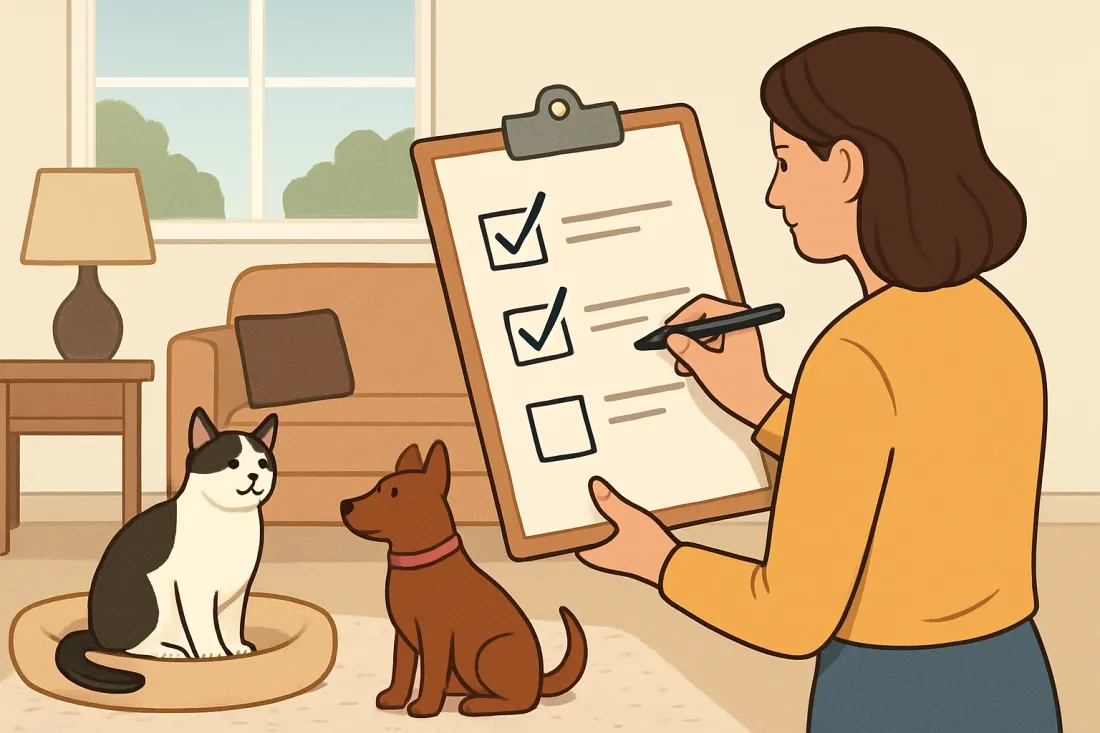
House rules checklist for your household
You can copy this checklist into a document or notebook and tick items as you decide them.
- We chose where our dog or cat will sleep the first night and long-term.
- We decided which rooms are always allowed, sometimes allowed, or off-limits.
- We agreed on furniture rules (sofa, bed, chairs, counters, table).
- We set feeding times and who is responsible for feeding.
- We chose potty/litter box locations and who cleans them.
- We set rules for kids: how to touch, when to leave the pet alone, and when to ask an adult.
- We planned how to introduce the pet to visitors and other animals.
- We agreed on training methods: rewards, no physical punishment, and consistent cues.
- We listed signs that mean we will contact a trainer, behaviorist, or veterinarian.
Common mistakes that confuse or stress new dogs and cats
Avoiding a few typical errors can make the first month much smoother.
- Changing rules from day to day
Example: letting the dog on the couch sometimes and scolding them other times. Pets cannot guess your mood; they only know what is usually allowed. - Too much freedom too soon
Giving a new pet full run of the house often leads to accidents, chewing, or hiding. Start small and expand access as they show good choices. - Overwhelming the pet with visitors
Many people want to meet your new pet, but too many new faces can be scary. Limit visitors in the first week and keep greetings calm and short. - Ignoring early warning signs
Growling, hissing, freezing, or hiding are signals that the pet is uncomfortable. Punishing those signals can make behavior worse and less predictable. - Using punishment instead of management
Yelling or physical corrections may stop behavior in the moment but often increase fear. It is usually more effective to remove temptations and reward alternatives. - Inconsistent responses from family members
If one person laughs at jumping and another scolds it, the dog will be confused. If one person lets the cat on the counter and another sprays water, the cat learns nothing useful.
Decision criteria for how strict your house rules should be
Not every home needs the same level of structure. Use these questions to decide how firm your rules should be.
- Do you have young children, elderly family members, or people with mobility challenges?
If yes, lean toward stricter rules about jumping, running indoors, and access to certain areas. - Is your pet a large, strong dog or a very active cat?
Bigger or more energetic animals often need clearer boundaries about furniture, doors, and play. - Is anyone in the home nervous around animals?
More structure (leash indoors at first, safe zones, clear no-go areas) can help everyone feel secure. - How much time can you realistically spend on training and supervision?
If time is limited, use more management tools (gates, crates, pens) so the pet cannot rehearse unwanted behaviors. - Are you in an apartment or shared building?
You may need extra rules about barking, hallway access, and elevator etiquette. If you rent, also check any apartment pet rules for dogs that apply.
Where a new dog should sleep the first night
Many new dog owners wonder about the first night specifically. There is no single right answer, but these guidelines help.
- Keep the dog close, but contained
A crate or pen in your bedroom or just outside your door lets the dog hear and smell you, which can be calming, while still preventing accidents or chewing. - Use familiar scents
If possible, place a blanket or toy from the previous home or shelter in the sleeping area. - Plan for at least one potty break
Puppies and some adult dogs may need to go out during the night. Set an alarm rather than waiting for whining to escalate. - Stay calm and low-key
If the dog cries, offer a quiet word or gentle touch, but avoid turning it into a long cuddle party. You want night-time to feel safe and boring.
When to seek a trainer or behaviorist in the United States
Some challenges are normal adjustment; others are red flags that you should get professional help. In the United States, you can look for certified trainers or behavior professionals when you notice:
- Safety concerns
Any biting that breaks skin, repeated attempts to bite, intense lunging, or serious fights between pets should be addressed quickly with professional guidance. - Persistent fear or anxiety
Hiding almost all the time, refusing to eat, constant pacing, or nonstop vocalizing for more than a few days may need expert support. - Separation-related problems
Destruction near doors, loud vocalizing when alone, or attempts to escape crates can indicate separation distress. - House-soiling that does not improve
After ruling out medical issues with a veterinarian, a trainer or behaviorist can help with behavior-based causes.
When choosing a professional, look for someone who uses reward-based methods and is comfortable working with your veterinarian if needed. For long-term health planning, it can also help to review an annual vet care schedule for dogs and cats USA so medical issues do not masquerade as behavior problems.
FAQ about house rules for new dogs and cats
What is the 3-3-3 rule for dogs and cats?
The 3-3-3 rule is a rough guideline for how long it takes a new pet to adjust: about 3 days to decompress, 3 weeks to learn the routine, and 3 months to feel fully at home. Some pets adjust faster or slower, but this timeline helps you stay patient and avoid expecting perfect behavior right away.
What is the 7-7-7 rule for dogs?
People sometimes use a “7-7-7” style idea (for example, 7 hours, 7 days, 7 weeks) to highlight that dogs need time at different stages to settle in. The exact numbers vary by source, but the message is the same: give your dog time, structure, and consistent rules as they adjust.
What is the 3-3-3 rule for new cats?
For cats, the 3-3-3 idea usually means about 3 days of hiding and decompression, 3 weeks of learning where food, water, litter, and safe spots are, and around 3 months to feel truly secure and show their full personality. Many cats need even longer, especially if they are shy or have had stressful experiences.
Where should a new dog sleep the first night?
Most new dogs do best sleeping in a crate or pen near your bed the first night. Being close to you helps them feel safe, while the crate or pen prevents accidents and chewing. Use soft bedding and, if available, an item that smells like their previous home.
Should I let my new pet on the bed or sofa right away?
Only if you are comfortable keeping that rule long-term. It is easier to start with stricter boundaries and relax them later than to allow full access and then try to take it away. Decide as a family before the pet arrives and stay consistent.
How many house rules are too many?
Focus on a small set of high-impact rules at first: potty or litter habits, sleeping area, furniture access, and kid interaction. As your pet learns these, you can add more detailed rules. If your pet seems constantly confused or stressed, simplify and make the environment easier to understand.
How can I get my kids to follow the pet rules?
Keep rules short and clear, use pictures or charts for younger children, and practice with role-play. Praise kids when they follow the rules, just as you praise the pet. Remind them that rules keep both them and the pet safe.