Core obedience commands every dog in the US should know
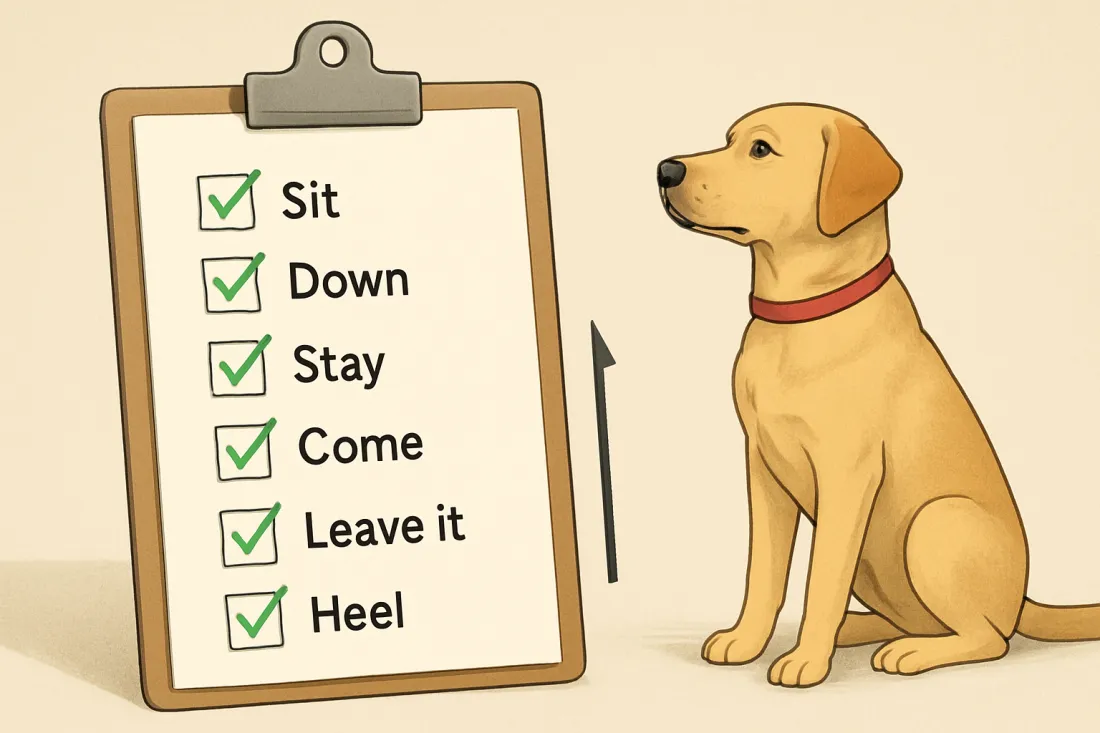
For day‑to‑day life in the United States—apartments, suburbs, sidewalks, parks—every dog should reliably know at least these core obedience commands:
- Sit
- Down (lie down)
- Stay
- Come (recall)
- Leave it
- Drop it
- Heel or loose‑leash walk
- Place (go to bed/mat and settle)
These eight commands cover most real‑world situations: greeting people politely at the door, walking calmly past other dogs on a city sidewalk, waiting at a crosswalk, coming back at the park, and staying relaxed at the vet or groomer. The rest of this guide shows you how to teach each command step by step, how to fit training into a busy US schedule, and how to use these skills in everyday places like apartment hallways, elevators, and dog‑friendly patios.
How basic obedience supports responsible dog ownership in the US
Basic obedience is not about having a “perfect” dog. It is about safety, manners, and being a considerate neighbor. Obedience training supports responsible ownership by:
- Preventing accidents – A solid come and stay can help stop a dog from running into a street or chasing a bike on a shared path.
- Reducing stress – Commands like place and down help your dog relax during vet visits, grooming, or when guests arrive.
- Protecting others – Leave it and drop it keep your dog from grabbing food, trash, or wildlife, which is especially important in public parks and shared apartment spaces.
- Making public spaces accessible – A dog that can walk on a loose leash and sit at crosswalks is welcome in more places and easier to take along.
- Meeting local expectations – Many US communities expect dogs to be under control in common areas. Some landlords, HOAs, and insurance companies care about behavior when deciding whether to allow certain dogs.
If you are starting from scratch with a new dog, you may also find it helpful to read about basic dog training rules for responsible owners so your obedience work fits into a consistent routine.
Essential commands explained: what they do and when to use them
| Command | What it means | Everyday US examples | Why it matters for safety/manners |
|---|---|---|---|
| Sit | Put your bottom on the ground and stay there until released. | At the front door, before crossing a street, before getting food or toys. | Helps prevent jumping, bolting through doors, and teaches impulse control. |
| Down | Lie down with elbows on the ground and stay until released. | Under a table at a café, in a vet waiting room, during family meals. | Helps your dog relax and stay out of the way in tight or busy spaces. |
| Stay | Hold your current position until released, even with distractions. | Waiting at crosswalks, when delivery drivers come, at apartment elevators. | Gives you time to handle doors, traffic, and surprises safely. |
| Come | Return directly to you and stay close. | At off‑leash dog parks where allowed, in yards, if the leash slips from your hand. | Important for preventing run‑offs and keeping your dog near you in emergencies. |
| Leave it | Ignore or move away from something and do not touch it. | Chicken bones on sidewalks, trash in city parks, dropped medication at home. | Helps prevent your dog from eating or grabbing dangerous or rude items. |
| Drop it | Release whatever is already in your mouth. | Sticks, kids’ toys, socks, or wildlife picked up in the yard. | Reduces choking risks and protects valuables without wrestling with your dog. |
| Heel / loose leash | Walk beside you without pulling, with attention on you. | Busy sidewalks, outdoor malls, crowded events, narrow trails. | Helps prevent falls, shoulder strain, and conflicts with people or other dogs. |
| Place | Go to a specific bed/mat and stay there until released. | When guests visit, during dinner, while working from home. | Creates a safe “parking spot” and reduces barking, begging, and under‑foot chaos. |
Step‑by‑step training instructions for each essential command
Use small, soft treats your dog loves, and train in short, upbeat sessions. If your dog is very distracted, move to a quieter room and lower your expectations until they understand the basics.
How to teach Sit
- Hold a treat at your dog’s nose.
- Slowly move the treat up and slightly back over their head. As they look up, their rear usually drops.
- The moment their bottom hits the ground, say “Yes!” (or click) and give the treat.
- Add the word “Sit” just before you move the treat once they are offering the behavior easily.
- Practice at doors, before meals, and before putting the leash on so it becomes a default polite behavior.
How to teach Down
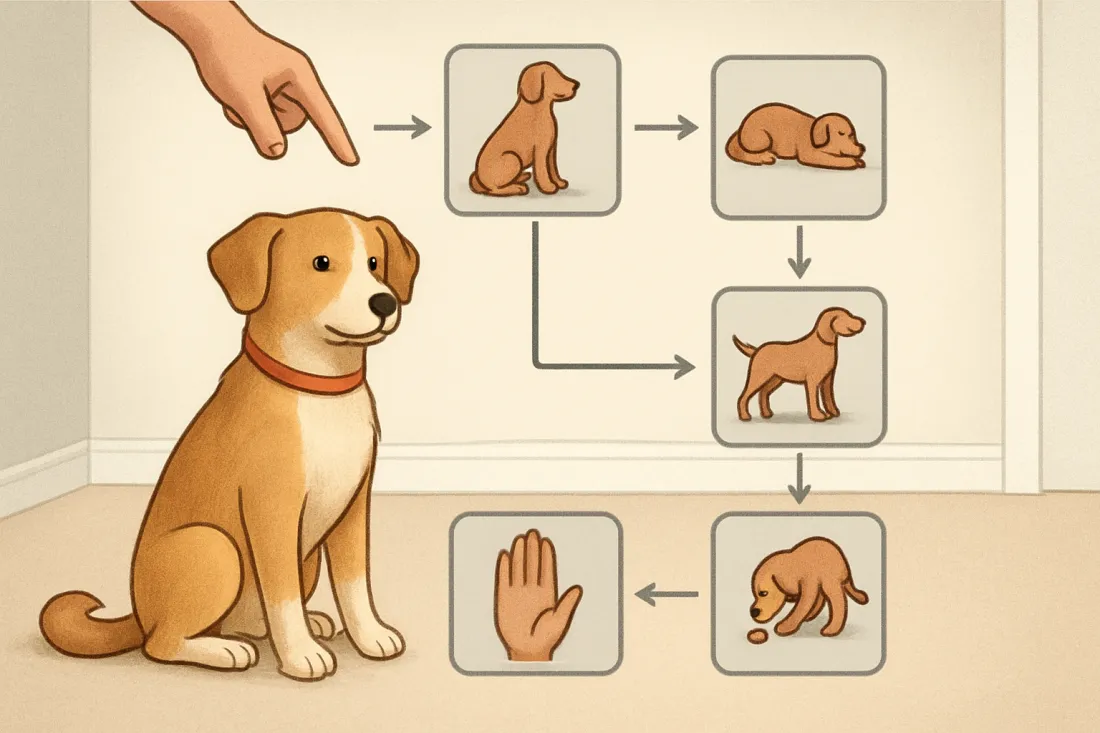
- Ask your dog to sit.
- Hold a treat at their nose, then slowly lower it straight down to the floor between their front paws.
- As they follow the treat, slowly move it out along the floor. When they lie down, mark (“Yes!”) and reward.
- Say “Down” just before you lure once they understand the motion.
- Reward calmness by giving a few treats in a row while they stay lying down.
How to teach Stay
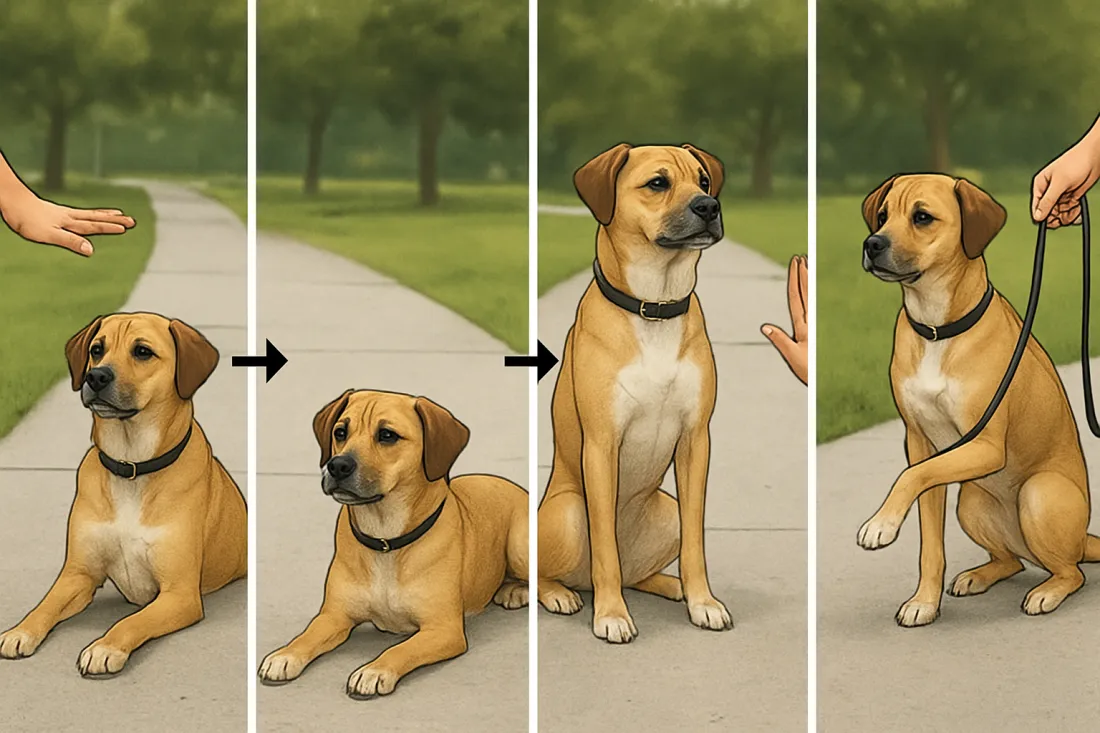
- Ask for sit or down.
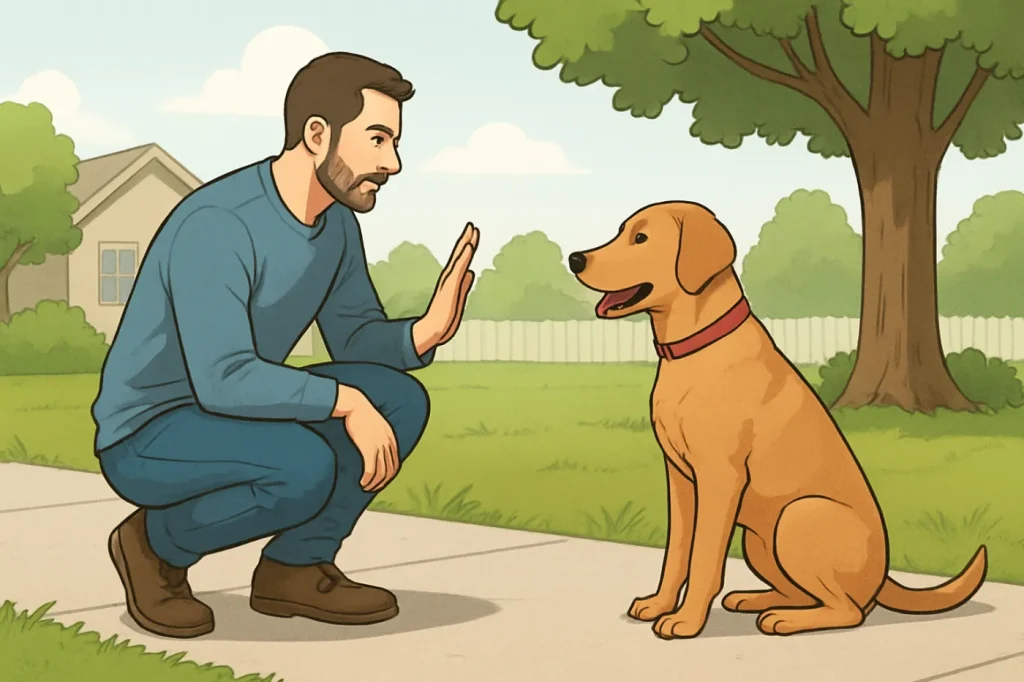
- Show your flat hand like a stop sign and say “Stay.”
- Count “one‑Mississippi” in your head, then mark and treat if they have not moved.
- Gradually increase time, then add distance (one step back, then two) and distractions (turning your back, opening a door).
- Always release with a consistent word like “Okay” or “Free” so your dog knows when the stay is over.
How to teach Come (recall)
- Start indoors or in a fenced yard with a long leash.
- Crouch down, open your arms, and say your dog’s name plus “Come!” in a happy voice.
- Back up a step or two to encourage movement toward you.
- When they reach you, gently take their collar, mark, and reward with several treats or a favorite toy.
- Do not call your dog to punish them or end all fun. Sometimes call them, reward, and then let them go play again.
How to teach Leave it
- Hold a treat in your closed fist and present it to your dog.
- They will lick, paw, or nudge. Say nothing. The moment they back off or look away, mark and give a different treat from your other hand.
- Add the cue “Leave it” as they start to understand that ignoring your fist makes treats appear.
- Progress to placing a treat on the floor covered by your hand, then partially uncovered, then fully exposed, always rewarding when they choose to leave it.
- Later, practice with dropped food, toys, and interesting smells on walks.
How to teach Drop it
- Start with a toy your dog likes but does not obsess over.
- Offer the toy; let them take it.
- Present a high‑value treat right at their nose. When they open their mouth to take the treat, say “Drop it,” mark, and give the treat.
- Offer the toy back so they learn that dropping things does not always mean the fun is over.
- Gradually phase out the lure by saying “Drop it” first, then showing the treat.
How to teach Heel / loose‑leash walking
- Pick a side (left or right) and be consistent.
- With your dog at your side, hold a treat at your leg and take one step forward.
- If the leash stays loose and your dog stays near your leg, mark and reward.
- Repeat, building up to several steps before each reward.
- If your dog pulls ahead, stop walking. Wait for them to turn back or loosen the leash, then move forward again. Forward motion is the reward for a loose leash.
How to teach Place
- Choose a bed or mat and place it in a low‑distraction area.
- Lure your dog onto the mat with a treat. When all four paws are on, mark and reward.
- Toss a treat off the mat to reset. When they finish, lure them back on and reward again.
- Add the cue “Place” as they move toward the mat.
- Once they go to the mat reliably, ask for a down on the mat and reward for staying there.
Using rewards effectively: treats, toys, and praise
Rewards drive learning. Used well, they speed up training and help your dog enjoy working with you. Types of rewards
- Treats – Small, soft, and easy to swallow. Use higher‑value treats (like tiny bits of cooked meat) for harder tasks or distracting environments.
- Toys – Great for playful dogs. A quick tug game or ball toss can be more motivating than food for some dogs.
- Praise and touch – Warm, upbeat praise and gentle petting help maintain the bond, especially once a behavior is well learned.
Reward rules that keep training effective
- Reward immediately after the correct behavior so your dog connects the action with the payoff.
- Start with frequent rewards (every success), then gradually switch to a mix of treats, praise, and occasional jackpots.
- Keep treats tiny—about pea‑sized—to help avoid overfeeding during multiple short sessions.
- Use your dog’s daily food for some training to balance their overall calories.
- In public US spaces (sidewalks, parks), use a treat pouch so you are not fumbling with bags or pockets.
Recommended training schedule and session structure
You do not need hours each day. Consistency matters more than length. Example weekly structure
- Daily: 3–5 mini‑sessions of 3–5 minutes each.
- Focus: 1–2 commands per mini‑session to keep things clear.
- Mix: Alternate easy commands (sit, down) with harder ones (come, heel) so your dog does not get frustrated.
Inside a single session
- Warm‑up (30–60 seconds) – A few easy sits or hand targets to get your dog engaged.
- Skill work (2–3 minutes) – Practice one main command with 5–10 repetitions.
- Break (30 seconds) – Sniffing, a quick play, or a drink of water.
- Second skill (2–3 minutes) – Another command or a variation (for example, stay with more distance).
- Cool‑down (30–60 seconds) – Easy tricks or cuddles to end on a positive note.
On busy days, fold training into daily life: ask for sit before going outside, down while you watch TV, place when you start cooking.
Safety‑focused commands for US streets, sidewalks, and parks
US environments add specific risks: traffic, bikes and scooters, shared paths, and off‑leash areas with varying rules. The same core commands become safety tools when used deliberately. Key safety applications
- Crosswalk routine – Ask for sit and stay at every curb. Release with “Okay” only when you have checked for cars, bikes, and turning vehicles.
- Sidewalk etiquette – Use heel or loose‑leash walking to keep your dog by your side when passing strollers, wheelchairs, or other dogs.
- Off‑leash parks – Only let your dog off leash where it is allowed and when your come is strong. Practice recalls frequently with rewards, even when they are already near you.
- Trash and food on the ground – In many US cities, sidewalks and parks have food scraps or chicken bones. Use leave it to help prevent dangerous snacking.
- Emergency stops – A solid stay can help stop a dog from following you into a street or elevator when it is not safe.
Always check local leash rules and posted signs in your area. Even with great obedience, many US cities and parks require dogs to be leashed outside designated off‑leash zones. For more on the legal side of ownership, you can review US pet laws every dog owner should know and then pair that knowledge with your training plan.
Generalizing commands to real‑world US situations
Dogs do not automatically understand that “sit” in your kitchen is the same as “sit” in a busy apartment lobby. You need to practice in different places and with different distractions. Common US scenarios and how to train for them
- Apartment hallways – Practice heel and leave it while walking past doors and smells. Ask for a sit when you hear people or dogs approaching around a corner.
- Elevators – Before the doors open, ask for sit or down. Reward for staying in position as people enter or exit. Use heel to guide your dog in and out without blocking the doorway.
- Vet visits – Practice down and stay on a mat at home, then bring the mat to the clinic waiting room. Reward calm behavior and use leave it around dropped treats or medical supplies.
- Groomers – Work on stand (optional but helpful) and stay while gently handling paws, ears, and tail at home so your dog is more comfortable being touched.
- Dog‑friendly patios – Use place with a portable mat under the table. Reward your dog for lying quietly while people and servers move around.
- Suburban sidewalks – Combine heel, sit at driveways, and leave it for lawn decorations, kids’ toys, and wildlife.
Tips for successful generalization
- Change only one thing at a time: new place, or new distraction, or more distance—but not all three at once.
- Use better rewards in harder places (busy streets, pet stores) than you do at home.
- Keep early public sessions short and end on a win, even if it is just one good sit.
Common obedience training mistakes and how to fix them
Avoiding a few typical errors will make your training smoother and your dog more reliable.
- Inconsistent cues
Problem: Family members use different words (“Down,” “Lay,” “Off”).
Fix: Agree on one cue per behavior and write them on a fridge list so everyone matches. - Repeating commands
Problem: Saying “Sit, sit, sit” teaches your dog that the first cue is optional.
Fix: Say the cue once, wait a few seconds, then help with a lure. Reward only when they respond to a single cue. - Training only at home
Problem: Dog listens indoors but ignores you outside.
Fix: Gradually add distractions—yard, quiet street, then busier areas—while lowering difficulty and increasing rewards. - Using the recall to end all fun
Problem: Dog avoids coming because “Come” always means going home or leaving the park.
Fix: Frequently call, reward, and then release your dog back to play so “Come” predicts good things. - Over‑long sessions
Problem: Dog gets bored or frustrated and starts ignoring you.
Fix: Keep sessions short and upbeat. Stop while your dog is still engaged. - Accidental punishment
Problem: Scolding a slow recall or grabbing the collar roughly when they arrive.
Fix: Make coming to you feel safe and rewarding every time, especially in busy US environments where you need that behavior under pressure.
Progress checklist and milestones by age
Every dog is different, but having rough milestones helps you see progress. Use this as a flexible guide, not a strict deadline.
| Age / stage | Expected progress | What to focus on |
|---|---|---|
| 8–16 weeks (puppy) | Responds to name, basic sit with a lure, short (1–2 second) stays indoors. | Positive social experiences, gentle handling, very short fun sessions. |
| 4–6 months | Can sit, down, and stay for a few seconds with mild distractions; starts loose‑leash walking in quiet areas. | Consistency, rewarding calm behavior, introducing leave it and drop it. |
| 6–12 months (adolescent) | Improving recall on a long line, better leash manners, can settle on place at home. | Practicing in new locations, managing teenage energy, reinforcing good choices. |
| 12+ months (adult) | Reliable sit, down, stay, and come in most everyday US environments with practice. | Maintaining skills, adding challenges (busier parks, longer stays), and occasional refreshers. |
Simple progress checklist Use this as a quick reference. When you can honestly say “yes” to each item in a row, move to the next level of difficulty.
- Level 1 – Home basics
- My dog can sit and down on one cue indoors.
- My dog can stay for 5–10 seconds with me standing close.
- My dog will come from a short distance in the same room.
- Level 2 – Yard and quiet streets
- My dog can walk on a loose leash for a short block in a quiet area.
- My dog can leave dropped food in the yard when I say “Leave it.”
- My dog can stay while I take 3–5 steps away.
- Level 3 – Real‑world distractions
- My dog can sit and stay at a curb until I release them.
- My dog can come when called at a park while on a long line.
- My dog can lie on place for several minutes while I move around the room.
Practical training checklist you can follow
Use this checklist as a weekly routine guide.
- Daily
- 3–5 short training sessions (3–5 minutes each).
- Practice at least one safety command (come, stay, leave it) every day.
- Ask for a sit before meals, walks, and going out the door.
- Weekly
- Practice in one new location (different room, yard, quiet street).
- Do at least one session focused on leash walking.
- Review progress on recall using a long line in a safe area.
- Monthly
- Add a new real‑world challenge (vet lobby practice, patio visit, apartment hallway walk).
- Refresh any command that has become “sloppy” with easier versions and better rewards.
If you are working with a newly adopted dog, combining this checklist with a structured resource such as a basic obedience training for rescue dogs plan can make the first month together much smoother.
When to seek a professional trainer in the US and how to choose one
Some dogs and situations need more help than DIY training can provide. Consider working with a professional trainer if:
- Your dog shows aggression (growling, snapping, biting) toward people or other animals.
- Your dog is fearful of everyday things (cars, strangers, other dogs) and does not improve with gentle exposure.
- Leash pulling, barking, or ignoring commands makes walks or public outings stressful or unsafe.
- You feel overwhelmed or unsure how to progress.
How to choose a trainer in the US
- Look for trainers who use reward‑based methods and focus on teaching what to do, not just punishing mistakes.
- Ask if you can observe a class before joining. Dogs and people should look engaged, not fearful.
- Check for clear communication—the trainer should explain what they are doing and why, and give you homework you understand.
- Confirm they have experience with your dog’s age and issues (puppies, rescues, reactivity, and similar situations).
- Read recent reviews and ask your vet, groomer, or local dog community for recommendations.
FAQ about essential obedience commands in the US
What are the 7 most important dog commands?
Many owners focus on seven core commands: sit, down, stay, come, leave it, drop it, and heel/loose‑leash walk. Adding place makes everyday life at home and in public even easier, especially in apartments and busy households.
What are the 5 basic dog commands?
A common “top five” list is: sit, down, stay, come, and heel. For modern US living, it is wise to add leave it and drop it for safety around trash, food, and household items.
What is the 7‑7‑7 rule for dogs?
People sometimes use “7‑7‑7” as a reminder that new dogs often need time to adjust: roughly a few days to decompress, a few weeks to settle into a routine, and longer to fully feel at home. The exact timing varies by dog, but the idea is to be patient and not expect perfect obedience immediately.
What are the 5 D’s of dog training?
Trainers often talk about the “5 D’s” when making behaviors harder:
- Duration – How long your dog holds the behavior.
- Distance – How far you are from your dog.
- Distraction – What else is going on around you.
- Difficulty – How complex the task is.
- Direction – The position or movement you ask for (for example, heel turns, different angles).
Change only one “D” at a time so your dog can succeed.
How long does it take to teach basic obedience?
Many dogs can learn the basics of sit, down, and short stays within a few weeks of consistent daily practice. Reliable behavior in real‑world US settings—busy sidewalks, parks, and apartment lobbies—usually takes longer and needs months of practice and refreshers. Progress depends on your dog’s age, history, and how regularly you train.
Can older dogs still learn these commands?
Yes. Adult and senior dogs can learn new commands. They may progress more slowly than puppies, and you may need to adjust for physical comfort, but the same reward‑based methods work well.
Do I need special equipment to start?
You can begin with a regular flat collar or harness, a standard leash, and small treats. As you advance, a long line is useful for recall practice in safe open areas. Check any new equipment instructions and make sure it fits comfortably before training.
With consistent practice, clear cues, and generous rewards, these essential obedience commands will help your dog stay safe and well‑mannered in typical US homes, sidewalks, and parks—and make life together more relaxed and enjoyable.