
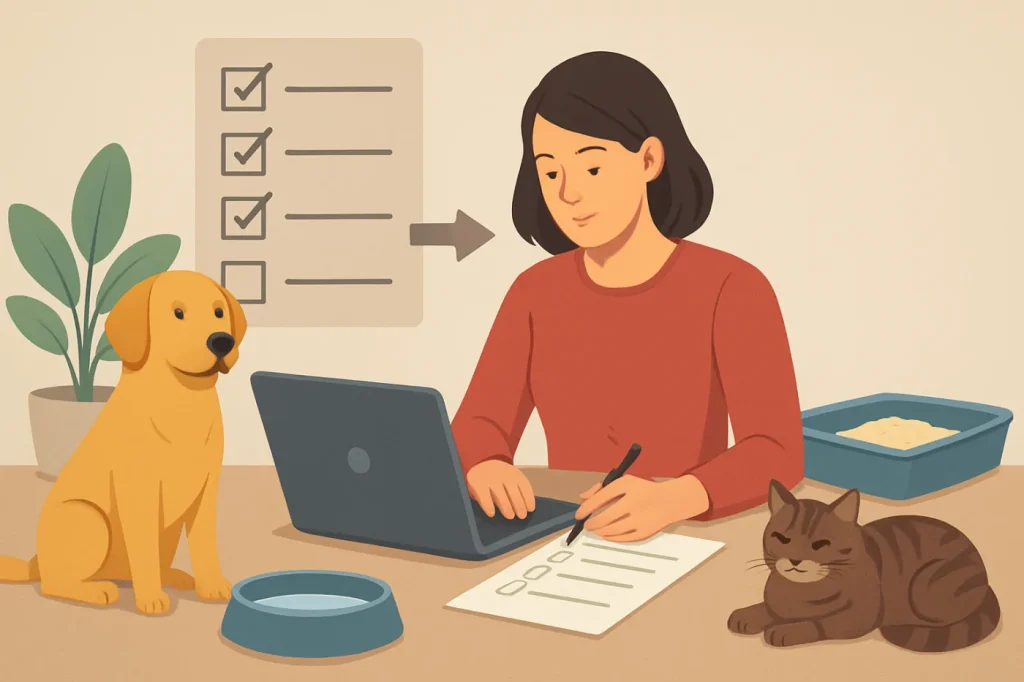
Working full-time and caring for a dog or cat is absolutely possible if you follow a simple, consistent routine. You need to cover five basics every single day: fresh water, the right amount of food, toilet breaks or litter care, exercise, and mental enrichment. Everything else is a bonus.
Daily care basics for dogs vs cats when you work full-time
Before building a schedule, get clear on the minimum daily standards your pet needs. These are not “nice to have” – they are the baseline for health and behavior.
Non‑negotiable daily needs for dogs
- Water: Clean, fresh water available at all times. Use a heavy bowl or spill‑resistant option if your dog is clumsy.
- Food: Usually split into two meals (morning and evening) for adults. Puppies may need more frequent meals – confirm with your vet.
- Toilet breaks: Most healthy adult dogs need to go out at least 3–5 times per day. Long workdays usually mean a morning potty, a midday break (you or a helper), and 1–2 evening/night trips.
- Exercise: Daily movement that matches your dog’s age and breed type. High‑energy dogs need more than a quick lap around the block; older or small dogs may be fine with shorter, gentler walks.
- Mental enrichment: Short training sessions, sniffing time on walks, puzzle feeders, or safe chews to prevent boredom and destructive behavior.
Non‑negotiable daily needs for cats
- Water: Fresh water daily. Many cats drink more from a wide bowl or fountain.
- Food: Consistent feeding schedule. Many indoor cats do well with 2–3 small meals or measured portions if free‑feeding dry food.
- Litter box: Scoop at least once per day; more often for multi‑cat homes. Top up litter as needed.
- Play and hunting outlet: 2–3 short play sessions (5–10 minutes) with wand toys, balls, or chase games to mimic hunting.
- Environment: Safe hiding spots, vertical spaces (cat tree or shelves), and a quiet place to sleep away from household traffic.
Morning vs evening: how routines differ for dogs and cats
Working owners usually have two main windows for hands‑on care: before work and after work. Here is a step‑by‑step guide for each.
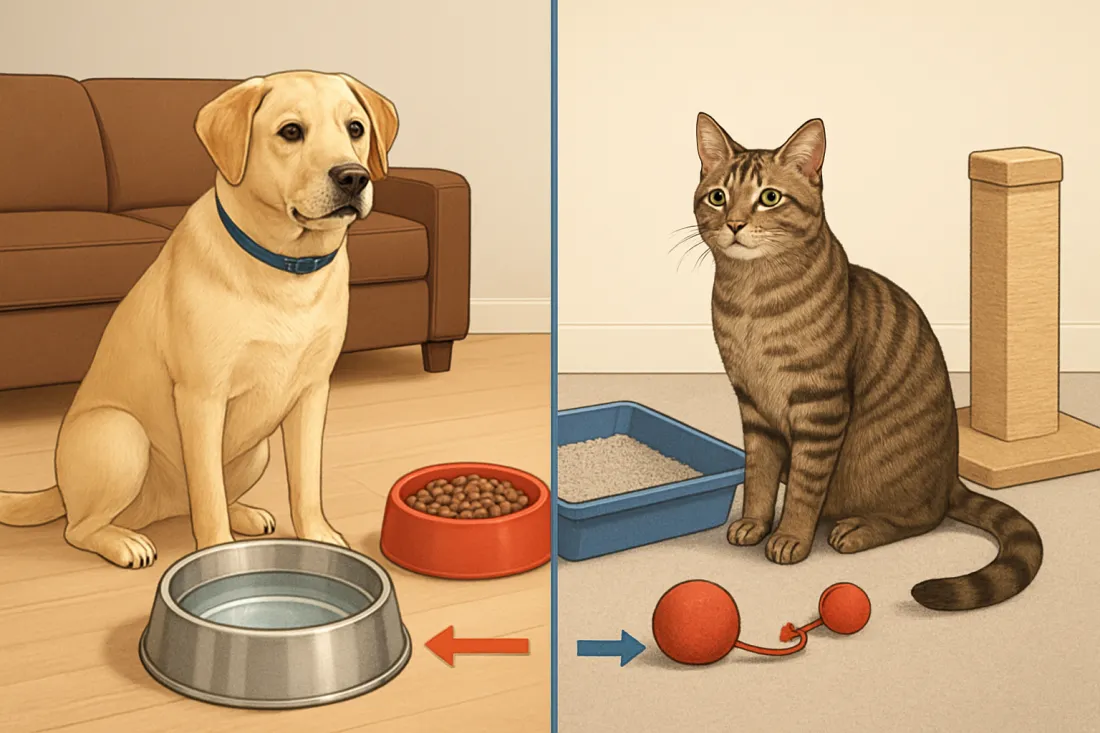
Step‑by‑step morning routine for dog owners
- Immediate potty break: Take your dog out as soon as you wake up. Let them fully empty their bladder and bowels, not just a 30‑second dash.
- Short walk or play: Aim for at least 10–20 minutes of walking, sniffing, or backyard fetch, depending on your dog’s needs and your schedule.
- Breakfast: Feed the measured morning portion. Use a slow‑feeder bowl or puzzle toy for extra mental work.
- Water check: Wash and refill the water bowl. If you are gone long hours, consider a second bowl in another room.
- Quick grooming check: Run your hands over your dog to check for mats, burrs, or sore spots. Wipe paws if needed.
- Calm‑down time: Give 10–15 minutes after eating before intense play to reduce stomach upset risk. Offer a safe chew or quiet toy.
- Set up the day space: Before leaving, make sure your dog’s area is safe: no access to trash, cords, or toxic plants; comfortable bed; safe toys only.
Step‑by‑step morning routine for cat owners
- Food and water refresh: Wash bowls if they are slimy or dirty, then provide breakfast or top up measured food. Refill water.
- Litter scoop: Scoop clumps and solids. Check for changes in urine size or stool consistency.
- 5–10 minutes of play: Use a wand toy or ball to get your cat moving. End with a “catch” and a small treat to mimic a successful hunt.
- Environment check: Open blinds for window watching if safe, ensure scratching posts are accessible, and remove any dangerous items (string, hair ties, small toys that can be swallowed).
- Quick health scan: Look at eyes, nose, and coat. Note any limping, hiding, or sudden changes in behavior.
Midday care options when you cannot come home
Many working owners are away from home for 8–10 hours. Dogs especially need a plan for the middle of the day; most cats can cope with less hands‑on midday care but still benefit from enrichment.
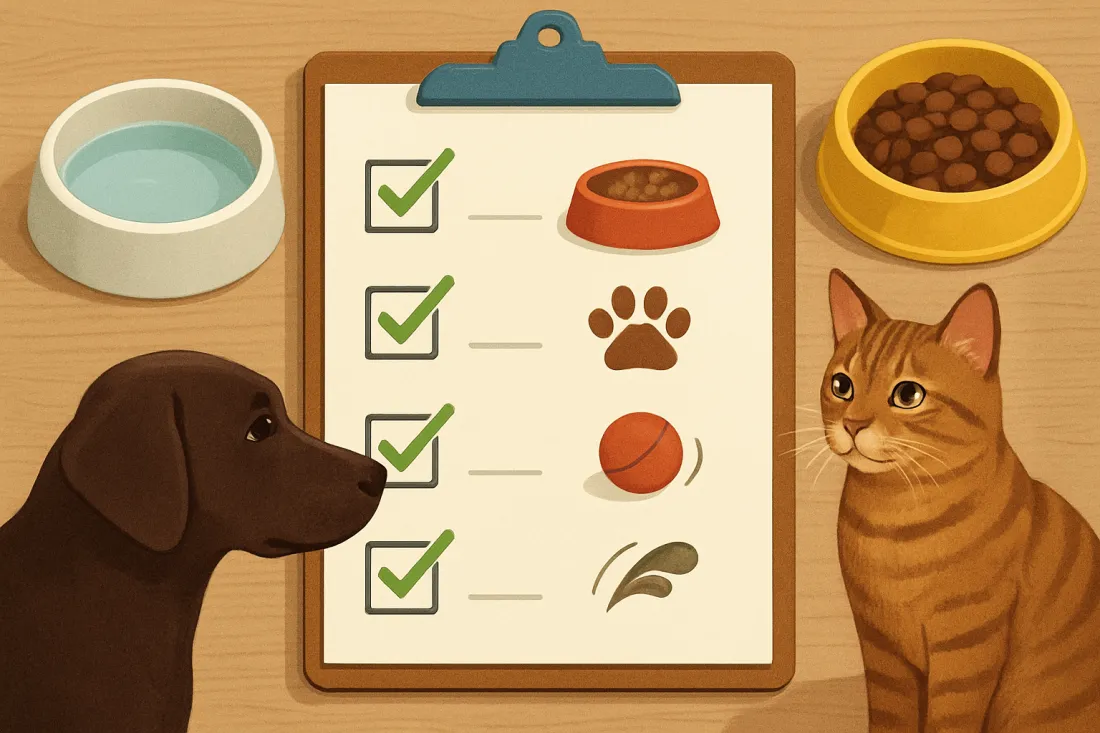
Midday solutions for dogs
- Dog walker: A trusted walker can provide a 20–30 minute walk, potty break, and some companionship. Ask for updates and photos so you can monitor how your dog is doing.
- Dog daycare: Helpful for social, high‑energy dogs that get lonely or destructive. Not ideal for very shy, reactive, or elderly dogs who may find it stressful.
- Neighbor or family helper: A retired neighbor, responsible teen, or family member can let your dog out and play for a bit. Agree on clear instructions and emergency contacts.
- Pet sitter drop‑in: Professional sitters can do short visits for potty breaks, feeding, or medication.
- Tech‑assisted options: Camera systems, treat‑dispensing devices, and smart feeders let you check in and provide some interaction, but they do not replace real toilet breaks or exercise.
Midday solutions for cats
- Interactive feeders: Timed feeders or puzzle feeders can split meals and keep your cat engaged.
- Window perches and bird feeders outside: Visual stimulation helps prevent boredom.
- Short check‑ins: If a neighbor or sitter can stop by a few times a week, they can scoop litter, refresh water, and provide a little social time.
- Cameras: Let you monitor behavior changes, over‑grooming, or signs of distress while you are away.
Evening routine for tired working owners and restless pets
Evenings are your main window to reconnect with your pet and make up for the quiet hours while you were gone.
Step‑by‑step evening routine for dogs
- Greeting and potty break: Go straight outside when you get home. Keep greetings calm to avoid over‑excitement and jumping.
- Exercise block: Plan one solid session of physical and mental work. Examples:
- Leash walk with sniffing time and a few simple training cues.
- Backyard fetch, tug, or scent games.
- Short training session (sit, stay, tricks) using part of dinner as rewards.
- Dinner: Feed the evening portion. Again, consider puzzle bowls or scatter feeding in the yard for extra enrichment.
- Family time: Let your dog relax near you while you cook, watch TV, or read. Calm companionship matters as much as active play.
- Last potty break: Take your dog out before bed, even if they seem sleepy.
- Bedtime setup: Provide a comfortable, consistent sleeping spot. Remove high‑value chews if your dog tends to swallow large pieces unsupervised.
Step‑by‑step evening routine for cats
- Litter and food check: Scoop again if needed, top up or serve dinner, and refresh water.
- Interactive play: Two short sessions of 5–10 minutes each in the evening help burn energy and reduce zoomies at night.
- Grooming and bonding: Many cats enjoy brushing or gentle petting. Use this time to check for lumps, mats, or sore spots.
- Nighttime environment: Ensure your cat has access to a safe sleeping area, scratching posts, and a litter box. If your cat wakes you at night for food, consider a timed feeder.
Weekend adjustments and deeper care tasks
Weekends are your chance to go beyond the minimum and catch up on tasks that are hard to fit into workdays.
Weekend upgrades for dogs
- Longer outings: Hikes, park visits, or longer neighborhood walks to provide variety and extra exercise.
- Training refresh: Work on leash manners, recall, or new tricks in short, fun sessions.
- Grooming: Bathing as needed, brushing, nail checks, ear cleaning, and teeth brushing.
- Deep clean: Wash bedding, sanitize food and water bowls, and tidy toy baskets. Check collars and harnesses for wear.
Weekend upgrades for cats
- Environment reset: Rotate toys, add a new cardboard box or paper bag, or rearrange climbing spaces.
- Extra play sessions: Longer, more varied play to keep your cat mentally sharp and physically active.
- Grooming and nail trims: Especially important for long‑haired cats or those prone to mats.
- Deep clean: Wash food and water bowls, wipe down litter box surfaces, replace some or all of the litter, and wash bedding.
Sample schedules: dogs vs cats, apartment vs house
Use these sample schedules as starting points and adjust for your pet’s age, health, and energy level.
| Scenario | Morning (before work) | Midday (while at work) | Evening (after work) |
|---|---|---|---|
| Dog in apartment, 9–5 job | 6:30–7:00: Potty + 15–20 min walk, breakfast, water refresh, set up toys. | 12:00–1:00: Dog walker or sitter for 20–30 min potty + walk; camera check‑in. | 5:30–6:00: Potty + walk; 7:00: dinner; 8:00: training or play; 10:00: last potty. |
| Dog in house with yard, 9–5 job | 6:30–7:00: Potty in yard + short walk or fetch, breakfast, water refresh. | 12:00–1:00: Neighbor lets dog out in yard or walker for short visit. | 5:30–6:00: Longer walk or yard play; 7:00: dinner; 9:30: quick yard potty. |
| Indoor cat in apartment, 9–5 job | 6:45–7:15: Scoop litter, breakfast, water refresh, 5–10 min play. | Timed feeder releases small meal; cat has window perch, toys, and scratching posts. | 6:00: dinner; 7:00 & 9:00: 5–10 min play sessions; quick litter check before bed. |
| Indoor/outdoor‑restricted cat in house, 9–5 job | 6:45–7:15: Breakfast, water refresh, litter scoop, short play; supervised outdoor time if safe. | Indoor only while you are gone; enrichment toys and safe window views. | 6:00: dinner; evening supervised outdoor time if appropriate; play and grooming before bed. |
If you are juggling a full‑time job and a dog, you may also find a dedicated daily dog care routine for working owners helpful for fine‑tuning your schedule.
Comparison: daily care priorities for dogs vs cats
Dogs and cats share the same basic needs, but the way you meet them is different. Use this comparison to focus on what matters most for your situation.
| Care area | Dog (working owner focus) | Cat (working owner focus) |
|---|---|---|
| Toilet needs | Multiple outdoor trips daily; plan at least one midday break via walker, sitter, or neighbor. | Daily litter scooping; ensure enough boxes for number of cats and easy access in quiet areas. |
| Exercise | Structured walks and play; weekends for longer outings. Lack of exercise often leads to chewing and barking. | Short, intense play sessions; vertical climbing and exploring. Lack of play can lead to weight gain and night zoomies. |
| Mental enrichment | Training, puzzle feeders, sniffing games, safe chews during alone time. | Puzzle feeders, hunting‑style play, window watching, and toy rotation. |
| Social needs | Generally need more direct interaction and companionship; consider daycare or walkers for long days. | Many cats tolerate alone time well but still need daily affection and play on your schedule. |
| Housing type impact | Apartment dogs rely on walks for every potty break; house/yard dogs still need walks for stimulation. | Apartment cats rely more on vertical space and window views; house cats may have more rooms to explore. |
Fridge‑friendly daily pet care checklist
Use this as a quick daily reference. Check items off mentally or on a printed copy.
Daily checklist for dogs
- ☐ Fresh water in clean bowl (morning and evening)
- ☐ Measured breakfast and dinner (no constant refills)
- ☐ Morning potty break and short walk
- ☐ Midday potty break (you, walker, sitter, or neighbor)
- ☐ Evening exercise (walk, play, or training)
- ☐ Last potty break before bed
- ☐ Quick body check (eyes, ears, paws, coat, energy level)
- ☐ Safe, comfortable sleeping area prepared
Daily checklist for cats
- ☐ Fresh water and clean food bowls
- ☐ Measured meals or checked automatic feeder
- ☐ Litter box scooped at least once
- ☐ 2–3 play sessions of 5–10 minutes
- ☐ Scratching posts and safe resting spots available
- ☐ Quick health scan (eyes, coat, appetite, litter habits)
- ☐ Environment tidy and free of small, dangerous objects
Decision checklist: is your current routine enough?
Use these questions to evaluate your routine and decide what to adjust.
- Time alone: Is your dog regularly alone more than a full workday without a potty break? If yes, arrange a midday visit or daycare. Most dogs cannot comfortably hold it that long.
- Energy outlet: Does your pet get at least one meaningful exercise or play block every day, not just a quick bathroom trip?
- Behavior changes: Have you noticed new destructive behavior, accidents, or withdrawal since your schedule changed?
- Feeding consistency: Are meals at roughly the same times each day, with measured portions?
- Health monitoring: Do you look at stool, urine, appetite, and energy daily so you can catch issues early?
- Backup plan: If you are delayed at work or stuck in traffic, do you have someone who can step in?
Warning signs your daily routine is not enough
Pets cannot tell you in words that your schedule is not working, but their behavior and body will show it. If you notice any of the following, talk with your veterinarian and adjust your routine.
- Frequent accidents: A house‑trained dog suddenly peeing or pooping indoors, or a cat urinating outside the litter box.
- Destructive behavior: Chewed doors, furniture, or crates; shredded carpets; excessive scratching in cats.
- Excessive vocalizing: Barking, whining, or howling for long periods; cats yowling or crying when you leave or at night.
- Changes in appetite: Refusing meals, sudden overeating, or food guarding.
- Withdrawal or clinginess: Hiding, refusing to play, or becoming extremely needy when you are home.
- Weight changes: Noticeable weight gain or loss over time, often linked to too little exercise or overfeeding.
- Over‑grooming or skin issues: Bald patches, constant licking, or scratching that may signal stress or medical problems.
- Sleep changes: Restless pacing at night, or sleeping almost all the time and ignoring normal activities.
If you see these signs, options include adding a dog walker or sitter, increasing play and exercise, adjusting feeding, or seeking help from a trainer or behavior professional alongside your vet.
Common mistakes working owners make with daily pet care
Many problems come from a few predictable missteps. Avoid these to make your routine smoother.
- Relying on “yard time” only: Letting a dog out in the yard is not the same as a walk. Dogs need mental stimulation, new smells, and interaction.
- Skipping play because the pet seems “lazy”: Some pets look calm because they have given up asking for attention. Offer play and see if they engage.
- Free‑feeding without measuring: Constantly full bowls make it hard to notice appetite changes and often lead to weight gain.
- Ignoring small behavior changes: Subtle shifts in litter habits, energy, or friendliness can be early signs of stress or illness.
- Over‑packing weekends only: Doing one huge, exhausting outing on Saturday does not replace daily movement and enrichment.
- No backup plan: Traffic, overtime, or travel happen. Without a trusted backup, your pet may go too long without a break or meal.
- Too many long days in a row: Repeated 12‑hour absences without help can wear down even easygoing pets.
What to do next: turn this checklist into your real routine
To make this work in real life, keep it simple and consistent.
- Map your workday: Write down your usual leave and return times, including commute.
- Pick your morning and evening blocks: Decide exactly when you will walk, feed, and play with your pet on workdays.
- Choose a midday solution: Decide whether you will come home, hire help, use daycare, or ask a neighbor.
- Print or save the checklist: Put it on the fridge or in your phone notes so everyone in the household can follow it.
- Review after two weeks: Notice what is working, what feels rushed, and how your pet’s behavior looks. Adjust times or support as needed.
- Plan for busy seasons: If you know a hectic period is coming at work, line up extra help in advance.
If you are looking for more structure specifically around dogs, a focused daily dog care checklist for busy owners can help you fine‑tune your plan.
FAQ about daily pet care for working owners
How long can I leave my dog alone while I work?
Most adult dogs cope best when they have a toilet break and some interaction in the middle of the day. Very long stretches without a break can lead to discomfort, accidents, and behavior issues. Puppies, seniors, and dogs with medical conditions usually need more frequent breaks, so build your schedule around their specific needs and your veterinarian’s guidance.
Is it okay to leave my indoor cat alone all day?
Many healthy adult indoor cats can stay home alone during a standard workday if they have fresh water, food, a clean litter box, and safe enrichment. They still need daily play and attention when you are home. Kittens, elderly cats, or cats with health issues may need more frequent checks.
Do I need a dog walker if I have a yard?
A yard is helpful for quick toilet breaks, but it usually does not provide the same mental and physical exercise as a walk. If your dog seems restless, gains weight, or becomes destructive, a walker or more structured walks with you can make a big difference, even if you have outdoor space.
What if I work irregular shifts?
Focus on consistency from your pet’s point of view, not the clock. Try to keep the same sequence of events (walk, meal, play, rest) whenever you are home, and use trusted helpers when your shifts make it hard to provide regular breaks. A written routine and backup contacts are especially important with changing schedules.
How do I know if my pet is getting enough exercise?
Signs that your pet may need more activity include weight gain, destructive behavior, restlessness, or constant demands for attention. On the other hand, a pet that settles calmly after play, maintains a healthy weight, and shows relaxed behavior at home is likely getting close to the right amount. If you are unsure, ask your veterinarian or a qualified trainer to help you tailor an exercise plan.