
Wondering, “Can I afford to keep my dog or should I surrender?” is painful and stressful. You are not alone, and asking the question is a sign of responsible pet ownership, not failure.
This guide walks through a clear, practical way to:
- Estimate what your dog really costs each month and each year
- Do a quick cost-versus-income snapshot
- See if your current budget can handle it
- Find safe ways to cut costs without hurting your dog’s welfare
- Locate low-cost vet care and food help in the United States
- Understand one-time and emergency expenses
- Decide when rehoming is sadly the kindest option
Immediate reality check: can you afford to keep your dog right now
Use this fast three-part check before you dive into details:
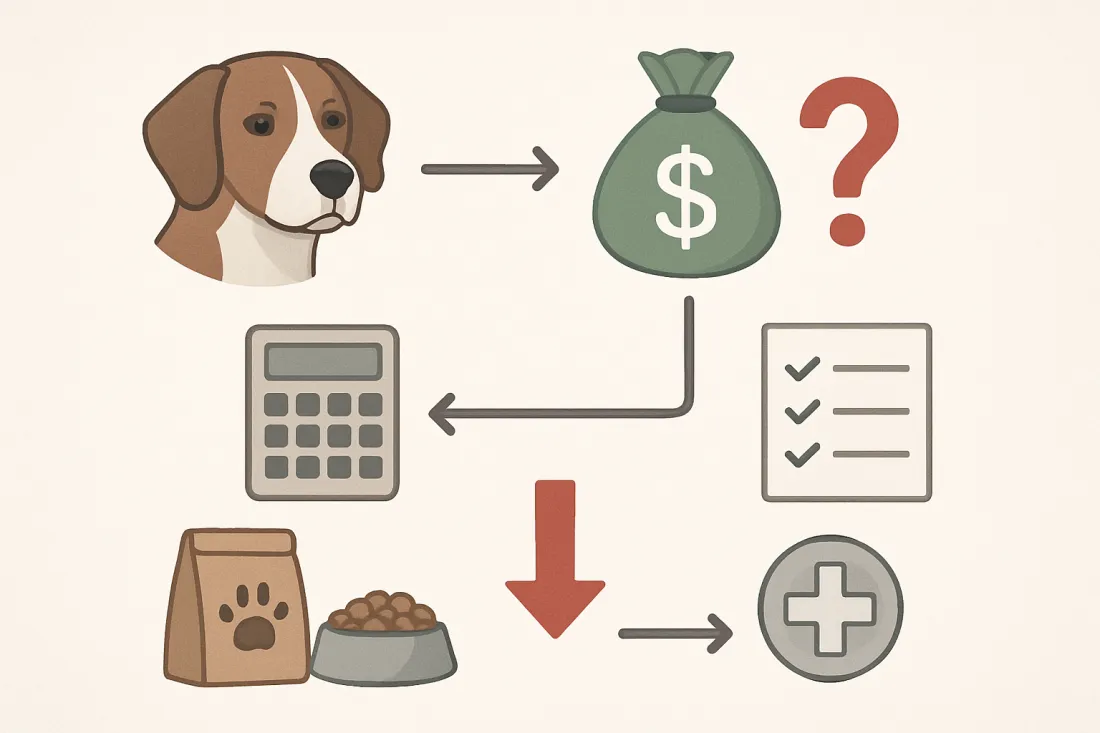
- Are you consistently able to pay for food and basic supplies?
If you are already skipping meals for yourself or your dog, or stretching food in unsafe ways (like feeding only table scraps), you are in the danger zone and need immediate support (see food assistance section below). - Can you cover basic vet care in the next 12 months?
Every dog will need at least routine care (vaccines, parasite prevention, checkups). If you have no way to save even a small emergency fund or access low-cost vet options, you are at high financial risk if your dog gets sick or injured. - Is dog spending pushing you into debt for essentials?
If you are using credit cards or loans to pay for rent, utilities, or groceries because of pet costs, you need to adjust your dog budget or seek help quickly.
If you answered “no” to one or more of these, do not panic. The next sections show how to:
- Estimate your dog’s realistic costs
- Compare them to your income in a simple snapshot
- Cut what you safely can
- Find outside help before you consider surrendering
Quick cost vs income snapshot: can you realistically afford your dog?
Use this 5-minute snapshot to see whether keeping your dog looks financially realistic right now.
- Write down your monthly take-home income.
This is the money that actually lands in your bank account after taxes and deductions. - Subtract your essential human bills.
Include rent or mortgage, utilities, basic groceries, transportation, health insurance, and minimum debt payments. - Estimate your total monthly dog cost.
Use the breakdown in the next section to get a rough number for food, vet care, grooming, supplies, and a small emergency amount. - Compare what is left.
After subtracting dog costs, ask:- Is there still money left for savings and small surprises?
- Or are you short every month and relying on credit cards or loans?
- Match your situation to one of these patterns.
- Stable: You can cover essentials and dog costs, with some money left over most months. Keeping your dog is likely realistic if you keep budgeting.
- Strained but possible: You can just barely cover everything, with little or no cushion. Focus on safe cost-cutting and assistance programs before you think about surrender.
- Unsustainable: Even with strict budgeting, you regularly cannot pay for food, housing, or basic vet care. In this case, you urgently need outside help and may eventually need to consider rehoming.
This snapshot does not make the decision for you, but it shows whether the question is “How can I afford to keep my dog?” or “Can I realistically keep my dog at all?”
Typical annual and monthly dog costs in the United States
Dog costs vary a lot by size, health, and where you live. Guidance from U.S. pet-care and personal finance discussions suggests that many owners should expect dog expenses to land somewhere in the low hundreds of dollars per month, with some people planning for several hundred dollars to stay on the safe side.
Instead of exact prices, use this comparison table to see where your dog might fall on the spectrum. Then you can plug in your own local numbers from recent receipts and vet estimates.

Monthly and annual cost breakdown by category
Use these categories to build a realistic picture of what your dog costs in a typical year. Think in both monthly and annual terms so you do not forget big once-a-year bills.
| Cost category | What it usually includes | How to think about it |
|---|---|---|
| Food | Dry or wet food, special diets if needed. | Track how often you buy food and what each bag or case costs. Multiply to get a monthly and yearly total. |
| Treats and chews | Training treats, chews, dental sticks. | Small purchases add up. Look at a full month of receipts instead of guessing. |
| Routine vet care | Annual exam, vaccines, parasite tests, preventives. | Use last year’s vet bills (or clinic estimates) and divide by 12 for a monthly amount. |
| Medications and supplements | Long-term meds, joint supplements, allergy meds. | Some are monthly, others are seasonal. Average them over the year. |
| Pet insurance | Monthly or annual premium. | If you have insurance, include the premium. If not, consider whether a similar amount could go into an emergency fund. |
| Grooming | Professional grooming, nail trims, grooming supplies. | Long-haired or curly-coated dogs often need more frequent, higher-cost grooming than short-haired dogs. |
| Supplies | Leashes, collars, harnesses, beds, crates, bowls, poop bags, toys. | Some items last years; others (like toys and poop bags) are ongoing. Estimate a yearly total and divide by 12. |
| Training and services | Group classes, private training, daycare, dog walker, boarding. | These can be major costs. Add up what you spent in the last 6–12 months and average it. |
| Emergency and one-time costs | Unexpected vet visits, surgery, big equipment purchases. | You cannot predict exact amounts, but you can plan to set aside a small amount each month. |
Many U.S. dog owners find that when they add everything up honestly, their dog costs are similar to a modest monthly car payment or more. The key is not the exact number, but whether your income and other bills can support that level of spending without constant stress.
One-time and emergency expenses to keep in mind
Even if your month-to-month costs feel manageable, one big bill can change whether you can afford to keep your dog.
Common one-time or irregular costs
- Adoption or purchase fees: A past cost, but useful to remember if you are comparing keeping your dog versus adopting again later.
- Spay/neuter surgery: Often a one-time cost if not already done, sometimes available at low-cost clinics.
- Major gear: Crates, sturdy beds, car restraints, fencing, or gates that you replace only every few years.
- Moving-related costs: Pet deposits, pet rent, or fees for pet-friendly housing.
- Travel-related costs: Boarding, pet-sitting, or extra fees if your dog travels with you.
Emergency and unexpected vet bills
Emergency costs are the biggest financial shock for many dog guardians. While you cannot know exactly what will happen, you can:
- Assume that at some point your dog will need urgent care. This might be an injury, sudden illness, or worsening of a chronic condition.
- Decide in advance how you would pay for it. Options might include a small savings fund, a dedicated credit line, pet insurance, or help from family.
- Talk to local clinics now, not during a crisis. Ask which ones see emergencies, what payment options they offer, and whether they work with any assistance funds.
If you realize that even a modest emergency bill would be completely impossible, that is an important factor when you are weighing “Can I afford to keep my dog or should I surrender?”
Self-assessment: simple budget guide for your dog
Use this list as a mini budget guide. Walk through each step with your own numbers based on your receipts and current bills.
Step 1 – List your dog’s regular monthly costs
- Food: Average of what you spend each month on your dog’s main food.
- Treats and chews: Training treats, chews, dental sticks.
- Routine medications: Heartworm prevention, flea/tick prevention, any long-term meds.
- Pet insurance (if you have it): Monthly premium.
- Grooming: Monthly average of grooming visits or supplies (shampoo, nail clippers).
- Training / daycare / dog walker: Monthly average for any services.
- Supplies: Toys, poop bags, replacement leashes, etc., averaged per month.
Total regular monthly dog cost = add all the lines above.
Step 2 – Plan for annual and emergency costs
- Annual vet care: Routine checkup, vaccines, tests. Take last year’s total and divide by 12 to get a monthly amount.
- License and microchip updates: If required in your area, divide yearly cost by 12.
- Big-ticket items: Crate, bed, harness, or travel gear that you replace every few years. Estimate a yearly amount and divide by 12.
- Emergency savings: Decide how much you want to set aside each month for unexpected vet visits or accidents, even if it is a small amount.
Add these to your regular monthly total to get a more realistic monthly dog budget.
Step 3 – Compare to your income and other bills
Now look at your overall budget:
- List your monthly take-home income.
- Subtract essential human expenses: rent or mortgage, utilities, groceries, transportation, insurance, minimum debt payments.
- Subtract your total monthly dog cost from Steps 1 and 2.
Ask yourself:
- After paying essentials and dog costs, how much is left for everything else and savings?
- Are you using credit to cover any of the essentials because of pet expenses?
- Could you reduce non-essential spending before cutting dog care?
If your dog’s costs are more than you can handle, move to the cost-cutting section before you think about rehoming.
Comparison table: where your dog budget is tightest
Use this table to spot which areas are squeezing your budget the most and which are safer to adjust.
| Area of spending | If this is your situation | Risk level for your dog | Typical next step |
|---|---|---|---|
| Food | You can buy complete dog food regularly, but premium brands are hard to afford. | Low, if you switch to a balanced budget food with vet input. | Ask your vet about more affordable complete diets; watch for sales and bulk options. |
| Routine vet care | You struggle to pay for yearly vaccines and checkups. | Medium to high, because skipped care can lead to illness. | Look for low-cost clinics and ask your vet for a prioritized care plan. |
| Emergency costs | You have no savings or backup plan for sudden illness or injury. | High, because a single emergency could be unaffordable. | Start a small emergency fund and ask clinics about payment options in advance. |
| Grooming | Professional grooming visits are stretching your budget. | Low to medium, depending on your dog’s coat type. | Learn basic home grooming and stretch time between appointments safely. |
| Services (daycare, walker, boarding) | Regular services cost as much as your own major bills. | Low, if your dog’s basic exercise and care needs are still met. | Reduce frequency, swap with friends, or replace some services with your own time. |
| Supplies and extras | You buy toys, outfits, and gadgets often. | Low for your dog, high for your budget. | Pause non-essential purchases and rotate existing toys. |
Interactive-style budgeting checklist: walk through your decision
If you are stuck between “Can I afford to keep my dog?” and “Should I surrender?”, use this step-by-step checklist as a guided exercise.
- Confirm your non-negotiables.
Decide what “basic care” means for your dog: safe housing, daily food, clean water, exercise, and essential vet care. - Mark which dog costs are truly essential.
Food, core vaccines, parasite prevention, and needed medications are essential. Designer collars, subscription boxes, and frequent daycare are not. - List three human expenses you can reduce before cutting dog care.
Examples: streaming services, takeout, non-essential shopping, or unused subscriptions. - Identify one or two safe pet cost cuts.
For example, switching to a more affordable complete diet, doing basic grooming at home, or reducing daycare days. - Contact at least one local resource.
Call a shelter, humane society, or community clinic to ask about low-cost vet care or pet food assistance. - Talk to your vet about a “must-do first” plan.
Ask which tests and treatments are most urgent and whether there are generic medications or phased plans. - Set a small monthly emergency target.
Even a few dollars a week into a separate envelope or account is better than nothing. - Set a review date.
Choose a date 1–3 months from now to look again at your budget, your stress level, and your dog’s needs.
By the time you reach the review date, you will have clearer information to answer, “Can I afford to keep my dog, or is surrender the kindest option?”
Ways to reduce dog costs safely
There is a big difference between smart savings and dangerous corner-cutting. The goal is to protect your dog’s health and emotional needs while reducing unnecessary spending.
Safe ways to save money
- Food:
- Switch to a more affordable, complete-and-balanced food instead of premium brands, if your vet agrees.
- Buy in larger bags if you can store them safely; per-pound cost is often lower.
- Use store loyalty programs or auto-ship discounts only if they truly reduce your total cost.
- Treats and chews:
- Use part of your dog’s regular kibble as training treats.
- Limit impulse-buy treats and novelty chews.
- Choose simple, long-lasting chews instead of frequent small ones.
- Toys and enrichment:
- Rotate existing toys so they feel “new.”
- Make DIY enrichment: towel-snuffle mats, cardboard box puzzles, frozen food in safe containers.
- Use free outdoor enrichment like sniffy walks and training games.
- Grooming:
- Learn to brush, bathe, and do basic maintenance at home if your dog’s coat allows.
- Ask groomers about stretching appointments by maintaining coat between visits.
- Trim nails at home if you feel confident, or use low-cost nail trim clinics.
- Training and exercise:
- Replace some daycare or dog-walker days with structured walks you do yourself when possible.
- Use free online training videos and library books to work on manners at home.
- Arrange walk swaps with neighbors or friends who also have dogs.
- Supplies:
- Buy only what you truly need; avoid constant “cute” purchases.
- Look for secondhand crates, beds, and gear in good condition.
- Repair items when safe instead of immediately replacing them.
- Medical costs:
- Ask your vet whether generic medications are available instead of brand-name drugs.
- Fill prescriptions at pharmacies that offer pet discounts when your vet approves.
- Ask if any treatments can be safely spaced out or monitored instead of done all at once.
- Planning tools:
- Consider pet insurance if you can afford the premium and want help with large, unexpected bills.
- If insurance is not realistic, commit to putting a similar amount into a dedicated emergency fund.
Cost-cutting that can backfire
Some savings end up costing more later or harming your dog:
- Skipping vaccines or parasite prevention: Illnesses and infestations can be far more expensive than prevention and can seriously harm your dog.
- Feeding unbalanced homemade diets without vet guidance: Nutritional problems can lead to serious health issues over time.
- Ignoring behavior problems to avoid training costs: Unmanaged behavior can lead to bites, property damage, or even surrender.
- Delaying needed vet visits: Waiting until a problem is an emergency often makes treatment more expensive and less successful.
- Using unsafe DIY treatments: Human medications or home remedies without vet approval can be dangerous.
Low-cost vet care and vaccine options in the U.S.
If regular vet prices are overwhelming, there may be lower-cost options nearby. Availability varies by city and state, so you will need to check what exists in your area.
Where to look for lower-cost vet care
- Humane societies and animal shelters: Many run public clinics for vaccines, spay/neuter, and basic care at reduced fees.
- Nonprofit or community clinics: Some areas have nonprofit veterinary clinics focused on affordability.
- Vaccine and microchip clinics: Pop-up events at shelters, pet stores, or community centers can offer core vaccines at lower cost.
- Veterinary schools: Teaching hospitals sometimes offer services at different price structures, especially for certain procedures.
- Payment plans and financing: Some clinics use third-party payment options or in-house plans; always read terms carefully.
- Mobile clinics: In some regions, mobile vet units visit neighborhoods with lower-cost wellness services.
When you call around, ask specifically:
- “Do you offer low-cost wellness clinics or vaccine days?”
- “Are there income-based discounts or assistance programs?”
- “Can you give me a written estimate before treatment?”
Knowing your options can make the difference between “I cannot afford any vet care” and “I can afford basic care if I plan carefully.”
Pet food assistance programs and charities
Many communities recognize that people fall on hard times and want to help keep pets with their families. While availability varies, you can often find:
- Pet food banks: Some food pantries include dog food, or there may be dedicated pet food banks.
- Shelter-based assistance: Local shelters sometimes run “pet retention” programs that provide food, supplies, or temporary help.
- Faith and community groups: Churches, community centers, and mutual aid groups may have small funds or donation drives for pet food.
- Online local groups: Neighborhood groups sometimes organize pet food swaps or donation pickups.
- Senior and disability support programs: In some areas, programs that deliver meals to people also help with pet food.
When you reach out, be honest about:
- How long you expect to need help (one-time vs. ongoing).
- Any special diet your dog needs.
- Whether you can pick up food or need delivery options.
Using a pet food pantry for a few months while you stabilize your finances is a responsible way to keep your dog cared for.
U.S. financial assistance programs and low-cost clinic ideas
There is no single national program that covers all pet expenses, but there are many small, targeted resources that can add up.
Types of financial help that may be available
- Local humane society funds: Some shelters have small emergency funds to help community members with urgent vet bills.
- Breed-specific rescues: If your dog is a particular breed, a rescue group for that breed may offer limited medical assistance or referrals.
- Condition-specific charities: Certain nonprofits focus on helping with specific illnesses (for example, cancer or orthopedic issues).
- Municipal programs: Some cities and counties offer vouchers for spay/neuter, vaccines, or microchipping.
- Low-cost spay/neuter networks: Regional networks sometimes coordinate reduced-cost surgeries through partner clinics.
- General hardship grants: A few charities provide small grants or loans to pet guardians in crisis, usually after an application and vet confirmation.
To find these in your area, try:
- Searching for phrases like “low-cost vet clinic near me,” “pet financial assistance [your state],” or “pet retention program [your city].”
- Calling your local shelter and asking, “Do you know of any financial assistance or low-cost clinics for pet guardians who are struggling?”
- Asking your vet’s office if they know of local charities or funds that sometimes help with bills.
These programs often have limited money and specific rules, so it is important to apply early and have a backup plan. Still, they can sometimes bridge the gap between keeping your dog and facing surrender.
How to talk to your vet about money without shame
Many owners are afraid to admit financial limits to their vet, but clear communication can open up more options. You do not need to share every detail of your finances; you just need to set boundaries.
Before the appointment
- Decide what you can realistically spend for this visit and any follow-up.
- Write down your dog’s symptoms, how long they have been happening, and any changes in behavior or appetite.
- List your top concerns and questions so you do not forget them when you feel stressed.
What to say during the visit
Use clear, direct phrases like:
- “Are there lower-cost alternatives or a step-by-step plan instead of doing everything at once?”
- “Can we start with the most important tests and treatments, and then re-evaluate?”
- “If we cannot afford the ideal option, what is the minimum safe care to keep my dog comfortable?”
Ask for:
- Written estimates before procedures.
- Explanations of what is urgent versus what can wait.
- Generic medications when appropriate.
A good vet understands that finances are real constraints and will work with you to find a humane plan.
Decision criteria: when financial strain makes rehoming necessary
Rehoming a dog is heartbreaking, but sometimes it is the kindest choice for both you and your pet. The goal is to make a thoughtful decision, not one driven only by panic.
Signs that keeping your dog may no longer be sustainable
- You regularly cannot afford food or basic vet care even after using assistance programs and cutting other spending.
- Your dog has serious medical needs that require ongoing treatment you truly cannot provide, even with payment plans or charity help.
- Your financial situation is causing constant crisis-level stress that affects your mental health and your ability to care for your dog.
- You are facing housing instability and cannot find any realistic pet-friendly options within your budget.
- You have tried cost-cutting and assistance for several months, and your situation is still getting worse, not better.
If you decide rehoming might be necessary
If you reach this point, focus on finding the safest possible outcome for your dog:
- Talk to your local shelter or rescue: Some have surrender-prevention support; others can help with responsible rehoming.
- Be honest about behavior and medical issues: Hiding problems makes it harder for your dog to land safely.
- Avoid “free to a good home” posts without screening: Work with organizations that can vet adopters when possible.
- Ask about foster options: In some cases, a temporary foster home can give you time to stabilize your situation.
- Plan emotionally as well as financially: Reach out to friends, family, or support groups to help you process the grief and guilt.
Feeling guilty is normal, but remember: choosing a safe, stable home for your dog when you truly cannot provide one is an act of care, not abandonment.
Step-by-step checklist if you are unsure you can afford your dog
- Complete a clear budget: Write down your dog’s monthly and annual costs and compare them to your income and essential bills.
- Cut non-essential human spending first: See if you can free up money by reducing subscriptions, takeout, or other extras.
- Identify safe pet cost cuts: Switch to affordable food (with vet approval), DIY grooming where possible, and reduce luxury services.
- Call local resources: Look up shelters, humane societies, and community groups for low-cost vet clinics and pet food help.
- Talk to your vet: Explain your budget and ask for a prioritized care plan and cost estimates.
- Build even a small emergency buffer: Set aside a little each month for unexpected vet needs, even if it is only a few dollars.
- Reassess after 1–3 months: If you are still in constant crisis despite all efforts, start exploring responsible rehoming options.
If you are also considering another pet in the future, you may find it useful to compare costs using tools like the can i afford a cat calculator before making any decisions.
Understanding the 3-3-3 rule and 7-7-7 rule for dogs
When people talk about whether they can keep a dog, they often mention the “3-3-3 rule” or “7-7-7 rule.” These are not scientific laws, but simple ways to remember how long it can take a dog to adjust to a new home.
The 3-3-3 rule (common version)
- First 3 days: Many dogs feel overwhelmed, shut down, or extra hyper. They may sleep a lot, hide, or test boundaries.
- First 3 weeks: The dog starts to learn the routine, show more personality, and test rules more clearly.
- First 3 months: The dog often feels more secure and bonded, and you see their true behavior and needs more clearly.
This rule is mainly about emotional adjustment, not money. But it matters because:
- Behavior issues in the early months can lead to extra costs (training, damaged items).
- Some people consider surrendering too quickly, before the dog has time to settle.
The 7-7-7 rule (less common, similar idea)
Some people use a “7-7-7 rule” with slightly different time frames (for example, 7 days, 7 weeks, 7 months) to describe stages of adjustment. The core message is the same: dogs need time and consistent care to fully settle into a new home.
When you are under financial stress, it can be tempting to give up quickly. Understanding these adjustment periods can help you decide whether the problem is mainly money, mainly behavior and stress, or both.
Common mistakes when deciding if you can afford your dog
- Ignoring long-term costs: Only looking at food and forgetting vet care, grooming, and emergencies.
- Relying on credit for every surprise: This can turn one emergency into long-term debt.
- Not asking for help early: Waiting until you are in crisis can limit your options.
- Cutting essential care instead of luxuries: Skipping vaccines or medications while keeping non-essential spending.
- Making a rushed surrender decision: Rehoming during a short-term setback without exploring temporary assistance.
- Underestimating behavior-related costs: Ignoring training needs that could prevent damage or safety issues.
FAQ about affording and keeping your dog
What should I do if I really cannot afford to keep my dog?
First, complete a clear budget and cut non-essential spending. Then look for local help: low-cost vet clinics, pet food assistance, and community support. Talk openly with your vet about your limits. If, after trying these steps, you still cannot provide basic food, safe housing, and essential vet care, contact reputable shelters or rescues to discuss responsible rehoming or foster options.
What is the average monthly cost of owning a dog?
There is no single number that fits every dog. Many U.S. owners find that when they include food, routine vet care, preventives, grooming, and a bit of savings for emergencies, the total often reaches the low hundreds of dollars per month or more. Your dog’s size, health, and lifestyle can push that number lower or higher, so it is important to calculate your own costs using recent receipts and local vet estimates.
How can I lower my dog expenses without hurting my dog?
Focus on safe savings: choose a more affordable complete diet with your vet’s approval, use DIY enrichment and grooming where appropriate, reduce luxury services like daycare or frequent boarding, and avoid impulse buys. Do not skip core vaccines, necessary medications, or needed vet visits just to save money; those cuts often lead to higher costs and worse outcomes later.
What is the 3-3-3 rule for dogs?
The 3-3-3 rule is a simple way to remember how dogs often adjust to a new home: about 3 days to decompress, 3 weeks to start learning the routine and showing more personality, and 3 months to feel more fully settled and secure. It is a guideline, not a strict rule, but it helps set realistic expectations for behavior and bonding.
What is the 7-7-7 rule for dogs?
The 7-7-7 rule is another informal way some people describe stages of adjustment, often using 7 days, 7 weeks, and 7 months as milestones. Like the 3-3-3 rule, it emphasizes that dogs need time and consistent care to fully adapt to a new environment. It is not about exact timing or money, but about patience and understanding during the transition.
Is it irresponsible to rehome a dog because of money?
It is not automatically irresponsible. If you have honestly tried to adjust your budget, use assistance programs, and work with your vet, but still cannot provide basic care, rehoming through safe, reputable channels can be a compassionate decision. What matters is acting early, being honest about your dog’s needs, and prioritizing their long-term welfare.
How do I decide between keeping my dog and surrendering due to finances?
Look at the full picture: your income, essential bills, realistic dog costs, and access to assistance. If, after cutting non-essential spending and using available help, you still cannot provide food, housing, and basic vet care without constant crisis, surrender may be the kindest option. If your situation is tight but stable with support, focusing on budgeting and low-cost resources can make keeping your dog realistic.
Where can I find a more general checklist for responsible pet ownership?
If you want to step back and review all aspects of pet care, not just money, you can use a broader resource such as a responsible pet ownership checklist USA to see how your current situation lines up with typical expectations. First-time dog guardians may also find a first time dog owner checklist USA helpful for planning future costs and responsibilities.
Budgeting structure: what to track each month
If you like working from a structured plan, keep a simple monthly record that includes:
- Category: Food, treats, vet care, medications, grooming, training, services, supplies, emergency savings.
- Planned monthly amount: What you aim to spend or save for each category.
- Actual monthly amount: What you really spent that month.
- Notes: Any one-time events (like an emergency vet visit or a big gear purchase) that changed the numbers.
Reviewing this record every month or two will show you patterns: which costs are stable, which spike, and where you have room to adjust. That information makes it much easier to decide whether you can realistically afford to keep your dog and what support you might need.