
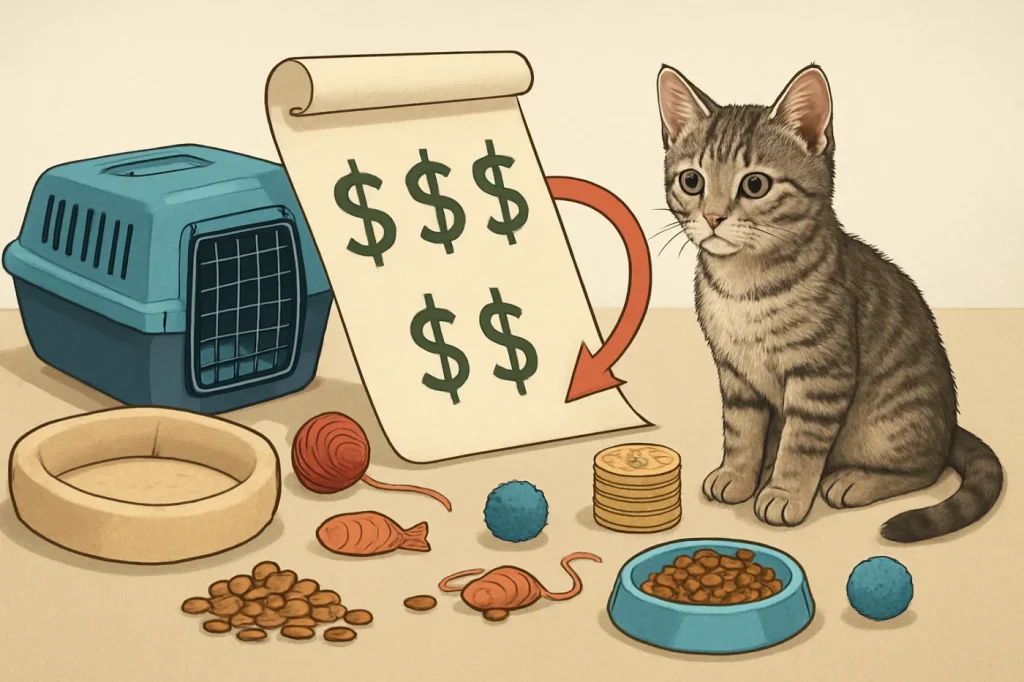
Adopting a kitten is exciting, but the first-year costs can surprise many new cat parents. You do not need a perfect prediction, but you do need a realistic range and a plan.
Realistic overview of kitten first year expenses
Based on common U.S. estimates from pet organizations and budget guides, most people spend somewhere in the low four figures during a kitten’s first year. That usually includes:
- Adoption or purchase fee
- Initial supplies (litter box, carrier, bed, scratcher, toys, bowls)
- Veterinary exams and vaccines
- Spay/neuter and microchip
- Food and litter for 12 months
- Occasional extras and a buffer for minor health issues
Different sources suggest that a kitten’s first year can range from several hundred dollars on a very tight budget to a few thousand dollars when you include higher-end supplies, full vet care, and some unexpected costs. One recent guide notes that first-year kitten expenses, including veterinary care and supplies, can fall anywhere from the hundreds into the low thousands of dollars, and other summaries place typical first-year cat costs in a similar band.
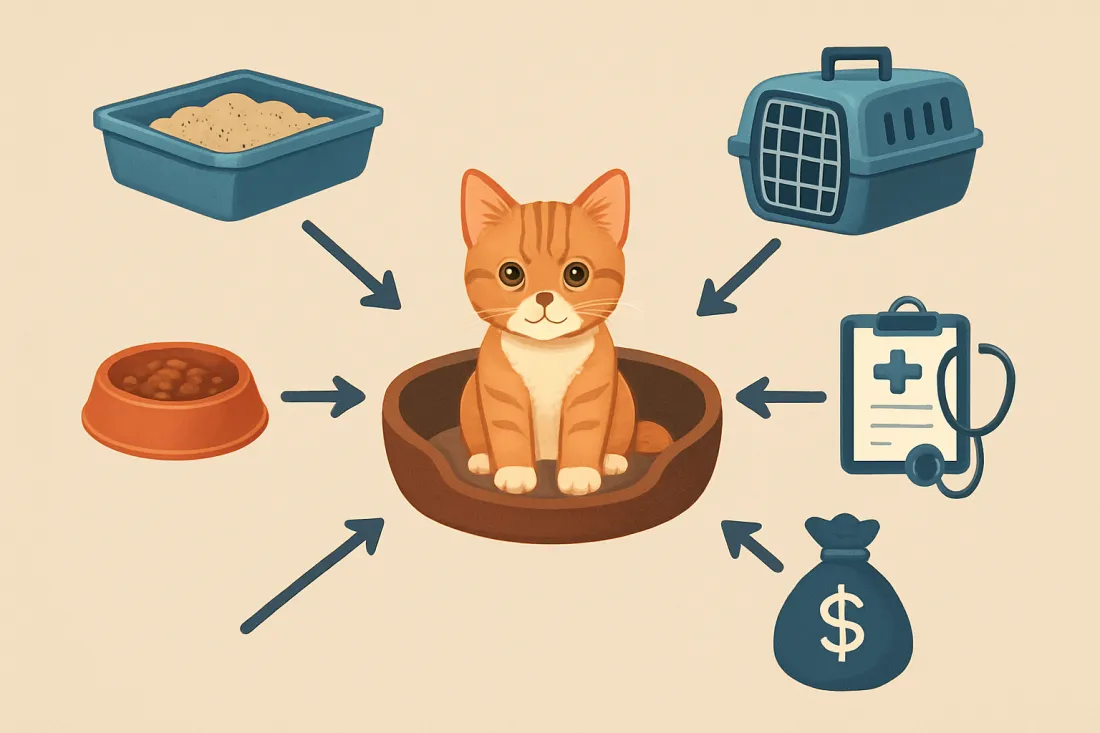
Instead of chasing an exact number, it is more useful to:
- Decide whether you are planning a bare-bones, moderate, or comfort-level budget
- List the main categories of spending
- Set aside a health emergency buffer before you adopt
If you want to compare the first year with ongoing costs later, you can also look at a dedicated guide on the monthly cost of owning a cat in the US.
Key decisions that change your kitten budget
Your actual first-year expenses depend on a few big choices and conditions:
- Adoption vs. breeder vs. “free” kitten
Adoption fees often include some vaccines and spay/neuter. Breeder kittens usually cost more up front but may come with health screening. “Free” kittens can become expensive if they need all vet work from scratch. - Indoor-only vs. indoor/outdoor
Indoor-only cats often have lower injury risk and more predictable costs. Indoor/outdoor cats may face higher risk of accidents, parasites, and infections. - Local vet prices and services
Urban clinics and 24/7 hospitals often charge more than small-town or low-cost clinics. Wellness plans and pet insurance can change how and when you pay. - Brand level for food and litter
Premium brands cost more per month but may offer better quality. Budget brands cost less but may not suit every kitten’s digestion or allergies. - How much you buy up front
Buying every cute accessory at once can double your first-month bill. Starting with essentials and adding extras slowly keeps costs manageable.
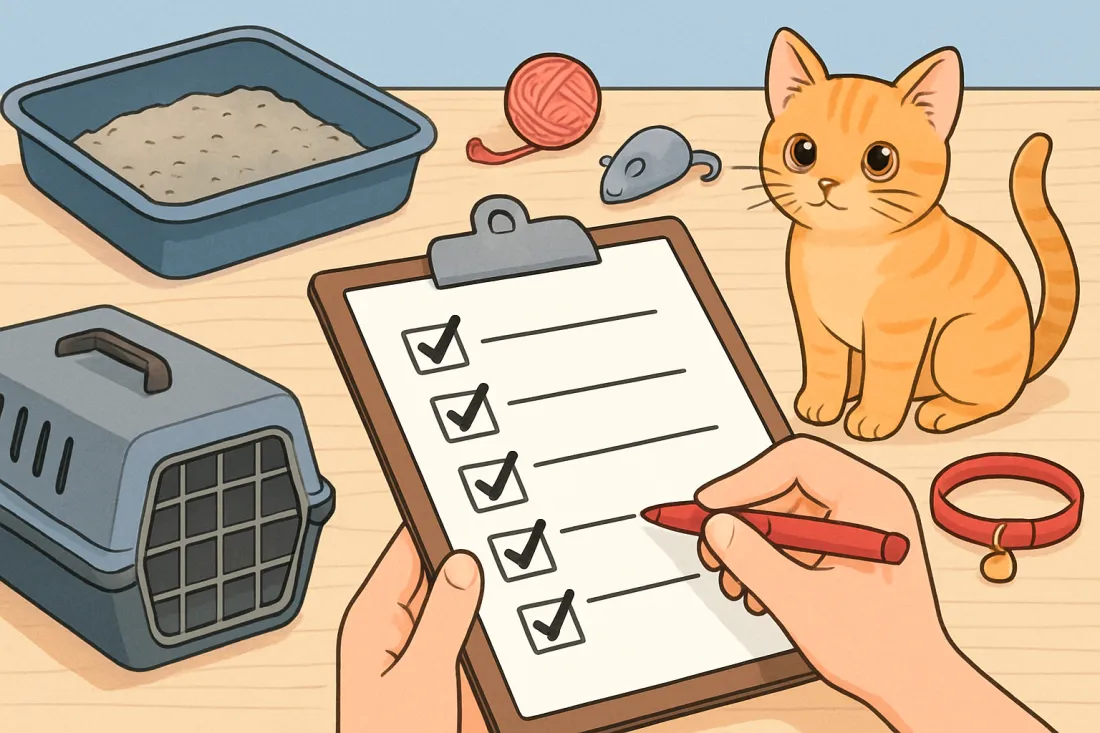
Checklist of required initial supplies for a new kitten
These are the minimum supplies most U.S. kitten owners need in the first week. You can upgrade or add extras later.
- Carrier – Hard or soft, big enough for an adult cat. Needed for vet visits and emergencies.
- Litter box – At least one standard-size box. Many people prefer one box per cat plus one extra, but for a single kitten you can start with one and add a second later.
- Litter scoop and mat – Scoop for daily cleaning; mat to catch tracked litter.
- Cat litter – Start with the same type the kitten is used to, then change slowly if needed.
- Food and water bowls – Non-tip, easy-to-wash bowls. Stainless steel or ceramic are common choices.
- Kitten food – Wet, dry, or a mix, labeled for kittens or “all life stages.” Ask the previous caregiver what the kitten is eating now.
- Scratching post or board – Essential to protect furniture and support healthy claws and stretching.
- Bed or soft blanket – A cozy, washable sleeping spot in a quiet area.
- Basic toys – Wand toys, small balls, and soft toys for chasing and pouncing. Avoid tiny parts that can be swallowed.
- Brush or comb – Especially for medium or long-haired kittens to prevent mats.
- ID tag and collar (if used) – Breakaway collar only, with your phone number. Microchipping is more reliable, but an ID tag helps too.
- Enzyme cleaner – For cleaning accidents without leaving odor that encourages re-marking.
Optional but helpful early purchases:
- Cat tree or climbing shelves
- Calming diffuser (if the kitten is very anxious)
- Baby gates or room dividers to limit access at first
Veterinary and vaccination costs to plan for
Most kittens need several vet visits in the first year. Exact prices vary widely by location and clinic, so treat the items below as a checklist, not a fixed quote.
Typical first-year vet care items
- Initial wellness exam – Full physical, discussion of diet and behavior, and a plan for vaccines and parasite prevention.
- Core vaccines – Usually a series of shots against common feline viruses, starting around 6–8 weeks and repeated every few weeks until about 16 weeks.
- Rabies vaccine – Required or strongly recommended in many areas; timing depends on local rules and vet guidance.
- Fecal test and deworming – To check for intestinal parasites and treat them if present.
- Flea, tick, and heartworm prevention – Monthly or seasonal products, especially important in warmer climates or for outdoor exposure.
- Follow-up visits – For booster shots, rechecks, or minor issues like ear mites or mild infections.
How much does a first vet visit for a kitten cost?
Because clinic fees differ so much, you will see a wide range when you call around. Some shelters and low-cost clinics offer discounted first exams or vaccine packages, while full-service clinics may charge more but include longer consultations and additional tests.
To get a realistic local estimate:
- Call 3 nearby clinics and ask for the price of a “new kitten exam and first vaccines.”
- Ask whether that includes a fecal test, deworming, and any follow-up boosters.
- Ask if they offer wellness plans that spread costs over the year, and what is included.
- Check if your local shelter or humane society runs low-cost vaccine clinics for basic shots.
Spay/neuter and microchip costs and timing
Spaying or neutering and microchipping are one-time expenses that belong in your first-year budget.
Spay/neuter
Many vets recommend spaying or neutering kittens when they are a few months old, often before the first heat cycle in females. The exact timing depends on your vet’s advice and the kitten’s health and size.
Cost factors include:
- Sex of the kitten (spay surgery is usually more complex than neuter)
- Body weight and age
- Whether the clinic is private, a low-cost program, or a shelter
- Pre-surgery bloodwork and pain medication
Some adoption fees already include spay/neuter, or you may receive a voucher for a discounted surgery at a partner clinic. Always confirm what is and is not included before you adopt.
Microchip
Microchipping is a tiny implant under the skin that stores an ID number linked to your contact details. It is usually done:
- During spay/neuter surgery, or
- At a regular vet visit with a quick injection
There may be a separate fee for the chip itself and for registering it with a database. Some shelters include microchips in the adoption fee; others offer them at low-cost clinics.
Food and litter monthly costs for a kitten
Food and litter are your main ongoing first-year expenses.
Kitten food budget factors
- Wet vs. dry food – Wet food often costs more per meal but provides extra moisture. Many owners feed a mix.
- Brand and quality level – Premium brands cost more; budget brands cost less but may not suit every kitten.
- Portion size – Kittens eat more per pound of body weight than adult cats because they are growing fast.
- Special diets – Food sensitivities or medical conditions can increase costs.
Litter budget factors
- Type of litter – Clumping clay, non-clumping, crystal, paper, wood pellets, and other options all have different price points and usage rates.
- Number of boxes – More boxes mean more litter, but also better hygiene.
- How often you change the litter – Scooping daily and changing regularly keeps odors down and can reduce accidents.
Different budget guides suggest that ongoing cat costs (including food, litter, and basic care) can add up to hundreds of dollars per year. For a kitten, expect the first year’s food and litter to be a noticeable but manageable monthly line in your budget rather than a one-time shock.
Why you need an unexpected health issue buffer
Even healthy kittens can surprise you with sudden expenses: a swallowed toy, a bad fall, diarrhea that needs testing, or an eye infection that will not clear on its own.
Because emergency clinics and diagnostics can be costly, many pet budget guides recommend setting aside a dedicated emergency fund for vet care. You can think of this as money you hope never to spend, but that keeps you from having to choose between your finances and your kitten’s health.
How to build a basic kitten health buffer
- Decide on a target amount that feels realistic for your income. Some people aim for a few hundred dollars; others prefer more.
- Open a separate savings account or envelope labeled “Pet Emergency Fund.”
- Automate a small transfer each payday until you reach your target.
- Use this fund only for unexpected vet bills, not routine food or litter.
You can also explore pet insurance, but read the policy carefully. Check what is covered, what counts as a pre-existing condition, and how deductibles and reimbursement work.
Sample kitten first-year budget comparison table
The table below shows how different choices can change your first-year kitten expenses. These are illustrative ranges and categories, not quotes. Always confirm real prices with local shelters, vets, and stores.
| Expense category | Low-budget approach | Moderate approach | Comfort / premium approach |
|---|---|---|---|
| Adoption or purchase | Adopt from shelter; fee often includes basic vaccines and sometimes spay/neuter. | Adopt from rescue or small breeder; some vet work included, some extra visits needed. | Purebred kitten from established breeder; higher upfront cost, health screening included. |
| Initial supplies | Buy only essentials (box, litter, bowls, simple bed, basic toys); look for sales or secondhand carriers and scratchers in good condition. | Mix of budget and mid-range items; add a cat tree or extra scratchers. | High-end furniture-style litter box, designer bed, multiple trees and interactive toys. |
| Vet exams and vaccines | Use low-cost clinics or shelter vaccine days; basic exams and core shots only. | Standard private clinic care; wellness exams, core vaccines, parasite prevention. | Full-service clinic with extra diagnostics, optional tests, and frequent checkups. |
| Spay/neuter and microchip | Included in adoption fee or done at low-cost clinic with voucher. | Standard clinic surgery with pre-op bloodwork and microchip. | Premium clinic, extra monitoring, and additional pain control options. |
| Food and litter (12 months) | Budget brands that still meet basic nutrition standards; buy in bulk when on sale. | Mix of mid-range wet and dry food; clumping litter changed regularly. | Premium or specialty diets (grain-free, limited ingredient); higher-end low-dust litter. |
| Extras and toys | DIY toys (cardboard boxes, paper bags, simple balls); minimal decor items. | Rotate a few interactive toys; occasional new items for enrichment. | Subscription toy boxes, puzzle feeders, multiple beds and perches. |
| Emergency/health buffer | Small savings cushion; rely on low-cost clinics when possible. | Moderate savings buffer plus possible basic pet insurance plan. | Larger emergency fund plus comprehensive insurance with lower deductibles. |
Step-by-step process to plan your kitten first-year budget
Use this simple checklist-style process to turn rough ideas into a concrete plan.
- Decide your lifestyle level
Are you aiming for a low-budget, moderate, or comfort-level setup? Use the table above as a reference. - List one-time costs
Write down adoption fee, initial supplies, spay/neuter, and microchip. Call your local shelter and vet for ballpark ranges. - Estimate monthly costs
Check prices for your preferred food and litter brands at local stores or online. Multiply by 12 for the first year. - Add routine vet care
Ask a vet clinic for a typical kitten vaccine schedule and approximate total for the first year’s routine visits. - Set an emergency fund target
Choose a realistic amount you want to have set aside for unexpected health issues. - Compare to your income
Look at your monthly budget. Can you comfortably cover the ongoing costs and save toward the emergency fund? - Adjust before adopting
If the numbers feel tight, consider adopting an adult cat instead of a kitten, choosing more budget-friendly supplies, or waiting a few months to build your savings. A guide that compares options like should I adopt a kitten or adult cat can help you decide.
Practical ways to save on kitten supplies and care
You can be a responsible pet owner without buying the most expensive option for everything. Focus on saving where it is safe, and spending where it truly matters.
Where it is usually safe to save
- Non-essential accessories – Skip fancy bowls, themed beds, and matching decor until you know your kitten’s habits.
- DIY toys and enrichment – Many kittens love cardboard boxes, paper bags (handles removed), and homemade wand toys.
- Secondhand carriers and trees – As long as they are sturdy and can be cleaned thoroughly, used items can cut costs.
- Buying in bulk – Larger bags of litter or food can be cheaper per unit, as long as you can store them properly.
- Sales and loyalty programs – Sign up for store loyalty cards or online autoship discounts if they truly save you money.
Where you should not cut corners
- Basic vet care – Skipping vaccines or parasite prevention can lead to serious illness and higher bills later.
- Spay/neuter – Avoiding this surgery can increase health risks and contribute to unwanted litters.
- Food quality – Extremely low-quality diets may cause digestive issues or poor growth. If you need to save, ask your vet for budget-friendly but adequate options.
- Safety – Do not buy toys with easily swallowed parts, non-breakaway collars, or unsafe cleaning products.
Common money mistakes new kitten owners make
- Buying everything at once – You do not need three beds, two trees, and a dozen toys on day one. Start small and see what your kitten actually uses.
- Ignoring the emergency fund – Planning only for routine costs and having nothing set aside for emergencies can lead to stressful decisions.
- Underestimating vet care – Assuming a “free” kitten will stay free leads to shock when vaccines, tests, and spay/neuter are due.
- Choosing based on looks, not lifestyle – High-energy or special-care breeds can cost more in enrichment and vet care. Matching your lifestyle to the right pet (similar to using a first time dog owner checklist USA when choosing a dog) helps avoid surprises.
- Skipping pet-proofing – Not securing cords, toxic plants, or small objects can lead to injuries and emergency vet bills.
Understanding the 3-3-3 rule for kittens and settling-in costs
Many pet professionals use a “3-3-3 rule” as a rough way to describe how long it takes a new pet to adjust:
- First 3 days – The kitten may be overwhelmed, hiding, or very clingy. You might spend extra on comfort items like a calming diffuser or soft bed.
- First 3 weeks – The kitten starts to learn your routine, explore more, and show their true personality. You may realize you need more scratchers, toys, or baby gates.
- First 3 months – The kitten usually feels at home, and you understand their habits and needs. This is when you can fine-tune your budget for food, litter, and enrichment.
The 3-3-3 rule is not a strict scientific formula, but it is a useful reminder that your spending pattern will change as your kitten settles in. Expect the first month to be the most expensive, with costs leveling out once you have the basics in place.
FAQ about kitten first year expenses and care
How much does a kitten cost in its first year?
Most U.S. estimates suggest that a kitten’s first year typically falls somewhere in the low four-figure range when you include adoption, supplies, vet care, food, litter, and a bit of emergency money. Some budget guides mention totals from the hundreds into a few thousand dollars, depending on your choices. A low-budget plan with adoption from a shelter, basic supplies, and low-cost clinics will be at the lower end, while a premium setup with breeder fees, high-end supplies, and extensive vet care will be at the higher end. The best way to get a realistic number is to list each category and call local providers for their current ranges.
What is the 3-3-3 rule for kittens, and does it affect costs?
The 3-3-3 rule is a simple way to think about adjustment: roughly 3 days to decompress, 3 weeks to learn the routine, and 3 months to feel fully at home. It is not a strict rule, but it helps you plan. In the first 3 days, you may buy extra comfort items if your kitten seems stressed. Over the next 3 weeks, you might realize you need more scratchers, toys, or gates. By 3 months, you will know your kitten’s habits well enough to set a stable monthly budget for food, litter, and enrichment.
Can a kitten be left alone for 5 days if I want to save on pet sitting?
No. Leaving a kitten alone for 5 days is unsafe and can lead to serious health and behavior problems. Kittens need daily feeding, fresh water, litter box cleaning, and social interaction. If you must travel, budget for a trusted friend, family member, or professional pet sitter to visit at least once or twice a day, or consider a reputable boarding option. The cost of pet care during trips should be part of your overall first-year planning.
How much does a first vet visit for a kitten usually cost?
There is no single standard price, because clinics set their own fees and include different services in a “new kitten” visit. Some low-cost clinics or shelters offer discounted packages that include an exam and basic vaccines, while full-service clinics may charge more but include longer consultations and additional tests. To get a realistic figure, call a few local clinics and ask specifically for the price of a new kitten exam plus first vaccines, and whether that includes a fecal test, deworming, and any follow-up boosters.
Is it cheaper to adopt an adult cat instead of a kitten?
Often, yes. Adult cats usually need fewer vaccine visits and may already be spayed or neutered and microchipped. Their personalities and health needs are more predictable, which can reduce surprise costs. If your main concern is budget and you are flexible about age, it is worth comparing kitten and adult cat costs using a guide like should I adopt a kitten or adult cat and talking to local shelters about what is included in their adoption fees.
How can I tell if I can really afford a kitten right now?
Start by listing your current monthly expenses and income. Then add estimated monthly costs for kitten food, litter, and routine vet care, plus a plan to build an emergency fund. If the new total still leaves you with comfortable breathing room and you can handle occasional one-time costs (like spay/neuter or a minor emergency), you are likely in a good position. If the numbers feel tight, consider waiting a few months to save more, choosing a lower-cost setup, or looking at an adult cat whose first-year medical needs may be lower.