
If you want a simple pet budget template (monthly and annual) you can copy right now, use the ready-made tables and examples below. They are designed for dogs and cats in the United States, but you can easily adapt them for other pets.
Simple pet budget template you can use right away
Here is a practical structure you can copy into a notebook, notes app, or spreadsheet. It works for both monthly and annual planning.
Core budget categories for any pet
- Food and treats
- Routine vet care (checkups, vaccines, tests)
- Preventive meds (flea/tick, heartworm, deworming)
- Pet insurance or vet savings fund
- Grooming and hygiene
- Supplies (litter, poop bags, pads, cleaning products)
- Toys, enrichment, and training
- Licensing and microchipping
- Boarding, pet sitting, or dog walking
- Emergency and one-off costs (surgery, broken gear, moving fees)
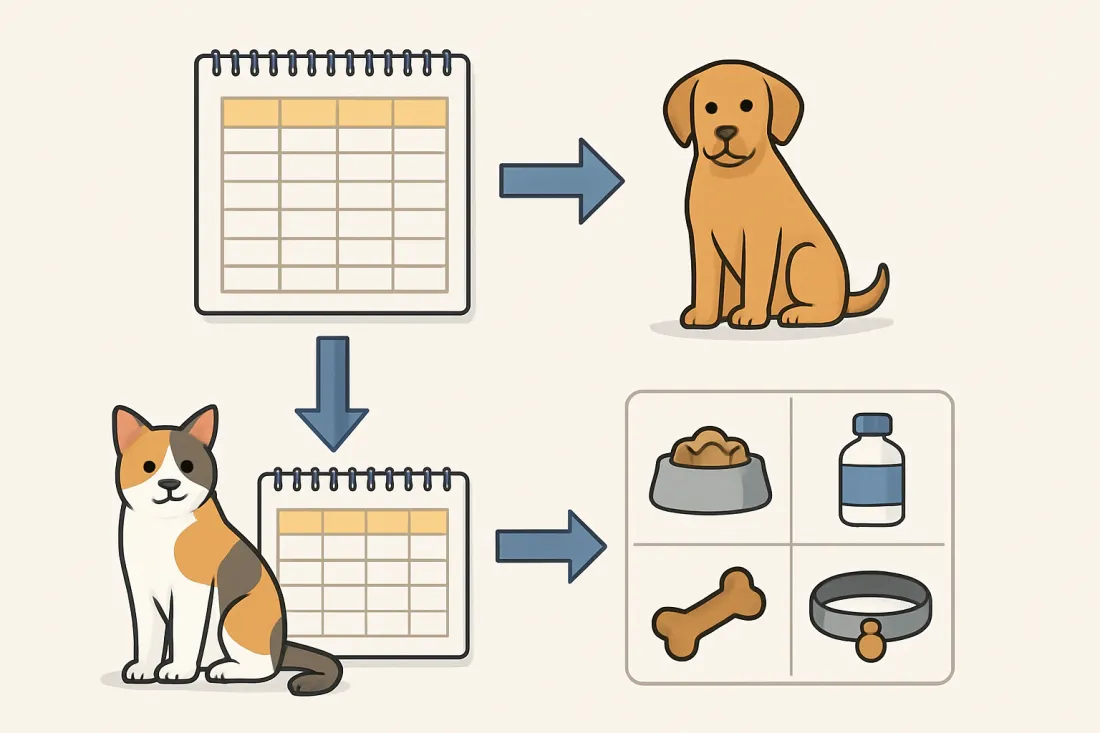
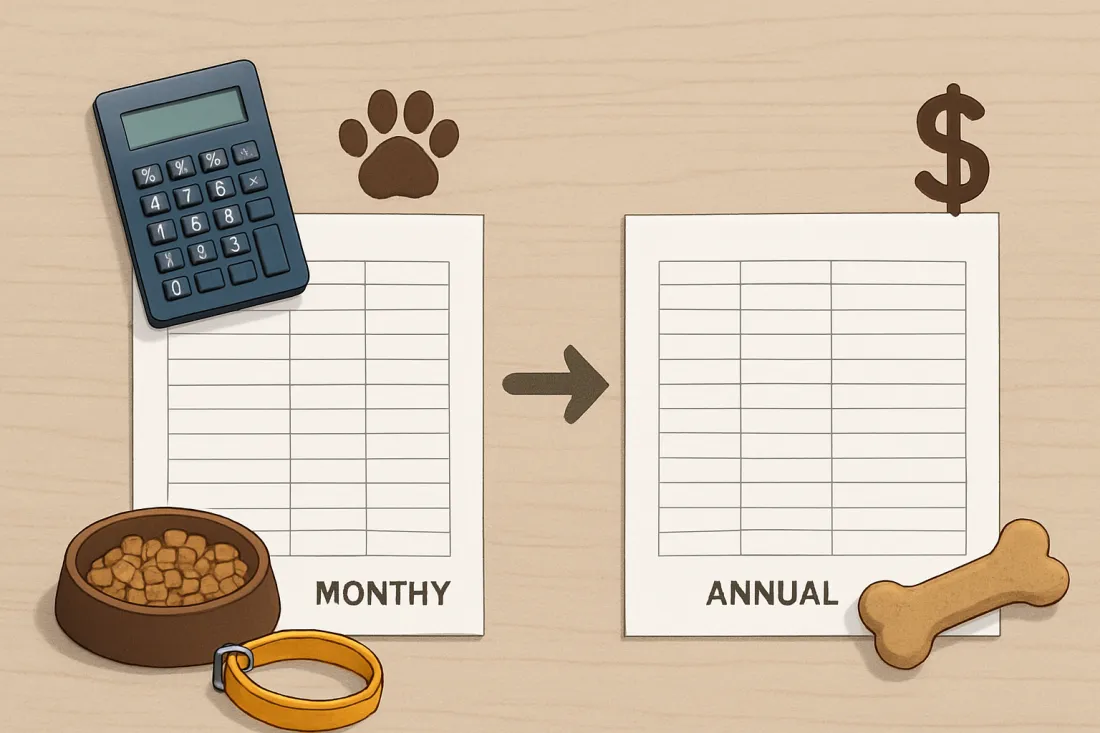
Use the monthly template to track what you actually spend, then roll those numbers into the annual template to see your real yearly cost.
Why budgeting for your pet directly affects their welfare
Pet budgeting is not just about money management. It is a core part of responsible pet ownership and your pet’s welfare. When you plan ahead:
- Routine vet care is less likely to be skipped. Without a budget, checkups and vaccines are often delayed, which can lead to preventable illness and higher bills later.
- Preventive meds become a habit. Heartworm, flea, and tick prevention are easy to forget if they are not in your monthly plan.
- Food quality is more stable. If money gets tight, some owners switch to very low-quality food or underfeed. A budget helps you protect your pet’s nutrition.
- Emergencies are less catastrophic. Having even a small emergency fund or insurance can be the difference between getting timely treatment and delaying care.
- Fewer pets are surrendered. One common reason people give up pets is underestimating long-term costs. A realistic budget helps you avoid that situation.
Thinking through costs before and after adoption is a sign that you are taking your pet’s long-term well-being seriously. If you are still deciding whether you are ready for a dog, a self-check like the am I ready to adopt a dog quiz can help you combine financial and lifestyle questions.
Budget categories explained with practical examples
Use these explanations to decide which lines you need in your own template and how detailed to make them.

1. Food and treats
- Food: Kibble, canned food, raw or fresh food, prescription diets.
- Treats and chews: Training treats, dental chews, long-lasting chews.
- Decision tip: If your pet has allergies or a medical diet, keep food as a separate, clearly labeled line so you can see its impact.
2. Routine vet care
- Annual or semi-annual wellness exams.
- Core and lifestyle vaccines.
- Basic screening tests recommended by your vet.
- Decision tip: If your vet suggests a regular schedule, you can spread the expected annual cost across 12 months. For example, if your vet estimates a certain amount per year for routine care, divide that by 12 to get a monthly “vet sinking fund.” You can also review an annual vet costs for dogs and cats in the US guide to understand typical ranges.
3. Preventive medications
- Heartworm prevention (usually monthly).
- Flea and tick prevention (monthly or seasonal).
- Internal parasite control if recommended.
- Decision tip: If you buy several months at once, record the full cost in the month you pay and also note the “per month” amount so your budget stays realistic.
4. Insurance or vet savings fund
- Pet insurance premium: Monthly or annual payment.
- Self-funded vet savings: A set amount you move into a savings account every month if you do not use insurance.
- Decision tip: Choose one main strategy (insurance or savings) and budget for it consistently so you are not caught off guard by big bills.
5. Grooming and hygiene
- Professional grooming (haircuts, baths, nail trims).
- At-home supplies (shampoo, brushes, nail clippers, ear cleaner, toothpaste).
- Litter and litter box supplies for cats.
- Decision tip: Long-haired dogs and some cats may need frequent grooming. Short-haired pets may only need occasional baths and nail trims.
6. Supplies and household items
- Beds, crates, carriers.
- Collars, harnesses, leashes.
- Bowls, slow feeders, water fountains.
- Cleaning products for accidents.
- Decision tip: These are often one-off or rare purchases. Treat them as “occasional” and spread the expected yearly cost across months.
7. Toys, enrichment, and training
- Toys, puzzle feeders, scratching posts.
- Training treats and clickers.
- Training classes or private sessions.
- Decision tip: If your dog is young or high-energy, training and enrichment are not optional extras; they are part of welfare. Budget for them like you would for food.
8. Licensing, microchipping, and ID
- Local pet license fees.
- Microchipping and registration.
- ID tags and replacements.
- Decision tip: These are usually small but important costs. Put them in your annual budget and divide by 12 if you want a smoother monthly picture.
9. Boarding, pet sitting, and dog walking
- Boarding or pet hotels when you travel.
- In-home pet sitters.
- Dog walkers or doggy day care.
- Decision tip: If you travel regularly or work long hours, this category can be significant. Estimate how many days per year you will need help and budget accordingly.
10. Emergency and one-off costs
- Emergency vet visits or surgery.
- Damage repair (chewed furniture, scratched doors).
- Moving or housing fees related to pets.
- Decision tip: You cannot predict exact emergencies, but you can decide on a target emergency fund and add a small amount every month.
Monthly pet budget template table
Use this table as a template. Copy the structure and fill in your own estimates or actual spending. The “Example monthly cost” column shows how you might think about the numbers; replace it with your own.
| Category | What to include | How to estimate monthly cost | Example monthly cost idea* |
|---|---|---|---|
| Food | Dry, wet, or fresh food | Estimate bags/cans per month × price per unit | 1 bag per month × price you pay |
| Treats & chews | Training treats, chews, dental sticks | Decide a monthly limit and stick to it | Set a fixed treat budget (e.g., small share of food cost) |
| Routine vet care fund | Annual checkups, vaccines, basic tests | Ask your vet for a yearly estimate and divide by 12 | If yearly total is Y, monthly fund is Y ÷ 12 |
| Preventive meds | Heartworm, flea/tick, deworming | Cost per dose × doses per month | Usually 1 dose per month per product |
| Insurance or vet savings | Pet insurance premium or savings deposit | Use your actual premium or chosen savings amount | Pick a realistic, consistent amount |
| Grooming & hygiene | Groomer visits, shampoo, brushes, litter | For services: yearly cost ÷ 12; for litter: bags per month × price | More for long-haired dogs; moderate for most cats |
| Supplies | Beds, collars, leashes, bowls, carriers | Estimate what you replace in a year ÷ 12 | Higher in first year, lower later |
| Toys & training | Toys, puzzle feeders, classes | Average monthly toy spend + class cost spread over months | More for puppies/kittens and active dogs |
| Boarding & pet sitting | Boarding, sitters, walkers, day care | Trips per year × daily rate ÷ 12; plus regular walking costs | Depends heavily on your travel and work schedule |
| Licensing & ID | License, microchip, ID tags | Yearly total ÷ 12 | Usually a small monthly equivalent |
| Emergency fund | Money set aside for unexpected vet bills | Choose a monthly amount you can commit to | Even a small, steady amount helps |
| Total monthly pet budget | Add all monthly amounts above | ||
*Do not treat the example ideas as fixed prices. Ask your vet, local stores, or services for current costs and plug those into the template.
Annual pet budget template table
The annual template helps you see the full-year impact of your pet expenses and plan for big once-a-year costs.
| Category | Typical pattern | How to estimate annual cost | How to convert to monthly |
|---|---|---|---|
| Food | Ongoing, every month | Monthly food cost × 12 | Annual food ÷ 12 |
| Treats & chews | Ongoing, but flexible | Average monthly spend × 12 | Annual treats ÷ 12 |
| Routine vet care | 1–2 visits per year | Ask vet for typical yearly total | Annual vet ÷ 12 |
| Preventive meds | Monthly or seasonal | Cost per dose × doses per year | Annual meds ÷ 12 |
| Insurance premiums | Monthly or annual billing | Monthly premium × 12, or annual bill | Annual premium ÷ 12 |
| Grooming | Every few weeks to a few times a year | Average cost per visit × visits per year | Annual grooming ÷ 12 |
| Litter & hygiene supplies | Monthly for cats; as needed for dogs | Monthly average × 12 | Annual hygiene ÷ 12 |
| Supplies & gear | Occasional replacements and upgrades | Estimate total you expect to spend this year | Annual supplies ÷ 12 |
| Toys & training | Ongoing toys; short bursts of classes | Monthly toy average × 12 + total class fees | Annual total ÷ 12 |
| Boarding, sitting, walking | Travel and work-related | Trips per year × daily rate + walking/day care total | Annual services ÷ 12 |
| Licensing & ID | Once a year or every few years | Total of all expected fees this year | Annual license ÷ 12 |
| Emergency fund target | Goal amount for the year | Decide how much you want saved by year-end | Annual target ÷ 12 |
| Total annual pet budget | Add all annual amounts above | ||
How to estimate each line item without guessing blindly
Use this step-by-step process to turn vague ideas into realistic numbers.
Step 1: Start with known recurring costs
- Look at your current receipts or bank statements for pet stores, vets, and groomers.
- List anything that happens every month or every few months (food, litter, meds, grooming).
- Use the average of the last 2–3 months as your starting monthly estimate.
Step 2: Ask your vet for a yearly care estimate
- At your next visit, ask: “What routine care do you expect my pet to need over the next 12 months?”
- Request a rough total for exams, vaccines, and recommended tests.
- Divide that total by 12 and plug it into the “Routine vet care fund” line.
- For more context, you can also compare with an annual vet care schedule for dogs and cats USA to see typical visit timing.
Step 3: Price out preventive medications
- Call your vet or check your last invoice for the cost per dose of heartworm and flea/tick prevention.
- Multiply by the number of months you use them (often 12 for heartworm; flea/tick may be seasonal in some areas).
- Divide the yearly total by 12 for your monthly budget.
Step 4: Decide on insurance vs. savings
- If you already have pet insurance, your monthly premium is your budget number.
- If you do not, decide how much you can realistically save each month toward vet emergencies.
- Set a minimum amount you will treat like a bill, not an optional extra.
Step 5: Estimate grooming and hygiene
- Ask your groomer for the typical cost per visit and how often they recommend visits for your pet’s coat type.
- Multiply cost per visit by visits per year to get an annual grooming total.
- For litter and cleaning supplies, look at how often you buy them and multiply by the price.
Step 6: Plan for travel and work-related services
- Think about how many days per year you are likely to travel without your pet.
- Multiply expected days by the daily rate of your preferred boarding facility or sitter.
- If you use a dog walker or day care, multiply the weekly cost by 52 for an annual total.
Step 7: Set an emergency fund target
- Decide how much you would like to have available for emergencies by the end of the year.
- Divide that number by 12 and add it to your monthly budget.
- If money is tight, start with a small amount and increase it later.
Example filled-in monthly and annual budget for a dog
This is a fictional example to show how the template works. It is not a price list. Always check your own local costs.
Example monthly dog budget (conceptual)
- Food: enough for one month of a mid-range diet.
- Treats & chews: a modest amount for training and enrichment.
- Routine vet care fund: based on a typical yearly wellness package divided by 12.
- Preventive meds: one monthly heartworm dose and one flea/tick dose.
- Insurance or vet savings: a steady monthly amount.
- Grooming & hygiene: a share of a professional grooming visit every 6–8 weeks, plus shampoo and nail tools.
- Supplies: averaged cost of replacing a leash, collar, and bed over the year.
- Toys & training: a couple of new toys per month and a training class spread over several months.
- Boarding & pet sitting: a yearly trip’s boarding cost divided by 12.
- Licensing & ID: annual license fee divided by 12.
- Emergency fund: a small, fixed monthly contribution.
When you add these conceptual amounts together, you get a realistic monthly total that reflects both everyday and future costs.
Example annual dog budget (conceptual)
Using the same dog, the annual budget would include:
- Food: monthly food cost × 12.
- Treats & chews: monthly treat budget × 12.
- Routine vet care: estimated yearly wellness cost.
- Preventive meds: 12 months of heartworm and flea/tick prevention.
- Insurance or savings: monthly amount × 12.
- Grooming: cost per groom × number of grooms per year.
- Supplies: total expected replacements (bed, leash, toys, bowls).
- Training: any classes or behavior consults planned for the year.
- Boarding & pet sitting: total days away × daily rate.
- Licensing & ID: license and any ID tag replacements.
- Emergency fund: monthly contribution × 12.
This annual view helps you see whether your current income and savings can comfortably support a dog at the level of care you want to provide.
Example filled-in monthly and annual budget for a cat
Again, this is a fictional example to show structure, not actual prices.
Example monthly cat budget (conceptual)
- Food: enough dry and/or wet food for one month.
- Treats: a small amount for training and bonding.
- Routine vet care fund: yearly checkup and vaccines divided by 12.
- Preventive meds: flea/tick prevention if recommended in your area.
- Insurance or vet savings: monthly contribution.
- Litter & hygiene: litter, liners, and cleaning supplies.
- Supplies: occasional replacement of scratching posts, beds, and bowls.
- Toys & enrichment: new toys or puzzle feeders every month or two.
- Boarding & pet sitting: a yearly trip’s cat sitting cost divided by 12.
- Licensing & ID: if required in your area, divided by 12.
- Emergency fund: small monthly contribution.
Example annual cat budget (conceptual)
- Food: monthly food cost × 12.
- Treats: monthly treat budget × 12.
- Routine vet care: yearly exam and vaccines.
- Preventive meds: doses per year × cost per dose.
- Insurance or savings: monthly amount × 12.
- Litter & hygiene: monthly litter cost × 12 plus cleaning supplies.
- Supplies: beds, scratching posts, carriers, and replacements.
- Toys & enrichment: total expected toy purchases.
- Boarding & pet sitting: total days of care × daily rate.
- Licensing & ID: license and any new ID tags or microchip updates.
- Emergency fund: monthly contribution × 12.
Comparing your cat’s annual budget with your dog’s can show where you might be able to save or where you may be under-spending on enrichment or preventive care.
Checklist: set up and use your pet budget in 20 minutes
Use this quick checklist as a practical algorithm to go from “no plan” to a working pet budget.
- Pick your format
- Notebook, notes app, or spreadsheet.
- Create two tabs or pages: “Monthly” and “Annual.”
- Copy the categories
- Food, treats, vet care, preventive meds, insurance/savings, grooming, supplies, toys/training, boarding/sitting, licensing/ID, emergency fund.
- Delete any that truly do not apply; add any special ones (e.g., special diet, behaviorist).
- Fill in what you already know
- Insurance premium, regular grooming cost, average food and litter cost.
- Use your last 2–3 months of receipts for guidance.
- Call or check with your vet
- Ask for a rough yearly estimate for routine care and preventive meds.
- Write that number in the annual sheet and divide by 12 for the monthly sheet.
- Estimate travel and work services
- Think about how many days per year you will need boarding or a sitter.
- Multiply by the rate and divide by 12 for your monthly budget.
- Set an emergency fund goal
- Decide how much you want saved by year-end.
- Divide by 12 and add that to your monthly budget.
- Add it all up
- Sum your monthly lines to see your total monthly pet budget.
- Compare it to your income and other expenses.
- Adjust if needed
- If the total is too high, look for areas to save without harming welfare (e.g., fewer impulse toys, compare food brands with your vet’s guidance).
- If it is lower than expected, consider increasing your emergency fund or enrichment budget.
- Track for one month
- Write down every pet expense and compare it to your budget.
- Update your estimates based on real numbers.
- Review every 3–6 months
- Adjust for changes like new health conditions, weight changes, or moving to a new area.
- Revisit your annual plan at least once a year.
Common mistakes when using a pet budget template
Avoid these typical errors so your budget stays realistic and actually helps your pet.
- Only counting food and forgetting vet care. Food is the most visible cost, but vet care, preventive meds, and emergencies can easily exceed it over a year.
- Ignoring one-off and first-year costs. Adoption fees, spay/neuter, microchipping, and initial supplies can be substantial. Spread them over the first year so you see the real cost of getting started.
- Underestimating preventive care. Skipping heartworm or flea prevention to “save money” can lead to much higher treatment costs and serious health problems later.
- Not adjusting for life changes. A new job, a move, or a new baby can change how often you need walkers, sitters, or day care. Update your budget when your life changes.
- Being too optimistic about emergencies. Hoping nothing will go wrong is not a plan. Even a small emergency fund contribution is better than none.
- Copying someone else’s numbers exactly. Costs vary widely by region, pet size, and health. Use other budgets as structure, not as fixed amounts.
- Forgetting aging-related costs. Senior pets often need more frequent vet visits, medications, and special diets. Build some flexibility into your budget as your pet ages.
How to track and adjust your pet budget over time
A budget only works if you keep it alive. Here is how to make it practical instead of theoretical.
Track spending in simple categories
- Each time you spend on your pet, assign it to one of your budget categories.
- Use a notes app, spreadsheet, or a simple paper log.
- At the end of the month, total each category and compare it to your planned amount.
Spot patterns and problem areas
- If you consistently overspend on toys or treats, set a clear monthly limit.
- If vet bills are higher than expected, ask your vet whether there are predictable recurring needs you can plan for.
- If your emergency fund is not growing, consider automating a transfer on payday.
Adjust for your pet’s life stage
- Puppies and kittens: Higher costs for vaccines, spay/neuter, training, and replacement of chewed or outgrown items.
- Adult pets: More stable costs, but still include training refreshers and enrichment.
- Senior pets: Plan for more frequent vet visits, possible medications, and supportive gear.
Review your annual plan once a year
- At the end of the year, compare your actual spending to your annual budget.
- Note any big surprises and decide whether they are likely to repeat.
- Adjust your next year’s budget to reflect what you learned.
FAQ about monthly and annual pet budget templates
What should I understand before using a pet budget template for annual and monthly planning?
Understand that the template is a framework, not a fixed bill. Its job is to make all the main cost areas visible: food, vet care, preventive meds, grooming, supplies, enrichment, travel care, and emergencies. Your actual amounts will depend on your pet’s size, health, age, and where you live. Use the template to map out both regular monthly costs and less frequent annual costs so you are not surprised by routine vet visits, license renewals, or boarding when you travel.
What are the biggest mistakes people make when setting up a pet budget?
The biggest mistakes are underestimating vet and preventive care, forgetting first-year and one-off costs, and copying someone else’s numbers without adjusting for their own situation. People also tend to ignore boarding or pet sitting until a trip appears, and they often skip building an emergency fund. Avoid these by listing every type of expense your pet might create over a year, even if it only happens once, and then spreading that total across 12 months.
How detailed should my pet budget be each month?
It should be detailed enough that you can see where your money is going, but not so detailed that you stop using it. For many owners, separating food, vet care, preventive meds, grooming, supplies, enrichment, travel care, and emergencies is enough. If you find that one category is consistently off, you can split it further, for example separating “routine vet care” from “unexpected vet visits.”
What should I do next after setting up my pet budget template?
After you set up your template and fill in your first estimates, track your real pet spending for at least one month. Compare actual costs to your planned amounts and adjust your numbers so they match reality. Then decide whether your current income can comfortably support that level of spending or whether you need to change anything, such as choosing a different food within your vet’s recommendations or increasing your emergency fund. If you are budgeting specifically for a cat, a focused guide on the monthly cost of owning a cat in the US can help you refine your numbers.
How often should I update my pet budget?
Update your monthly sheet at least once a month when you total your spending. Review your annual plan at least once a year, or sooner if something major changes, such as a new diagnosis, a move, or a change in your work schedule. Regular small updates are easier and more accurate than trying to rebuild your budget from scratch after a year.
What to do now with this pet budget template
You now have a clear monthly and annual structure, example categories, and a checklist for turning real-world costs into a practical plan. Copy the tables into your preferred format, fill in your own numbers, and track your pet expenses for the next month. Then refine your budget so it matches your life and your pet’s needs. A realistic budget is one of the simplest ways to protect your pet’s health, avoid financial stress, and enjoy your time together with fewer surprises.