
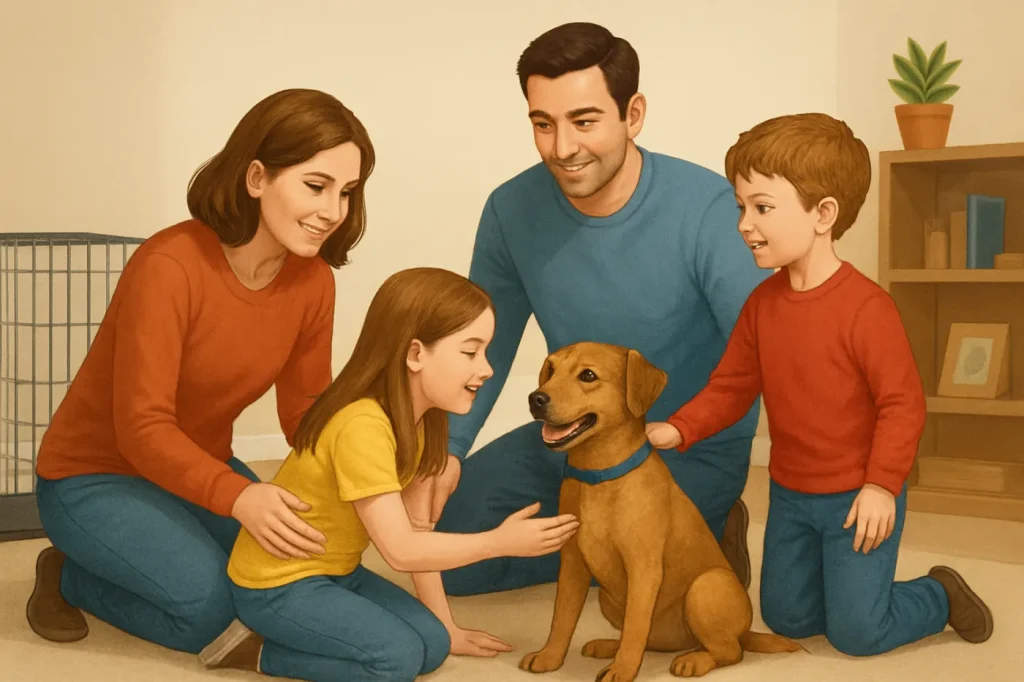
Adopting a shelter dog when you have young children can be wonderful if you treat it like a safety project, not just a cute moment. Safe adoption comes down to three things: choosing the right dog, setting clear rules for kids and adults, and managing the first weeks like a slow, supervised introduction.
Below is a practical, step-by-step guide to help you decide if your family is ready, choose a child-friendly dog, and keep everyone safe during the transition.
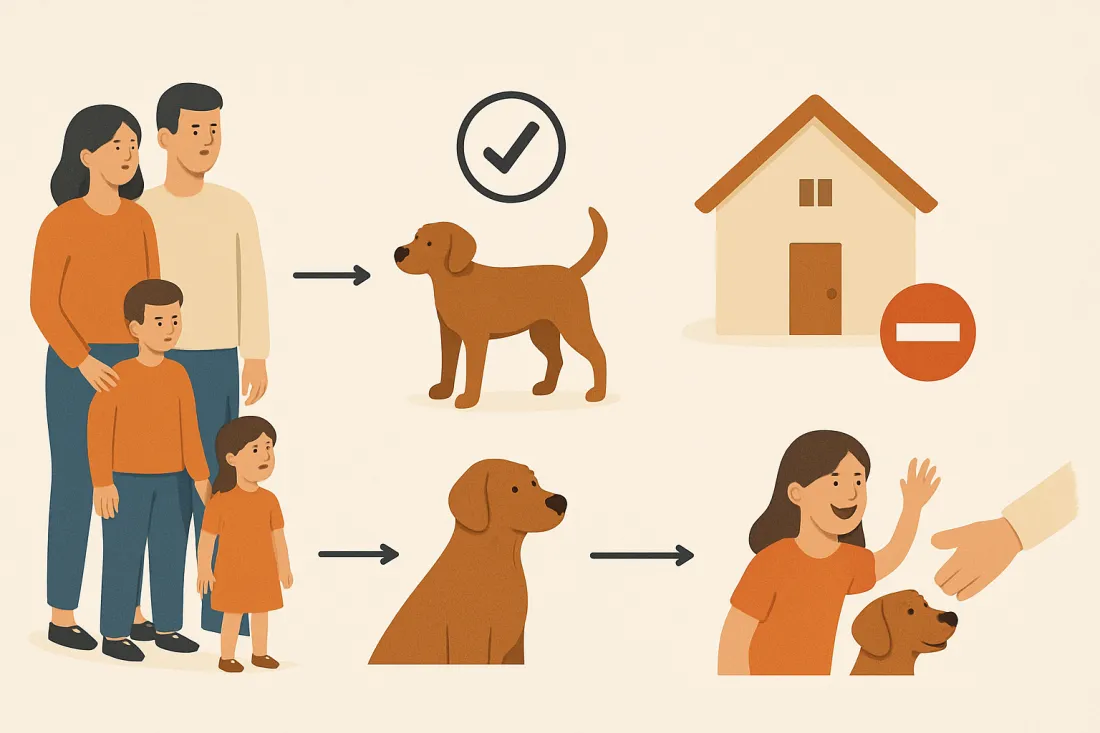
Key steps to safely adopt a shelter dog with young children
- Decide if your kids and household are truly ready for a dog right now.
- Define what kind of dog fits your children’s age, energy, and noise level.
- Work closely with a shelter that does behavior assessments and meet-and-greets.
- Prioritize temperament and history over looks or breed stereotypes.
- Teach and enforce non-negotiable safety rules for kids and adults.
- Use a slow, structured introduction plan at the shelter and at home.
- Supervise all child–dog contact and manage spaces with gates and crates.
- Watch for early warning signs of stress or aggression and act quickly.
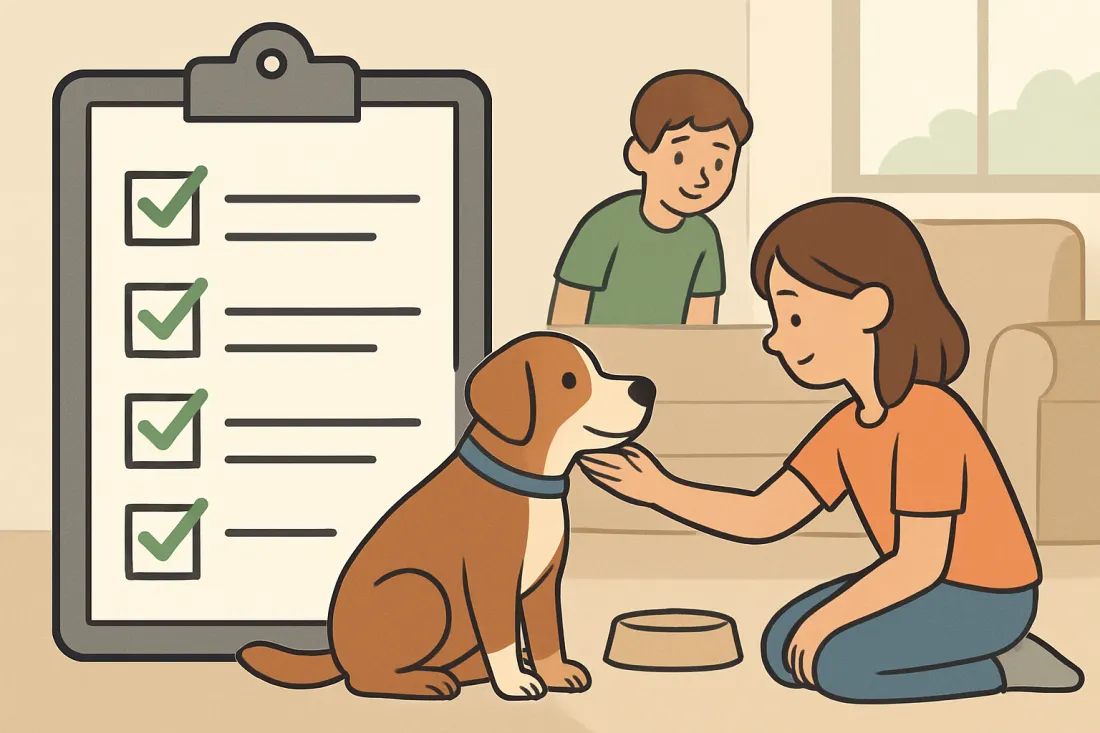
- Follow a written family safety checklist for the first weeks.
If you are still deciding whether a dog is the right species for your home, you may find it helpful to read the should I adopt a dog or cat quiz before you move forward.
Deciding if your children are ready for a shelter dog
Not every family with young kids is ready for a dog yet. Before you even visit a shelter, check three areas: your kids’ behavior, your adults’ bandwidth, and your home setup.
1. Check your children’s behavior and expectations
- Can they follow simple rules? For example, “no running at the dog,” “no grabbing toys from the dog,” “hands off the dog while it’s eating.” If your child regularly ignores basic rules, you will need very close supervision or may want to wait.
- How do they react to frustration? A child who hits, throws, or screams when upset may scare or hurt a dog. That can lead to defensive behavior from the dog.
- Do they understand that dogs feel pain and fear? Even a preschooler can learn “we touch the dog gently” and “the dog can say no by walking away.” Practice with stuffed animals first.
- Are they afraid of dogs? A little caution is fine. Extreme fear (crying, hiding, panic) can make introductions stressful for both child and dog. Consider working on confidence around calm, known dogs before adopting.
2. Be honest about adult time and energy
Safe adoption with kids requires adults who can supervise and train consistently.
- Supervision: Are there enough adults to watch both kids and dog, especially in the first 4–6 weeks? A single caregiver managing multiple toddlers and a new dog at once is a high-risk setup.
- Training: Are you willing to invest daily time in basic training, enrichment, and walks? A bored, under-exercised dog is more likely to jump, mouth, or guard toys.
- Stability: Are you in the middle of a major life change (new baby, move, divorce)? It may be kinder and safer to wait until routines are more stable.
3. Prepare your home before you adopt
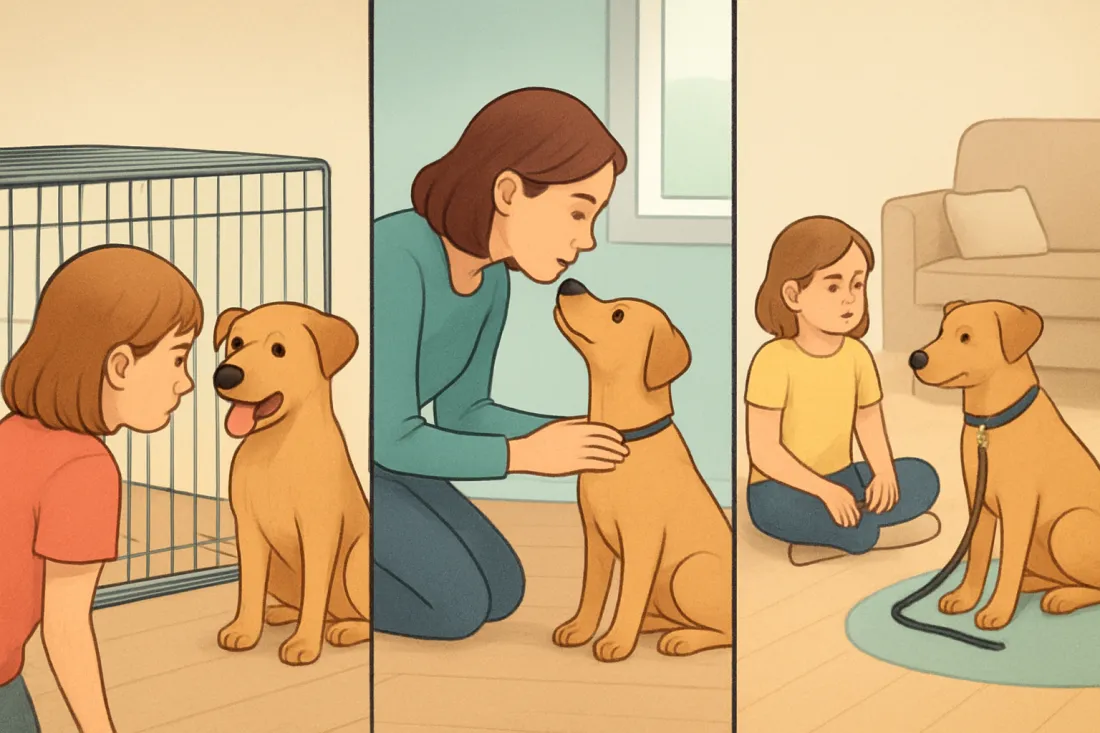
- Safe zones: Can you create at least one dog-only area (crate, pen, or gated room) where kids are not allowed?
- Child-only zones: Do kids have a play area where dog access can be limited, especially for toddlers with small toys?
- Secure exits: Are doors, gates, and fences in good repair so a startled dog cannot bolt into the street?
- Clutter and hazards: Are there many small toys, food scraps, or breakables on the floor? These can trigger guarding or be swallowed.
If several of these items are not in place, treat that as a signal to prepare first and adopt later. A few weeks of planning can prevent years of stress.
Choosing child-friendly temperaments at the shelter
There is no single “kid-safe breed.” Individual temperament and history matter far more than looks. Work with shelter staff to find a dog whose personality fits your children and lifestyle.
What to ask the shelter about each dog
- History with children: Has the dog lived with or been around kids before? How did it behave?
- Handling tolerance: How does the dog react to being touched on paws, ears, tail, or body? Does it stiffen, growl, or move away?
- Energy level: Is the dog calm, moderate, or very high energy? High-energy dogs can be overwhelming for toddlers.
- Startle response: How does the dog react to sudden noises or fast movements? Young kids are loud and unpredictable.
- Resource guarding: Has the dog shown signs of guarding food, toys, or resting spots? This is a red flag in homes with children.
- Medical issues: Painful conditions can make a dog less tolerant of clumsy handling.
Traits that usually work better with young children
Every dog is an individual, but for homes with young kids, it is usually safer to prioritize:
- Stable, easygoing temperament: The dog recovers quickly from surprises and does not stay tense or fearful.
- Moderate energy: Enough energy to play and walk, but not so much that the dog is constantly jumping, mouthing, or knocking kids over.
- Adult or older puppy: Very young puppies can be mouthy and fragile; adult dogs often have more predictable personalities.
- Good body-handling tolerance: The dog accepts gentle petting and brief handling without stiffening or snapping.
- Low prey drive: Dogs that fixate on fast-moving objects may chase running children.
Situations where extra caution is needed
These factors do not automatically rule out a dog, but they do require more experience and management:
- Strong resource guarding history around food or toys.
- Severe fear or anxiety, especially around strangers or noise.
- Very large, powerful dogs in homes with very small children, because accidental knocks or pulls can cause injury.
- Dogs with a bite history, even if the bite was “minor.” This needs careful professional evaluation before placing with kids.
If you are unsure whether a shelter dog is the right choice at all, you can compare options like adopting from a shelter versus taking in a dog directly from a previous owner by reading about adopt from shelter vs rehome a pet from current owner.
Comparison table: dog options for homes with young children
| Dog option | When it may fit a home with young kids | Main risks with young children | What to check with the shelter |
|---|---|---|---|
| Adult dog with known kid history | Best for most families; temperament is more predictable and staff may know how the dog behaves around children. | Past experiences may not match your kids’ age or behavior; still need careful introductions. | Ask for specific examples of interactions with kids, any issues around toys/food, and how the dog handles noise and chaos. |
| Adult dog with unknown history | Can work if temperament is calm and the dog passes handling and noise tests at the shelter. | Hidden fears or guarding may appear later under stress. | Request a behavior assessment, meet the dog several times, and ask if staff can simulate kid-like movement and sounds during testing. |
| Young puppy (under ~6 months) | May suit families ready for intense training and supervision; kids can grow up with the dog. | Frequent mouthing, scratching, house-soiling, and fragile bones; kids may accidentally hurt or over-handle the puppy. | Discuss socialization needs, expected adult size and energy, and how to manage puppy biting around children. |
| High-energy adolescent (6–24 months) | Better for active families with older children and time for training and exercise. | Jumping, pulling, and rough play can knock over or scare young kids. | Ask about training level, leash manners, and whether the dog can settle after play or stays constantly “on.” |
| Senior dog | Often calmer and less demanding; may enjoy gentle, quiet children. | Pain or medical issues can reduce tolerance for clumsy handling; may need more vet care. | Check for pain, mobility issues, and how the dog reacts to gentle but uncoordinated touch. |
Safety rules for kids and dogs in the same home
Clear rules protect both children and dogs. Go over these rules with kids before adoption and repeat them daily at first.
Non-negotiable rules for children
- No hugging or climbing on the dog. Many dogs find hugs scary or threatening, even if they tolerate them.
- No touching the dog while it eats, chews, or sleeps. This includes food bowls, treats, bones, and favorite toys.
- No pulling ears, tail, fur, or paws. Show kids how to use flat, gentle hands.
- No yelling at or chasing the dog. If the dog walks away, kids must let it go.
- Ask an adult before petting. Adults should check the dog’s body language first.
Non-negotiable rules for adults
- Always supervise child–dog interactions. Treat it like supervising kids near water: if you cannot watch, separate.
- Use management tools. Baby gates, crates, and pens are not “mean”; they are safety equipment.
- Protect the dog’s safe space. If the dog goes to its bed, crate, or room, kids must not follow.
- Model gentle behavior. Kids copy what they see. Handle the dog the way you want your children to handle it.
- Intervene early. If play gets too rough or the dog looks stressed, calmly separate them and redirect both.
Step-by-step introduction plan for shelter dog and young children
A structured introduction lowers the risk of fear or defensive behavior. Think of it as a gradual “getting to know you” process, not a one-time event.
Step 1: Meet the dog without kids first
- Visit the shelter adults-only at least once.
- Observe the dog’s behavior in a quiet room and on a short walk.
- Ask staff to show how the dog handles basic handling (touching paws, ears, etc.).
- If anything feels unsafe or unpredictable, keep looking. You are not obligated to adopt a dog just because you met it.
Step 2: Controlled meet-and-greet with children at the shelter
- Explain rules to kids before entering: walk, use quiet voices, no rushing at the dog.
- Have the dog on leash with a shelter staff member or experienced adult holding it.
- Let the dog approach the children, not the other way around.
- Start with one child at a time, sitting or standing sideways to the dog, offering a hand to sniff.
- Watch body language: loose body and wagging tail are good; stiff body, tucked tail, lip licking, or turning away mean the dog is uncomfortable.
- Keep the first meeting short and positive. End while things are going well.
Step 3: Prepare the home before the dog arrives
- Set up the dog’s bed or crate in a quiet area away from main play zones.
- Install baby gates if you plan to use them.
- Remove or secure kids’ small toys, art supplies, and food from the floor.
- Decide and mark “no-go” areas for the dog (for example, kids’ bedrooms) and for kids (for example, dog’s crate).
Step 4: First day at home
- Bring the dog home during a calm part of the day, not right before bedtime or a busy event.
- Let the dog explore on leash at first, then in a limited area.
- Introduce kids one at a time, seated and calm, with an adult between child and dog.
- Keep interactions short and positive, with treats for calm behavior from both dog and kids.
- Give the dog frequent breaks in its safe zone, even if kids want more time.
Step 5: First 2–4 weeks
- Maintain supervision for all contact between dog and young children.
- Stick to a predictable routine for feeding, walks, play, and rest.
- Practice basic cues (sit, come, leave it) daily with adults; involve older kids under supervision.
- Gradually increase freedom in the home as the dog shows calm, predictable behavior.
- If you see worrying signs (growling, snapping, intense guarding), contact a qualified trainer or behavior professional promptly.
For a more detailed look at what those first weeks can look like, you can also review the first 30 days with a rescue dog routine and adapt it to your family.
Supervision and boundary setting in everyday life
Once the dog is home, safety depends on consistent supervision and clear boundaries.
How to supervise effectively
- Use active supervision: Stay close enough to step in quickly, with your attention on the interaction, not on your phone or another room.
- Limit multi-tasking: If you need to cook, work, or use the bathroom, separate dog and kids with gates or closed doors.
- Watch the dog’s body language: Learn signs of stress such as yawning when not tired, lip licking, turning away, showing the whites of the eyes, or stiffening.
Setting physical boundaries
- Dog-only spaces: Crate, bed, or room where the dog can rest undisturbed.
- Kid-only spaces: Playroom or area where small toys and snacks are allowed and the dog does not go.
- Shared spaces with rules: Living room, yard, or kitchen where interactions happen under supervision.
Teaching kids to respect boundaries
- Use simple phrases like “When the dog is on the bed, we let it rest.”
- Reward kids with praise or small privileges when they follow dog rules.
- Redirect gently instead of scolding: “Let’s give the dog space and play over here instead.”
Warning signs of trouble between dog and children
Many bites and scares are preceded by subtle warning signs that adults miss. Learning these signs helps you step in early.
Early stress signals in dogs
- Turning head or body away from the child repeatedly.
- Yawning, lip licking, or panting when not hot or tired.
- Freezing or stiffening when the child approaches or touches.
- Whale eye (you can see the whites of the eyes).
- Moving to higher ground (couch, chair) to get away from kids.
Escalating warning signs
- Growling or low rumbling when a child comes near food, toys, or resting spots.
- Snapping in the air or toward a child without making contact.
- Blocking access to certain areas or objects with a stiff body.
Growling is a warning, not “bad behavior” to punish away. If a dog growls at a child, immediately and calmly separate them, protect the dog’s space, and contact a qualified behavior professional to assess the situation.
When to seek urgent professional help
- Any bite that breaks skin, even if small.
- Repeated growling or snapping at children.
- Intense guarding of food, toys, or resting spots around kids.
- Sudden, severe changes in behavior (for example, a previously relaxed dog becomes very tense or reactive).
In addition to behavior support, have a veterinarian check for pain or medical issues, as these can change a dog’s tolerance and reactions.
Family safety checklist for adopting a shelter dog with young children
Use this checklist as a structured tool before and after adoption. You can print it or copy it into your notes and tick items off.
Before visiting the shelter
- All adults agree on adopting and understand the extra work with kids.
- Children can follow basic rules (no hitting, no grabbing, no chasing).
- Home has or will have gates, crate/pen, and a dog bed in a quiet area.
- Small toys and choking hazards can be kept out of dog-accessible areas.
- You have a plan for daily walks, training, and supervision.
At the shelter
- You met the dog without kids first and felt comfortable with its behavior.
- Shelter staff shared what they know about the dog’s history with kids.
- The dog tolerated gentle handling (paws, ears, body) without stiffening or growling.
- You saw how the dog reacts to noise and quick movement.
- Kids met the dog calmly, one at a time, with adults supervising.
First week at home
- Dog has a clear safe space where kids are not allowed.
- Kids know and repeat the main rules (no hugging, no disturbing while eating or sleeping).
- All child–dog interactions are supervised by an adult.
- You are using gates or doors when you cannot supervise.
- You are watching for stress signals and giving the dog breaks.
First month at home
- A predictable routine for feeding, walks, and rest is in place.
- The dog is learning basic cues and responding reliably in calm situations.
- Kids are involved in safe, age-appropriate care (helping with filling water bowl, gentle brushing) under supervision.
- Any worrying behavior has been discussed with a vet or qualified trainer.
- The dog and kids can be in the same room calmly for short periods without constant intervention.
Common mistakes to avoid when adopting a shelter dog with young children
- Choosing by looks alone: A cute face or popular breed does not guarantee a child-friendly temperament.
- Skipping the adults-only visit: Meeting the dog first without kids lets you focus on behavior and ask detailed questions.
- Letting kids overwhelm the dog on day one: Too much excitement, hugging, or noise can scare a new dog and set a bad pattern.
- Assuming a “good with kids” label means no supervision needed: Even tolerant dogs have limits, especially in a new home.
- Punishing growling: This can suppress warnings and make a dog more likely to bite without signaling.
- Leaving dog and child alone “just for a minute”: Many accidents happen in those unsupervised moments.
- Ignoring early stress signs: Waiting until a bite or serious scare makes the situation much harder to fix.
- Expecting instant bonding: Some dogs need weeks or months to fully relax and trust children.
FAQ about safely adopting a shelter dog with young children
How old should my children be before we adopt a shelter dog?
There is no single “right” age, but the key factor is whether your children can reliably follow safety rules. Many families successfully adopt dogs with preschool-age kids, while others wait until children are in early elementary school. If your child often hits, throws, or ignores instructions, it is safer to delay adoption or plan for extremely close supervision and strong physical barriers between dog and child.
Is it safer to adopt a puppy or an adult dog when I have young kids?
Both can work, but they come with different challenges. Puppies are small and may seem harmless, but they bite and scratch during normal play, need constant supervision, and are physically fragile. Adult dogs usually have more predictable personalities, and shelters may know how they behave around kids. For many families with young children, a calm, well-matched adult dog is easier and safer than a high-energy puppy.
What should I do if my new shelter dog growls at my child?
Stay calm, separate the dog and child immediately, and prevent similar situations from happening again. Do not punish the growl; instead, treat it as important information that the dog is uncomfortable. Review what was happening (for example, the child approached while the dog was eating or sleeping) and adjust your rules and management. Then contact a qualified trainer or behavior professional who has experience with family dogs and children to assess the situation and guide you.
How long does it usually take for a shelter dog to adjust to living with young children?
Adjustment time varies widely. Many dogs start to relax after a few days, but it can take several weeks or even a few months for a dog to fully settle into a new home, especially one with noise and activity from young kids. During this period, stick to routines, maintain supervision, and keep expectations modest. Improvement over time is more important than instant comfort.
What should I do next if I feel ready to adopt a shelter dog with my kids?
First, walk through the family safety checklist and make sure your home and routines are prepared. Next, contact local shelters and ask specifically about dogs that have done well around children or have calm, stable temperaments. Plan at least one adults-only visit and one controlled visit with your children. Finally, commit to ongoing training and supervision once the dog comes home, treating the first month as a careful trial period where safety and routines come before everything else.