
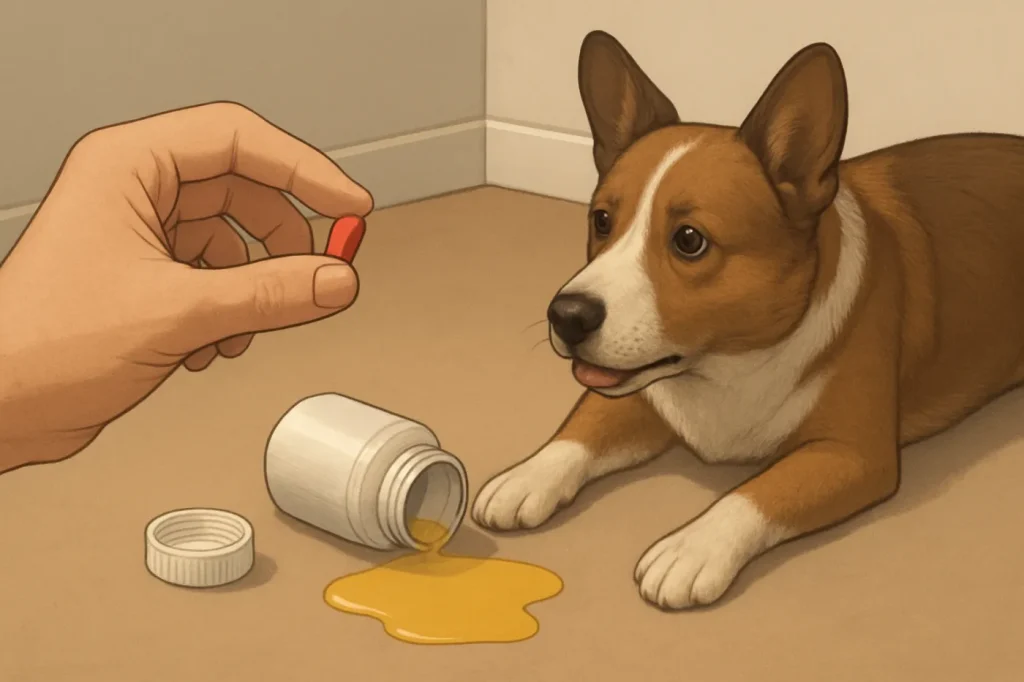
If you think your dog has eaten something toxic, treat it as an emergency and act within minutes, not hours.
Do this immediately:
- Stay calm but move fast so you can think clearly.
- Remove any remaining substance and keep your dog, other pets, and children away from it.
- Check your dog’s breathing, responsiveness, and ability to stand or walk.
- Call your regular vet or the nearest emergency vet right away.
- If you cannot reach a vet quickly, call a pet poison control hotline for specific instructions.
Do not try home remedies or force vomiting unless a veterinarian or poison expert tells you to.
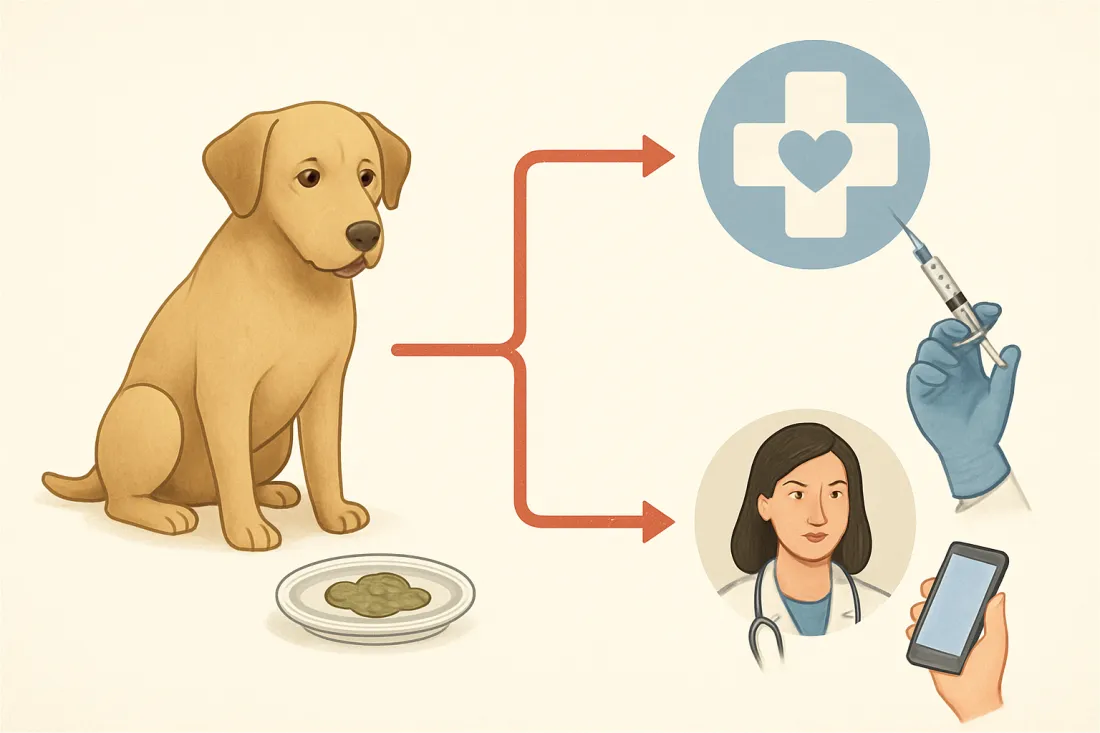
Immediate emergency care vs guided home monitoring
When your dog may have eaten something toxic, you are choosing between two main paths:
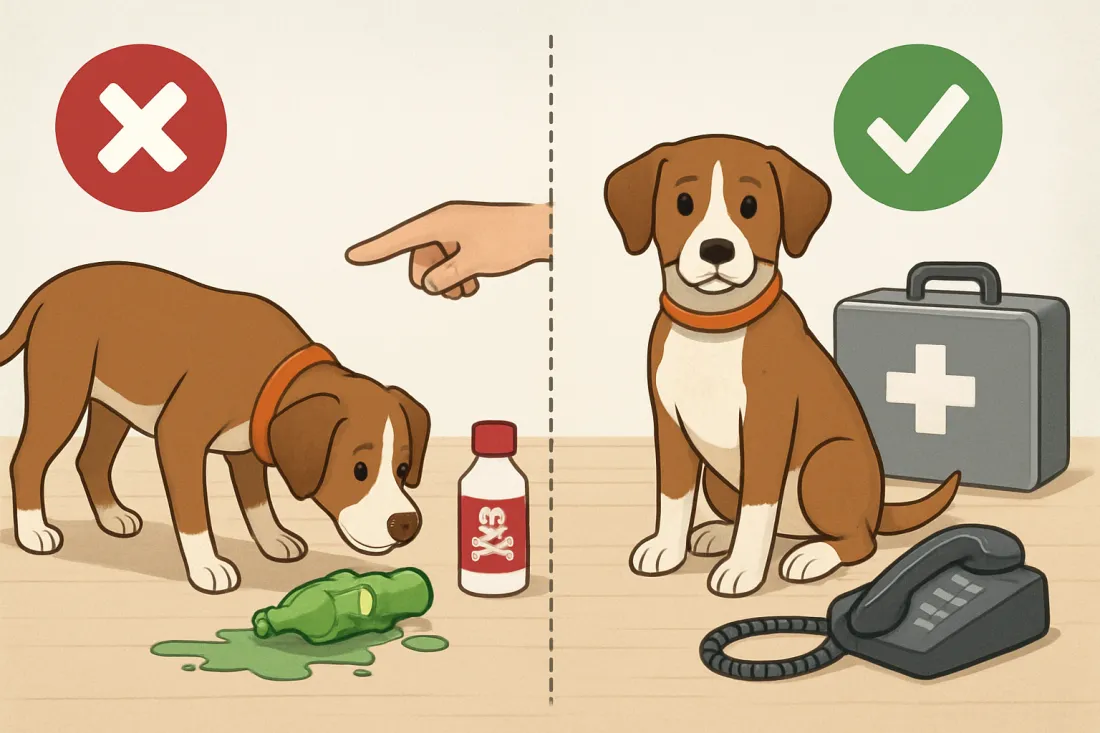
- Immediate emergency care – you leave for a vet or emergency clinic right away.
- Guided monitoring at home – you stay home but only under clear instructions from a vet or poison hotline.
Use these decision points while you are on the phone with a professional:
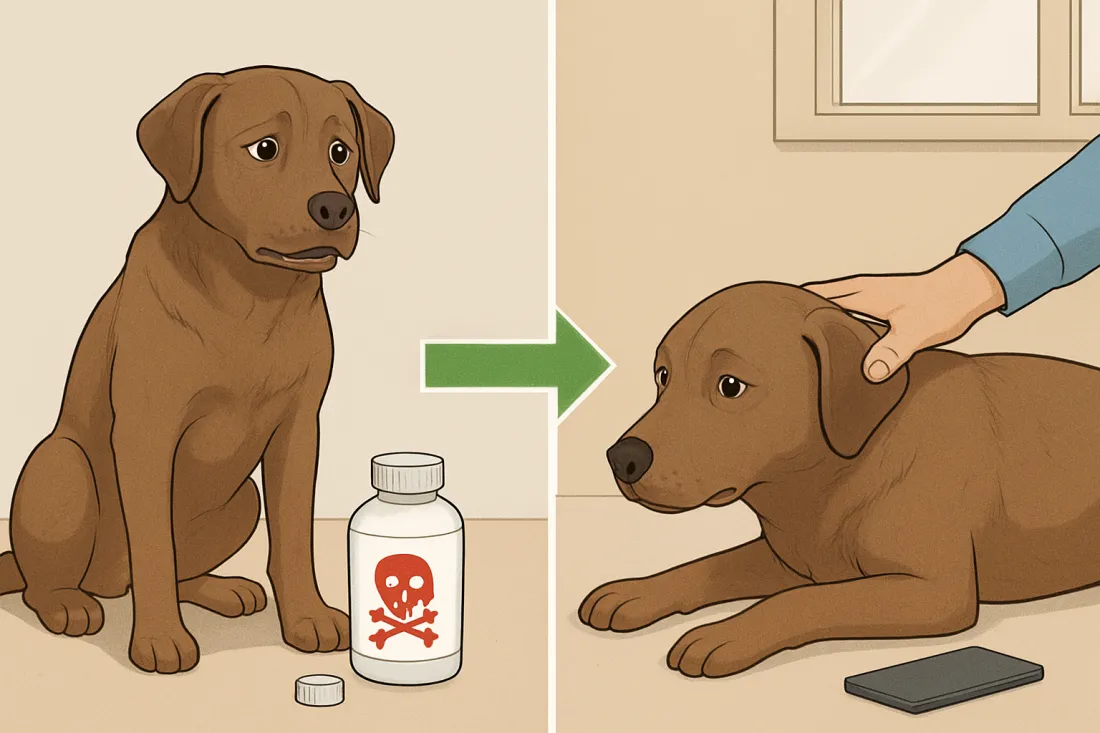
- Head straight to an emergency vet (no delay) if any of these are true:
- Your dog is having trouble breathing, collapsing, or having seizures.
- Your dog is very weak, cannot stand, or is unresponsive.
- You know they ate a highly dangerous substance (for example, a large amount of human medication, rat poison, antifreeze, or concentrated cleaning chemicals).
- You see blood in vomit or stool or severe, repeated vomiting or diarrhea.
- Call poison control or your vet for guidance first if:
- You are not sure whether the substance is toxic.
- You know what they ate and roughly how much, but your dog still seems normal or only slightly off.
- You cannot reach a vet immediately and need instructions for the next 30–60 minutes.
Do not wait to “see what happens” before you call. Early advice can mean simpler treatment and a better outcome.
Common household toxins for dogs in the United States
Many poisoning emergencies start with everyday items in a typical U.S. home or yard. This is not a complete list, but it covers common categories veterinarians frequently see.
Human foods that can poison dogs
- Chocolate – darker and baking chocolates are more dangerous than milk chocolate.
- Grapes and raisins – even small amounts can cause serious kidney problems in some dogs.
- Xylitol (in sugar-free gum, candy, some peanut butters, and baked goods) – can cause a rapid drop in blood sugar and liver damage.
- Onions, garlic, chives, leeks – raw, cooked, or powdered forms can damage red blood cells.
- Alcohol – drinks, raw bread dough, or foods cooked with a lot of alcohol.
- Caffeine – coffee grounds, tea bags, energy drinks, caffeine pills.
- Macadamia nuts – can cause weakness, tremors, and other neurologic signs.
Medications and supplements
- Human pain relievers – common over-the-counter pain pills can be dangerous even at low doses for some dogs.
- Antidepressants, ADHD medications, sleep aids – can affect the heart, nervous system, and blood pressure.
- Diabetes medications – can cause dangerously low blood sugar.
- Veterinary medications – flavored chewables (such as some joint supplements or parasite preventives) can be toxic if a dog eats a whole month’s supply at once.
Chemicals and household products
- Antifreeze – even small amounts of certain types can cause severe kidney damage.
- Rodent poisons (rat or mouse bait) – can cause internal bleeding, brain swelling, or other severe problems depending on the type.
- Insecticides and slug baits – sprays, powders, and pellets used indoors or in yards.
- Household cleaners – concentrated bleach, drain cleaners, oven cleaners, toilet bowl tablets.
- Batteries – can leak corrosive material or cause blockages if swallowed.
Plants and outdoor hazards
- Certain ornamental plants – some lilies, sago palm, and other decorative plants can be dangerous if chewed or swallowed.
- Fertilizers and lawn products – especially if recently applied and still wet or in granule form.
- Wild mushrooms – some species can cause liver failure or neurologic signs.
If you are not sure whether something is toxic, treat it as suspicious and call a professional for guidance.
Structured checklist: exact steps right after ingestion
Use this step-by-step checklist as soon as you suspect your dog ate something toxic. You can mentally walk through it while you are on the phone with a vet or poison hotline.
- Secure the area
- Move your dog away from the substance.
- Pick up any remaining pills, food, or material so your dog cannot eat more.
- Keep other pets and children out of the area.
- Check your dog’s condition
- Is your dog breathing normally?
- Are they standing, walking, and responding to you?
- Look for obvious signs: drooling, vomiting, shaking, collapse, pale gums, or trouble breathing.
- Collect evidence
- Find the package, bottle, or plant label.
- Estimate how much is missing (number of pills, pieces, ounces, or bites).
- Note when your dog may have eaten it (exact time or best guess).
- Take clear photos of the product and any vomit or chewed material if safe to do so.
- Call for professional help
- Contact your regular vet if they are open.
- If closed, call the nearest emergency vet clinic.
- If you cannot reach a vet quickly, call a pet poison control hotline for step-by-step advice.
- Follow instructions exactly
- Only give home treatments (such as inducing vomiting or giving any liquid) if a vet or poison expert tells you to.
- Write down or repeat back the instructions to be sure you understand.
- Prepare for transport if advised
- Bring the product container or label with you.
- Note your dog’s weight, age, and any medical conditions.
- Secure your dog safely in the car (crate or harness) and keep them warm and quiet.
- Monitor closely
- Watch for new or worsening signs: repeated vomiting, diarrhea, tremors, collapse, or behavior changes.
- Update the vet or hotline if anything changes on the way or while you are waiting.
Poison control hotline vs emergency vet: which to call first
Both an emergency vet and a pet poison control hotline can help, but they serve slightly different roles. The best choice depends on your dog’s current condition and how quickly you can reach in-person care.
| Situation | Call an emergency vet first | Call a pet poison control hotline first |
|---|---|---|
| Your dog’s current condition | Dog is showing serious signs: trouble breathing, seizures, collapse, very pale gums, repeated vomiting, or extreme weakness. | Dog is acting normal or only mildly off (slightly drooly, a bit quiet) and you are unsure how dangerous the substance is. |
| Access to in-person care | You have an open clinic within driving distance and can leave immediately. | You are far from a clinic, it is a long drive, or you are unsure whether the trip is necessary. |
| Type of substance | You know your dog ate something clearly high-risk (large amounts of human medication, antifreeze, or strong chemicals). | You are not sure whether the plant, food, or product is toxic, or the label is confusing. |
| What they can do for you | Provide physical examination, tests, and treatment (IV fluids, medications, monitoring). | Give fast, substance-specific guidance, including whether vomiting is safe and whether you need to go to a clinic. |
| Next steps after the call | Usually: bring your dog in immediately for hands-on care. | Either: go to a vet with a treatment plan or monitor at home with clear instructions and warning signs to watch for. |
If you are ever unsure which to call, start with the nearest emergency vet. If they are overwhelmed or you cannot reach them, a poison hotline can guide your next move.
Information to gather before you call for help
Having the right details ready can save precious minutes and help the vet or poison expert give accurate advice.
Details about your dog
- Weight (even a rough estimate helps).
- Age and breed.
- Existing medical conditions (for example, kidney disease, heart disease, diabetes).
- Current medications or supplements your dog takes regularly.
Details about the suspected toxin
- Exact product name and brand, if available.
- Active ingredients and strength from the label, if you can read them safely.
- Form – pill, liquid, powder, plant, food, bait, etc.
- How much is missing – number of tablets, ounces, bites, or pieces.
- Where it came from – kitchen counter, garage, yard, purse, trash, etc.
Timing and symptoms
- When you think your dog ate it – exact time or best guess (for example, “about 30 minutes ago”).
- Whether your dog has vomited, had diarrhea, or acted strangely since then.
- Any changes in breathing, walking, or behavior you have noticed.
Keep the package, bottle, or plant sample with you when you call and when you go to the clinic. The more specific the information, the more precise the advice.
What not to do after your dog eats something toxic
Some common “fixes” can make poisoning worse. Avoid these unless a vet or poison expert specifically instructs you otherwise.
- Do not induce vomiting on your own.
- Pouring salt, mustard, or other substances down your dog’s throat can cause additional harm.
- Even using products sometimes recommended in the past can be risky if your dog has already started to show signs like weakness or trouble swallowing.
- Do not give random food, milk, or oil as an antidote.
- These can change how the toxin is absorbed or cause vomiting and aspiration.
- Some toxins are actually absorbed more quickly with fatty foods.
- Do not give human medications to “counteract” the poison.
- Many human drugs that seem harmless to people can be dangerous for dogs.
- Mixing medications without guidance can complicate treatment.
- Do not wait hours to see if your dog gets worse.
- Many toxins are easier to treat in the first 1–2 hours after ingestion.
- Waiting can mean more severe illness and more intensive treatment later.
- Do not rely only on internet searches or social media advice.
- Different toxins require very different treatments.
- Only a vet or poison expert with full details about your dog and the substance can give safe, specific instructions.
Transport tips if your dog is vomiting or lethargic
If you are told to bring your dog to a clinic, how you transport them matters, especially if they are already sick.
When your dog is vomiting
- Use towels or blankets in the car to keep them comfortable and to catch vomit.
- Position your dog’s head slightly lower than their chest if they are lying down, to reduce the risk of inhaling vomit.
- Do not offer food or large amounts of water on the way unless a vet specifically tells you to.
When your dog is weak, wobbly, or very sleepy
- Carry them carefully to the car if they cannot walk safely.
- Use a crate or a secure harness so they do not fall or slide around.
- Keep them warm with a light blanket, but do not overheat them.
- Have one person sit next to the dog if possible to watch breathing and responsiveness.
When your dog has seizures or severe neurologic signs
- Protect them from injury by padding the area around them with towels or blankets.
- Do not put your hands near their mouth during a seizure; they may bite unintentionally.
- Drive directly to the clinic and call ahead so the staff is ready to help as soon as you arrive.
Always bring the suspected toxin or its packaging with you. If it is unsafe to handle (for example, a strong chemical), take clear photos instead and follow any safety instructions on the label.
Home monitoring vs clinic treatment: how they compare
After you speak with a professional, you will usually be guided toward either monitoring at home or going to a clinic. The table below compares the two options so you know what to expect.
| Option | When it usually fits | What it involves | Main trade-offs and risks |
|---|---|---|---|
| Guided home monitoring |
|
|
|
| Immediate clinic visit |
|
|
|
Always base the decision on professional advice, not just how your dog looks in the moment. Some toxins cause delayed damage even when the dog initially seems fine.
Decision checklist: what to do next, step by step
Use this brief decision checklist whenever you suspect your dog has eaten something toxic:
- Is your dog in immediate distress?
- If yes (trouble breathing, seizures, collapse, repeated vomiting, very weak): go to the nearest emergency vet now. Call on the way if possible.
- If no: go to step 2.
- Do you know what they ate?
- If yes: grab the package, label, or plant sample.
- If no: collect any clues (chewed packaging, vomit, items on the floor) and take photos.
- How long ago did it happen?
- If within the last 1–2 hours: early treatment may be especially helpful, so call a vet or poison hotline right away.
- If more than a few hours: still call; some toxins act slowly and still need treatment.
- Who can you reach fastest?
- If your regular vet or an emergency clinic is open: call them first.
- If you cannot reach a vet quickly: call a pet poison control hotline for instructions.
- Follow the plan you are given.
- If told to go to a clinic: transport your dog safely and bring the suspected toxin.
- If told to monitor at home: write down warning signs and check your dog frequently.
- Review prevention steps after the crisis.
- Secure medications, foods, and chemicals.
- Adjust your home setup and training to reduce future risk. A detailed guide on how to pet proof your home and yard can help you do a full safety sweep.
Prevention tips to avoid repeat incidents
Once your dog has had a poisoning scare, it is worth taking time to reduce the chance of it happening again. Many incidents are preventable with simple changes at home.
Secure storage and home setup
- Store medications up high in closed cabinets, not on nightstands, counters, or in purses on the floor.
- Use childproof latches on cabinets that hold cleaning products or chemicals.
- Keep trash cans covered or behind closed doors so dogs cannot reach food scraps, wrappers, or used medications.
- Lock up garage and yard products like antifreeze, fertilizers, and pesticides.
Food, visitors, and holidays
- Teach family and visitors not to feed your dog table scraps without checking first.
- Keep party foods like chocolate desserts, alcohol, and snack bowls out of reach.
- Watch children who may drop or share food and candy without realizing the risk.
- During holidays, clear plates and trash quickly so your dog cannot raid leftovers or skewers.
Outdoor and walk-time safety
- Use a leash in areas where your dog might find trash, bait, or wild mushrooms.
- Check your yard regularly for toxic plants, mushrooms, or spilled chemicals.
- Read labels on lawn and garden products to see if pets should be kept off treated areas for a certain time.
Behavior and training
- Teach a strong “leave it” and “drop it” cue so you can interrupt your dog before they swallow something.
- Provide safe chew toys and enrichment so your dog is less likely to go looking for trouble.
- If your dog is a known counter-surfer or trash-raider, consider baby gates or closed doors to limit access when you are not watching.
Frequently asked questions about dogs eating toxic substances
How do you flush poison out of a dog’s system?
There is no single safe way to flush poison out of a dog’s body at home. Giving large amounts of water, milk, or food can sometimes make things worse by speeding up absorption or causing vomiting and aspiration. In a clinic, vets may use treatments such as controlled vomiting (when safe), substances that bind toxins in the gut, IV fluids, or specific antidotes. At home, the most effective “flushing” step is to act quickly so a professional can choose the right treatment before the toxin has done serious damage.
What happens if my dog eats something toxic?
What happens next depends on what your dog ate, how much, and how long ago. Some dogs develop signs within minutes, such as vomiting, drooling, shaking, or collapse. Others may look normal for hours while internal damage is developing in organs like the liver, kidneys, or brain. Because you cannot predict which way it will go, treat any suspected poisoning as urgent: call a vet or poison hotline, share details about the substance and timing, and follow their plan for monitoring or treatment.
How do you treat toxicity in dogs at home?
Safe home care for a dog that has eaten something toxic is always guided by a professional. After you call a vet or poison hotline, they may advise you to monitor your dog at home if the risk is low, or they may recommend a specific step such as temporarily withholding food or watching for certain signs. You should never start treatments like inducing vomiting, giving human medications, or using household products as antidotes without clear instructions. When in doubt, it is safer to go to a clinic where your dog can be examined and treated directly.
Can a dog recover from poisoning on its own?
Some dogs do recover after eating small amounts of mildly toxic substances, but there is no reliable way to know in advance which cases will stay mild and which will become serious. Many dangerous toxins do not cause obvious signs right away. Waiting to see if your dog improves on their own can allow more damage to occur. Because early treatment often leads to better outcomes, assume your dog needs professional guidance whenever poisoning is possible, even if they currently seem fine.
How long after eating something toxic will a dog show symptoms?
The timing of symptoms varies widely. Some substances cause signs within minutes to an hour, while others may not cause noticeable problems for several hours or longer. Factors such as your dog’s size, age, and health also play a role. Since you cannot safely guess the timeline, call for help as soon as you discover the exposure. A vet or poison expert can explain what signs to watch for and how long your dog should be monitored based on the specific substance.