Practical pet emergency plan by disaster scenario
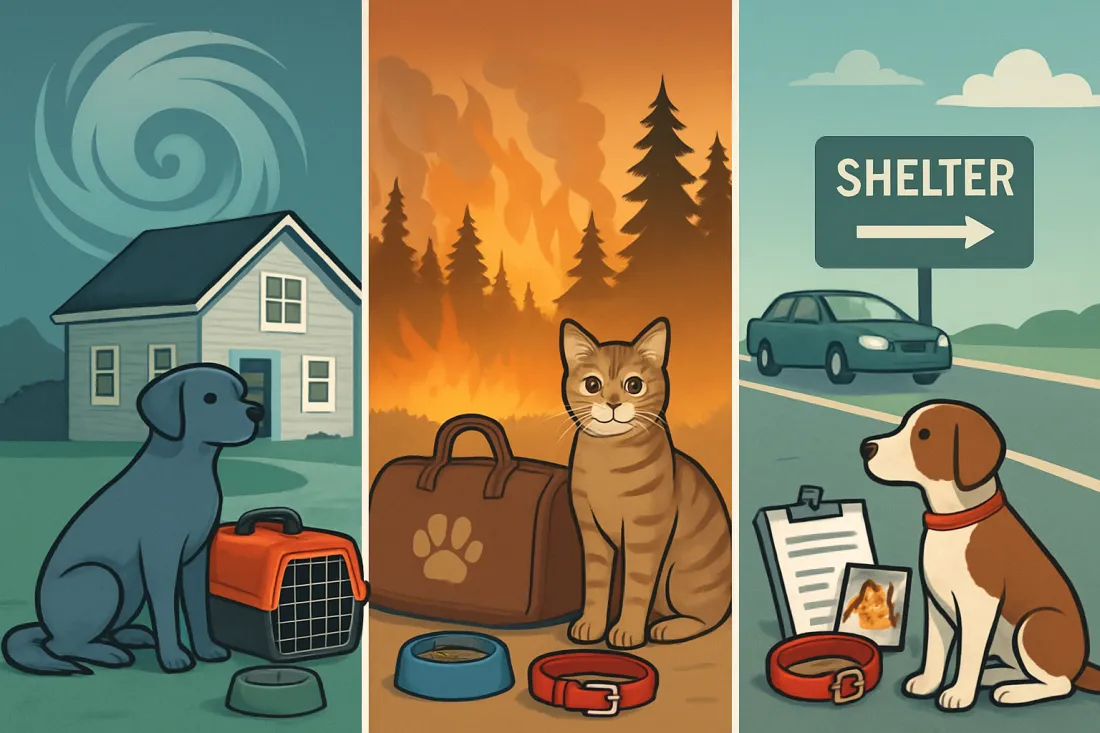
If you live in a U.S. area with hurricanes, wildfires, floods, or severe storms, your pet emergency plan should cover three specific situations:
- Shelter-in-place at home – a few days stuck inside without power or safe roads.
- Planned evacuation – hurricane or wildfire warnings, voluntary or mandatory orders with some lead time.
- Sudden evacuation – fast-moving wildfire, flash flood, chemical spill, or tornado damage where you must leave now.
For each situation, you need four things ready before disaster season:
- Supplies – a packed pet go-bag plus extra at home.
- Paperwork and ID – microchip, tags, photos, and medical records.
- Places to go – pet-friendly shelters, hotels, friends or family, and backup options.
- People and backup – who helps if you are at work, injured, or stuck without a car.
Once those are set, you can adjust details for hurricanes vs. wildfires vs. floods instead of starting from scratch every time.
Key U.S. disaster risks and how they affect pets
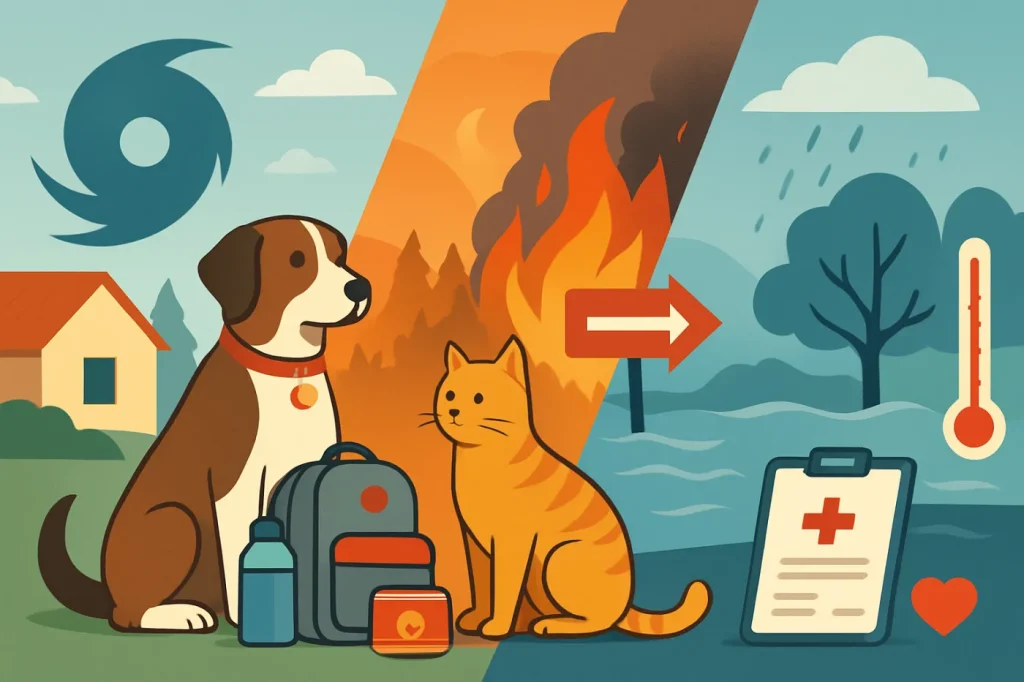
Different U.S. disasters affect pets in different ways. Your plan should match the main risks where you live and how much warning you usually get.
- Hurricanes and tropical storms (Gulf Coast, Southeast, East Coast)
- Often days of warning, but evacuations can be slow and crowded.
- Power and water outages can last for days or longer.
- Flooding and storm surge can trap people and animals on upper floors.
- Some areas become inaccessible to emergency services during and after the storm.
- Wildfires (West, Southwest, some Southern and Plains states)
- Smoke and poor air quality can harm pets long before flames reach you.
- Evacuation orders can change from “be ready” to “go now” within hours or less.
- Roads may close quickly; you may have only one safe exit route.
- Floods and flash floods (rivers, low-lying areas, urban zones)
- Water can rise faster than you can carry multiple pets without a plan.
- Contaminated water increases infection risk if pets drink or walk through it.
- Bridges and low crossings may be washed out, changing your evacuation route.
- Severe thunderstorms, tornadoes, and winter storms
- Often require sheltering in a safe room, basement, or interior hallway.
- Debris and broken glass can injure pets that are loose in the home.
- Extended power outages can make it hard to keep pets warm or cool.
Action step: Look up your ZIP code on your local emergency management or weather service site and list the top two or three hazards. Build your pet plan around those, focusing on how much warning you get and whether you are more likely to shelter at home or evacuate.
Shelter-in-place vs. evacuation planning for pets
You need two versions of your plan: one for staying home, one for leaving. The supplies overlap, but how you use them is different.
When sheltering in place with pets makes sense
Sheltering in place is common for:
- Short-term severe storms or tornado warnings.
- Winter storms where roads are unsafe.
- Situations where authorities advise staying off roads but do not order evacuation.
Key points for sheltering in place:
- Safe room for everyone – choose an interior room, basement, or bathroom away from windows where carriers, leashes, beds, and litter trays fit.
- Several days of supplies – food, water, medications, and cleaning supplies stored where you can reach them fast.
- Containment – crates or carriers ready so pets cannot bolt if windows break or doors open suddenly.
- Sanitation – puppy pads, extra litter, trash bags, and gloves if you lose water or cannot go outside.
- Temperature control – blankets, cooling mats, or battery-powered fans if your area is prone to long outages.
When to plan for evacuation with pets
Evacuation is more likely for:
- Hurricanes with evacuation zones or storm surge risk.
- Wildfires approaching your neighborhood.
- Rising rivers or flash flood warnings in low-lying areas.
- Chemical spills, gas leaks, or train derailments with hazardous materials.
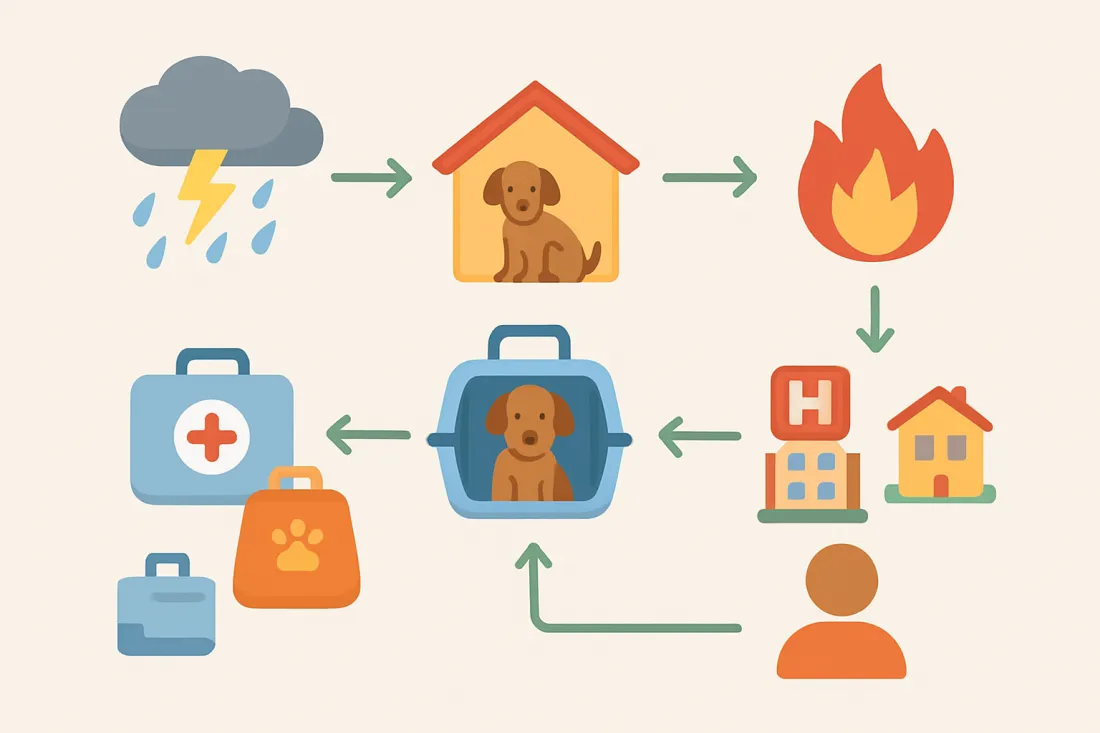
For evacuation, your plan must answer four questions in advance:
- Where are we going first? A friend or family home, hotel, or public shelter that accepts pets.
- How are we getting there? Your car, a neighbor’s car, public transport, or community assistance.
- What is Plan B? A backup destination and route if the first option is full or blocked.
- Who helps if I am not home when orders come? A local backup caregiver with a key and written permission to take your pets.
Rule of thumb: If you would not stay there without your pet, do not plan to stay there during a disaster. Assume you must evacuate with your animals, not leave them behind.
Comparison table: shelter-in-place vs. evacuation for pets
| Planning area | Shelter-in-place with pets | Evacuation with pets |
|---|---|---|
| Typical use | Short storms, tornado warnings, brief power outages, winter storms | Hurricanes, wildfires, major floods, chemical spills, long outages |
| Main goal | Keep pets safe and calm inside the home | Move pets quickly to a safer location and keep them contained |
| Key supplies | Extra water, food, litter, puppy pads, flashlights, safe-room setup | Go-bag, carriers, leashes, copies of records, cash, fuel, list of destinations |
| Biggest risk if unprepared | Pets loose in a damaged home, injuries from debris, running away during chaos | Leaving pets behind, being turned away from shelters or hotels, running out of meds on the road |
| Decision trigger | Local guidance to stay off roads, but no evacuation order | Evacuation order, fast-moving fire or water, or strong recommendation to leave |
| What to decide now | Which room is the safe room and where pet supplies are stored | Primary and backup destinations, routes, and who helps transport pets |
Assembling a go-bag for dogs and cats
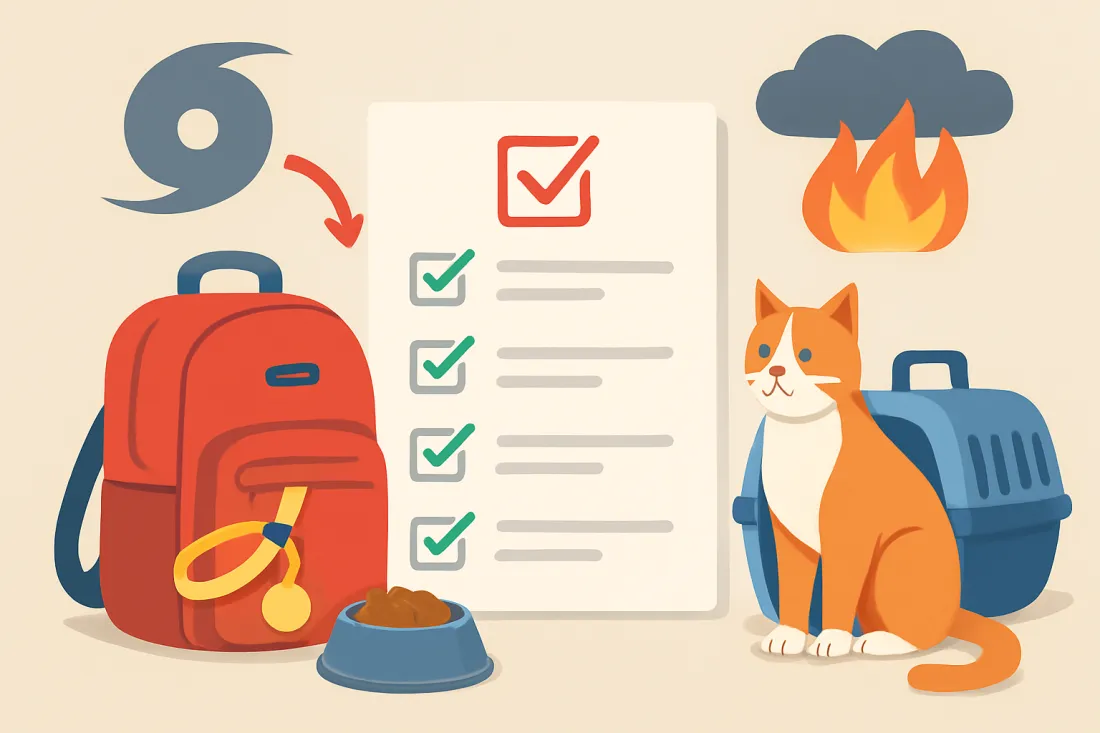
Your pet go-bag should be packed and stored near the door you would use to evacuate. Use a backpack or small bin you can grab with one hand while handling leashes or carriers.
Core items for both dogs and cats
- Food – a supply of your pet’s regular food in a waterproof container, plus a lightweight bowl.
- Water – separate from the family supply so you do not have to choose between you and your pet.
- Medications and supplements – in original containers, with a written list of names and dosing instructions.
- Copies of vet records – printed vaccination history, recent visit summary, and any chronic condition notes.
- Identification – recent printed photos of your pet (full body and face) and you with your pet.
- Leashes, harnesses, and collars – with up-to-date ID tags and a backup leash if possible.
- Carriers or crates – sized so pets can stand and turn around; label each with your name and phone number.
- Waste supplies – poop bags, small trash bags, paper towels, and disinfecting wipes.
- Comfort items – a familiar blanket, small toy, or worn T-shirt that smells like home.
- Basic first-aid items – bandage material, gauze, tape, saline for rinsing, and any pet-safe items your vet recommends.
If you want a deeper dive into supplies, you can also review a dedicated pet emergency kit checklist for US households and adapt it to your pets.
Dog-specific go-bag items
- Sturdy harness that they cannot slip out of when stressed.
- Extra leash (one standard, one long line if you expect limited off-leash space).
- Collapsible water and food bowls.
- Muzzle if your dog is anxious or may be required to wear one in crowded spaces.
- Booties if you live in areas with debris, hot pavement, or ash.
Cat-specific go-bag items
- Hard-sided or secure soft carrier with a towel over it to reduce stress.
- Small bag or container of litter and a lightweight tray or disposable baking pan.
- Pillowcase or spare towel that can act as an emergency carrier if needed.
- Extra clips or zip ties to secure carrier doors.
- Calming spray or wipes if recommended by your vet.
For more supply ideas, you can also look at guidance on how to make a pet emergency kit for dogs and cats and tailor it to your local risks.
Structured checklist: worked example of a pet emergency plan
Use this checklist as a model and fill in your own details. Keep one copy on your fridge and one in your go-bag.
1. Pet identification and medical basics
- Each pet has a collar with your current cell number.
- Each pet is microchipped and the registration shows your current phone and email.
- You have printed photos of each pet and you with each pet.
- You have a printed summary of vaccinations and chronic conditions.
2. Contacts and decision chain
- Primary emergency contact (out of area)
- Details to record: name, phone, email, and city.
- Role: knows your plan, can receive calls if local lines are down, and can coordinate updates.
- Local backup caregiver
- Details to record: neighbor or nearby friend with a key, phone, and address.
- Role: authorized in writing to enter your home and evacuate pets if you are at work or blocked.
- Primary vet
- Details to record: clinic name, phone, address, usual hours.
- Note: ask whether they post updates on voicemail or social media during disasters.
- 24/7 emergency vet
- Details to record: name, phone, address, and directions from your home.
- Note: ask how they operate during regional emergencies (triage, payment, capacity).
3. Routes and transportation
- Primary evacuation route
- Write down: main road or highway, likely traffic choke points, and any low-lying sections that may flood.
- Note nearby gas stations and typical travel time in normal conditions.
- Backup route
- Write down: different road in case the primary is blocked, plus key landmarks.
- Transportation plan if you have no car
- Neighbor or family with a car who agrees to help and knows your pets.
- Local emergency management or community transport options you have checked in advance.
- Plan for how you will carry carriers or walk dogs safely to a pickup point.
- Carrier and leash locations
- Write where each carrier, harness, and leash is stored so every household member can find them quickly.
4. Destinations and shelter options
- Friend or family home (primary)
- Details: name, city, phone, and any pet limits (size, number, species).
- Confirmed they can host you and your pets for several days if needed.
- Friend or family home (backup)
- In a different part of town or another city, in case the primary is also affected.
- Pet-friendly hotel list
- At least two or three hotels along your likely evacuation route that accept pets, with phone numbers.
- Notes on size limits, number of pets per room, and any extra pet fees.
- Public shelter options
- Local county or city emergency management website bookmarked on your phone.
- Notes on whether they run pet-friendly shelters or partner with animal services.
- Any requirements such as crates, proof of vaccines, or leashes.
5. Go-bag and home supplies
- Pet go-bag packed and stored near the exit.
- Carriers labeled and easy to reach, not buried in a closet or attic.
- Extra food and water stored for sheltering in place.
- List of last-minute items to grab (meds from fridge, current phone charger, favorite toy) taped to the door.
- Calendar reminder to check and refresh supplies at least once a year.
Finding pet-friendly shelters and hotels in the United States
You cannot assume every shelter or hotel will take animals, especially larger dogs or multiple pets. Build your list now, before a storm or fire is on the way.
How to research pet-friendly public shelters
- Check your county or city emergency management website for hurricane, wildfire, or flood plans.
- Look for sections on pets, animal services, or companion animals.
- Call your local animal control or humane society during non-emergency times and ask:
- Do you operate or support pet-friendly shelters during evacuations?
- Are pets housed with owners or in a separate area?
- What do owners need to bring (crates, proof of vaccines, food, leashes)?
- Note any limits such as species, size, or number of animals per household.
- Ask how they handle exotic pets (birds, reptiles, small mammals) so you can plan boarding or foster options if needed.
How to build a pet-friendly hotel list
- Search for hotels along your likely evacuation route and in your target city that allow pets.
- Call a few directly and ask:
- Do you accept pets during evacuations or only under normal conditions?
- Are there size or breed limits?
- Is there a limit on the number of pets per room?
- Do you require proof of vaccinations?
- Write down at least three options with phone numbers and exit numbers or directions.
- Keep that list in your go-bag and saved on your phone so you can call ahead as you drive.
Other temporary options
- Friends or family outside your immediate risk zone who are comfortable with animals.
- Boarding facilities that may accept evacuated pets if they are not in the danger area.
- Local rescue groups that sometimes coordinate foster homes during large disasters.
Medical records, medications, and microchip registration
Medical and ID preparation helps you reunite with a lost pet and get them treated quickly if they are injured.
Microchips and tags
- Make sure each pet is microchipped and that the registration shows your current cell number and email.
- Add a secondary contact who lives outside your immediate area in case local cell service is disrupted.
- Check that your pet’s collar tags are readable and include at least one phone number you actually answer.
- Consider a temporary tag or tape-on label with the phone number you will use during evacuation if it differs from your usual contact.
Medical records to keep handy
Prepare a simple packet for each pet:
- Vaccination history, especially rabies.
- List of chronic conditions (for example, diabetes, heart disease, allergies).
- Current medications with doses and schedules.
- Contact details for your regular vet and preferred emergency vet.
Store one copy in your go-bag and one digitally on your phone or cloud storage.
Medication planning
- Ask your vet how much extra medication they recommend keeping on hand for emergencies.
- Use a reminder to rotate meds before they expire so your go-bag supply stays current.
- If your pet needs refrigerated medication, ask your vet how to handle short-term storage during outages or travel (for example, using a small cooler with ice packs).
- Include a written dosing schedule in your go-bag in case someone else has to care for your pet.
- Note any drug allergies clearly on the packet.
How emergency vets tend to function during regional disasters
Emergency veterinary clinics often stay open or reopen as soon as they safely can, but they may operate differently during large disasters. Typical changes you may see:
- Triage at the door – pets with life-threatening injuries or conditions are seen first; less urgent cases may wait longer or be referred elsewhere.
- Limited staff and space – some team members may be evacuated or unable to travel, and the clinic may be running on backup power.
- Communication changes – phone lines may be busy or down; some clinics post updates on voicemail or social media instead.
- Payment flexibility or constraints – policies can vary; some clinics may require deposits or specific payment methods when systems are disrupted.
How to prepare:
- Ask your regular vet which 24/7 emergency clinic they recommend and how that clinic handles regional emergencies.
- Write down the emergency clinic’s address, phone, and directions from your home and likely evacuation routes.
- Keep a basic emergency vet fund or credit option set aside so you are not scrambling to pay during a crisis; a guide on emergency vet fund how much per year can help you think this through.
- Bring your pet’s medical records and medication list with you to speed up treatment.
Common mistakes in pet emergency planning
Avoid these frequent problems that cause the most stress and harm during real disasters:
- Waiting for mandatory orders – leaving late with pets means heavier traffic, fewer hotel options, and more time in the car for anxious animals.
- Not practicing with carriers and leashes – pets that only see a carrier at the vet may hide or fight you when you need to leave quickly.
- Assuming shelters will take pets – some do, some do not, and rules can change; always confirm in advance.
- Letting microchip info go out of date – a chip without current contact details is much less useful if your pet is found.
- Storing all pet supplies in hard-to-reach spots – if you cannot grab carriers, leashes, and food in minutes, you may have to leave without them.
- Ignoring behavior and stress – anxious pets may bite, scratch, or bolt; planning for muzzles, secure harnesses, and quiet spaces helps keep everyone safe.
- Forgetting your own limits – if you cannot safely carry multiple crates down stairs alone, you need a buddy plan or different equipment.
- Relying only on digital records – phones can die or lose signal; always have printed copies of key documents.
Decision criteria: when to stay, when to go, and how fast
Use these criteria to decide your timing and actions when a hurricane, wildfire, or flood threat appears.
When to lean toward early evacuation with pets
You may want to leave earlier if:
- You have multiple pets, large dogs, or animals that are hard to move quickly.
- You live in an area with limited roads that can flood or close easily.
- Your pet has serious medical needs that would be hard to manage without power or refrigeration.
- You rely on public transportation or others for rides and need time to coordinate.
- Local officials strongly recommend evacuation even before it is mandatory.
- Wildfire smoke or rising water is already affecting your neighborhood.
When sheltering in place may be reasonable
Staying home may be appropriate when:
- There is no evacuation order and your home is outside the highest-risk zones (for example, not in a storm surge or immediate fire path).
- You can safely shelter in a sturdy interior room away from windows.
- You have several days of supplies for people and pets.
- You have a backup heat or cooling plan for pets sensitive to temperature changes.
- You can block off unsafe areas (damaged rooms, broken glass, flooded sections) so pets stay contained.
When in doubt, especially with pets that are hard to move, leaving earlier is often safer than waiting.
Step-by-step process when a disaster threat appears
Use this simple algorithm when you hear about a hurricane, wildfire, or other threat.
Step 1 – Check official updates
- Look at your local emergency management or weather alerts for your county.
- Note whether they are advising to prepare, consider evacuation, or leave now.
Step 2 – Secure your pets immediately
- Bring outdoor pets inside.
- Put collars with ID on all pets.
- Place carriers and leashes in one spot near the exit.
- Move cats and small dogs into a smaller room so you can crate them quickly if conditions change.
Step 3 – Decide: stay or go
- If there is an evacuation order or strong recommendation, start your evacuation plan.
- If guidance is to shelter in place, move supplies toward your safe room and prepare for possible power loss.
- Re-check your decision every time new official updates come out.
Step 4 – If evacuating with a car
- Load pets into carriers or harnesses before you start loading other items.
- Grab your go-bag, medical records, and any refrigerated meds.
- Leave early enough to avoid the worst traffic if possible.
- Head to your primary destination; if it is full or unsafe, switch to Plan B.
Step 5 – If you must evacuate without a car
- Call your pre-arranged ride (neighbor, friend, or family) right away.
- If that fails, check local emergency management guidance for transportation assistance.
- Keep pets in carriers or on secure leashes while you wait.
- Bring only what you can carry while still safely handling your animals.
Step 6 – After you reach safety
- Set up a quiet corner for your pets with familiar bedding and water.
- Keep them on leash or in carriers until they are calm and the area is secure.
- Monitor for signs of stress or illness and contact a vet if you are concerned.
- Update your out-of-area contact on your location and status.
FAQ about pet emergency plans for hurricanes, wildfires, and evacuations
What is the most important part of a pet emergency plan for hurricanes and wildfires?
The most important piece is knowing exactly where you will go with your pets and how you will get there before a storm or fire is close. Supplies matter, but in real disasters people lose time debating whether to leave and where to go. If you already have:
- Named destinations (friends, family, hotels, or shelters that accept pets), and
- Primary and backup routes written down, and
- Carriers, leashes, and a go-bag in one place,
then you can act quickly when officials say to evacuate or when conditions feel unsafe, instead of scrambling to make decisions under pressure.
What common mistakes should I avoid when planning for pet evacuations?
Some of the most damaging mistakes are:
- Leaving pets loose until the last minute – always secure them early in carriers or on leashes so they cannot hide or bolt.
- Assuming you will be able to come back soon – fires, floods, and hurricanes can block access for days; plan as if you might not return quickly.
- Skipping practice – do a dry run where you load pets into carriers, grab the go-bag, and get into the car so you know how long it really takes.
- Not planning for your own absence – have a trusted neighbor or friend with a key and written permission to take your pets if you are at work or stuck.
What should I do right after finishing my pet emergency plan?
Once your plan is written, take three follow-up steps:
- Walk through it once – physically gather carriers, leashes, and the go-bag, and time how long it takes to be ready to walk out the door with your pets.
- Share it – give a copy to your out-of-area contact and local backup caregiver, and explain where keys and carriers are kept.
- Set reminders – at least once a year, update microchip info, vet records, and your list of pet-friendly hotels and shelters.
These small actions turn a written plan into something you and your pets can actually rely on when a hurricane, wildfire, or flood threat appears.
What if I have to evacuate without a car and I have multiple pets?
If you have no car and more than one pet, planning ahead is critical:
- Choose carriers that you can realistically carry or roll, and practice walking with them.
- Arrange in advance with neighbors, friends, or family who have vehicles to help transport you and your animals.
- Ask your local emergency management office how they handle people with pets who need transportation assistance during evacuations.
- Keep your pet go-bag light and focused on essentials so you can manage both your animals and your belongings safely.
If an evacuation is likely, contact your planned helpers early rather than waiting until roads are crowded or conditions worsen.
Next steps to put your pet emergency plan into action
To move from ideas to a working plan, do these today:
- List your top two local hazards (for example, hurricanes and flooding, or wildfires and smoke).
- Choose your primary and backup evacuation destinations and write them down.
- Pack a basic pet go-bag and store it near your exit.
- Confirm your pets’ microchip registrations and update any old phone numbers.
- Talk with your vet about emergency meds and which emergency clinic they recommend.
- Schedule a short practice drill so everyone in the household knows their role.
Once these steps are done, you will have a practical, U.S.-specific pet emergency plan that you can update as your household, pets, or local risks change.