
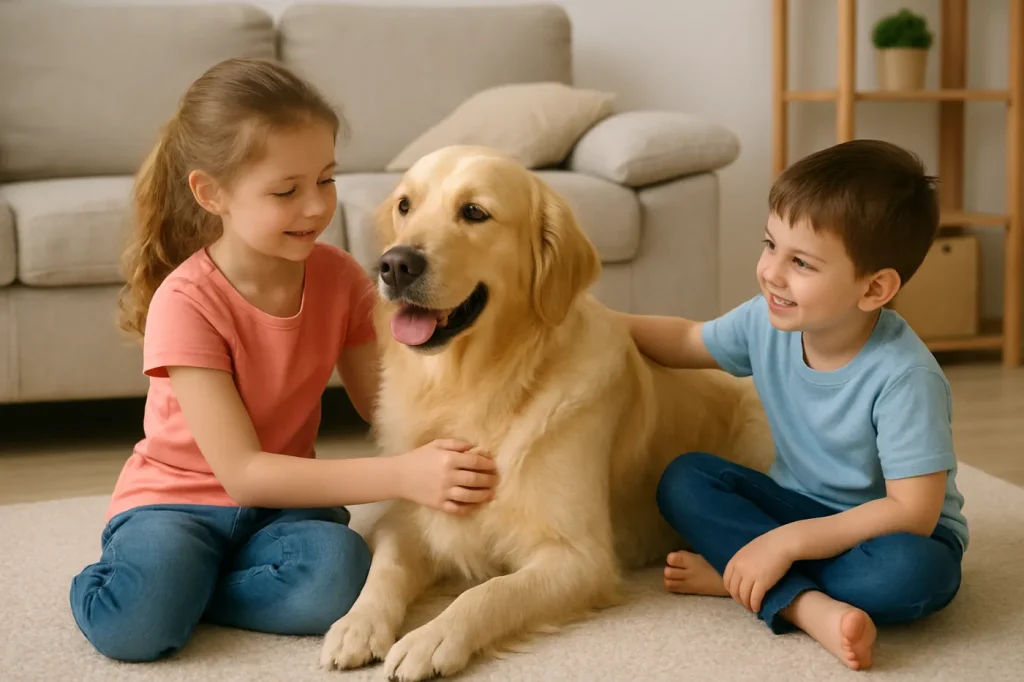
Best family dogs in the US: start with temperament, not a single “magic” breed
For a typical US household with children, the safest and happiest family dogs tend to share the same core traits rather than a specific breed label. You are usually looking for a dog that is:
- Gentle and tolerant around noise, sudden movement, and kid mistakes
- Friendly and social with people, including visitors
- Trainable and eager to cooperate with adults
- Matched to your family’s real energy level and schedule
- Comfortable being handled under close adult supervision
- Not strongly driven to guard, herd, or chase
Many breeds and mixes can have these traits. Common examples US families often choose include Labrador Retrievers, Golden Retrievers, Cavalier King Charles Spaniels, Poodles and poodle mixes, Beagles, Basset Hounds, Boxers, and many mixed-breed shelter dogs with calm, social personalities. The key decision is not “Which breed is best?” but “Which individual dog with the right temperament fits our kids’ ages, our schedule, and our home?”
Breed tendencies vs individual temperament in homes with children
Breed gives you a rough prediction of size, coat type, and typical instincts. Individual temperament tells you how that specific dog will actually cope with your kids and your lifestyle.
- Breed helps you predict: adult size, grooming needs, likely energy level, and some instincts (herding, guarding, retrieving, scenting).
- Individual temperament decides: patience with children, reaction to stress, ease of training, and how safe handling will be under supervision.
For families with kids, that means:
- Do not assume a dog is safe with children just because the breed appears on a “good with kids” list.
- Do not ignore a mixed-breed or shelter dog that shows calm, social behavior simply because it is not a classic family breed.
- Plan to meet the dog more than once, in different situations, and ask detailed questions about their history with children.
If you are considering a shelter or rescue, a resource such as how to safely adopt a shelter dog with young children can help you evaluate individual temperament step by step.
Family-friendly temperament traits explained
When you have children, especially under 10, some traits matter far more than others. Use these traits as your main decision criteria.
1. Patience and tolerance for kid-style chaos
Kids move fast, squeal, drop toys, and forget to be gentle. A good family dog usually:
- Recovers quickly from sudden noises or bumps
- Chooses to walk away from annoying behavior instead of reacting aggressively
- Does not guard space intensely when kids pass by
Adults still need to protect the dog from rough handling, but a tolerant baseline makes daily life much safer.
2. Stable, predictable mood
In a busy home, you want a dog that is emotionally steady:
- Not extremely fearful or anxious in normal household situations
- Not highly reactive to every sound, visitor, or movement
- Shows similar behavior from day to day so kids know what to expect
Dogs that are very nervous or unpredictable can feel overwhelmed by children and may be more likely to react defensively.
3. Sociability and people-focus
Family-friendly dogs tend to enjoy human company. They often:
- Seek out people for attention and affection
- Accept gentle petting and handling when supervised
- Are curious rather than defensive when visitors arrive
This does not mean they must love every stranger, but they should not be quick to guard or snap when approached calmly.
4. Trainability and desire to cooperate
A dog that wants to work with you is easier to manage around kids. Look for dogs that:
- Take treats gently and are willing to focus on you
- Pick up basic cues like “sit,” “down,” and “come” with reasonable practice
- Respond to redirection instead of ignoring you completely when excited
Trainability helps you teach safe behaviors such as not jumping on children, waiting at doors, and dropping toys on cue.
5. Energy level that matches your real life
Energy mismatch is one of the biggest reasons families struggle with dogs.
- High-energy dogs (many herding, working, and some sporting breeds) need a lot of physical exercise and mental work. Without it, they may nip, herd kids, or destroy things.
- Moderate-energy dogs are often ideal for families: happy with daily walks, playtime, and some training games.
- Low-energy dogs may suit quieter families or apartments, but still need daily walks, bathroom breaks, and interaction.
Be honest about how much time you can consistently give a dog every weekday, not just on weekends.
6. Body sensitivity and handling tolerance
Kids often want to hug, lean on, or lie next to dogs. Adults must teach respectful handling, but it helps if the dog:
- Accepts gentle touching of ears, paws, and tail without panicking
- Does not guard food or toys from people
- Can be brushed and bathed with only mild stress
If a dog already dislikes being touched or shows strong guarding behavior, that is usually a poor match for a home with children.
Examples of breeds and mixes that often fit family life
No breed is guaranteed safe with children, and individual dogs vary widely. The breeds and types below are commonly chosen by US families because many individuals show the traits described above. Use this as a starting point, then evaluate each dog on its own.
Retrievers and retriever mixes
Labrador Retriever
- Typically friendly, outgoing, and eager to please
- Often good for active families who enjoy outdoor time, swimming, and games
- Can be boisterous when young; needs consistent training and daily exercise
Golden Retriever
- Often gentle, people-oriented, and patient
- Generally good with kids and other pets when socialized well
- Heavy shedding and regular grooming needs; research breeders or rescues carefully for health
Retriever mixes (including many “doodles”)
- Can combine retriever friendliness with traits from another breed
- Temperament and coat type vary widely; do not assume any mix is automatically hypoallergenic or calm
- Meet the individual dog and, when possible, ask about the parents’ temperaments
Companion and toy breeds for gentler play
Cavalier King Charles Spaniel
- Typically affectionate, gentle, and very people-focused
- Good for families wanting a smaller dog that enjoys cuddling and moderate walks
- More fragile with rough toddlers; supervision and gentle-handling rules are essential
Pug
- Often clownish, friendly, and sturdy for their size
- Can fit apartment life with daily walks and indoor play
- Short-nosed structure can make them sensitive to heat and intense exercise
Small poodle mixes and similar companion mixes
- Can be very people-oriented and highly trainable
- Coats often require regular professional grooming; some shed less but can still trigger allergies
- Energy levels vary; some are surprisingly high-energy and need plenty of activity
Hounds and laid-back companions
Beagle
- Generally friendly, curious, and often good with kids
- Strong nose and independent streak; may follow scents and ignore recalls without training
- Can be vocal; consider neighbors and your tolerance for barking or howling
Basset Hound
- Often calm, affectionate, and tolerant
- Good for families wanting a more relaxed dog that still enjoys walks
- Can be stubborn; consistent training and careful weight management are important
Working and guardian breeds for experienced families
Some larger working or guardian breeds can be excellent with children in the right homes, but they are not always ideal for first-time dog owners. Boxer
- Typically playful, goofy, and very people-loving
- Can be energetic and physical; needs training to avoid knocking kids over
- Best for active families committed to exercise and obedience work
Other working or guardian breeds
- May bond deeply with family but can be wary of strangers
- Often need experienced handling, early socialization, and clear rules
- Research carefully and consider professional training support if you choose one
Mixed-breed and shelter dogs
Many of the best family dogs in the US are mixed-breed rescues. Potential advantages include:
- Adult dogs with known personalities and behavior histories
- Staff or foster families who can describe how the dog behaves with children
- Often more moderate energy and size than some purebred working lines
If you adopt, ask the shelter to help you find a dog that has lived with or been tested around kids. A resource like first 30 days with a rescue dog routine can help your new dog settle safely into a family home.
Lifestyle fit matrix for US families choosing a dog
Use this comparison table to see how different dog types tend to fit common US family situations. These are general patterns; individual dogs can differ.
| Family situation | Dog types that often fit | Why they work | Potential challenges | What to double-check before choosing |
|---|---|---|---|---|
| Apartment or small home, young kids, moderate activity | Cavalier King Charles Spaniel, Pug, small mixed-breed companions, calm adult shelter dogs | Smaller size, often happy with walks and indoor play, enjoy close contact with family | Some are fragile with rough toddlers; may have breathing or joint issues; can be clingy | Ask about tolerance for handling, barking level, and any medical needs; plan strict kid–dog rules |
| Suburban home with yard, school-age kids, active weekends | Labrador Retriever, Golden Retriever, Beagle, Boxer, medium poodle mixes | Enjoy outdoor play, hiking, and games; often social and trainable | High energy when young; need daily exercise and training; shedding or grooming needs | Be honest about daily time for walks and training; meet calm adults from these breeds if you prefer lower energy |
| Very busy parents, kids in activities, limited weekday time | Calm adult mixed-breed, older retriever, low to moderate energy hounds | Adult dogs are often past the wild puppy stage; more predictable routines | May come with habits that need training; some hounds are vocal or stubborn | Ask shelters for dogs that cope well alone for part of the day and have a history of living in a home |
| First-time dog owners with cautious or sensitive children | Gentle companion breeds, easygoing adult rescues with documented kid experience | Typically people-focused and affectionate; adult dogs’ personalities are clearer | Some small dogs can become snappy if over-handled; rescues may have unknown history | Arrange multiple meet-and-greets; watch how the dog responds to slow, gentle child interactions |
| Very active, outdoorsy family (running, hiking, sports) | Sporting breeds (Labs, Goldens, some pointers), athletic mixed-breeds | Can keep up with high activity; enjoy training and games | Without enough structure, may become destructive or overexcited with kids | Plan a training routine; confirm the dog is physically ready for your favorite activities |
If your lifestyle is closer to “busy professionals” than “home most of the day,” it can help to read about the best dog breeds for busy professionals and then layer in your kids’ needs.
Key questions to ask before choosing a family dog
Before you fall in love with a cute face, walk through these questions with everyone in the household.
Questions about your kids
- How old are your children, and how do they behave around animals? Toddlers and preschoolers move unpredictably and can be rough. School-age kids can learn rules and help with care.
- Does any child have allergies or asthma? No dog is truly hypoallergenic, but some shed less. Arrange test visits with similar dogs and talk to your child’s healthcare provider.
- Is any child fearful of dogs? A calm, smaller, or older dog may be better than a large, bouncy puppy. Consider gradual exposure and training support.
Questions about your time and energy
- How many hours will the dog be alone most weekdays? Puppies need frequent potty breaks and supervision. Adult dogs may cope better with longer workdays but still need exercise and company.
- Who will handle daily walks, feeding, and training? Kids can help, but adults must be the primary caregivers and decision-makers.
- Can you commit to training classes or at-home training sessions? Even easygoing breeds need consistent training, especially around children.
Questions about your home and budget
- Do you rent or own, and are there pet restrictions? Check breed, size, and number limits in leases or homeowners’ rules before adopting.
- How much can you realistically budget for food, vet care, grooming, and supplies? Larger dogs and high-grooming breeds cost more to maintain; plan for routine care and unexpected vet visits.
- Do you have safe spaces for separation? Baby gates, crates, or separate rooms help manage dog–kid interactions and give the dog a break.
Questions about the specific dog or breeder/rescue
- What is the dog’s history with children? Have they lived with kids, been tested around them, or shown any fear or aggression?
- How does the dog react to handling? Ask to see gentle ear, paw, and tail handling under supervision. The dog should show mild discomfort at most, not panic or aggression.
- What is the dog’s energy level like day to day? A quick meet-and-greet can hide true energy. Ask staff, fosters, or breeders about typical behavior at home.
- What support is offered after adoption or purchase? Some rescues and breeders provide guidance or take dogs back if the match fails; clarify this in advance.
Structured family dog readiness checklist
Use this structured checklist as a step-by-step readiness test. If you answer “no” to several items, consider waiting or adjusting your expectations.
1. Family agreement and expectations
- All adults in the home agree to getting a dog and understand it is a long-term commitment.
- Everyone accepts that no breed is automatically safe; supervision is always required with kids.
- You have discussed what a realistic “good family dog” looks like for you (energy level, size, grooming, indoor rules).
2. Kid safety and education
- Children know basic rules: no pulling ears or tail, no climbing on the dog, no disturbing while eating or sleeping.
- You are prepared to supervise all interactions between the dog and children, especially under about 12 years old.
- You have a plan to teach kids how to notice simple dog body language (relaxed vs stressed).
3. Time and routine
- You can provide at least two meaningful exercise or play sessions daily (walks, fetch, training games), adjusted to the dog’s age and health.
- Someone can reliably handle morning and evening feeding, potty breaks, and basic grooming.
- You can set aside short daily training sessions, especially during the first few months.
4. Home setup
- You have a quiet, dog-only space (crate, bed, or room) where kids are not allowed to bother the dog.
- You can safely store food, trash, and kids’ toys out of reach.
- You have considered where the dog will sleep and how you will manage doorways and yard access.
5. Financial and long-term planning
- You have a basic budget for food, routine vet care, grooming, and training.
- You have thought about who will care for the dog during vacations, emergencies, or schedule changes.
- You are prepared for the dog to live many years, through different stages of your children’s lives.
6. Dog selection process
- You plan to meet more than one dog or litter before deciding, not choose only by appearance.
- You will prioritize temperament and lifestyle fit over rare colors, trends, or social media popularity.
- You are ready to walk away from a dog that is clearly fearful, aggressive, or overwhelmed by children, even if you feel emotionally attached.
Common mistakes US families make when choosing a “kid-friendly” dog
Avoiding a few frequent errors can make a big difference in safety and happiness for both kids and dogs.
1. Choosing by looks or trends instead of temperament
Families often pick a dog because it is cute, popular online, or labeled as a “designer” mix. This can lead to:
- Energy levels that do not match your lifestyle
- Temperaments that are too intense or anxious for kids
- Unexpected grooming and health needs
2. Assuming a breed label guarantees kid-friendliness
Even breeds famous for loving children can produce individuals who are shy, easily stressed, or intolerant of rough handling. Always:
- Meet the specific dog in calm and slightly busy settings
- Ask detailed behavior questions about their past
- Watch how the dog recovers from surprises and interacts with calm, supervised kids
3. Underestimating puppy work
Puppies bite, chew, jump, and have accidents. With kids in the home, this can be overwhelming. Common issues include:
- Kids getting scared or hurt by normal puppy nipping
- Parents stretched thin between child care and puppy training
- Frustration leading to inconsistent rules and routines
Consider whether an adult dog might be a better fit than a very young puppy, especially if your schedule is already full.
4. Leaving kids and dogs unsupervised
Even the gentlest dog can react if hurt, cornered, or startled. Mistakes to avoid:
- Letting toddlers climb on or hug the dog tightly
- Allowing kids to bother the dog while it eats, sleeps, or chews a high-value item
- Expecting the dog to “teach the kids a lesson” instead of stepping in
Adult supervision and clear rules protect both children and dogs.
5. Ignoring early warning signs
Families sometimes dismiss growling, stiff body language, or hiding as “just a phase.” These can be signs the dog is uncomfortable or stressed. Instead of punishing warnings:
- Give the dog space and a safe retreat area
- Adjust how kids interact (quieter, slower, more respectful)
- Consult a qualified trainer or behavior professional if you see repeated signs of stress or aggression
6. Not planning for training and structure
A dog without guidance may jump on kids, steal food, or guard toys. Common training oversights include:
- No consistent rules about furniture, feeding, or play
- Inconsistent commands from different family members
- Delaying training until problems feel serious
Starting with simple cues and house rules from day one can prevent many issues. Resources on house training mistakes to avoid with dogs and cats can help you avoid early frustrations.
Decision checklist: which dog type fits your family best?
Use this decision checklist to narrow your options and move from “best breed list” to a concrete choice.
- List your non-negotiables.
- Maximum adult size you can handle (small, medium, large)
- Acceptable grooming level (low, moderate, high)
- Energy level you can realistically support (low, moderate, high)
- Match energy to your real schedule.
- If you can commit to long daily walks, training, and weekend adventures, consider sporting or active companion breeds and mixes.
- If your weekdays are packed, lean toward calm adult dogs or lower to moderate energy breeds.
- Factor in your kids’ ages and personalities.
- For toddlers: prioritize sturdy but gentle dogs, avoid very tiny or extremely boisterous dogs, and plan for strict supervision.
- For school-age kids: consider dogs that enjoy games and training, and involve kids in structured activities.
- Decide puppy vs adult.
- Puppy: more work and supervision, more flexibility in shaping behavior.
- Adult: more predictable temperament, often easier in busy homes.
- Choose your sourcing route.
- Reputable breeder: research health testing and temperament focus; ask how they socialize puppies.
- Shelter/rescue: ask for dogs with kid-friendly histories and arrange multiple visits.
- Plan your first month.
- Set up safe spaces, routines, and kid–dog rules before the dog arrives.
- Schedule a vet visit and consider enrolling in a positive reinforcement training class.
FAQ about choosing the best dog breeds for families with kids in the US
What should parents really understand about “best dog breeds for families with kids in the US”?
Parents should understand that “best family breed” lists are only a starting point. Breed tendencies can suggest which dogs are more likely to be friendly, trainable, and tolerant, but individual temperament, socialization, and training matter more than the label. A calm, well-socialized mixed-breed can be a better family dog than a poorly bred or under-socialized purebred from a traditionally kid-friendly breed.
What mistakes should US families avoid when picking a dog for children?
Common mistakes include choosing a dog based on looks or trends, underestimating the work of a puppy, leaving kids and dogs unsupervised, and ignoring early signs of stress or discomfort in the dog. Families also often assume that kids will take full responsibility for care, when adults actually need to lead. Planning, supervision, and early training greatly reduce the risk of bites, fear, and rehoming.
How should a family narrow down breeds and mixes that might fit their kids and lifestyle?
Start by listing your non-negotiables: size, grooming level, and realistic daily exercise time. Then consider your children’s ages and personalities, and decide whether a puppy or adult dog fits your schedule. Use those answers to focus on dog types with matching energy and temperament, and then evaluate individual dogs through meet-and-greets and behavior questions rather than relying only on breed names.
What should families do next after reading about the best dog breeds for kids?
Next steps are to talk honestly as a family about your schedule, energy, and budget; complete a readiness checklist; and decide whether a puppy or adult dog fits better. Then, research local shelters, rescues, or breeders, focusing on temperament and lifestyle fit rather than just breed name. Arrange meet-and-greets, ask detailed behavior questions, and be prepared to walk away if the match does not feel right for your children’s safety and the dog’s well-being.
Is it better to get a dog before having kids or wait until after?
Both options can work, but each has trade-offs. Getting a dog before kids gives you time to train and bond without juggling child care, but you must be confident the dog’s temperament will adapt well when a baby arrives. Waiting until after kids are born lets you choose a dog that matches your children’s actual ages and personalities. If you are unsure, a guide that explores whether you should we get a dog before having kids can help you weigh timing and responsibilities.
Summary: choosing a kid-friendly dog is about fit, not perfection
For families in the US, the best dog is not a single breed but an individual animal whose temperament, energy, and needs match your children, your home, and your daily life. Look for patience, stability, sociability, and trainability. Be honest about your schedule and experience, and use structured questions and checklists to guide your choice. When in doubt, slow down. Meet several dogs, ask detailed questions, and prioritize safety and long-term fit over impulse decisions. A well-matched dog can become a beloved family member and a powerful lesson in responsible pet ownership for your children.