
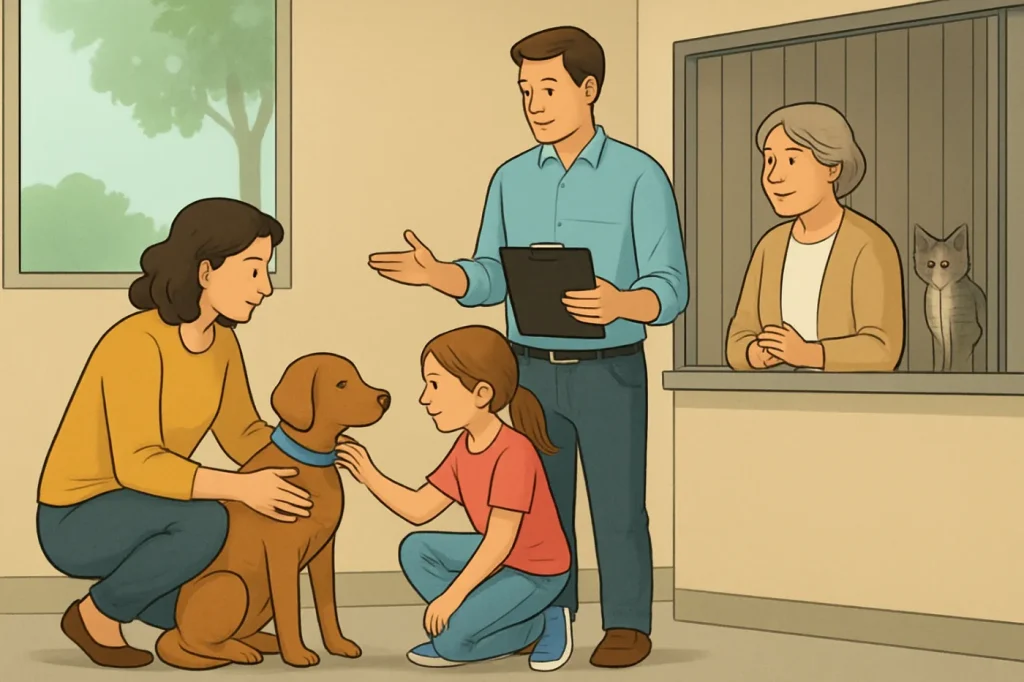
Most U.S. shelters and rescues are happy to adopt to families with children, but they do have specific requirements. Expect checks around your kids’ ages, your housing situation, safety planning, and how you will supervise and care for the pet long term.
Because policies vary by organization and even by individual animal, think of everything below as a practical roadmap, not a rigid rulebook. You will see patterns in what most shelters ask for and how to prepare your family so you are approved and matched with the right pet.
Key pet adoption requirements families with children should expect
When you apply to adopt with kids in the home, most U.S. shelters and rescues will look for at least these points:
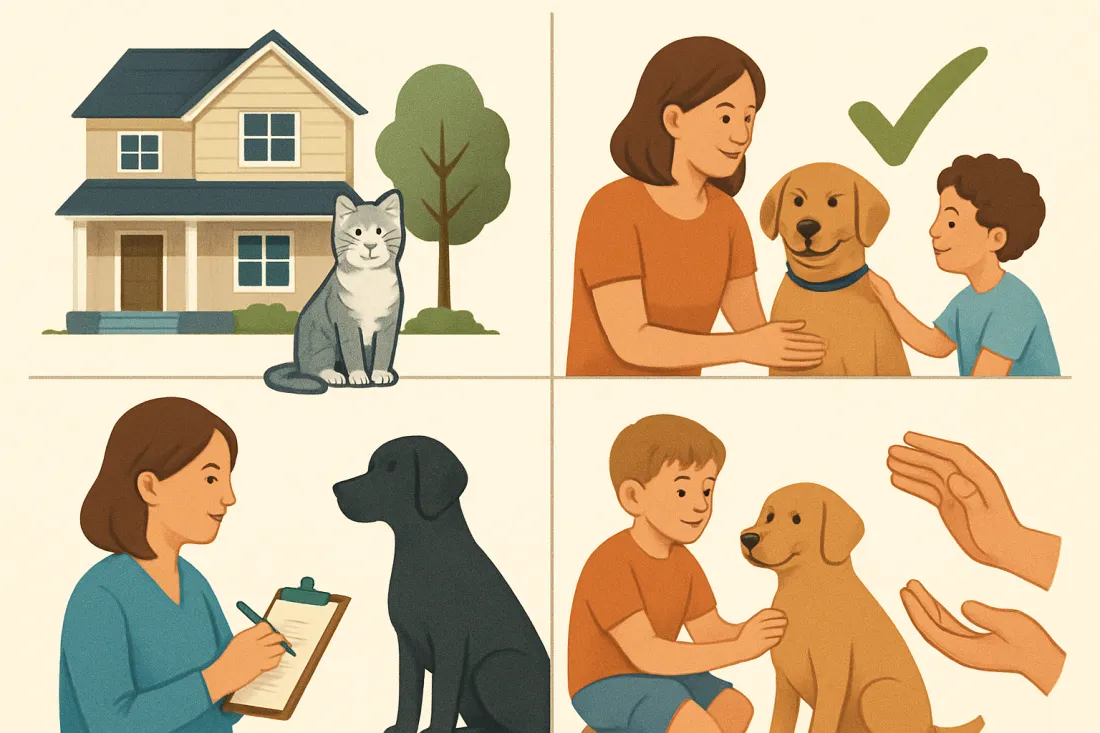
- Stable housing and landlord approval if you rent.
- Age-appropriate matches between the pet and your children (for example, many dogs are not placed in homes with toddlers).
- Supervision and safety plans for all child–pet interactions.
- Commitment to responsible pet ownership (training, exercise, vet care, and daily time).
- Financial readiness for routine and emergency veterinary care.
- Vaccination and health requirements for your existing pets.
- Willingness to follow behavior and training guidance from the shelter or rescue.
Some organizations will also require a home visit, reference checks, or a meet-and-greet with your children and any current pets.
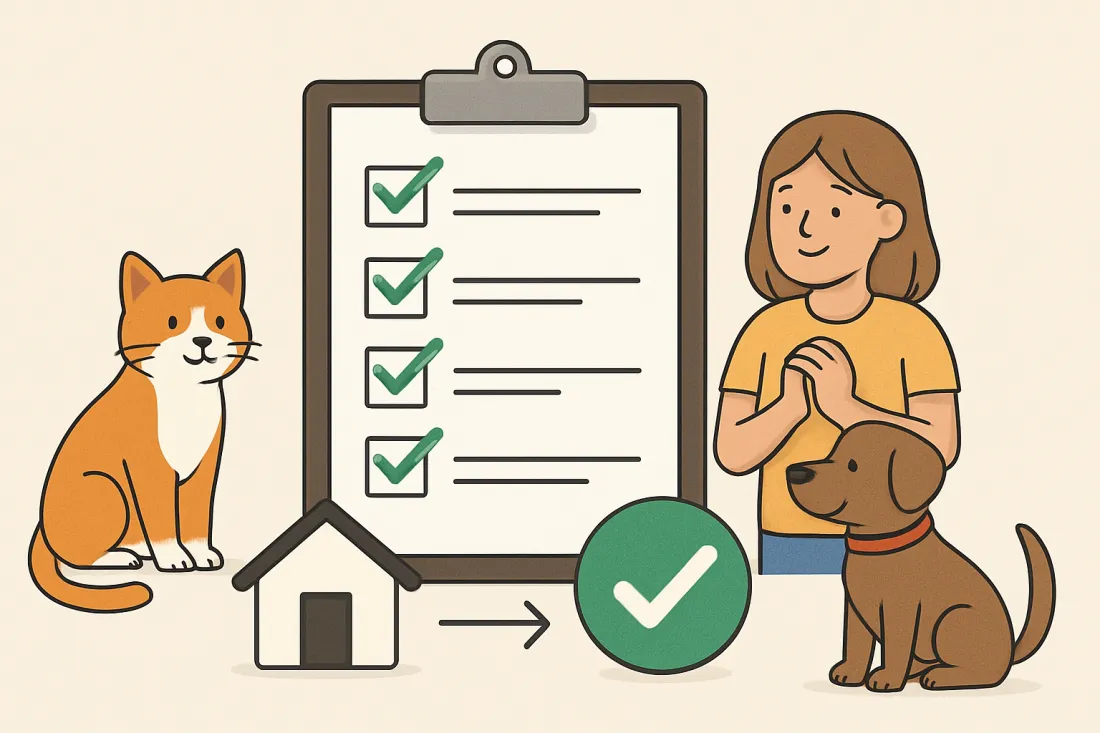
How shelters think about kids, safety, and responsible pet ownership
From the shelter’s perspective, adopting to a family with children is about balancing three things:
- Child safety – preventing bites, scratches, and fear-based behavior.
- Animal welfare – making sure the pet is not overwhelmed, mishandled, or returned.
- Long-term stability – choosing homes that can keep the pet for its lifetime.
That is why you will see questions about your kids’ ages, their experience with animals, your schedule, and your home setup. None of this is meant to scare you off; it is meant to find a safe, realistic match.
Common shelter and rescue policies about kids in the home
Policies differ, but these are typical patterns you may encounter when adopting with children in the United States.
Typical age-based policies for dogs and cats
Many organizations use age guidelines to decide which pets can live with which children. These are not laws; they are internal safety rules. Always ask the specific shelter what applies to the animal you are considering.
| Child age group | Typical shelter approach | Common reasons | What families can do |
|---|---|---|---|
| Toddlers (under ~5) | Often no large, jumpy, or mouthy dogs; some shelters avoid placing small, fragile pets as well. | Toddlers move unpredictably, grab fur, and may fall on pets, which can trigger defensive bites or injuries. | Look for very calm, tolerant adult dogs or cats with a known history around young kids; commit to constant supervision. |
| Young children (~5–9) | More options, but many rescues still avoid high-prey-drive or fearful dogs and may restrict certain breeds or sizes. | Kids are more coordinated but still learning boundaries and may misread warning signs from animals. | Choose pets with solid temperament evaluations; enroll in family-friendly training and practice gentle handling rules. |
| Preteens and teens (~10+) | Most pets are considered if the child understands rules and the adults remain primary caregivers. | Older kids can help with care and training but may have busy schedules or lose interest. | Clarify adult responsibility for vet care and training; involve teens in training classes and daily routines. |
Behavior notes and child suitability labels
Many shelters label animals with phrases like:
- “Good with kids 8+ only”
- “Adult-only home”
- “No small children”
- “Best with calm, dog-savvy kids”
These labels usually come from behavior evaluations, foster reports, or previous home history. Treat them seriously. If a dog is listed as “adult-only,” staff have seen enough to believe that younger children would not be safe or that the dog would be too stressed.
Meet-and-greet expectations
Most organizations will require your children to meet the pet before final approval. During this meeting, staff will watch for:
- How your kids approach and touch the animal.
- Whether the pet seems relaxed, curious, fearful, or overwhelmed.
- How you coach and supervise your children.
Be prepared to show that you can calmly redirect your kids, respect the pet’s space, and end the interaction if the animal looks stressed.
Age restrictions and home visit requirements
Age restrictions you may encounter
Age rules vary widely. Some examples of what you might see:
- “No children under 6 in the home for this dog.”
- “Puppies can only go to homes where all children are 8 or older.”
- “Kittens under a certain age must be adopted in pairs or to homes with gentle children.”
These rules are usually based on the specific animal’s size, energy level, bite history, or fearfulness. If you are turned down for one pet because of your kids’ ages, ask staff to suggest animals that are a better fit.
Why some rescues require home visits
Home visits are more common with foster-based rescues than with municipal shelters. A volunteer or staff member may come to your home to:
- Check that your yard, balcony, or windows are secure for the type of pet you want.
- See where the pet will sleep and spend time when unsupervised.
- Observe how your children move around the home and how you manage doors and gates.
- Discuss routines, such as who will walk the dog, feed the cat, and supervise playtime.
If a home visit is required, treat it as a collaborative safety check, not an exam you must “pass” by hiding problems. Be honest about challenges so the rescue can help you plan.
Rental and homeowner rules families should check
Before you fall in love with a pet, confirm that you are actually allowed to keep it where you live. Many adoptions fall through or pets are surrendered later because of housing rules.
If you rent your home
Most shelters will ask for proof that pets are allowed in your rental. They may require:
- A copy of your lease showing pet-friendly terms.
- A written note or email from your landlord approving the specific type or size of pet.
- Confirmation of any pet deposits or monthly pet fees you must pay.
Common rental restrictions include:
- Weight limits for dogs.
- Breed or type restrictions for dogs.
- Limits on number of pets per unit.
- Rules about caged animals or exotic pets.
Because families with children often live in multi-unit housing, shelters may be especially careful to avoid situations where a landlord could later force you to give up the pet.
If you own your home
Even homeowners should check for:
- Homeowners association (HOA) rules on pet size, number, or type.
- Local animal ordinances about licensing, leash laws, and limits on how many pets you can keep.
- Insurance limitations that might affect certain dog types or large animals.
Shelters may ask for your address to confirm local rules or to ensure they can support you if the pet is lost or needs to be returned.
Liability, bite risk, and safety considerations with kids
When children are involved, shelters pay close attention to bite risk and liability. Families should do the same.
Why bite risk matters so much with children
Even a small bite can be serious for a child, both physically and emotionally. Shelters try to avoid placing dogs or cats with known bite histories into homes with young kids. They may:
- Refuse to adopt out animals with serious bite incidents to any home with children.
- Limit certain pets to homes with older, experienced kids.
- Require training commitments for dogs that are mouthy, jumpy, or easily startled.
As a parent, you should also think about your own liability. If your dog bites a child’s friend during a playdate, you may be responsible for medical costs and other consequences. Talk with your insurance provider about coverage for dog-related incidents and whether any restrictions apply.
Red flags to discuss honestly with the shelter
Be upfront about any of these situations:
- Your child is fearful of animals or has had a bad experience in the past.
- Your child has difficulty following safety rules or respecting boundaries.
- Your household is extremely busy or chaotic with frequent visitors and playdates.
- You cannot commit to supervising all child–pet interactions at first.
These do not automatically disqualify you, but they may change which animals are considered safe for your family.
Vaccination and health requirements for family adoptions
Most shelters and rescues in the United States will adopt out animals that have received core vaccinations and basic veterinary care appropriate to their age. However, you should still ask specific questions and be prepared for follow-up care.
Typical health steps shelters take before adoption
While exact protocols vary, many organizations aim to provide at least:
- Core vaccinations appropriate for the pet’s age.
- Basic parasite treatment or prevention.
- Spay or neuter surgery, or a plan for it if the animal is too young.
- A general health exam by a veterinarian or trained staff member.
Ask the shelter for a written medical record and any known health concerns. This helps you plan vet visits and budget for care.
Health checks for your existing pets
If you already have pets at home, many shelters will require that they are:
- Up to date on core vaccinations according to your veterinarian’s recommendations.
- On appropriate parasite prevention, especially if you are adopting a dog or outdoor cat.
- Spayed or neutered, or that you have a clear plan discussed with your vet.
This protects both your current animals and the new arrival. It also reduces the risk of disease transmission, which is especially important in homes with children.
Ethical considerations when adopting with children
Beyond meeting minimum requirements, families with kids should think carefully about whether adoption is the right choice right now and what kind of pet can truly thrive in their home.
Matching energy levels and expectations
Children often imagine a playful, always-available companion. Some pets love that; others find it overwhelming. Consider:
- Puppies and young dogs – high energy, need training, can be mouthy and jumpy. Great for active families who can commit time every day.
- Adult dogs – often calmer, with known personalities. A good choice if you want more predictability around kids.
- Kittens – playful and fragile, may scratch or bite during play. Need gentle handling and supervision.
- Adult cats – personalities vary widely; some love kids, others prefer quiet homes.
Ethically, it is better to choose a pet whose needs match your reality than to adopt a high-need animal you cannot fully support.
Teaching children respect and boundaries
Responsible pet ownership with kids means teaching them that animals are not toys. Before adoption, talk about:
- Not disturbing pets while they eat or sleep.
- Letting the animal choose when to be petted or picked up.
- Recognizing stress signals such as growling, hissing, hiding, or stiff body language.
- Always having an adult present when playing with the pet.
Many shelters will ask your children questions or watch how they interact with animals to see whether they understand these basics.
Planning for the pet’s entire life
Pets can live for many years. During that time, your children will grow, schedules will change, and you may move homes. Before adopting, discuss:
- Who will care for the pet when kids go to college or move out.
- How you will handle major life changes such as new jobs, new babies, or relocations.
- Whether you are prepared for age-related health issues as the pet gets older.
Ethically, adoption is a long-term commitment, not a short-term experiment to “see how it goes.”
Questions to ask before signing adoption papers
Use these questions to guide your conversation with shelter or rescue staff. They show that you are thinking ahead and help you avoid surprises.
Questions about the pet’s history and behavior
- Has this pet lived with children before? What ages, and how did it go?
- Has the pet ever shown fear, growling, hissing, or snapping around kids?
- How does the pet react to fast movement, loud noise, or rough play?
- Does the pet guard food, toys, or resting spots?
- What kind of exercise and mental stimulation does this animal need every day?
Questions about health and care
- What vaccinations and treatments has the pet already received?
- Are there any known medical conditions or special diets?
- When should we schedule the first vet visit after adoption?
- Is the pet already spayed or neutered, or is there a plan for that?
Questions about policies and support
- What happens if the pet is not a good fit with our children despite our efforts?
- Is there a trial period or foster-to-adopt option?
- Do you offer or recommend training classes, especially for families with kids?
- What behavior support is available if we run into problems later?
If you are specifically considering a shelter dog with young children, you may also find it helpful to read about how to safely adopt a shelter dog with young children for more detailed dog-focused safety tips.
Structured checklist: are you ready to adopt a pet with children?
Use this checklist as a practical decision tool before you apply. If you cannot honestly check most of these items, consider waiting or choosing a different type of pet.
Family readiness checklist
- Time and routine
- We have discussed who will feed, walk, and clean up after the pet every day.
- At least one adult can reliably supervise child–pet interactions, especially in the first months.
- Our schedule allows time for training, exercise, and play, not just basic feeding.
- Children’s understanding
- Our children know that pets are living beings, not toys.
- We have practiced gentle touch and talked about not disturbing animals while they eat or sleep.
- We are prepared to enforce rules such as “no hugging the dog’s neck” or “no chasing the cat.”
- Housing and rules
- We have checked our lease, landlord, or HOA rules and confirmed that the type and size of pet we want is allowed.
- We understand any pet deposits, fees, or insurance implications.
- Our home has (or can easily have) safe spaces where the pet can retreat away from children when needed.
- Financial preparedness
- We have room in our budget for food, supplies, and routine vet care.
- We have a plan for unexpected veterinary expenses, such as savings or pet insurance.
- Safety planning
- We are ready to supervise all interactions between the pet and young children.
- We can separate the pet from visiting children if needed (baby gates, crates, closed doors).
- We are willing to seek professional training help if behavior issues arise.
- Long-term commitment
- We have discussed how we will care for the pet through future life changes.
- At least one adult accepts ultimate responsibility for the pet, regardless of children’s changing interests.
Common mistakes families make when adopting a pet with children
Avoiding a few frequent missteps can dramatically improve safety and long-term success.
Choosing based on looks or breed reputation alone
Families sometimes pick a pet because it is cute, trendy, or known as “good with kids.” Individual temperament matters far more than appearance or general breed stereotypes. Always ask about the specific animal’s behavior history and how it has done in foster or shelter environments.
Underestimating training and adjustment time
Many new owners expect instant harmony. In reality, it can take weeks or months for a pet to settle into a new home. During that time, you may see:
- Accidents in the house.
- Chewing or scratching.
- Shyness, hiding, or clinginess.
- Testing boundaries with kids and adults.
Plan for a structured adjustment period. For dogs, resources like a first 30 days with a rescue dog routine can help you set expectations and routines that keep everyone safe.
Leaving kids and pets unsupervised too soon
Even well-meaning children and gentle animals can have misunderstandings. A child may hug too tightly; a dog may guard a toy; a cat may scratch when startled. The most preventable incidents happen when adults assume “they are fine together now” and stop supervising.
Ignoring early warning signs
Growling, hissing, stiff posture, hiding, or avoidance are all signals that a pet is uncomfortable. Punishing these signals or forcing interaction can push an animal toward more serious aggression. Instead, give the pet space, adjust the environment, and seek guidance from the shelter or a qualified trainer.
Not having a backup plan
Sometimes, despite everyone’s best efforts, a particular match is not safe or sustainable. Families get into trouble when they feel trapped and delay asking for help. Before adopting, clarify:
- What the shelter’s return policy is.
- Whether there is a trial or foster-to-adopt option.
- Who you can contact for behavior support.
Having a backup plan does not mean you are not committed; it means you are realistic and responsible.
Decision criteria: is adoption right for your family right now?
Use these criteria to decide not just whether to adopt, but what kind of pet and when.
Key questions to guide your decision
- Child age and temperament – Are your children old enough and calm enough to follow safety rules consistently?
- Home environment – Is your home generally calm, or is it loud and chaotic with constant visitors?
- Experience level – Have you had pets before, or will this be your first? If it is your first, a lower-need, adult animal may be a better starting point.
- Support network – Do you have friends, family, or professionals you can turn to for pet care or behavior advice?
- Future plans – Are you likely to move, change jobs, or have another child soon? How will that affect your ability to care for a pet?
If you are unsure, consider fostering first through a local rescue. Fostering can give your family a realistic sense of daily responsibilities and how your children handle living with an animal, without the same long-term commitment.
FAQ about pet adoption requirements for families with children
What should families with children understand about pet adoption requirements before applying?
Families should understand that shelters and rescues are focused on safety and long-term stability. Requirements are not meant to judge your parenting; they are meant to protect both children and animals. Expect questions about your kids’ ages, your housing, your schedule, and your experience with pets. Be prepared to show that adults, not children, will be the primary caregivers, and that you have a plan for supervision, training, and veterinary care. Policies can vary, so always ask the specific organization what they require for the pet you are considering.
What are the biggest mistakes parents make when adopting a pet with kids?
Common mistakes include choosing a pet based on looks instead of temperament, assuming a puppy is automatically best for children, and underestimating the time needed for training and supervision. Parents sometimes let kids handle the pet unsupervised too soon or ignore early warning signs like growling or hiding. Another frequent issue is not checking rental or HOA rules in advance, which can lead to stressful rehoming later. Taking time to match the right animal to your family’s real lifestyle and being honest with the shelter about your situation helps avoid these problems.
What should families do next after learning about adoption requirements?
After you understand the typical requirements, start by having a family discussion about responsibilities, rules, and what kind of pet fits your home. Then, confirm your housing and financial readiness, including any landlord or HOA rules. Next, research local shelters and rescues, read their adoption policies, and make a short list of organizations whose approach matches your values. When you are ready, visit in person, ask detailed questions about behavior and health, and use a checklist to evaluate whether a specific animal is a safe match for your children. If you decide on a dog, learning what to expect during the first week with a rescue dog can help you prepare for the transition.
Are there situations where a shelter might decline to adopt to a family with children?
Yes. A shelter or rescue may decline an application if the specific animal has a history or temperament that makes it unsafe around children, if your housing does not allow the type of pet you want, or if they believe your current situation cannot support the pet’s needs. For example, they may not place a fearful or reactive dog in a home with toddlers, or they may hesitate if adults are rarely home and cannot supervise. A denial for one animal does not mean you are unfit to adopt; it usually means that particular pet is not a safe match for your family.
How can parents show shelters they are responsible pet owners?
Parents can demonstrate responsible pet ownership by arriving prepared with questions, being honest about their schedule and children’s behavior, and showing they have already checked housing rules and budgeted for care. Describing clear household rules for kids around animals, mentioning plans for training or obedience classes, and having a primary adult caregiver identified all signal that you have thought beyond the excitement of adoption. Bringing your children to meet potential pets and calmly guiding their interactions also reassures staff that you will supervise and teach respectful behavior at home.