
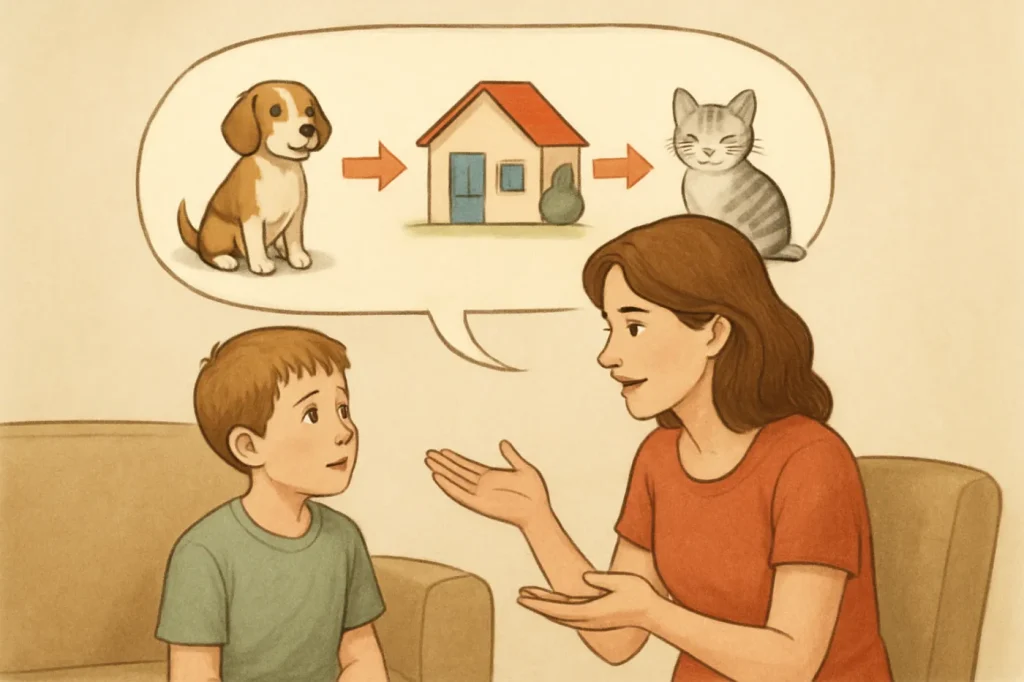
To explain pet adoption to a child, connect it directly to what your family is about to do: choose a pet, bring them home, and care for them every day. Children do not need every detail about shelters or rescue systems. They need three clear ideas:
- What “adoption” means for this specific pet and your family
- How the pet might feel at first (shy, scared, excited, confused)
- What your child’s job will be to help the pet feel safe and loved
When you cover those points in age‑appropriate language, your child is more likely to bond with the pet, follow rules, and cope better if things are hard or plans change.
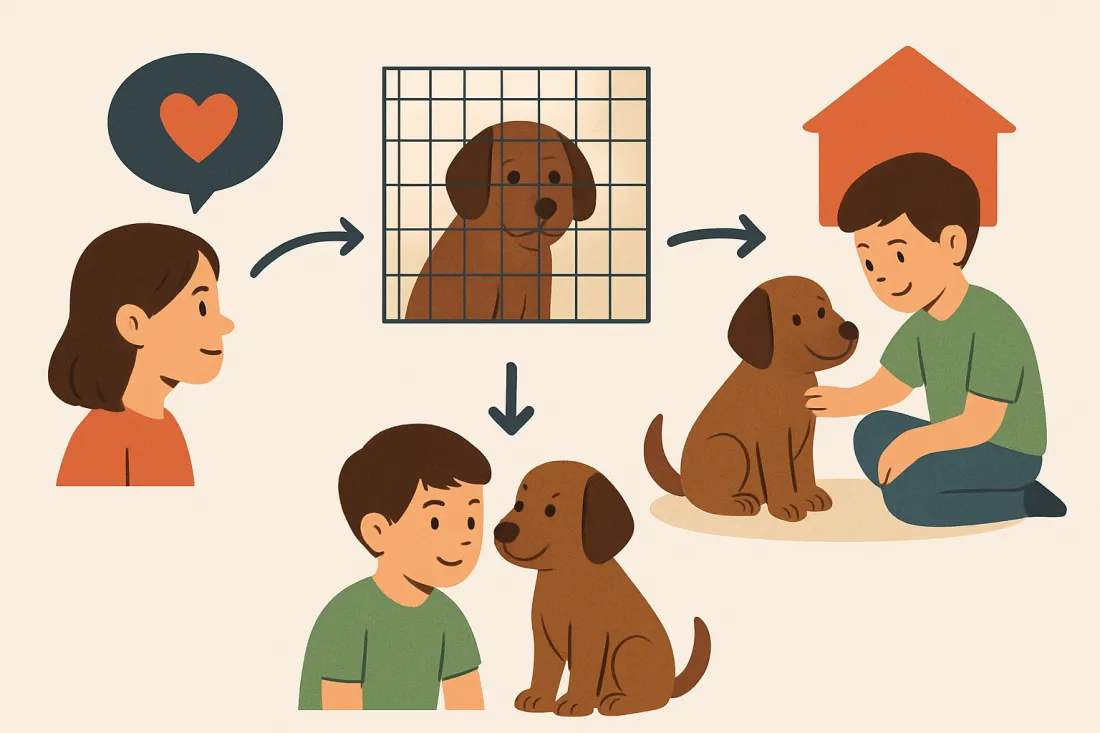
What pet adoption means in simple, child‑friendly terms
Children understand stories much better than abstract explanations. You can describe adoption as “giving a pet a new home and family” without blaming the previous owner or making big promises you cannot keep.
A simple story structure you can adapt for any age:
- Past: Where the pet is now and why it needs a new home (in gentle terms).
- Present: What your family is doing (visiting, meeting, deciding).
- Future: What life will be like if the pet comes home.
Kid‑friendly phrases you can use:
- Basic definition: “Adoption means we are choosing a pet that needs a new family, and we are promising to take care of them.”
- About the shelter: “Right now, this pet is living at a place where people keep animals safe and fed while they wait for new homes.”
- About the previous home (simple version): “Their old family couldn’t keep them anymore, so now we get to be their new family.”
- About your role: “When we adopt a pet, we become their people. They depend on us for everything.”
Try to avoid harsh or scary lines like “Their old family didn’t want them” or “They were rescued from something terrible,” especially for younger kids. Older children and teens can handle more nuance, but always check how much they actually want to know.
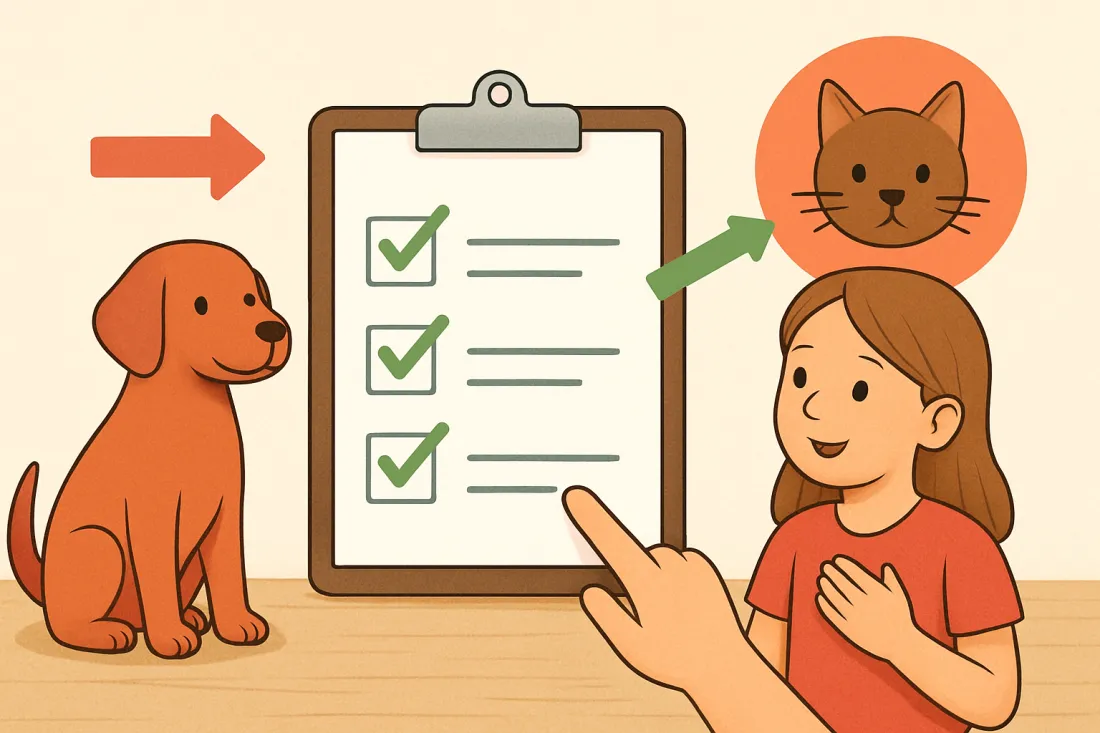
Age‑based talking points: toddlers, school‑age kids, and teens
Children at different ages understand adoption and responsibility very differently. Adjust your words, the amount of detail, and the jobs you give them.
| Age group | How much to explain | Key message about adoption | Realistic responsibilities |
|---|---|---|---|
| Toddlers (2–4) | Very short, concrete, repeat often | “We are bringing a pet home to love and be gentle with.” | Help pour food with an adult, gentle petting, staying seated while you hold the pet. |
| Early school age (5–8) | Simple story, a few feelings, basic rules | “This pet needed a new family. We chose them, and we all help take care of them.” | Filling water bowl, helping with feeding, reminding about doors and gates, quiet time when pet rests. |
| Older kids (9–12) | More detail, questions about fairness and feelings | “Some pets lose their homes. Adoption means we’re giving this pet a second chance and a safe place.” | Walking (with an adult nearby), brushing, helping with litter box or poop bags, tracking a simple chore chart. |
| Teens (13+) | Honest discussion, pros/cons, behavior issues | “Adoption is a long‑term commitment. We’re choosing this pet knowing they may need extra patience.” | Regular walks, training practice, cleaning tasks, helping watch health and behavior, sharing decision‑making. |
Talking to toddlers about pet adoption
Toddlers live in the here and now. They may not grasp “shelter” or “previous owner,” but they understand “home,” “gentle,” and “ours.”
- Keep it to one or two sentences at a time.
- Repeat the same phrases so they stick.
- Focus on what they can do with you, not on what the pet has been through.
Example phrases:
- “We are getting a kitty. Kitty will live in our house.”
- “We touch kitty soft. Grown‑ups feed kitty.”
- “When kitty sleeps, we let kitty sleep.”
Talking to a 5–8‑year‑old (including a 7‑year‑old)
Kids around 7 are curious and often very literal. They can understand that a pet had another home before yours, and they may ask “why” many times.
For a 7‑year‑old, you might say:
- “Some pets lose their homes. Maybe their family moved or got sick and couldn’t take care of them. The shelter keeps them safe until a new family adopts them.”
- “We are choosing this dog to be part of our family. That means we promise to give them food, water, walks, and love for their whole life.”
- “You can help by doing your pet jobs every day, like filling the water bowl and helping with walks.”
Be ready for follow‑up questions like “Why didn’t their old family keep them?” or “Will they have to leave us too?” Answer honestly but calmly: “We don’t know everything that happened before, but now it’s our job to keep them safe. We plan for them to stay with us.”
Talking to older kids and teens
Older children can handle more nuance: that some pets were neglected, that shelters have limited space, or that behavior problems take work. They may also be more aware that adoption is a choice with long‑term consequences.
With teens, treat them as partners:
- Discuss what kind of pet fits your family’s schedule and budget.
- Talk honestly about training time, noise, and mess.
- Ask what responsibilities they feel ready to take on and how they will handle them during busy times like exams or sports season.
If you want help deciding what kind of pet to adopt, you can explore tools like the should I adopt a dog or cat quiz together and talk through the results as a family.
How to discuss responsibility and rules before adoption
Children often hear “We’re getting a pet!” and imagine endless playtime. They rarely picture early‑morning walks, chewed toys, or cleaning litter boxes. Laying out responsibilities and rules before adoption helps prevent conflict and disappointment later.
Turn responsibilities into specific, visible jobs
Instead of saying “You’ll help take care of the dog,” name exact tasks and when they happen. For example:
- “Every morning before school, you’ll fill the water bowl.”
- “After dinner, you’ll help me scoop the litter box.”
- “On weekends, you’ll come on at least one walk with us.”
Use a simple chart or whiteboard so your child can see their pet jobs. If you already have a chore system, add pet tasks to it.
Explain that adults are ultimately responsible
Children can and should help, but they cannot be the only caregiver. Say this clearly:
- “These are your pet jobs, but the adults are in charge of making sure the pet always has what they need.”
- “If you forget sometimes, we will still take care of the pet, but we’ll also remind you of your jobs.”
This prevents your child from feeling guilty if they slip up and also keeps you from expecting more than they can realistically do.
Set house rules that protect both kids and pets
Rules should cover how to treat the pet, how to keep everyone safe, and what is off‑limits. For example:
- No pulling tails, ears, or fur.
- No hugging or picking up the pet unless an adult says it is okay and shows how.
- No bothering the pet when they are eating, sleeping, or in their crate/bed.
- Doors and gates must stay closed so the pet does not run out.
- Only adults give the pet people food or new treats.
For more detailed ideas on age‑appropriate tasks and boundaries, you can read about teaching kids responsible pet ownership and adapt the suggestions to your family.
Setting realistic expectations about shelter and rescue pets
Many adopted pets settle beautifully into family life. Some, however, arrive with fears, habits, or health needs that take time to understand. Children need to hear that adoption is not a movie moment where everything is perfect on day one.
Explain that the pet may feel scared or confused at first
Use simple, feeling‑based language:
- “Our new dog doesn’t know us yet. They might feel shy or nervous.”
- “They may not understand our house rules right away. We’ll teach them gently.”
- “If they hide or bark, it doesn’t mean they don’t like us. It means they’re still learning that this is home.”
Use the 3‑3‑3 idea as a gentle framework
Many adoption groups talk about a “3‑3‑3” pattern: roughly three days to start to settle, three weeks to learn routines, and three months to feel truly at home. It is not a strict rule, but it can help kids understand that adjustment takes time.
You might say:
- “In the first few days, our dog might be very tired or very excited. We’ll give them space and keep things calm.”
- “After a few weeks, they’ll start to learn our schedule and rules.”
- “After a few months, they’ll probably feel like they really belong here.”
Emphasize that every pet is different. Some may relax faster; others may need longer.
Be honest about possible behavior and health challenges
Without scaring your child, prepare them for common issues:
- Accidents in the house while the pet learns where to go.
- Chewing or scratching while they adjust.
- Barking, meowing, or hiding more than expected.
- Vet visits to check on health or treat existing problems.
Frame these as problems the family will solve together, not as reasons to give up on the pet quickly.
Sample scripts parents can use in real situations
You do not need to memorize perfect lines, but having a few phrases ready can make hard conversations easier. Adapt these to your child’s age and your family’s style.
Script: Explaining pet adoption to a 7‑year‑old before visiting a shelter
“We’re going to visit a place where animals stay while they wait for new families. It’s called a shelter. Some of the pets used to have homes, but their families couldn’t keep them anymore. The people at the shelter keep them safe and fed until someone adopts them.
Adopting means choosing a pet to join our family and promising to take care of them for their whole life. When we visit, we’ll meet a few pets and see who might be a good match for us. We’ll look for a pet that is comfortable around kids and fits our home. We may not bring a pet home today, and that’s okay. Our job is to choose carefully so the pet and our family are both happy.”
Script: Talking about responsibility and rules with a school‑age child
“If we adopt this cat, they will depend on us every day. That means food, water, a clean litter box, and gentle play. The adults in our family will make sure those things always happen, but you’ll have some pet jobs too.
Your jobs will be to fill the water bowl every morning and help scoop the litter box after dinner. You’ll also need to remember our rules: no picking the cat up without asking, no bothering them when they’re eating or sleeping, and always closing the door so they don’t run outside. If you forget sometimes, we’ll remind you, but we need to know you’re willing to try your best.”
Script: What to say when adoption falls through
Sometimes a specific adoption does not work out. The pet might not be a good match with children, another family might adopt them first, or the shelter might decide your home is not the right fit for that animal. This can be very disappointing for kids.
You might say:
“I know you’re really sad that we can’t adopt [pet’s name]. I’m sad too. The people who take care of the animals decided that [pet’s name] needs a different kind of home. That doesn’t mean we did anything wrong, and it doesn’t mean they won’t be loved. It just means this wasn’t the right match.
Our job is to find a pet that will be safe and happy in our family and with kids. Sometimes that takes more than one try. We can take a break today and feel sad, and later we can talk about whether we want to look for another pet.”
Script: Explaining rehoming a pet to a child
Rehoming a pet is one of the hardest conversations to have with a child. If you have to make this decision for safety, health, or serious behavior reasons, be honest but gentle. Avoid blaming your child or the pet.
“We need to talk about something important. We have tried many things to help [pet’s name] live safely and happily with our family. Even with all of that, [describe the core issue in simple terms, such as ‘they are still very scared and sometimes bite’ or ‘they need more space and exercise than we can give’].
Because of that, we’ve decided that the kindest and safest thing is to find [pet’s name] a different home where they can get what they need. This is not your fault, and it doesn’t mean we don’t love [pet’s name]. Sometimes loving an animal means making a really hard choice to keep everyone safe.
We will work with people who know how to find good homes for pets. We can say goodbye and remember [pet’s name] together. It’s okay to feel sad, angry, or confused. I’m here to talk about it with you.”
If you are considering rehoming, it can help to read guidance on how to responsibly rehome a dog in the US or similar resources for other pets, and then translate the steps into child‑friendly language.
Family pet rules checklist to review with your child
Use this checklist as a starting point. Go through it together before adoption and again in the first weeks after your pet comes home. Adjust for your pet’s species, age, and personality.
- Safe touch rules
- We always use gentle hands with the pet (no hitting, squeezing, or pulling).
- We ask an adult before hugging, picking up, or carrying the pet.
- We do not chase the pet if they walk away; that means they need space.
- Food and treat rules
- Only adults decide what food and treats the pet gets.
- We never take food or toys out of the pet’s mouth.
- We do not bother the pet while they are eating.
- Quiet and rest rules
- The pet has a bed/crate/hiding spot that is just for them.
- We do not touch or talk to the pet when they are in their special spot.
- We use indoor voices around the pet, especially in the first few weeks.
- Door and outdoor rules
- We close doors and gates behind us so the pet cannot run out.
- We only walk the dog with an adult, using a leash.
- We always ask before opening the front door if the pet is nearby.
- Responsibility rules
- We know which pet jobs belong to which family members.
- We understand that adults will help and check that pet jobs are done.
- We agree to tell an adult if we notice the pet acting sick, scared, or hurt.
Decision criteria: is your child ready for an adopted pet?
Before you commit to adoption, check whether your child is ready for the changes a pet will bring. Use these questions as a decision guide:
- Can my child follow basic safety rules? If they struggle to keep hands gentle or respect “no,” you may need more time or closer supervision.
- How does my child handle frustration? Pets will ignore, walk away from, or accidentally scratch them at times. Can they cope without lashing out?
- Is my child comfortable around animals already? If not, consider more time with friends’ pets or supervised visits to shelters before adopting.
- Can our family realistically support daily care? Think about work schedules, school, activities, and energy levels.
- Are we prepared for the long term? Dogs and cats can live many years. Talk about what happens when your child is older, busier, or moves out.
For help matching a pet to your family’s situation, you can review pet adoption requirements for families with children and use them as a checklist before you apply.
Common mistakes when explaining pet adoption to children
Even well‑meaning parents sometimes make explanations more confusing or upsetting than they need to be. Watching out for these common mistakes can make the process smoother.
- Promising a pet too early. Telling kids “We’re getting a dog!” before you are approved or have chosen a specific pet can lead to heartbreak if plans change. Instead, say “We’re thinking about adopting a pet and learning what kind would fit our family.”
- Blaming the previous owner in harsh terms. Saying “Their old family was mean and didn’t want them” can make children anxious about being “given away” themselves. Use neutral language unless your child is old enough for more context.
- Overloading kids with sad stories. Graphic rescue details can be overwhelming. Focus on what life will be like now and how your family will help.
- Expecting children to be the main caregiver. Kids can help, but adults must handle the bulk of care, training, and costs. Present pet care as a team effort.
- Skipping a trial mindset. Even after adoption, the first weeks are a learning period for everyone. Let kids know that you will keep adjusting routines and rules as you get to know the pet.
- Not matching the pet to the child’s age and energy. A very fragile or fearful pet may not be a good fit for a rough‑and‑tumble toddler. Check shelter guidance and adoption requirements to choose an animal that is more likely to thrive with your kids.
- Ignoring your child’s fears. If your child seems nervous around animals, do not brush it off. Talk about what scares them and plan slow, supervised introductions.
Resources for kids: books, stories, and videos
Stories and visuals can make adoption concepts easier for children to understand and remember. Look for:
- Picture books about shelter pets finding new homes, written for your child’s age group.
- Short videos from reputable animal organizations that show what shelters look like and how pets are cared for.
- Comics or chapter books for older kids that follow a pet’s journey from shelter to home.
- Printable coloring pages or activity sheets that include gentle messages about kindness to animals and basic care tasks.
Preview any resource first to make sure the tone is hopeful and age‑appropriate, especially for sensitive children.
FAQ about explaining pet adoption to children
How do I explain adoption to a 7‑year‑old without making them worry they could be given away too?
Keep the focus on the pet’s situation and your family’s commitment. You might say, “Some pets lose their homes because their families move, get sick, or cannot take care of them anymore. The shelter helps them until a new family adopts them. We are choosing this pet and promising to take care of them for their whole life.”
If your child asks, “Could that happen to me?” answer directly: “No. Parents and kids are a family forever. Pets are animals, and sometimes their families cannot keep them, but we do not give children away.” Reassure them with examples of how you care for them every day.
What should I say when my child wants to adopt every pet they see at the shelter?
Before you visit, set a clear limit: “We are here to meet pets and see who might be a good match for our family. We can only adopt one pet because that’s what we can take care of well.” At the shelter, acknowledge their feelings: “It’s hard to see so many animals and not take them all home. The good news is that lots of families come here to adopt, not just us.”
You can offer small ways to help other animals, like donating old towels or toys, drawing pictures for the staff, or putting aside part of an allowance for pet supplies the shelter needs.
What is the 3‑3‑3 rule for adoption and how can I explain it to my child?
The 3‑3‑3 idea is a simple way to describe how long it can take an adopted pet to settle in: about three days to start to calm down, about three weeks to learn your routine, and about three months to feel truly at home. It is not an exact rule, but it gives kids a timeline.
You can say, “In the first three days, our pet might be scared or very excited. In about three weeks, they’ll start to know when we eat, sleep, and play. In about three months, they’ll probably feel like they really belong here.” Mark these points on a calendar and celebrate small milestones together.
How do I explain rehoming a pet to a child if safety is the main reason?
Be clear that safety comes first and that the decision is an adult responsibility. You might say, “We love [pet’s name], but we have seen that they sometimes [bite, scratch, knock you down] even when we try to prevent it. We have talked with experts and tried to fix it, but it is still not safe for you or for them here.”
Then explain the plan: “Because of that, we are going to find [pet’s name] a home that is safer for everyone, maybe with adults only or someone who has more experience. This is not your fault, and it does not mean we do not care. It means we are making a hard choice to keep people and animals safe.” Give your child space to feel sad and offer ways to say goodbye, like drawing pictures or making a small photo book.
What can I say when an adoption falls through so my child does not lose hope?
Start by naming the feeling: “It is really disappointing that we cannot adopt [pet’s name]. I feel sad too.” Then explain in simple terms: “The people who care for the animals decided that [pet’s name] needs a different kind of home. That does not mean we did anything wrong. It just means this was not the right match.”
Reassure them that there are other pets who will need families: “There are many animals who still need homes. We can take some time to feel sad, and when you are ready, we can look again for a pet that will be safe and happy with us.”