
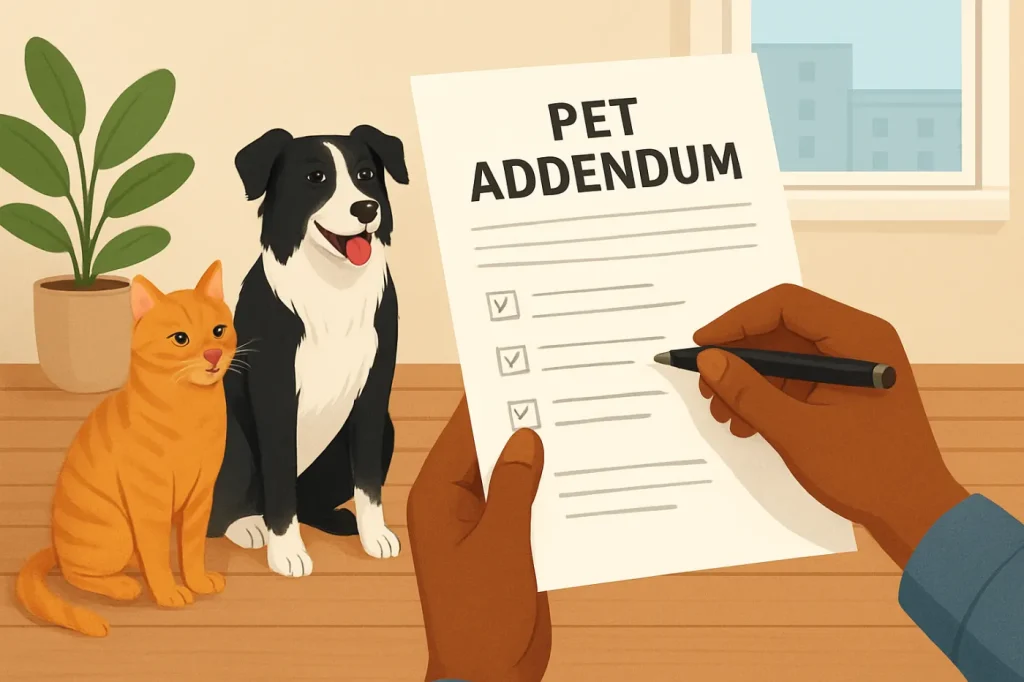
When you rent with a dog or cat, the pet addendum to your lease is where your real rights and responsibilities live. If the addendum is vague or one-sided, you can end up paying for damage you did not cause, facing surprise fees, or even being forced to rehome your pet.
This guide walks you through what a solid pet addendum should include, what to push back on, and how to request fair, responsible terms from your landlord.
What a pet addendum is and why it matters for renters with dogs or cats
A pet addendum is a written agreement attached to your lease that sets the rules for keeping a pet in the rental. It usually covers:
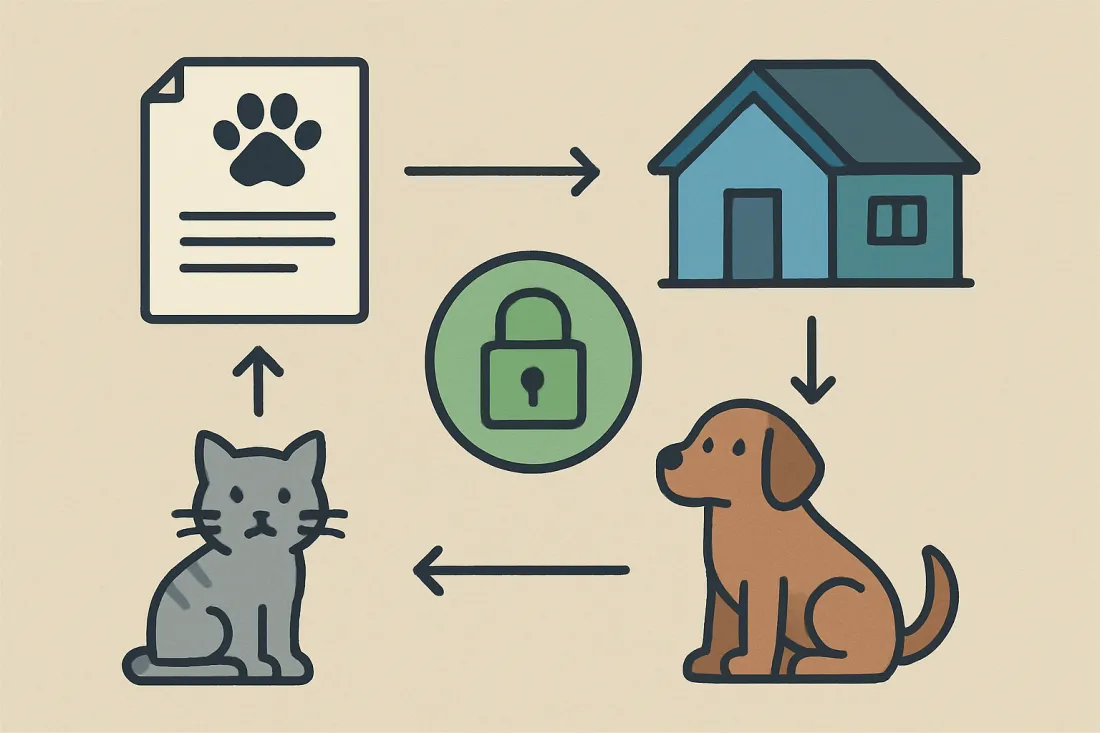
- Which pets are allowed (species, breed, size, number)
- Any pet deposits, fees, or monthly pet rent
- House rules (noise, waste, supervision, common areas)
- Damage responsibility and cleaning expectations
- Insurance and liability for injuries or property damage
- What happens if you break the pet rules
Without a clear pet addendum, you may be treated as if pets are not allowed at all, even if your landlord verbally said it was fine. Verbal promises are hard to enforce; written terms are what count if there is a dispute.
A good pet addendum protects both sides: the landlord’s property and the renter’s right to keep a well-cared-for pet. It should reward responsible pet ownership, not punish it.
Key clauses to look for in a pet addendum (and how to evaluate them)
When you read a pet addendum for dogs or cats, focus on these core areas. Use the decision points below to judge whether the terms are fair and realistic for your situation.
1. Pet description and limits
The addendum should clearly describe each pet you are allowed to keep:
- Species (dog, cat)
- Breed or mix (if known)
- Approximate weight
- Age
- Color/markings
- Microchip number (if applicable)
Decision checks:
- Accuracy: Make sure the description matches your current pet. If your dog is still growing, ask for wording like “up to approximately [weight range] pounds at maturity” instead of a fixed number that could be exceeded later.
- Number of pets: Confirm the maximum number of pets allowed and whether it is “per unit” or “per bedroom.” If you plan to add a second pet later, ask how that would be approved and added to the addendum.
- Future pets: Look for language that says any new pet must be approved in writing before moving in. That is normal, but you can ask for a clear process and timeline for approval.
2. Pet deposits, fees, and monthly pet rent
Landlords often use three different money terms:
- Pet deposit: Usually refundable if there is no pet damage beyond normal wear and tear.
- Pet fee: Typically a one-time, nonrefundable charge for allowing a pet.
- Pet rent: Extra monthly rent for each pet or for all pets.
Decision checks:
- Clarity: The addendum should clearly label each charge as refundable deposit, nonrefundable fee, or monthly pet rent. If the wording is vague, ask for it to be clarified in writing.
- Stacking charges: Some landlords charge all three. You can negotiate. For example, you might accept a higher refundable deposit in exchange for no monthly pet rent, or ask to reduce a nonrefundable fee if you provide strong references and proof of responsible ownership.
- Per pet vs. per unit: Check whether charges apply per pet or per household. If you have more than one pet, this makes a big difference. Ask for a cap if the total feels excessive.
- Refund conditions: For deposits, the addendum should state that any unused portion will be returned after move-out, minus documented pet-related damage. Ask that “normal wear and tear” is not charged against the pet deposit.
3. Damage, cleaning, and move-out expectations
This section explains what you are responsible for if your pet causes damage or extra cleaning needs.
Reasonable terms often include:
- You pay for repairs or cleaning needed because of your pet (chewed trim, urine-soaked carpet, scratched doors).
- The landlord will document damage and provide an itemized statement of costs.
- Normal wear and tear (light scuffs, minor hair) is not charged as damage.
Decision checks:
- Specific vs. blanket charges: Watch for language that automatically charges you for full carpet replacement or full repainting at move-out “because you had a pet,” even if there is no actual damage. Ask for wording that ties charges to documented damage or excessive wear.
- Inspection rights: It can be helpful to have a pre-move-out walk-through so you can address issues yourself (deep cleaning, minor repairs) before final charges are assessed.
- Shared spaces: Clarify whether you are responsible if someone else’s pet damages common areas, or if responsibility is based on proof (for example, camera footage or staff observation).
4. Behavior rules: noise, supervision, and common areas
Behavior rules are where many pet disputes start. A balanced addendum should set clear expectations without making normal pet behavior impossible.
Common rules include:
- Keeping dogs leashed in hallways, parking lots, and outdoor common areas
- Cleaning up pet waste immediately and disposing of it properly
- Preventing excessive barking or howling, especially at night or early morning
- Not leaving pets unattended on balconies or in common areas
- Restricting pets from certain spaces (pools, gyms, laundry rooms)
Decision checks:
- Reasonableness: Rules should target nuisance behavior, not normal, brief sounds or movement. For example, “no barking ever” is unrealistic; “no prolonged or repeated barking that disturbs neighbors” is more reasonable.
- Enforcement process: Look for a warning or notice process before serious penalties (like fines or eviction) are applied, unless there is a serious safety issue.
- Visitor pets: Clarify whether guests may bring pets and under what conditions. If visitor pets are banned, make sure that is clear so you can plan accordingly.
Strong behavior rules are easier to follow when your pet has good manners at home. If you are still working on basics, a guide to basic house rules for dogs and cats can help you get ahead of potential complaints.
5. Insurance and liability for injuries or property damage
Many pet addenda state that you are responsible if your pet injures someone or damages property. Some may require you to carry renters insurance with liability coverage.
Decision checks:
- Scope of liability: It is normal to be responsible for your pet’s actions. Watch for language that makes you liable for any animal on the property, not just your own.
- Insurance requirement: If renters insurance is required, ask what coverage level is expected and confirm with your insurer that your dog’s breed or size is covered. Some insurers have breed restrictions or special conditions.
- Reporting incidents: The addendum may require you to report bites or serious incidents. Make sure you understand the process and potential consequences.
6. Health, vaccinations, and preventive care
Landlords may require proof that your pet is healthy and up to date on core vaccinations. This helps protect other residents and pets.
Common requirements include:
- Proof of current rabies vaccination for dogs and cats, where required locally
- Proof of spay/neuter, or a statement if intact pets are allowed
- Regular flea and tick prevention, especially in multi-unit buildings
Decision checks:
- Documentation: Confirm how often you must provide updated records (for example, annually or when vaccines are renewed). Keep digital copies from your vet.
- Realistic timelines: If your pet is overdue on a vaccine, negotiate a short grace period to schedule a vet visit rather than signing something you cannot meet immediately.
- Preventive care: Even if not required, following an annual vet care schedule for dogs and cats USA can reduce the risk of health issues that might lead to complaints or damage.
7. Breed, size, or age restrictions
Some properties list restricted breeds, weight limits, or minimum ages for pets. These rules can be controversial, but they are common in many markets.
Decision checks:
- Written list: If there are restrictions, they should be clearly listed in the addendum, not just mentioned verbally.
- Existing pets: If your pet already lives with you, ask for a written exception if they do not meet a new rule (for example, a weight limit that changes mid-lease).
- Age limits: If puppies or kittens under a certain age are not allowed, clarify whether that applies only at move-in or also to future adoptions.
8. Violations, warnings, and eviction risk
The addendum should explain what happens if you break a pet rule. This is where you want clarity and a fair process.
Reasonable approaches often include:
- Written warning for minor issues (occasional noise, missed waste pickup)
- Time to correct the problem (training, cleaning, repairing damage)
- Fines or charges for repeated or serious violations
- Possibility of requiring removal of the pet for ongoing or dangerous behavior
Decision checks:
- Immediate eviction: Be cautious with language that allows instant eviction for any minor pet rule violation. Ask for a clear escalation path, with exceptions only for serious safety threats.
- Right to cure: Try to include a right to fix the issue within a reasonable time before harsher steps are taken, especially for noise or cleanliness complaints.
- Documentation: Ask that complaints be documented (dates, times, nature of issue) so you can understand and address them.
Comparison table: strict vs. balanced vs. pet-friendly addendum terms
Use this table to quickly compare how different pet addendum terms affect you as a renter with dogs or cats.
| Clause type | Strict / riskier for renter | Balanced / fair | Pet-friendly / renter-advantaged |
|---|---|---|---|
| Pet charges | High nonrefundable fee + high pet rent per pet, unclear deposit terms | Moderate refundable deposit tied to documented damage, reasonable pet rent or fee (not both high) | Refundable deposit only, no pet rent or fee if no history of issues |
| Damage & cleaning | Automatic carpet replacement or full repaint at move-out just for having a pet | Charges only for documented pet damage beyond normal wear and tear | Pre-move-out walk-through and option to fix or clean before charges |
| Noise rules | “No barking or noise at any time” with immediate fines | “No excessive or prolonged noise that disturbs neighbors,” with warning first | Clear quiet hours, written warning, and time to address training before penalties |
| Behavior violations | Immediate eviction allowed for any single violation | Escalating steps: warning → fine or required training → possible removal of pet | Multiple chances to correct issues, mediation encouraged before removal |
| Pet description | Vague description, landlord can later claim your pet is “unauthorized” | Detailed description of each approved pet, process for adding new pets | Detailed description plus pre-approved conditions for future pets (for example, same size and species) |
| Health requirements | Unclear or constantly changing requirements, short deadlines | Proof of core vaccines and spay/neuter with reasonable update schedule | Same as balanced, plus acceptance of digital records and reminders |
| Common areas | Pets banned from nearly all outdoor spaces, hard to exercise dogs | Leash rules and waste pickup required, some no-pet zones | Designated pet relief areas and clear, reasonable rules for use |
Example terms and conditions you might see in a pet addendum
Below are sample clauses you may encounter. These are examples only, not legal advice. Use them to recognize patterns and decide what to accept or negotiate.
Example 1: Pet description clause
“Tenant is permitted to keep one dog in the Premises, described as follows: mixed-breed dog, approximately 35 pounds at the time of signing, brown with white markings, microchip number [XXXX]. No other animals may be kept in the Premises without Landlord’s prior written consent.”
How to use this:
- Check that the description matches your dog.
- If your dog is still growing, ask to add “expected adult weight up to approximately [range] pounds.”
- If you plan to adopt a second pet later, ask for a sentence about how additional pets may be approved.
Example 2: Pet deposit and fee clause
“Tenant shall pay a refundable pet deposit of $[amount], to be held with the security deposit and applied to any pet-related damage. Tenant shall also pay a nonrefundable pet fee of $[amount] prior to move-in. Pet rent of $[amount] per month shall be added to the monthly rent.”
How to use this:
- Confirm which part is refundable.
- If the total feels high, propose removing either the fee or the pet rent, or lowering one of them.
- Ask to add language that any unused portion of the pet deposit will be returned after move-out, minus documented pet damage.
Example 3: Behavior and noise clause
“Tenant shall prevent the Pet from causing unreasonable noise or disturbance to other residents. Repeated complaints of barking, howling, or other disruptive behavior may constitute a violation of this Lease if not corrected after written notice from Landlord.”
How to use this:
- “Unreasonable” and “disruptive” leave room for judgment, but the requirement for written notice gives you a chance to fix issues.
- If possible, ask for a specific time frame to correct the problem (for example, 7–14 days) before further action.
- If your dog is still learning, plan ahead to avoid house training mistakes to avoid with dogs and cats that can lead to noise or mess complaints.
Example 4: Damage and cleaning clause
“Tenant is responsible for all damage to the Premises caused by the Pet, including but not limited to scratched doors, chewed woodwork, stained carpet, and odors. Landlord may deduct the cost of repair or replacement from the pet deposit and security deposit. Normal wear and tear is excluded.”
How to use this:
- “Normal wear and tear is excluded” is a helpful phrase; try to keep or add it.
- Ask that any deductions be itemized with receipts or estimates.
- Consider adding a right to do reasonable cleaning or minor repairs yourself before move-out.
Example 5: Violation and removal clause
“If Tenant fails to comply with the terms of this Pet Addendum, Landlord may deliver written notice specifying the violation. If Tenant does not correct the violation within [X] days, Landlord may require permanent removal of the Pet from the Premises or pursue remedies available under the Lease.”
How to use this:
- Look for the right to receive notice and time to correct the issue.
- Ask that “permanent removal” be reserved for repeated or serious violations, not a single minor incident.
- Clarify whether you can continue the lease without the pet if removal is required.
How to request a pet addendum or negotiate better terms
Whether you are signing a new lease or adding a pet mid-lease, you can often improve the pet addendum by approaching the conversation in a structured way.
Step 1: Gather proof of responsible pet ownership
Before you ask for changes, collect documents that show you and your pet are low-risk:
- Recent vet records (vaccinations, spay/neuter, general health)
- Proof of flea/tick and parasite prevention
- Training certificates or class completion (if available)
- References from previous landlords or neighbors about your pet’s behavior
- Photos of your pet and any crate or containment setup you use when away
- Proof of renters insurance with liability coverage, if you have it
These materials make it easier for a landlord to justify more flexible terms.
Step 2: Ask for the pet addendum early
Do not wait until move-in day to see the pet terms. When you first discuss the rental, say clearly that you have a dog or cat and ask to review the pet addendum along with the main lease.
You can say something like:
“I have a well-behaved indoor cat and want to make sure the pet terms work for both of us. Could you share your standard pet addendum so I can review it before we finalize the lease?”
Step 3: Mark up the addendum with specific requests
Read through the addendum and highlight any clauses that feel unclear, unfair, or unrealistic. For each one, decide whether you want to:
- Ask for clarification (for example, what counts as “excessive noise”)
- Request a small wording change (for example, adding “beyond normal wear and tear”)
- Propose an alternative (for example, higher refundable deposit instead of high monthly pet rent)
Keep your requests focused on the issues that matter most to you: total cost, risk of surprise charges, and eviction risk.
Step 4: Negotiate calmly and tie requests to your reliability
When you present your requests, stay calm and practical. Emphasize that you want clear expectations and are willing to take responsibility for your pet.
For example:
- “I’m comfortable paying a refundable deposit for my dog, but the additional monthly pet rent makes the total cost tough. Would you consider a slightly higher deposit instead of the monthly pet rent?”
- “This clause says the carpet will be automatically replaced when I move out because I have a cat. My cat is fully litter-box trained and has never damaged carpet. Could we change this so I’m responsible for documented pet damage beyond normal wear and tear?”
- “I see that any pet rule violation could lead to immediate eviction. I want to avoid problems as much as you do. Could we add a written warning and time to correct minor issues before that step?”
Step 5: Get every agreement in writing
Verbal promises are not enough. If the landlord agrees to any change, make sure it is:
- Written directly into the pet addendum or lease, or
- Added as a signed and dated addendum or rider
Both you and the landlord should sign and date the final version. Keep a copy in a safe place, along with your pet records.
Step 6: Follow the rules and document your efforts
Once the addendum is signed, treat it as your rulebook. To protect yourself:
- Take move-in photos of floors, doors, and walls before your pet spends time there.
- Keep receipts for any pet-related cleaning or repairs you pay for during the lease.
- Save emails or messages where you report issues early (for example, if your dog chews a door and you arrange repair).
- Stay ahead on training and preventive care to reduce the chance of complaints or damage.
Structured checklist: reviewing a pet addendum before you sign
Use this step-by-step checklist to review any pet addendum for dogs or cats. Do not sign until you can answer “yes” to the items that matter most to you.
- Pet identification
- Every pet you plan to keep is listed by species, breed/mix, approximate weight, and age.
- The addendum does not accidentally exclude your current pet (for example, by weight or breed).
- There is a clear process for adding a new pet later, if that is important to you.
- Money terms
- Pet deposit amount is clearly labeled as refundable and tied to pet-related damage.
- Any nonrefundable pet fee is clearly labeled and you are comfortable with the amount.
- Pet rent (if any) is clearly stated per month and per pet or per unit.
- You understand the total extra cost over a year and have decided it fits your budget.
- Damage and cleaning
- The addendum says you pay for pet damage beyond normal wear and tear, not automatic full replacements.
- There is a requirement for itemized charges or documentation if money is withheld.
- You know whether you can do your own cleaning or minor repairs before move-out.
- Behavior rules
- Leash, waste pickup, and supervision rules are clear and realistic for your pet.
- Noise rules focus on excessive or disruptive behavior, not any tiny sound.
- You understand which common areas your pet can and cannot use.
- Health and documentation
- You can meet the vaccination and health requirements within the stated time.
- You know how often you must provide updated records.
- If renters insurance is required, you have confirmed you can obtain it with your pet.
- Restrictions and exceptions
- Any breed, size, or age restrictions are clearly written.
- If your pet is an exception to a rule, that exception is written and signed.
- Visitor pet rules are clear so you can plan accordingly.
- Violations and consequences
- The addendum describes a process for warnings and correction of minor issues.
- Eviction or forced removal of the pet is reserved for serious or repeated violations.
- You understand what happens if you must remove the pet (for example, whether you can stay in the unit).
- Final confirmation
- Any negotiated changes are written into the addendum or a signed rider.
- You have a complete copy of the signed pet addendum for your records.
- You feel confident you can follow the rules with your dog or cat’s current behavior and routine.
Common mistakes renters make with pet addenda (and how to avoid them)
Understanding what often goes wrong can help you avoid expensive or stressful surprises.
Mistake 1: Relying on verbal pet approval
Problem: A landlord says “pets are fine” but never provides a written pet addendum. Later, management changes or a neighbor complains, and you are suddenly told your pet is not allowed.
Avoid it:
- Insist on a written pet addendum that specifically lists your pet.
- Do not move your pet in until the addendum is signed by both parties.
Mistake 2: Skimming the money terms
Problem: You focus on the monthly rent and miss stacked pet charges (fee + deposit + rent). Over a year, the total cost is much higher than expected.
Avoid it:
- Write down each pet-related cost and calculate the total for 12 months.
- Negotiate before signing if the total is more than you can comfortably afford.
Mistake 3: Accepting automatic damage charges
Problem: The addendum says carpets will be replaced or units fully repainted at move-out for any pet, regardless of condition. You end up paying for upgrades, not just damage.
Avoid it:
- Ask to tie charges to documented damage beyond normal wear and tear.
- Take move-in and move-out photos to show the actual condition.
Mistake 4: Ignoring behavior rules until there is a complaint
Problem: You assume your dog or cat will be fine, but barking, scratching, or litter box issues lead to neighbor complaints and warnings.
Avoid it:
- Read the behavior section closely and adjust your routine from day one.
- Use crates, enrichment, and training to prevent boredom and noise.
- Address any early complaints quickly and document what you do to fix them.
Mistake 5: Not updating health records or insurance
Problem: The addendum requires current vaccinations or renters insurance, but you forget to renew or send proof. This can be treated as a lease violation.
Avoid it:
- Set reminders for vet visits and policy renewals.
- Send updated records to your landlord promptly and keep copies of what you send.
Mistake 6: Hiding a pet instead of negotiating
Problem: You move in without disclosing your pet, hoping no one notices. If you are discovered, you may face fines, forced removal of the pet, or eviction.
Avoid it:
- Be upfront about your dog or cat from the start.
- Use your strong pet history and references to negotiate better terms instead of hiding the pet.
FAQ about pet addenda for renters with dogs or cats
What should I understand first about a pet addendum for my dog or cat?
Start with three core ideas: the pet addendum is legally part of your lease, it controls whether your pet is considered “authorized,” and it sets the financial and behavior rules you must follow. If your pet is not clearly listed and the terms are vague, you are more exposed to surprise charges or disputes. Always read the pet addendum as carefully as the main lease and make sure it matches your real pet and routine.
How do I know if the pet terms are fair enough to accept?
Ask yourself: Can I afford the total extra cost over a year? Are damage charges tied to real, documented damage instead of automatic upgrades? Do I get a warning and chance to fix minor issues before facing serious consequences? If you can answer “yes” to those questions and the rules are realistic for your dog or cat’s behavior, the terms are likely within a fair range. If not, decide which points you want to negotiate or whether you should look for a more pet-friendly rental.
What are the biggest mistakes to avoid when signing a pet addendum?
The most common mistakes are relying on verbal approval instead of a written addendum, skimming over stacked pet fees and rent, accepting automatic damage charges, and signing rules your pet cannot realistically follow. Another major mistake is hiding a pet instead of negotiating. All of these can lead to unexpected costs, stress with neighbors, or even losing your housing. Taking time to review and adjust the addendum before signing is far easier than trying to fix problems later.
What should I do next after reviewing my pet addendum?
After you review the addendum with a checklist, make a short list of any clauses you want clarified or changed. Gather proof of your responsible pet ownership, then schedule a calm conversation with your landlord or property manager to discuss your requests. Once you agree on terms, get every change in writing and keep a signed copy. Finally, set yourself up for success by planning your pet’s routine, training, and vet care so you can follow the rules comfortably throughout your lease.
Summary: using your pet addendum to protect both your pet and your tenancy
A pet addendum for renters with dogs or cats is more than a formality. It decides how much you pay, how secure your housing is with your pet, and how conflicts will be handled. By understanding the key clauses, comparing strict vs. balanced terms, and using a structured checklist to review the document, you can negotiate conditions that recognize your responsible pet ownership.
Once the addendum is signed, follow it closely, keep good records, and stay proactive with training and preventive care. That way, your lease, your landlord, your neighbors, and your pet can all coexist with fewer surprises and a lot less stress.