
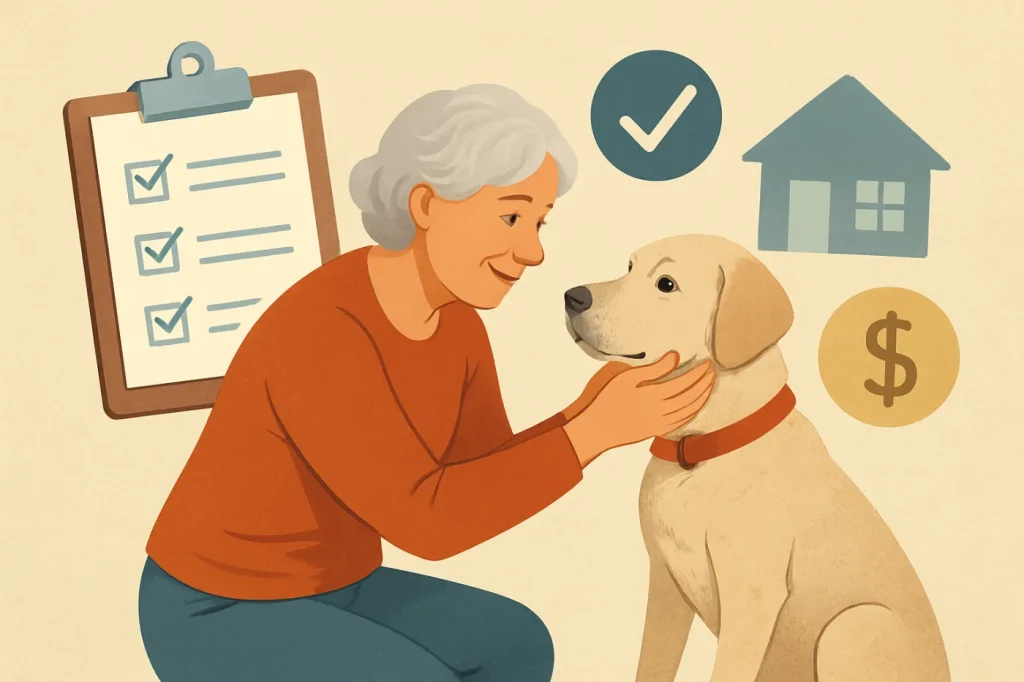
To get approved to adopt a senior dog, you need to show that you understand older dogs’ needs, have a realistic plan for medical costs and time, and can give the dog a safe, stable home for the rest of their life. Rescue groups are not looking for perfection; they are looking for honest, thoughtful adopters who have planned ahead.
How rescues evaluate adopters for senior dogs
Senior dogs are often overlooked, so many rescues are thrilled when someone is interested in them. At the same time, they screen carefully because older dogs may have health issues and less time left. Their goal is to avoid another surrender or stressful move.
Most rescues look at four big areas when reviewing senior dog applications:

- Safety and stability of your home – Is it secure, calm, and reasonably senior-dog-friendly?
- Your time and lifestyle – Can you meet the dog’s daily care needs and adjust as they age?
- Financial readiness – Can you handle routine vet care plus likely age-related issues?
- Long-term plan – What happens if the dog outlives your current situation or your health changes?
If you can clearly explain these four areas, your chances of approval for a senior dog usually improve significantly.
Unique needs of senior dogs and how that affects screening
Most shelters and rescues consider a dog “senior” somewhere around the last third of their expected lifespan. That might be around 7–8 years for many large breeds and closer to 9–10 years or more for some smaller breeds. Age is only part of the picture, though. What matters for your application is that you understand how senior needs differ from younger dogs.
Common senior dog needs rescues worry about:
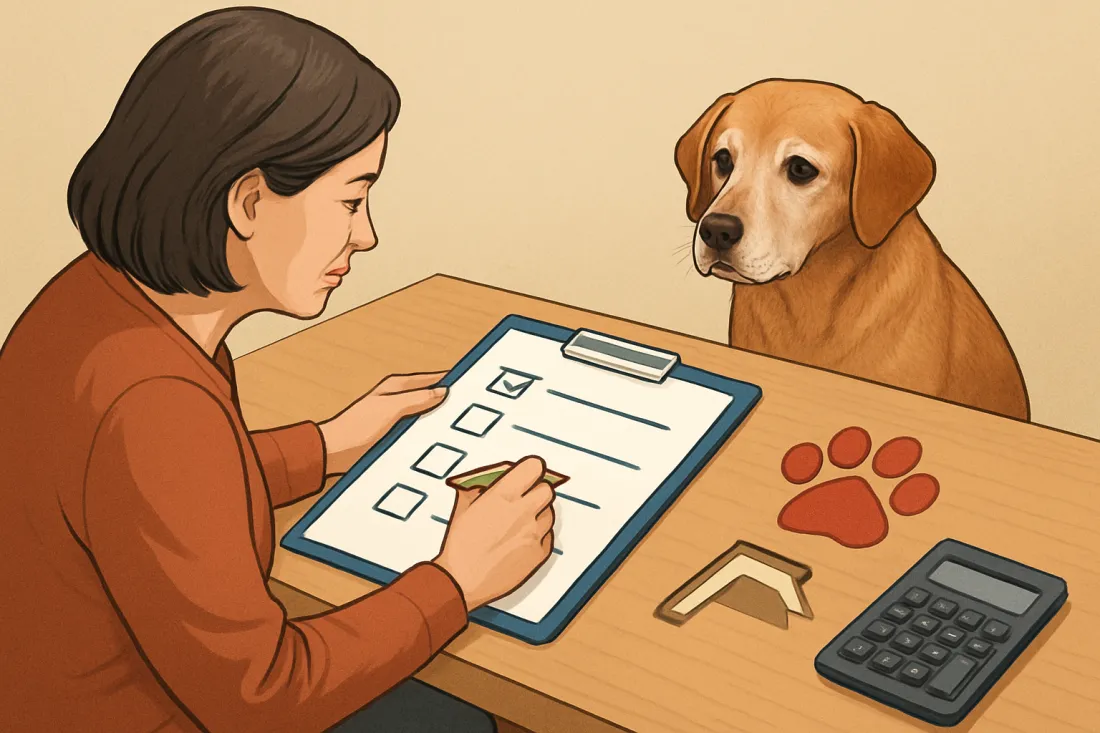
- Mobility and comfort – Arthritis, stiffness, or slower movement; need for soft bedding, fewer stairs, and shorter walks.
- More frequent vet care – Senior wellness exams, bloodwork, dental care, and monitoring for chronic conditions.
- Medication and special diets – Joint supplements, pain meds, heart meds, or prescription food.
- Bathroom needs – More frequent potty breaks, possible incontinence, or accidents.
- Emotional needs – Some seniors are more sensitive to loud noise, chaos, or being left alone for long periods.
Rescues screen adopters for senior dogs by looking for signs that you:
- Have thought about how to manage stairs, slippery floors, or long flights of steps.
- Can get to a vet reasonably easily and are open to following medical advice.
- Accept that the dog may have a shorter lifespan and possible health surprises.
- Are adopting for the dog’s sake, not just because a senior seems “easier” or “temporary.”
When you show that you understand these realities and still want to adopt, you look like a strong match.
Typical questions on senior dog adoption applications
Most senior dog applications use the same core questions as any dog adoption form, then add a few that focus on age and health. Expect versions of the following:
Home and lifestyle questions
- What is your housing situation (rent/own, house/apartment)?
- Do you have stairs inside or outside your home?
- How many hours will the dog be left alone on a typical day?
- Who lives in the home (adults, children, other pets)?
- Where will the dog sleep at night?
- Where will the dog stay when you travel?
Experience and expectations
- Have you had dogs before? Any experience with senior or special-needs dogs?
- Why are you interested in adopting a senior dog specifically?
- What kind of exercise and mental stimulation will you provide?
- What behaviors are you not willing to tolerate?
- What would cause you to return a dog?
Health and financial questions
- Who is your current or planned veterinarian?
- How often do you plan to take the dog to the vet?
- Are you prepared for the possibility of ongoing medication or special diets?
- How would you handle an unexpected medical expense?
- Are you open to hospice or end-of-life care when the time comes?
Age and long-term planning questions
- How long do you plan to keep this dog?
- What is your plan if your health or mobility changes?
- If you are older, who will care for the dog if it outlives you?
- Do you have a friend or family member who can step in if needed?
None of these are trick questions. Rescues are looking for thoughtful, specific answers instead of vague promises.
How to talk about your time and long-term plans
Time and long-term planning are two of the most important parts of getting approved for a senior dog. Rescues want to know that the dog will not be left alone for long stretches and that you have a realistic plan if your situation changes.
Explaining your daily schedule honestly
Be specific about your routine and how it fits a senior dog’s needs:
- Work schedule – Mention your typical hours, commute, and whether you work from home or have flexibility.
- Breaks and support – If you cannot come home midday, explain who can help with potty breaks or check-ins.
- Evening and weekend time – Describe how you plan to include the dog in your daily life.
Example of a strong answer:
“I work 9–3 on weekdays and am home the rest of the time. My partner works from home full-time, so the dog will rarely be alone for more than 2–3 hours. We plan short morning and evening walks and plenty of cuddle time on the couch.”
Addressing long-term plans, especially for older adopters
Many older adults are excellent senior dog adopters because they are home more and appreciate a calm companion. Rescues may still ask about your age and health because they want to know the dog will be cared for if something happens to you.
Helpful points to cover:
- Any realistic health limitations that might affect dog care (and how you plan around them).
- Family, friends, or neighbors who could step in if you are hospitalized or need help.
- Whether you have talked with someone who agrees to take the dog if you cannot keep them.
- Any written plan, such as including the dog in your personal planning documents.
Example of a reassuring answer:
“I am 72 and in good health. I walk daily and can manage short walks and basic care. My daughter lives 10 minutes away and has agreed in writing to take the dog if my health changes. She already has a senior-friendly home and knows I am applying for this dog.”
Budgeting for senior dog medical care
Senior dogs are more likely to need regular vet visits, medication, or special diets. Rescues are not expecting unlimited funds, but they do want to see that you have thought about costs and have a plan.
Typical cost areas to plan for
Exact prices vary widely by location and clinic, so you will need to check with local veterinarians. As you plan, think in terms of categories rather than exact numbers:
- Routine care – Annual or semiannual exams, vaccines, parasite prevention, and dental cleanings.
- Diagnostics – Occasional bloodwork, X-rays, or other tests if new symptoms appear.
- Medication – Pain relief for arthritis, heart medication, thyroid medication, or other chronic treatments.
- Food and supplements – Senior formulas, joint supplements, or prescription diets if recommended.
- Emergency or urgent care – Unplanned visits for sudden illness or injury.
To prepare for your application, call a local vet and ask for a rough range of annual costs for a senior dog of the size and breed type you are considering. You can then describe your plan in the application without quoting exact numbers.
Ways to show financial readiness on your application
You do not need to share bank statements. Instead, explain how you will handle expected and unexpected costs:
- Mention that you have room in your monthly budget for vet care and pet supplies.
- Note if you have an emergency fund that could cover an urgent vet visit.
- Share if you plan to use pet insurance, a wellness plan, or a savings account for the dog.
- Explain how you would decide on treatment options if a serious illness appears.
Example of a balanced answer:
“I understand that senior dogs may need more frequent vet care and medication. I have room in my monthly budget to cover routine visits and prescriptions. For larger unexpected expenses, I have an emergency fund and would discuss options with my vet to choose treatment that keeps the dog comfortable and respects their quality of life.”
Comparison table: Senior dog vs adult vs puppy adoption fit
If you are not sure whether a senior dog is the best match, compare it with adopting a younger adult or a puppy. Rescues appreciate when adopters choose the age range that truly fits their life.
| Dog age group | When it usually fits | Key challenges | Why rescues might approve or hesitate |
|---|---|---|---|
| Senior dog | Calmer households, people who are home often, adopters comfortable with shorter timelines and medical needs. | Higher chance of chronic health issues, possible mobility limits, more frequent vet visits, end-of-life decisions sooner. | Approve when the adopter has realistic expectations, a vet plan, and a stable home. Hesitate if the adopter expects a “cheap, easy” dog or has no plan for medical care. |
| Adult dog (about 2–7 years) | Most lifestyles, including working adults who can provide exercise and training. | May still need training, can have behavior habits from past homes, energy level may be high. | Approve when the adopter has time for training and exercise. Hesitate if the adopter underestimates energy needs or has unrealistic behavior expectations. |
| Puppy | Households with time for intensive training, socialization, and frequent potty breaks. | Very time-consuming, destructive chewing, house-training, long-term commitment of a decade or more. | Approve when someone is home often and ready for years of care. Hesitate if the adopter works long hours, has limited mobility, or wants an “already trained” dog. |
If you realize that your lifestyle fits an adult dog better than a senior, that is a responsible decision, not a failure.
Structured checklist: Are you ready to adopt a senior dog?
Use this checklist before you apply. If you can honestly say “yes” to most of these, you are likely a strong candidate for a senior dog.
Home and environment
- I can provide a calm space where a senior dog can rest without being constantly disturbed.
- There is a safe place for the dog to sleep that is easy to reach (no steep stairs required).
- I can add simple aids if needed (rugs on slippery floors, ramps, raised food bowls).
- My landlord or housing rules allow dogs, and I know any size or breed limits.
Time and routine
- I can let the dog out for bathroom breaks at least every 4–6 hours during the day, or I have help.
- My schedule allows daily short walks or gentle play, adjusted to the dog’s ability.
- I am home enough to provide companionship; the dog will not be alone most of the day, every day.
- I am willing to adjust my routine if the dog’s needs change with age.
Health and financial planning
- I have a veterinarian in mind or am willing to find one experienced with senior dogs.
- I can cover routine vet care and expect that costs may rise as the dog ages.
- I have a plan for unexpected vet bills (savings, family support, or another realistic option).
- I am prepared to follow vet advice about pain management and quality of life.
Emotional readiness and long-term plan
- I understand that I may have less time with a senior dog than with a puppy.
- I am adopting to give this dog a good life, not just to “try out” pet ownership.
- I have discussed with at least one trusted person what will happen to the dog if I cannot care for them.
- I am willing to stay in touch with the rescue and ask for help if I run into problems.
If you find yourself answering “no” to several items, you might still be a great adopter, but a different age or type of dog could be a better fit. You can also work through a self-check like the am I ready to adopt a dog quiz to clarify your situation.
Sample answers that show realistic, compassionate planning
Use these examples as inspiration, not scripts. Your answers should match your real life.
“Why do you want to adopt a senior dog?”
“I know senior dogs are often overlooked, and I have the time and calm home environment that many of them need. I am not looking for a jogging partner; I want a companion for walks around the block, car rides, and relaxing at home. I understand that a senior dog may have medical needs and a shorter time with me, and I am ready to make that time as comfortable and loving as possible.”
“How will you handle potential medical issues?”
“I expect that a senior dog may develop arthritis or other age-related conditions. I have a regular veterinarian and will schedule recommended senior checkups. I have room in my budget for routine care and medication. For larger, unexpected expenses, I have savings and will work with my vet to choose treatments that focus on the dog’s comfort and quality of life.”
“How long will the dog be alone each day?”
“On weekdays, the dog will be alone for about three hours in the morning while I run errands. The rest of the time, either my spouse or I will be home. If we need to be out longer, my neighbor, who already helps with her own senior dog, has agreed to stop by for a potty break and check-in.”
“What is your plan if your situation changes?”
“If I have a temporary health issue or need to travel unexpectedly, my sister has agreed to care for the dog; she has met my current pets and is comfortable with senior dogs. If I ever faced a long-term change that truly prevented me from caring for the dog, I would first work with my family to keep the dog in a familiar home. I would also contact the rescue for guidance rather than surrendering the dog elsewhere.”
“What behaviors are you not willing to tolerate?”
“I understand that senior dogs may have accidents or need help with house-training in a new environment, and I am prepared to be patient with that. I am not comfortable with severe aggression toward people or other pets, but I am open to working with a trainer on mild issues like barking or leash reactivity.”
Common mistakes that get senior dog applications declined
Many people are turned down not because they would be bad owners, but because their application raises preventable red flags. Avoid these common mistakes:
- Being vague or unrealistic – Writing “I will do whatever it takes” without details about time, money, or plans makes it hard for rescues to trust your commitment.
- Downplaying medical needs – Saying “I only want a healthy senior with no issues” can signal that you are not prepared for normal aging.
- Expecting a “low-effort” dog – Describing a senior dog as a cheap or temporary option instead of a full family member is a major red flag.
- Ignoring your own limits – Claiming you can walk a large, mobility-challenged dog several miles a day when you have your own mobility issues may sound unrealistic.
- Not mentioning a backup plan – Leaving the “what if something happens to you” question blank or vague, especially if you are older, can worry rescues.
- Hiding information – Not disclosing past pet surrenders, landlord restrictions, or other pets in the home can lead to automatic denial if discovered later.
It is better to be honest about your limits and let the rescue help match you with the right dog than to stretch the truth and end up with a poor fit.
When a senior dog might not be the right fit
Choosing not to adopt a senior dog can be an act of responsible pet ownership if your situation does not match their needs. Consider whether any of these apply:
- Very long workdays with no support – If the dog would be alone 9–10 hours most days and you have no one to help with breaks, a senior may struggle.
- Severe budget strain – If even routine vet care would be a serious hardship, the likely medical needs of a senior dog could create stress for both of you.
- Highly chaotic environment – Constant noise, rough play from young children, or frequent parties can overwhelm many older dogs.
- Strong desire for high-intensity activities – If your main goal is a running or hiking partner for long distances, a senior dog may not be able to keep up safely.
- Emotional difficulty with end-of-life care – If you know that facing a pet’s declining health in the near future would be unbearable right now, it may be kinder to wait.
If you recognize yourself in several of these points, consider an adult dog with fewer medical needs or use a resource like the should I adopt a dog or cat quiz to explore other options. You can still support senior dogs through fostering, donations, or volunteering.
Practical next steps to strengthen your senior dog application
Once you have decided that a senior dog is right for you, take these steps before applying:
- Talk to a vet – Call a local veterinarian to ask what senior dog care typically involves and what to expect in terms of visits and common conditions.
- Assess your home – Walk through your space and note any hazards: steep stairs, slippery floors, or clutter. Plan simple changes like adding rugs or baby gates.
- Clarify your budget – Review your monthly finances and decide how much you can reasonably set aside for pet care.
- Choose a backup caregiver – Talk with a trusted friend or family member about being your emergency contact for the dog, and mention this in your application.
- Gather references – Have contact information ready for a vet (past or future) and possibly a personal reference who knows how you care for animals.
- Read the rescue’s policies – Check what they expect regarding fencing, indoor living, and vet care so you can address any questions directly.
- Be ready for a home visit or virtual tour – Many rescues do a quick check to confirm that your home is safe and matches what you described.
If you are still deciding where to apply, you can also review guidance on where to adopt a pet near me to find reputable shelters and rescues in your area.
FAQ about getting approved to adopt a senior dog
What is the most important thing rescues want to see on a senior dog application?
Rescues want to see that you have realistic expectations and a plan. That means you understand that senior dogs may need more vet care, may have mobility or bathroom issues, and may not live as long as a younger dog. When you explain clearly how you will handle daily care, medical costs, and long-term planning, you show that you are adopting for the dog’s sake, not just because a senior seems easier.
What mistakes should I avoid when applying for a senior dog?
Avoid being vague, minimizing medical needs, or presenting a senior dog as a low-effort option. Do not hide important information about your schedule, housing, or past pets. Instead of writing general promises like “I will do anything,” give specific examples of your routine, budget planning, and backup caregiver. Rescues are more likely to approve honest, detailed applications than perfect-sounding ones.
Is there an age that is “too old” to adopt a senior dog?
There is no single age that automatically disqualifies someone from adopting a senior dog. Many older adults make excellent adopters because they are home more and value a calm companion. What matters more than your age is your health, mobility, support system, and long-term plan for the dog if your situation changes. If you can clearly explain who will care for the dog if you cannot, rescues are often very open to older adopters.
What should I do after reading this if I still want to adopt a senior dog?
First, use the readiness checklist to confirm that a senior dog truly fits your life. Next, talk to a local vet about typical senior care and costs. Then, prepare your home with simple senior-friendly adjustments and choose a backup caregiver. Once you have this in place, start contacting reputable shelters and rescues, read their adoption policies, and complete applications with honest, detailed answers about your time, budget, and long-term plans.
How likely is a senior dog to be adopted compared with younger dogs?
Senior dogs are often adopted more slowly than puppies or young adults because many people worry about medical costs or shorter lifespans. That is exactly why rescues value thoughtful senior adopters so highly. When your application shows that you understand the realities and still want to give an older dog a loving home, you may actually have an easier time being matched with the right senior than you would with a highly in-demand puppy.