
Low cost preventive care for pets means putting most of your limited budget into the few services that prevent the biggest, most expensive problems: core vaccines, heartworm and parasite prevention, and at least one wellness check each year. You do not need every optional test or premium product, but you do need a simple, realistic plan.
This guide explains which preventive services matter most in the United States, how to keep them affordable, and how to turn that into an annual plan you can actually follow.
Essential preventive care services to focus on first
Preventive care includes everything you do to keep your pet healthy instead of only reacting when something goes wrong. When money is tight, the goal is not “do everything,” but “do the most important things consistently.”
Core building blocks of preventive care
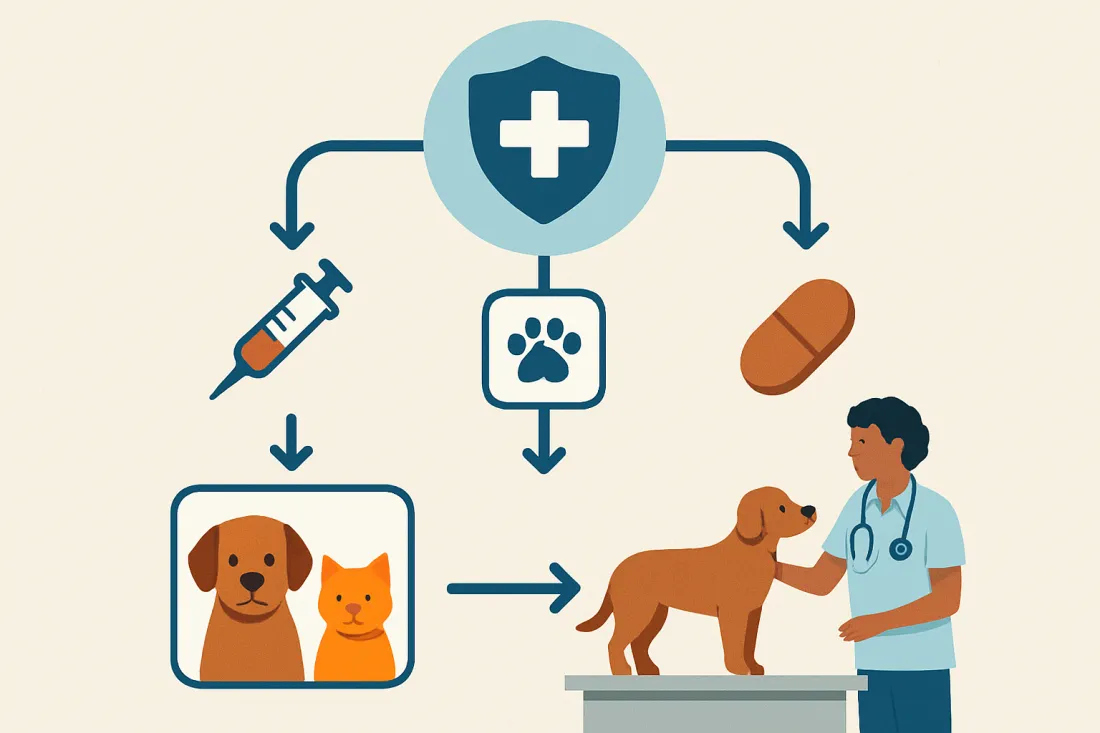
For most dogs and cats in the U.S., preventive care falls into these main categories:
- Core vaccines – Protect against the most serious and common infectious diseases.
- Non-core vaccines – Added based on lifestyle and local risk.
- Heartworm prevention – Especially important for dogs in many U.S. regions.
- Flea and tick control – Prevents itching, skin infections, and some serious diseases.
- Annual wellness exam – A physical checkup to catch issues early.
- Dental and home care – Brushing, nail trims, and basic grooming.
- Weight and nutrition management – Keeping your pet at a healthy body condition.
On a limited budget, your first priorities are usually:

- Keeping rabies and other core vaccines up to date.
- Providing heartworm prevention for dogs (and for cats if your vet recommends it).
- Using flea and tick prevention during your local risk season.
- Scheduling at least one wellness exam per year for healthy adults.
Other services like bloodwork, dental cleanings, and some non-core vaccines are still valuable, but you can time them carefully or space them out with your veterinarian’s guidance.
Which vaccines are essential in the U.S. and how to prioritize them
Vaccines are one of the most cost-effective tools in preventive care. Treating a preventable disease can cost many times more than the vaccine series that would have avoided it, and it is often much harder on your pet.
Core vaccines for dogs
Core vaccines are recommended for almost all dogs, regardless of lifestyle:
- Rabies – Required by law in many U.S. areas and critical for public health. It protects against a fatal disease that can spread to people. Puppies usually receive a series, then a booster after about a year, and then boosters at intervals set by local rules and your vet’s protocol.
- DA2PP (also called DAPP or DHPP) – A combination vaccine that typically covers distemper, adenovirus, parvovirus, and parainfluenza. These diseases can be severe or fatal, especially in puppies and unvaccinated dogs.
On a budget, keeping rabies and DA2PP current is usually non-negotiable. If you must delay something, talk with your vet about which vaccine is most urgent and how long you can safely wait.
Common non-core vaccines for dogs
Non-core vaccines are added based on where you live and how your dog lives:
- Bordetella (kennel cough) – Often required for boarding, grooming, training classes, or dog daycare.
- Leptospirosis – Considered in many areas, especially where dogs may contact wildlife urine, standing water, or farm environments.
- Lyme disease – Considered in regions with significant tick activity and Lyme risk.
To keep costs down, ask your vet which of these truly fits your dog’s risk. A dog that never boards and rarely meets other dogs may not need the same vaccine list as a social, outdoor dog in a tick-heavy area.
Core vaccines for cats
Even indoor cats need vaccines. Core vaccines for cats usually include:
- Rabies – Often required by law and important for human and animal safety.
- FVRCP – A combination vaccine that typically covers feline viral rhinotracheitis (herpesvirus), calicivirus, and panleukopenia. These can cause severe respiratory disease and life-threatening illness, especially in kittens.
Some cats also receive FeLV (feline leukemia virus) vaccine, especially when young or if they go outdoors or live with FeLV-positive cats. Your vet can help you decide whether FeLV is needed long term or only during higher-risk life stages.
How to keep vaccine costs manageable
- Use low-cost vaccine clinics – Many communities offer periodic clinics with reduced fees for core vaccines, often run by shelters, humane groups, or mobile services.
- Ask about bundled wellness packages – Some clinics offer puppy/kitten packages or annual wellness bundles that combine exams, vaccines, and parasite tests at a lower combined cost.
- Stay on schedule – Letting vaccines lapse can mean restarting series, which may cost more overall. Keep a record and set reminders.
- Bring all records – If you change clinics, bring your pet’s vaccine history so you do not pay for unnecessary repeats.
If you want a detailed timing guide for vaccines and other services by age, a resource like a pet preventive care schedule USA can help you see what is typically due at each life stage.
Heartworm, flea, and tick prevention options on a budget
Parasite prevention can feel expensive month to month, but the illnesses they prevent are usually far more costly and risky to treat. The key is choosing products that fit your region, your pet, and your budget—and then using them consistently.
Heartworm prevention
Heartworm is spread by mosquitoes and can cause severe heart and lung disease, especially in dogs. In many parts of the U.S., year-round prevention is recommended. Even in cooler climates, your vet may advise seasonal or year-round coverage depending on local mosquito activity.
Common heartworm prevention formats include:
- Monthly chewable tablets – Often also protect against some intestinal worms.
- Monthly topical liquids – Applied to the skin, sometimes combined with flea prevention.
- Long-acting injections – Given at the vet clinic and lasting for an extended period.
Ways to manage heartworm prevention costs:
- Ask about generic options – Some heartworm preventives have lower-cost generic versions.
- Buy in multi-month packs when realistic – A 6- or 12-month supply may lower the cost per dose if you can afford the upfront expense.
- Use manufacturer rebates or loyalty programs – Many brands offer rebates when purchased through a veterinarian.
- Test as recommended – Your vet may recommend periodic heartworm testing. Skipping prevention for months and then restarting without testing can be unsafe.
Flea and tick prevention
Fleas and ticks are more than a nuisance. They can cause allergic reactions, skin infections, anemia, and transmit diseases. Prevention options include:
- Monthly topical treatments – Applied to the skin, often at the back of the neck.
- Oral chewable tablets – Given monthly or at other intervals depending on the product.
- Collars – Some collars provide longer-lasting flea and tick protection.
To keep flea and tick control affordable:
- Match the product to your real risk season – In colder regions, your vet may suggest seasonal use. In warmer climates, year-round protection may still be needed.
- Treat all pets in the household – Treating only one pet often leads to ongoing infestations and repeated costs.
- Avoid very cheap, unverified products – Extremely low-cost products from unknown sources may be ineffective or unsafe. Ask your vet which budget-friendly options they trust.
- Combine with home cleaning – Regular vacuuming, washing bedding, and yard maintenance reduce flea populations and help your products work better.
Choosing between parasite prevention options
When comparing parasite products, consider:
- Coverage – Does it protect against fleas only, or fleas and ticks, or also heartworm and intestinal worms?
- Frequency – Monthly vs. longer-acting options. Longer-acting products may cost more upfront but can reduce missed doses.
- Your pet’s preferences – Some pets refuse chewables but tolerate topicals, and vice versa.
- Your ability to remember dosing – If you often forget monthly doses, a longer-acting option might be more cost-effective over time.
How skipping prevention increases long‑term costs
It is understandable to think about cutting preventive care when money is tight. However, skipping prevention often leads to higher bills later and more suffering for your pet. While exact dollar amounts vary, the pattern is consistent: prevention is usually far cheaper and kinder than treatment.
Prevention vs. treatment: typical cost patterns
- Parvovirus vs. puppy vaccines – A full puppy vaccine series requires several visits, but treating parvovirus often involves hospitalization, intensive care, and a much higher total bill.
- Heartworm prevention vs. heartworm treatment – Monthly prevention adds up over the year, but treating adult heartworm disease typically involves multiple vet visits, medications, strict exercise restriction, and a significantly larger total cost.
- Flea control vs. flea infestation – Regular prevention helps avoid severe infestations that can require repeated treatments, home pest control, and treatment of secondary skin infections.
- Dental care vs. advanced dental disease – Brushing at home and periodic cleanings can delay or reduce the need for extractions and treatment of painful infections, which are more complex and expensive.
Beyond money, skipping prevention can mean:
- More pain and discomfort for your pet.
- Higher risk of diseases that can spread to people, such as some parasites and rabies.
- Emergency visits that are stressful and often more expensive than planned care.
If you are trying to save overall, it usually makes more sense to maintain a basic level of prevention and cut back on non-essential extras instead of dropping prevention entirely.
Where to find low‑cost vaccine clinics and wellness options
In many U.S. communities, there are ways to reduce the cost of vaccines and basic preventive services if you know where to look. Availability varies by location, so you will need to check what is offered near you.
Common sources of low‑cost preventive care
- Animal shelters and humane societies – Many offer low-cost vaccine clinics, spay/neuter programs, and basic wellness services on certain days.
- Mobile vaccine clinics – These may visit pet stores, community centers, or parking lots on scheduled days, offering discounted vaccines and parasite prevention.
- Nonprofit veterinary clinics – Some cities have nonprofit or community clinics with sliding-scale fees based on income.
- Veterinary schools – Teaching hospitals sometimes provide services at reduced cost, though appointment availability may be limited.
- Local government programs – Some counties or cities sponsor low-cost rabies clinics or pet wellness events.
How to locate low‑cost options near you
To find affordable preventive care in your area, you can:
- Search online for your city or county name plus terms like “low-cost pet vaccines,” “pet wellness clinic,” or “spay and neuter assistance.”
- Check the websites or social media pages of local shelters and humane societies for clinic schedules.
- Call nearby veterinary clinics and ask if they know of any community programs or special clinic days.
- Ask local rescue groups or pet food banks; they often know about regional resources.
When you find a potential clinic, confirm:
- Which vaccines and services are offered.
- Whether appointments are required or it is first-come, first-served.
- What documentation you need to bring, such as previous vaccine records or proof of residence.
- How payment works and whether there are income-based discounts.
For broader ideas on stretching your pet care budget, you may also find it helpful to read about saving money on pet care without sacrificing quality.
Comparison table: preventive care options and budget trade‑offs
The table below compares common preventive care choices and how they affect both risk and budget planning.
| Preventive area | Lower-cost approach | When it can make sense | Main risks or trade-offs | Higher-cost but broader approach |
|---|---|---|---|---|
| Core vaccines | Use low-cost community vaccine clinics | Healthy pets needing basic rabies and core shots; owners comfortable with brief, high-volume visits | Limited time with a vet; fewer chances to discuss other health issues | Full-service vet exam with vaccines and personalized advice |
| Non-core vaccines | Skip or delay non-core vaccines after a risk discussion with a vet | Low-risk lifestyle (indoor-only pets, minimal exposure to other animals or wildlife) | Sudden lifestyle changes (boarding, moving, travel) may leave gaps in protection | Follow full vaccine recommendations for all likely risks |
| Heartworm prevention | Generic monthly preventive bought in multi-month packs | Owners who can remember monthly dosing and want to keep per-dose cost down | Missed doses increase risk; may not include extra parasite coverage | Brand-name or long-acting options with broader parasite protection |
| Flea and tick control | Seasonal use during peak months only (if your vet agrees) | Regions with cold winters and clearly defined flea/tick seasons | Parasites may still be active in “shoulder seasons”; stopping too early can lead to infestations | Year-round broad-spectrum flea and tick prevention |
| Wellness exams | Once-yearly exam for healthy adult pets | Young to middle-aged pets with no chronic conditions and attentive owners | Subtle early signs between visits may be missed if owners do not monitor closely | Twice-yearly exams, especially for seniors or pets with health issues |
| Dental care | Daily tooth brushing and dental chews, delaying cleanings when safe | Pets that tolerate home care and have mild tartar | May not be enough for pets with advanced dental disease; problems can progress unnoticed | Regular professional cleanings with dental X-rays as advised |
| Diagnostics (bloodwork, screening tests) | Basic tests only when there is a specific concern or before anesthesia | Healthy young adults with no symptoms and limited budget | Some silent diseases may go undetected until later stages | Routine screening panels at recommended intervals |
Structured checklist: annual low‑cost preventive care plan
Use this checklist to build a simple, low-cost preventive care plan for your dog or cat. Adjust timing and details with your veterinarian based on your pet’s age, health, and local risks.
Step 1 – Gather your pet’s basic information
- Write down your pet’s age, species, and breed.
- Note any existing health conditions or medications.
- List your pet’s lifestyle factors: indoor-only, outdoor access, boarding, dog parks, travel, exposure to wildlife or standing water.
- Collect all previous vaccine and medical records.
Step 2 – Confirm core vaccines and due dates
- Check when your pet last received rabies and other core vaccines (DA2PP for dogs, FVRCP for cats).
- Call your vet or a low-cost clinic to confirm when boosters are due.
- Ask whether your pet is fully vaccinated or needs to complete a series (common for puppies and kittens).
- Set calendar reminders a few weeks before vaccines expire so you can budget ahead.
Step 3 – Decide on non‑core vaccines
- Discuss your pet’s lifestyle with a vet and ask which non-core vaccines are recommended (for example, Bordetella, leptospirosis, Lyme, FeLV).
- For each recommended vaccine, ask whether it is essential now or can safely be delayed.
- Prioritize vaccines that are required for services you plan to use, such as boarding, grooming, or training classes.
Step 4 – Set up parasite prevention
- Ask your vet which heartworm preventive is appropriate for your pet and region.
- Confirm whether your area needs year-round or seasonal heartworm and flea/tick prevention.
- Choose a product type (chewable, topical, collar) that fits your pet and your budget.
- Mark monthly or seasonal dosing reminders on your calendar or phone.
Step 5 – Schedule at least one wellness exam
- Book a yearly exam for healthy adult pets; ask if seniors or pets with conditions should come more often.
- Prepare a list of questions and concerns (weight, behavior changes, lumps, appetite, mobility).
- Bring a fresh stool sample if your vet recommends parasite screening.
- Ask your vet to help you prioritize tests if you cannot afford everything at once.
Step 6 – Plan simple home care
- Choose a balanced diet appropriate for your pet’s life stage and health.
- Set a daily or weekly routine for tooth brushing, coat checks, and nail trims.
- Monitor your pet’s weight and body condition; adjust food and exercise as needed.
- Keep a simple health log of changes in appetite, energy, bathroom habits, or behavior.
Step 7 – Build a small preventive care budget
- Estimate yearly costs for vaccines, parasite prevention, and one exam using quotes from your vet or local clinics.
- Divide that total by 12 to see a rough monthly amount to set aside.
- Consider setting up a separate savings envelope or account just for pet care.
- Ask your vet if they offer wellness plans that spread costs into monthly payments.
Common mistakes that make “low cost” care more expensive
Trying to save money can sometimes backfire. Avoid these frequent mistakes when planning low cost preventive care for pets.
1. Stopping prevention completely to cut costs
Stopping all vaccines and parasite prevention may reduce expenses this month, but it increases the chance of emergencies and serious illness later. Even a minimal plan with core vaccines, heartworm prevention for dogs, and basic flea control is usually more cost-effective than doing nothing.
2. Choosing products only by price or online reviews
Buying flea, tick, or heartworm products based only on price or reviews can lead to:
- Ineffective products that do not protect your pet.
- Incorrect dosing, especially when pets grow or change weight.
- Using dog products on cats or vice versa, which can be dangerous.
Even if you are on a tight budget, ask a vet which lower-cost options they trust and how to use them safely.
3. Letting vaccines lapse and needing to restart series
Missing boosters by a wide margin can mean your pet needs extra doses to be fully protected again. That can cost more than staying on schedule. Use a calendar, phone reminders, or a note on the fridge to track due dates.
4. Ignoring early signs of illness
Waiting too long to address changes like weight loss, coughing, vomiting, or persistent itching can turn a small, manageable problem into a major one. If you notice a new symptom, call your vet and ask whether it can wait for the next scheduled visit or needs attention sooner.
5. Not updating the plan as pets age
Senior pets often need more frequent exams and may benefit from additional screening tests. At the same time, some vaccines or services may be spaced out differently. Review your preventive plan with your vet at least once a year so it stays appropriate for your pet’s life stage.
6. Overspending on extras while underfunding basics
It is easy to spend on toys, treats, and accessories while postponing vaccines or exams. When money is limited, prioritize:
- Core vaccines and parasite prevention.
- At least one wellness exam per year.
- Essential medications and food.
Then, add non-essential items only if your budget allows.
Decision criteria: choosing the right level of preventive care
Every pet and household is different. Use these criteria to decide how much preventive care you can and should provide right now, and where you can safely save.
1. Pet age and health status
- Puppies and kittens – Need more frequent visits for vaccine series and deworming. Skipping early care can have long-lasting effects.
- Healthy adults – Often can follow a once-yearly exam schedule with regular vaccines and parasite prevention.
- Seniors or pets with chronic disease – Usually benefit from more frequent monitoring. If you cannot do every recommended test, ask your vet which ones are most important.
2. Lifestyle and exposure risk
- Outdoor access, dog parks, boarding, and travel generally increase vaccine and parasite prevention needs.
- Indoor-only pets still need core vaccines and parasite checks, but may have fewer non-core needs.
- Multi-pet households may need stricter parasite control to prevent spread between animals.
3. Local disease and parasite patterns
- Some regions have higher heartworm risk; others have more ticks or specific diseases like Lyme.
- Ask your vet which diseases they see most often and which preventives they consider essential for your area.
- Adjust your plan if you move to a new region with different risks.
4. Budget and ability to save over time
- If your budget is very tight, focus on core vaccines, heartworm prevention for dogs, and at least one exam.
- If you can save a small amount monthly, add flea and tick prevention and basic dental care.
- As your finances improve, consider adding routine bloodwork and more frequent exams, especially for older pets.
5. Access to low‑cost resources
- If you have access to low-cost clinics, you may be able to maintain a more complete preventive plan even on a limited income.
- If options are limited in your area, talk with a full-service vet about prioritizing and spacing out services to fit your budget.
What to do next after reading
To turn these ideas into action for your own pet:
- List what your pet is due for – Vaccines, heartworm test, parasite prevention refills, wellness exam.
- Call your vet or a local low-cost clinic – Explain your budget and ask which items are most urgent.
- Set a monthly pet care amount – Even a small, consistent amount helps you avoid surprise bills.
- Use reminders – Add vaccine due dates and monthly parasite doses to your calendar.
- Review yearly – Revisit your plan each year or after major life changes such as moving, changing jobs, or adding a new pet.
If you want more detail on timing and frequency for different life stages, you can also compare your routine with an annual vet care schedule for dogs and cats USA.
FAQ about low cost preventive care for pets
What should I understand first about low cost preventive care for pets?
The key idea is that low cost preventive care is about prioritizing, not skipping everything. Focus your limited budget on the services that prevent the most serious and expensive problems: core vaccines, heartworm prevention for dogs, flea and tick control during risk seasons, and at least one wellness exam per year. From there, add or delay other services based on your pet’s age, lifestyle, and local risks. Even a basic plan is far better than no plan at all.
What common mistakes should I avoid when trying to save money on preventive care?
Frequent mistakes include stopping vaccines and parasite prevention completely, choosing very cheap products without veterinary guidance, missing vaccine boosters and needing to restart series, and ignoring early signs of illness to avoid a vet visit. Another common error is spending on non-essential items like toys or accessories while postponing core health needs. To avoid these pitfalls, keep a simple checklist of essential services, talk openly with your vet about your budget, and use reminders so you do not miss key dates.
How can I figure out which vaccines are truly essential for my pet in the U.S.
Start by asking a veterinarian which vaccines are considered core for your pet’s species and age. For most dogs, that includes rabies and a combination vaccine such as DA2PP; for most cats, rabies and FVRCP are core. Then discuss your pet’s lifestyle—indoor vs. outdoor, boarding, dog parks, travel—to see whether non-core vaccines like Bordetella, leptospirosis, Lyme, or FeLV are needed. If cost is a concern, ask your vet to rank vaccines in order of importance so you can schedule them over time instead of all at once.
What should I do right now if my pet is behind on vaccines or parasite prevention?
If your pet is overdue, gather any medical records you have and call a vet or low-cost clinic. Explain that you are behind and working with a limited budget. Ask which services are most urgent—for example, rabies and heartworm prevention for a dog in a high-risk area—and schedule those first. Then, create a simple plan to catch up on remaining vaccines and prevention over the next few months. Calendar reminders and setting aside a small amount each month can help you stay on track once you are caught up.
How can I tell if a low‑cost vaccine clinic is a good option for my pet?
A low-cost clinic can be a good choice if your pet is generally healthy and only needs basic services like vaccines, parasite prevention, or simple tests. Before going, check which services are offered, who is providing them (for example, licensed veterinarians or trained staff under veterinary supervision), and whether there is a plan for follow-up care if your pet has a reaction or needs additional treatment. If your pet has chronic health issues, is very anxious, or needs more in-depth evaluation, a full-service veterinary clinic may be a better fit, at least for the main exam.