

If you live in the United States and want a simple, age-based pet preventive care schedule for dogs and cats, think in three layers:
- How often your pet should see the vet (by age and life stage).
- What usually happens at those visits (vaccines, tests, parasite prevention, dental care).
- How to budget and avoid surprise emergency bills while keeping up with preventive care.
Use this guide to build a practical preventive care plan you can adapt with your own veterinarian, including age-based schedules, checklists, comparison tables, and money-saving options that don’t cut corners on care.
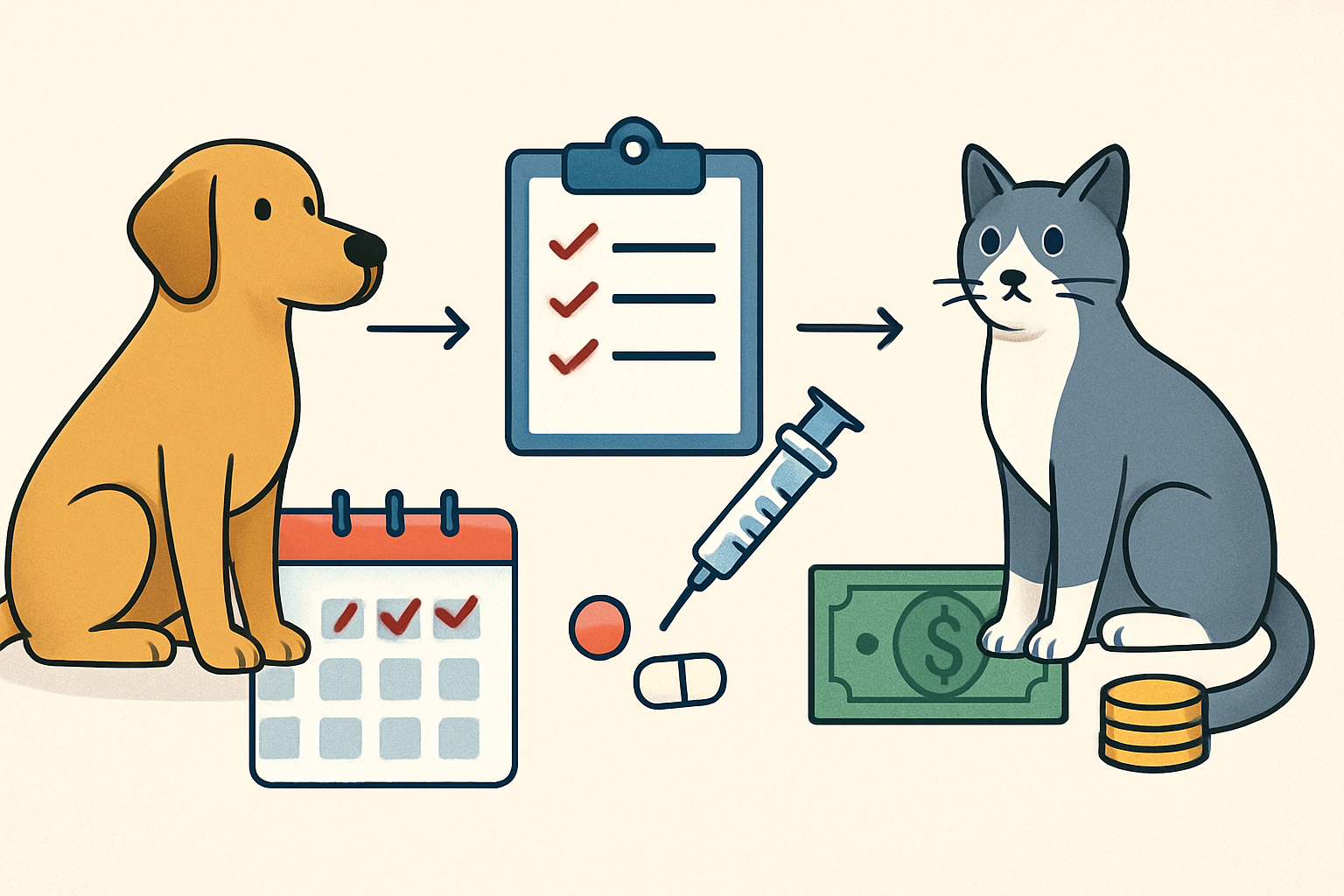
Annual wellness care vs emergency visits for dogs and cats
Preventive care and emergency care are very different, and mixing them up is one of the most expensive mistakes pet owners make.
Preventive (wellness) vet care is planned and predictable. It usually includes:
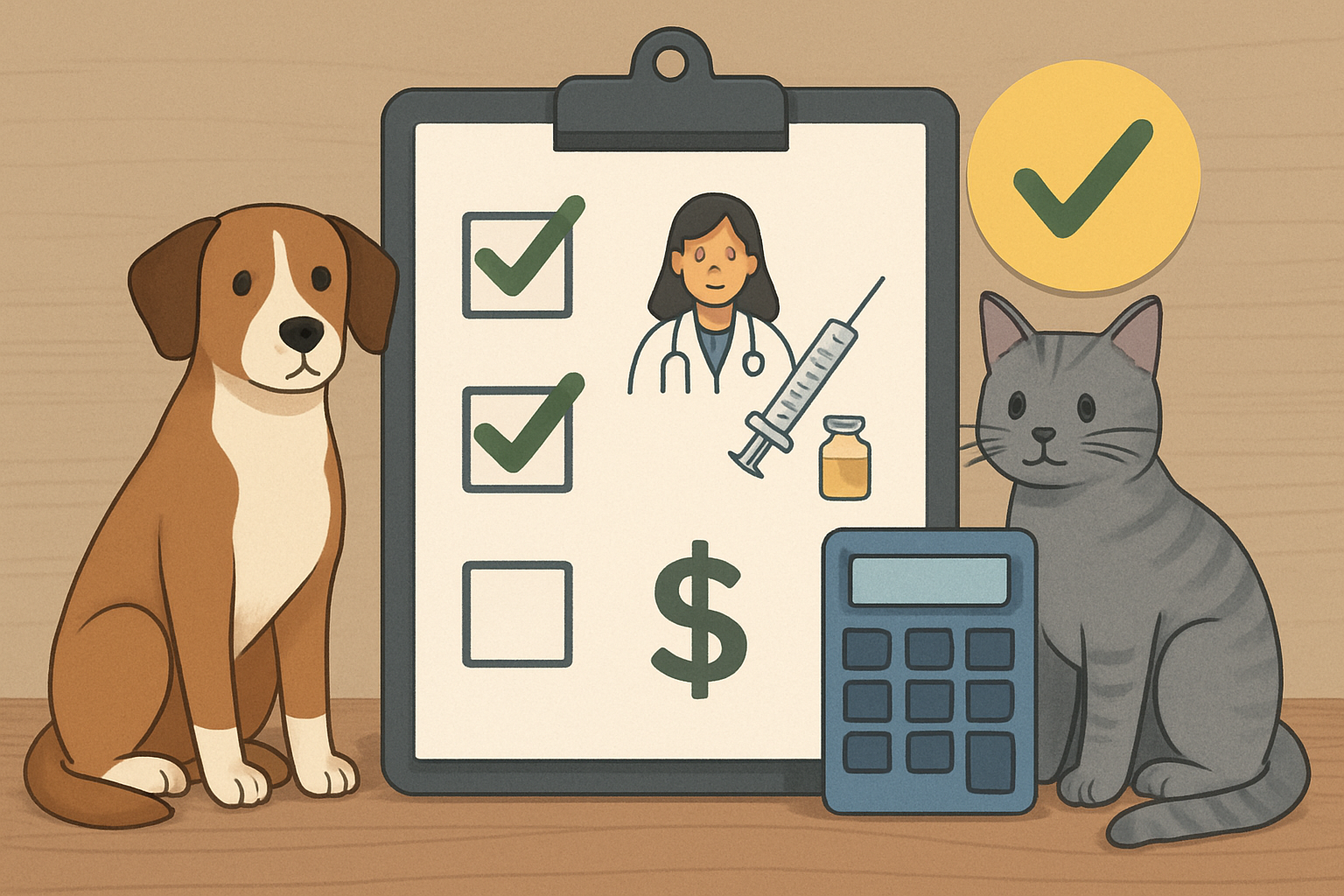
- Routine wellness exams (nose-to-tail physical check).
- Vaccinations and boosters on a set schedule.
- Parasite prevention (fleas, ticks, heartworms, intestinal worms).
- Screening tests (bloodwork, fecal tests, sometimes urine tests or imaging).
- Dental cleanings and home dental care plans.
- Nutrition, weight, and behavior reviews.
Emergency or urgent care is unplanned and often much more expensive. It covers things like:
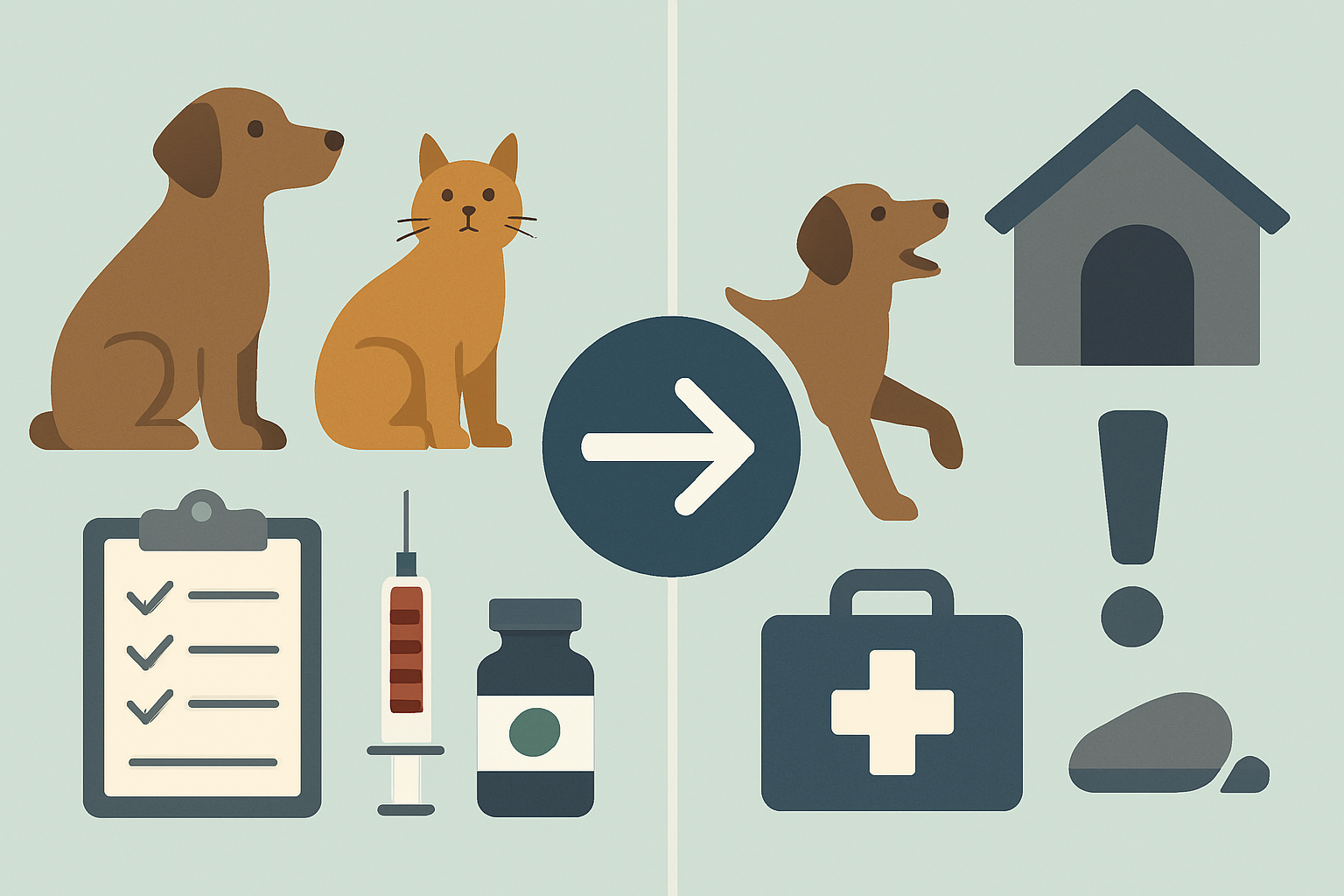
- Sudden injuries (car accidents, falls, bites).
- Poisoning or eating foreign objects.
- Severe vomiting, diarrhea, or breathing problems.
- Collapse, seizures, or extreme pain.
Think of preventive care as regular maintenance on a car: you spend smaller, predictable amounts to reduce the risk of huge repair bills later. A consistent annual vet care schedule helps catch problems early, when they’re usually easier and less costly to treat.
Comparing vet visit frequency for dogs vs cats by life stage
Dogs and cats follow similar patterns: more frequent visits when they’re very young and when they’re seniors, with steady annual checkups in between. Your vet may adjust this based on breed, lifestyle, and health conditions.
Comparison table: typical visit frequency by age
| Life stage | Dogs – typical visit frequency | Cats – typical visit frequency |
|---|---|---|
| Puppy/Kitten (birth to ~12 months) | Multiple visits during the first months of life for vaccines and checks, then at least one wellness visit around 1 year | Multiple visits during the first 16–20 weeks of life for vaccines and checks, then transition to annual wellness visits |
| Young Adult (about 1–7 years, depending on breed and size) | Generally once a year for a wellness exam, vaccines as needed, and prevention review | Generally once a year for a wellness exam, vaccines as needed, and prevention review |
| Senior (often from ~7 years and up, earlier for large-breed dogs) | Often every 6 months for exams and screening tests, based on vet advice | Often every 6–12 months for exams and screening tests, based on vet advice |
Because breeds and individual pets vary, confirm the exact timing with your veterinarian, especially for large or giant-breed dogs, which may be considered senior earlier than small dogs and cats.
Core vs lifestyle vaccines for U.S. dogs and cats on a preventive schedule
Vaccines are grouped into two broad categories in the United States:
- Core vaccines: recommended for almost all dogs and cats because they protect against widespread or severe diseases.
- Non-core (lifestyle) vaccines: recommended based on your pet’s risk (region, travel, boarding, outdoor access, wildlife exposure).
Your vet will design a vaccine schedule during puppy/kitten visits and then set boosters for adulthood. Exact timing and intervals can vary by product and local risk, so always follow your vet’s plan and the vaccine manufacturer’s instructions.
Typical core vaccines for dogs in the U.S.
- Rabies – required by many U.S. jurisdictions. Given as a puppy, then boosted on a schedule set by local rules and the vaccine used.
- Combination vaccine (often called “distemper-parvo” or similar) – protects against several serious viral diseases. Given in a series as a puppy, then boosted at intervals in adulthood.
Common non-core dog vaccines (your vet will advise based on lifestyle):
- Vaccines related to kennel cough risk (often recommended for dogs that board, attend daycare, or visit groomers).
- Vaccines for diseases spread by ticks or standing water in some regions.
Typical core vaccines for cats in the U.S.
- Rabies – often recommended even for indoor cats, depending on local rules and risk.
- Combination vaccine (often called “FVRCP” or similar) – protects against several common viral infections. Given in a kitten series, then boosted in adulthood.
Common non-core cat vaccines may be recommended for cats that go outdoors, live with other cats, or are at higher risk of certain infections.
Ask your vet to print or email your pet’s vaccine schedule so you can plug it into your preventive care plan and set reminders. For dogs, you can also cross-check timing with a detailed dog vaccination schedule USA guide.
Age-based preventive care schedule: what dogs and cats need at each stage
Use these tables as a starting point to discuss with your veterinarian. They compare typical preventive care for dogs and cats at each life stage, including vaccines, tests, and parasite control.
Puppy and kitten preventive care schedule (birth to ~12 months)
| Age range | Dogs – typical focus | Cats – typical focus |
|---|---|---|
| First weeks to ~4 months | Series of vet visits for exams, core vaccines, parasite checks, and deworming as advised; start heartworm and flea/tick prevention where recommended | Series of vet visits for exams, core vaccines, parasite checks, and deworming as advised; start flea/tick and other parasite prevention where recommended |
| 4–6 months | Booster vaccines, discussion of spay/neuter timing, microchipping, behavior and training guidance; continue monthly parasite prevention | Booster vaccines, discussion of spay/neuter timing, microchipping, litter box and behavior guidance; continue parasite prevention as advised |
| 6–12 months | Transition to annual wellness exam, review of diet, growth, and long-term prevention plan; confirm ongoing heartworm and flea/tick schedule | Transition to annual wellness exam, review of diet, growth, and long-term prevention plan; confirm ongoing flea/tick and other parasite schedule |
Adult dog and cat preventive care schedule (about 1–7 years)
| Visit type | Dogs – typical components | Cats – typical components |
|---|---|---|
| Annual wellness exam | Full physical exam, weight check, vaccine boosters as needed, parasite prevention review, diet and exercise discussion, behavior check | Full physical exam, weight check, vaccine boosters as needed, parasite prevention review, diet and enrichment discussion, behavior check |
| Screening tests | Heartworm test and fecal test as advised; additional bloodwork based on age and risk | Fecal test and other screening tests as advised; bloodwork may be added as the cat approaches middle age |
| Dental care | Home brushing or dental chews; professional cleaning when recommended by the vet | Home dental care if tolerated; professional cleaning when recommended by the vet |
| Parasite prevention | Year-round or seasonal heartworm, flea, tick, and intestinal worm prevention based on local risk | Year-round or seasonal flea, tick, and intestinal worm prevention based on local risk; heartworm prevention where recommended |
Senior dog and cat preventive care schedule (often 7+ years)
| Visit type | Dogs – typical components | Cats – typical components |
|---|---|---|
| Wellness exams | Often every 6 months, with focus on mobility, weight, heart and lung sounds, behavior changes, and quality of life | Often every 6–12 months, with focus on weight changes, kidney and thyroid health, mobility, behavior, and quality of life |
| Screening tests | Bloodwork, urine tests, and imaging as advised to monitor for age-related disease (for example, kidney, liver, heart, or cancer screening) | Bloodwork, urine tests, and imaging as advised to monitor for age-related disease (for example, kidney, thyroid, or heart screening) |
| Dental and pain management | More frequent dental checks; pain assessment and joint support plans; review of arthritis and mobility aids | Dental checks; pain assessment, especially for arthritis; environmental adjustments such as ramps, soft bedding, and easy-access litter boxes |
| Parasite prevention | Ongoing heartworm, flea, tick, and intestinal parasite prevention tailored to senior health status | Ongoing flea, tick, and intestinal parasite prevention; heartworm prevention where recommended, adjusted for senior health |
Parasite prevention schedules by U.S. climate for dogs and cats
Parasite risks in the United States vary by climate, but most pets need year-round protection against at least some parasites. Your vet will recommend specific products and timing.
Common parasites to plan for:
- Fleas and ticks.
- Heartworms (spread by mosquitoes).
- Intestinal worms (roundworms, hookworms, etc.).
How often you give preventives depends on the product (for example, many are monthly) and your local risk. Climate often affects the plan in these ways:
- Warm, humid, or southern states: Mosquito and flea seasons can be long or year-round. Vets in these areas often recommend year-round heartworm and flea prevention for both dogs and cats, plus tick control where ticks are common.
- Temperate or northern states: Parasite activity may drop in winter, but some vets still recommend year-round prevention because of unpredictable weather and indoor risks.
- Rural or wooded areas: Tick prevention is especially important for both dogs and outdoor cats, and sometimes for indoor cats that live with dogs who go outside.
Ask your vet:
- Which parasites are a concern in your ZIP code.
- Which products cover multiple parasites vs single ones.
- Exactly how often to give each product and how to set reminders.
Screening tests and dental care cadence for dogs vs cats
Screening tests and dental care are easy to overlook, but they are key parts of a preventive care schedule for dogs and cats.
Common screening tests your vet may recommend:
- Fecal test – checks for intestinal parasites. Often recommended at least once a year, sometimes more for puppies, kittens, or pets with diarrhea.
- Heartworm test (dogs) – often recommended regularly for dogs on heartworm prevention, especially in areas where heartworm is common.
- Bloodwork – helps monitor organ function and detect early disease, especially in seniors or pets on long-term medications.
- Urinalysis – can help detect kidney or urinary issues, often added for middle-aged and senior pets.
- Imaging (X-rays or ultrasound) – sometimes suggested for seniors or pets with specific risk factors.
Dental care cadence:
- Home care: Aim for regular tooth brushing if your pet tolerates it, or use vet-approved dental products such as rinses, gels, or dental diets.
- Professional cleanings: Your vet will recommend timing based on tartar buildup, gum health, and breed. Small dogs and some cats may need more frequent cleanings.
Include these tests and dental services in your yearly budget so they do not become surprise expenses. For cats, it can help to compare these costs with your overall budget using a monthly cost of owning a cat in the US guide.
Budgeting for preventive vet care without relying on exact prices
Routine vet care costs in the United States vary by region, clinic type, and your pet’s size and needs. Evidence from national averages suggests that a routine vet visit for a dog or cat can fall within a broad range, and that dogs often cost more than cats for similar services. Because prices change and can differ widely, use these steps instead of relying on a single number:
- Call 2–3 local clinics and ask for ballpark ranges for:
- Annual wellness exam.
- Core vaccine boosters.
- Common screening tests (fecal test, heartworm test for dogs, basic bloodwork for seniors).
- Typical dental cleaning (without extractions).
- Monthly parasite prevention products for your pet’s weight.
- Ask about package pricing for puppy/kitten series, annual wellness bundles, or preventive care plans.
- Write down low and high estimates for each service so you can build a realistic yearly budget and monthly average.
- Add a safety margin for unexpected issues, especially for seniors or pets with chronic conditions.
For new dog owners, pairing these numbers with a broader planning tool such as a first time dog owner checklist USA can make it easier to see how preventive vet care fits into overall pet expenses.
Choosing and evaluating a veterinarian in the U.S.
A good vet partnership makes it much easier to follow a preventive care schedule. When comparing clinics, look at more than just price.
Key decision criteria:
- Location and hours: Is the clinic close enough for regular visits and emergencies? Do their hours fit your work schedule?
- Communication style: Do they explain options clearly, answer questions, and respect your budget?
- Services offered: Do they provide in-house diagnostics, dental care, and surgery, or refer out frequently?
- Cat-friendly or dog-friendly handling: Do they have separate waiting areas, fear-reducing handling, or special accommodations for anxious pets?
- Continuity of care: Will your pet usually see the same vet, or a rotating team?
When you call a clinic, you can ask:
- “How do you structure wellness and preventive care for puppies/kittens, adults, and seniors?”
- “Do you offer written estimates before procedures?”
- “Do you have wellness plans or preventive care packages?”
- “How do you handle after-hours emergencies?”
Many vets in the U.S. work a mix of daytime appointments, some evenings, and occasional weekends or on-call shifts. If you often work late or travel, ask specifically about early-morning, evening, or weekend availability.
Saving on preventive vet care without cutting quality
Preventive care is still an investment, but there are ways to manage costs while keeping your pet protected.
Options to ask about:
- Wellness plans: Some clinics bundle exams, vaccines, and basic tests into a monthly or annual plan. These do not usually cover emergencies but can smooth out routine costs.
- Low-cost vaccine or spay/neuter clinics: In some areas, organizations offer reduced-cost services for basic preventive care. Ask your primary vet how to coordinate records if you use these.
- Pet insurance: Policies vary widely. Some focus on accidents and illnesses, while others add wellness coverage. Compare what is covered, waiting periods, and reimbursement methods before enrolling.
- Preventive focus: Staying on top of vaccines, parasite prevention, and dental care can reduce the risk of expensive treatments later.
- Home monitoring: Tracking weight, appetite, water intake, and behavior at home can help you catch issues early and discuss them at scheduled visits instead of waiting for a crisis.
Who should prioritize which schedule: comparing dogs vs cats, young vs senior
Different pets need different levels of attention at different times of life. Use this comparison to decide where to focus your time and budget within your pet’s preventive care schedule.
| Scenario | Dog – priority focus | Cat – priority focus |
|---|---|---|
| New puppy or kitten | Complete vaccine series, parasite prevention, training, and socialization; plan for spay/neuter and microchipping | Complete vaccine series, parasite prevention, litter box setup, stress-free handling; plan for spay/neuter and microchipping |
| Healthy adult, mostly indoors | Annual exam, vaccines as needed, parasite prevention based on region, weight control, mental stimulation | Annual exam, vaccines as needed, indoor enrichment, weight control, parasite prevention if recommended |
| Outdoor or active lifestyle | Tick and heartworm prevention, lifestyle vaccines, injury prevention, paw and joint checks after activity | Parasite prevention, lifestyle vaccines if advised, monitoring for wounds or abscesses, regular checks for external parasites |
| Senior pet | More frequent exams, screening tests, pain management, mobility support, home adjustments | More frequent exams, screening tests, kidney and thyroid monitoring, comfort adjustments at home |
Decision checklist for building your pet preventive care schedule
Use this checklist as a step-by-step algorithm to turn general advice into a concrete preventive care schedule for your dog or cat.
- Confirm your pet’s life stage
- Puppy/kitten (under ~1 year).
- Adult (about 1–7 years, depending on size and breed).
- Senior (often 7+ years, earlier for large-breed dogs).
- List required visit frequency
- Puppies/kittens: multiple visits in the first months, then at least one around 1 year.
- Adults: usually once a year.
- Seniors: often every 6–12 months, depending on vet advice.
- Ask your vet to map out vaccines
- Identify core vaccines your pet needs.
- Discuss non-core vaccines based on lifestyle and region.
- Write down due dates for boosters so they fit into your annual schedule.
- Plan parasite prevention
- Ask which parasites are a concern in your area.
- Choose products and note how often to give them.
- Set calendar reminders (for example, the same date each month).
- Schedule screening tests and dental care
- Ask which tests your vet recommends this year based on age and health.
- Ask when your pet is likely to need a dental cleaning.
- Add these to your yearly plan and budget.
- Build a simple budget
- Call your clinic for typical ranges for exams, vaccines, tests, dental care, and preventives.
- Add a cushion for unexpected issues, especially for seniors.
- Set up reminders and records
- Use a phone calendar or app to track appointments and monthly preventives.
- Keep digital or paper copies of vaccine records and test results in one place.
Common mistakes that derail preventive care schedules
A few predictable missteps can derail even a good preventive care plan. Watch for these:
- Skipping annual exams for indoor cats: Many people assume indoor cats do not need yearly vet visits, but they can still develop dental disease, obesity, kidney problems, and other issues that are easier to catch early.
- Stopping parasite prevention in winter without vet input: In many U.S. regions, parasites remain active longer than expected. Always check with your vet before pausing prevention.
- Only going to the vet when something is obviously wrong: Waiting for clear symptoms can mean diseases are more advanced and harder to treat.
- Not updating the plan as pets age: A schedule that worked for a 2-year-old dog may be too light for a 9-year-old.
- Ignoring weight changes: Small, gradual weight gain or loss can be an early sign of health problems.
- Using over-the-counter products without guidance: Some parasite or dental products are not appropriate for every pet. Ask your vet which ones fit your pet’s preventive care plan.
Red-flag symptoms that should not wait for the next annual visit
Even with a perfect preventive schedule, some signs need prompt veterinary attention. Contact a vet or emergency clinic quickly if you notice:
- Difficulty breathing, open-mouth breathing in cats, or blue/pale gums.
- Repeated vomiting or diarrhea, especially with blood or if your pet seems weak.
- Collapse, seizures, or inability to stand.
- Sudden, severe pain (crying out, guarding an area, refusing to move).
- Inability to urinate or defecate, or straining without producing anything.
- Swollen abdomen, especially if your dog is restless or trying to vomit unsuccessfully.
- Known or suspected poisoning (chewing medications, toxic plants, chemicals, or certain human foods).
When in doubt, call your vet’s office or an emergency clinic and describe the symptoms; they can tell you whether to come in immediately.
FAQ on preventive care schedules for U.S. dogs and cats
Do cats really need yearly preventive vet visits?
Most cats benefit from at least a yearly wellness exam, even if they live strictly indoors and seem healthy. Annual visits allow your vet to catch issues like dental disease, weight changes, and early kidney or thyroid problems before they become serious. Senior cats or cats with chronic conditions may need more frequent checkups.
How often should my adult dog see the vet for preventive care?
Many healthy adult dogs in the U.S. see the vet about once a year for a wellness exam, vaccines as needed, and parasite prevention review. Your vet may recommend more frequent visits if your dog has ongoing medical issues, is a senior, or has a high-risk lifestyle.
What preventive shots do dogs usually need each year?
Most dogs in the U.S. receive core vaccines such as rabies and a combination vaccine that protects against several serious viral diseases. Depending on your dog’s lifestyle and regional risks, your vet may also recommend additional vaccines. The exact schedule and which vaccines are needed should be set by your veterinarian.
What preventive shots do cats usually need each year?
Most cats receive core vaccines such as rabies (where required or recommended) and a combination vaccine like FVRCP. Outdoor cats or cats in multi-cat households may need additional vaccines based on risk. Your vet will tailor the schedule to your cat’s lifestyle.
Is there a difference between dog and cat preventive care costs?
Evidence from national averages suggests that routine vet visits for dogs often fall in a higher price range than for cats, partly because dogs are usually larger and may need higher doses of medications. However, actual costs depend heavily on your region, clinic, and your individual pet’s needs, so it is important to get local estimates.
How can I keep track of my pet’s preventive care schedule without forgetting?
Combine your vet’s written recommendations with a simple system: mark annual exams, vaccine due dates, and monthly parasite prevention on your phone calendar, and keep a one-page summary of your pet’s schedule on the fridge or in a pet folder. Review it every time you visit the vet and update it with any changes.