
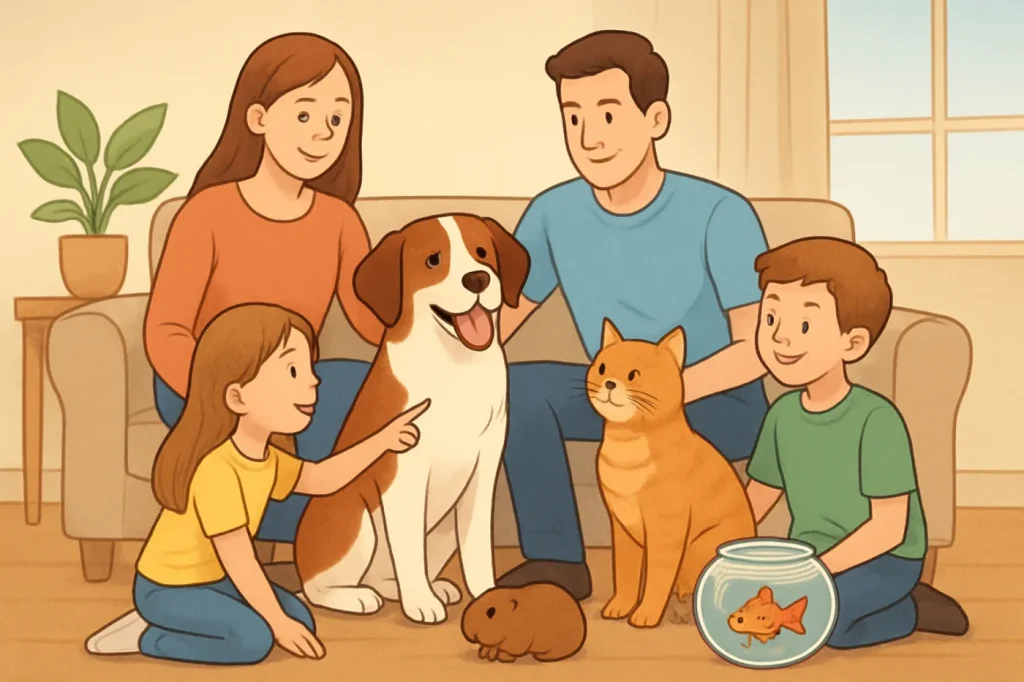
For most families with kids in the United States, the best first pets usually fall into three groups:
- Dogs – for active families who want a very social, involved companion and can commit daily time and training.
- Cats – for families who want affection and play but have less time and space than a dog typically needs.
- Small pets (like guinea pigs or some fish) – for families wanting a lower‑intensity starter pet, or when space, allergies, or schedules rule out dogs and cats.
The “best” pet is not a universal list of species. It is the pet that fits your children’s ages, your home, your schedule, your budget, and your comfort with mess and noise. The rest of this guide walks through that decision step by step and compares common options side by side so you can match a pet to your real life.
Quick overview of common family pets with kids
Most U.S. families considering a pet for children look at a similar set of options. Here is a practical overview before we go deeper into decision criteria.

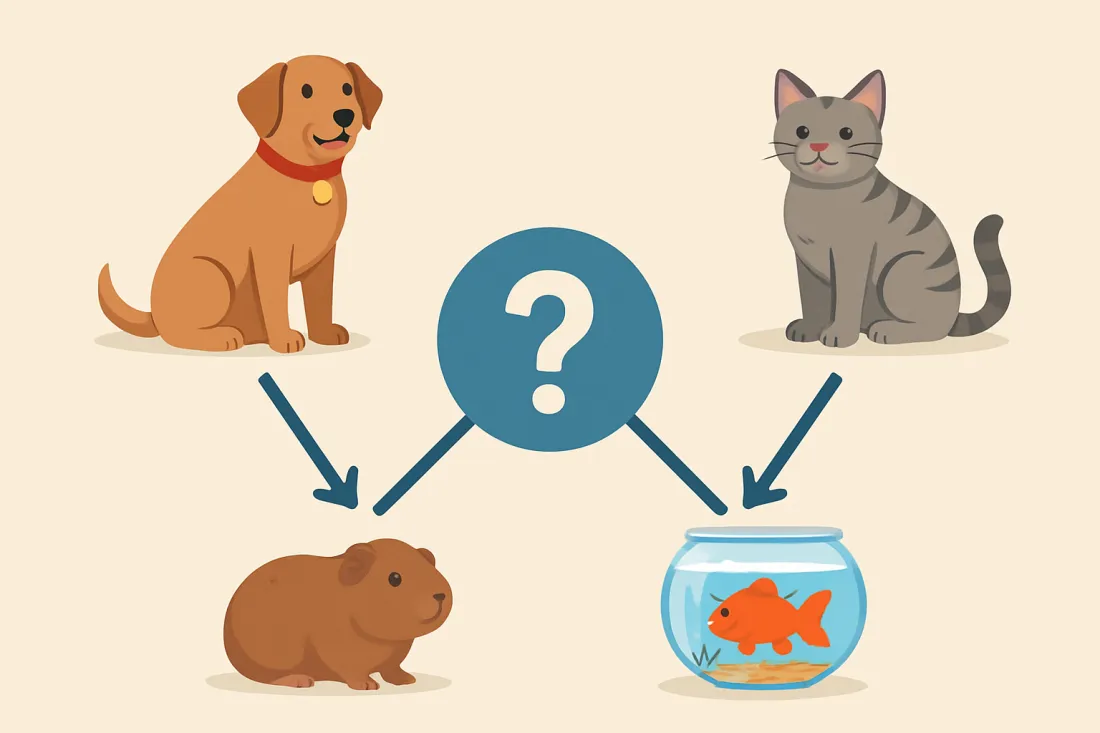
- Dogs – Highly social, often great with kids when well trained and supervised. Need daily walks, training, and significant time. Best for families ready for a “fourth child,” not a toy.
- Cats – Affectionate but more independent. Use litter boxes instead of going outside. Good for apartments and busy schedules, but still need play, enrichment, and vet care.
- Guinea pigs – Gentle, social small pets that usually tolerate calm handling better than many other rodents. Need daily cage cleaning and supervised floor time.
- Rabbits – Can be very affectionate but are physically delicate and can scratch or bite if scared. Need space to hop, careful diet, and gentle, calm children.
- Hamsters/gerbils/mice – Cute and interesting to watch, but many are nocturnal and do not enjoy being handled by young kids. Better as “look but don’t squeeze” pets for older children.
- Fish – Very low handling risk and good for teaching routine care. Still need regular tank maintenance and water quality checks.
- Reptiles (turtles, lizards, snakes) – Fascinating but have specific heating, lighting, and hygiene needs. Handling requires supervision and careful handwashing.
Before choosing any of these, it helps to step back and look at your family’s situation in a structured way.
Key factors to compare before choosing a pet for kids
Choosing the right pet for your family is less about “cutest” and more about fit. Use these factors as decision criteria when comparing dogs, cats, and small pets.
1. Children’s ages and maturity
- Under 5 years – Kids this age are still learning impulse control. They may grab, squeeze, or drop animals without meaning to. Pets must be physically sturdy and all interaction should be closely supervised. Dogs and cats can work if adults are fully in charge. Very small pets and fragile animals are usually a poor match.
- 5–9 years – Many kids can learn basic rules (gentle touch, no chasing, wash hands). They can help with simple tasks like filling water bowls or measuring food, but adults still carry the real responsibility.
- 10+ years – Older kids can take on more daily chores and understand that pets have needs even when they are busy or bored. They may be ready for more complex pets, but adults should still be backup caregivers.
2. Space and housing
- House with yard – Often suitable for dogs, but a yard does not replace walks and training. Also works well for cats (indoor only or supervised outdoor time) and larger small‑pet setups.
- Apartment or condo – Check pet policies and noise tolerance. Cats, small dogs, and many small pets can do well. Large, high‑energy dogs may struggle without enough outdoor time.
- Room for enclosures – Even “small” pets need adequate cage or tank space, plus a safe, quiet location away from drafts and direct sun.
3. Allergies and health considerations
- If anyone in the family has asthma or known pet allergies, talk with a healthcare professional before bringing home a furry pet.
- Consider trial exposure – spending time with similar animals at a friend’s house, shelter, or adoption event to see how everyone reacts.
- Remember that bedding, hay, and litter can also trigger allergies, not just fur.
4. Time and lifestyle
- Daily schedule – Who is home mornings, after school, and evenings? Dogs especially need predictable time for walks, play, and training.
- Travel and activities – If weekends are packed with sports and trips, you may need a pet that can be cared for by a sitter or that copes well with short absences.
- Energy level – Active families often enjoy active dogs. Quieter households may prefer cats, fish, or calm small pets.
5. Budget and long‑term commitment
Every pet comes with ongoing costs such as food, bedding, and veterinary care. Exact amounts vary widely by region and pet type, so it is wise to:
- Call a local veterinarian for typical annual care costs for the species you are considering.
- Review realistic pet costs for families with children to understand how expenses add up over time.
- Plan for emergencies – unexpected illness or injury can be expensive, so consider whether your budget can handle surprises.
6. Adult responsibility and long‑term plans
- Kids can help, but adults are ultimately responsible for the pet’s welfare.
- Think about life changes – moves, new jobs, college. Many pets live for years; dogs and cats often live into the teens, and some small pets also have multi‑year lifespans.
Dogs with kids: pros, cons, and care needs
Dogs are often the first pet families imagine. They can be wonderful companions for children, but they also require the most daily work compared with cats and many small pets.
Why dogs can be great for families with kids
- Very social – Many dogs love being part of family activities, from walks to games in the yard.
- Teach responsibility – Daily walks, feeding, and training give kids visible ways to help care for another living being.
- Active play – Fetch, hiking, and backyard play can get kids moving and outside.
- Emotional support – Dogs often bond strongly with children and can be a source of comfort.
Challenges and risks of dogs around children
- Time‑intensive – Puppies especially need frequent potty breaks, socialization, and training. Even adult dogs need daily exercise and attention.
- Training required – Without consistent training, dogs can jump, mouth, or guard toys and food, which is risky around kids.
- Size and strength – Large dogs can accidentally knock over small children. Very small dogs can be injured by rough handling.
- Noise and neighbors – Barking can be an issue in apartments or close neighborhoods.
Care needs for a family dog
- Daily exercise – Walks, play, and mental stimulation like training games or puzzle toys.
- Training and socialization – Positive‑reinforcement training and early exposure to different people and environments.
- Grooming – Brushing, nail trims, and bathing as needed, depending on coat type.
- Veterinary care – Routine checkups, vaccinations, parasite prevention, and dental care.
If you are leaning toward a dog, it can help to research the best dog breeds for families with kids in the US and talk with shelters or reputable rescues about temperament, not just looks.
Cats with kids: pros, cons, and care needs
Cats can be excellent family pets, especially when you want affection and play without the daily outdoor exercise needs of a dog.
Why cats can be great for families with kids
- More independent schedules – Most cats are fine alone during the work or school day as long as they have food, water, and enrichment.
- Indoor living – Cats can live entirely indoors, which suits apartments and busy neighborhoods.
- Playful but compact – Many cats enjoy interactive play (wands, balls, tunnels) without needing a yard.
- Quiet – Meowing is usually less disruptive than barking, though some cats are quite vocal.
Challenges and risks of cats around children
- Claws and teeth – Even friendly cats may scratch or nip if overhandled or startled.
- Need for respect – Cats often dislike being chased or grabbed. Kids must learn to read body language and let cats choose when to interact.
- Litter box care – Boxes must be scooped and cleaned regularly to avoid odor and health issues.
- Allergies – Cat dander is a common trigger for allergies and asthma.
Care needs for a family cat
- Daily play – Short, active play sessions help prevent boredom and behavior problems.
- Environmental enrichment – Scratching posts, climbing spaces, hiding spots, and window views.
- Grooming – Brushing (especially for long‑haired cats), nail trims, and dental care.
- Veterinary care – Regular checkups, vaccinations, parasite prevention, and spay/neuter if not already done.
Other small pets and when they fit families with kids
Small pets are often seen as “easier” or “starter” pets for kids. In reality, many have very specific needs and are better for watching than handling. Here is how common small pets compare for families.
| Pet type | When it fits families with kids | Main risks or drawbacks | Typical care pattern |
|---|---|---|---|
| Guinea pigs | Gentle kids who can sit and hold them calmly; families ready to clean cages and provide daily social time. | Need large cages and daily cleaning; can be stressed by rough handling; hay and bedding may trigger allergies. | Daily feeding and hay, spot‑cleaning cage, regular full clean, supervised floor time. |
| Rabbits | Calm households with older children who can respect boundaries and support rabbits’ backs when holding. | Fragile spines; can scratch or bite if scared; need space to hop and chew‑safe areas; sensitive digestion. | Daily feeding and hay, litter box or pen cleaning, safe exercise time, regular grooming for some breeds. |
| Hamsters/gerbils/mice | Families who mainly want to watch, not hold; older kids who can be gentle and patient. | Many are nocturnal and active at night; small and easy to drop; can bite if woken or startled. | Daily food and water checks, cage spot‑cleaning, regular full bedding changes, enrichment toys. |
| Fish | Families wanting a low‑handling pet and a way to teach routine care and observation. | Tank water quality can be tricky; overfeeding is common; not cuddly or interactive. | Regular feeding, scheduled water changes, filter maintenance, water testing as recommended. |
| Reptiles | Older kids and adults interested in specialized care and willing to learn about heating and hygiene. | Require specific temperatures and lighting; some carry germs that require careful handwashing after handling. | Daily checks of temperature and lighting, feeding schedule specific to species, regular enclosure cleaning. |
Small pets can be a good fit when space is limited or when a family wants a pet that does not need walks. They are not automatically easier than dogs or cats; the work is just different.
Dogs vs cats vs small pets: side‑by‑side comparison for families
This comparison table summarizes how dogs, cats, and a typical small pet (such as a guinea pig) differ for families with children. Use it alongside your answers to the checklist below.
| Option | Best fit family profile | Daily time and interaction | Handling and kid interaction | Key risks or challenges |
|---|---|---|---|---|
| Dog | Active families who want a very social companion and can commit to training and outdoor exercise. | High – walks, play, training, feeding, and routine care every day. | Can be very interactive and playful; needs supervision with young kids and clear rules. | Requires consistent training; risk of knocks, nips, or fear if kids are rough; higher overall cost and time. |
| Cat | Families wanting affection and play with more flexible schedules and limited outdoor space. | Moderate – feeding, litter box care, and daily play sessions. | Enjoys gentle interaction on their own terms; kids must respect signals to avoid scratches. | Potential allergies; scratching furniture; litter box odor if not cleaned regularly. |
| Small pet (e.g., guinea pig) | Families with limited space who are comfortable with cage cleaning and calmer, shorter handling sessions. | Moderate – daily feeding and spot‑cleaning, regular full cage cleaning, social time. | Usually tolerates gentle holding while seated; fragile and easily stressed by loud or rough play. | Delicate health; bedding and hay can trigger allergies; less interactive than dogs or many cats. |
Sample family scenarios and recommended pet types
To make the decision more concrete, here are a few common family situations and which pets often fit best. Use them as patterns to compare with your own life.
Scenario 1: Busy family with young kids in an apartment
- Kids: 3 and 6 years old.
- Parents: Full‑time jobs, home evenings and weekends.
- Home: Two‑bedroom apartment, no yard.
Often a better fit: A friendly adult cat, a pair of guinea pigs, or a well‑planned fish tank. These options do not require long daily walks and can live comfortably indoors.
Often a poor fit: High‑energy dogs that need long runs, very fragile small pets, or nocturnal animals that might keep kids awake.
Scenario 2: Active suburban family that loves the outdoors
- Kids: 8 and 11 years old.
- Parents: One parent works from home; weekends are spent hiking and playing sports.
- Home: House with fenced yard.
Often a better fit: A well‑matched family dog that enjoys hikes and games, or a cat that likes joining yard time but lives primarily indoors.
Considerations: Make sure someone is always responsible for walks and training, not just “when we feel like it.”
Scenario 3: Child asking for a pet, but parents unsure about long‑term commitment
- Kids: 9 years old, very enthusiastic about animals.
- Parents: Worried they will end up doing all the work.
- Home: Flexible; could fit a small pet or a cat.
Often a better fit: Start with a lower‑handling pet like fish, or spend time volunteering or fostering through a local shelter to test how the family handles daily care.
Next step: If everyone consistently follows through, consider a longer‑lived pet like a cat or dog.
Scenario 4: Family with known allergies
- Kids: 7 and 10 years old; one has seasonal allergies and mild asthma.
- Parents: Want a pet but worried about health.
Often a better fit: After discussing with a healthcare professional, some families choose fish or certain reptiles to avoid fur and dander. Others may tolerate some small pets with careful cleaning and air filtration.
Important: Always test exposure to similar animals and follow medical advice before committing.
Family pet fit checklist: step‑by‑step decision process
Use this structured checklist as a step‑by‑step algorithm. Go through each step and note which options stay realistic for your family.
Step 1 – Clarify who the pet is really for
- Is the pet mainly for the kids, for the whole family, or also for an adult who loves animals?
- Which adult will be the backup caregiver when kids are tired, sick, or busy?
Step 2 – Map your typical week
- How many minutes per day can your household realistically spend on feeding, cleaning, and play?
- Who is home in the morning, after school, and evening?
- If you travel, who will care for the pet and how often?
If you cannot reliably spare at least some time every single day, focus on pets that do not need walks and can handle short absences, like many cats, fish, or some small pets.
Step 3 – Check space and housing rules
- Does your lease or HOA have pet restrictions (size, species, number)?
- Is there a quiet, stable spot for a litter box, cage, or tank?
- Is there safe outdoor access for a dog, or will all exercise be on‑leash walks?
Step 4 – Review health and allergies
- Does anyone have asthma, allergies, or immune issues that might be affected by pets?
- Have you discussed pet options with a healthcare professional if needed?
- Can everyone commit to handwashing after handling pets, especially small animals and reptiles?
Step 5 – Outline a realistic budget
- List expected ongoing costs: food, litter or bedding, toys, grooming, and vet visits.
- Call at least one local vet to ask about typical annual care for the species you are considering.
- Decide how you will handle unexpected medical costs if they arise.
Step 6 – Match pet types to your answers
Based on your answers so far:
- If you have time for daily walks and training, enjoy outdoor activities, and want a very interactive companion, a dog may fit.
- If you want affection and play but have limited time for outdoor exercise, a cat may suit you better.
- If you have limited space or prefer a pet that does not need walks, consider guinea pigs, rabbits, fish, or other small pets, but research their specific needs first.
Step 7 – Plan how to prepare your kids
- Talk through rules for interacting with the pet (no chasing, no grabbing, gentle touch).
- Decide which age‑appropriate chores kids will help with and how adults will supervise.
- Consider reading a guide on how to prepare kids for a new pet so expectations are clear before adoption.
Cost and time commitment summary
Exact costs vary by region, pet size, and health needs, so treat any numbers you hear as examples, not guarantees. Instead of focusing on a specific dollar amount, think in terms of relative cost and time levels and then confirm locally.
Relative cost levels
- Dogs – Generally the highest ongoing cost due to food, routine vet care, preventive medications, and possible training or grooming.
- Cats – Often moderate ongoing cost. Food, litter, and vet care are the main recurring expenses.
- Small pets – Food and bedding may seem inexpensive, but vet care can still be significant relative to their size, and specialized small‑animal vets may charge differently.
- Fish and some reptiles – Initial setup (tank, filters, heaters, lights) can be a larger one‑time cost, with lower day‑to‑day expenses afterward.
Relative time commitments
- High time commitment: Most dogs, especially puppies and active breeds.
- Moderate time commitment: Cats, guinea pigs, rabbits, and many other small mammals.
- Lower daily time but regular maintenance: Fish and some reptiles (less hands‑on daily, but require consistent tank or enclosure care).
Before deciding, call a local veterinarian and, if possible, a groomer or pet sitter to ask about typical time and cost expectations for the species you are considering. This gives you current, local information instead of guesses.
Common mistakes families make when choosing pets for kids
Avoiding a few frequent mistakes can prevent stress for both your family and the pet.
- Treating the pet as a toy or reward – Pets are living beings, not prizes for good grades. When the novelty wears off, adults must still provide care.
- Choosing based only on looks or trends – A cute puppy video or a popular movie animal does not guarantee a good fit with your lifestyle.
- Underestimating lifespan – Many pets live for years. Think about who will care for the pet when kids become teenagers or move out.
- Ignoring temperament and energy level – A high‑energy dog in a low‑activity home, or a shy cat in a loud, busy household, can lead to behavior problems.
- Assuming small pets are “easy” – Many small animals are delicate, need specific diets, and require careful cleaning and handling.
- Skipping research on species needs – Each species has its own diet, housing, and social needs. Quick research before adoption prevents many problems later.
- Not planning for supervision – Young children and pets should not be left together unsupervised, even with friendly animals.
- Ignoring adoption requirements – Shelters and rescues often have specific pet adoption requirements for families with children. Reviewing them early helps you avoid disappointment later.
What to do next: practical decision guide
Once you have a sense of what might fit, use this simple process to move from idea to responsible pet ownership.
- Talk as a family
- Discuss why you want a pet and what everyone expects.
- Agree that adults are ultimately responsible, even if kids help.
- Complete the checklist
- Work through the family pet fit checklist above and write down your answers.
- Cross off pet types that clearly do not match your time, space, or health situation.
- Research your top one or two options
- Read species‑specific care guides and talk with local veterinarians.
- Ask about typical health issues and what routine care involves.
- Meet real animals
- Visit shelters, rescues, or friends with similar pets.
- Watch how your kids behave and how the animals respond.
- Prepare your home and kids
- Set up the space (bed, crate, litter box, cage, or tank) before bringing a pet home.
- Review rules and practice gentle handling with stuffed animals or role‑play.
- Confirm adoption or purchase requirements
- Check age limits for children, home visit policies, and landlord approval if you rent.
- Gather any documents or references that may be requested.
- Plan a follow‑up check‑in
- Schedule a family meeting a few weeks after adoption to review what is working and what needs to change.
- Adjust routines, chores, or even the type of enrichment you provide based on that discussion.
FAQ about choosing the best pets for families with kids
What should families understand first about the best pets for kids?
Families should understand that there is no single “best” pet for all kids. The right choice depends on how much time adults can give daily, how old and gentle the children are, the family’s budget, and any health issues like allergies. A pet that fits these realities is far more likely to stay in the home and build a strong bond with the children.
Are dogs or cats usually better for families with young children?
Both dogs and cats can work well with young children when adults supervise and choose an individual animal with a suitable temperament. Dogs usually need more daily time and training but can be very interactive playmates. Cats often fit better in smaller spaces and busy schedules but require kids to respect their boundaries to avoid scratches. The better option is the one that matches your time, space, and comfort with training and noise.
What common mistakes should parents avoid when picking a pet for their kids?
Parents should avoid choosing a pet on impulse, assuming kids will handle all the care, or picking a species just because it looks cute or is popular. It is also a mistake to underestimate the lifespan and costs involved or to treat small pets as disposable “practice” animals. Careful research, honest planning, and a clear agreement that adults are responsible help prevent many later problems.
How can parents tell if their child is ready to help with a family pet?
Signs of readiness include a child consistently following household rules, handling fragile objects gently, and helping with simple chores without constant reminders. Parents can test readiness by assigning pet‑like tasks, such as watering plants or feeding a neighbor’s pet under supervision, and seeing whether the child follows through over several weeks.
What should families do next after deciding on a pet type?
After choosing a pet type, families should research specific care needs, talk with a local veterinarian, and prepare their home with appropriate supplies and safe spaces. Visiting shelters or rescues to meet individual animals is a valuable next step, as personality and energy level matter as much as species. Finally, parents should set clear routines and responsibilities so the new pet’s needs are met from day one.
Conclusion: matching the pet to your real life
The best pets for families with kids are those that fit your real life, not an idealized version of it. Dogs can be wonderful for active, hands‑on families; cats often suit busy households and smaller spaces; and small pets or fish can work when you want a gentler introduction to pet care. By honestly assessing your time, space, budget, and children’s maturity, then following a structured checklist and decision process, you give your future pet and your kids the best chance at a safe, happy, long‑term relationship.